 Library of Congress
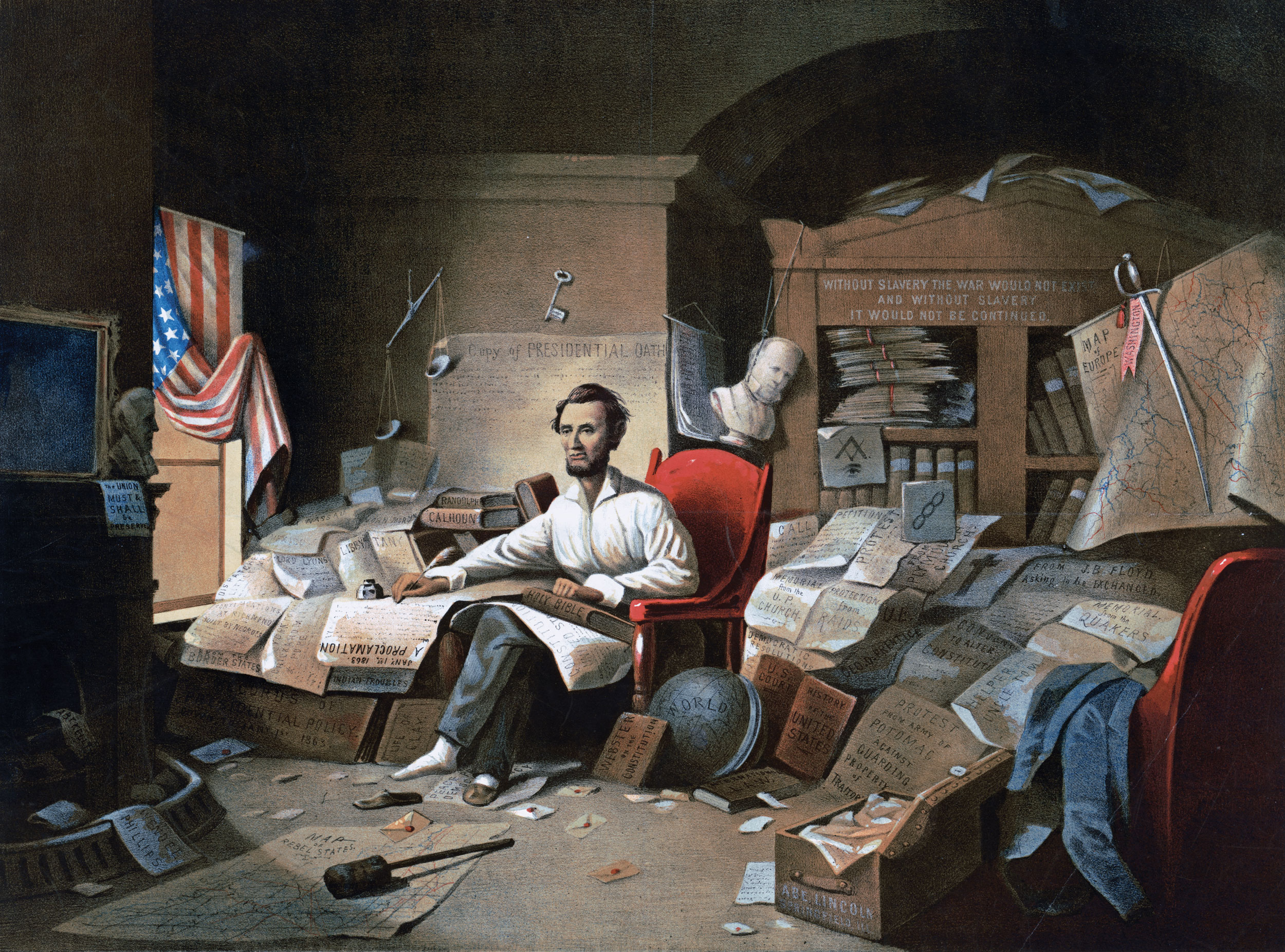
In this painting by David Gilmour Blythe, President Abraham Lincoln, sitting in his cluttered study in shirtsleeves and slippers, drafts the Emancipation Proclamation.
In my experience as a lawyer, when a dispute arises about a contract, a statute, or a regulation, it is often the case that the language at issue was added late in the drafting process, sometimes at the last minute. It is also common for the problematic language to be something that no one involved in the drafting process thought was controversial or even important. The drafting of President Abraham Lincoln’s Emancipation Proclamation provides a particularly dramatic illustration of how last-minute additions can be consequential. Two words added late in the drafting process, almost as an afterthought, ended up having an enormous impact on how, in their military campaigns throughout the Confederacy, Union forces encountered and interacted with people who had been enslaved. In effect, the inserted words—as well as provisions later added to balance the effect of those words—led to a host of proclamations and orders issued by military leaders during the last two years of the war. Some of these orders and proclamations, supposedly designed to proclaim and define freedom, instead introduced broad restrictions on the liberties of formerly enslaved people.
One of the most famous, and certainly the most celebrated, orders addressing the transition from slavery to freedom was the “Juneteenth Order” issued in Galveston, Texas, on June 19, 1865. On that date, now the basis for a national holiday, Major General Gordon Granger arrived in Texas and issued an order confirming that emancipation was a reality that the army would enforce. President Lincoln’s Emancipation Proclamation had previously declared that, effective January 1, 1863, all enslaved people in Texas were free, but until Granger’s forces arrived, Lincoln’s proclamation was nothing more than lofty words on a faraway paper. Many enslaved people in Texas learned about the Emancipation Proclamation shortly after it was issued, but it had no immediate impact on their lives. Confederate Texans regarded the 1863 proclamation as ineffective and used its issuance only as a recruiting tool to encourage more men to volunteer for their rebel army. With the arrival of the Union army in June 1865, however, practical freedom finally arrived for the last large, intact body of enslaved people in the Confederacy. It is no wonder that these people (estimated to exceed 250,000 in number) chose to celebrate the army’s arrival and the order that announced their liberation. Beginning in 1866, parades and festivities took place to honor the event that eventually became known as “Juneteenth” as a contraction of the order’s original June 19 date. Although Juneteenth celebrations of emancipation began in Texas in 1866, they have continued to be an annual event and have expanded across the country and even to some foreign countries.1
The series of emancipation orders that culminated in the Juneteenth Order all had their roots in a pivotal event that took place three years before, when President Lincoln convened what may well be the most famous cabinet meeting in American history. On July 22, 1862, Lincoln had begun the discussion by announcing that he had determined to issue a proclamation ordering the emancipation of slaves as a war measure. The president emphasized that it was his personal decision and that, while he welcomed discussion of the language and procedures surrounding its implementation, his choice to issue the proclamation was firm and irrevocable. As Lincoln later recalled, “I said to the Cabinet that I had resolved upon this step and had not called them together to ask their advice, but to lay the subject-matter of a proclamation before them; suggestions as to which would be in order, after they had heard it read.”2
Lincoln then proceeded to read his draft proclamation. At the end was an 85-word sentence:
And, as a fit and necessary military measure for effecting this object, I, as Commander-in-Chief of the Army and Navy of the United States, do order and declare that on the first day of January in the year of Our Lord one thousand eight hundred and sixty-three, all persons held as slaves within any state or states, wherein the constitutional authority of the United States shall not then be practically recognized, submitted to, and maintained, shall then, thenceforward, and forever, be free.3
With these words, perhaps the most important ever uttered by an American president, Lincoln escalated the prospect of emancipation to a serious possibility. A few minor comments were volunteered and then Secretary of State William Seward offered an observation about timing. Seward suggested that the president delay issuing his proclamation until it could accompany an important Union military victory. Lincoln reluctantly agreed and put his proclamation aside for the time being. Two months later, the Battle of Antietam was close enough to a victory for Lincoln’s purposes and he used that battle’s result as the excuse to dust off his draft proclamation and prepare to issue it.4
 National Portrait Gallery, Smithsonian Institution
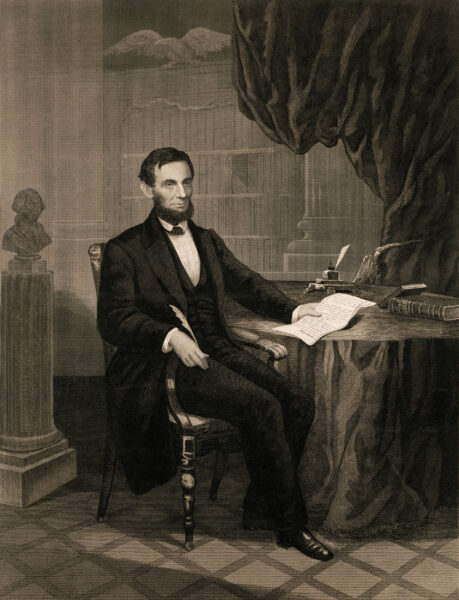
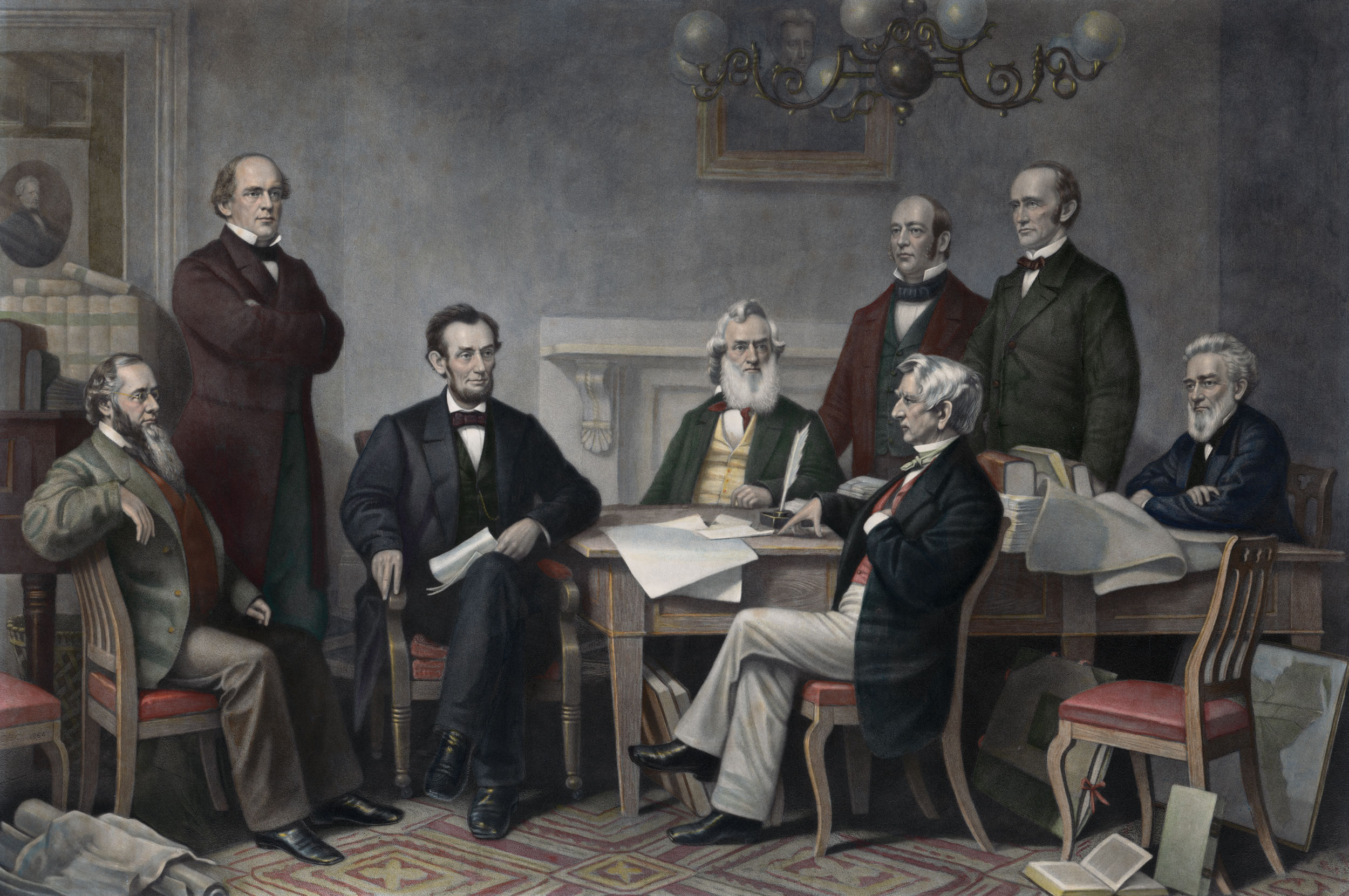
On July 22, 1862, Abraham Lincoln assembled his cabinet (an event depicted above in a painting from 1866) to announce that he had determined to issue a proclamation ordering the emancipation of slaves as a war measure. “I said to the Cabinet that I had resolved upon this step and had not called them together to ask their advice, but to lay the subject-matter of a proclamation before them,” Lincoln later recalled.
On September 22, 1862, Lincoln convened another meeting of his cabinet to discuss emancipation. The president again noted that he was not asking the cabinet for their thoughts on whether a proclamation should be issued. Instead, Lincoln said, “What I have written is that which my reflections have determined me to say. If there is anything in the expressions I use, or in any minor matter, which any one of you thinks had best be changed, I shall be glad to receive the suggestions.”5 Secretary of the Navy Gideon Welles recorded that before reading his draft proclamation, Lincoln warned those present not to suggest substantive changes to the draft. “[Lincoln’s] mind was fixed—his decision made—but he wished his paper announcing his course as correct in terms as it could be made without any change in his determination.”6
Lincoln’s new draft proclamation boldly declared in its third paragraph that on January 1, 1863, a date 100 days in the future, enslaved people in all areas of states then in rebellion “shall be then, thenceforward and forever free.” After declaring those people free, the draft order then provided that “the executive government of the United States will, during the continuance in office of the present incumbent, recognize such persons as being free and will do no act or acts to repress such persons, or any of them, in any efforts they may make for their actual freedom.”7
 Library of Congress
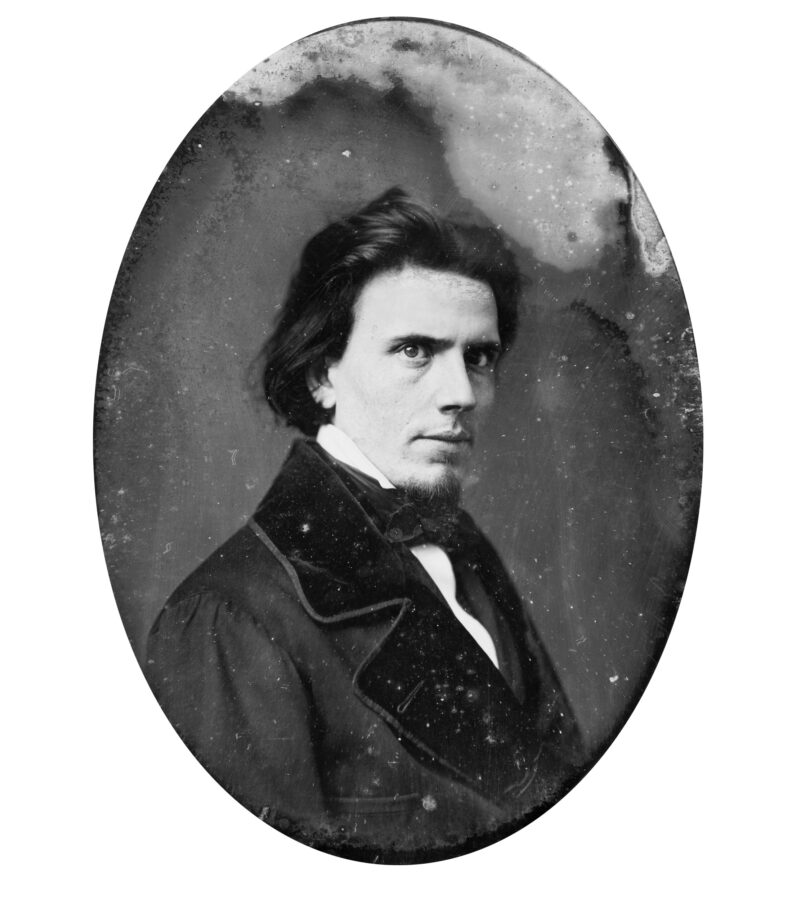
Francis Bicknell Carpenter
As Lincoln later described the meeting to artist Francis Bicknell Carpenter, after the president finished reading this paragraph, Secretary Seward interrupted to suggest two revisions. Seward proposed that the words “and maintain” be inserted after “recognize” so that the executive would “recognize and maintain” the freedom of the formerly enslaved. In addition, Seward urged Lincoln to expand his reference to “executive government” to clarify that it included “the military and naval authority thereof.” The draft of the proclamation in Lincoln’s hand, which now resides in the collection of the New York State Library, shows Seward’s inserted language as though it was a mere clarification of little importance. But it was no such thing. This language changed the whole thrust of the Emancipation Proclamation.8
Historian Allen C. Guelzo has correctly observed that in the excitement of getting the proclamation ready for issuance, “no one thought long enough about Seward’s proposed recognize and maintain [language] to realize that this phrase might be the most shocking in the Proclamation.”9 It was one thing to “recognize” a former slave’s freedom—Lincoln could do that from his office in Washington—but what did it mean to “maintain” that freedom? Just as importantly, how could such a commitment possibly be fulfilled? Lincoln later said that his first inclination was to reject the “and maintain” language suggested by Seward, noting that it was something he had considered and rejected in drafting his proclamation. The president initially left it out, not because he objected to the concept, but “because it was not my way to promise what I was not entirely sure that I could perform, and I was not prepared to say that I thought we were exactly able to ‘maintain’ this.”10 Despite these misgivings, Lincoln agreed to make Seward’s proposed change.
Lincoln did not explain why he decided to accept Seward’s amendments. As he later described his reaction, “Seward insisted we ought to take this ground, and the words finally went in!”11 Lincoln did not know it at the time, but his decision to defer to Seward and take the “and maintain” ground would have important consequences. The preliminary Emancipation Proclamation, as the September version of the proclamation came to be called, was issued immediately following the cabinet meeting.12
On December 30, 1862, Lincoln provided a draft of the final Emancipation Proclamation to his cabinet and again asked for suggestions. Technically, all the final proclamation needed to do was list the places where the rebellion was still ongoing. In those places, as the preliminary proclamation had promised, slaves were going to be declared “forever free.” This proclamation could have been extremely simple, little more than a list of the Confederate states.13
The final Emancipation Proclamation ended up being much more than a simple list of rebel territories. Why? The answer to this question goes back to the “recognize and maintain” language added in the preliminary proclamation and the duties it seemed to impose on the Union army. After Seward’s amendments, the language of the preliminary proclamation provided that the military would “recognize and maintain the freedom of [those formerly enslaved] and will do no act or acts to repress such persons, or any of them, in any efforts they may make for their actual freedom.” The proclamation did not, however, define what it meant for the Union military to maintain the freedom of slaves, and the use of that phrase so closely in connection with the commitment to support efforts by the enslaved to free themselves led to a series of concerns that Lincoln felt he had to address in the final Emancipation Proclamation.
The only practical way to maintain the freedom of those people who had been enslaved was for Union troops to physically occupy southern territories and intervene between the former slaves and the former slaveholders. But many questions remained about the army’s role. What would the army do if the freed people revolted during this process? What if the presence of the army led the freed people to cease working altogether and come to the army seeking rations? None of these questions had easy answers.14
Since the issuance of the preliminary proclamation, Seward had become concerned that the prospect of emancipation might trigger a bloody slave revolt. Lincoln shared this concern and believed that his final proclamation needed to address the subject. To clarify that maintaining freedom did not mean supporting any form of violent revolt, Lincoln’s draft of the final proclamation added the word “suitable” to clarify that the military was only obligated to support “suitable efforts” that those enslaved people might make to secure their actual freedom. It would be left for another day to define what the word “suitable” meant in this context. The president’s draft then followed up this vague language with an important new sentence: “And I hereby appeal to the people so declared to be free, to abstain from all disorder, tumult, and violence, unless in necessary self defence; and in all cases, when allowed, to labor faithfully for wages.”15
 National Portrait Gallery
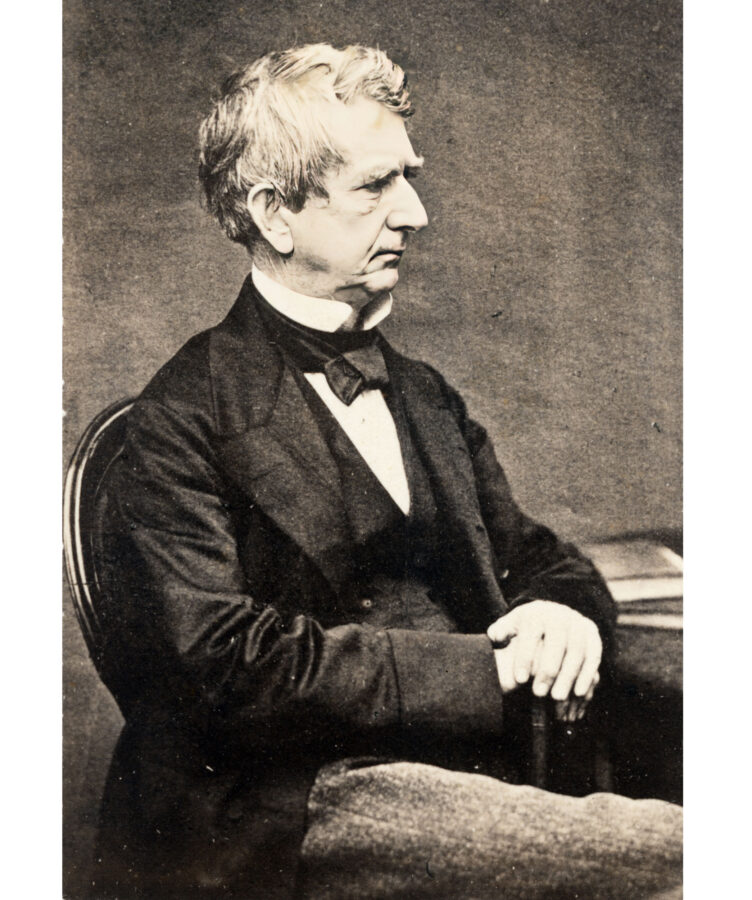
During a meeting of Lincoln’s cabinet on September 22, 1862, Secretary of State William Seward (pictured above) suggested the preliminary Emancipation Proclamation should note that the federal government would not only “recognize,” but also “maintain” the freedom of the formerly enslaved. The new language changed the whole thrust of the document.
Secretary Seward suggested that the word “appeal” in Lincoln’s draft was not strong enough. In Seward’s opinion, the president needed to do more than just appeal to the freed people to refrain from violence and continue to work. Lincoln took the suggestion and substituted the following language: “And I hereby enjoin upon the people so declared to be free, to abstain from all disorder, tumult, and violence, unless in necessary self defence; and I recommend to them that, in all cases, when allowed, to labor faithfully, for reasonable wages.”16
Why did Lincoln add the language to the final proclamation appealing to the freed people to avoid violence and recommending that they continue to work? Why did he then strengthen that language at Seward’s suggestion to enjoin them against violence and instruct them to continue to work? The answer is that these provisions were a patch designed to undo confusion caused by Seward’s “recognize and maintain” amendments to the preliminary proclamation and the underappreciated complications they caused for the military. Who would be present to enforce the president’s injunction that those freed people remain peaceful and gainfully employed? It could only be the Union troops fighting their way across the South. With these new changes in the final proclamation, the “recognize and maintain” language effectively snowballed to add a host of complicated responsibilities for Union commanders operating in the field.
The preliminary Emancipation Proclamation had ordered the military to “recognize and maintain” each former slave’s freedom. The final Emancipation Proclamation expanded those responsibilities. As of January 1, 1863, every Union military commander now had three assigned tasks in addition to his duty to fight battles: recognize and maintain the liberty of the formerly enslaved in rebel-controlled areas; support “suitable” efforts for freedom but prevent disorder and violence by the freed people; and enforce the president’s injunction and recommendation that those people continue to labor faithfully for wages. Of these assignments, only the second, preserving order, was traditional for a military force. None of this had been part of the curriculum at West Point.
As Confederate armies surrendered in the spring of 1865, leaving the field clear for Union armies to take control, the problem of how to “recognize and maintain” the freedom of formerly enslaved people materializing in large numbers throughout the occupied South came sharply into focus. It was in many cases the number one issue confronting the victorious Union generals who now stepped in to become the chief civil authorities in the Confederate states their armies occupied. And they would get little assistance from Washington.
Lincoln’s assassination on April 14, 1865, threw the entire Washington policymaking apparatus into disorder and meant that the army was basically on its own in determining emancipation policy in the field. Left to their own devices, many Union generals gradually began to use the language of the Emancipation Proclamation as a template to create a new series of general orders intended to govern relations between freed people and their former masters. Each of these orders would be worded slightly differently, but they would all involve the common themes of reinforcing emancipation as policy while warning the freed people against vagrancy.
 Library of Congress
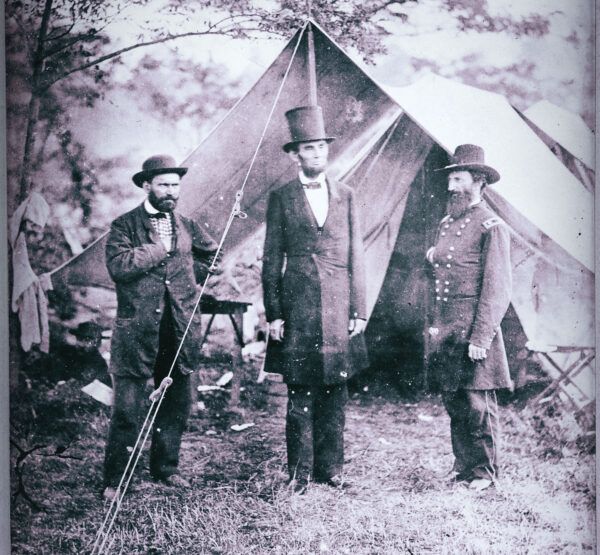
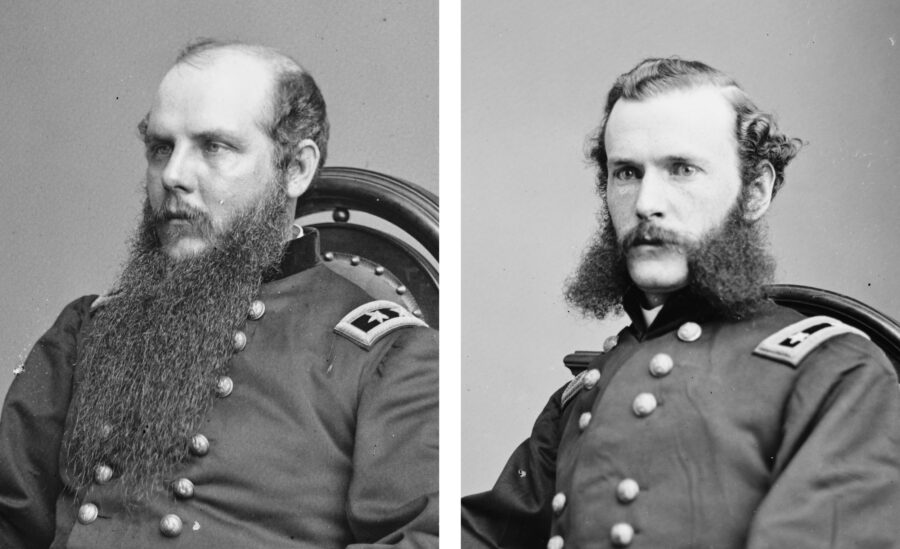
 John M. Schofield (left) and Francis J. Herron
On April 27, 1865, Major General John M. Schofield, commanding the Department of North Carolina, issued an order that addressed both parties to the former master-slave relationship. Citing his duty under the Emancipation Proclamation to maintain the freedom of the emancipated people, he declared, “It is recommended to the former owners of the freedmen to employ them as hired servants at reasonable wages, and it is recommended to the freedmen that when allowed to do so they remain with their former masters and labor faithfully so long as they shall be treated kindly and paid reasonable wages, or that they immediately seek employment elsewhere in the kind of work to which they are accustomed.”17
The language in Schofield’s order, designated General Orders No. 32, seemed to reach a good balance between warnings directed to the former masters and the people they had enslaved. Schofield wrote later in his memoirs that “This order, which was the first public official declaration on the subject, was mentioned by one of the leading journals of New York at the time as having at least the merit of ‘saving a world of discussion.’”18
Elsewhere in the occupied South, other Union generals were starting to follow in Schofield’s footsteps and issue public proclamations regarding the changed status of the relationship between slave owners and those they had enslaved. Many used Schofield’s order as a model. Others chose to use even stronger language requiring formerly enslaved people to continue working. This was largely a feature of the calendar. As summer approached, the focus shifted increasingly to the coming harvest seasons. Suddenly, Union generals who had only months before devoted themselves to the disruption of southern agricultural systems now began to worry whether those same systems could be revived to provide food for those who depended on them. Who would harvest the crops if the freed people fled to the cities or congregated around military installations? The consensus among Union commanders was that some way needed to be found to compel those people formerly enslaved to continue working at their previous locations until the crops could be harvested and order established.
Nowhere in the Confederacy was this situation more urgent than in Louisiana. As the war wound down in the spring of 1865, Major General Francis J. Herron found himself placed in command of the Northern Division of Louisiana. Herron’s assignment was to go up the Red River and assume command in Shreveport. But Herron received reports that the city was flooding, food and supplies were critically low, and that a huge number of freed people were now crowding around the city seeking help from the Union army. As he approached Shreveport, Herron decided to issue a few general orders that he sent ahead of him to pave the way.19
General Orders No. 20, the most important of them, was directed at planters and others living within the limits of Herron’s new command. “There are no longer any slaves in the United States,” the order stated, citing Lincoln’s Emancipation Proclamation. Noting that any attempt by the planters to evade this provision would be treated as a continuation of the rebellion and severely punished, Herron “recommended” that the freed people “be employed under specific contracts at reasonable wages and kindly treated.” Herron demanded the cooperation of the planters in negotiating fair labor contracts and said that such cooperation would go a long way toward assisting the country to recover.20
As for the freed people themselves, Herron’s order also set clear expectations:
No encouragement will be given the [freed people] to leave their former masters, and they must learn that they cannot be supported in idleness or allowed to congregate at military posts. To be worthy of their freedom they must be industrious and honest. Their status will in no way be compromised by remaining at home and working for wages.21
As soon as Herron reached Shreveport, he was besieged with requests to meet with local planters and explain the labor system. Harvest would soon be underway and the planters had a host of questions. What if the freed people refused to work or left the plantations and fled to the city? Was the general prepared to force them back to work? Many of the planters had been financially devastated by the war. How could they be expected to come up with money to pay wages to these freed people? Herron assured the planters that his primary concerns were ensuring order and making sure that crops were harvested in a timely manner. Everything else was secondary. This was exactly what the planters wanted to hear.22
Following his meeting with the planters, on June 11, Herron issued General Orders No. 24, one of the more unusual orders issued during the war. Noting that “Great and sudden changes in the condition of any class of people are always productive of suffering, and the transition of the blacks from a state of slavery to freedom cannot fail to cause temporary suffering to all classes,” Herron observed that this uncertain situation had resulted in “the negroes leaving their homes and setting out en masse for the military posts, and with no definite purpose except to leave the scene of their former bondage.” This, Herron proclaimed, could not be allowed because it would result in (1) “the loss of the crops and the entire ruin of the agricultural interests in this part of the State,” and (2) “untold suffering, starvation, and misery among the blacks themselves.”23
It was clear to Herron that he had to find some way to require the freed people to continue working agreeably at the place of their former bondage. He ordered that “all persons heretofore held as slaves remain for the present with their former masters and by their labor secure the crops of the present season.” They would not be allowed a choice of where to work, but were expressly confined to the fields or other places “where they have been accustomed to work.” No boats would be allowed to transport freed people unless they had a pass from their employer, and they were warned that if they were caught wandering about or gathering at military posts, they would be arrested and punished.24
By the time Herron issued his order, Major General Philip H. Sheridan had arrived in New Orleans to take control of the Military Division of the Southwest. He had been closely monitoring the situation in Shreveport and the actions that Herron had taken. Sheridan quickly concluded that Herron’s approach, while not ideal, was a good temporary policy for other generals under his command to follow in dealing with large populations of freed slaves.25
As it turned out, the next general who would face this situation would be Major General Gordon Granger, who would soon be headed to Texas, the last Confederate state to surrender and the state with the largest remaining population of enslaved people. Sheridan was concerned that the eccentric Granger might face the same problems that Herron had experienced at Shreveport. He also knew that his superior, Lieutenant General Ulysses S. Grant, did not like or trust Granger. To help Granger avoid mistakes, Sheridan decided to write the key provisions of a series of orders for the general to issue when he reached Texas. Since this language was important and would probably be reprinted in northern newspapers, Sheridan appears to have gotten out his copies of the orders issued by Generals Herron and Schofield (his West Point roommate) and used them to provide Granger with firm guidance.26
On June 13, 1865, Sheridan sent Granger specific instructions:
On your arrival at Galveston assume command of all troops in the State of Texas; carry out the conditions of the surrender of General Kirby Smith to Major-General Canby; notify the people of Texas that in accordance with the existing proclamation from the Executive of the United States “all slaves are free;” advise all such freedmen that they must remain at home; that they will not be allowed to collect at military posts, and will not be supported in idleness.27
On the morning of June 19, 1865, Granger arrived in Galveston with his staff and portions of his XIII Corps. From Granger’s headquarters, a staff officer promptly issued five general orders. General Orders No. 3, which came to be famous as the Juneteenth Order, read as follows:
Headquarters, District of Texas
Galveston, Texas, June 19, 1865
General Orders, No. 3
The people are informed that, in accordance with a proclamation from the Executive of the United States, “all slaves are free.” This involves an absolute equality of personal rights and rights of property, between former masters and slaves, and the connection heretofore existing between them, becomes that between employer and hired labor. The freedmen are advised to remain at their present homes, and work for wages. They are informed that they will not be allowed to collect at military posts; and that they will not be supported in idleness either there or elsewhere.
By order of
Major-General Granger
F.W. Emery, Maj. & A.A.G.28
The first sentence of the Juneteenth Order was the precise language that Sheridan had directed Granger to use. It declared that the Emancipation Proclamation was in effect and confirmed that the army was now in Texas to maintain the freedom of all former slaves. It is interesting to note that both Sheridan and Granger erroneously quoted the proclamation as providing that “all slaves are free” when that language did not appear in Lincoln’s proclamation and was an inaccurate summary of what the proclamation ordered.
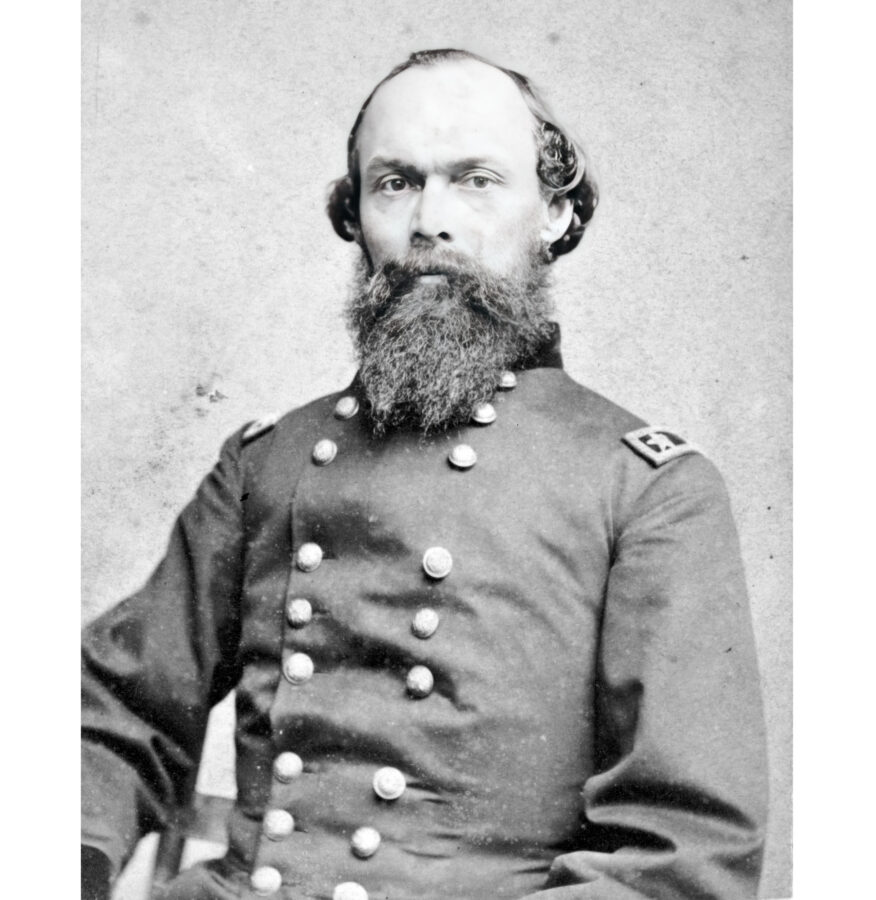 Library of Congress
Major General Gordon Granger (pictured above) issued General Orders No. 3—the so-called “Juneteenth Order”—on June 19, 1865, from his headquarters in Galveston, Texas. While inspired by the Emancipation Proclamation, Granger’s order included a paternalistic requirement that restricted freedom of movement and employment among the formerly enslaved.
Much of the Juneteenth Order’s remaining language was taken either directly or indirectly from the earlier orders issued by Herron and Schofield. The last part of the order’s language also comes from the Emancipation Proclamation and its injunction and recommendation that the formerly enslaved continue to work as employees. In fact, it is fair to say that almost every sentence in the Juneteenth Order had its origin in the Emancipation Proclamation and was a direct or indirect result of language inserted at the last minute to define the military’s responsibilities for regulating the freedom and conduct of the emancipated. Ironically, the language that Seward and Lincoln inserted in the preliminary Emancipation Proclamation to make sure that the Union military stood on the side of practical freedom for people who had been enslaved ended up mutating into a paternalistic requirement that the military used as justification at the war’s end to restrict freedom of movement and employment.
It is unlikely that any of the cabinet members present with Lincoln at the meetings in 1862 where the Emancipation Proclamation was discussed had a full appreciation of the importance that would eventually be attached to the small language changes suggested by Seward. But the inserted language turned out to be important to the way events played out during the last two years of the war. None of this was inevitable. There was a moment on the afternoon of September 22, 1862, where the key language almost did not find its way into the proclamation.
Lincoln had gone out of his way to discourage cabinet members from offering substantive changes to the proclamations he had so carefully drafted. That did not stop Seward from suggesting several changes, some of which were quite substantive. The “and maintain” language put the military on a collision course with slaveholders. A lesser leader might have angrily rejected Seward’s suggestions and silenced him. Lincoln, however, trusted Seward’s instincts and made the changes.
As things turned out, the last-minute changes would have enduring consequences, one of which was the host of liberation orders that culminated in the Juneteenth Order. Not all of the language changes suggested by Seward and accepted by Lincoln, however, had their originally intended effect. One of the unintended consequences was that many of the military liberation orders, including the Juneteenth Order, came to contain provisions that explicitly restricted the liberties of the emancipated people, in effect requiring them to remain working for the same slaveholder in the same place. Getting the government to say that slaves were free had been a difficult thing to achieve, making them free was harder still, and it turned out that defining what that freedom meant would be a challenge that would last well beyond the end of the war.
Edward T. Cotham Jr. is an independent scholar in Houston, Texas, whose work focuses on military events in the Trans-Mississippi. He is the author of five books on Civil War topics, including Juneteenth: The Story Behind the Celebration (State House Press, 2021).
Notes
1. Elizabeth Hayes Turner, “Juneteenth: Emancipation and Memory,” in Lone Star Pasts: Memory and History in Texas, Greg Cantrell and Elizabeth Hayes Turner, eds. (College Station, TX, 2007), 143–167.
2. Francis Bicknell Carpenter, Six Months at the White House with Abraham Lincoln: The Story of a Picture (New York, 1866), 21.
3. Abraham Lincoln, Emancipation Proclamation, First Draft, July 22, 1862, Library of Congress.
4. “The Emancipation Proclamation,” The New York Times, April 2, 1864.
5. Carpenter, Six Months at the White House, 21–22; Michael Burlingame, Abraham Lincoln: A Life (Baltimore, 2008), 2:407–408; John M. Hay and John G. Nicolay, Abraham Lincoln: A History 10 vols. (1917; reprinted New York, 2009), 6:159; John Niven, ed., The Salmon P. Chase Papers (Kent, OH, 1993), 1:394.
6. William E. Gienapp and Erica L. Gienapp, eds., The Civil War Diary of Gideon Welles, Lincoln’s Secretary of the Navy (Urbana, IL, 2014), 54.
7. The Preliminary Emancipation Proclamation, consisting of Abraham Lincoln’s original draft and Secretary of State William Seward’s changes, is held in a double-chambered glass case filled with nitrogen at the New York State Library.
8. Carpenter, Six Months at the White House, 23–24; Hay and Nicolay, Abraham Lincoln: A History, 6:161.
9. Allen C. Guelzo, Lincoln’s Emancipation Proclamation: The End of Slavery in America (New York, 2004), 174.
10. Carpenter, Six Months at the White House, 22.
11. Ibid., 23–24.
12. Preliminary Emancipation Proclamation, September 22, 1862, Roy P. Basler, ed., The Collected Works of Abraham Lincoln (New Brunswick, NJ, 1953), 5:433-436 (hereinafter CW); General Orders No. 139, War Department, Washington, D.C., September 24, 1862, in United States War Records Office, The War of the Rebellion: A Compilation of the Official Records of the Union and Confederate Armies (Washington, 1880-1901), Series 3, Vol. 2, 584–585 (hereinafter OR).
13. Hay and Nicolay, Abraham Lincoln: A History, 6:420–421.
14. Andrew F. Lang, In the Wake of War: Military Occupation, Emancipation, and Civil War America (Baton Rouge, 2017), 8,130–145.
15. Notes to Preliminary Draft of Final Emancipation Proclamation, December 30, 1862, CW, 6:24–26; Stahr, Seward, 338.
16. Gienapp, The Civil War Diary of Gideon Welles, 111; Preliminary Draft of Final Emancipation Proclamation, December 30, 1862, CW, 6:23–26; Emancipation Proclamation, January 1, 1863, CW, 6:28–31 (emphasis added).
17. General Orders No. 32, Raleigh, NC, April 27, 1865, OR, Series 1, Vol. 47, Pt. 3, 331.
18. John M. Schofield, Forty-Six Years in the Army (New York, 1897), 368.
19. N.P. Banks to E.M. Stanton, May 10, 1865, OR, Series 1, Vol. 48, Pt. 2, 380; F.J. Herron to N.P. Banks, June 3, 1865, OR, Series 1, Vol. 48, Pt. 2, 747–748.
20. General Orders No. 20, Shreveport, LA, June 3, 1865, OR, Series 1, Vol. 48, Pt. 2, 749.
21. Ibid.
22. Notes accompanying publication of General Orders No. 24, The [Shreveport] South-Western, June 14, 1865; Letter to F.J. Herron from a Delegation of Planters, Thomas J. Land, Chairman, June 11, 1865, Francis J. Herron Papers, New York Historical Society.
23. General Orders No. 24, Shreveport, LA, June 11, 1865, OR, Series 1, Vol. 48, Pt. 2, 854–855.
24. Ibid.
25. Indorsement by J.W. Forsyth by order of P.H. Sheridan, on letter from F.J. Herron to C.T. Christensen, June 16, 1865, OR, Series 1, Vol. 48, Pt. 2, 903.
26. David Coffey, Sheridan’s Lieutenants: Phil Sheridan, His Generals, and the Final Year of the Civil War (Lanham, MD, 2005), 136; Edward T. Cotham Jr., Juneteenth: The Story Behind the Celebration (Kerrville, TX, 2021), 167–180.
27. P.H. Sheridan to G. Granger, June 13, 1865, OR, Series 1, Vol. 48, Pt. 2, 866–867.
28. G. Granger to P.H. Sheridan, June 19, 1865, OR, Series 1, Vol. 48, Pt. 2, 927–928; General Orders No. 3, Headquarters, District of Texas, June 19, 1865, OR, Series 1, Vol. 48, Pt. 2, 929. Also arriving in Galveston at the same time as General Granger were elements of the United States Colored Troops, including one man who some historians believe may have had a connection to a slave whose freedom was assisted by Abraham Lincoln as part of his law practice. See Carl Adams, Nance: Trials of the First Slave Freed by Abraham Lincoln (n.p., 2016); Steve Karnowski, “Sleuths trace fate of 1st black male slave freed by Lincoln,” The [McAllen, TX] Monitor, July 19, 2015.
Related topics: African Americans, emancipation, slavery