 Dylan and Patrick Brennan
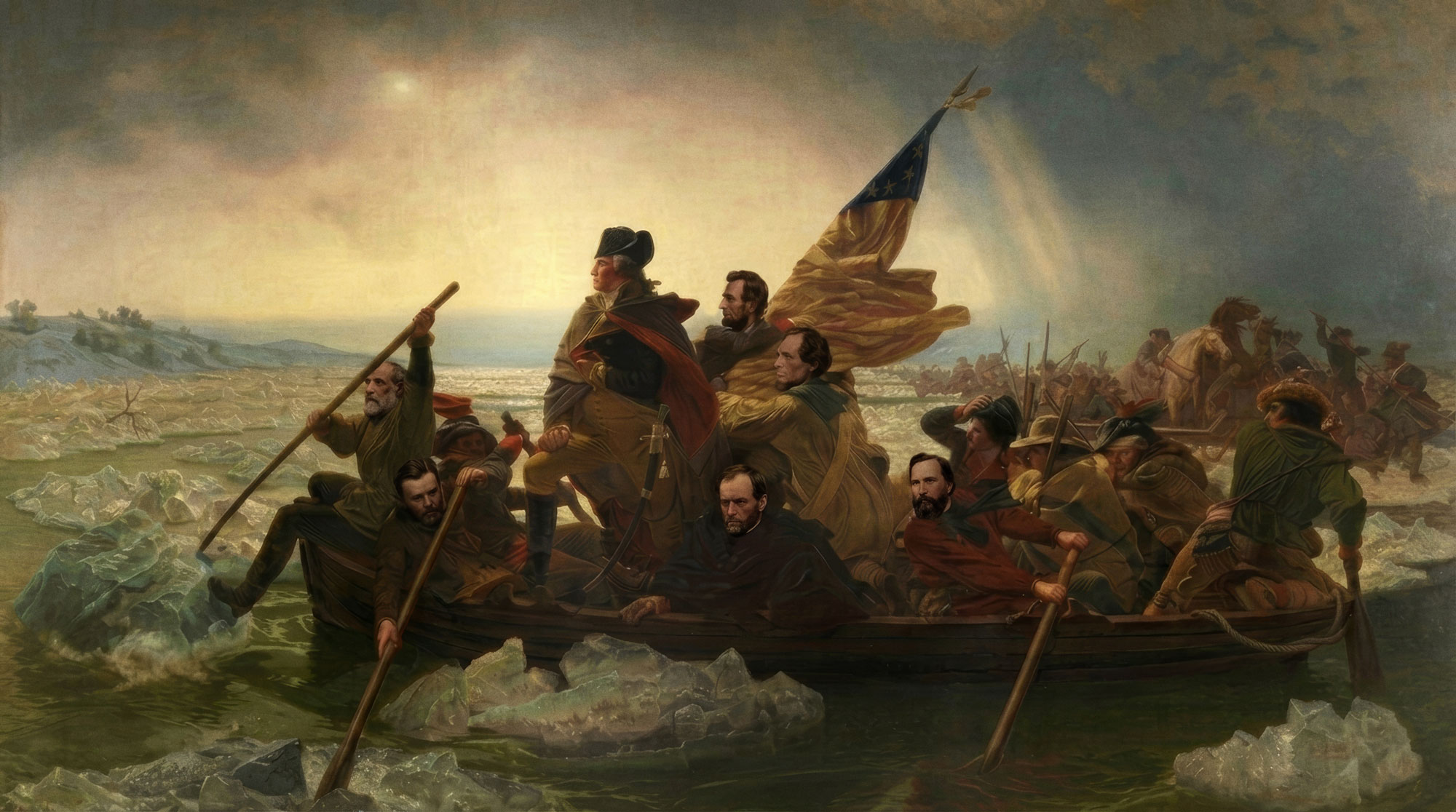
In this reimagining of Emanuel Leutze’s iconic 1851 painting “Washington Crossing the Delaware,” several Civil War figures are depicted aboard the Continental Army commander’s lead boat. They are (clockwise, from far left): Robert E. Lee, Abraham Lincoln, Jefferson Davis, James Longstreet, William T. Sherman, and Ulysses S. Grant.
The Last Men
The Civil War Testimony of the Last Revolutionary Veterans
By Allen C. Guelzo
In 1864, the Congress of the United States paused the interminable business of funding and managing the Civil War to pay attention to veterans’ pensions. The sheer size of the war effort was forcing Congress to revisit the extent of its pension system and to invent an enormous new bureaucracy for administering it that would, in the decades after the war, become the single largest agency within the federal government. A comprehensive new pension law had already been passed in 1862, as the number of pensioners was being swollen by the casualties of the war.1 But this newest pension bill had a very different and specific focus. On March 10, 1864, Congress took the unusual step of increasing by $100 per year the pensions “of each of the surviving soldiers of the Revolution … in addition to the pensions to which they are now entitled.”
Surprisingly, in 1864, there still remained a handful of living veterans of the Revolution. John Law of Indiana, the War Democrat who introduced the new pension legislation, estimated that there were at least 12 who had seen one kind of service or another between 1775 and 1783. In case any budget hawks were bothered by this additional outlay, Law added that the advanced ages of the veterans assured that the increases “will not be paid longer than three years.” And so, with that indelicate sweetening, the bill passed the House and sailed through the Senate with just one small tweak in the wording on March 28. President Lincoln signed it into law three days later, and the Washington National Intelligencer announced it on April 5. A few newspapers, as an act of celebration, took the trouble to publish the names of the 12 Revolutionary pensioners who would benefit from the new Congressional largesse.2
That announcement actually puzzled as many people as it pleased, since only a handful of Americans could have been aware that veterans of the Revolution were still in their midst. Who were these revolutionary soldiers who had survived one great national cataclysm, only to live to see a second? That was the question that nagged at two artistic brothers, Nelson and Roswell Moore, who were operating a successful photographic studio in Hartford, Connecticut. And the answer it suggested to the two brothers involved both a mission and an opportunity. They would record photographically these last living relics of the Revolution—all of them born a century before the Civil War (and 60 years before Joseph Saxton made the first American photograph)—and their faces would provide a living reminder that the Civil War was sharing the lifespans of the Revolution. Meanwhile, the photographs would also—or so they hoped—make the Moore brothers famous.
 Anne S.K. Brown Military Collection, Brown University Library
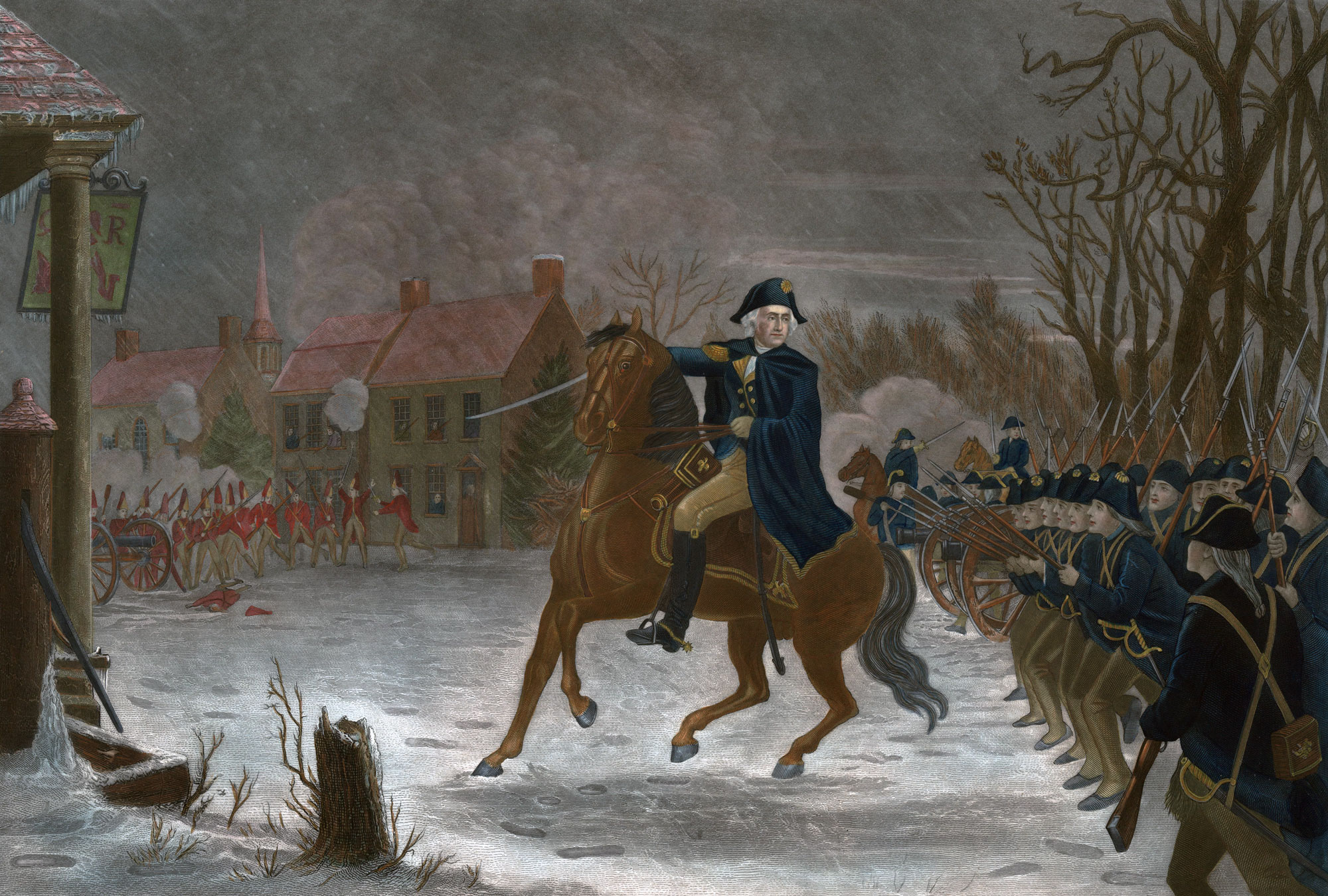
During the Civil War, northerners regularly drew connections between the Union cause and the Revolution. Abraham Lincoln himself invoked the Revolution in 1861, on his inaugural journey to Washington, when he described his boyhood reading about the Battle of Trenton (depicted here in an engraving from 1870) as the example of a struggle for “something even more than National Independence.”
This was not the first time northerners had sought to draw connections between the Union cause and the Revolution. Lincoln himself invoked the Revolution in 1861 on his inaugural journey to Washington when he described his boyhood reading about the Battle of Trenton as the example of a struggle for “something even more than National Independence; that something that held out a great promise to all the people of the world to all time to come.” A day later, in Philadelphia, Lincoln declared that he had “never had a feeling politically that did not spring from the sentiments embodied in the Declaration of Independence.”3 The new speaker of the House of Representatives, Galusha Grow, took the Revolution as his guiding star when he was sworn in on July 4, 1861: “Three-score years ago, fifty-six old merchants, farmers, lawyers and mechanics … met in Convention to found a new empire, based on the inalienable rights of man.”4 Even Stephen Foster was moved to write a new song in which “an old revolutionary soldier” who had “handled a gun/When noble deeds were done” pledged his loyalty to “my home and my country” in the Civil War as in the Revolution.5
 Library of Congress
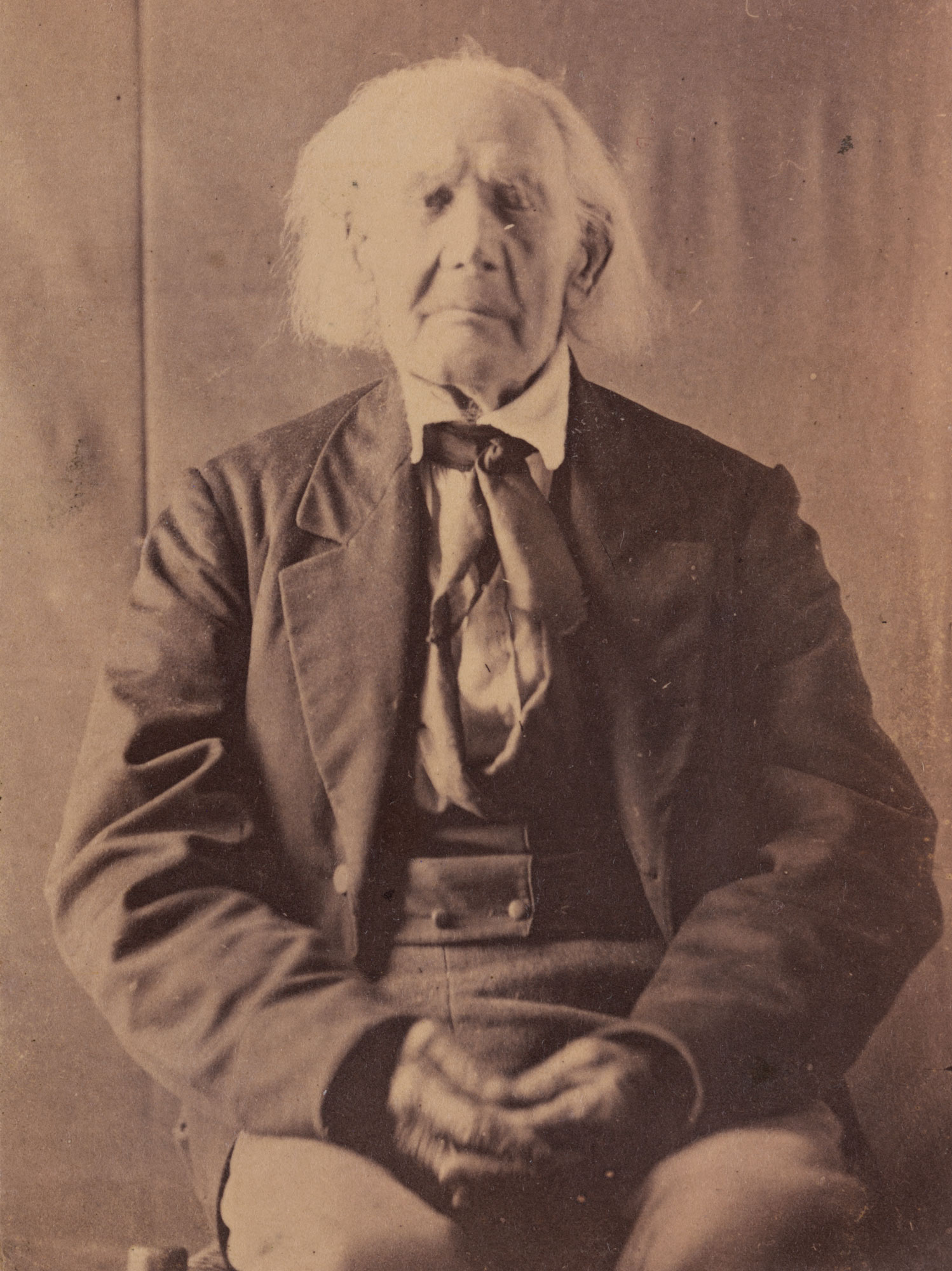
The first Revolutionary War veteran interviewed by Elias Brewster Hillard in the summer of 1864 was Samuel Downing (shown here), a 102-year-old resident of Edinburgh, New York. According to Hillard, the elderly veteran “denounces the present rebellion, and says he only wishes to live to see it crushed out.”
But speeches and songs were, after all, only acts of the imagination. The Congressional statute was not, nor would be the work of the Moore brothers. With addresses supplied by the Bureau of Pensions, the Moores began writing to the surviving pensioners almost as soon as news of the bill was published. They learned that five of the 12 were, in fact, already beyond their reach (Jonas Gates had died on January 14 at 101; John Pettingill was 97 when he departed this life on April 23), while a sixth was somewhere beyond the extent of federal authority in divided Missouri “in the country infested by guerrillas.”
Rather than delay any longer, Nelson Moore set off, photographic equipment in tow, to capture the remaining six, who were scattered in a long arc from Ohio to Maine.6 And remarkably, by August, the Moores were able to advertise that they had for sale, as cartes de visite, “likenesses of these few remaining patriots … and among them will be the last survivor of the American Revolution.”7
 Library of Congress
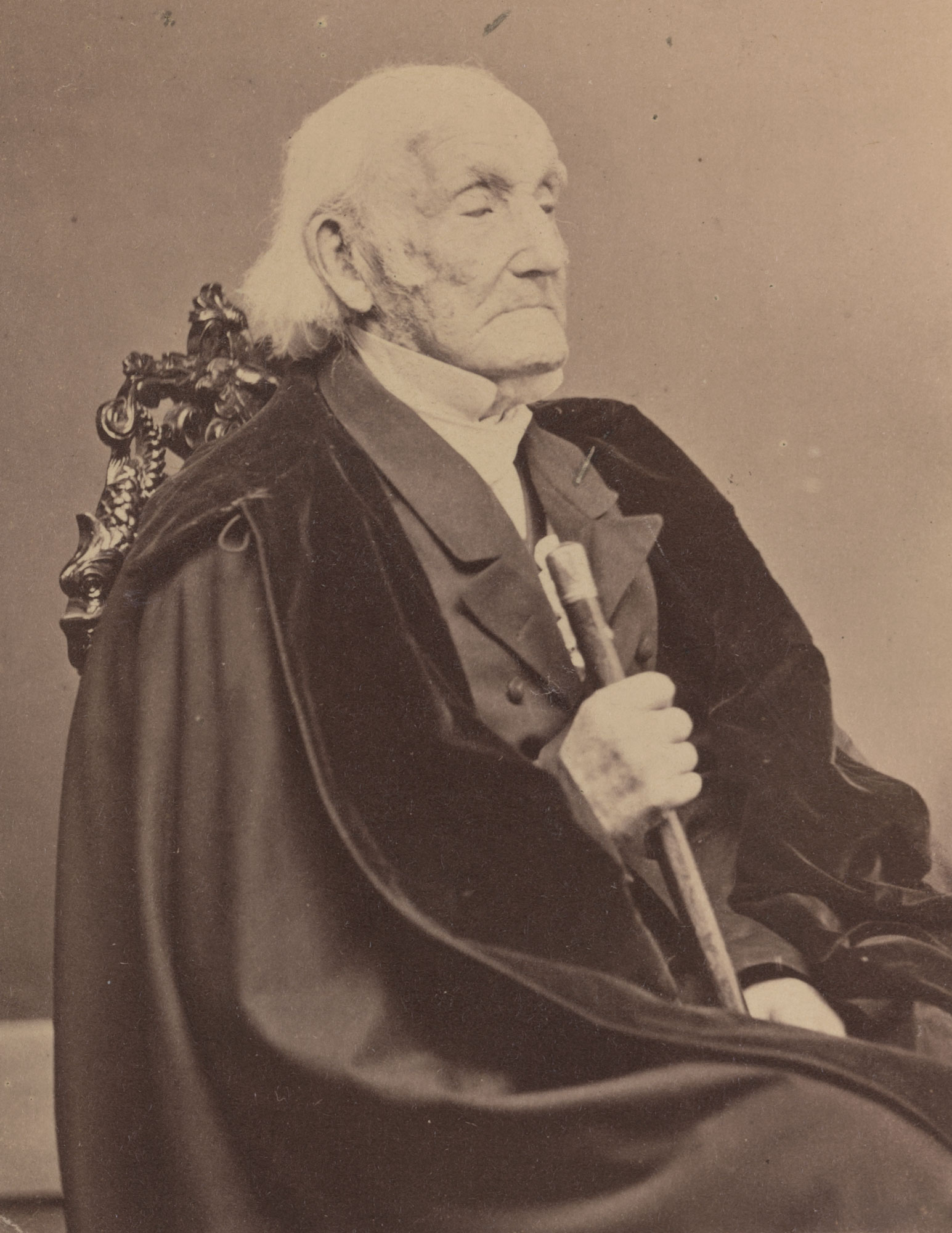
Reverend Daniel Waldo
Along with the photographs, the Moores announced that they were also planning on the publication of a book “containing a sketch of their lives, together with incidents of the experience,” by a “writer” who “has just returned from a visit to the homes of these men, where he received from their own lips the story of their lives.”8 The “writer” was an enterprising Connecticut clergyman, Elias Brewster Hillard, an ardent Unionist who had become pastor of the Congregational church in Kensington, Connecticut, in May 1860. He had no theological scruples about flying his political colors. A United States flag hung from the belfry of the church, and Hillard sponsored “the first monument to the soldiers of the Civil War erected in the country.”9 Since Kensington was also the Moores’ old hometown, Hillard was perfectly positioned to suggest taking the photographic record one step further. He would solicit from the lips of this last remnant of the Revolution’s soldiery an endorsement of the ongoing Union war effort, as if it were a blessing from the last apostles.
The first of the six Revolutionary veterans whom Hillard visited “in their homes” was Samuel Downing, 102, of Edinburgh, New York, northwest of Saratoga Springs and 180 wearying miles from Kensington. Even in the oppressive heat of July 1864, Downing was “altogether the most vigorous in body and mind of the survivors” Hillard interviewed. A runaway apprentice who had enlisted in the New York militia, he was part of the American forces that compelled the surrender of “Gentlemanly Johnny” Burgoyne at Saratoga, and “burnt thirteen candles … one for each state … when peace was declared.” But otherwise, his Revolutionary service was remarkably humdrum. What he did not mind telling Hillard, though, was what Hillard wanted most to hear: “He denounces the present rebellion, and says he only wishes to live to see it crushed out.” In fact, he said, “if the rebels come here, I shall sartainly take my gun.”10
Hillard pushed on from Edinburg to Syracuse, another long westward loop of 130 miles, where he planned to interview the Reverend Daniel Waldo, 101. To Hillard’s disappointment, Waldo had suffered a fall, and the “shock to his nervous system” sent him into coma from which there was no expectation of recovery. But Hillard garnered from Waldo’s family enough details of Waldo’s revolutionary service in the Connecticut militia to assure his readers that “in the present conflict with rebellion, he was intensely loyal, greatly desiring to live till the rebellion should be suppressed.”11
From Syracuse, Hillard headed straight west, past Rochester, to Lemuel Cook, who at 105 was “the oldest survivor of the Revolution.” Cook was the only horse soldier among the Last Men, and served (by his own account) from the onset of the Revolution until his discharge in 1784. Hillard was unsure how much credit to give Cook, since “the old man’s talk is very broken and fragmentary” and “he recalls the past slowly, and with difficulty.” But Cook delighted Hillard at least by exclaiming that, “terrible” as the Civil War was, “the rebellion must be put down!”12
It was easier for Hillard to make his fourth call, since Alexander Milliner (who was just six months younger than Cook) lived only 12 miles away. He also had a better memory and better stories to tell, since he had served as a drummer boy in George Washington’s elite personal Life Guard, from Long Island in 1776 to the British surrender at Yorktown. Even better for Hillard’s purpose, Milliner had enlisted in the Navy in the 1790s and even served aboard the frigate Constitution in the War of 1812. “His memory is clear,” Hillard reported, and “though he finds difficulty in giving long, connected accounts,” he had (like Lemuel Cook) no difficulty at all in expressing his disbelief “this country, so hardly got, should be destroyed by its own people.” In 1862, Milliner had even been onstage at a recruiting meeting in Rochester for the 140th New York Infantry.13
The clock was running down for the last two Revolutionary veterans, William Hutchings who lived on Penobscot Bay, in Maine, and Adam Link who was living in north-central Ohio (Link, in fact, died in mid-August). Hillard’s accounts of Hutchings and Link are sufficiently coy that it is likely he never interviewed either, but instead relied on notes from the Moore brothers. Link’s “part in the war” was “unimportant” anyway; what was of most interest to Hillard was Hutchings’ declaration that he “was deeply interested in the present conflict, his whole soul being enlisted in the cause of his country.”14
 History of the Town of Plymouth, Connecticut (Hillard); Illustrated popular biography of Connecticut (moore)
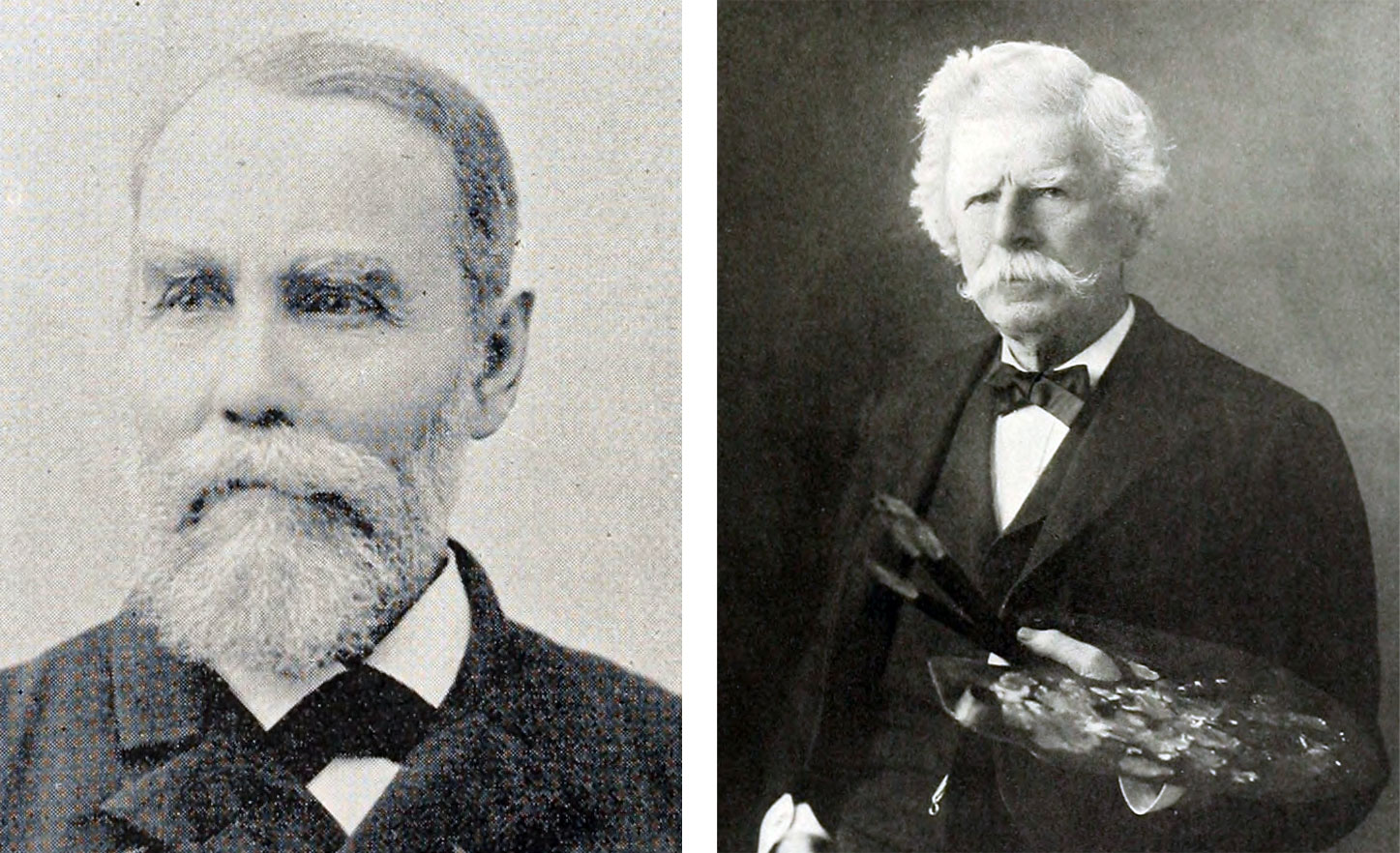
Postwar images of Elias Brewster Hillard (left) and Nelson Moore
The Hillard-Moore collection was published in Hartford near the end of January 1865 under the title, The Last Men of the Revolution: Containing a Photograph of Each from Life, Accompanied by Brief Biographical Sketches, and featuring albumen prints of the Moores’ photographs tipped into the book. Although they managed to obtain an endorsement from famed orator Edward Everett, there is no evidence that The Last Men of the Revolution attained any manner of best-seller status.15 After all, the war ended only four months later, and so the need for patriotic endorsements from Revolutionary centenarians quickly faded.
Nor did it acquire any great notoriety as a historical resource. Hillard was in search of patriotic celebration, and he was not overly inquisitive about the details of these veterans’ reminiscences if they yielded an encouraging endorsement of the Union war effort. Alexander Milliner might indeed have been a drummer boy in Washington’s Life Guard, but he was probably born in 1770 and only enlisted as drummer in 1780. William Hutchings’ “whole soul” might have been stirred by the preservation of the Union, but his Revolutionary service probably amounted to nothing more than six months in the local militia. Ironically, Lemuel Cook, who had the least to offer Hillard and the Moores in the way of historical memory, turned out to be the last of the group to die, just shy of his 107th birthday.16
Not that this necessarily hurt the ongoing fortunes of either the Moores or Hillard. Nelson Moore had never wanted to be a photographer only—he had originally studied painting under Daniel Huntington (later the president of the National Academy of Design)—and he “longed to resume his painting full-time.” After the publication of The Last Men of the Revolution, he turned his energies entirely to landscape painting in the style of the Hudson River School artists.17 Roswell Moore stayed with photography only slightly longer. He had begun as a daguerreotypist in the 1850s, and expanded into tintypes and cartes de visite during the Civil War. But unlike his brother’s, Roswell’s interests turned in more lucrative directions, including “the manufacture of buckles and other light hardware,” and his obituary in 1907 made no mention at all of either photography or The Last Men.18
Elias Brewster Hillard continued to serve the Congregational Church in Kensington until 1867, then at Plymouth, Connecticut, from 1869 to 1889, and finally in Conway, Massachusetts, until his retirement in 1893. “Thirty-eight years in all he exercised the ministry of the gospel,” declared a brief biographical entry in the Brewster family’s published genealogy, “and with his whole heart, with burning zeal, and the enlistment of every faculty of his being.”19 But also without any allusion to The Last Men.
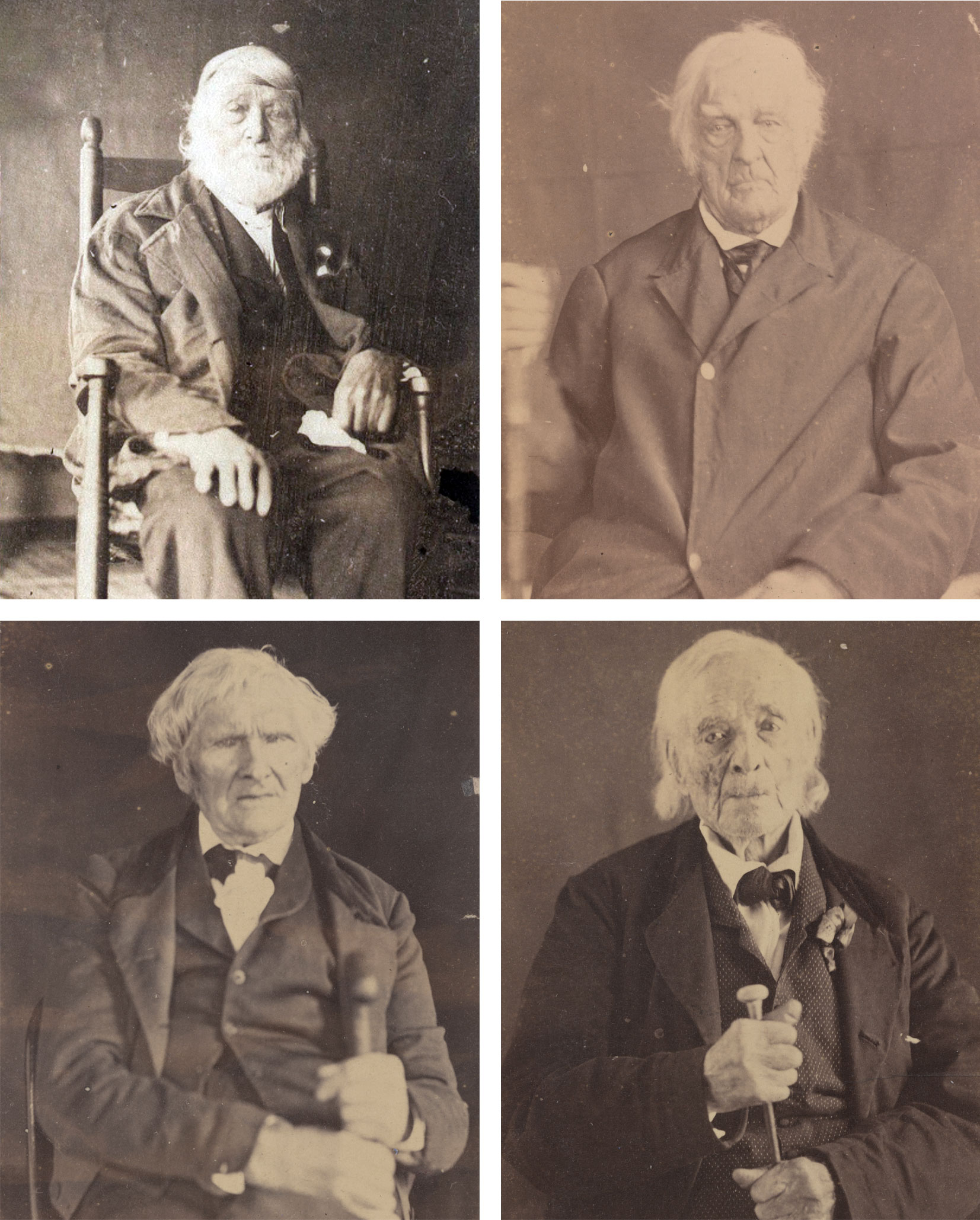 Library of Congress
Among the surviving Revolutionary War veterans Hillard profiled were (clockwise from upper left) Adam Link; Lemuel Cook; William Hutchings; and Alexander Milliner.
And yet, The Last Men of the Revolution did not quietly fade into invisibility. In 1948, the celebrated poet Archibald MacLeish (Hillard’s grandson) had published in Life Magazine a lavishly illustrated and generously worshipful article on The Last Men, and from there, the book awoke from its eight-decades-long slumber into a fresh series of reprints.20 It can be read today as a curiosity in mid-19th-century American publishing; or it can be appreciated as a unique effort to connect the turbulence of the Civil War with the nobility of the Revolution. Or perhaps MacLeish had it right when he said that anyone who was tempted at any time to think that the Revolution was an artifact of an “antiquated” past—anyone, in fact, who was “timid and afraid” that the principles of the Revolution “must now be surrendered”—would do well to gaze on the faces captured through the Moores’ photographs. At that moment, MacLeish added, we might “recall to mind Sam Downing’s 13 candles and the hope they stood for. That hope has not gone out.”
Allen C. Guelzo is Professor of Humanities in the Hamilton School for Classical and Civic Education at the University of Florida.
Irreconcilable Constitutions
Abraham Lincoln versus Jefferson Davis on the Meaning of Freedom
By James Oakes
On February 9, 1850, Henry Clay, the venerable “Great Compromiser” from Kentucky, rose in the United States Senate to propose a series of statutes and resolutions he believed would put an end to years of sectional wrangling over slavery. Those proposals—among them, to admit California as a free state, strengthen the Fugitive Slave Act, and use popular sovereignty to decide slavery in the new territories of Utah and New Mexico—would come to be known as the Compromise of 1850.
 Library of Congress
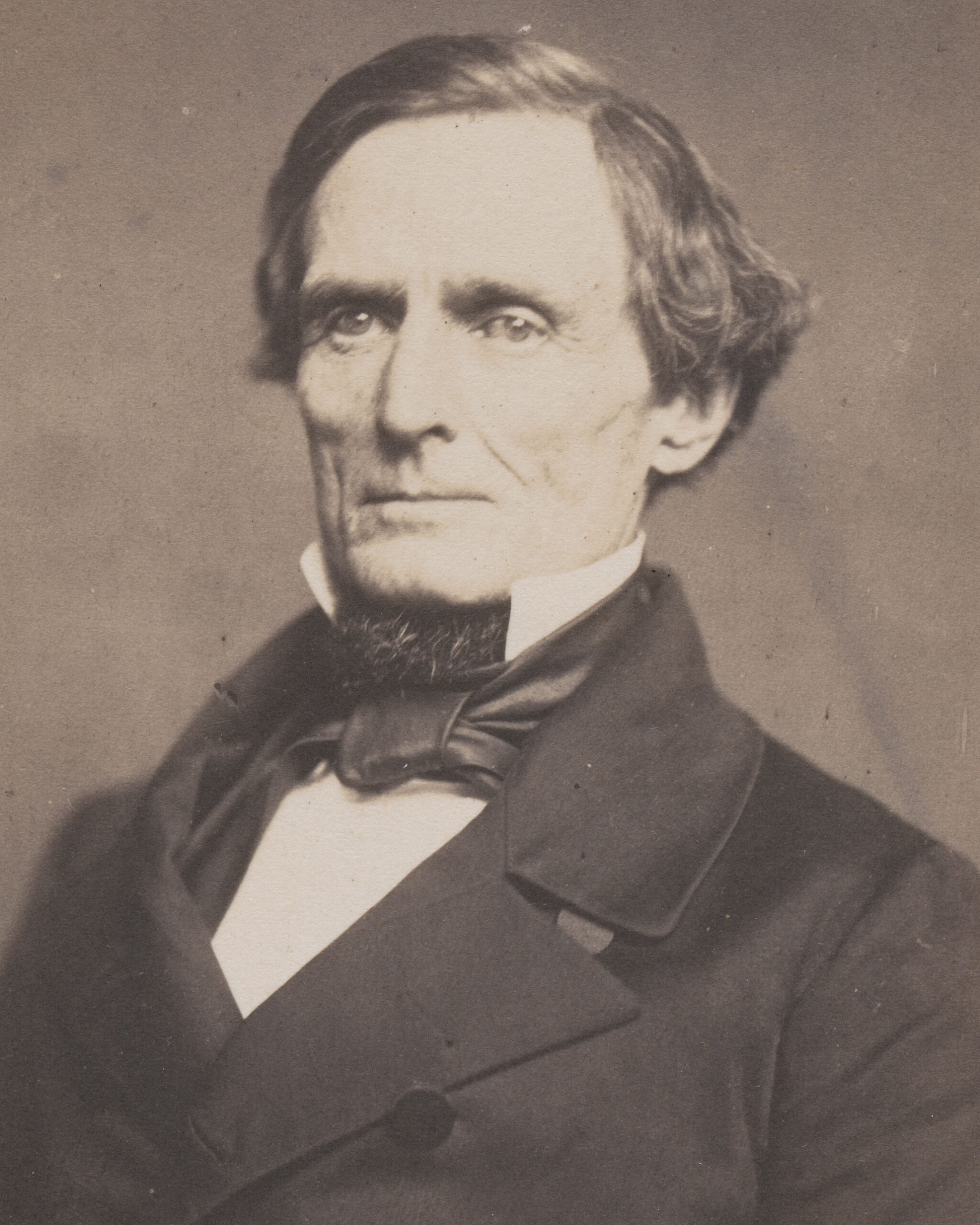
Jefferson Davis
A few days later, even before Clay could spell out the details of his proposal, Mississippi Senator Jefferson Davis took the floor and, for two days, elaborated on the reasons for his opposition. Congress, he said, was not authorized to ban slavery from the territories, it had no power to abolish slavery in Washington, D.C., nor could it regulate the domestic slave trade. Beneath these specific complaints was a deceptively simply claim: Just about all of Clay’s proposals were, in Davis’ mind, unconstitutional. Specifically, they violated the constitutional right to hold “property in man”—that is, slaves.1
Ten years later, Abraham Lincoln was vying for the Republican nomination for president when he traveled from his home in Springfield, Illinois, to New York City to speak to a gathering of party leaders at the Cooper Institute (now Cooper Union) about the sectional crisis that had barely abated in the decade since Clay’s compromise was adopted. Lincoln had conspicuously failed to support those compromise measures and in the years since had put his antislavery convictions front and center. Yet despite his having endorsed a number of specific antislavery policies, Lincoln’s speech highlighted another deceptively simple proposition: There was no such thing as a constitutional right to hold “property in man.”
The long debate over slavery is scarcely conceivable without these diametrically opposed interpretations of the Constitution. All of Davis’ proslavery politics followed logically from his claim that slaves were a constitutionally protected “species of property.” Similarly, all of Lincoln’s antislavery politics followed logically from his claim that the Constitution nowhere recognized slaves as property.
 National Portrait Gallery
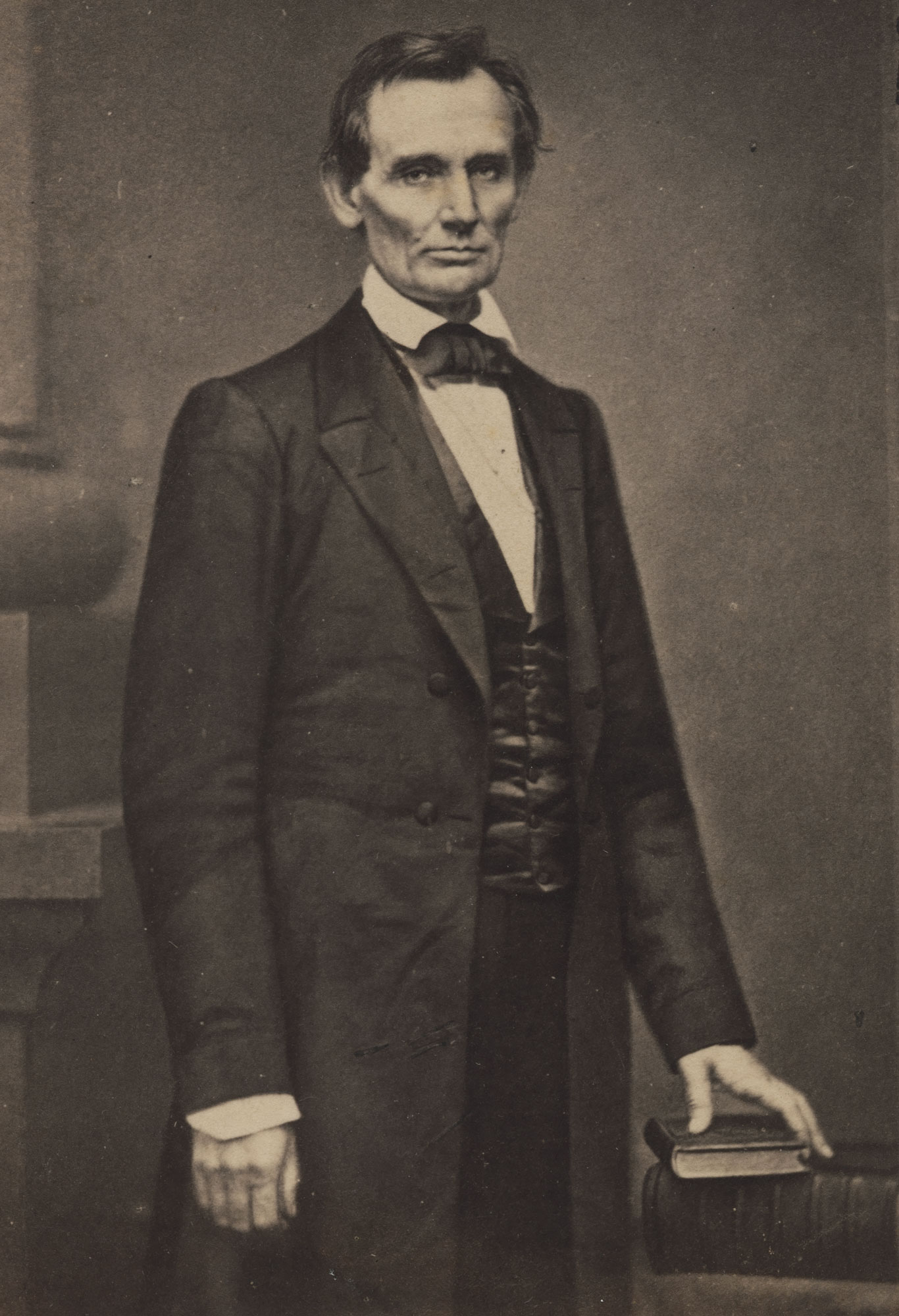
Mathew Brady made this photograph of Abraham Lincoln hours before he delivered his famous address at New York City’s Cooper Institute (now Cooper Union) on February 27, 1860.
Comparisons between Davis and Lincoln are nothing new. Scholars have pointed out that whereas Davis was thin-skinned and argued incessantly with his critics, Lincoln had a way of letting criticism roll off his back—even when his detractors angered him. Davis was notoriously authoritarian, whereas Lincoln gave a wide berth to his cabinet officers. Davis, the West Point graduate, mismanaged his generals, even to the point of sidelining some of the Confederate army’s most competent officers, notably P.G.T. Beauregard and Joseph E. Johnston. Lincoln, the military novice, eventually had a clearer conception of appropriate Union strategy, put aside petty squabbles, and made competence in the field his chief criterion for promotion of generals. When critics demanded the resignation of Ulysses S. Grant, for example, Lincoln declared, “I can’t spare this man. He fights.”
Here I want to offer yet another comparison of Davis and Lincoln: their profoundly different interpretations of slavery and the Constitution. Where most comparisons focus on the war years, military affairs, and the two men’s management styles, this comparison is highlighted in the 1850s, when American politics were constitutional politics.
 Library of Congress
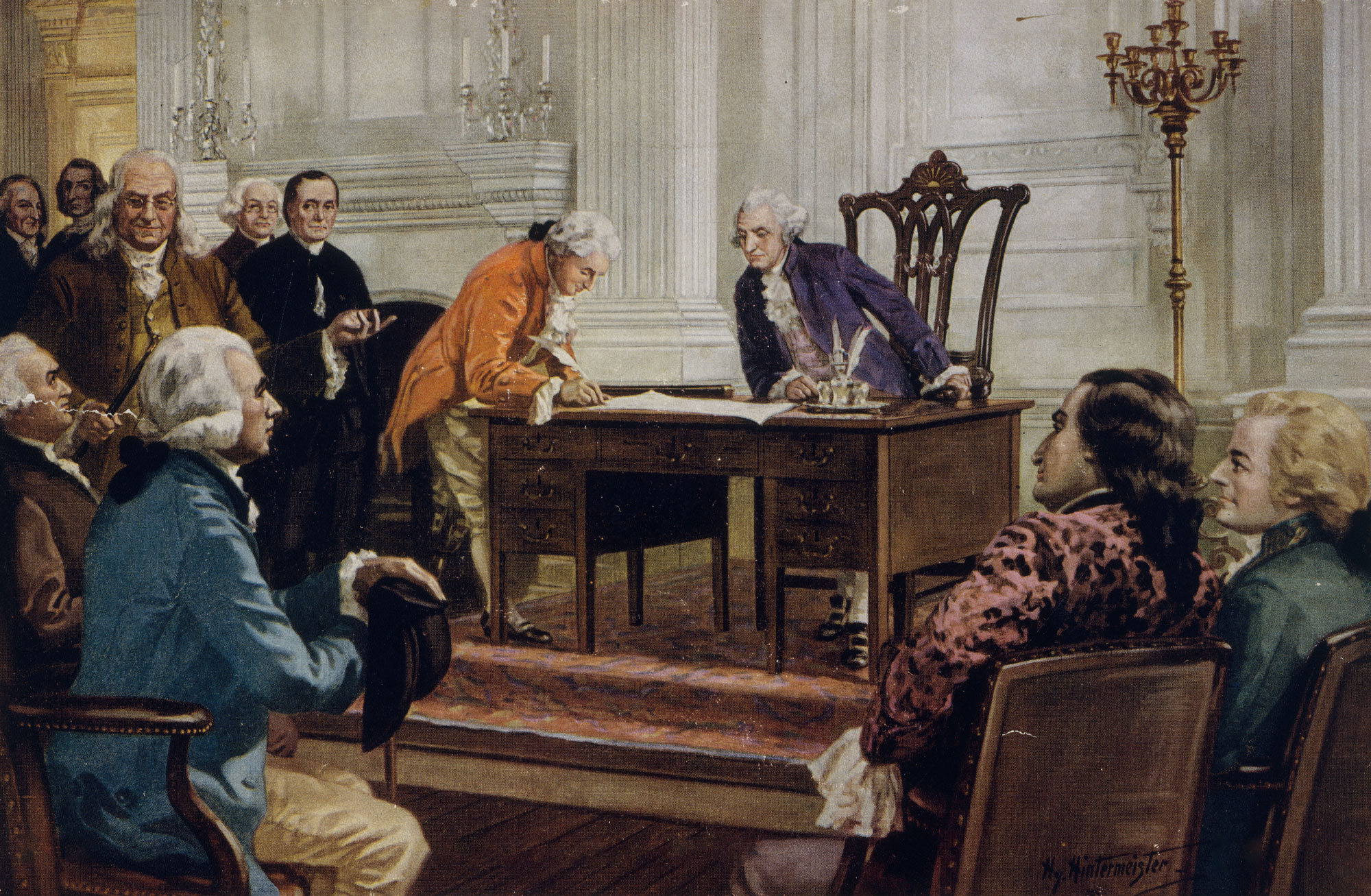
Abraham Lincoln’s and Jefferson Davis’ profoundly different interpretations of the Constitution embodied the core disagreement behind America’s widening sectional divide in the mid-19th century. Above: An early 20th-century work by Henry Hintermeister depicts George Washington, Benjamin Franklin, and others at the September 1787 signing of the U.S. Constitution in Philadelphia.
The first multivolume collection of Davis’ writings, edited by Dunbar Rowland, was published in 1923 under the title Jefferson Davis, Constitutionalist. That Lincoln was no less a constitutionalist was clear in the first public statement he ever made regarding slavery. In 1837, as a young politician and member of the Illinois Legislature, Lincoln argued that Congress could, “under the Constitution,” abolish slavery in the District of Columbia.
Two smart constitutionalists, positing two different interpretations of the Constitution, are led to endorse two profoundly different readings of federal policy regarding slavery. If you want to understand why there was a Civil War, these men’s irreconcilable argument is a place to start.
In interpreting the Constitution, Davis had the tougher job. Though he would occasionally claim—as would Chief Justice Roger Taney—that the Constitution expressly recognized a right of property in slaves, his argument was entirely inferential. Davis cited three clauses—the Fugitive Slave clause, the taxation clause, and the three-fifths clause. None of those referred to slaves as property but Davis insisted that they necessarily implied it. The Fugitive Slave clause guaranteed slaveholders the right to recovery of their slaves who escaped into free states or free territories. Davis inferred from this that the right to recovery of fugitive slaves was by definition a right of property. The Constitution allowed Congress to tax slaves at $10 per head, and here Davis argued that this could only mean that the Constitution recognized slaves as property. Then there was the Constitution’s three-fifths clause (providing that three-fifths of the enslaved population would be counted for determining both taxation and representation in the U.S. House of Representatives), which certainly recognized the existence of slavery and gave the slave states more influence in the House and the Electoral College. Davis believed this clause also recognized slaves as property, despite the fact that the clause referred to slaves as persons.
That reference—to slaves as persons—was central to Lincoln’s claim that there was no such thing as a right of property in slaves. He had been insisting on the fundamental humanity of slaves for several years before his speech on February 27, 1860. In strictly linguistic terms, Lincoln had the better case. The Fugitive Slave clause refers to slaves not as property but as persons held to service or labor. He took the northern position that this clause was a right of recaption (the peaceful, extra-legal act of retaking personal property, goods, or family members wrongfully taken or detained by another), not a right of property. Although Congress was authorized to impose a $10 tax on slaves, that authorization did not refer to slaves as property. Head taxes, poll taxes, or capitation taxes—as they are known—are levied on persons, not property. And the three-fifths clause established the principle that political representation was to be based on population (“numbers”) rather than property. All free persons were counted—men, women, and even children—and “three-fifths of all other persons.”
Lincoln’s speech highlighted this language. Nowhere in the Constitution are slaves referred to as property, he said, and no references to “property” have anything to do with slavery. On the contrary, everywhere in the Constitution slaves are referred to as “persons.”
The language of legal personhood had important implications for the politics of slavery. The Fifth Amendment decrees that “no person … be deprived of life, liberty, or property, without due process of law.” As persons, Lincoln reasoned, blacks accused of being fugitive slaves were entitled to the rights of due process.
Lincoln’s opposition to the expansion of slavery into the territories also rested on his argument that the Constitution did not recognize slaves as property. This was the central theme of his Cooper Union address. Southerners, Lincoln said, allude “to an assumed Constitutional right of yours, to take slaves into the federal territories, and to hold them there as property.” But “no such right is specifically written in the Constitution. That instrument is literally silent about any such right.”
As to Davis’ claim that the Constitution implied a right of property in slaves, Lincoln flatly repudiated it. Not only is the Constitution silent on the right to hold property in man, he said, but we “deny that such a right has any existence in the Constitution, even by implication.” Lincoln declared the Constitution explicitly referred to slaves as persons, never as property.
Lincoln acknowledged that the Fugitive Slave and three-fifths clauses were concessions the Founders made to slavery at the Constitutional Convention of 1787. But these were exceptions in a document that overwhelming favored freedom. Throughout the Constitution, he argued, freedom was the rule, slavery the exception. Slavery was merely a local institution, whereas freedom was national.
If slaves were legal persons a host of antislavery policies were permissible, even under a Constitution that prohibited the federal government from abolishing slavery in a state. Long before he became president, Lincoln endorsed most of those policies. As president, he would sign bills to abolish slavery in Washington, D.C., and ban slavery from the territories. He would protect the due process rights of accused fugitives. He even hinted that he might support regulation of the coastwise domestic slave trade.
Davis, starting from his forceful premise that the Constitution protected slaves as property, rejected all such proposals. The “preponderating majority” of northerners, he complained, would restrict slavery from all federal territories, abolish it in Washington, and “withdraw from it the protection of the American flag wherever it is found on the high seas.”
Because fugitive slaves were property, Davis reasoned, they were not entitled to due process. Congress could not deprive slaveholders of their property by abolishing slavery in the District of Columbia. Slaveholders had as much right to carry their enslaved property into the U.S. territories as a northern settler had to ride his horse there. If slaves were property wherever the Constitution was sovereign, they were legally protected as property on slave ships plying the coastwise trade.
Davis denounced the popular antislavery theory that freedom was national, that slavery “derives its existence from municipal [i.e., state and local] law,” that the right to property in slaves was created by individual states, not by the Constitution. If the Constitution treated slaves as property, southern slave law would apply in the territories, in the nation’s capital, on the high seas, and even in the free states. Davis would make slavery national.
It is not too much to say that the cause of the Civil War can be discerned in Jefferson Davis and Abraham Lincoln arguing whether the Founders saw slaves as persons or property. It was an argument that surely had its origins in a Constitution that contained both proslavery and antislavery elements, a Constitution that reflected a conflict over slavery that was already present at the creation of the republic.
James Oakes is the author of The Crooked Path to Abolition: Abraham Lincoln and the Antislavery Constitution. His forthcoming book is “What Has the North To Do With Slavery”: The Antislavery Project and the Civil War.
Loyalists and Unionists
Comparing Internal Dissent in America’s Two Greatest Conflicts
By Gary W. Gallagher
The American Revolution and the Civil War established a fragile new republic and then subjected it to a profoundly disruptive test of national resiliency. Loyalists who retained their allegiance to Great Britain and Unionists in the Confederacy offer a promising comparative approach to the two conflicts. Constraints of space limit the focus of this essay to the respective white populations, though the experiences of enslaved and free African Americans in the two wars invite similar attention.
Loyalists to England and Unionists in the South, though 80 years apart, aligned in many ways. Both occupied some political positions, served in regular and irregular military units, supplied intelligence about local conditions, caused considerable friction that aggravated the opposing side’s leaders, and suffered financial, social, and legal targeting by the more numerous Patriots and Confederates. In the end, neither compromised the other side’s war effort in anything like a decisive way.
As is almost always the case, pinning down numbers can be tricky. Older estimates placed Loyalists at about one-third of the colonial population, but recent scholarship lowers the figure to 15–20 percent of the 2 million white residents in 1776. New York proved a bulwark of Loyalist sentiment, with other concentrations in Pennsylvania, New Jersey, South Carolina, and Georgia. Of the 5.5 million white people in the Confederacy, perhaps 1 in 10 should be considered unconditional Unionists who opposed secession and never embraced the incipient slaveholding republic. They maintained a presence in every state but proved most influential in the Upper South. Mountainous East Tennessee was a leading stronghold, with other concentrations in western North Carolina, the uplands of Arkansas, and the Hill Country of Texas. By far the most spectacular showing by Unionists came in Virginia, where they broke with secessionists in 1861 and engineered the departure of 48 counties to create the loyal state of West Virginia in 1863.
 Anne S.K. Brown Military Collection, Brown University Library
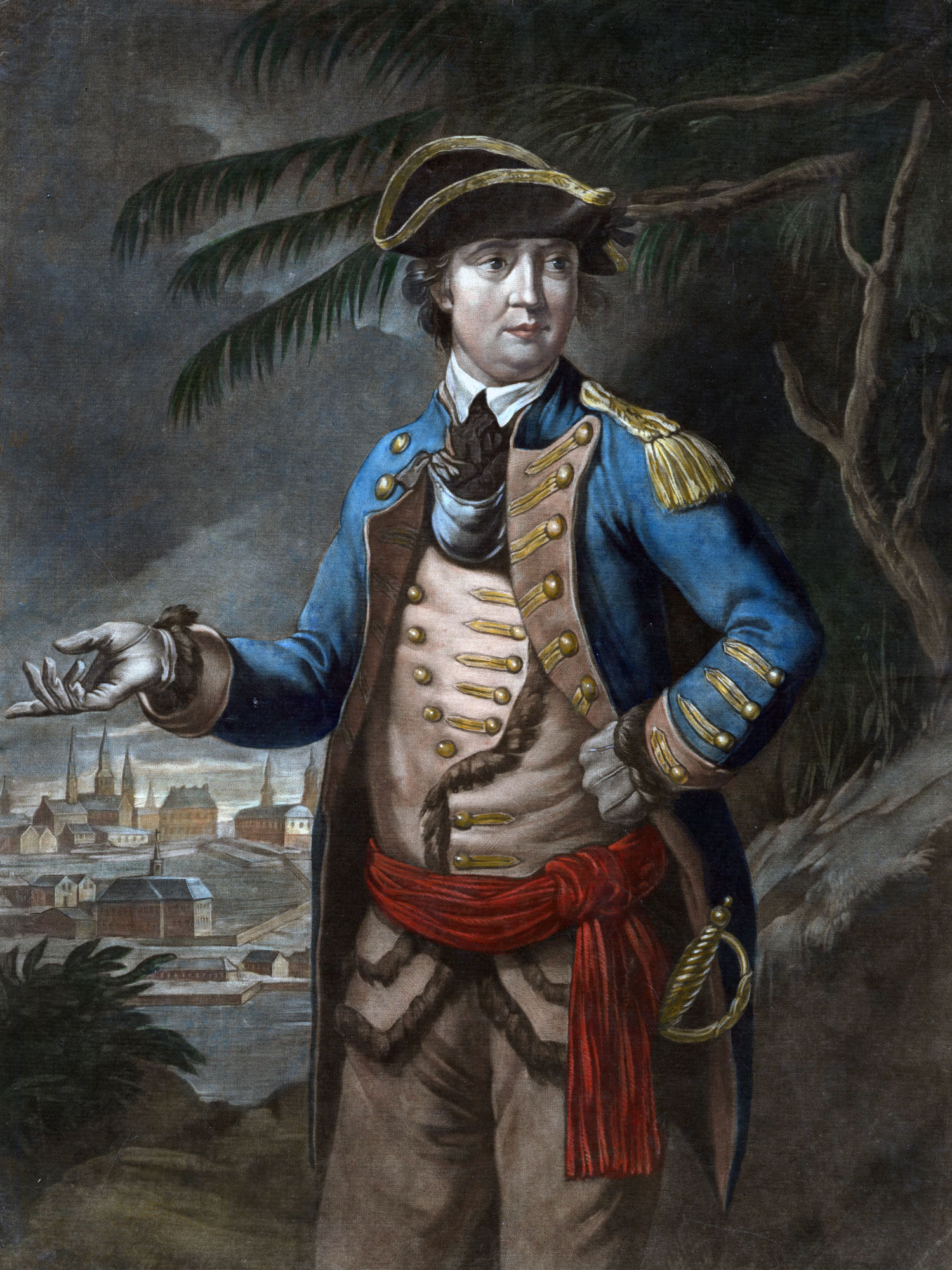
This 1776 portrait by Thomas Hart shows Benedict Arnold as a Continental Army officer, several years before his defection to the British army and Loyalist cause.
Loyalists and Unionists made noteworthy military contributions. Between 19,000 and 25,000 men served in regular Loyalist units, and numerous others spent at least some time in various militias. Those figures should be compared with the 230,000 individuals who fought for the Patriot cause. Loyalists served in all military theaters, fought in partisan groups that disrupted communications and supply, and accounted for all or most of the British combatants in several engagements. Benedict Arnold, one of the ablest Patriot generals early in the war, ended the conflict as a notorious Loyalist officer in the British army. Lieutenant Colonel Banastre Tarleton’s British Legion, which operated most famously in the southern campaigns, was a Loyalist unit. Because Britain relied heavily on Loyalists in the South between 1778 and 1783, fighting in the Carolinas and Georgia took on the character of a vicious civil war.
Southern Unionists similarly supported United States military efforts against the Confederacy. According to the 1860 census, approximately one million white males of military age lived in what became Confederate states. Of those, the Richmond government mobilized between 850,000 and 900,000. At least 100,000, about 10 percent of the pool, joined regiments recruited from the white Unionist populace, while others formed guerrilla bands in mountainous or upland regions. Tennessee and what became West Virginia each mobilized more than 31,000 Unionists, which together accounted for about 60 percent of the total. Approximately one-third of all Virginians who had graduated from West Point remained loyal to the United States, and of the six Virginian colonels in United States service in the winter of 1861, only Robert E. Lee resigned his commission. General-in-Chief Winfield Scott, a Virginia native, was a staunch Unionist, as were two other accomplished U.S. military figures—Admiral David G. Farragut, a Tennessean, and Major General George H. Thomas, another Virginian.
 Anne S.K. Brown Military Collection
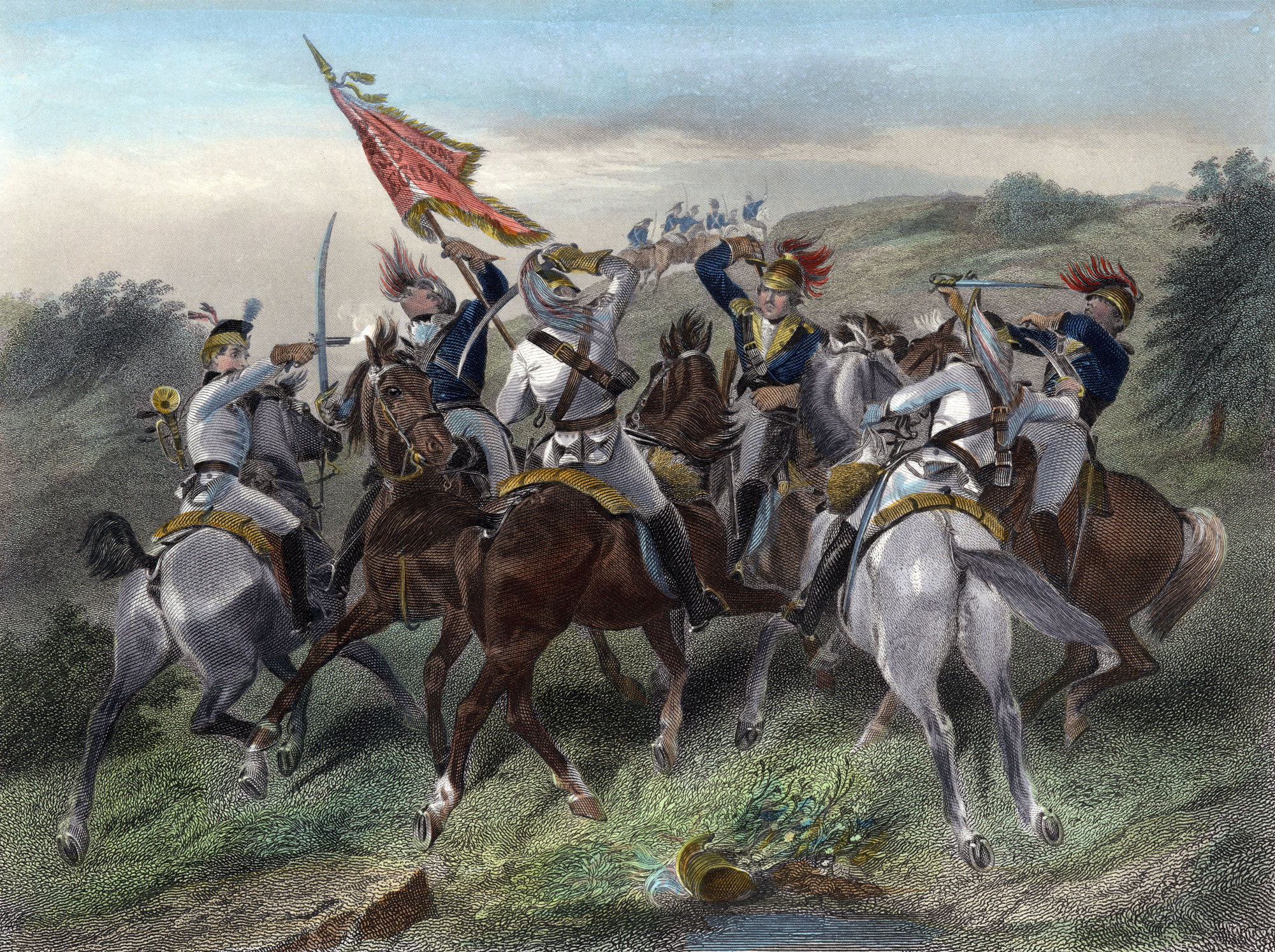
During the Revolution, Loyalist units played notable roles in many engagements, including at the Battle of Cowpens (depicted above), fought in South Carolina in January 1781.
Relative contributions to important battles illuminate one difference between Loyalist and Unionist soldiers. During the Revolution, Loyalist units played notable roles in many engagements, especially in the Carolinas, where Major Patrick Ferguson proved to be a successful recruiter until his death in battle in October 1780. Loyalists’ participation in military action between March 1780 and March 1781 included fighting at the siege of Charleston, the Waxhaws, Ramsour’s Mill, Camden, King’s Mountain, Cowpens, and Guilford Court House. Preeminent in notoriety among Tory units, Tarleton’s British Legion gained a reputation as an effective, relentlessly brutal outfit that cut a bloody swath through the Carolinas and inspired fear and hatred among the Patriot population.
The Civil War produced no Unionist equivalent of King’s Mountain or Cowpens, where Loyalists played leading roles in strategically significant battles. Neither the western nor the eastern theater featured a major action in which Unionist regiments shaped the outcome in a crucial way. Nor did any of the more than 50 white Unionist regiments from Confederate states match the record or reputation of Tarleton’s Legion. Some Unionists served in units that fought in major U.S. armies, while many others carried out garrison duty, dealt with guerrillas, and protected lines of supply and communication. For example, the 13th Tennessee Cavalry, recruited mostly from white Unionists in West Tennessee, made up more than 45 percent of the garrison at Fort Pillow in April 1864. Excoriated by Confederates as “Tennessee Tories” and “traitors to their race,” they fought alongside United States Colored Troops when Nathan Bedford Forrest’s men captured the fort on April 12. Forrest’s soldiers infamously killed almost two-thirds of the African Americans; nearly 100 of the white defenders also perished, most of them after they tried to surrender. Newton Knight’s anti-Confederate band in Mississippi, often cast as Unionists, has received considerable attention from historians—and Hollywood, in the 2016 movie Free State of Jones and earlier films—though its activities remained utterly marginal to the broader course of the conflict.
 New York Public Library (Franklin); Library of Congress
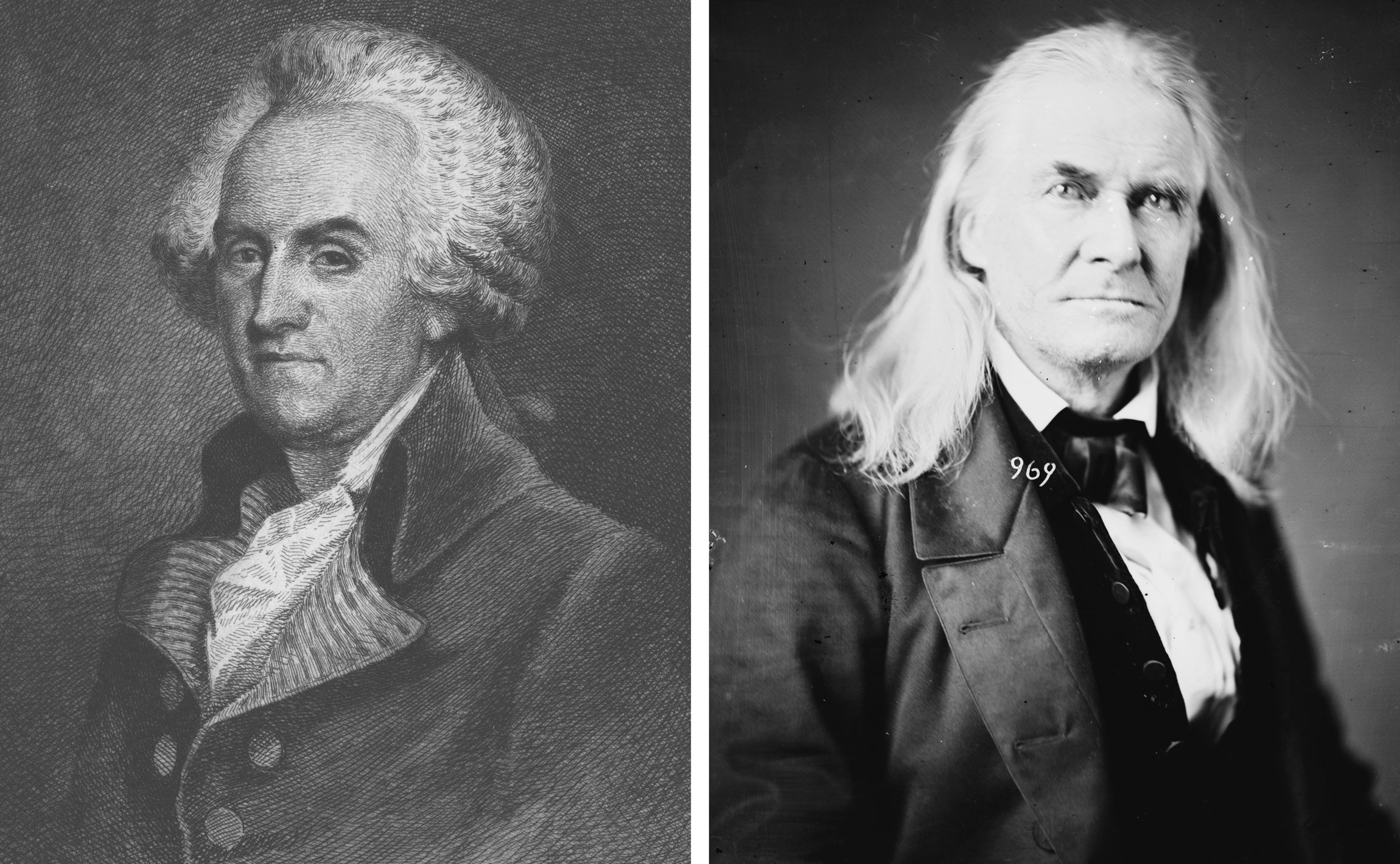
William Franklin (left) and Edmund Ruffin
Cities during both wars offer an interesting comparative dimension. During the Revolution, Loyalists controlled four of the five most populous cities for extended periods. New York, second in size to Philadelphia, became a Loyalist stronghold in August 1776 and remained the hub of Britain’s American operations until the end of the conflict. Loyalist refugees who suffered persecution from Patriots flocked to the city as the war dragged on. For example, William Franklin, son of Patriot stalwart Benjamin Franklin and the last royal governor of New Jersey, remarked that he “removed to New York … from New Jersey where he suffered greatly by the Rebells for his loyalty.” Philadelphia experienced nearly a year of Loyalist domination in 1777–1778, and Newport, Rhode Island, the fifth largest colonial city, experienced nearly three years between December 1776 and October 1779. British forces captured Charleston, the most populous southern city and fourth largest overall, in May 1780 and remained in charge until December 1782. Together with Savannah, which the British seized in December 1778 and held until July 1782, Charleston proved vital as a secure base for operations overseen first by Henry Clinton and later by Charles Cornwallis.
Five of the 10 most populous cities in the Confederacy spent most of the war under Union control. In 1861, tenth-ranked Wheeling, Virginia, proclaimed itself home to the “restored government” of the state under provisional governor Francis H. Pierpont and in 1863 became the capital of West Virginia. Between February and June 1862, U.S. military successes transferred power to Unionists in Nashville (eighth), New Orleans (first), Norfolk (ninth), and Memphis (fifth). All four cities became magnets for white Unionist refugees and enslaved people seeking to escape bondage. Union control of New Orleans, by far the largest city and busiest port in the Confederacy, effectively closed the Mississippi River as an economic artery for the rebellious republic. Not surprisingly Confederates resented Unionists in these cities. North Carolinian Catherine Ann Devereux Edmondston wrote in June 1863 about a sister who resided “near to that den of oppression—Memphis. She has suffered severely for the Tories came to her house whilst she was sick in bed, ransacked it from top to bottom, took her silver, such of her clothes as they wished, her husband’s instruments & horses & carried him off a prisoner & threw him into Jail.”
As when Edmondston used the word “Tories,” people on both sides during the Civil War deployed Revolutionary War terms. A few examples illustrate this phenomenon. In early 1865, Chief Justice Salmon P. Chase remarked that numerous “loyalists of Texas favor universal suffrage as a matter of safety.” Earlier in the war, New York lawyer George Templeton Strong described one southern man as a “thorough-going loyalist” who welcomed Union men from the North. In June 1861, the old fire-eater Edmund Ruffin complained that parts of Virginia were infested with “many tories” who should be compelled “to serve in the army against their northern friends, or to leave Va. & join them.” A woman in South Carolina commented in March 1863 about the Cumberland Mountains of Tennessee: “The people all about there are Tories, thieves & vagabonds, & civilization almost unknown.” Just after the war, former Confederate general Jubal A. Early passed through Alabama while traveling from Virginia to Texas. “Got dinner at Hiram Smith’s a vile old Tory in Fayette,” Early wrote in his diary on June 21: “[W]e passed for Yankees and he charged us no bill…. All of this part of Alabama is for Union.”
The British government and the Lincoln administration tended to overestimate numbers of Loyalists and Unionists. The British most obviously expected too much from southern Loyalists in the last several years of the Revolutionary War. As for Lincoln, he initially believed a mass of Unionists would step forward to oppose secessionists. His First Inaugural Address closed with a hopeful affirmation of latent Unionist sentiment that directly linked events in 1861 to the Revolution’s Patriots: “Though passion may have strained it must not break our bonds of affection. The mystic chords of memory, stretching from every battlefield and patriot grave to every living heart and hearthstone all over this broad land, will yet swell the chorus of the Union, when again touched, as surely they will be, by the better angels of our nature.” Lincoln later accepted the reality of widespread support for the Confederacy and encouraged establishment of alternative Unionist governments in various states that could help suppress the rebellion and serve as a bridge toward reestablishment of the Union. Andrew Johnson, one of the two or three most notable southern Unionists, served in Nashville as military governor of Tennessee from March 1862 until he assumed the vice presidency in March 1865.
 The Picture Gallery of Canadian History, Vol. 2 (1945)
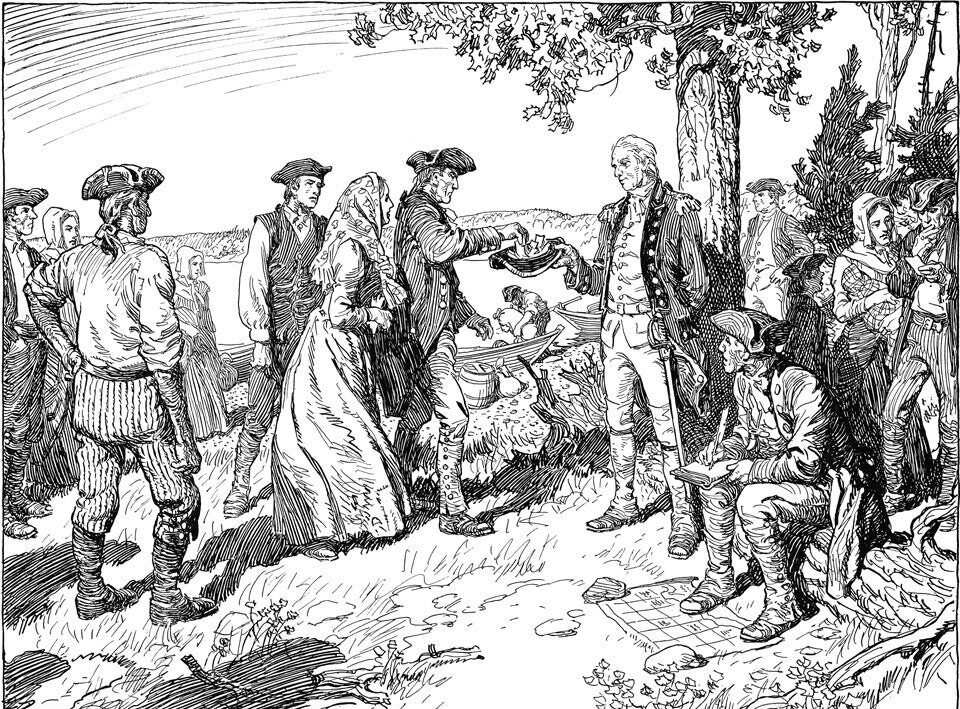
Loyalists who emigrated to Canada at the end of the Revolution draw lots for land on which to settle.
Loyalists and Unionists differed markedly in their postwar situations. The former had supported a failed cause, lost much of their property, and sometimes been imprisoned. Perhaps 70,000, about one in six, emigrated to England, Canada, the Caribbean, and elsewhere. Unionists in the former Confederacy stood with the winners, and individuals such as Andrew Jackson Hamilton of Texas, who had left the state in July 1862 because of alleged plots against his life, participated in Reconstruction state politics. Elizabeth Van Lew, a Richmonder who created a spy ring that passed intelligence to Union officials during the war, headed the city’s Post Office between 1869 and 1877. Often called Scalawags who had betrayed the white South, the old Unionists endured social ostracism not unlike what they had endured under Confederate rule.
Gary W. Gallagher is the John L. Nau III Professor of History Emeritus at the University of Virginia.
Southern Yankee Doodles
The American Revolution in Confederate Culture
By Anne Sarah Rubin
When the members of the Confederate Provisional Congress arrived at their temporary quarters, the Alabama Senate Chamber, on February 4, 1861, they walked into a “tastefully and beautifully decorated” space. Local residents had donated a variety of pictures and portraits to dress up the room. Among John C. Calhoun, Andrew Jackson, and some noted Alabamians, there were no fewer than three images of George Washington. One portrayed him as a general, one delivering his Second Inaugural Address, and the third was the true prize: an original Gilbert Stuart portrait of the first president, given pride of place in the center of the room.1 Washington, the father of the country that these men had just abandoned, would oversee the creation of their new nation.
 University of Georgia Libraries (Cobb); New York Public Library (Marion)
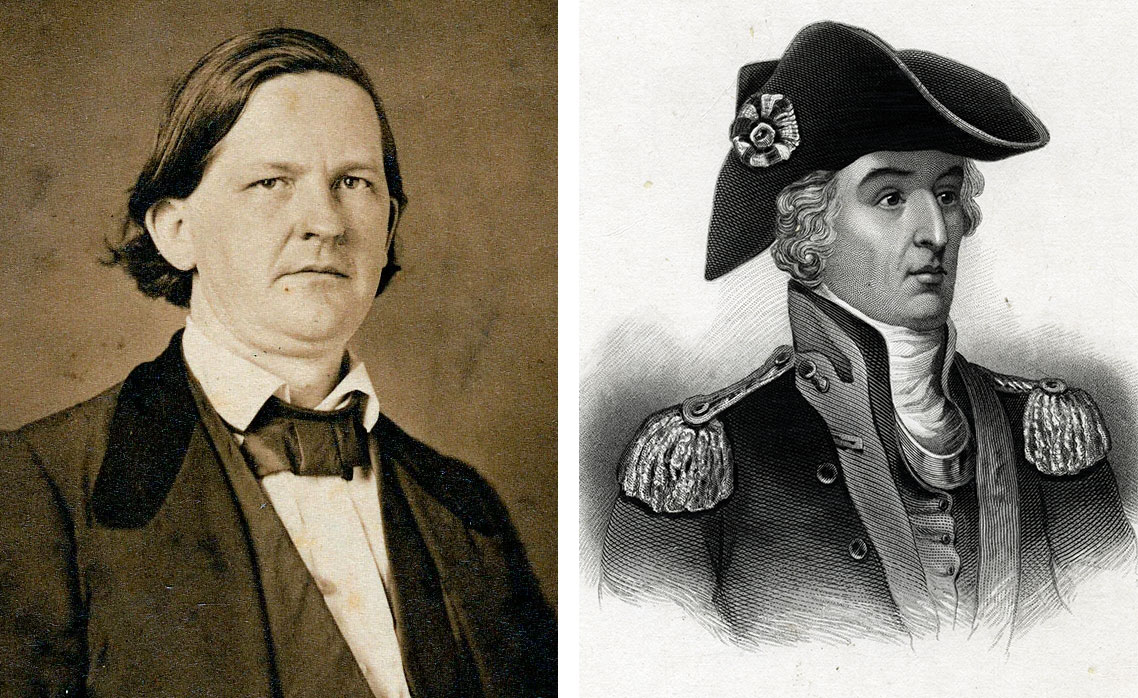
Thomas R.R. Cobb (left) and Francis Marion
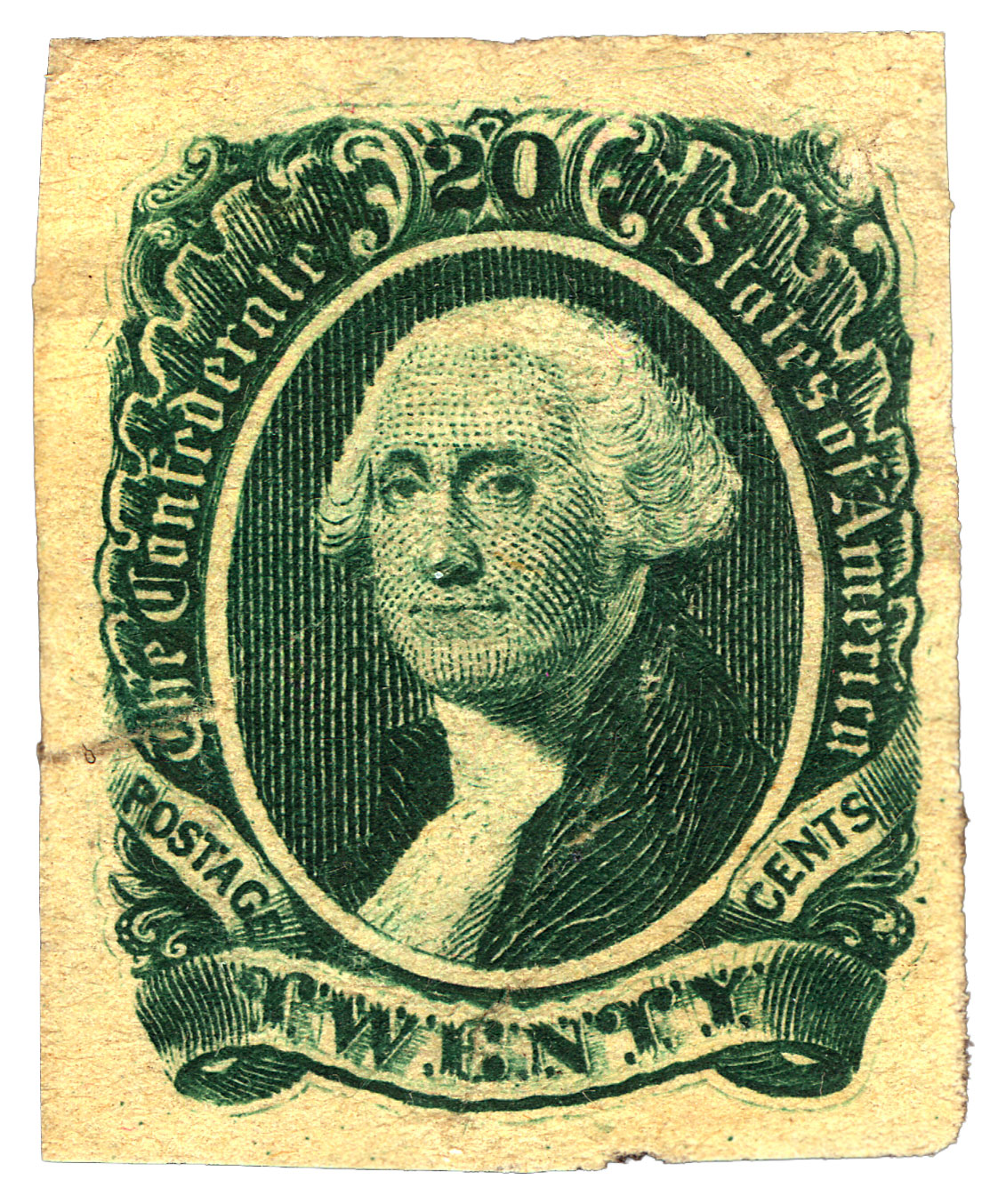
But in leaving the United States of America, the new Confederates did not leave their beloved Washington behind. Rather, he was everywhere in the symbols and iconography of the Confederate States of America. His image appeared on a postage stamp and on five different denominations of Confederate currency. On the Seal of the Confederate States he sat astride his horse, right hand raised and pointing south, dressed in his military uniform, complete with epaulets and tricorn hat. Modeled on the statue of Washington in Richmond’s Capitol Square, the image that graces the Seal of the Confederate States is surrounded by a wreath of entwined wheat, corn, rice, tobacco, sugar cane, and of course cotton—the main agricultural products of the new nation. In a burst of literalism, Confederate congressman Thomas R.R. Cobb of Georgia actually proposed that the new country be named the “Republic of Washington,” though he was voted down.2 Jefferson Davis scheduled his official inauguration for Washington’s birthday in 1862, claiming the second most important American holiday (after July 4) for the Confederacy.
 National Postal Museum
George Washington was everywhere in the symbols and iconography of the Confederate States of America, including on the 20-cent stamp shown above.
Washington was the most prominent Revolutionary figure Confederates invoked, but he was certainly not alone. In the first weeks of the Provisional Congress, Washington was often twinned with General Francis Marion, the legendary Revolutionary “Swamp Fox.” Later, as Robert E. Lee rose to prominence, Confederates made much of both the Revolutionary military service of his father, Henry “Light-Horse Harry” Lee, and his ties to Washington through marriage (and distant ancestors).3 Nor were the connections limited to leaders, whether Revolutionary or contemporary. Even ordinary southerners could draw connections back through the generations, and link, in the parlance of the time, “Seventy-Six and Sixty-One.”
In the American Revolution, Confederates found a recipe for their present-day nation, a language of legitimation. They cast themselves as the true heirs of the Founders, fighting back against supposed northern greed and fanaticism. As Confederates sought first to inspire and later to sustain their people, they drew on the patriotic example of colonists fighting for seven years, surviving material hardship, and eventually vanquishing a more numerous and better-equipped foe, to both inspire people to support the new nation and later to sustain them as their own struggle for independence seemed to break down. In their own minds, Confederates were not destroying the Union; they were restoring it to its earlier glory. They were not rebels, but patriots. Their ancestors had fought a glorious revolution to create a great nation; Confederates would do the same. Rather than representing a challenge to the ideals of the Founders, the Confederacy would be the perfection of their vision.
 The Library Company of Philadelphia
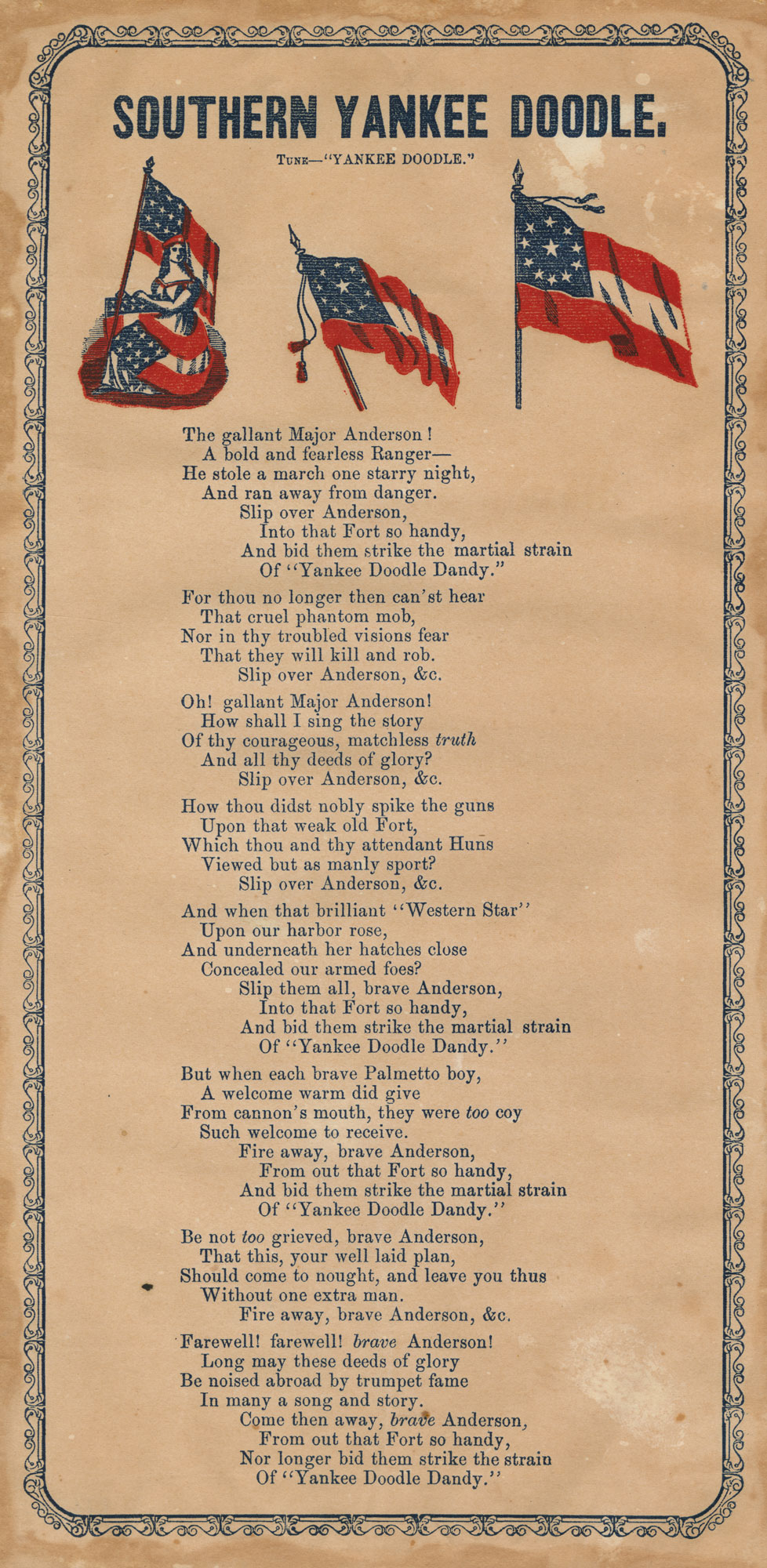
Confederates made the case that they were guardians of America’s revolutionary ideals by using the tools of popular culture, including songs like “Southern Yankee Doodle,” which mocked Major Robert Anderson for failing to hold Fort Sumter in April 1861.
Confederates thus used the language of ancestry to emphasize their connection to the past. Whether an individual southern soldier had descended from a Revolutionary fighter was largely irrelevant. What mattered was that Confederates, as a whole, cast themselves as a people apart. They were the Anglo-Saxon Cavaliers to the northern Puritans and immigrants. Indeed, northern Founders like Benjamin Franklin and Samuel and John Adams were rarely mentioned. In this construction, the courage and fortitude of the Revolutionary generation flowed through Confederate veins: those of women as well as men, yeomen as well as aristocrats, Mississippians as well as South Carolinians.
Too, when Confederates cast themselves as the guardians of Revolutionary ideals, they avoided discussing the issue of slavery. The word rarely appeared in southern evocations of the American Revolution, and when it did, it was usually in the rhetorical sense of Confederates fearing enslavement to northern masters. This silence on the subject of racial slavery suggests that Confederates used the Revolutionary War to shift the terms of debate, and to make the war more palatable to conditional Unionists (who were pro-state’s rights but anti-disunion), non-slaveholders, and outside nations.
Confederate leaders made this case to ordinary southerners by using the tools of popular culture. In poems and songs, conversation and letters, northerners and southern Unionists were repeatedly damned as “Tories,” and Union soldiers as “Hessians” (playing on the many immigrants in the northern ranks).4 These more popular forms illustrate the tremendous resonance the American Revolution had among the general Confederate public. While comparatively few readers might have been expected to wade through detailed treatises on the true intentions of the Constitution’s framers, even a child could appreciate the significance of a picture of George Washington on a stamp or adorning a broadside, or laugh at a new version of an old song. Revolutionary iconography had been a staple of political culture since the 1790s, and it provided a popular shorthand for expressing loyalty to party, state, or nation. Appropriating the instantly familiar to make the war comprehensible was a sure strategy for securing loyalty, for it meant that the new nation was not so different from the old. Preserving the Revolutionary past made it easier for new Confederates to reject the American present.5
“The Star Spangled Banner” became “The Stars and Bars,” which began:
Oh! say do you see now so vauntingly borne,
In the hands of the Yankee, the Hessian and Tory,
The flag that once floated at Liberty’s dawn,
O’er heroes who made it the emblem of glory?
Do the hireling and knave
Bid that banner now wave
O’er the fortress where freemen they dare
to enslave?
Oh! say has the star-spangled banner become
The flag of the Tory and vile Northern scum?
“Southern Yankee Doodle” mocked Major Robert Anderson for failing to hold Fort Sumter in April 1861, while “The New Yankee Doodle” expressed Confederate contempt for northerners in general:
Yankee Doodle had a mind
To whip the Southern traitors,
Because they didn’t choose to live
On codfish and potatoes.
Yankee Doodle, doodle doo,
Yankee Doodle dandy,
And so to keep his courage up,
He took a drink of brandy.
No longer a symbol of home-grown resistance, “Yankee Doodle” had become a caricature of all that was weak and unmanly about Confederates’ foes.6
As Confederates sought to encourage enlistments, spur patriotism, and ultimately fight despair, they called upon Confederate men to live out the patriotism of their more direct ancestors, the common soldiers of the Revolution. Poems, songs, and stories invoked Revolutionary victories on southern soil at Sullivan’s Island and Yorktown, Cowpens and King’s Mountain.7 The image of the Revolutionary War soldier spurring on the younger generation pervaded Confederate calls to arms. In a song called “The Spirit of ’76—The Old Rifleman,” an old man put on his buckskin suit and ventured forth to inspire the new crop of soldiers:
We’ll teach these shot-gun boys the tricks,
By which a war is won;
Especially how seventy-six
Took tories on the run!
Another, “Seventy-Six and Sixty-One,” sought to conjure the “spirits of the glorious dead!” to lend their inspiration to their southern sons, while “The Spirit of ’60” referred to a resurgence of “the old spirit of ’76.” When Mrs. Frank Wilson of Raleigh, North Carolina, presented a Confederate flag to the local Oak City Guards in June 1861, her husband read a poem of his own writing, encouraging “Patriots! Warriors! Freedom’s Sons!” to “meet as your fathers met the foe!”8 A poem directed at Marylanders called upon the “sons of Sires, of manly deeds, who died for love of right” to emulate their forbears and rise up in revolution against Yankee despotism. Apparently some were moved by the poetry, for the Southern Monthly reported that the Maryland regiments in the Confederate army “have adopted the title of ‘the Maryland Line,’ which was so heroically sustained by their patriotic sires of the first Revolution….”9
Confederate women and men both turned to the Revolutionary experience to find comfort in times of trouble. The war went on for much longer than Confederates had expected, and when the people feared that all might be lost, they were reminded of the bleak times in the Revolutionary War that eventually changed for the better. Confederates were repeatedly reassured that their ancestors had been in a much more difficult spot, and had overcome far worse trials than those they were presently experiencing. In January 1862, for instance, readers of the Montgomery Mail were told that “in the Revolution there was more suffering and more destitution than will happen to us if the war should last for fifty years. We are in a better position for carrying on a war than almost every other people, and should not complain of hardship.” A piece in the Charleston Mercury, after the double Confederate defeats at Gettysburg and Vicksburg in July 1863, pointedly argued that “if Generals Lee and Bragg and Johnston were to-morrow beaten in the field, we would not be in as desperate a condition as our fathers were when General Washington, vanquished at Long Island, Germantown, and White Plains, and with a handful of men under his command, attacked Princeton in the dead of winter.” The American Revolution proved that selfless dedication to the cause of liberty could triumph over a more numerous and better-supplied foe, and Confederates were encouraged to keep that lesson before them at all times. “Think of the men of the Revolution,” Confederates were told in an article reprinted around the country in 1863, “when the entire South was overrun by the British and the Tories!… Are we any less than they?”10
Analogy was not to be destiny. The Confederacy ultimately had to yield to the United States, as the Founders and Revolutionary generation surely would have wished.
Anne Sarah Rubin, a Professor of History at the University of Maryland, Baltimore County, is the author of several books on the Civil War, including Through the Heart of Dixie: Sherman’s March in American Memory (UNC Press, 2014).
Fighting for the Father of the Republic
Celebrating Washington’s Birthday in the Union armies
By Zachery A. Fry
As they huddled around campfires in February 1863, Private Harvey Reid and his comrades in the 22nd Wisconsin Infantry had so far avoided the worst of the war. Assigned to garrison duty in Kentucky and Tennessee since mustering into federal service the previous September, Wisconsin’s “Abolition Regiment” narrowly missed the recent bloodletting at Stones River. Still, the demands of marching, drilling, and confronting a hostile population far away from loved ones conspired to sap the energy of many soldiers, leading to what Reid called “too much ‘croaking’ in the army.” The 22nd was far from alone in this regard. Commanders at every echelon, from regiment to field army, recognized that a drop in morale at the front could imperil an already stalemated Union war effort. Commemorating George Washington’s birthday on February 22 provided an opportunity to refocus commitment, and commanders in each theater of operations directed that elaborate ceremonies be conducted for just that purpose. The fetes that followed, complete with patriotic airs and speeches from field grade officers, “revived our dormant patriotism,” Private Reid wrote home. The 22nd “again feel as we did last summer, and are prepared to enter the field with a proper appreciation of our duties and of the contest in which we are engaged.”1
Washington’s birthday commanded near-sacred observance in the mid-19th century, making it a touchstone common to every Union field army in the war’s early 1863 nadir. From Virginia to Mississippi and beyond, and often at the insistence of official orders from higher headquarters, regiments gathered to commemorate the nation’s founding and tie their service to that of the Continental Army 80 years earlier. Arriving on the heels of the Emancipation Proclamation, Washington’s birthday that year also provided a moment for introspection about the war’s purpose relative to the founding principles. Even more practically, as a powerful “Copperhead” antiwar movement burned across the North that cold winter, Union soldiers used the day’s activities to rally their resolve at the front and shame lukewarm patriots at home.
 National Portrait Gallery
William Rosecrans
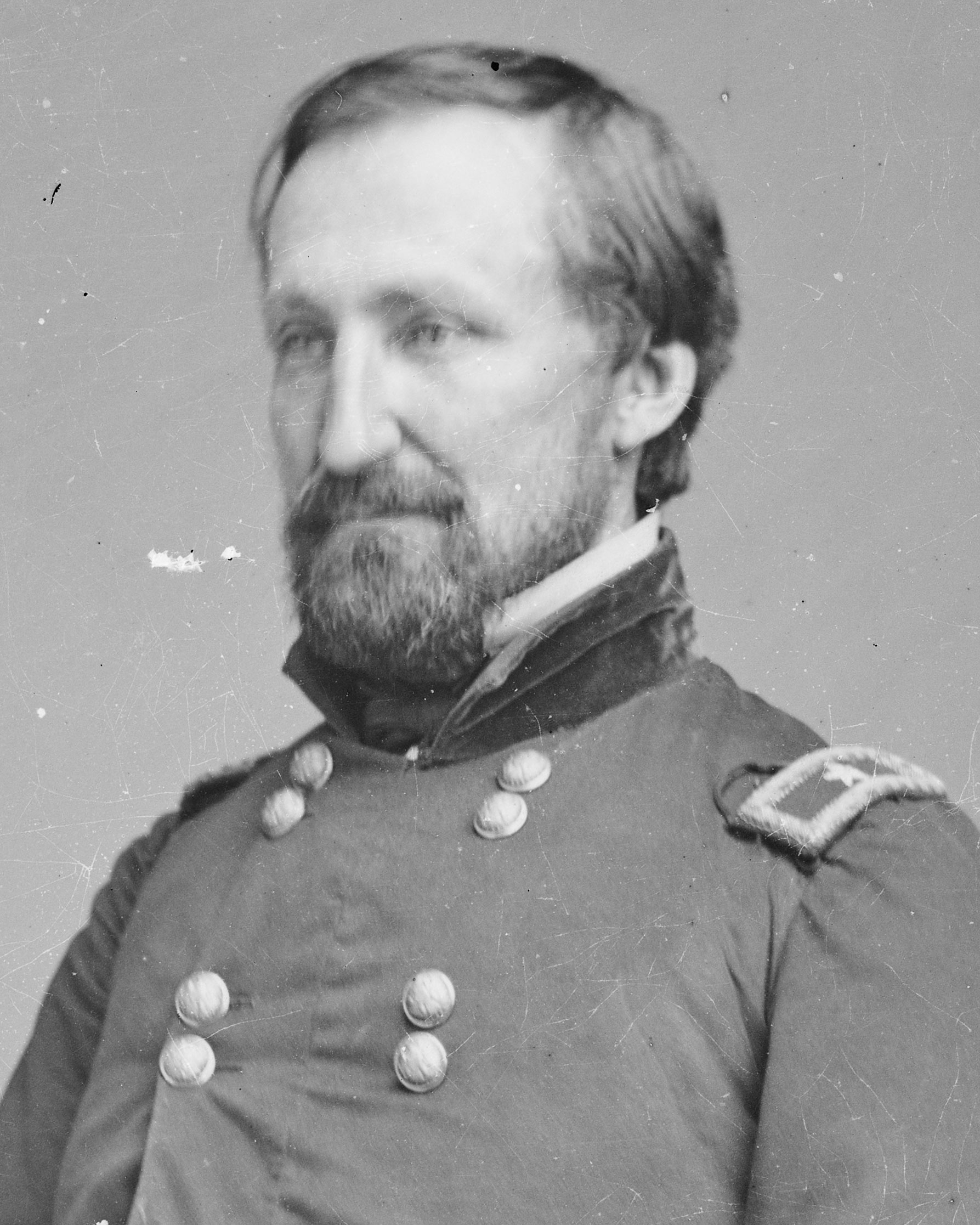
At battle-scarred Murfreesboro, Tennessee, on the morning of February 22, Major General William Rosecrans issued orders to the Army of the Cumberland for a “national salute … fired at sunset by one battery of each division” in commemoration of the nation’s first president, “the great representative man of this nation, who fought for its independence, laid the foundation of our freedom, and set up the frame-work of the most free, reasonable and just government for a great nation, that has ever been seen in the tide of time.”2 Private Elias H. Whitmer, a soldier-correspondent from the 79th Pennsylvania Infantry, wrote home to the Lancaster Daily Evening Express that Rosecrans’ order and the ensuing ceremonies throughout the army proved that “they were celebrating a grand, magnificent[,] peculiar affection which binds the soldier to the dead heroes who have offered their lives in the establishment or preservation of our Government.” The Cumberland men would need such motivation when the coming campaign season stretched the army and its commander to the breaking point.3
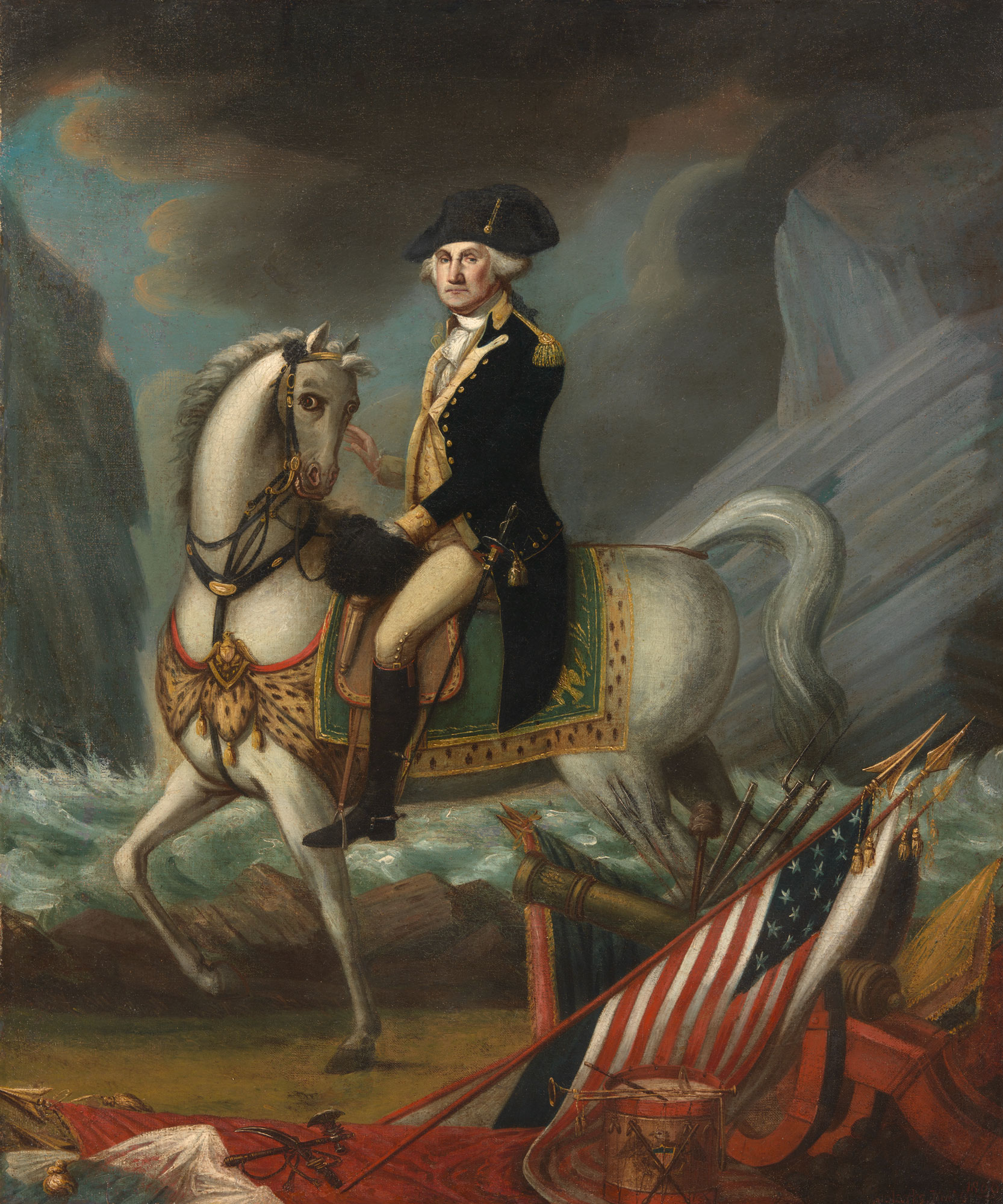 National Portrait Gallery
In February 1863, Union soldiers across the country celebrated George Washington (depicted above in a William Clarke portrait from 1800) on his birthday. The festivities “revived our dormant patriotism,” noted a Wisconsin private.
Midwestern soldiers in Major General Ulysses S. Grant’s sprawling western command held similar ceremonies. Lieutenant Emanuel Giesy of the 46th Ohio Infantry, reflecting on Washington’s birthday and the anniversary of his own enlistment, wrote that he had left home to defend a republic “erected by the great and good men of the Revolution.” To his horror, however, “those with whom we in former days acted, are determined to join hands with traitors and this rebellion; instilling the poison of secession into all by a bold and public attack upon the great and good Washington,” he wrote.4 Nearby, officers of the 111th Illinois Infantry turned attention in their ceremony to “the blood of our patriotic fathers … crying to us from every battle field of the Revolution to avenge the insults heaped upon the flag—the emblem of our nation’s greatness and glory.” Part of the vengeance “crying to us from beneath Mount Vernon’s heights,” the officers insisted, must be emancipation. Slavery was “not only the cause of the war” but also the logistical backbone of the rebellion, and Washington’s birthday provided the occasion for the Illinois officers to advocate the “arming” and “officering” of African Americans in Union blue.5
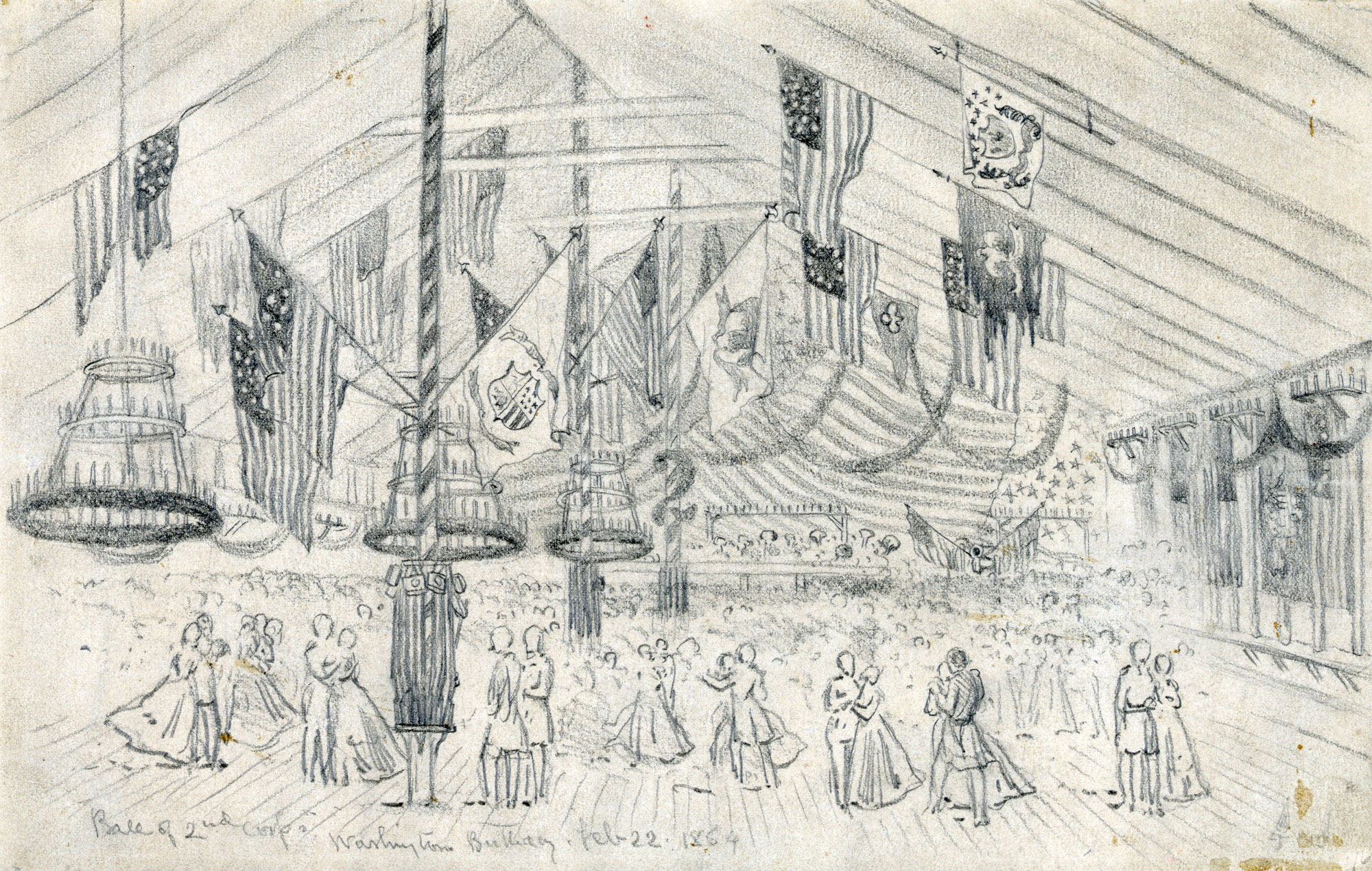 Library of Congress
Commemorations of George Washington’s birthday on February 22, 1863, provided members of the Union armies an opportunity to refocus their commitment to the cause. Above: An Edwin Forbes sketch of the birthday ball held the next year by the Army of the Potomac’s II Corps.
In Virginia sat the embittered Army of the Potomac, back from its disastrous “Mud March” and under the new command of Major General Joseph Hooker. The veterans of many hard-fought engagements lazed along the Rappahannock, still dejected from their crushing defeat the previous December at Fredericksburg and lamenting the army’s miserable winter, which some referred to as its “Valley Forge.”6 On the 22nd, however, orders went out from headquarters for each corps of the army to render a sharp artillery salute at noon. Some officers supplemented this with their own instructions, such as Major General Daniel Sickles, who enjoined his III Corps to remember that the “anniversary of the birthday of the Father of our Republic—our greatest leader in war and our wisest sage in peace—inspires every true soldier with fresh zeal in the sacred task of maintaining the Union which Washington established.”7 A blizzard left 12-inch snowdrifts between Falmouth and Belle Plain, but the icy commemoration continued. “If you had been here yesterday,” Private John Pardington of the Iron Brigade wrote to his wife the next day, “you would have thought there was a big Battle here the way our Batteries fired there guns in Honor of Washington Birthday.”8 Theodore Dodge, adjutant of the 119th New York Infantry, scribbled in his diary near Aquia Creek that 68 guns of the army’s XI Corps discharged their salutes “by couplets and very well fired too—regularly as clockwork.”9
The XI Corps, of which Dodge and his New Yorkers were a part, performed more than artillery salutes that day. Prompted by Wlodzimierz Krzyzanowski, commander of the 58th New York Infantry, European-born officers of Brigadier General Carl Schurz’s division used the occasion to pen a manifesto to President Lincoln pledging their unflinching loyalty to the war effort. Eleven field officers of the division signed the letter and forwarded copies to the Chicago Tribune, which reprinted it as a direct assault on partisan naysayers at home. Tying “the memory of the illustrious patriot whose birthday we celebrate” to “the blood of the many brave men whom we saw dropping from our ranks on the field of battle,” the letter called on Union soldiers and citizens alike to support “the cause of human liberty and progress.” As immigrants and exiles from the 1848 upheavals, Krzyzanowski and his fellow officers burnished a sense of belonging by attaching their service to the living memory of Washington and the Revolution.10
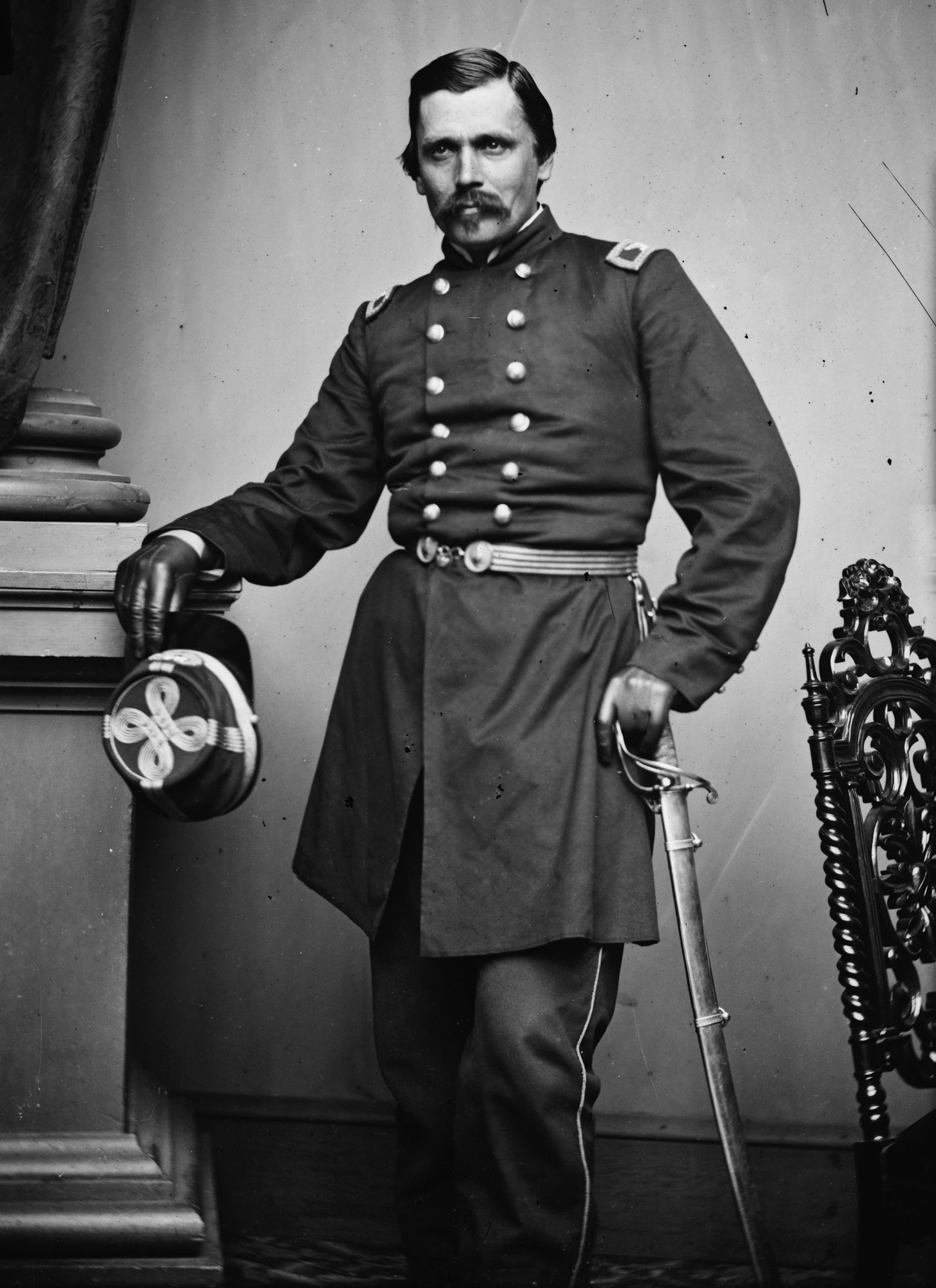 Library of Congress
Wlodzimierz Krzyzanowski
Other Army of the Potomac outfits similarly tied their service to the Revolutionary generation. The troopers of the 8th Illinois Cavalry gathered at the insistence of Colonel William Gamble, an Irish-born veteran of the British army, to commemorate Washington’s birthday through the passage of patriotic resolutions. Gamble framed the proceedings by calling for a pledge “to the support of the principles and the Government bequeathed to us by George Washington, and especially so to-day, as that commemorating his birth.” Like the colonel himself, the officers who drafted the resolutions had no intention of settling for mere sentimental celebration. In words excoriating stay-at-home “traitors” to Washington’s legacy and the “laws and glory of our flag,” the cavalrymen promised to cut down secession sympathizers, “wherever found.” Five months later, the 8th Illinois would carry that conviction onto the fields west of Gettysburg.11
The desperation of early 1863 forced soldiers to reexamine fundamental beliefs about the Union cause and war effort. The arrival of Washington’s birthday and its commemorative ceremonies in many camps at the front provided the opportunity to renew solidarity, not just by remembering the sacrifices of the revolutionary generation but also by shaming “Tories” on the home front. Their words, whether penned to loved ones or published in newspapers, proved the potency the War for Independence still possessed during the War of the Rebellion.
Zachery A. Fry is an associate professor at the U.S. Army Command and General Staff College and the author of A Republic in the Ranks: Loyalty and Dissent in the Army of the Potomac (UNC Press, 2020).
Notes
Guelzo
1. Claire Prechtel-Kluskens, “‘A Reasonable Degree of Promptitude’: Civil War Pension Application Processing, 1861–1885” Prologue Magazine Vol. 42, No. 1 (Spring 2010).
2. “Revolutionary Pensions” (March 10, 1864) in Congressional Globe, 38th Congress, 1st session, 1036 (April 1, 1864), 39; “Public – No. 37,” Washington Daily National Intelligencer, April 4, 1864; “Revolutionary Pensioners,” Dearborn County Register, April 8, 1864.
3. Abraham Lincoln, “Address to the New Jersey Senate at Trenton, New Jersey” (February 21, 1861) and “Speech in Independence Hall, Philadelphia, Pennsylvania” (February 22, 1861), in Collected Works of Abraham Lincoln, ed. R.P. Basler (New Brunswick, NJ, 1953), 4:235, 240.
4. “Address of the Speaker,” Washington National Intelligencer, July 6, 1861.
5. Stephen Foster, I’m Nothing But a Plain Old Soldier (New York, 1863).
6. Don N. Hagist, The Revolution’s Last Men: The Soldiers Behind the Photographs (Yardley, PA, 2016), xv.
7. “The Last Men of the Revolution!” Hartford Daily Courant, August 16, 1864.
8. “A Photographer Among the Last Men of the Revolution,” Hartford Daily Courant, August 11, 1864.
9. A.J. Benedict, “The Town of Kensington,” The Connecticut Magazine 6 (September-October 1900): 405.
10. Elias B. Hillard, The Last Men of the Revolution: A Photograph of Each From Life, Together with Views of Their Homes (Hartford, 1864), 6,8, 10, 17.
11. Ibid., 24, 29-30.
12. Ibid., 33, 37, 38.
13. Ibid., 40, 42, 44.
14. Ibid., 51, 53. The Missourian whom Hillard and the Moores never reached was James Barham, who lived on until January 8, 1865, and once the Hillard-Moore book was published, a fresh series of overlooked Revolutionary survivors popped into view: John Gray, 100, of Virginia, who held on until March 1868; Daniel Bakeman of western new York, who made it to 109 years and died in the spring of 1869; and John Kitts of Massachusetts who was 105 when he died in February 1865. See Hagist, The Revolution’s Last Men, 177–181.
15. Everett to the Moores, January 14, 1865, in Massachusetts Historical Society Proceedings 45 (1911-1912): 354.
16. Lindsey Wood, “Alexander Milliner, Age Ten, Enlisted September 1780,” in Journal of the American Revolution (January 17, 2019); “Funeral of William Hutchings, of Penobscot, Maine,” Bangor Daily Whig and Courier, May 16, 1866; Kevin Pawlak, “The Continentals’ Last Claimant: The Story of Lemuel Cook,” (September 29, 2020).
17. Sierra Dixon, “A Photographer with a Painter’s Eye: The Story of Nelson Augusts Moore,” Connecticut History (July 21, 2022); Adam Ochs Fleischer, “The Military Backdrop of the Moore Brothers in Hartford, Conn.,” Military Images (September 8, 2024); Heman Timlow, Ecclesiastical and Other Sketches of Southington, Conn. (Hartford, 1875), clxxviii.
18. “Roswell A. Moore,” Hartford Courant, September 21, 1907.
19. E.C. Brewster Jones, The Brewster Genealogy, 1566-1907: A Record of the Descendants of William Brewster (New York, 1908), 2:775; “The Rev. Elias B. Hillard,” Hartford Courant, March 2, 1895.
20. MacLeish, “Last Soldiers of the Revolution,” Life (May 31, 1948): 88–96.
Oakes
1. Dunbar Rowland, ed., Jefferson Davis, Constitutionalist (Jackson, MS, 1923), I: 266.
Rubin
1. “The Hall of the Southern Convention,” Montgomery Weekly Advertiser, February 6, 1861. This is adapted from Anne S. Rubin, A Shattered Nation: The Rise and Fall of the Confederacy, 1861-1868 (University of North Carolina Press, 2005), 14–25.
2. William C. Davis, “A Government of Our Own”: The Making of the Confederacy (New York, 1994), 103.
3. Richard B. McCaslin, Lee in the Shadow of Washington (Baton Rouge, 2001).
4. For a mention of Tory in relation to East Tennessee loyalists, see Lancelot Minor Blackford to Mrs. William M. Blackford, November 20, 1863, Blackford Family Papers, University of Virginia; for North Carolina Tories, see “The Other Side of the Picture,” Raleigh Register, August 6, 1862. For instances of “Hessian,” see “Country, Home and Liberty” and “Chivalrous C.S.A.,” Wake Forest Broadside Poetry Collection.
5. On the endurance and importance of the Revolutionary War to 19th-century American political culture, see David Waldstreicher, In The Midst of Perpetual Fetes: The Making of American Nationalism, 1776–1820 (Chapel Hill, 1997); Michael Kammen, A Season of Youth: The American Revolution and the Historical Imagination (New York, 1978); Michael F. Conlin, One Nation Divided by Slavery: Remembering the American Revolution While Marching toward the Civil War (Kent, OH, 2015).
6. “Rebel Poetry: The Stars and Bars,” and “The Southern Yankee Doodle,” Wake Forest Broadside Poetry Collection; “The New Yankee Doodle,” in The Stonewall Song Book: Being a Collection of Patriotic, Sentimental and Comic Songs 11th edition, enlarged (Richmond, 1865), 29.
7. Sarah J. Purcell, “Martyred Blood and Avenging Spirits: Revolutionary Martyrs and Heroes as Inspiration for the U.S. Civil War,” in Remembering the Revolution: Memory, History, and Nation Making from Independence to the Civil War, ed. Michael A. McDonell et al. (Amherst, MA, 2013).
8. Frank Ticknor, “The Spirit of ’76—The Old Rifleman,” from the Richmond Dispatch, in War Songs of the South, 57–58; John W. Overall, “Seventy-Six and Sixty-One,” from the Georgia Crusader, in ibid., 62–63; “The Spirit of ’60,” from the Columbus Times in ibid,, 58–59; “Flag Presentation,” Raleigh Register, June 5, 1861.
9. “To the Maryland Sons of Revolutionary Sires!,” Wake Forest Broadside Poetry Collection; “A Song for ‘The Maryland Line,’” Southern Monthly 1 (January 1862): 351.
10. “Never Say Die,” Montgomery Mail, January 18, 1862; “Our Cause & Our Course,” Charleston Mercury, July 17, 1863; “Lessons of Encouragement,” in Jackson, Historical Register, 20; reprinted in The Southern Field and Fireside, February 28, 1863.
Fry
1. Frank L. Byrne, ed., Uncommon Soldiers: Harvey Reid and the 22nd Wisconsin March with Sherman (Knoxville, TN, 2001), 26–27.
2. “Washington’s Birthday in the Tennessee Army,” Boston Evening Transcript, March 2, 1863.
3. “Letter from the Seventy-ninth,” Daily Evening Express (Lancaster, PA), March 12, 1863.
4. “Army Correspondence. Letter from the 46th O. Regiment,” Lancaster Gazette (Ohio), March 5, 1863.
5. “Meeting of the Officers of the 111th Illinois Regiment,” St. Louis Globe-Democrat, February 27, 1863.
6. See Albert Z. Conner and Chris Mackowski, Seizing Destiny: The Army of the Potomac’s “Valley Forge” and the Civil War Winter that Saved the Union (El Dorado Hills, CA, 2016).
7. “Eloquent Order of Major General Sickles to the Third Army Corps,” Washington Chronicle, February 25, 1863.
8. Coralou Peel Lassen, ed., Dear Sarah: Letters Home from a Soldier of the Iron Brigade (Bloomington, IN, 1999), 78–79.
9. Stephen W. Sears, ed., On Campaign with the Army of the Potomac: The Civil War Journal of Theodore Ayrault Dodge (New York, 2001), 186.
10. “The German Soldiers to the Copperheads,” Chicago Tribune, February 28, 1863.
11. “A Voice from the Potomac. The 8th Illinois Cavalry on the Illinois Copperheads,” Chicago Tribune, March 3, 1863.
Related topics: Abraham Lincoln, Jefferson Davis