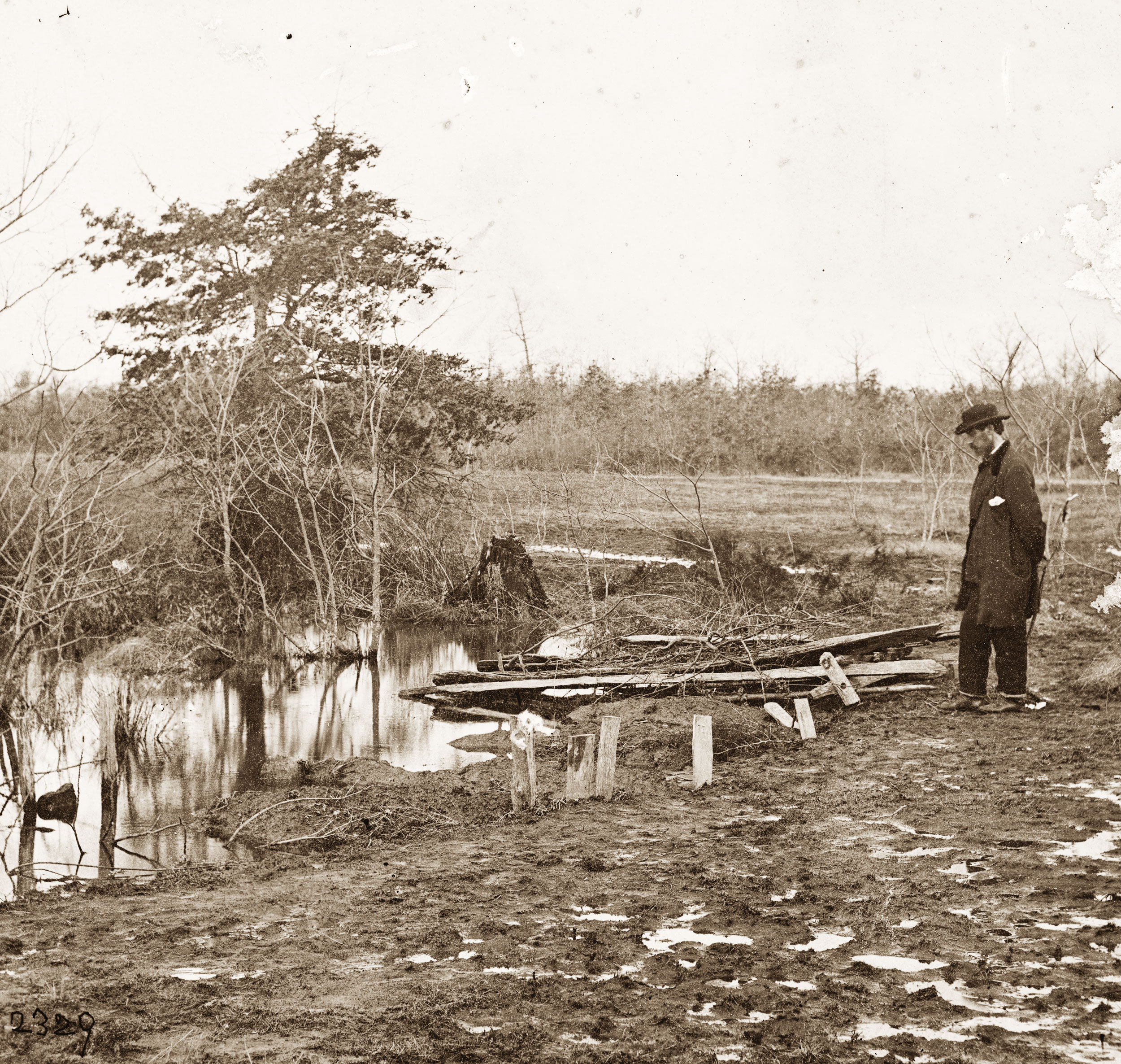
Union soldiers stand near a grave of their fallen comrade in Antietam.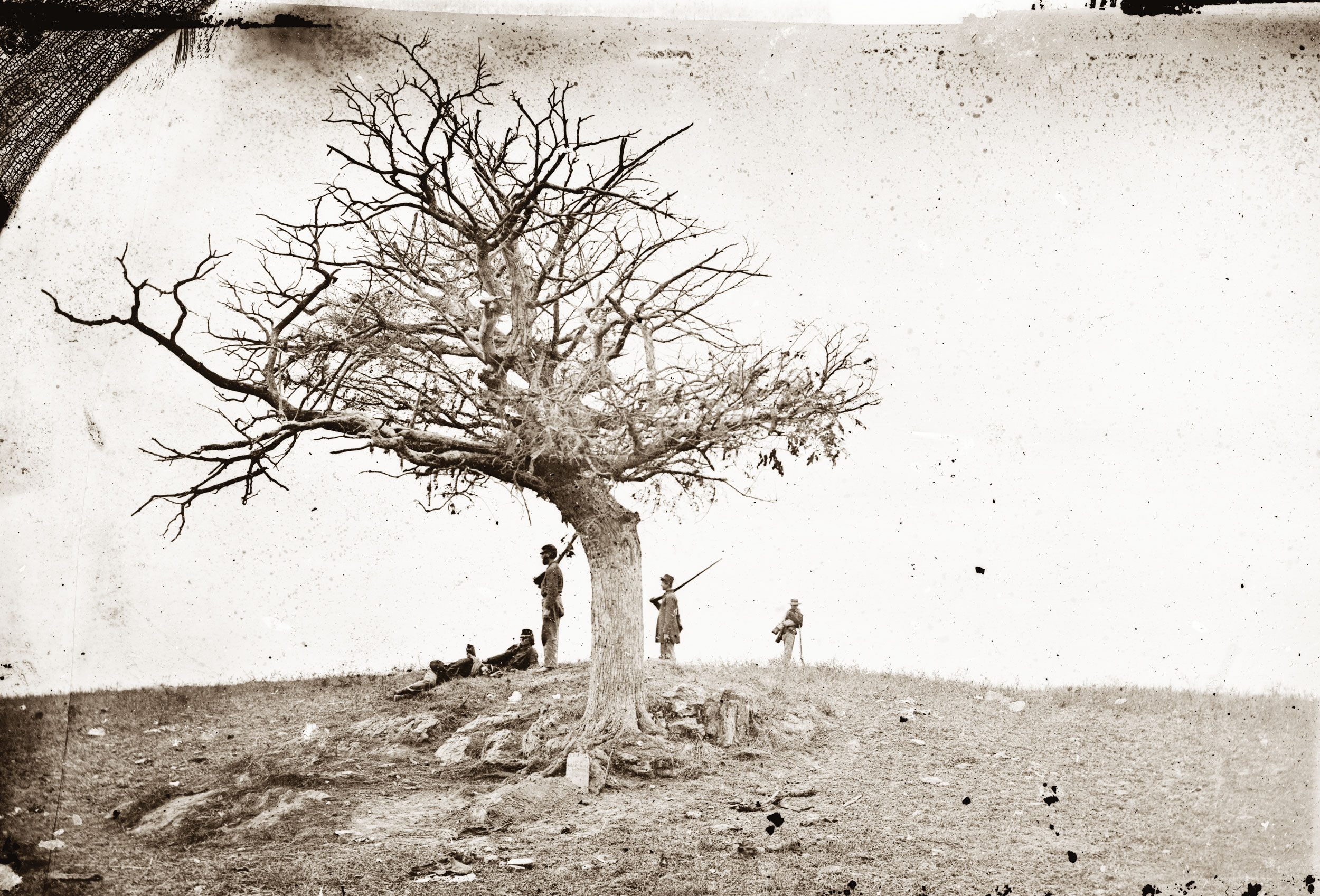 Library of Congress
In May 1865, one month after Robert E. Lee’s surrender at Appomattox, Mary Hall’s Civil War was not yet over. Her husband, Emory, had enlisted late in the war, leaving their farm just south of Pittsburgh in March 1864 to join Company A of the 22nd Pennsylvania Volunteer Cavalry. Just four months later he was dead, killed in battle near Lynchburg, Virginia. Like many soldiers, Emory had been buried near the spot where he died. Like many widows, Mary wanted her husband home.
In the months that followed, Mary had pressed Emory’s fellow soldiers for details about his burial. Where exactly was his grave, and how was it marked? Their descriptions were detailed enough that Mary believed her husband’s burial place could be found. “He is buried 10 miles from Lynchburgh on the tye river on the south side of blurdig,” Mary informed state officials, in her efforts to get them to help retrieve his remains and ship them back to her. “[H]is boddy lyes under and apple tree.”1
When it became clear that the officials would not help her, Mary made up her mind. She would pack her bags and set out for Lynchburg. If the U.S. Army would not bring Emory home, she would make the 300-mile, weeks-long journey and get him herself. That is, if she could find him.2
 Library of Congress
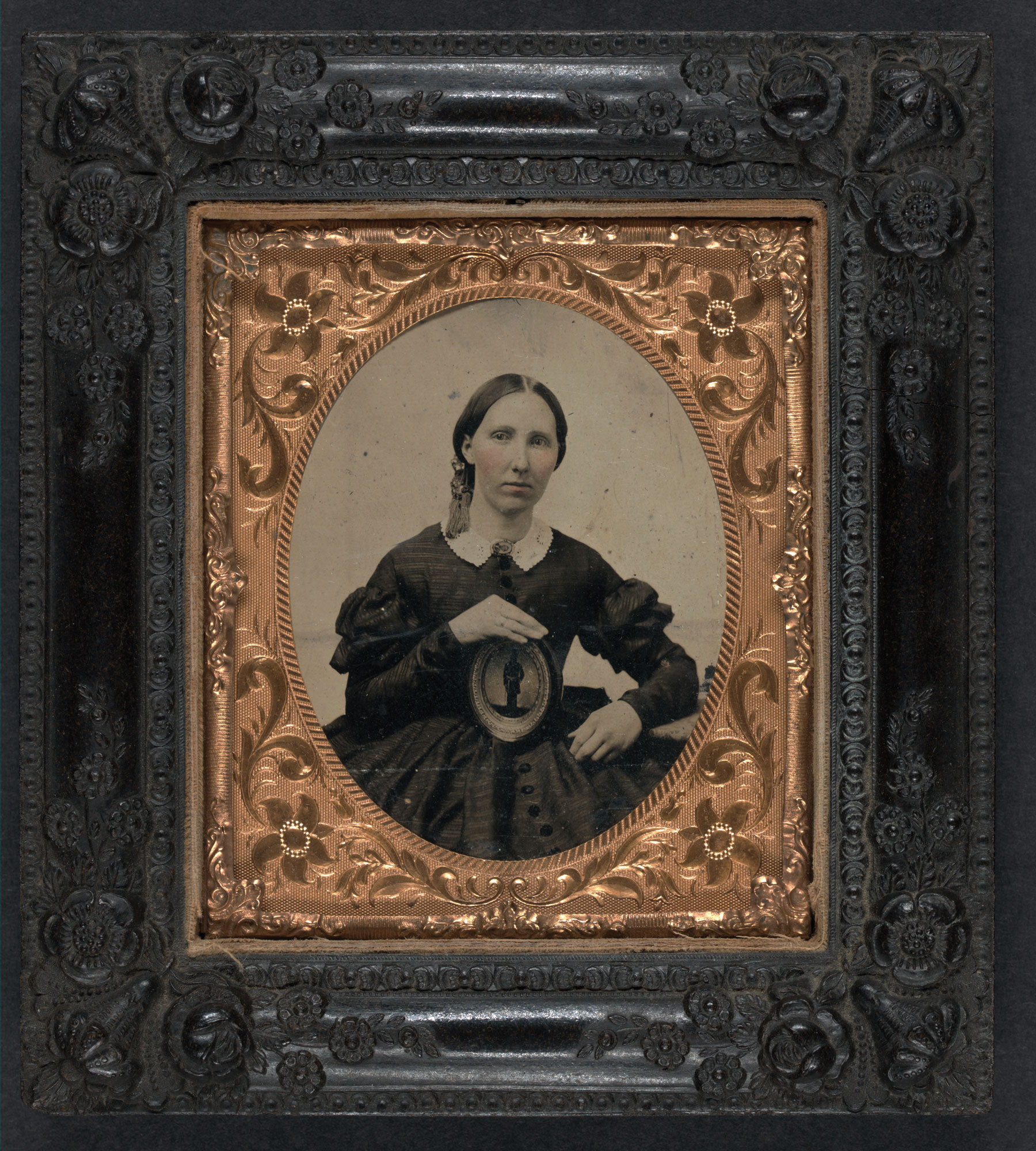
Families of Civil War soldiers killed in battle yearned to have a body to bury close to home. In this undated photo, an unidentified woman in mourning dress holds the framed image of a fallen loved one. In this September 1862 photo, Union soldiers pose for Alexander Gardner’s camera near the battlefield grave of a comrade killed at Antietam.
Mary Hall was hardly alone in her grief or in her journey. More than 620,000 soldiers died during the Civil War, leaving millions of civilians anguished by their deaths. How and where a soldier got killed, as well as his rank, often dictated whether his family received his remains. The bodies of officers or other soldiers of means were sometimes shipped home, while men who died in military hospitals were often buried in adjacent graveyards, their headstones clearly marked and the grounds well tended. However, the bodies of men killed in the chaos of the battlefield, especially enlisted men, were rarely sent home.
To be sure, both sides tried to ensure that all of their fallen soldiers would receive proper burials. U.S. military officials issued orders during the war’s first months making officers responsible for the interment of soldiers who died under their command or in their jurisdiction. In early 1862, these instructions became even more specific. “In order to secure, as far as possible, the decent internment of those who have fallen, or may fall, in battle,” read General Orders No. 33,
It is made the duty of Commanding Generals to lay off plots of ground in some suitable spot near every battlefield, so soon as it may be in their power, and to cause the remains of those killed to be interred, with headboards to the graves bearing numbers, and, when practicable, the names of the persons buried in them. A register of each burialground will be preserved, in which it will be noted the marks corresponding to the headboards.3
The war’s unexpected and unprecedented carnage soon rendered such directives impractical, however, and most soldiers were buried by their comrades near where they had fallen, in graves marked by whatever was available—slabs of wood, tent posts, or fence rails. Men left for burial by the enemy were often placed in hastily constructed common graves, if at all. Indeed, the U.S. War Department estimated that of all Union soldiers killed in battle, some 25,000 were never buried.4
The ad-hoc nature of battlefield burial made life far more complicated for surviving family members, throwing them into an often agonizing limbo. For women in particular, the absence of a body to bury and a grave to tend compounded their grief. Without a body, families were unable to perform the rituals that marked the passage from life to death considered vitally important during the nineteenth century. A “good death” meant the dying were surrounded by family members, both lending their strength and saying goodbye; after death, women often washed and dressed the body for burial, which usually occurred in a family plot of a scenic location that proved soothing to visit. Soldiers who died far from home and unattended were denied the possibility of a good death, a fact not lost on the men who left to fight the war. Union soldier William Vermilion likely spoke for most of his comrades when he instructed his wife Mary what he wanted her to do should he die while in the army. “Get me home if you can,” he wrote, “bury me on some nice loyal spot of ground, plant flowers over the grave.” “I don’t want to sleep in the land of traitors,” he concluded. “I couldn’t rest well.”5
Faced with the death of a loved one on a distant battlefield, then, many women felt compelled to bring home their remains. They wanted them close; they wanted a grave to tend and to visit. Ultimately they hoped that their family, separated in life, could at least be reunited in death. But time, resources, and a lack of sufficiently detailed information prevented the majority of women from completing this journey. The minority of women who did embark on these trips faced a daunting task. Hopeful and heartbroken, these women pressed on, determined to locate their loved ones’ bodies and bring them home.
 Library of Congress
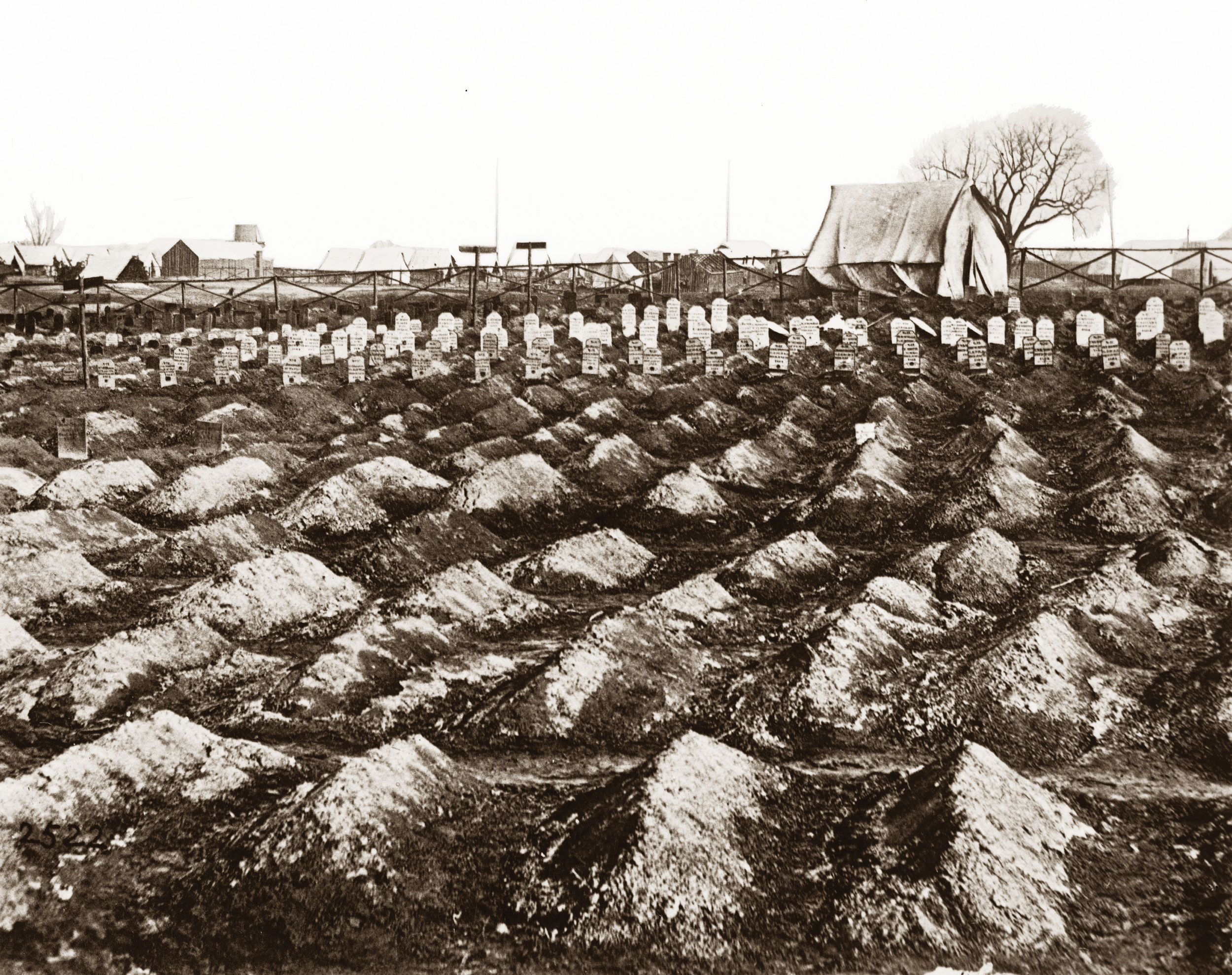
Men who died in military hospitals, unlike those who died in battle, were often buried in adjacent graveyards, where headstones were clearly marked and the grounds well tended. Pictured above is the graveyard of General Hospital at City Point, Virginia.
Regardless of the mission, making a trip into the South near or shortly after the war’s end presented civilians with myriad obstacles, from securing proper military passes to attempting to navigate the region’s damaged or destroyed railroad lines. Not atypical were the challenges faced by Stillman Wightman, who left New York City for Fort Fisher, North Carolina, the day he read in the paper about his son Edward’s death. In a journey that by his estimate covered some 1,600 miles, Wightman traveled by rail, wagon, steamer, horse, and foot. He faced many delays along the way, from late trains to absent boats, requiring him to spend several nights sleeping uncomfortably in saloons and other places. Ten days after starting out, Wightman arrived at his destination, having walked the last three miles in a blinding rainstorm across a marsh. But his work had just begun.6
For the next six days, Wightman haggled with U.S. Army generals and surgeons for permission to disinter Edward’s body. Using the professional connections he had made as a lawyer in New York and Connecticut, he eventually secured both military approval and all of the supplies he required for the task, including the aid of 20 soldiers and the materials—a pine box, salt, and pitch-treated canvas—to seal and preserve his son’s remains for the trip home. On the way back to New York, Wightman booked passage and quarters on military vessels (he described his cabin in one as “a nasty, filthy place unfit for a human being to sleep in”) and rode and took meals with a variety of officers, soldiers, and doctors. Three weeks after he had started, Wightman and his son arrived home.7
While his journey was both physically and emotionally challenging, Stillman Wightman enjoyed many advantages over women who ventured south on similar travels. Besides his gender, business connections, and firm knowledge of his son’s location, Wightman had the financial resources with which to make such a lengthy trip. Women, especially those like Mary Hall who occupied the lower rungs of the socio-economic ladder, rarely had such luxury. Indeed, financial concerns were among the biggest barriers women faced when attempting to retrieve the bodies of fallen loved ones. When Philadelphia resident Mary Raivley learned that her son had been killed in battle, she scraped together the funds to send an undertaker to retrieve his body at City Point, Virginia. When he came back empty-handed, Raivley despaired. She had at least two other children at home, and her husband, a city laborer, could not afford the expense of a trip. Desperate to have her son home, Raivley wrote to state officials, whom she hoped would pay for her travel. “If he was laid in a Cemetary like those that fell at Gettysburg I could be content,” she explained of her need to make the journey herself. “[T]o think that he must lay on an open battle field for his bons to be scattered, o dear me I can never think of it.” Indeed, she was so determined to make the trip on her own, she informed the officials that if the state would not help, she was willing “to beg my way to the battle field my self.”8
 Library of Congress
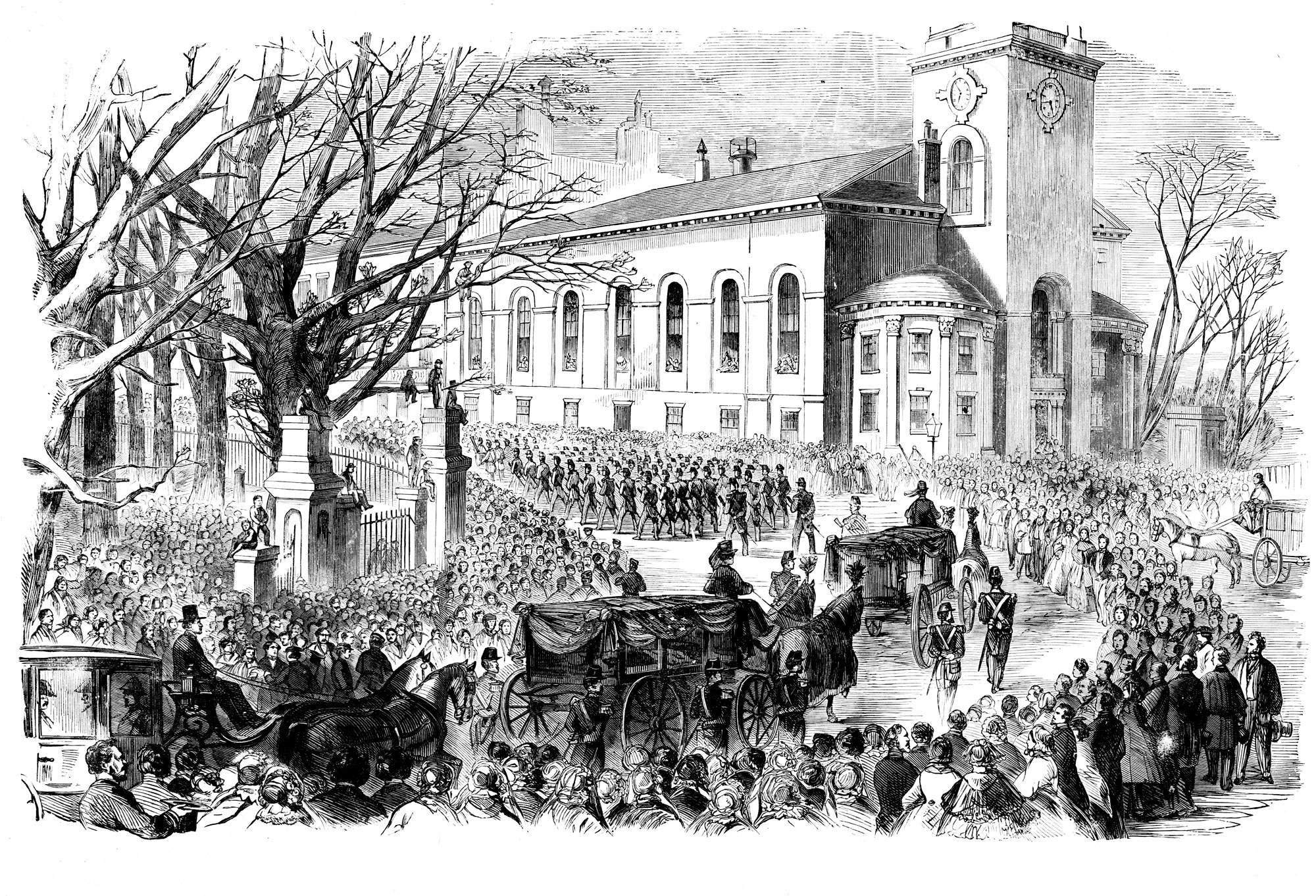
While both sides tried to ensure that all of their fallen soldiers would receive proper burials, the war’s unexpected and unprecedented carnage soon rendered such plans impractical. Before long, the elaborate funeral processions that marked the conflict’s early days (like the one, pictured above, held for the four Massachusetts militiamen killed in the Baltimore riot of April 19, 1861) increasingly gave way to battlefield burials.
Margaret Arbunkle, who contemplated setting forth to retrieve the body of her husband, Archibald, lying on a battlefield near Pine Knob, Georgia, faced a similar predicament. Like Raivley, Arbunkle felt compelled to make the journey but did not have money for the trip. Her husband had enlisted in 1861, leaving Margaret to sustain the family with little support from him throughout the war, and now his death made that tenuous situation permanent. “I am a poor woman and have to work hard to support myself and 3 children now,” she lamented to state officials.9
In Pennsylvania, as in several other northern states, such pleas for state assistance eventually resulted in a program that reimbursed family members for the travel and expenses of locating and returning a body. And while women like Mary Raivley and Margaret Arbunkle, as mothers or widows of a Union soldier, thought such compensation was their right, petitioners for state aid aimed to convince officials that they knew the location of their loved one’s body. Mary Hall, who had been informed by her late husband’s comrades of the specific apple tree beside which he was buried, reassured state officials, “[I]f I will go fore him they all say here that thire will not bee enney difficulty in findeng his grave.”10 Though the first attempt to retrieve her son’s body failed, Mary Raivley projected confidence to the state. “I know for certin that he is buried wheir I said,” she insisted, “for I was sent word where he was killed [and] that he was buried their.”11
 Library of Congress
Flimsy wooden boards mark soldiers’ graves on the field at Bull Run.
Perhaps more than anything, Mary Raivley’s certainty—like that of Mary Hall—resulted from the information that she received from her son’s comrades, members of his company who in the fall of 1865 had returned home and offered his mother information about his death. Whether transmitted by word of mouth or included in a condolence letter, such information about a loved one’s last words and battlefield grave not only had a powerful effect on grieving family members—allowing them to become, as historian Drew Faust has argued, “virtual witnesses” to their deaths, bridging the distance between battlefield and home—but also often included vivid and detailed descriptions of where the man’s body was buried.12 When William Callahan of Company E, 93rd Pennsylvania Volunteers died from an injury he sustained fighting in Williamsburg, Virginia, on May 5, 1862, W. W. Rogers, an officer in his regiment, sent his widow, Nancy, a condolence letter offering her details about when and where he was shot and how he died. “Those who were with him,” Rogers explained, “say that nearly all he spoke about was his family”; he spoke of the couple’s children, “lamenting his separation from them and expressing sorrow for the lonely and desolate condition they would be in after he was taken from them by death.” Rogers apologized for not being able to arrange for William’s body to be returned home, but he described in detail how and where the man was buried should she go in search of him. William Callahan was buried without a coffin but with a rough headboard, “on the farm of Thomas Whitaker, now in possession of a man named Adams, on the road leading from Yorktown to Williamsburg, and about three miles from the latter place…on a point or knoll.” Nancy Callahan was surely comforted by the information in Rogers’ letter, which provided her sufficient details with which to apply for a widow’s pension.13
Even when armed with state support and detailed descriptions of the location of bodies, women who ventured south on this grim duty were required to go to often extraordinary lengths to retrieve their loved ones. Some had no choice but to travel with their children. Just one week after she learned of the death of her husband—a soldier of two years’ service in the 116th Pennsylvania Infantry—Elizabeth Dyson planned to take her baby with her to retrieve his body from Petersburg, Virginia.14 Others were required to make multiple trips. Elizabeth Hines had already brought one of her four sons home to be buried when she wrote a letter asking for state support to retrieve the body of another. Having previously made a similar journey, Hines stated matter-of-factly that George was buried at the “20th Division Calvary Hosp grave yard near Petersburg,” expecting this information to be enough for Governor Andrew Curtin to send her travel passes. “His name is on his head and foot board,” Hines explained confidently, “His name is George P. Hines.”15 Even though she had lost two boys to the war, and had a third soldier-son whose whereabouts were unknown (“either he is living or dead,” she noted to officials), the state made no special arrangements to bring George home for burial near his family in York Furnace, Pennsylvania. So Hines set out to try to find George herself, preparing to make a round trip of likely more than 500 miles. If she had doubts, she did not betray them.
 Library of Congress
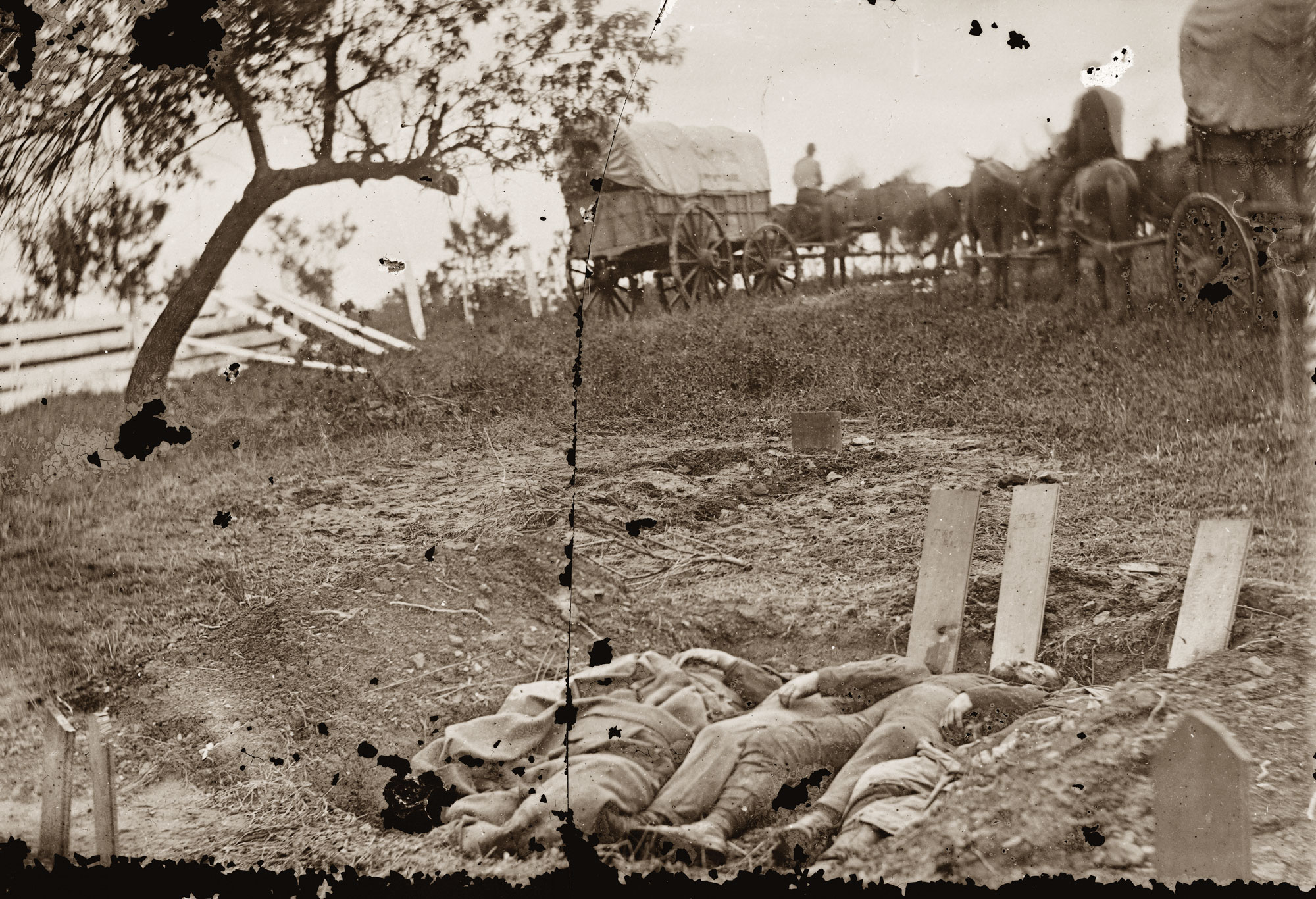
Unfinished Confederate graves on the Gettysburg battlefield.
Early in October 1865, Jane Deans left Philadelphia for a hospital in City Point, Virginia, to retrieve “the corpse of my husband.”16 Deans took the youngest of her five children with her, leaving the older children behind.17 On the way back, Deans—now traveling by boat with an infant, her dead husband, and the headboard that she found on his Virginia grave—accidentally left behind the state-issued travel pass allowing her free passage. She realized her mistake just as the boat pulled away from shore. Fortunately, soldiers and a doctor on board helped pay her way—and for the ticket she had to buy for her dead husband’s passage. Back in Philadelphia, Deans buried her husband, Mark, near his home. Having paid for the trip out of the meager funds she had available to her (she still awaited her husband’s back pay), Deans negotiated with the undertaker to have her husband interred on credit. By the time she returned from her trip to Virginia, two of her children were sick, and, as she explained, “I am so redused for wont of money that I cannot buy them any thing to do them good and if any of them was to die I would not like to call on the undertaker until I pay him for the burying of my husband which is 20 dollars.” Still, Deans clearly felt that making the trip was the right choice. “[N]ow I am content,” she explained, “for his 5 littel orphans can go with me to see where thier Fathers bones do ly.” Having her husband’s remains close to home brought Jane Deans’ Civil War to an end.18
 Library of Congress
Pennsylvania governor Andrew Curtin
In her popular 1868 novel, The Gates Ajar, Elizabeth Stuart Phelps explored the doubts a woman experienced when her husband, son, or—in the case of her protagonist, Mary Cabot—brother died abruptly on a Civil War battlefield. Jolted by the news of her sibling’s death, Cabot is not comforted by faith or offers of condolence, which she dismissed as “[b]ut a hundred little needles pricking at us.” Instead, she yearned to have him home again. “If I could have gone to him, could have busied myself with packing and journeying, could have been forced to think and plan, could have had the shadow of a hope of one more look, one word,” Cabot muses, “I suppose I should have taken it differently.”¹⁹ Trying to salvage some semblance of a good death, countless women expressed similarly strong desires to bring home the bodies of their husbands or sons. They scoured letters from his comrades and held on tightly to bits and pieces of information that helped them. And when they packed their bags and planned their journeys, they betrayed a hope that was larger than their doubts—that on the little knoll or under the apple tree they would find him, bring him home, and, as Jane Deans described it when she buried her husband Mark, be “content.”
Judith Giesberg, author of Army at Home: The Civil War on the Northern Home Front (University of North Carolina Press, 2009), is associate professor of history at Villanova University, where she teaches the Civil War and Reconstruction.
Notes
1. Mary L. Hall to H.H. Gregg, May 8, 1865, Adjutant General’s Correspondence, Pennsylvania Historical and Museum Commission Archives (PHMC), Harrisburg, Pennsylvania, Record Group (RG) 19.29, Box 25.
2. Distance estimates are based on current-day travel. With destroyed rails and incomplete lines, wartime and postwar travel was much longer than these estimates.
3. As quoted in Drew Gilpin Faust, This Republic of Suffering: Death and the American Civil War (New York, 2008), 65.
4. Lisa Long, Rehabilitating Bodies: Health, History, and the American Civil War (Philadelphia, 2004), 67.
5. John R. Neff, Honoring The Civil War Dead: Commemoration And The Problem Of Reconciliation (Lawrence, KS, 2004), 51; Drew Gilpin Faust, “The Civil War Soldier and the Art of Dying,” The Journal of Southern History vol. 67, no. 1 (February 2001): 5-12; Gary Laderman, The Sacred Remains: American Attitudes Toward Death, 1799-1883 (New Haven, 1999), 30-35; Faust, This Republic of Suffering, 61-63; William Vermilion, Helena, Arkansas, to Mary Vermilion, June 30, 1863, in Love Amid the Turmoil: The Civil War Letters of William and Mary Vermilion ed. Donald C. Elder III (Iowa City, 2005), 150.
6. Stillman K. Wightman, “‘A Father’s Journey,’ March 1865,” in From Antietam to Fort Fisher: The Civil War Letters of Edward King Wightman ed. Edward G. Longacre (Cranbury, NJ, 1985), 230-237.
7. Ibid., 244.
8. Mary Raivley to Gregg, October 30, 1865, PHMC, RG 19.29, Box 26. The 1860 federal census lists Edward “Ravely” as a “laborer,” 21-year-old John as a “Plumber,” 20-year-old George as a “Moulder,” and two other teenage boys. The family claimed $100 in property. 1860 U.S. Federal Census, Ancestry.com. Accessed 05/25/2011.
9. Margaret Ann Arbuckle to Mr. A. L. Russel, November 23, 1865, PHMC, RG 19.29, Box 27; Samuel Bates, History of Pennsylvanian Volunteers, 1861-1865 (Harrisburg, 1869-71), vol. 1, 524; Accessed 05/15/2011.
10. Mary L. Hall to H.H. Gregg, May 8, 1865, PHMC, RG 19.29, Box 25.
11. Mary Raivley to Major H.H. Gregg, October 30, 1865, PHMC, RG 19.29, Box 26.
12. Faust, This Republic of Suffering, 15.
13. W.W. Rogers to Mrs. Callahan, May 22, 1862, William Callahan Pension File, Civil War Pension Files, 1861-1864, PHMC, RG-2, 2-3.
14. Elizabeth Dyson to Col. L. M. Gregg, October 27, 1864, RG 19.29, Box 27; Bates, vol. 3, 1237.
15. Elizabeth Hines to Andrew Curtin, November 19, 1865, PHMC, RG 19.29, Box 27.
16. Jane Deans to Andrew Curtin, November 28, 1865, PHMC, RG 19.29, Box 27; Deans to Curtin, December 18, 1865, PHMC, RG 19.29, Box 27. For other women who traveled with small children, or contemplated doing so, see Elizabeth Dyson to Colonel L. M. Lucy, October 27, 1865, PHMC, RG 19.29, Box 25 and Margaret Arbuckle to A. L. Russel, Adjutant General of Pennsylvania, November 23, 1865, PHMC, RG 19.29, Box 27.
17. Unfortunately, no information about Mark Deans’ enlistment could be found. According to the 1860 census, Mark and Jane Deans had two children in 1860—four-year-old Mary and two-year-old Maggie. In 1865, the ages of Jane Deans’ children likely ranged in age from nine years to one or two years old. No Jane Deans could be located in the 1870 census, but Jane seems to have applied for a federal pension. 1860 U.S. Federal Census and Civil War Pension Index, Ancestry.com.
18. Jane Deans to Andrew Curtin, November 28, 1865, PHMC, RG 19.29, Box 27; Deans to Curtin, December 18, 1865, PHMC, RG 19.29, Box 27.
19. Elizabeth Stuart Phelps, The Gates Ajar (Boston, 1869), 4, 6.
Related topics: women