Cyrena Stone, or Miss Abby, writes in her diary.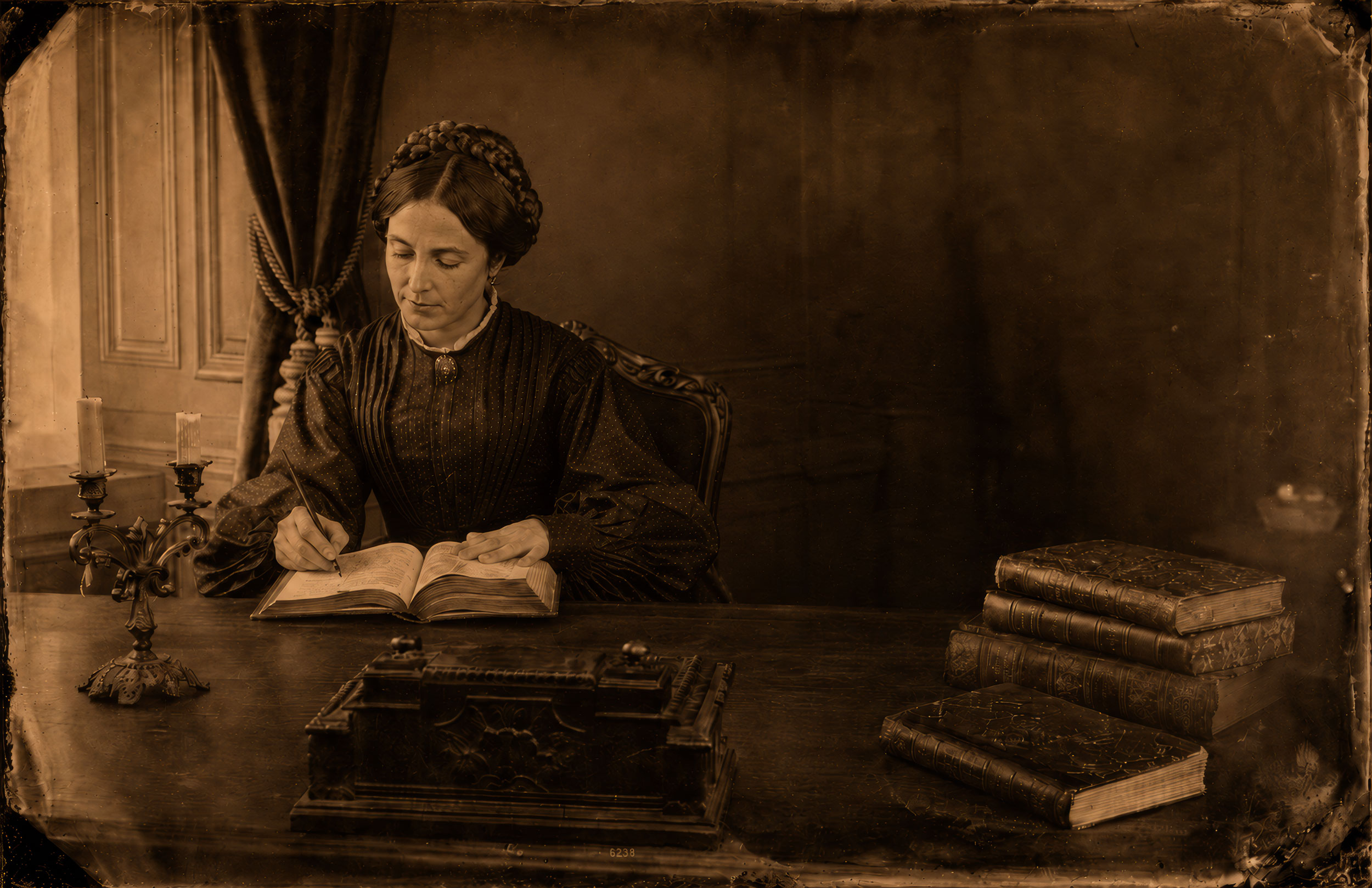 Patrick Brennan
One day in the spring of 1864, a friend came to Cyrena Stone’s Atlanta home and told her to burn all her papers. The swirl of rumors around town held that local officials suspected her of supporting William T. Sherman’s invading Union army. “For you know they say you have been corresponding with the enemy,” her friend warned, “& if we are all arrested, your house will certainly be searched.”1 The rumors were unfounded. Stone had not been corresponding with the Yankees. But she did have a secret. For the past four years, she had been a Unionist, a southerner loyal to the United States instead of the Confederacy, and as the war raged on, she expressed her sympathies in the pages of her diary, an incriminating document among those her friend advised burning.
Stone had already taken steps to protect herself. She wrote in the diary using a pen name—“Miss Abby”—and referred to friends using pseudonyms. Her methods of deception were effective enough that in 1976, when the University of Georgia bought the diary’s only surviving fragment (an 80-page document written from January 1 to late July 1864), no one knew who had written it. It wasn’t until the early 1990s that Thomas G. Dyer, a professor of education at the university, identified Stone as the author of the anonymously written “Miss Abby Diary.”2
Dyer’s original work with the diary produced a wonderful book about an entire “circle” of likeminded Unionists living in Atlanta during the Civil War. But while Stone’s diary serves as a window into the secret world of southern Unionists, it also illustrates another critical, if sometimes overlooked, aspect of the war: the steady deterioration and total collapse of the Confederate home front.3
It is an interesting question: Did the Confederacy lose the war on the battlefield or on the home front? It most certainly suffered serious losses on the battlefield. Vicksburg, Gettysburg, Atlanta and others were all decisive Union victories of real strategic importance. But in recent years, historians have been highlighting the many ways in which issues related to the home front undermined the Confederate war effort. From the experiences of southern women to slave resistance to the failings of the southern economy, these issues and many more all worked to weaken the Confederacy from within. Some historians have even called into question the very distinction, suggesting that what happened on the battlefield and at home were so intertwined that it doesn’t make sense to see them as two separate spaces. The experience of someone like Stone helps explain why.4
A native of Vermont, Stone came south with her husband, Amherst Stone, in 1850. They settled first in Fayetteville, Georgia, before moving to Atlanta in 1854, where Amherst established himself among the city’s business community. He wasn’t alone. Among southern cities, Atlanta, a growing rail hub, had a reputation for attracting northern-born businessmen, with one Alabama newspaper describing the city as possessing the “slight perceptible odor of Yankeedom” as a result.5
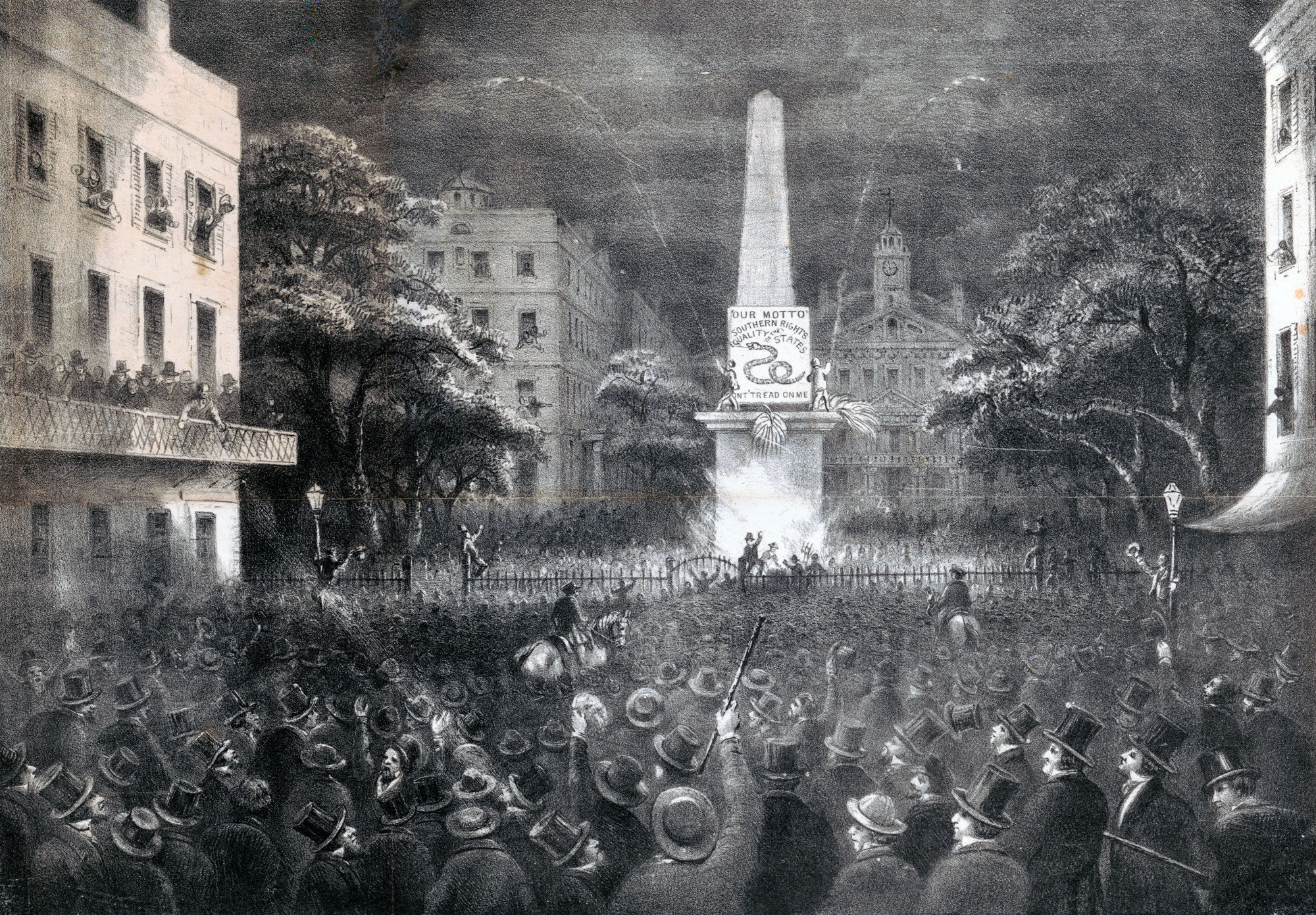
Despite their new ties to Atlanta, the Stones, one-time owners of at least six enslaved people, opposed secession. During the winter of 1860–1861, as secession fever swept through southern statehouses, the two stood by their allegiance to the U.S. government. But when Georgia voted to secede from the Union in late January 1861, their politics marked them. They became outcasts and generally kept their voices down, their sympathies suppressed. And for good reason. The mood in Atlanta soured during the early stages of the war. Where it was once open and hospitable to outsiders like the Stones, roving groups of pro-Confederate radicals soon started policing the city, promising to root out disloyal elements. Newspapers ranted and raved about spies and traitors living within the city’s limits. The tipping point for the Stones came in 1862 when Atlanta imposed a temporary state of martial law. This allowed the city’s provost marshal—basically, the chief of police—wide latitude when it came to arresting suspected Unionists.
It was an ominous sign of what was to come. In August 1862, with the city under martial law, local officials detained perhaps as many as a dozen residents suspected of harboring unpatriotic loyalties. One of them, a local dry-goods dealer, died of a beating he received on the day of his apprehension. Dyer speculated that Cyrena Stone was likely among those arrested before securing her release.6
Not long afterward, Amherst Stone fled north. While the recently imposed state of martial law hung in the back of his mind, he was also looking to make good on a business deal involving southern cotton. Whatever his true motive, he traveled alone. Conditions were such that whole families fleeing the Confederacy raised suspicion, leading Confederate authorities to clamp down on escapees. Men could often travel freely, but women could not, forcing Stone to leave his wife behind.
Unfortunately for Stone he could not escape suspicions about his loyalty—even in the land of his birth. While traveling through St. Albans, Vermont, local authorities arrested him on suspicions of blockade running on behalf of the Confederacy. He spent the next three months imprisoned alongside other suspected traitors at Fort Lafayette, located at the entrance of New York Harbor. Upon his release, he tried but failed to arrange for his wife to join him. Heading back to Atlanta was simply out of the question. Cyrena had apparently written earlier that year explaining that it was far too dangerous for him to do so, that he would face arrest and imprisonment should he return. As a result, Cyrena experienced the rest of the Civil War alone, with only her diary and a small circle of Unionist friends to lean on for support.
 Library of Congress
As secession fever swept through southern statehouses in the winter of 1860–1861, Atlanta residents Amherst and Cyrena Stone stood by their allegiance to the U.S. government. Above: Residents of Savannah raise a “flag of independence” on November 8, 1860, days after Abraham Lincoln’s election as president.
“The sun breaks through the clouds so goldenly, after these many days of darkness and storms—I half believe it is a bright omen of good things in store for us this year—which perhaps will be a New Year indeed, in the history of our Nation,” Stone wrote on January 1, 1864, the start of the diary’s surviving fragment. By then, Atlanta’s mood had changed once more. The paranoia of suspected spies and traitors living in the city had not abated. Local officials still sought to root out dissent. But Confederate morale had already begun to sink and would sink even further as Sherman’s invading army began its long, thunderous march on Atlanta later that spring.7
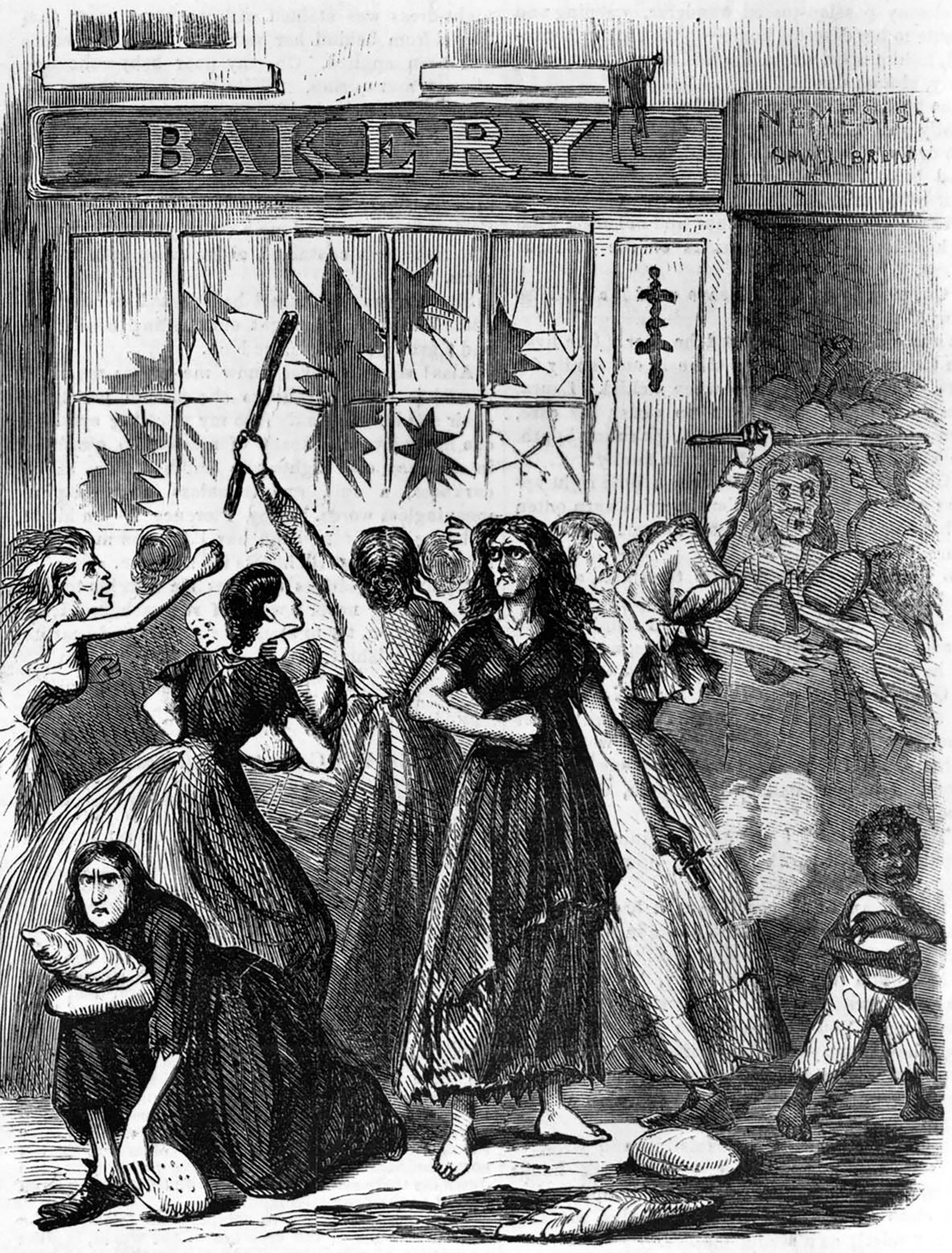
Yet Sherman’s invasion merely exacerbated problems already afflicting southern society. One was the basic material deprivation of life in wartime. By 1864, the federal blockade of southern ports had effectively stifled the Confederate economy. The flow of goods came to a screeching halt, which led to serious food shortages, especially among the poor. The lack of food—made worse by high rates of inflation as well as the refusal of large planters to grow anything of scale besides cotton—led scores of hungry women to riot in the streets of cities across the South, most famously in Richmond in March and April 1863. Georgia’s towns and cities were no exception. Also that year, groups of desperate women looted storefronts in places like Columbus, Milledgeville, and even Atlanta.
“Rare sport is … now to go shopping. No purse is large enough to hold all the ‘needful’ that is needed to make more than one purchase,” Stone wrote in early March, jotting down the high price of goods for her own future “amusement.” Stone, though shielded from severe hardship because of her wealth, nonetheless witnessed the South’s pauperization first hand. It appeared most often on the faces and in the sad stories of the women who came to collect items Stone wanted sewn, one of the few opportunities for women to earn extra cash in the wartime economy. These women were tired and hungry. They “rarely wore stockings,” went without shoes, and fashioned homespun clothes from flour sacks. Although they worked their fingers to the bone, the money they made from sewing could not keep up with the soaring price of goods. “O, I wish the Yankees would ever get here, before we are all murdered and starve to death!” one woman exclaimed to Stone.8
 Frank Leslie’s Illustrated Newspaper
As the war ground on, high inflation and shortages of vital goods, including food, caused by the Union naval blockade of Confederate ports, prompted desperate civilians to riot in various cities across the South, including Atlanta. Above: A depiction, published in Frank Leslie’s Illustrated Newspaper, of the “Bread Riots” that took place in Richmond, Virginia, in 1863.
For many of these women, their indigence dovetailed with a related problem plaguing the southern home front: a lack of men. When the war began, the Confederate army relied on volunteer spirit to fill its ranks. Following the firing on Fort Sumter, eager young men rushed to join the Confederate army in droves. But that spirit didn’t last. It waned as the realities of the war began to hit home, which forced the Confederate government to come up with more coercive methods of raising troops. In the spring of 1862, the Confederate government passed its first conscription act, which made southern males ages 18 to 35 eligible for mandatory military service. Critically, the government also passed a spate of exemptions to the law, including one, the infamous “Twenty Slave Law,” that exempted from service overseers of plantations of 20 or more enslaved people. Common southerners howled at this and other exemptions, believing they satisfied the interests of rich planters at the expense of the poor.
The Confederate government would ultimately pass two additional conscription bills, each of them further expanding the age range of potential draftees. The third and final bill, passed in February 1864, authorized drafting males between 17 and 50 for an unlimited term of service. Among the working women that Stone spoke with, the demands of Confederate conscription emerged as their chief complaint. Most had sons and husbands who had already been conscripted; some had sons and husbands who had been away for a few years; others had sons and husbands who would never return. Aside from the heartrending emotions of having loved ones off at the front, conscription became so acute for these women because it compounded their penury. With fewer men at home, the burden of household labor fell on their shoulders. Moreover, fewer men in the household meant fewer opportunities by which families could earn an income, making their wartime circumstances that much more difficult.
Thus the mournful laments from the women who visited Stone. “How can I get bread for my children!” cried one, whose husband was away at the front. For Stone, this became a common refrain. The women rued the war, damned the army, and had given up the Confederate cause. “They said their rich neighbors persuaded their husbands to volunteer in the first of the war, promising that their families would never suffer,” Stone wrote, recalling the women’s complaints. “But the promise was forgotten, & the little sewing they could get, hardly kept them alive.”9
These issues of hearth and home had a real impact on the Confederate war effort—in part because the complaints of their mothers and wives gave men a reason not to reenlist or keep fighting. In one particularly powerful instance, Stone came to the aid of a woman whose husband’s army furlough had come to an end. The woman, whom Stone described as “poor” and in “distress,” arrived at Stone’s home and asked if she had a little blue ink. She told Stone that it nearly “kills” her husband to think of leaving his family with nothing to eat, so if she could just get a little blue ink, she would change the word “June” to “July” on her husband’s furlough papers. By then, the woman imagined Sherman’s army would have arrived in Atlanta and the war might well be over, saving her husband from ever having to return to the front. Struck by the woman’s story, Stone scraped together a little indigo and turned a faded June into the “fairest” July for her.10
Elsewhere across Atlanta, conscription wrought havoc upon families. Women complained to Stone of having even their youngest sons enlisted. Men who believed they were far too old to fight were suddenly being impressed into military service. All the while, support for the war lagged. Stone herself knew that desertion had become a serious problem in the Confederate army. She also knew that conscripted men were now going to great lengths to avoid service, including simply taking flight. Indeed, all throughout the diary, Stone commented on meeting men who were on their way out of town, fleeing at a rapid pace to avoid having to serve.
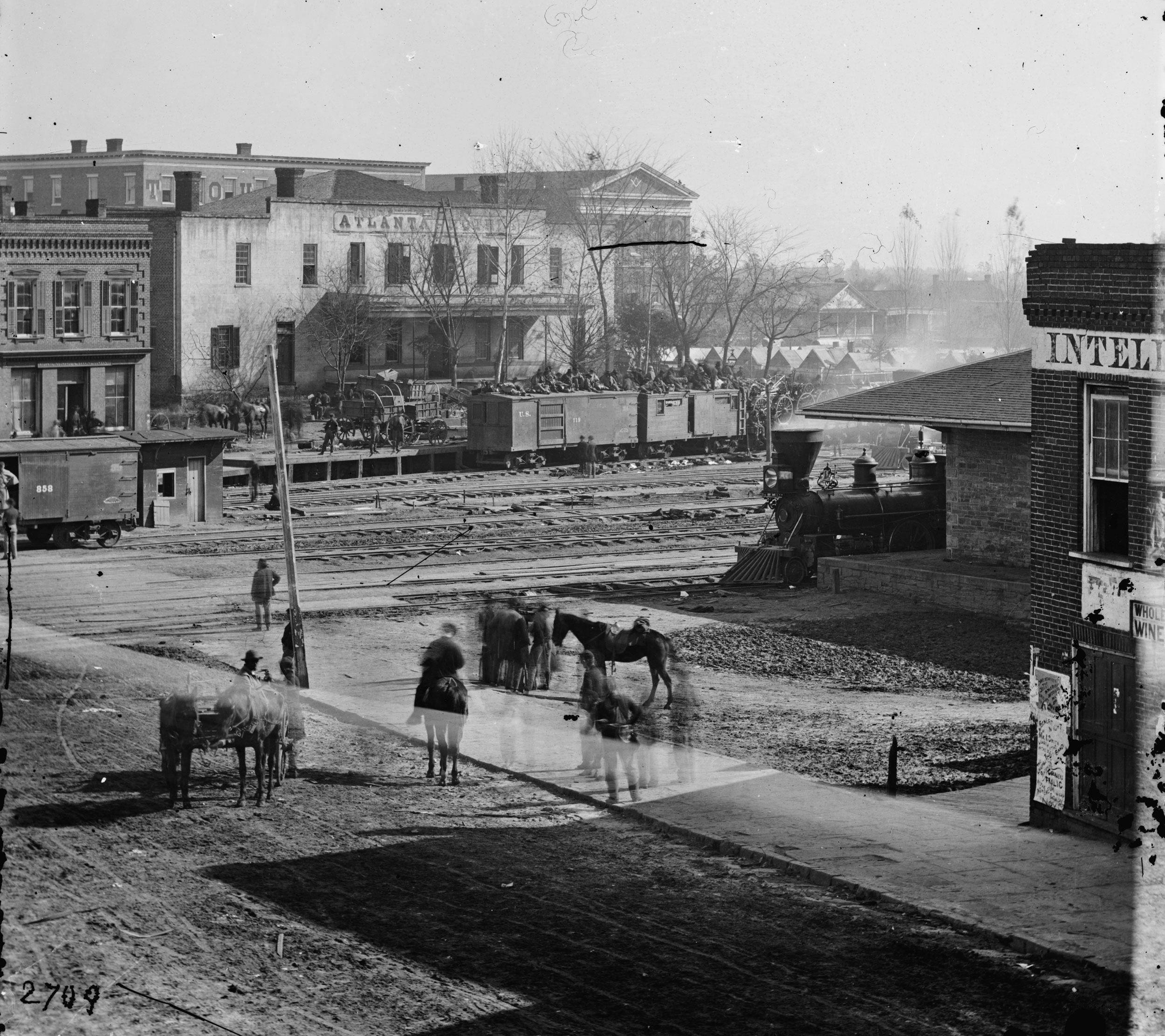
They were not alone taking flight. By the start of the summer, as Sherman’s army advanced closer and closer to Atlanta’s outer limits, the city entered a state of panic. Residents packed their bags, loaded their wagons, and made hurried escapes. It started slow, but eventually it seemed that the entire city moved with a tidal-like force for the safety of points farther south. “This has been a wild day of excitement. From early morning until now—engines have screamed—trains thundered along; wagons laden with government stores, refugees, negroes, and household stuff have rattled out of town. Every possible conveyance is bought, borrowed, begged or stolen,” Stone wrote in late May, just as the fear of Sherman’s nearing army gripped Atlanta.11
Amid these frenzied scenes, some of the basic structures of southern society fell apart. None proved as brittle as its self-professed cornerstone. While many of the fleeing families forced enslaved people to accompany them, these harried flights out of town nevertheless undermined slavery by shattering the systems of security and control that had long underpinned it. Stone herself noted that after President Lincoln issued the Emancipation Proclamation on January 1, 1863, city officials stepped up efforts to police the activities of enslaved people. They imposed curfews and monitored forms of public assembly. But the specter of Sherman’s army marching down from the mountains weakened these efforts, especially once the evacuations began and the city emptied out. On an individual level, too, these evacuations shattered the illusion of slaveholder power. In the case of Dan, an enslaved man whom Stone sometimes hired for his labor, his enslaver simply freed him rather than try to take him along as he fled the city. To Dan’s enslaver, the institution was as good as dead.12
One place slavery was still thriving, however, was in the Confederate army. In the lead-up to the Battle of Atlanta in late July, the Confederate army impressed scores of enslaved men into service, putting them to work digging trenches, building breastworks, and otherwise fortifying the city. Here, Stone did her own part to undermine the institution and the Confederacy by harboring, in the safety of her cotton house, four enslaved men who had been impressed into service as laborers. And this was just the beginning. Later in the year, after Atlanta fell and as Sherman swept across the state toward Savannah, thousands of enslaved people would flee plantations in an attempt to reach the presumed freedom of Union army lines. These movements struck like a dagger at the heart of the institution while hollowing out what was left of the framework of the Confederate home front.13
Meanwhile, the war continued to rage. By midsummer, it had practically arrived on Stone’s doorstep, which brought to the fore another issue sapping support for the Confederacy: As the Confederate army retreated, its soldiers proved just as destructive as their Union counterparts. Nothing was safe. Soldiers seized goods and supplies. Stone had her horse, Zephyr, taken and worked to death. Her turkey, George, had been appropriated earlier in the spring, which she found ironic considering he had been named after Union general George B. McClellan. “Last night they [the Confederate soldiers] called at ‘our house’;–broke into the kitchen—carried off two tubs of linen—took every implement lying about the yard—and more than all, they stole my beautiful George—my Turkey gentleman, the last of his tribe, I had permitted to live,” she wrote. Many of her neighbors reported similar interactions with retreating troops.14
 Library of Congress
As William T. Sherman’s army approached Atlanta in the summer of 1864, many residents hurriedly fled farther south, often creating frenzied scenes. Above: This George Barnard photograph shows civilians on boxcars ready to depart after the city’s fall.
By the time Confederate soldiers had begun falling back through Stone’s yard, the military situation in and around Atlanta neared a crisis point. For most of the spring, the war loomed far to the north. The only whiff of fighting arrived by way of wild rumors about massive battles and terrific Confederate victories. But around the start of summer, Stone’s own ears were hearing a different story. The low rumble of heavy guns firing in the distance told her that Sherman’s army remained on the move and that her liberation might well be nigh.
As the sound of those booming guns roared louder and louder, Stone cheered them on. She poured out her long-held hope of a Union victory in the pages of her diary and clung tightly to the American flag she had hidden away at the start of the war. Ominous news from the front that caused neighbors to fret and worry represented welcome, celebratory news for her, and she fought hard to suppress her excitement at the thought of Sherman’s arrival. “A little nearer each day, and each day the cannons are heard more distinctly,” she wrote on June 1.15
With the fortunes of war now falling in her favor, Stone became less of an outcast with every passing day. “Strange changes are taking place, and it is beautiful to note the contrast between things now & then,” she wrote, recognizing her rehabilitation back into society. Friends who had previously shunned her on account of her suspected loyalties now begged her for help. At least two old friends asked to stay with her when the city inevitably fell. They were sure Stone’s presumed loyalties would protect them as Sherman’s soldiers swooped into town. In another instance, an old acquaintance called in to see how she was “getting along.” He apologized that their “sociabilities” had been interrupted and promised to visit again. But Stone saw through it. While she “acquiesced” in person, she privately knew too much had changed, that these acts of reconciliation were too little, too late. She also recognized them for what they were: mere exigences of the war, a result of Sherman bearing down on a doomed city.16
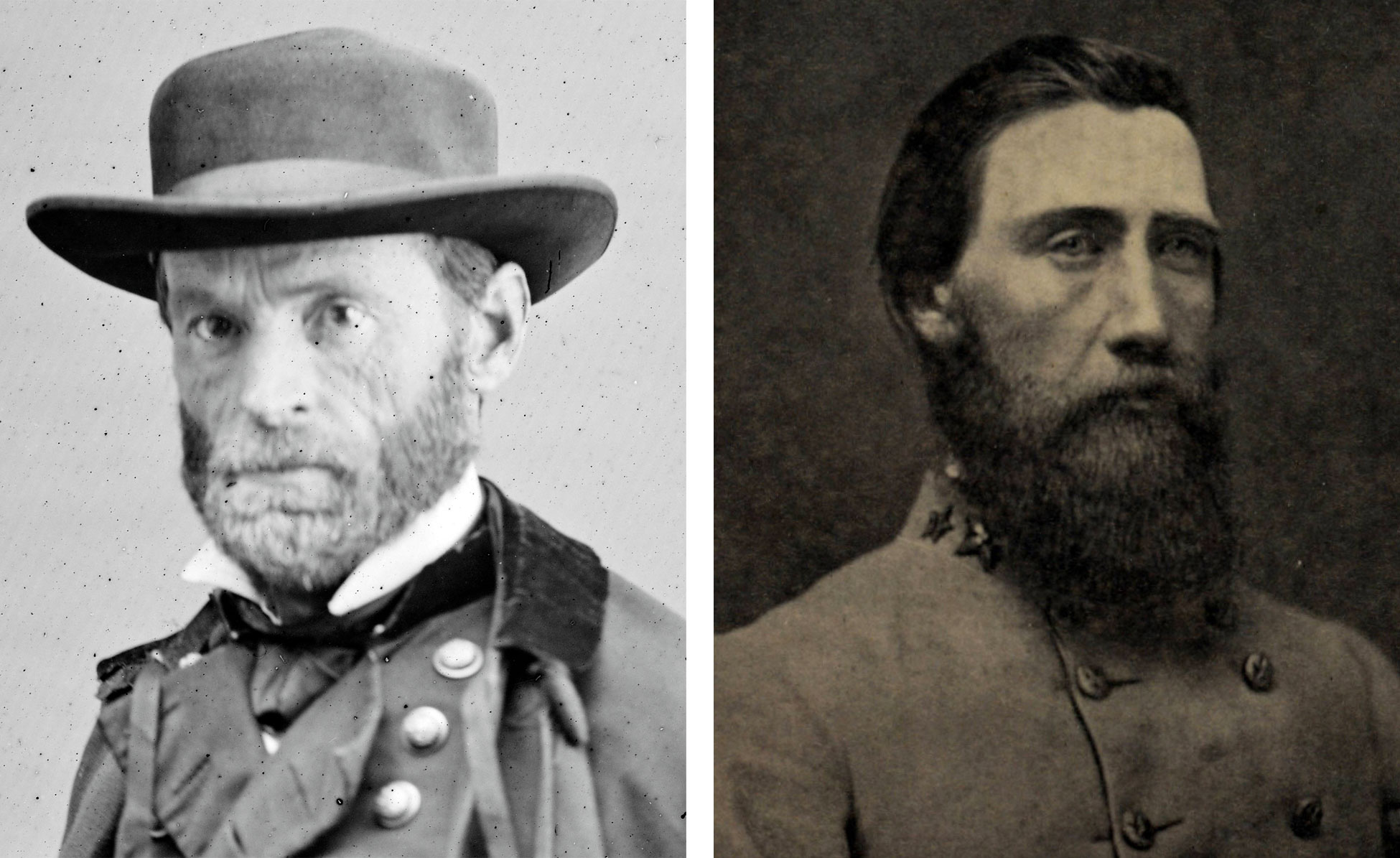
On June 27, the two armies tussling about in northern Georgia collided 25 miles north of Atlanta at a wooded rise known as Kennesaw Mountain. Confederate general Joseph E. Johnston mounted a stiff defense of the city, repulsing successive Union attacks from the base of the mountain. And yet, Sherman kept his army moving. Within days of the Battle of Kennesaw Mountain, Sherman’s flanking movements forced Johnston to fall back, which triggered a change in leadership atop the army. President Jefferson Davis, angry with Johnston for continuing to withdraw, relieved him of command in favor of a bold Texan named John Bell Hood.
It was a poor, fateful choice. Where Johnston moved cautiously, if sometimes to a fault, Hood went on the attack. On July 20, nearly a month after the fight at Kennesaw Mountain, Hood threw his beleaguered Confederate force against a stout section of Sherman’s front situated along Peachtree Creek, just six miles north of Atlanta. For several hours in the summer heat, Hood’s men clashed with Sherman’s lines, but the attack failed, forcing Hood’s men to fall back into town.
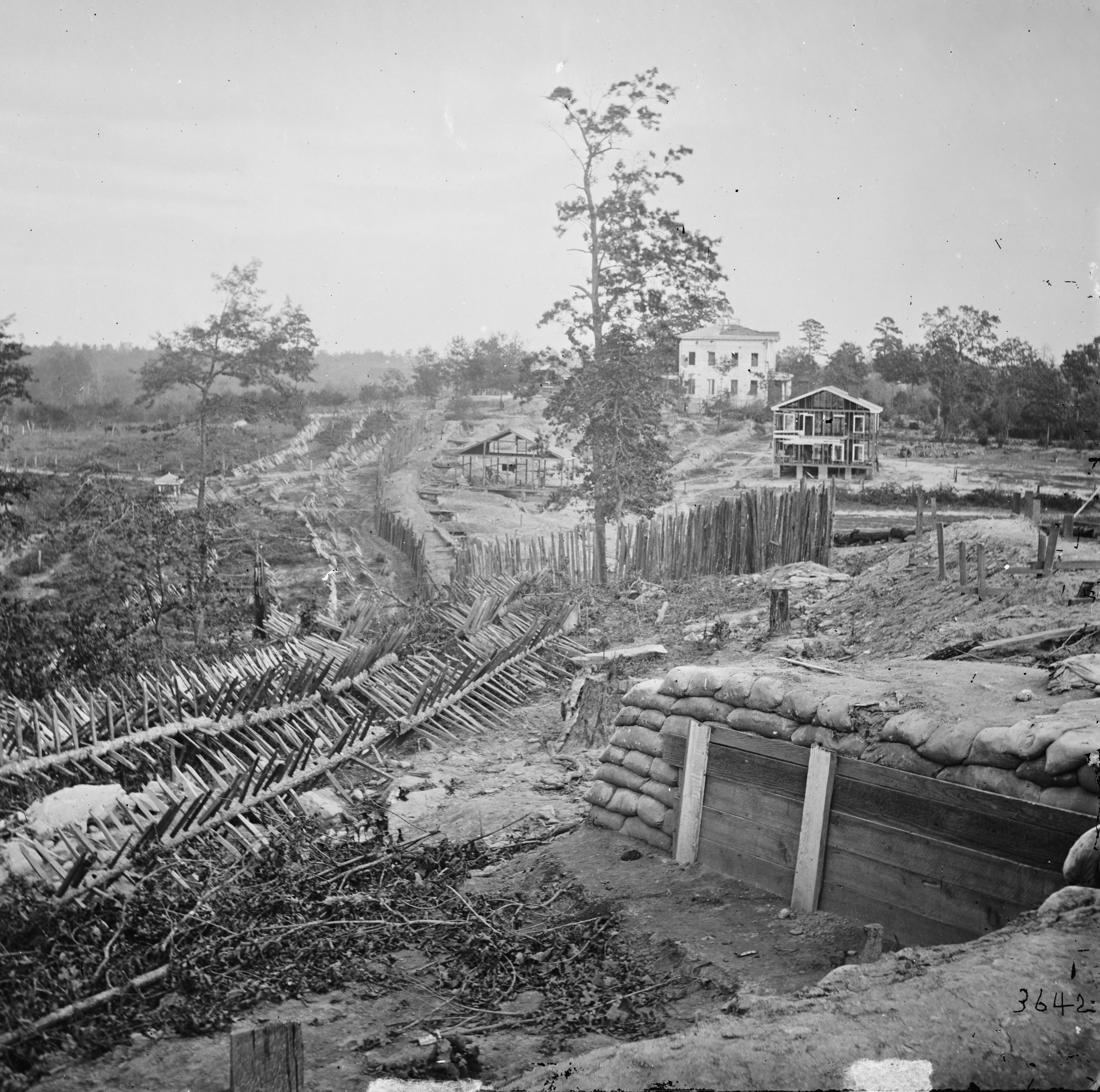
Stone’s quiet home suddenly became a war zone. The following morning, she woke to a Confederate hospital division setting up shop on her property. Soon afterward, soldiers flooded her home asking for food and supplies. “We are getting accustomed to the continued roaring of cannons & rattle of musketry, surrounding us with the fiery guerdon of war,” she wrote. Then at noon, the heavy firing began. A shell burst over the house. Then came another and another, both screeching through the air just over her home. And on it went for the rest of the afternoon, with the guns growing stronger by the hour and a thick layer of belching black smoke blanketing the horizon.17
 Library of Congress
“We are getting accustomed to the continued roaring of cannons & rattle of musketry, surrounding us with the fiery guerdon of war,” Cyrena Stone wrote as her home suddenly became a war zone in July 1864. Shown here: A portion of the elaborate Confederate defenses of Atlanta.
As evening approached, Stone couldn’t believe what she was seeing: Gray-clad soldiers were throwing up breastworks not far from her house, and artillery units were building batteries and wheeling in cannons. By midnight, the scenes surrounding her once peaceful abode had turned downright apocalyptic. “Words cannot picture the scenes that surround me—scenes & sounds which my soul will hold in remembrance forever. Terrific cannonading on every side—continual firing of musketry—men screaming to each other—wagons rumbling by on every street or pouring into the yard,” she wrote.18
Thus far, Stone had refused to evacuate. She did not want to give up her home and the comforts that came with it. She also wanted to be there to welcome Sherman’s soldiers when they arrived. But it was no longer safe for her to stay. The cannonading had come too close. The firing had reached a fever pitch. “They are falling back & will soon fight at the breastworks. It will not be safe for you to remain here madam,” a Confederate officer told her that evening.19
At this, Stone’s emotions welled up. The reality of her situation—alone, in danger, and surrounded by soldiers—began to hit home. As she wandered aimlessly about trying to collect her valuables, a few soldiers stepped in to help gather her things. She decided to wait through the night, hoping for a break in the action. “So here we are watching out this fearful night—waiting for a still more fearful morning,” she wrote, describing the “lurid light from the fires dotting the yard & grove” and how it “revealed groups of soldiers here and there—some asleep on the earth, & some leaning against the trees in a listless way—as if life had no longer any gladness for them.”20
The next morning, Stone moved in with a friend who lived in a place of greater safety. She left behind her piano, packed her books away in a locked closet, and gave her pigs—including one named after General Grant—to the soldiers. “A strong feeling came over me as I passed down the shaded walk,” she wrote, “but I looked not back, for I felt as if leaving those pleasant scenes forever.” Through it all, she remained mostly undaunted, buoyed by the belief that victory sat near at hand. “If such upheavings—such sunderings & losses, were to be the entrance gate into the large life of liberty for which I had sighed … I would go fearless, casting back no look of regret and longing for what I left behind,” she wrote in one of the diary’s final lines.21
As she rode away from her home, reflecting on all she had seen and heard, the guns opened up again. It was July 22. Over on the city’s eastern edge, the Battle of Atlanta had just begun.
 National Portrait Gallery (Sherman); South Caroliniana Library (Hood)
William T. Sherman (left) and John Bell Hood
While the Battle of Atlanta, a brutal, daylong fight that claimed some 9,000 casualties, marked the end of Stone’s diary, it did not end the campaign for Atlanta. After the battle, the two armies clashed once more before Sherman decided to lay siege to the city. For roughly the next month, Sherman hoped to wrench surrender from Hood. Instead, the Texan opted to flee. On the evening of September 1, he withdrew his army back into northern Alabama, leaving the city open to Sherman’s men. Atlanta, one of the Confederacy’s last great centers of modern industry, had officially fallen, paving the way for Lincoln’s reelection in November and an eventual Confederate defeat.
Stone survived the siege and ultimately the war. She reunited with her husband later in the year before resettling in Vermont. She remained there until 1868, when she succumbed to an unknown illness at 38 years old.
Yet Cyrena Stone’s diary, all 80 hand-scrawled pages of it, lives on. Although only a fragment survives, the “Miss Abby Diary” nevertheless tells an important story about the final days of the Confederacy and the southern home front. She watched them both collapse before her eyes.
Bennett Parten is an Assistant Professor of History at Georgia Southern University. He is the author of Somewhere Toward Freedom: Sherman’s March and the Story of America’s Largest Emancipation (2025) and holds a Ph.D. in History from Yale University.
Notes
1. Cyrena Bailey Stone Diary Typescript, Mss 1000, Hargrett Rare Book and Manuscript Library, University of Georgia Library, 46 (hereafter cited as Stone Diary).
2. Thomas G. Dyer, “Atlanta’s Other Civil War Novel: Fictional Unionists in a Confederate City,” The Georgia Historical Quarterly, Vol. 79, No. 1 (Spring 1995): 147–168.
3. Thomas G. Dyer, Secret Yankees: The Union Circle in Confederate Atlanta (Baltimore, 1999), 3–4.
4. See Lorien Foote, “Rethinking the Confederate Home Front,” The Journal of the Civil War Era 7, No. 3 (2017): 446–465.
5. Quoted in Bill Hendrick and Stephen Davis, The Atlanta Daily Intelligencer Covers the Civil War (Knoxville, 2020), 118.
6. Thomas G. Dyer, “Vermont Yankees in King Cotton’s Court: The Case of Cyrena and Amherst Stone” Vermont History, Vol. 60, No. 4 (Fall 1992): 205–226.
7. Stone Diary, 1.
8. Ibid., 9, 13–14.
9. Ibid., 18–19.
10. Ibid., 67–68.
11. Ibid., 41–42.
12. Ibid., 38–39.
13. Ibid., 54.
14. Ibid., 16.
15. Ibid., 49.
16. Ibid., 39–40.
17. Ibid., 63.
18. Ibid., 64.
19. Ibid., 66.
20. Ibid., 68–69.
21. Ibid., 71.
Related topics: women