Library of Congress
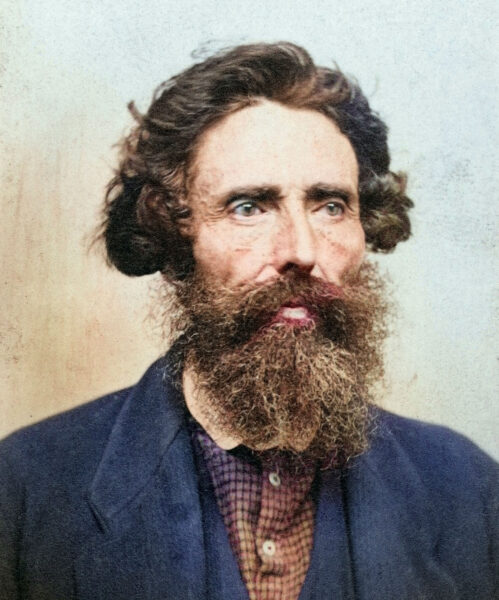
Union veteran Timothy Lee (left) and Confederate veteran James Hannon shake hands for the camera at an 1887 meeting of their respective veterans’ groups in Richmond, Virginia.
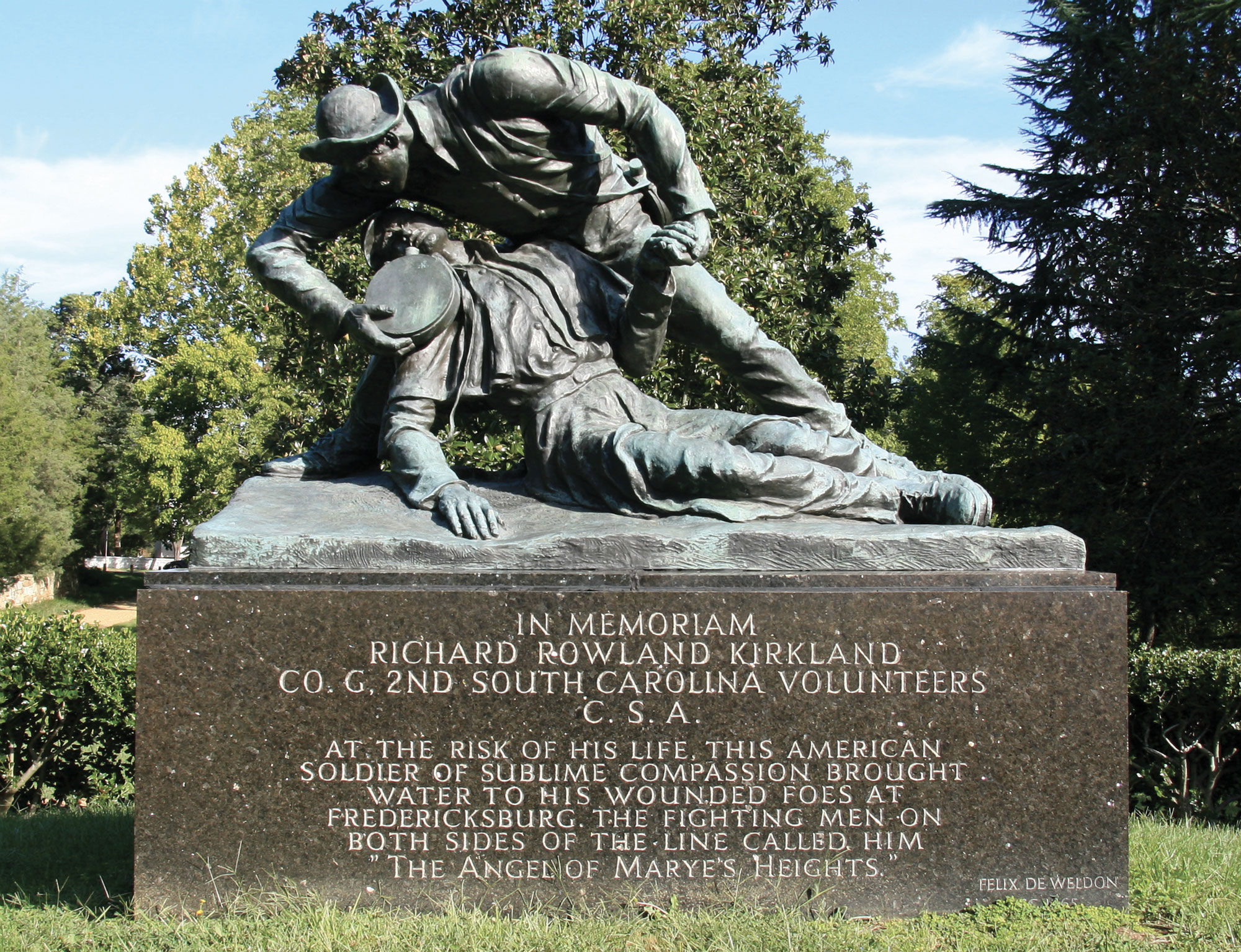
At Fredericksburg and Spotsylvania Military Park several years ago, there was an exhibit in the visitor center titled “Friendly Enemies.” It highlighted soldiers’ quotes and sketches regarding the trade of coffee and tobacco among Union and Confederate soldiers stationed on the Rappahannock River one winter during the Civil War. Such interactions between enemies intrigued me and many visitors (I was working as a seasonal park ranger). I began incorporating accounts of fraternization in my walking tours on Marye’s Heights, where stands the Sergeant Richard Kirkland monument. The tale behind it was that after the fierce combat at Fredericksburg on December 13, 1862, the South Carolinian hopped the stone wall to give water to wounded and dying Union soldiers. At the time, I thought the charity shown by Kirkland and the fraternization from that winter were a nice juxtaposition to the war’s carnage. The visitors’ reactions ranged from puzzlement over men’s abilities to both befriend and kill one another to declarations that such fraternization and human kindness proved they were never enemies in the first place. The former was the same inquiry I used throughout my book project on fraternization as I traveled the country reading soldiers’ letters and diaries. Because it is such an age-old and intriguing circumstance in war, I tried to answer with where and in what ways—and why—these interactions transpired. The danger in examining soldier fraternization is that it can romanticize war. Stories of enemies’ brotherly actions during the bloodiest war in our history lessens the deep-seated chasms that existed in the nation’s foundation. Moreover, such stories served as powerful fodder for constructing the “Lost Cause” rendering of the war’s history and assist those who still today want to remember a particular nostalgic version of the conflict. Interactions between enemies at war served a different purpose for those who used them to further their postwar agenda.
***
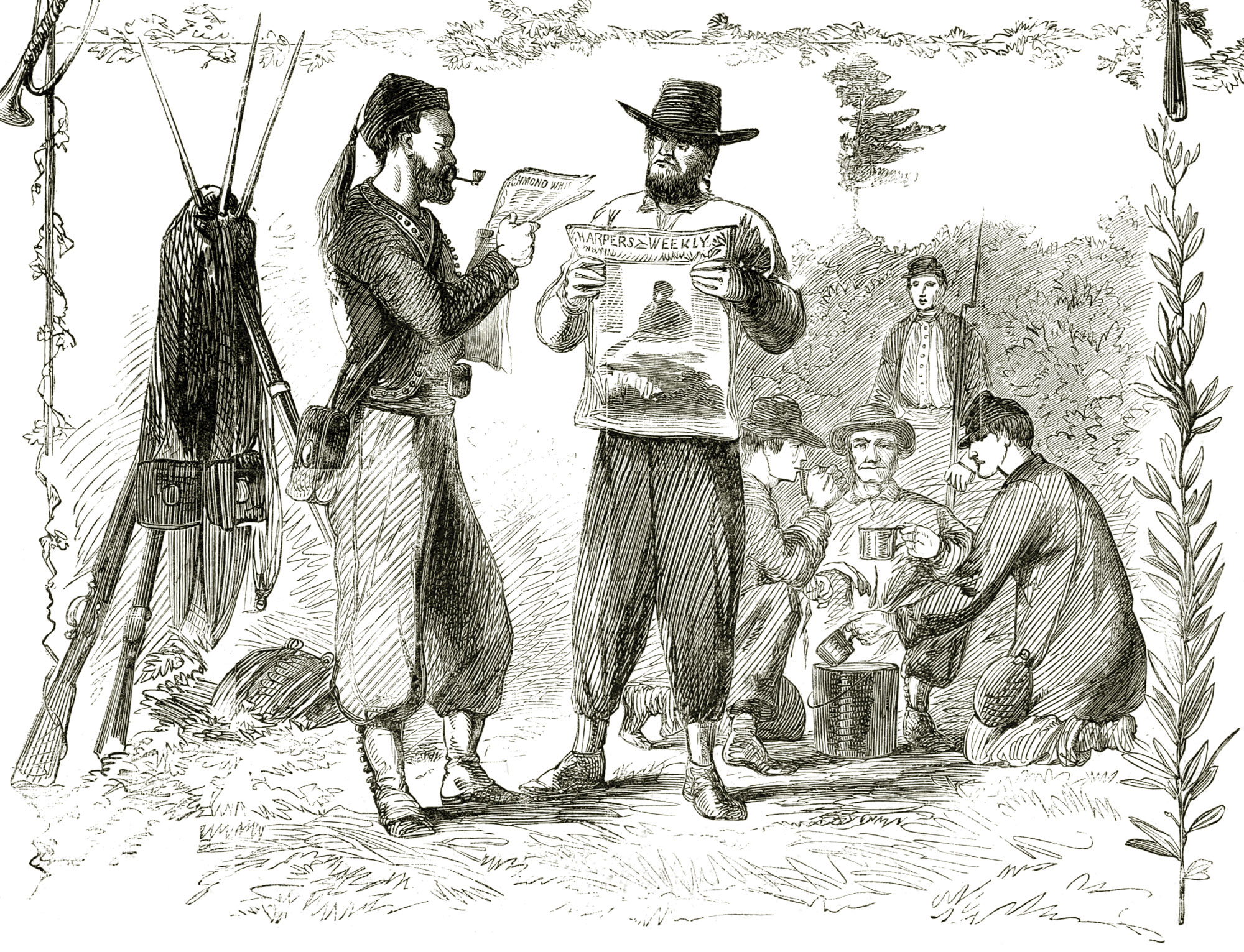
Fraternization during the Civil War was organic. Enemies caught sight of one another while straggling on long marches and retreating after campaigns, often at some distance from their main armies. These men spoke the same language and could be curious about those on the opposite side. Men would often call out to one another and secretly meet to swap coffee and tobacco. These instances of fraternization occurred across all theatres. But a certain occasion lent itself to fraternization more than any other: picket duty. When armies sat opposite each other for long periods, men had the opportunity to watch their enemies at close range. And when they had orders against firing at their opponents or were in winter encampment, soldiers grew accustomed to such observation. As early as summer 1861, soldiers like Private Francis Edward Bayol of the 5th Alabama Infantry were conversing with the enemy outside Fairfax, Virginia. He spoke with Union pickets, exchanged buttons with them, and even agreed to mail a letter for one of the Federal soldiers who had family in the South.1 Soldiers consistently complained about boredom and fatigue on picket duty. They took 24-hour shifts, out in front of their army’s position, and were punished if they fell asleep. Shouts and jokes across the neutral zone often alleviated the boredom. Even more satisfying was any exchange of commodities. “For our tobacco, our pickets traded coffee, an essential drink if one is to keep awake and warm,” one Mississippian noted while on picket duty.2 The Union navy blockaded southern ports, making it difficult for South American coffee to reach Confederate quartermasters. On the Chattahoochee River, John Hill Ferguson of the 10th Illinois Infantry wrote that Confederates were “very friendly and anxious to trade tobacco or something with us in order to get some coffee.”3 Men would sneak into the neutral zone and leave items for one another. If a river was too deep to cross, soldiers would construct small sailboats to float packages across the lines. Such were men’s efforts to make picket duty tolerable. They were bored and exhausted; under relatively little threat, they got through the day by bartering with the enemy.
 Maurice Savage / Alamy Stock Photo
Stories of wartime fraternization between enemies—like a story told about Sergeant Richard Kirkland at Fredericksburg—have served different purposes since the end of the conflict, including romanticizing the struggle and furthering the Lost Cause rendering of the war. Left: the Sergeant Richard Kirkland monument at Fredericksburg and Spotsylvania Military Park.
Just as important as coffee and tobacco was information. Newspapers were among the most traded items. Soldiers learned about campaign strategy and political happenings from camp rumors that were often speculation, and letters from home that were usually weeks old. They purchased newspapers from sutlers and traded them in camp. Picket duty, however, presented an opportunity to obtain enemy newspapers. After the Battle of Chancellorsville, Vermont infantryman Wilbur Fisk offered a Confederate picket copies of The New York Herald, Boston Post, and Windsor Journal in exchange for the Daily Richmond Examiner.4 Enemy papers offered soldiers a way to see if they were having an impact on other campaigns, elections, prisoner exchanges, etc. While besieged at Chattanooga, Frank Phelps of the 10th Wisconsin Infantry noted that Confederate pickets would come down the slopes to trade newspapers every day. He got papers from Richmond and Augusta in exchange for a New-York Tribune and Wisconsin State Journal.5 The news was not always what men hoped to learn. Union troops loathed reading anti-war northerners’ plans for a negotiated peace, while Confederates feared that Union forces might be reported moving through their southern hometowns. Even if it was bad news, soldiers still sought newspapers to contextualize their place within the broader war. When the command positioned small groups of soldiers close to the enemy, both sides used it to their advantage.
Discourse and trade with the enemy was forbidden. As these interactions became more common, army commanders cracked down on them. Union soldiers risked being caught and court-martialed. The United States developed two Articles of War to punish fraternization. No. 56 penalized “Relieving the enemy with victuals” and No. 57, “Holding correspondence with and giving intelligence to the enemy.”6 About three dozen Union soldiers were court-martialed for fraternization and over half were found guilty. In comparison with more egregious offenses, such as desertion and drunkenness, the penalties for fraternizing—hard labor, forfeiture of pay, public humiliation—were relatively light.
And yet men wrote home about fraternizing, their participation in it, and even details. Why? Fraternization was a way to obtain products and information the army did not provide them, a relatively mild resistance against the military hierarchy and a balm to some of the challenges of soldiering. It demonstrated a soldier’s independence and efforts to better his situation. Soldiers were pragmatic and proud of it.
Just as military tactics evolved, so too did fraternization. As the war ground on, armies increasingly dug protective trench networks to avoid deadly frontal assaults across open spaces. In battles like Vicksburg, Chattanooga, Atlanta, and Petersburg, armies besieged each other, where before, infantrymen could differentiate between an approaching battle and the lull of camp life and campaigning. The only time men saw their enemy up close, outside of combat, was on picket duty, where men were ordered to refrain from firing unless a major engagement developed. In siege warfare, especially for the pickets in the first line, men were under constant fire. Many of them took it upon themselves to lessen the threat level and negotiate ceasefires. While besieged in Atlanta, Alabamian J.P. Cannon wrote, “Without consulting the officers we have agreed upon an armistice. All firing between the pickets has ceased and consequently we have had a very quiet day.…”7 Such soldier-initiated ceasefires allowed for feelings of tranquillity, peace, and relief. At Petersburg, Massachusetts artillerist Charles Wellington Reed wrote to his mother how “our pickets and the reb pickets” had agreed to an armistice. The ceasefire “suited us ‘to a T,’” said Reed, “as more than half of their infernal bullets come flying, buzzing, and skipping all around us, which is exceeding annoying when a fellow wants to get a canteen of water or do a little cooking.”8 When officers came to the front and commanded them to fire, some soldiers promised two “warning shots” to alert the enemy that a negotiated truce was over. What may have seemed like friendship, instead demonstrated the most important goal: survival. Soldiers fraternized with their enemy to survive.
 Harper’s Weekly
Picket duty could offer opposing soldiers a chance to alleviate their boredom—and obtain such sought-after goods as coffee and newspapers. Above: This Alfred Waud sketch, titled “Pickets Fraternizing over Coffee and Exchanging Papers,” was published in Harper’s Weekly in July 1862.
How fraternization survived the Civil War is a remarkable backward transformation, from animal survival to a concocted fellow feeling that was elementary to the myth of the Lost Cause. Exchanges between enemies, told by the men who wrote about them as they experienced them, paint a much different picture from their depictions after the war. Yes, men were curious about their foes and sometimes empathized with their struggles as fellow soldiers. But postwar stories ignored soldiers’ autonomy and instead focused on imagined idealistic thoughts about the enemy. This memory of fraternization was developed not by accident and was used to promote an agenda that championed honor and sacrifice, while ignoring slavery as the cause of the war.
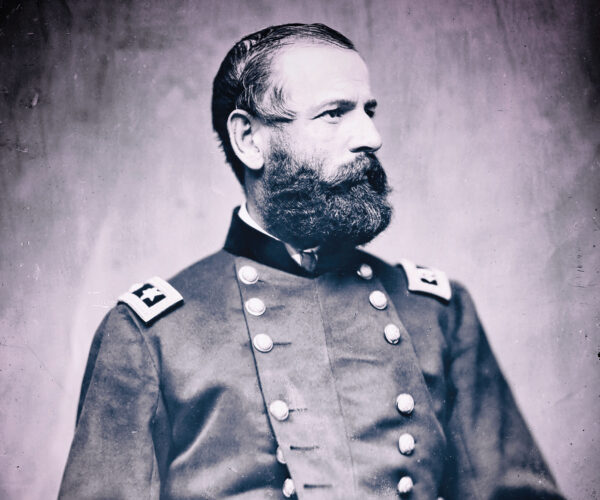
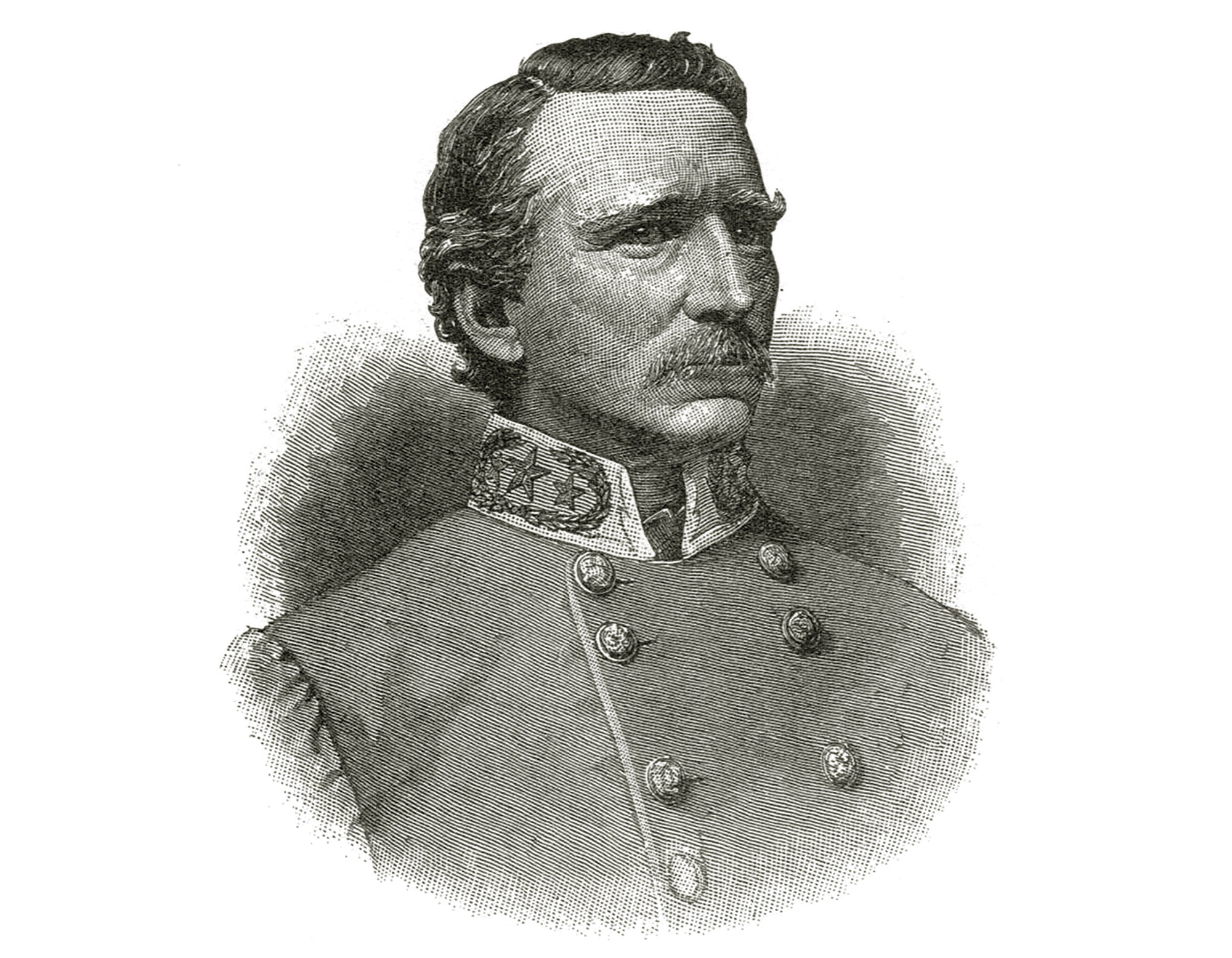
The Kirkland monument at Marye’s Heights was dedicated in 1965, in the midst of the civil rights movement, the year John Lewis and Hosea Williams led the march across the Edmund Pettis Bridge, the year the Voting Rights Act was signed by President Lyndon Baines Johnson, the centenary of the Civil War’s end. Kirkland’s statue, like other monuments at courthouses and public squares, mostly throughout the South, represented the other interpretation of soldiers’ fraternization during the war. There are no contemporary accounts documenting Kirkland’s benevolent actions at the Battle of Fredericksburg; he was killed in action at Chickamauga. The first Kirkland story appears in 1880 when his brigade commander, General J.B. Kershaw, wrote a piece titled “Richard Kirkland: The Human Hero of Fredericksburg.”9 The article appeared in the Southern Historical Society Papers, a publication of an elite southern organization led by such notable ex-Confederate officers as Jubal Early, Braxton Bragg, P.G.T. Beauregard, D.H. Hill, and John B. Gordon. In publishing recollections of wartime experiences, these men controlled who authored the accounts and their intended purpose. Articles in the SHS Papers ignored the issue of slavery as the central cause of secession, attributed Confederate defeat to a larger and better-supplied enemy, and projected southerners as brave, steadfast, and heroic soldiers—all things Kirkland’s story would exemplify.10 More importantly, ex-Confederates wanted to reclaim their positions of political and social control in the South. The Compromise of 1877 allowed northern Republicans to have Rutherford B. Hayes in the White House, with the promise to remove all federal oversight in the South—effectively ending the period known as Reconstruction. With their restored hegemony, ex-Confederates simultaneously led a full-scale assault on freed people while advertising their own version of the war. In 1880, Kirkland’s story suggests that if soldiers like him were able to see past sectional divisions and let bygones be bygones, present society could as well. Examples of such fraternization served as excellent evidence for those trying to rationalize Confederate defeat and restore the prewar racial order.
 Battles and Leaders of the Civil War
J.B. Kershaw
The SHS Papers also published anecdotes about “Billy Yank” and “Johnny Reb” sharing coffee and tobacco—thought to be ideal ways to promote sectional reunification. For example, in 1884 ex-Confederate Reverend J.G. Law reflected on a scene of fraternization he claimed occurred in 1862, at the Battle of Shiloh. He depicted the “ragged, war torn, and half-starved” Confederates meeting with the “well-dressed, well-fed Federals,” professing that the worst part “of this bloody war is fratricidal strife,” citing the well-equipped enemy from the Lost Cause story.11 Similarly, Lieutenant Colonel M.J. Smith, in his 1886 piece, “Combatants Fraternizing,” claimed that when enemy soldiers met across the lines, they never boasted of their latest victory but rather commended one another on their “skills and bravery.”12 Smith used fraternization to highlight veterans’ shared courage and suggested if men came together during the war, then Americans could certainly find that common ground in peacetime.
In their efforts to focus on fraternalism overcoming antagonism, SHS editors published an unknown author’s tale titled “Phi Gamma in War—Instances of Restoration of Good Will and Fraternity.” (Masonic and fraternal societies had survived the war.) The author of “Phi Gamma,” assumed to be the fraternity Phi Gamma Delta, witnessed, or possibly heard of, or more possibly fabricated, a scene during the Battle of Bull Run in July 1861. An unknown Confederate approached a wounded Union soldier. After the Confederate offered him water, the Union soldier “Looked up and smiled, and received a pitying, kindly smile in return, accompanied by more water. On the breast of the Federal was the pin of Phi Gam.” After realizing they were both Phi Gammas, the “Confederate placed beneath the Federal’s head a carefully-folded blanket, gave him another drink of water from his own canteen, placed a well-filled canteen of water within easy reach of him, looked wistfully and lovingly into his pallid face, touched the pin, pressed his hands again, said: ‘God be with you Phi Gam,’ turned away and disappeared.” A year later, at the Battle of Chantilly, Virginia, in September 1862, a mortally wounded Confederate asked a Union soldier for water. The Federal covered him with his blanket and sat beside him. In the morning, the Confederate uttered a quote from Horace. The Federal asked him, “When did you read Horace?” He said, “When I was first a Phi Gam.” “I am a Phi Gam,” said the Federal, “with choking voice.” When he died “the Federal scooped out a grave, kissed the forehead and the hair of his brother Phi Gam, lowered his body into the grave, and tenderly covered it with the soil of Virginia.” These stories suggested that if antebellum-era fraternity allegiances and friendships withstood the challenge of warfare, perhaps the nation could as well.
Our narrator continues with an occurrence on Lookout Mountain during the Battle of Chattanooga in November 1863. A wounded Confederate asked a Federal officer, “Please, sir, my left leg is shot and broken, and I need some water. I am so thirsty, sir; can you give me some water?” The tale continues: The officer gave water to the wounded Confederate and after the battle helped him to the foot of the mountain and sought for a surgeon. (There is already cause for much skepticism: The officer’s rank is unknown; why would an officer be so near a wounded enemy for a prolonged amount of time; and how would he be able to find him after the battle?) The author proceeded: The surgeon’s lantern “fell upon a Phi Gamma pin fastened to the breast of his coat.” The Confederate asked his rescuer if he was a Phi Gam because both he and his father were. The Federal replied to the surgeon, “Doctor, this is my brother; as you value my friendship, deal gently and uprightly with him. Give him your best attention, your best skill.” Now, fast forward to January 1895, when the same Federal officer was at Lookout Mountain, revisiting the battlefield. A Confederate amputee on crutches came up to him and said:
“I believe I know you, sir. I know your face and your voice. God grant me that I am not mistaken, sir. As your forces charged along the side of Lookout, a Federal officer gave a wounded Confederate a canteen of water, told him to drink, put a knapsack under his head, and then rushed on with his men. That evening he came back to the wounded Confederate, … called a surgeon, pledged him to care for and treat the Confederate, and then went back to his men. Do you know anything about that officer, sir?” … Trembling with emotion that he could not conceal the Federal said: “I am that Federal, and you——.…” They joined their hands … and sang: “Long may our land be bright, With freedom’s holy light, Great God, our King.”13
 Battles and Leaders of the Civil War
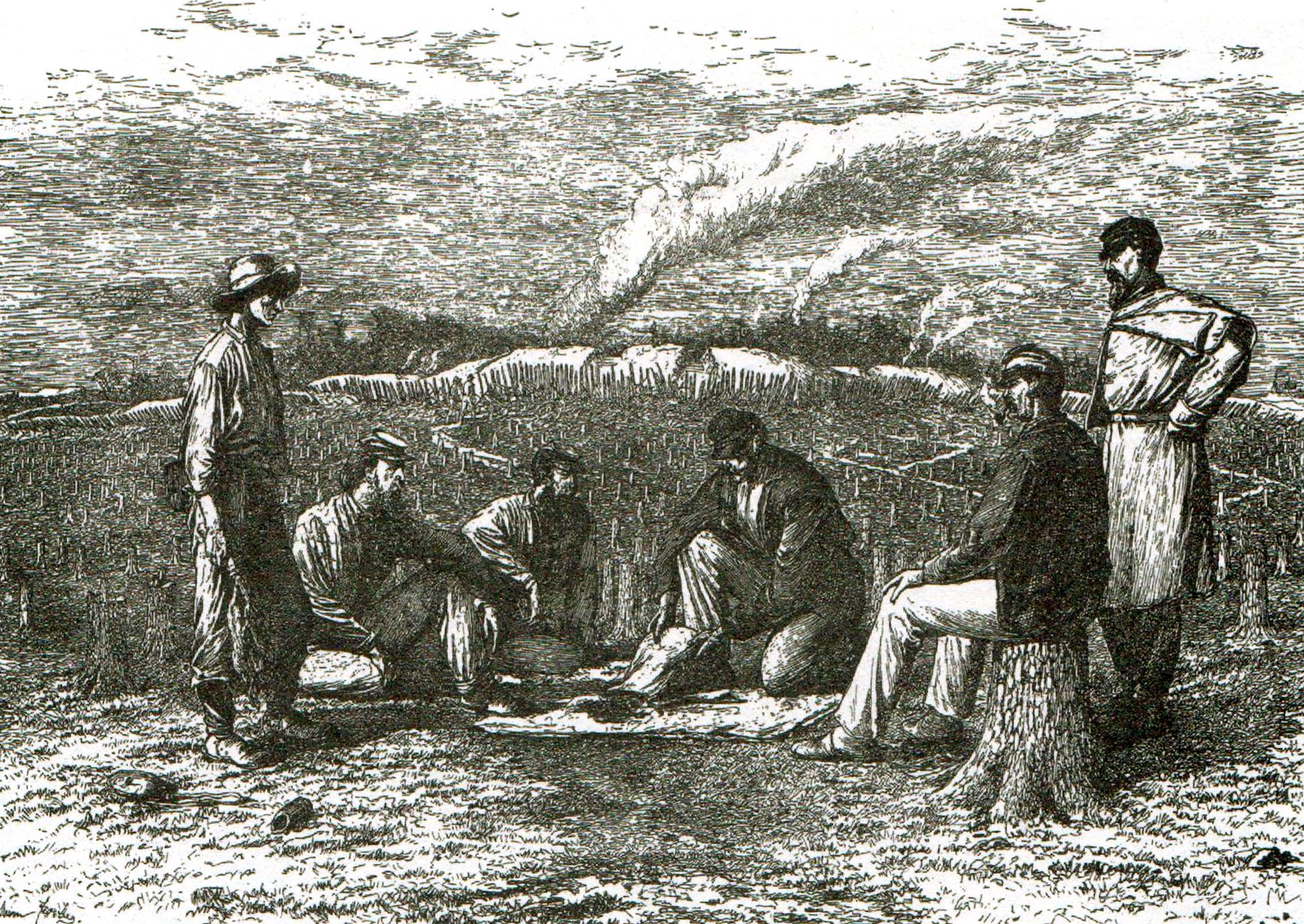
While instances of fraternization were well documented during the war, many postwar tales of benevolence between Union and Confederate troops seem far-fetched. Above: During a truce, Union and Confederate troops exchange items in a sketch published in Battles and Leaders of the Civil War.
This romantic account was written in 1900. It is not to say that this reunion was impossible. But the difference in ranks, lack of identifications, and third-person perspective make it seem highly unlikely. Why publish something so far-fetched? The SHS Papers used the “Phi Gamma” story and others to promote fraternal traditions of civility and reconciliation.
In the decades following the war, other publications including Battles and Leaders of the Civil War, The Blue and the Gray, the National Tribune, Confederate Veteran, and the Southern Bivouac all printed similar recollections of friendliness between enemies. These periodicals reached a wider readership and contained more accounts from former enlisted men. In Battles and Leaders, Thomas T. Roche of the 16th Mississippi Infantry recollected “Fighting at Petersburg.” He recalled cutting wood with northern soldiers in between the picket lines. Roche claimed that afterward, the Federals invited him to their picket post for dinner. He stayed for over an hour because they assured him “on their honor as soldiers” he would be safe to return to his lines. Roche then remarked, “The facts seem strange and improbable to the reader who did not participate in the late unpleasantness, but there are thousands today who cherish the remembrance of many such incidents.”14 Roche’s account, originally published in May 1883 in the Philadelphia Weekly Times, uses the southerner’s postwar term “late unpleasantness,” then highlights the cordiality between enemies during and after the conflict.
Despite being written by veterans who served as lower-ranking officers and privates, tales of fraternization in Southern Bivouac and Confederate Veteran resemble those written by their former officers in the SHS Papers. In 1921, W.A. Day of the 49th North Carolina Infantry recalled an Indiana soldier swimming in the creek in front of their lines. Day recalled that when he left, “He said he hoped we would live through the war and meet in Indiana over a big bottle of brandy.”15 Day’s memory suggests the men already looked forward to the war’s end, when they could be reunited as friends. Confederate Veteran published A.C. Jones’ 1918 recollection that depicted a ceasefire orchestrated between him and Union pickets on the Rappahannock. Jones called out to his opponent, “I want to know if it’s peace or war” and then asked, “I wish to make a bargain with you. I intend to place a line of pickets on this side of the river. If you do not fire upon them, we will agree to keep the peace.”16 During the winter of 1862–1863, soldiers remained on the banks of the Rappahannock for five months. Men on picket duty had orders not to fire. Not only was most of their time spent in winter quarters, but they saw one another on picket duty almost every day. It was no surprise to see the enemy and men did not fear engagement. Thus, it seems highly unlikely that a “truce” needed to be negotiated. Perhaps after 55 years, Jones forgot why the soldiers were not firing on one another. Maybe he wanted to cast himself as a man of mercy and reconciliation. As men at the end of their lives, they had autonomy to choose how they wanted to be remembered. Veterans’ stories of fraternization propose lessons of forgiveness and unity. But Jones and Day wrote during World War I, when the cruelties of Jim Crow still rampaged, and the heart of these stories was unification over their Americanness, and allied to that, their whiteness.
This culture of reunion was not limited to Confederate veterans. Their northern counterparts used stories of fraternization similarly in periodicals. In the National Tribune, a veteran recalled that after fraternizing with an enemy soldier, “we wondered if there was really a bloody war going on in the land between Americans.”17 In wartime accounts, while soldiers did comment on their similar circumstances, they did not question their duty.
Years after the war, a veteran commented at a joint gathering of members of the Grand Army of the Republic and the United Confederate Veterans that the event was “far from reviving sectional feeling,” and “had the effect of obliterating all differences of opinion in regard to the issues of the war and bringing about a sentiment of mutual respect and esteem.”18 He confirmed that when veterans came together, they ignored the war’s causes and focused on their commonalities. In 1893, Blue and Gray: The Patriotic American Magazine published a recollection by a Union veteran named Walker Y. Page. He prefaced his story on fraternization with a disclaimer that cautioned, “I want to emphasize what I said about the soldier and their feelings towards the war and towards each other…. [N]o bitterness existed, even while duty called upon them to cut each other’s throats in battle.” Before even getting to the fraternization scene, Page made it a point to deny any sectional animosity between enemies. Then, he explained that while on picket duty, he came across an old slave cabin and heard southern soldiers receiving a sermon. Page dropped his arms, went inside, and then went back to his commanding officer. After Page explained that the men needed that space, the officer allegedly passed an order that “rebs should remain undisturbed while holding religious services in said cabin.”19 Veterans on both sides used scenes of fraternization to showcase their own compassion and downplay their sectional divisions. Union veterans were just as much purveyors of the Lost Cause narrative as ex-Confederates.
Scholars of the era undoubtedly came across these examples of fraternization—which influenced public opinion—in their research. Unfortunately, postwar versions of fraternization became the dominant scenarios. Notions that soldiers used their enemy to get information and save their own lives were mangled by the Lost Cause. Throughout the 20th century, even after all eyewitnesses were dead, the southern version of the war remained hard at work. As historian Barbara Fields noted in Ken Burns’ documentary series The Civil War, the war of attrition over the memory of the war “can still be lost.”20 When Lost Cause depictions appear in popular history and films, the romanticized accounts of fraternization are usually close by.
In Ron Maxwell’s 2003 film, Gods & Generals, there is a mostly accurate scene that depicts the exchange of coffee and tobacco between enemy soldiers. Two soldiers call out to one another, joke about Union general Ambrose Burnside’s incompetency, and swap a smoke and a drink before going their ways. (“Silent Night” is playing in the background, which could be a nod to the Christmas Eve truce soldiers arranged on a piece of the Western Front in 1914.) In Maxwell’s 1993 movie, Gettysburg, there is a scene in which 20th Maine officer Tom Chamberlain asks a group of captured Confederates about their reasons for fighting. One responds, “I ain’t fightin’ for no darkies one way or the other. I’m fightin’ for my rights.”21 This epitomized the aspect of the Lost Cause myth stating that common Confederate soldiers only fought for states’ rights and in no way benefited from their whiteness. The scene exemplifies the misuse of fraternization stories after 1865.
In the hundreds of known accounts on wartime fraternization, there was never a single case in which a soldier asked his enemy his reasons for fighting. For those who still ignore the causes and consequences of the war—slavery and segregation—stories of fraternization serve as the perfect impediments to questions surrounding Confederate accountability. Romanticized accounts of friendliness between enemies enable us and allow us to remain in denial. Tales of men “clasping hands over the bloody chasm” continue to protect Americans from reckoning with the truth: Confederates committed treason against the United States to protect chattel slavery. They failed in their attempt. This romanticized fabrication of history continues to cause immeasurable damage, particularly when it reaches large audiences.
When we watch these Hollywood films, we flock to National Park Service sites to learn more about these heroes and walk the same ground they fought on. Part of that interpretive framework is fraternization, often depicted in exhibit centers and monuments like those I came across during my time at Fredericksburg. These are the “feel good” stories that absolve the guilt we inherit as Americans. It’s probably why I ended my walking tours with stories of fraternization. Like a salve, stories of Billy Yank and Johnny Reb sharing coffee and tobacco on picket duty alleviate the carnage and allow us to feel better about our mistakes. The longer we choose some palatable memory of the war and avoid the hard conversations, the longer we will feel the currents of racism and white supremacy swirling in America.
Lauren K. Thompson is the Samuel Hedding and Charles Samuel Deneen Professor of Early American History at McKendree University in Lebanon, Illinois. Her book Friendly Enemies: Soldier Fraternization during the American Civil War was published by the University of Nebraska Press in 2020.
Notes
1. Francis Edward Bayol to Sister, September 30, 1861, Bayol Family Papers, Virginia Museum of History and Culture.
2. Franklin Riley, diary entry, January 14–15, 1863, in Grandfather’s Journal: Company B, 16th Mississippi Infantry Volunteers, Harris’ Brigade, Mahone’s Division, Hill’s Corps, A.N.V., May 21, 1861–July 15, 1865 (Dayton, OH, 1988), 121.
3. John Hill Ferguson, diary entry, June 29, 1864, in On to Atlanta: The Civil War Diaries of John Hill Ferguson, Illinois 10th Regiment of Volunteers, ed. by Janet Correll Ellison (Lincoln, 2001), 54.
4. Wilbur Fisk to Green Mountain Freemen, June 10, 1863, in Hard Marching Every Day: The Civil War Letters of Private Wilbur Fisk, ed. by Emil and Ruth Rosenblatt (Lawrence, 1992), 102–103.
5. Frank Phelps to friends, December 2, 1863, in The Brothers War: Civil War Letters to Their Loved Ones from the Blue and the Gray, ed. by Annette Tapert (New York, 1988), 181.
6. U.S. War Department, “56th and 57th Articles of War,” Rules and Articles for the Government of the Armies of the United States (Washington, D.C., 1857).
7. J.P. Cannon, diary entry, July 16, 1864, in Bloody Banners and Barefoot Boys: A History of the 27th Alabama Infantry C.S.A.: The Civil War Memoirs and Diary Entries of J.P. Cannon M.D. (Shippensburg, PA, 1997), 83.
8. Charles Wellington Reed to mother, June 18, 1864, in “A Grand Terrible Drama”: From Gettysburg to Petersburg: The Civil War Letters of Charles Wellington Reed, ed. by Eric A. Campbell (New York, 2000), 236.
9. General J.B. Kershaw, “Richard Kirkland, the Human Hero of Fredericksburg,” Southern Historical Society Papers 3, no. 4 (April 1880): 186–188.
10. Edward Pollard coined the term “Lost Cause” in his first book published in 1866. Pollard openly admitted white supremacy was the bedrock of the Confederate cause. He later pivoted and championed the “states’ rights” theory along with themes of southern patriotism, loyalty, and military prowess.
11. J.G. Law, “In Diary,” Southern Historical Society Papers 12, nos. 10–12 (1884): 540–541.
12. M.J. Smith, “Fortification and Siege of Fort Hudson,” Southern Historical Society Papers 14, (1886): 334–335.
13. “Phi Gamma in War—Instances of Restoration of Good Will and Fraternity,” Southern Historical Society Papers 28 (1900): 309–312.
14. Thomas T. Roche, “Fighting for Petersburg,” Battles and Leaders of the Civil War: Vol. 5, ed. by Peter Cozzens (Urbana, 2002), 531.
15. W.A. Day, “Life Among Bullets—The Siege of Petersburg, VA,” Confederate Veteran 29, no. 4 (1921): 140.
16. A.C. Jones, “Inaugurating the Picket Exchange,” Confederate Veteran 26, no. 4 (1918): 154–155.
17. “Recitals and Reminiscences,” National Tribune, December 30, 1909.
18. “Untitled,” National Tribune, March 20, 1884.
19. Walker Y. Page, “The Old Log Cabin on the Rapidan,” Blue and Gray: The Patriotic American Magazine 2 (July-December 1893): 292–294.
20. The Civil War. Directed by Ken Burns (PBS, 1990).
21. Gettysburg. Directed by Ron Maxwell (New Line Cinema, 1993).
Related topics: veterans