 Anne SK Brown Military Collection
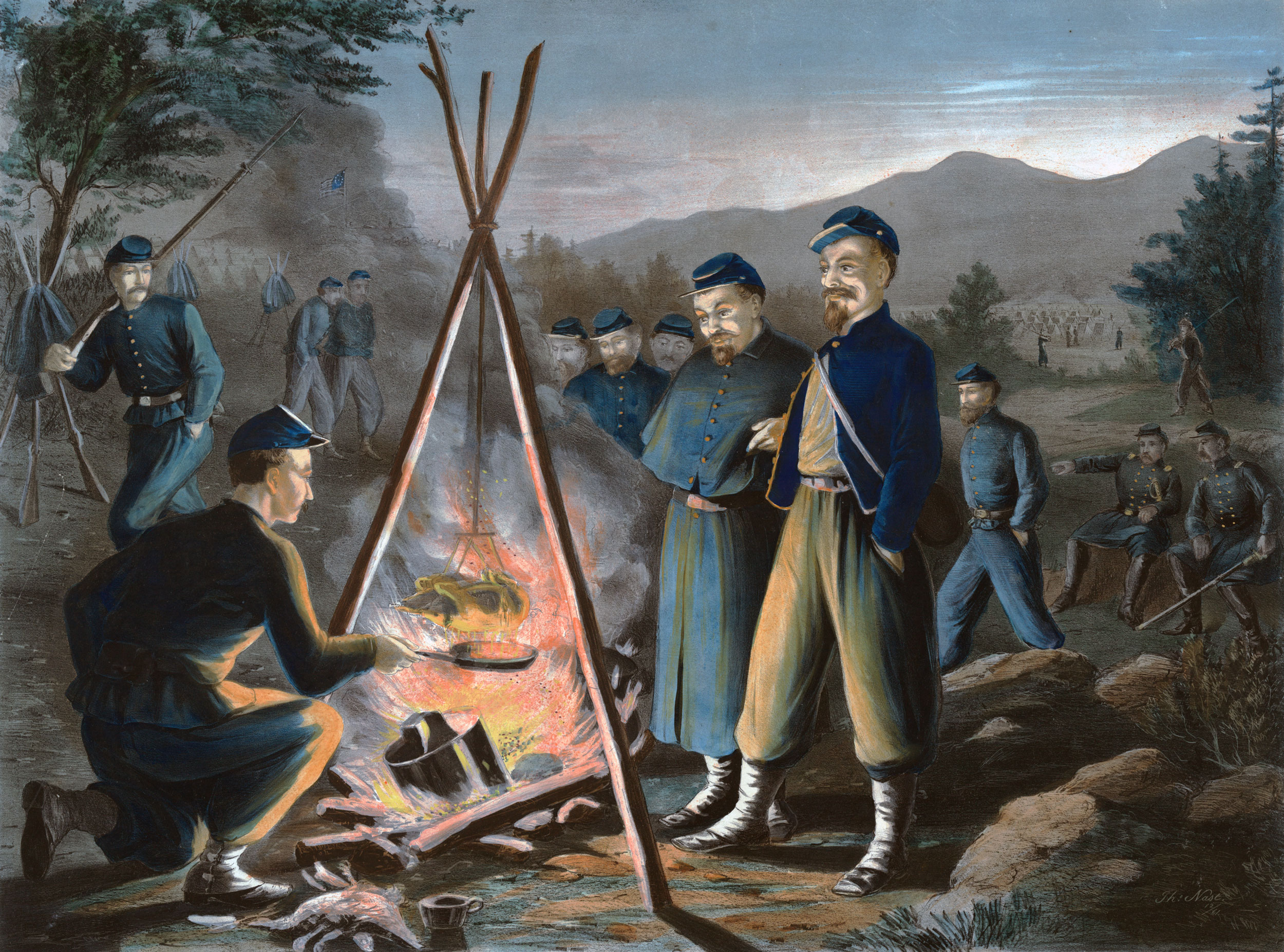
Thomas Nast’s “Life in the Camp: Preparing for Supper,” published as a color lithograph by Currier & Ives in 1863, depicts a Union soldier cooking a chicken over a campfire at dusk with his comrades in the background.
“An illustrated newspaper, if it fulfills its mission, must have its employees under constant excitement. There can be no indolence or ease about such an establishment. Every day brings its allotted and Herculean task, and night affords no respite.”
 Library of Congress
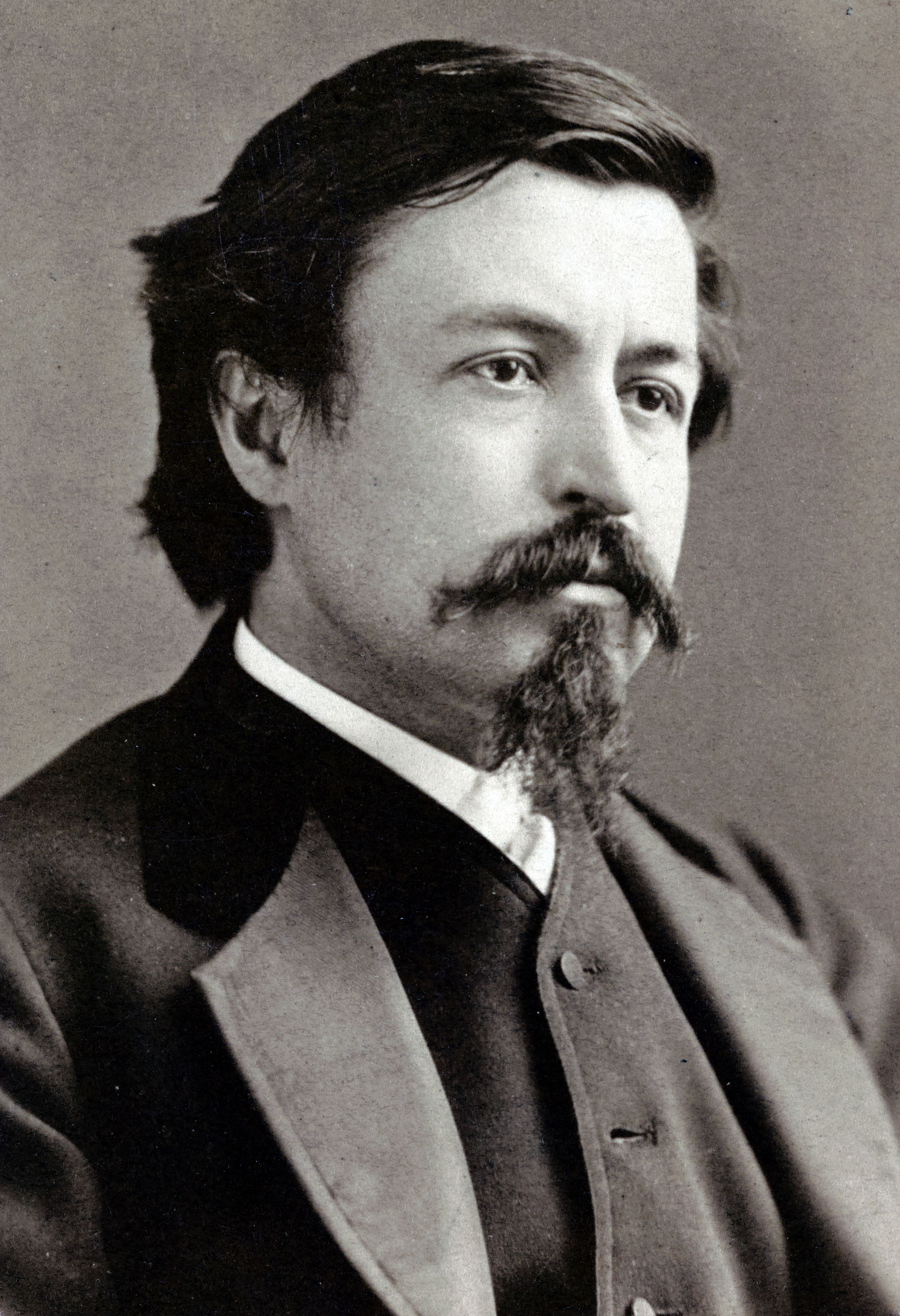
Thomas Nast in 1877
So wrote publisher Frank Leslie of the atmosphere in the newsroom at his popular Frank Leslie’s Illustrated Newspaper, which he founded in 1855 and which, along with competitors like Harper’s Weekly, for decades employed a number of the country’s most talented artists. In 1856, Leslie hired a precocious teenager, Thomas Nast, to join his paper’s illustrating staff. Nast, born in Bavaria in 1840, was six when he arrived in New York City with his mother and sister (his musician father joined them several years later). He soon began to study drawing and painting, and showed enough promise at 15 to convince Leslie to hire him. It was the start of a 31-year career as a newspaper artist.
By the beginning of the Civil War, Nast had left Frank Leslie’s and was working for the New York Illustrated News, for which he covered president-elect Abraham Lincoln’s travels to Washington. In 1862, Nast, newly married and after a brief return to Frank Leslie’s, was hired at Harper’s Weekly as an artist-reporter, a position he would hold for a quarter century. His wartime work—examples of which are shown on the following pages—was characterized less by its realism (unlike other wartime artists, Nast spent little time in the field) than by its sentimentality and emotional impact. Lincoln would come to call Nast “our best recruiting sergeant” for his timely and patriotic work, and by war’s end, he was Harper’s Weekly’s most recognized artist. After the war, he went on to great fame as a caricaturist and editorial cartoonist. Nast died in Ecuador in 1902 of yellow fever.
In February 1861, Nast—recently returned from a yearlong European trip—was assigned by the New York Illustrated News to cover president-elect Abraham Lincoln’s trip to Washington. The young artist sketched Lincoln during his stops in New York and Philadelphia before heading to the capital to cover the inauguration ceremonies. Nast made this drawing of Lincoln (seated at right) engrossed in a newspaper in the Gentleman’s Parlor of Washington’s Willard Hotel in the days before the inauguration.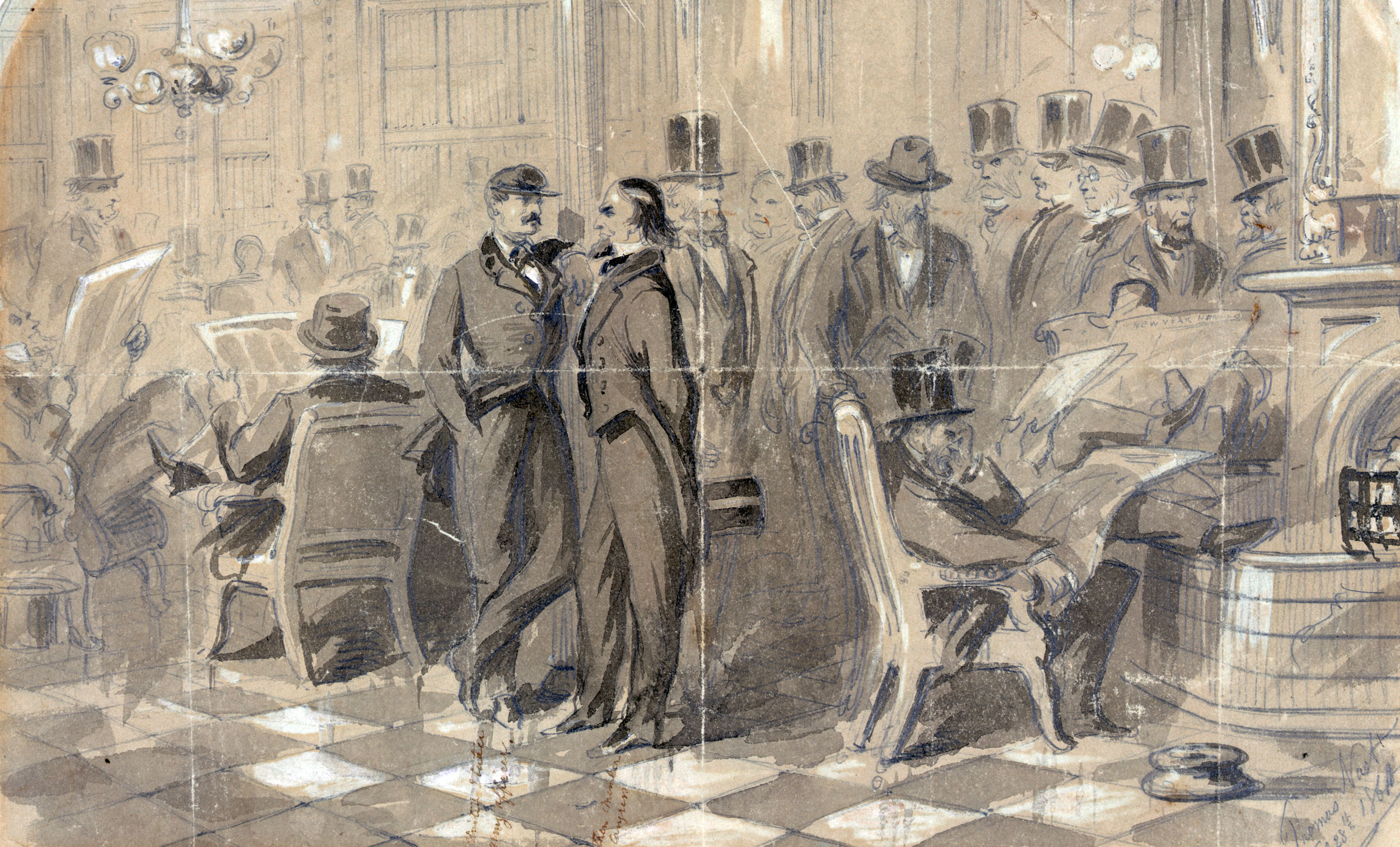 Library of Congress
In February 1861, Nast—recently returned from a yearlong European trip—was assigned by the New York Illustrated News to cover president-elect Abraham Lincoln’s trip to Washington. The young artist sketched Lincoln during his stops in New York and Philadelphia before heading to the capital to cover the inauguration ceremonies. Nast made this drawing of Lincoln (seated at right) engrossed in a newspaper in the Gentleman’s Parlor of Washington’s Willard Hotel in the days before the inauguration.
 Library of Congress
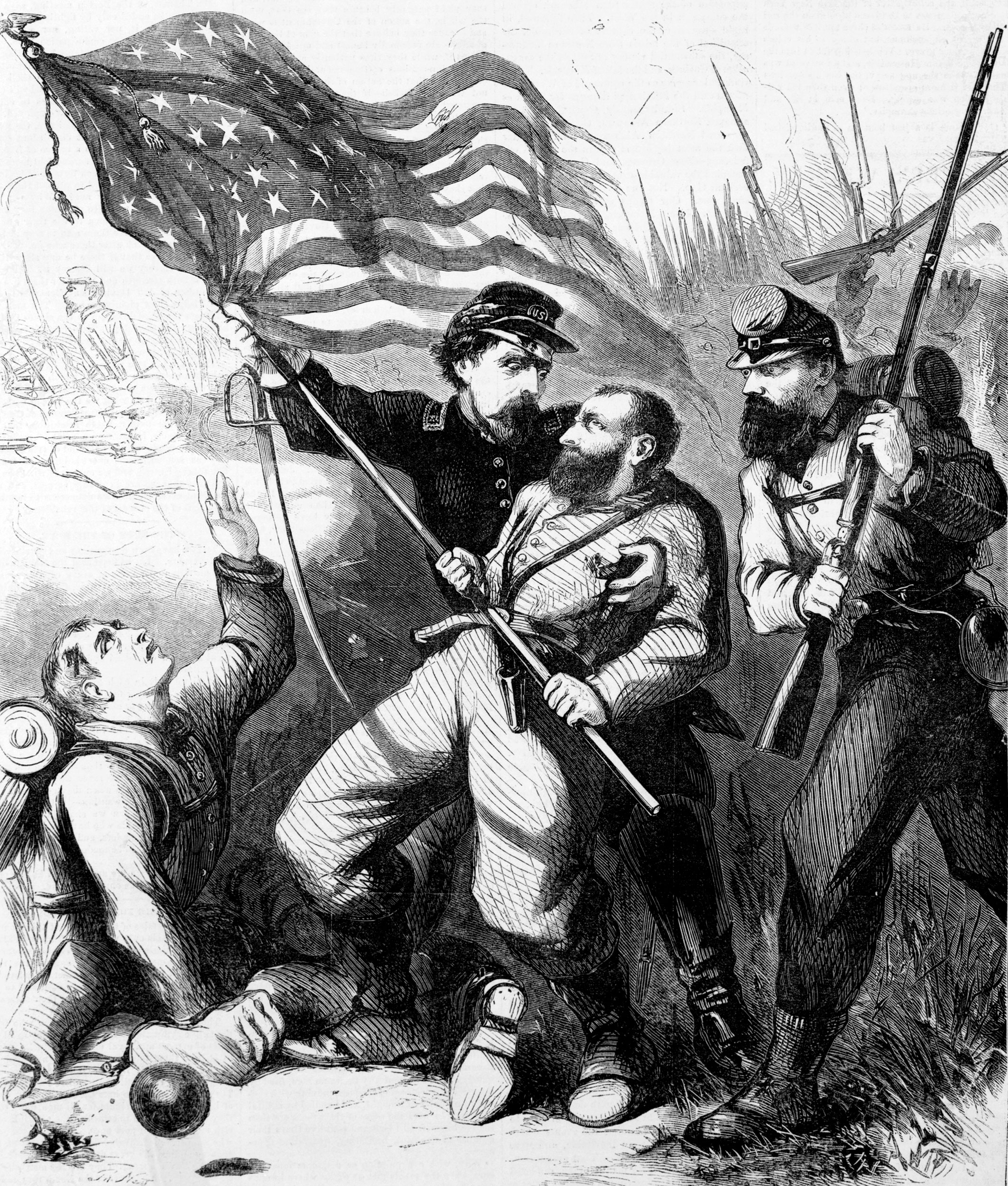
In the summer of 1862, Nast was assigned regular staff work at Harper’s Weekly. He mostly worked from home that year, producing illustrations whose themes and qualities he would return to throughout the war: fierce patriotism, heart-stirring sentimentality, and disdain for a monstrous and craven enemy. Above: “A Gallant Color-Bearer,” which adorned the cover of Harper’s Weekly on September 20, 1862, depicts a battlefield scene featuring the color-bearer of the 10th New York Infantry, who, despite being wounded three times, “clung to his colors with tenacious grasp,” wrote the editors. “Such men in life and death are glorious examples,” they concluded. Opposite page, top: After being asked to draw “how … a field look[s] after the battle” for Harper’s Weekly, Nast produced “‘Little Mac’ Making His Rounds,” in which popular Union general George McClellan is challenged by a sentry while on a nighttime surveillance during the Maryland Campaign. Opposite page, bottom: Nast depicts a Confederate general “startled” in his camp by a “Beautiful and Unexpected Display of Northern Light” in the form of approaching Union soldiers.
In the summer of 1862, Nast was assigned regular staff work at Harper’s Weekly. He mostly worked from home that year, producing illustrations whose themes and qualities he would return to throughout the war: fierce patriotism, heart-stirring sentimentality, and disdain for a monstrous and craven enemy. Above: “A Gallant Color-Bearer,” which adorned the cover of Harper’s Weekly on September 20, 1862, depicts a battlefield scene featuring the color-bearer of the 10th New York Infantry, who, despite being wounded three times, “clung to his colors with tenacious grasp,” wrote the editors. “Such men in life and death are glorious examples,” they concluded.
Little Mac’ Making His Rounds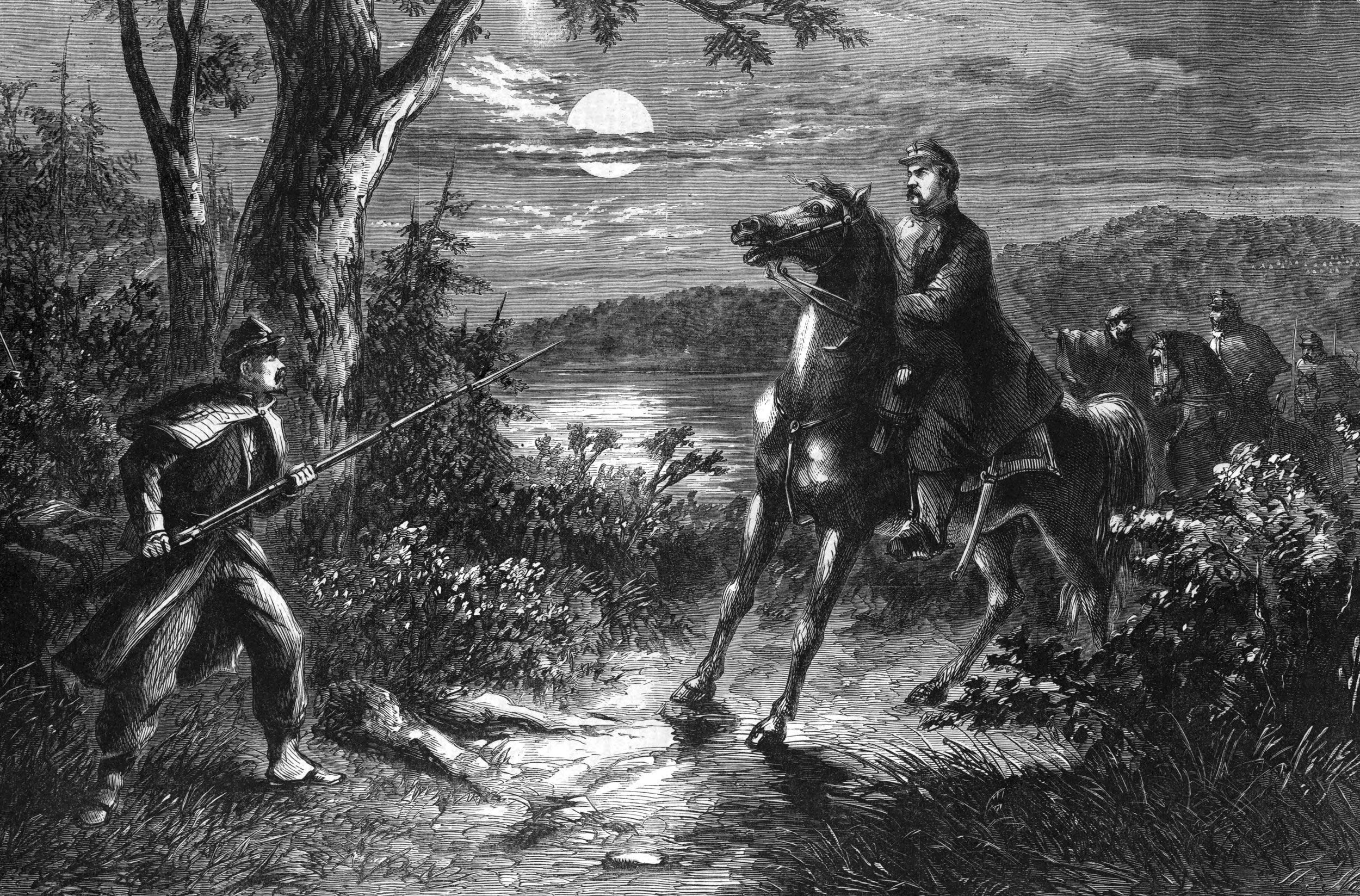 Harper’s Weekly
After being asked to draw “how … a field look[s] after the battle” for Harper’s Weekly, Nast produced “‘Little Mac’ Making His Rounds,” (above) in which popular Union general George McClellan is challenged by a sentry while on a nighttime surveillance during the Maryland Campaign.
Beautiful and Unexpected Display of Northern Light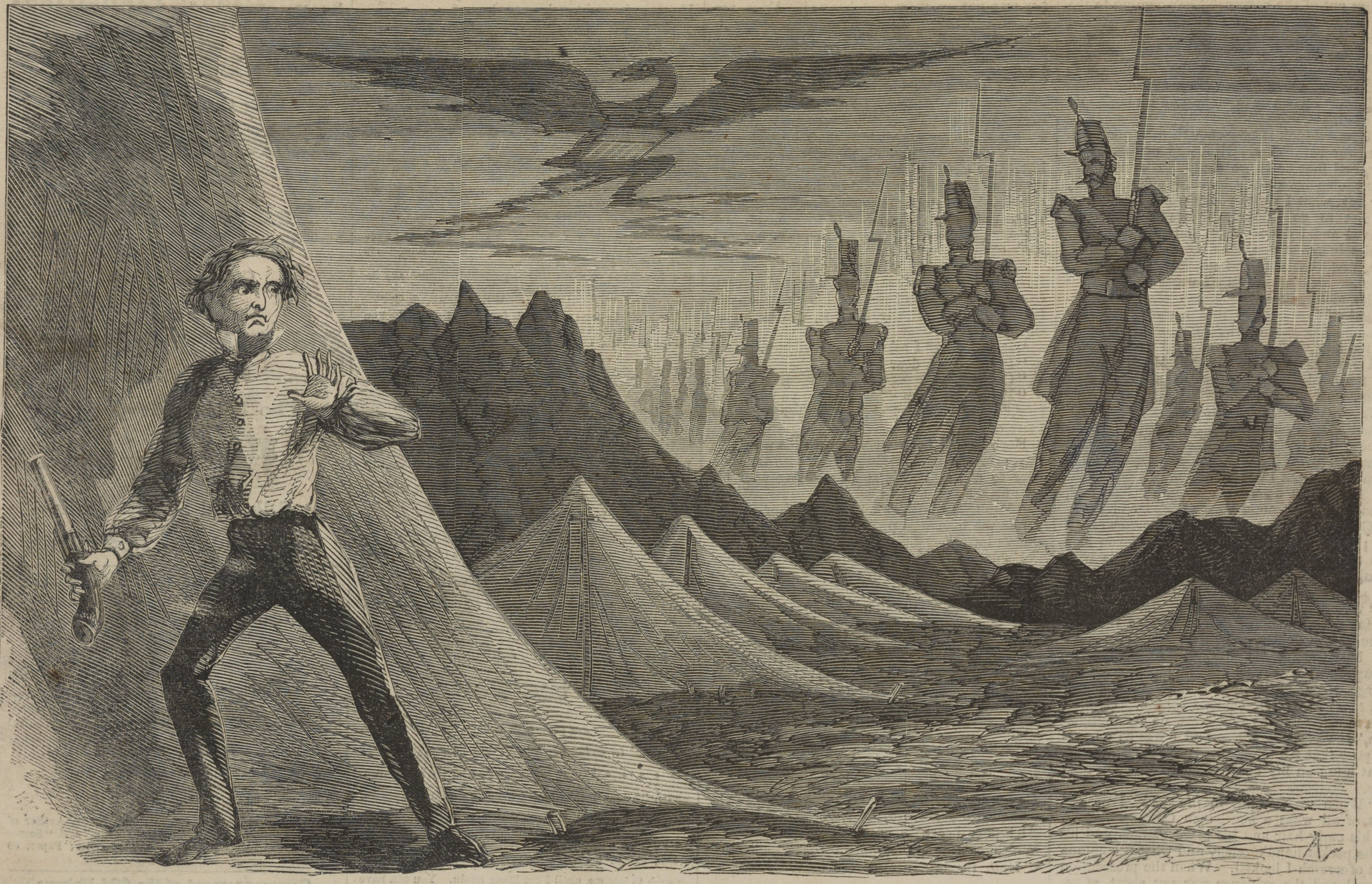 Harper’s Weekly
In the above illustration, Nast depicts a Confederate general “startled” in his camp by a “Beautiful and Unexpected Display of Northern Light” in the form of approaching Union soldiers.
Nast repeatedly created scenes (real and imagined) depicting Confederate atrocities, a means of both dehumanizing the enemy and creating outrage among northerners. Above: In “Battle-Field after the Battle,” Nast was inspired by a visitor’s account of the Confederate-controlled field after the Second Battle of Bull Run: “The common instincts of humanity seem to have entirely left the breasts of a majority of the rebel soldiery, for they not only neglected to pay the customary attention to the brave dead of the Union army around them, but also violated the sanctity of death by robbing the lifeless bodies of coats, caps, shoes, jewelry, money, and all other valuables….” Below: Nast’s illustration of Union POWs at Richmond’s Belle Island Prison showed, in the words of an accompanying article, “the condition of our poor fellows who are so unfortunate as to be prisoners of the rebels,” while “the rebel prisoners in our hands are supplied with food in such abundance that they can not consume it all….”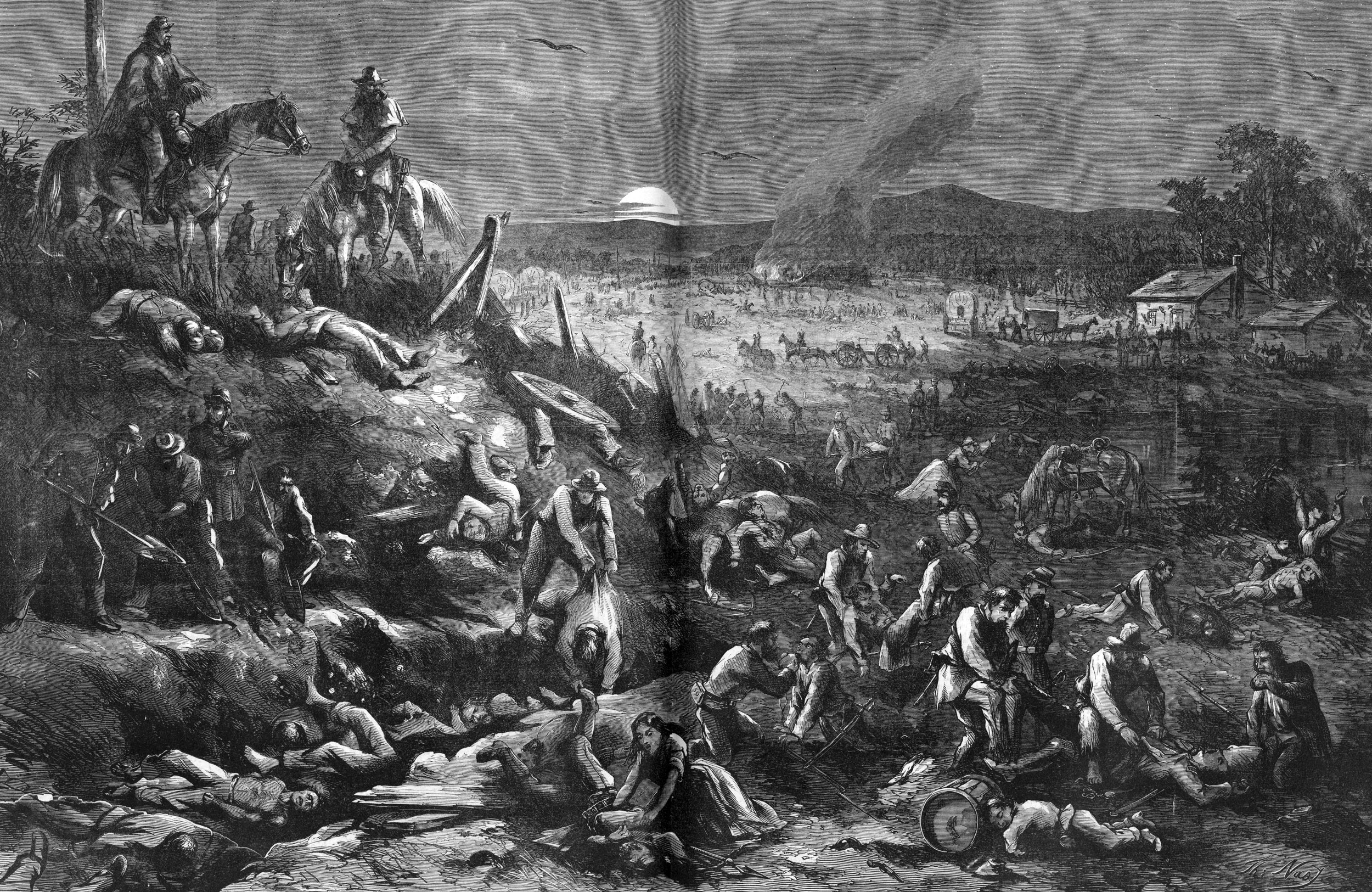 Harper’s Weekly
Nast repeatedly created scenes (real and imagined) depicting Confederate atrocities, a means of both dehumanizing the enemy and creating outrage among northerners. Above: In “Battle-Field after the Battle,” Nast was inspired by a visitor’s account of the Confederate-controlled field after the Second Battle of Bull Run: “The common instincts of humanity seem to have entirely left the breasts of a majority of the rebel soldiery, for they not only neglected to pay the customary attention to the brave dead of the Union army around them, but also violated the sanctity of death by robbing the lifeless bodies of coats, caps, shoes, jewelry, money, and all other valuables….”
Union POWs at Richmond’s Belle Island Prison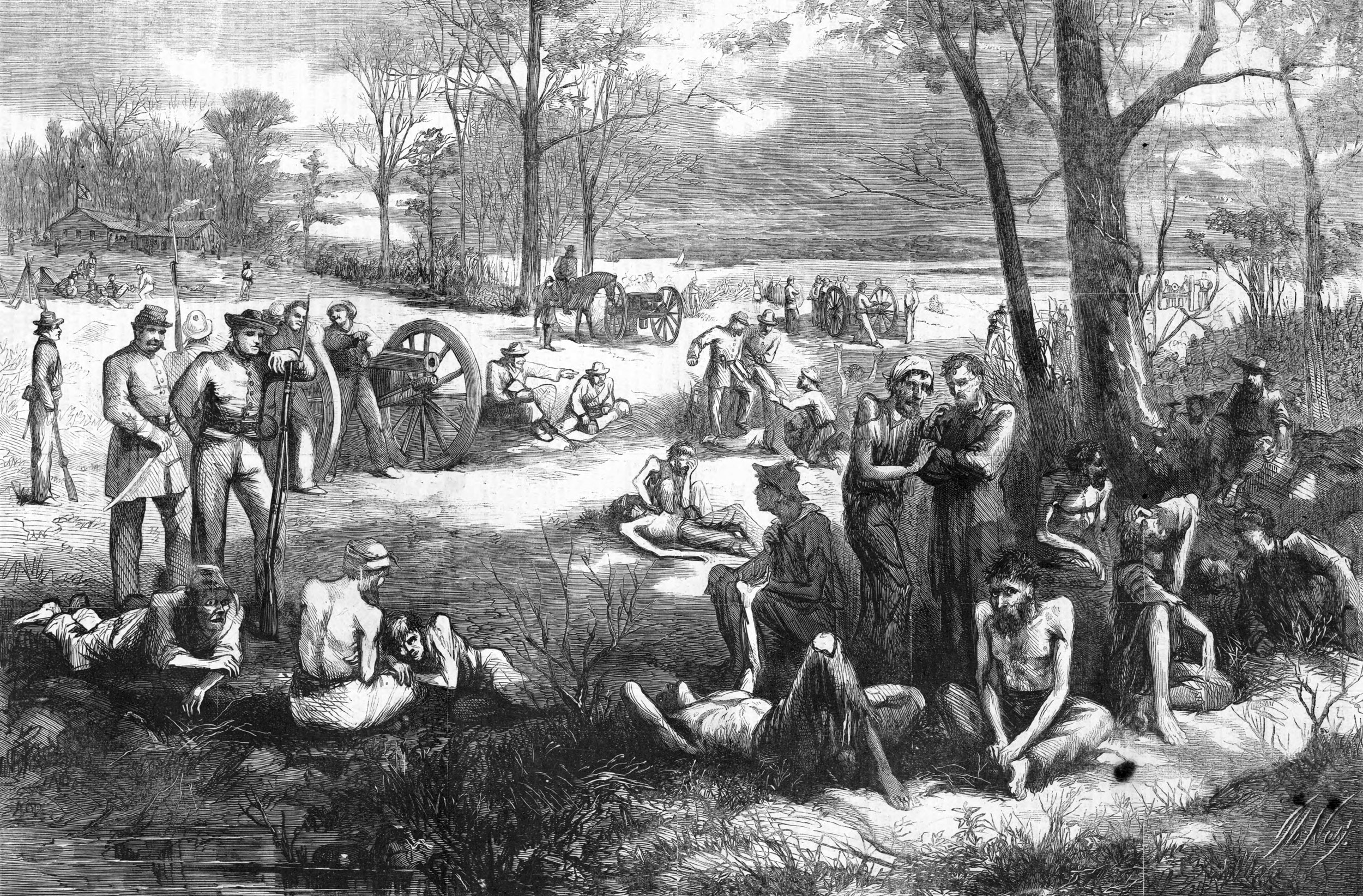 Harper’s Weekly
Nast’s above illustration of Union POWs at Richmond’s Belle Island Prison showed, in the words of an accompanying article, “the condition of our poor fellows who are so unfortunate as to be prisoners of the rebels,” while “the rebel prisoners in our hands are supplied with food in such abundance that they can not consume it all….”
In support of Nash’s multi-scene “Southern Chivalry” (above), the editors of Harper’s Weekly wrote, “Jeff Davis … has constantly endeavored to make it appear that whereas the war was waged with chivalry and gentleness by the South, it was carried on with every circumstance of atrocious savagery by the Union troops. Here are a few examples of the chivalry of which the rebel boasts.” Below: The paper published Nast’s “A Rebel Guerrilla Raid in a Western Town”—a depiction of the exploits of John Hunt Morgan’s Raiders—“in order that our readers may understand the sort of war which the rebels are waging.”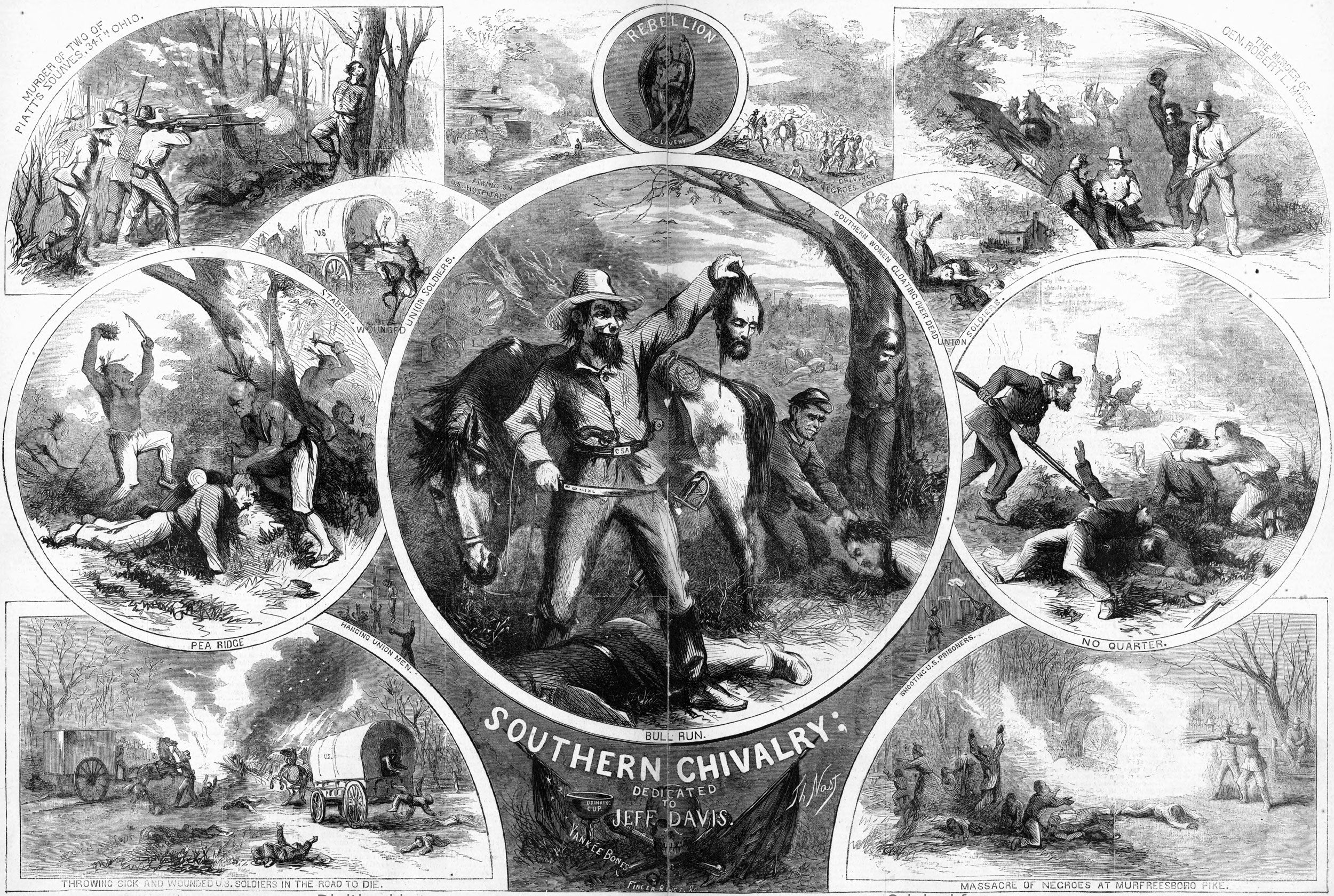 Harper’s Weekly
In support of Nash’s multi-scene “Southern Chivalry” (above), the editors of Harper’s Weekly wrote, “Jeff Davis … has constantly endeavored to make it appear that whereas the war was waged with chivalry and gentleness by the South, it was carried on with every circumstance of atrocious savagery by the Union troops. Here are a few examples of the chivalry of which the rebel boasts.”
A Rebel Guerrilla Raid in a Western Town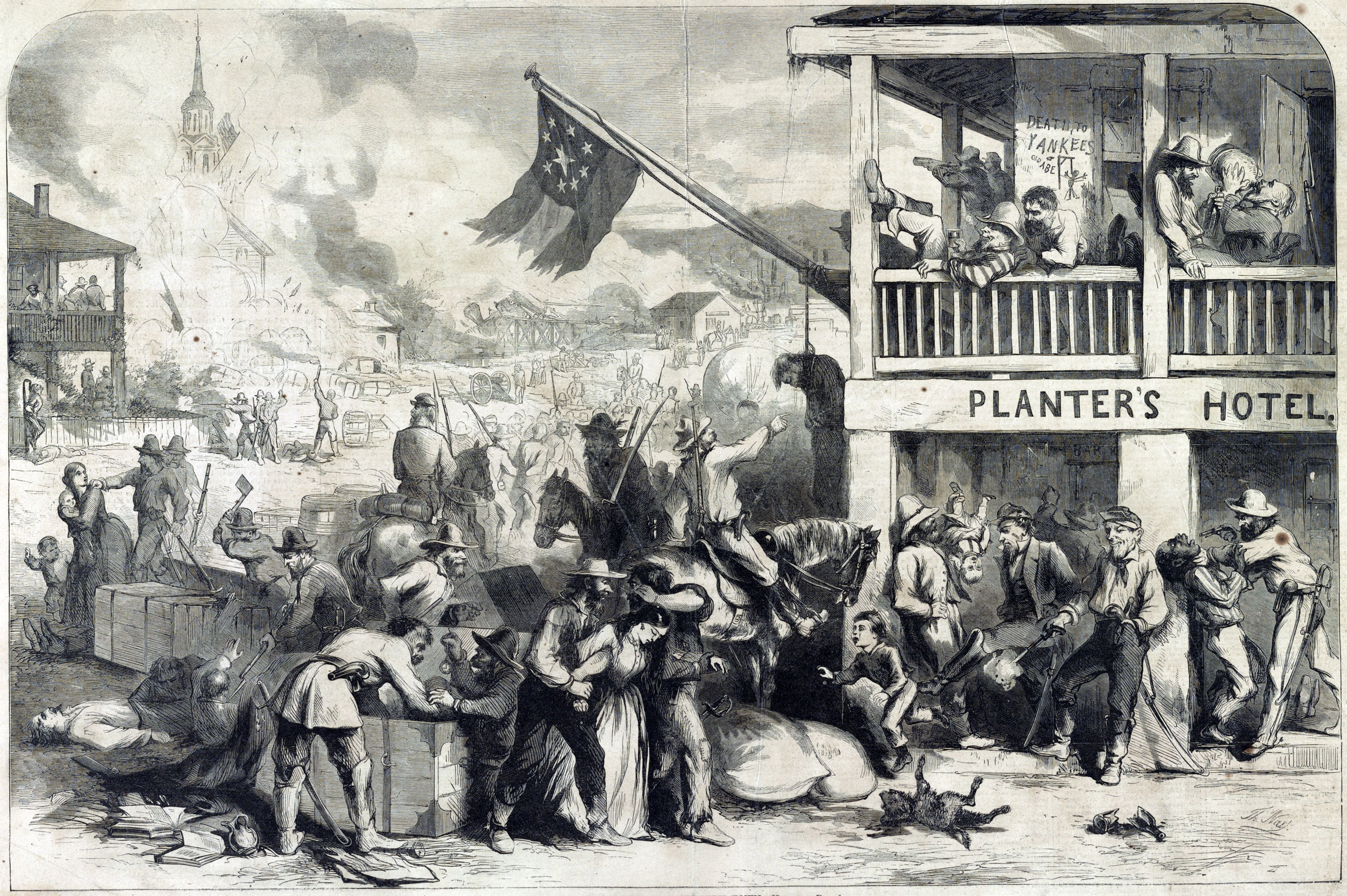 Library of Congress
Above: The paper published Nast’s “A Rebel Guerrilla Raid in a Western Town”—a depiction of the exploits of John Hunt Morgan’s Raiders—“in order that our readers may understand the sort of war which the rebels are waging.”
Soldiers of the Army of the Potomac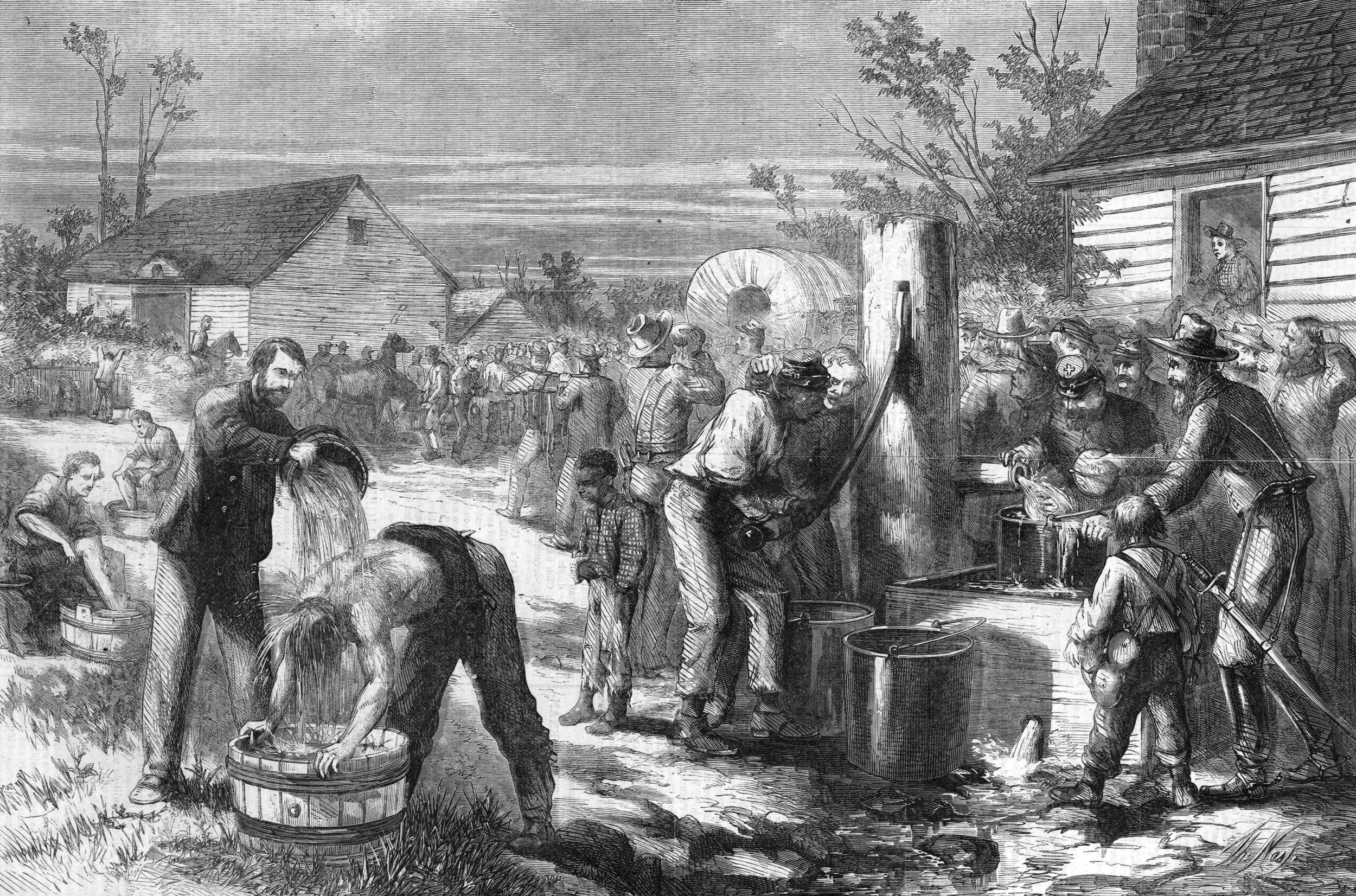 Harper’s Weekly
Unlike so many of his fellow sketch artists, Nast rarely traveled to the front lines, his illustrations of the armies and their men often relying not on first-hand knowledge but on his imagination, or outside accounts, for their details. Above: Soldiers of the Army of the Potomac draw rations in this Nast illustration from August 1863.
Unlike so many of his fellow sketch artists, Nast rarely traveled to the front lines, his illustrations of the armies and their men often relying not on first-hand knowledge but on his imagination, or outside accounts, for their details. Opposite page, top: Soldiers of the Army of the Potomac draw rations in this Nast illustration from August 1863. Opposite page, below: Of Nast’s April 1863 illustration titled “Arrival of a Federal Column at a Planter’s House in Dixie,” the editors of Harper’s Weekly wrote, “The picture explains itself.” Below: Nast became well known for his portrayals of wartime holiday celebrations—both at the front and at home. Among his first such illustrations was this one of Santa Claus visiting a Union army camp, which appeared on the Harper’s Weekly cover on January 3, 1863. “Children, you mustn’t think that Santa Claus comes to you alone,” read an accompanying article. “Santa Claus has brought lots … for the soldiers, so that they, too, as well as you little folks, may have a peep at the Christmas number.”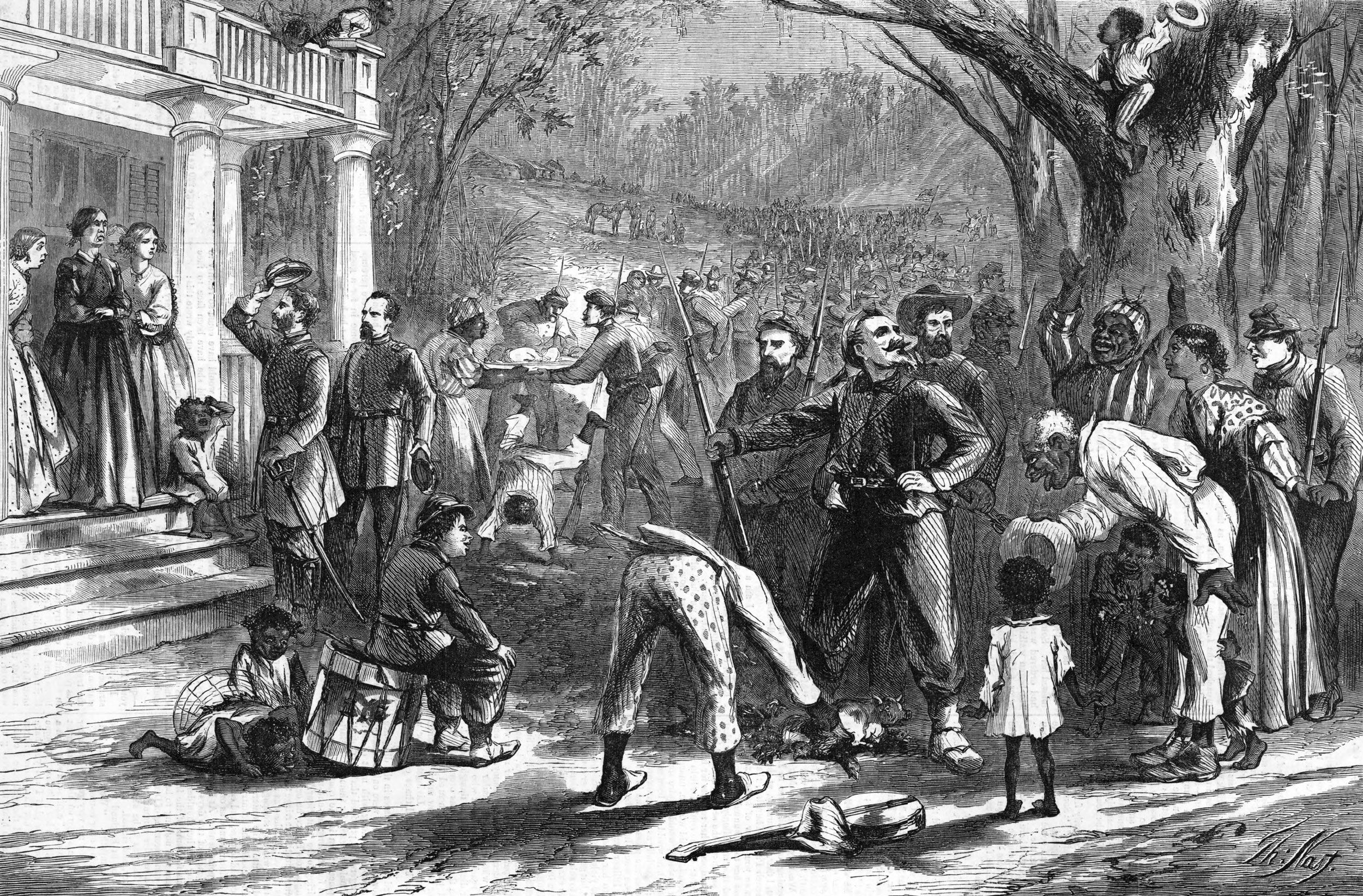 Harper’s Weekly
Of Nast’s April 1863 illustration titled “Arrival of a Federal Column at a Planter’s House in Dixie,” (above) the editors of Harper’s Weekly wrote, “The picture explains itself.”
Santa Claus visiting a Union army camp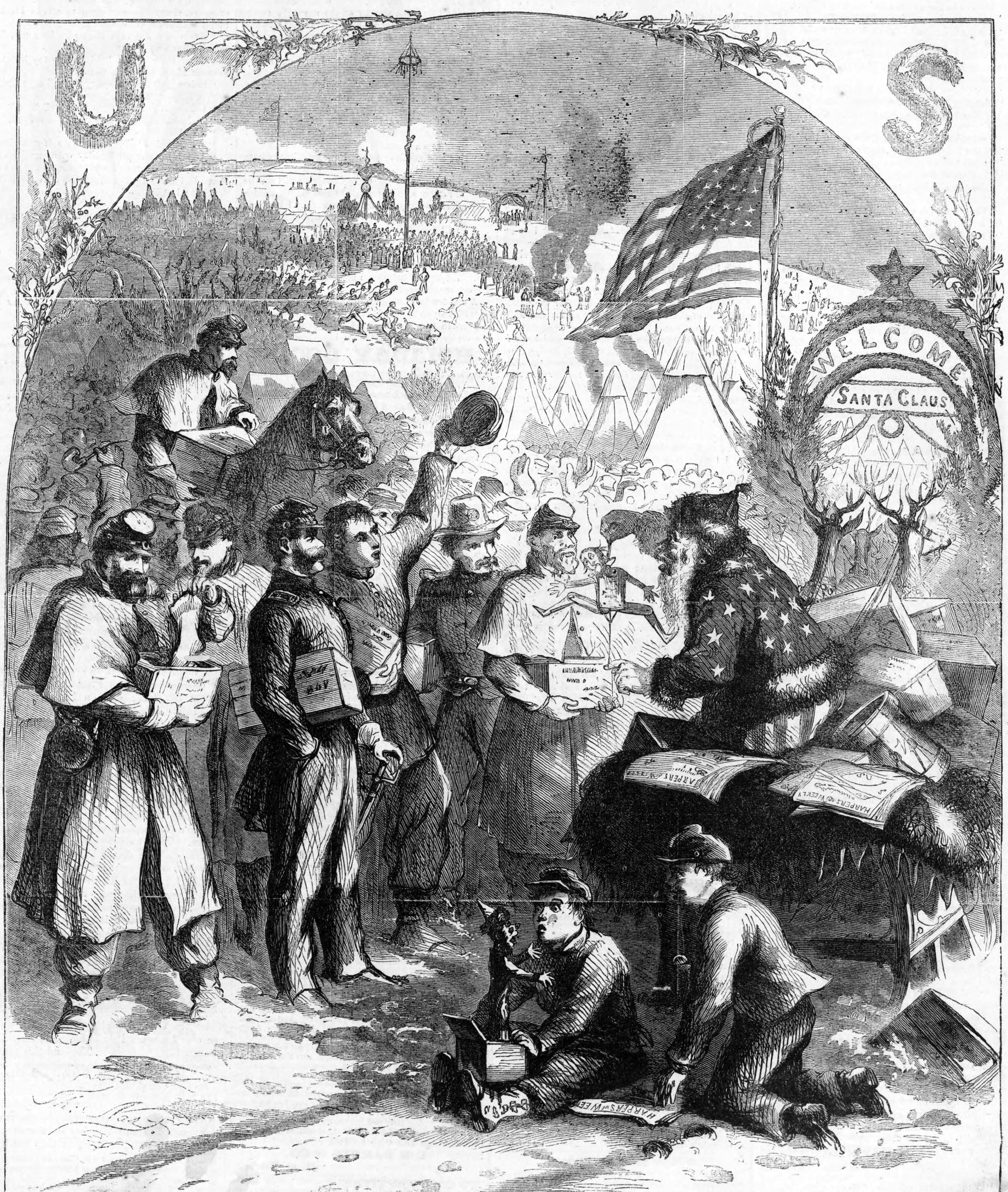 Harper’s Weekly
Nast became well known for his portrayals of wartime holiday celebrations—both at the front and at home. Among his first such illustrations was this one of Santa Claus visiting a Union army camp (above), which appeared on the Harper’s Weekly cover on January 3, 1863. “Children, you mustn’t think that Santa Claus comes to you alone,” read an accompanying article. “Santa Claus has brought lots … for the soldiers, so that they, too, as well as you little folks, may have a peep at the Christmas number.”
Nast’s interest in caricature—he would earn the postwar reputation as the father of American political cartooning for his frequent and influential work—took its shape during the conflict. After the war, Nast would caricature many prominent Union commanders, including these of (clockwise, from upper left) Winfield Scott, William T. Sherman, George G. Meade, Ulysses S. Grant, George B. McClellan, and Joseph Hooker.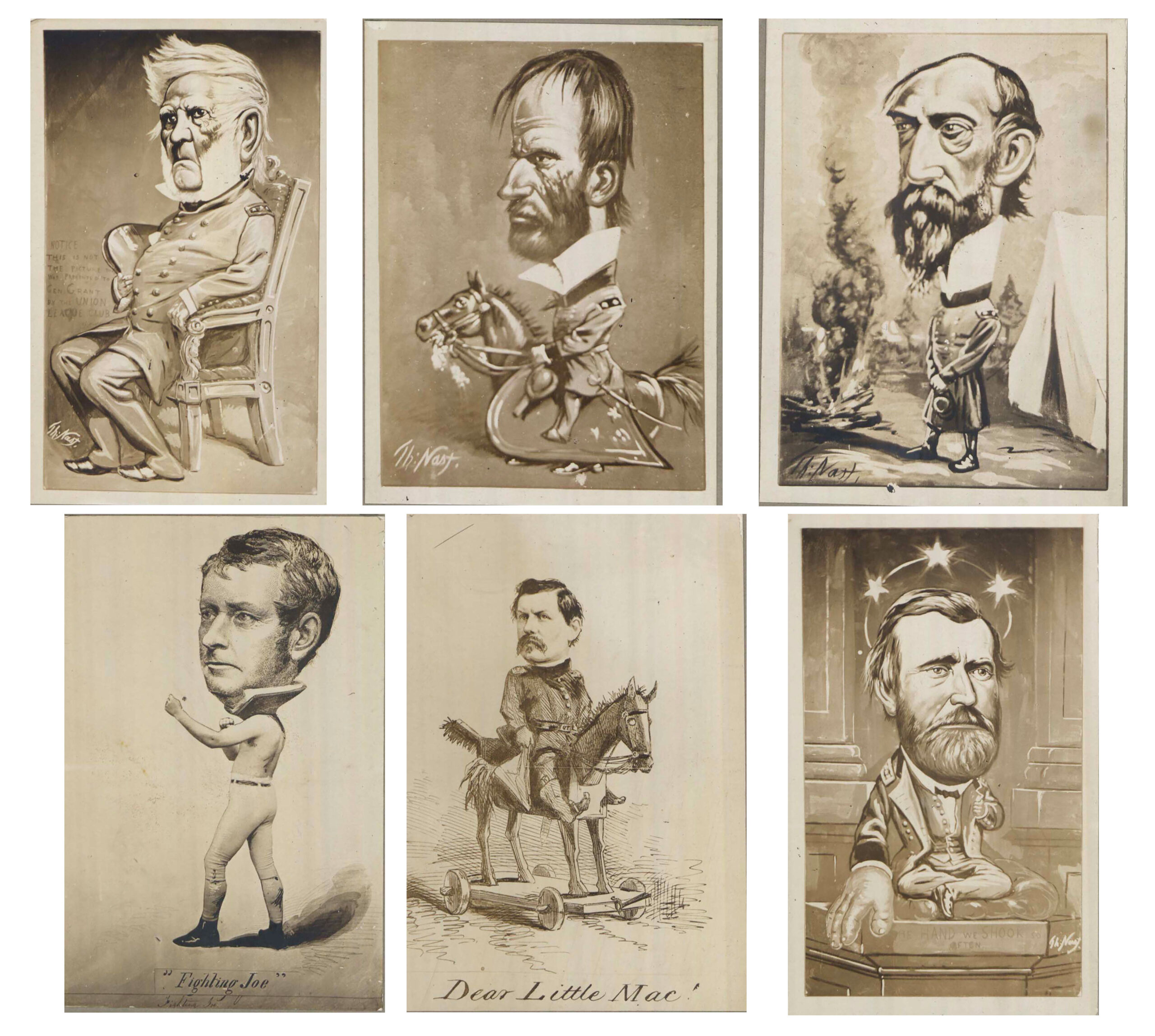 USAHEC
Nast’s interest in caricature—he would earn the postwar reputation as the father of American political cartooning for his frequent and influential work—took its shape during the conflict. After the war, Nast would caricature many prominent Union commanders, including these of (clockwise, from upper left) Winfield Scott, William T. Sherman, George G. Meade, Ulysses S. Grant, George B. McClellan, and Joseph Hooker.
 Harper’s Weekly
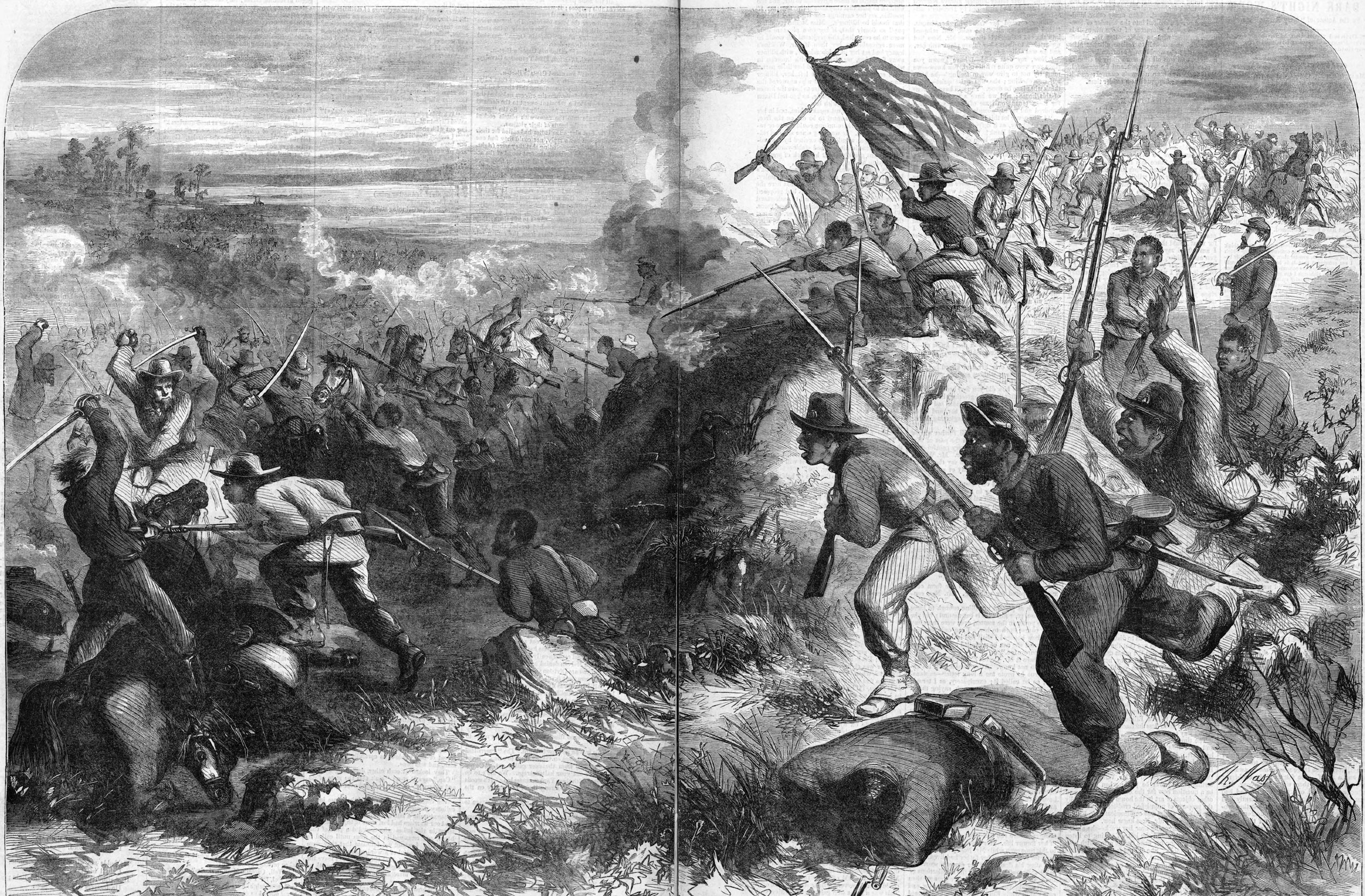
Nast’s work regularly highlighted the impact the war had on the lives of the black population, as well as the ways in which African Americans affected the course of the conflict. Left: Nast’s “A Negro Regiment in Action,” published in March 1863, showcased the bravery and fighting prowess of black soldiers. “[T]he ability of the negro to drill and fight can not be too strongly insisted upon,” noted an article that accompanied the illustration. Below: In “Emancipation,” Nast marked President Abraham Lincoln’s issuance of the Emancipation Proclamation with scenes that depicted the progress from bondage to freedom for the country’s enslaved population.
Nast’s work regularly highlighted the impact the war had on the lives of the black population, as well as the ways in which African Americans affected the course of the conflict. Above: Nast’s “A Negro Regiment in Action,” published in March 1863, showcased the bravery and fighting prowess of black soldiers. “[T]he ability of the negro to drill and fight can not be too strongly insisted upon,” noted an article that accompanied the illustration.
Emancipation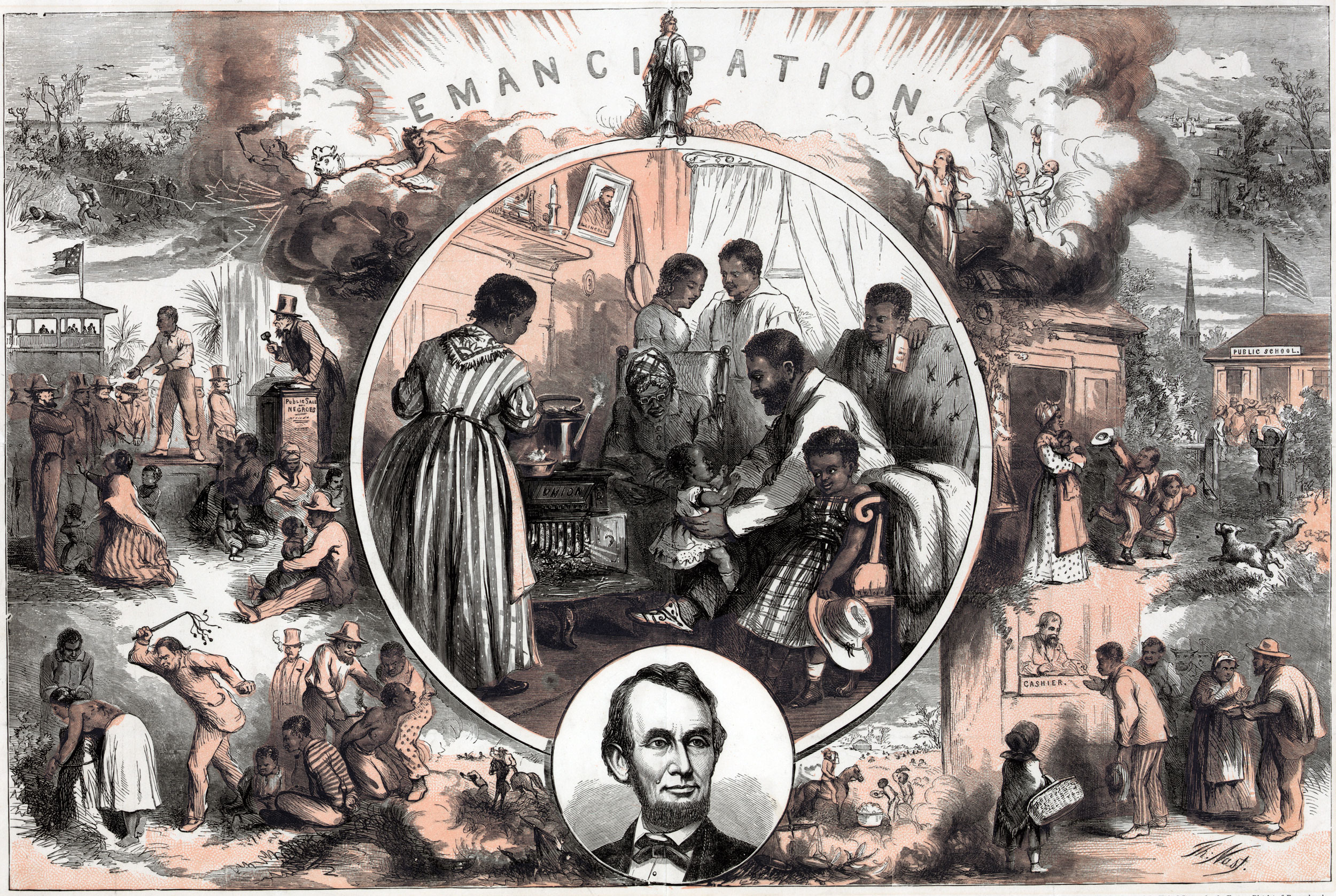 Library of Congress
In “Emancipation,” (above) Nast marked President Abraham Lincoln’s issuance of the Emancipation Proclamation with scenes that depicted the progress from bondage to freedom for the country’s enslaved population.
Among Nast’s best known—and affecting—wartime work was “Compromise with the South,” which Harper’s Weekly published in the runup to the 1864 presidential election, in which Abraham Lincoln faced Democratic candidate George McClellan, the Union army’s former general-in-chief. Nast’s striking illustration, which he “dedicated to the Chicago convention” (where the Democratic Party had recently adopted a peace platform that called for the immediate cessation of hostilities), imagined what a Republican electoral loss might look like: An arrogant Confederate soldier shakes the hand of a defeated and wounded Union veteran over a grave inscribed “In Memory of Our Union-Heroes Who Fell in a Useless War.” Lady Columbia is shown weeping at the foot of the grave, while an enslaved family, bound together in chains, nervously waits behind the Rebel soldier, who grips a cat o’ nine tails in his left hand. Nast’s “Compromise” was so popular that Harper’s Weekly printed more issues to satisfy public demand, while an estimated million copies of Nast’s drawing were printed on handbills and distributed during the final weeks of the campaign. Lincoln, who was handily reelected, reportedly said of Nast, “His emblematic cartoons have never failed to arouse enthusiasm and patriotism, and have always seemed to come just when these articles were getting scarce.”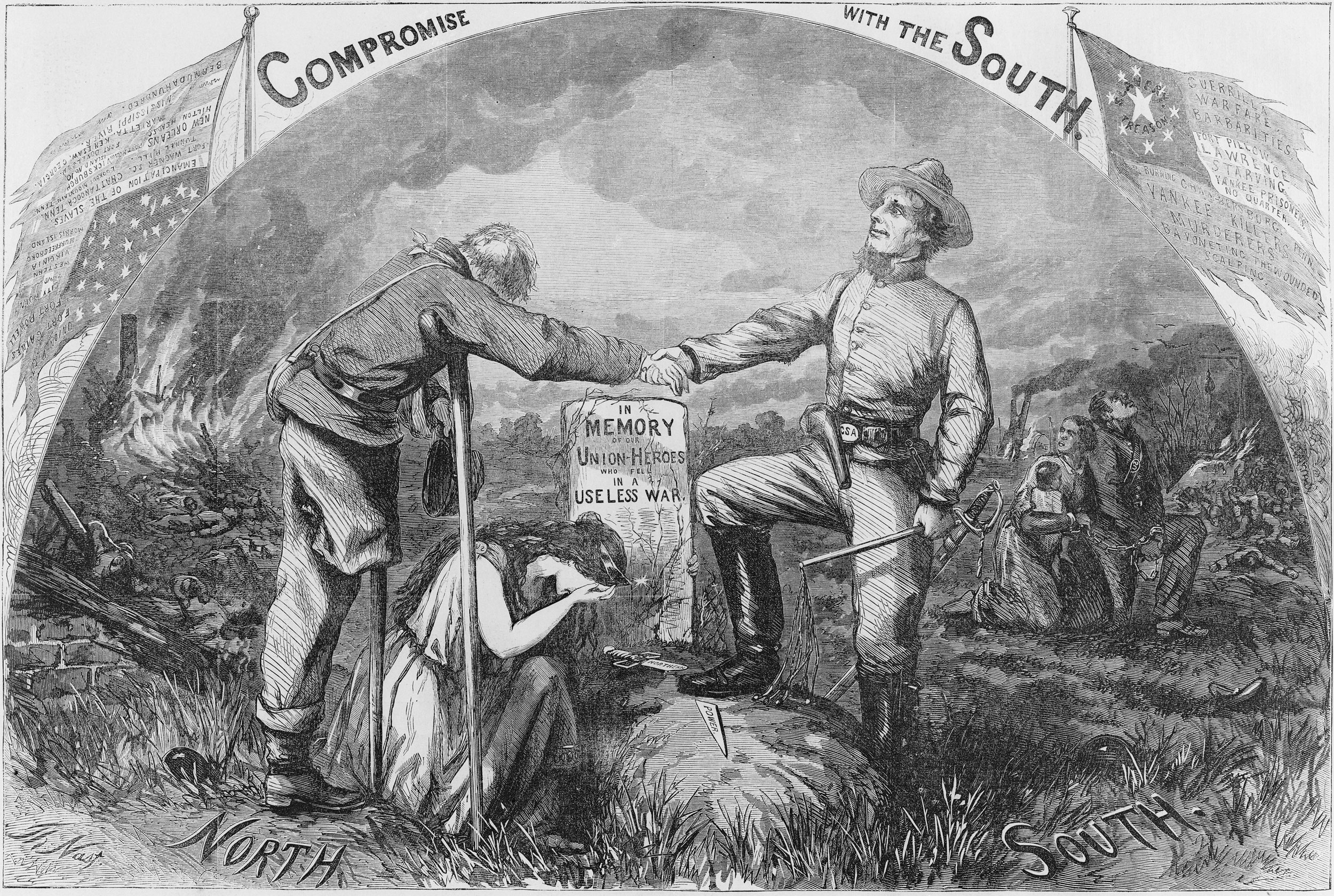 Library of Congress
Among Nast’s best known—and affecting—wartime work was “Compromise with the South,” which Harper’s Weekly published in the runup to the 1864 presidential election, in which Abraham Lincoln faced Democratic candidate George McClellan, the Union army’s former general-in-chief. Nast’s striking illustration, which he “dedicated to the Chicago convention” (where the Democratic Party had recently adopted a peace platform that called for the immediate cessation of hostilities), imagined what a Republican electoral loss might look like: An arrogant Confederate soldier shakes the hand of a defeated and wounded Union veteran over a grave inscribed “In Memory of Our Union-Heroes Who Fell in a Useless War.” Lady Columbia is shown weeping at the foot of the grave, while an enslaved family, bound together in chains, nervously waits behind the Rebel soldier, who grips a cat o’ nine tails in his left hand.
Nast’s “Compromise” was so popular that Harper’s Weekly printed more issues to satisfy public demand, while an estimated million copies of Nast’s drawing were printed on handbills and distributed during the final weeks of the campaign. Lincoln, who was handily reelected, reportedly said of Nast, “His emblematic cartoons have never failed to arouse enthusiasm and patriotism, and have always seemed to come just when these articles were getting scarce.”
Sources
Fiona Deans Halloran, Thomas Nast: Father of Modern Political Cartoons (2012); Albert Bigelow Paine, Th. Nast: His Period and His Pictures (1904); Andrea Pearson, “Frank Leslie’s Illustrated Newspaper and Harper’s Weekly: Innovation and Imitation in Nineteenth-Century American Pictorial Reporting,” Journal of Popular Culture 23 (1990): 81–111; thomasnast.com; John Chalmers Vinson, Thomas Nast: Political Cartoonist (1967; reprint, 2014).