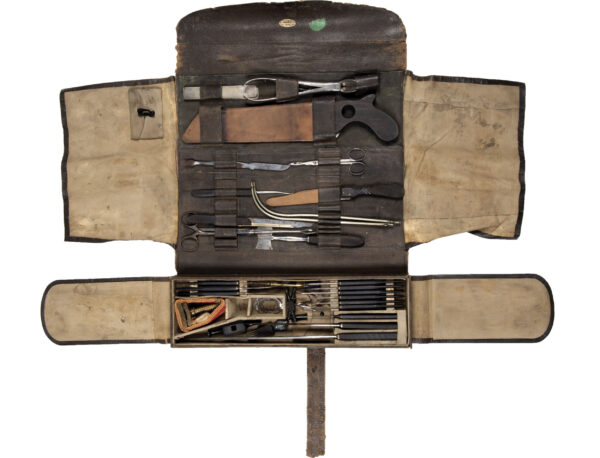
Wounded Union soldiers are attended to near a field hospital at Fredericksburg, Virginia, after the Battle of Spotsylvania.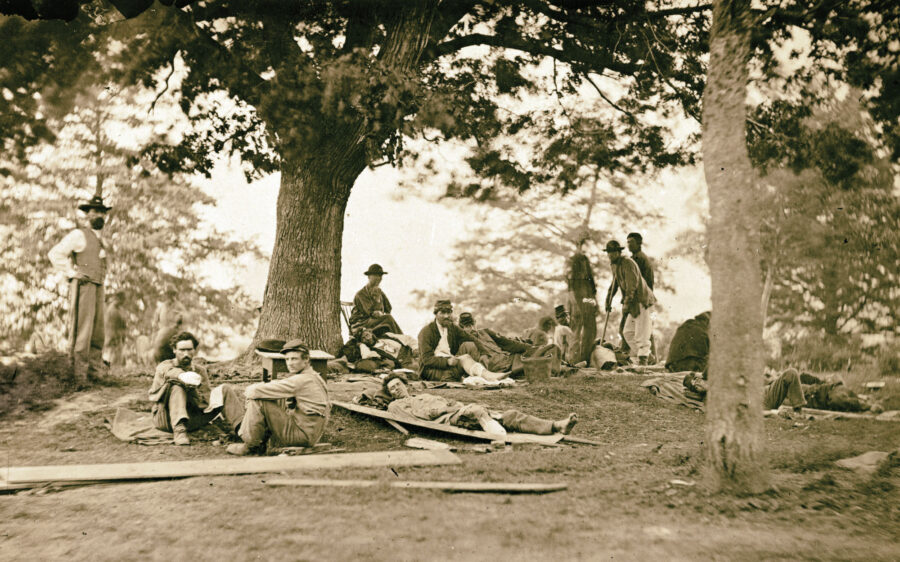 Library of Congress
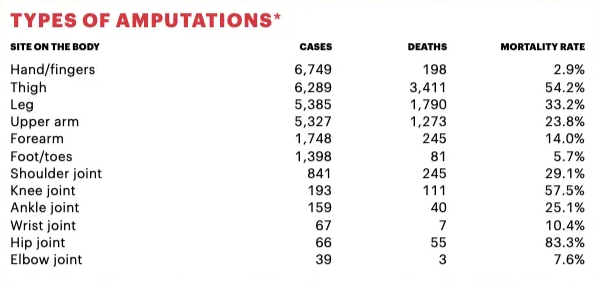
Civil War-era medical training varied widely, and the treatments seem primitive by 21st-century standards (doctors did not, for example, understand the role of microorganisms in disease nor how important cleanliness was in preventing infection). Nevertheless, great strides were made in treating the sick and wounded. Outcomes at field hospitals improved as the armies developed professional ambulance corps and instituted triage systems. More and larger general hospitals were constructed to house the growing numbers of wounded. Surgeons gained valuable experience as the war went on, developing more skilled approaches to the variety of terrible injuries. All these things contributed to improved survival rates. Shown here are statistics regarding the war’s most common surgical procedure: amputation.
Amputations by the Numbers
Approximate number of amputations performed during the Civil War: 60,000
Approximate number of amputees who survived the war: 45,000


Sources
The Medical and Surgical History of the War of the Rebellion Vol. 2, Part 3 (1883); Alfred Jay Bollet, “Amputations in the Civil War,” in Guy R. Hasegawa and James M. Schmidt, eds., Years of Change and Suffering: Modern Perspectives on Civil War Medicine (2009).
*Based on Union surgeons’ reports for 28,261 cases.
**Based on Union surgeons’ reports for 23,762 cases.
***Based on Union surgeons’ reports for 172 cases.
† The outcome of one of these cases is classified as “undetermined.”
Related topics: medical care