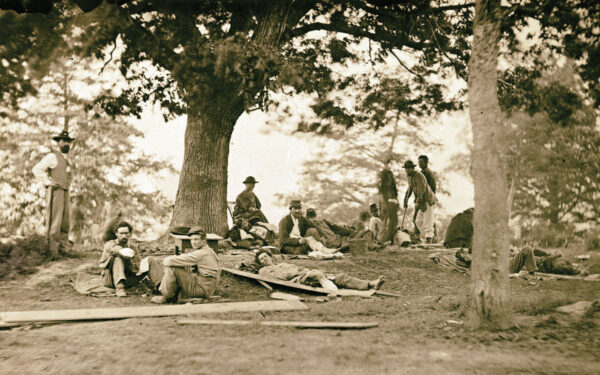
Civil War doctors performing surgery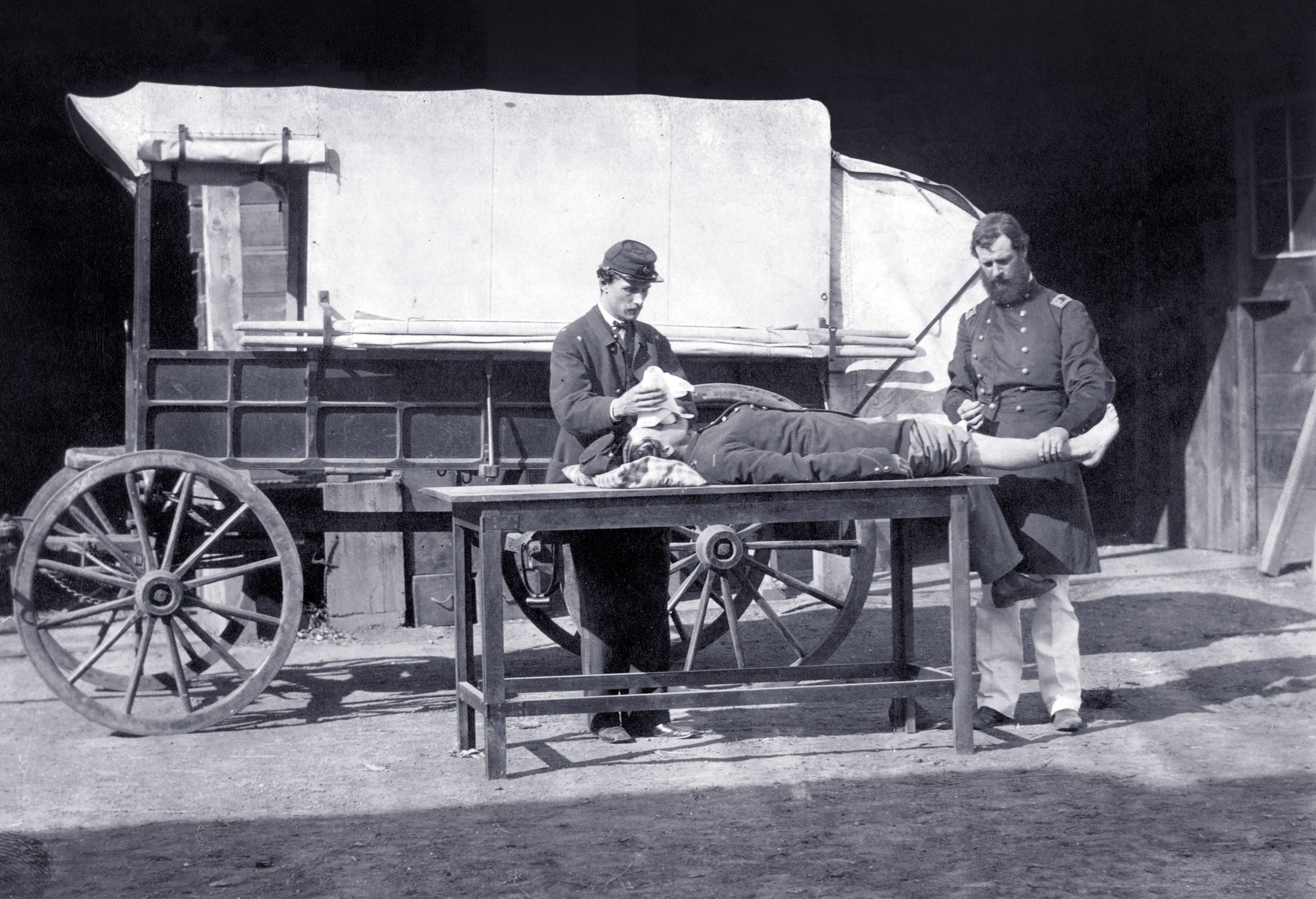 (CP 1563), OHA 75 Contributed Photographs Collection, Otis Historical Archives, National Museum of Health and Medicine
“I have in every instance but one, in the army, employed chloroform, and in but one case have had reason to believe its use disastrous.” So wrote Union army surgeon D.P. Smith on his use of that anesthetic when operating on wounded soldiers during the conflict. Smith was hardly alone in the practice. Indeed, anesthetics—both chloroform and ether—were widely used by the medical professionals on both sides. Surgeons most commonly administered anesthetics by infusing a sponge, located in the apex of a cloth or paper folded in the shape of a cone, with a small quantity of the drug. The cone was then held at a distance from the patient’s mouth and gradually advanced to the nose until the desired effect was produced. While both substances acted quickly, great care was required in administering them. In the one case in which Dr. Smith recorded an adverse result, chloroform was “given too profusely by an entirely incompetent person (since then dismissed from the medical corps) while I was amputating at the knee joint. The patient never reacted from the shock, but died about twelve hours subsequently.” Highlighted here are figures about Union surgeons’ use of chloroform and ether, chemicals that, in the words of another wartime medical professional, had an “inestimable value … in military surgery.”
Civil War Anesthetics By the Numbers
Minimum number of cases in which Union surgeons used anesthesia: 80,000
Major operations that employed anesthetics†
Chloroform used: 76.2%
Ether used: 14.7%
Mixture of chloroform and ether used: 9.1%
Deaths by anesthetics†
Deaths, per thousand cases, ascribed to use of chloroform: 5.4
Deaths, per thousand cases, ascribed to use of ether: 3
Deaths, per thousand cases, ascribed to use of a mixture of chloroform and ether: 2.1
Reaction to anesthetics*
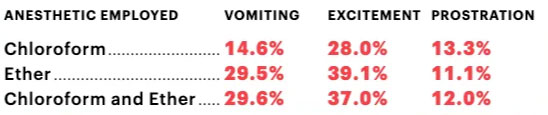
Quantity of anesthetic employed per case*
Average number of drachms (1/8 oz.) of chloroform used: 11
Average number of drachms of combined chloroform and ether used: 32
Average number of drachms of ether used: 51
Time needed to induce anesthesia*
Average minutes for chloroform: 9
Average minutes for ether: 16
Average minutes for combination of chloroform and ether: 17
Time anesthesia sustained*
Average minutes for chloroform: 22
Average minutes for ether: 26
Average minutes for combination of chloroform and ether: 26
Source
The Medical and Surgical History of the War of the Rebellion Part III Volume II (1883).
†Based on 8,900 major operations performed during the war by Union surgeons in general and field hospitals.
*Based on data collected between 1876–1878 from U.S. army medical officers by order of the U.S. Army surgeon general’s office; data for Civil War operations were deficient in this category.
Related topics: medical care