 Boston Public Library
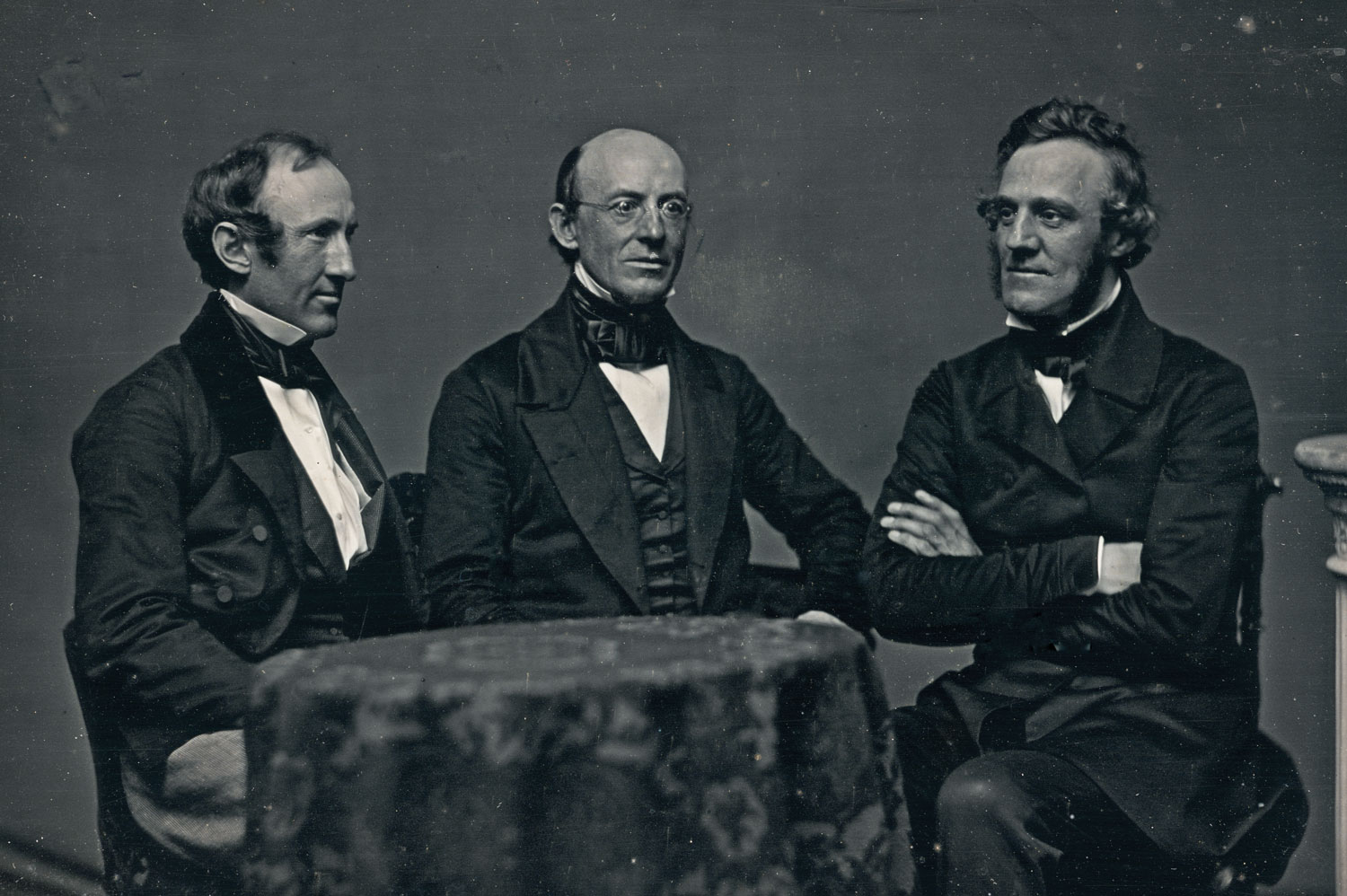
In this photo taken in 1851, William Lloyd Garrison (center) is flanked by fellow abolitionists Wendell Phillips (left) and George Thompson. During the Civil War, they and other abolitionists would grapple with whether—and how—to support the Union war effort.
In April 1865, a crowd gathered on an island in Charleston Harbor to witness an event of great significance: the raising of the U.S. flag over Fort Sumter. Four years earlier, Confederate forces surrounding the federal fort had launched the cannonballs that started the Civil War. The garrison commander, Major Robert Anderson, had surrendered, unfurling that same flag in defeat. Now, with the Confederacy on its last legs, thousands of Union soldiers and visitors thronged the fort to commemorate their impending national triumph. Prominent guests included Anderson, now a general, and congressmen, senators, and Supreme Court justices. In a sign of how drastically the nation had been transformed, Secretary of War Edwin Stanton had extended an invitation on behalf of the government to a man who would never have been welcomed at such an event before the conflict: the famed—and infamous—anti-slavery reformer William Lloyd Garrison.1
Garrison was among the most prominent of the radical activists known as abolitionists—the small number of men and women, white and black, who had long fought for the immediate end to slavery and a permanent place for African Americans in a free nation. In 1833, Garrison, a white newspaperman from Massachusetts, had founded the country’s chief abolitionist organization, the American Anti-Slavery Society, whose members engaged in a decades-long fight against overwhelming odds. Over the ensuing years, different anti-slavery reformers had taken up a variety of controversial positions, including opposition to the Constitution and a rejection of mainstream political parties like the Republicans. Some, including Garrison, had even called for the breakup of the Union as a way to end the political and economic stranglehold of the slaveholding South on the nation. Jeers and stones, or worse, had greeted abolitionists like Garrison and Frederick Douglass at their own public meetings before the war.2
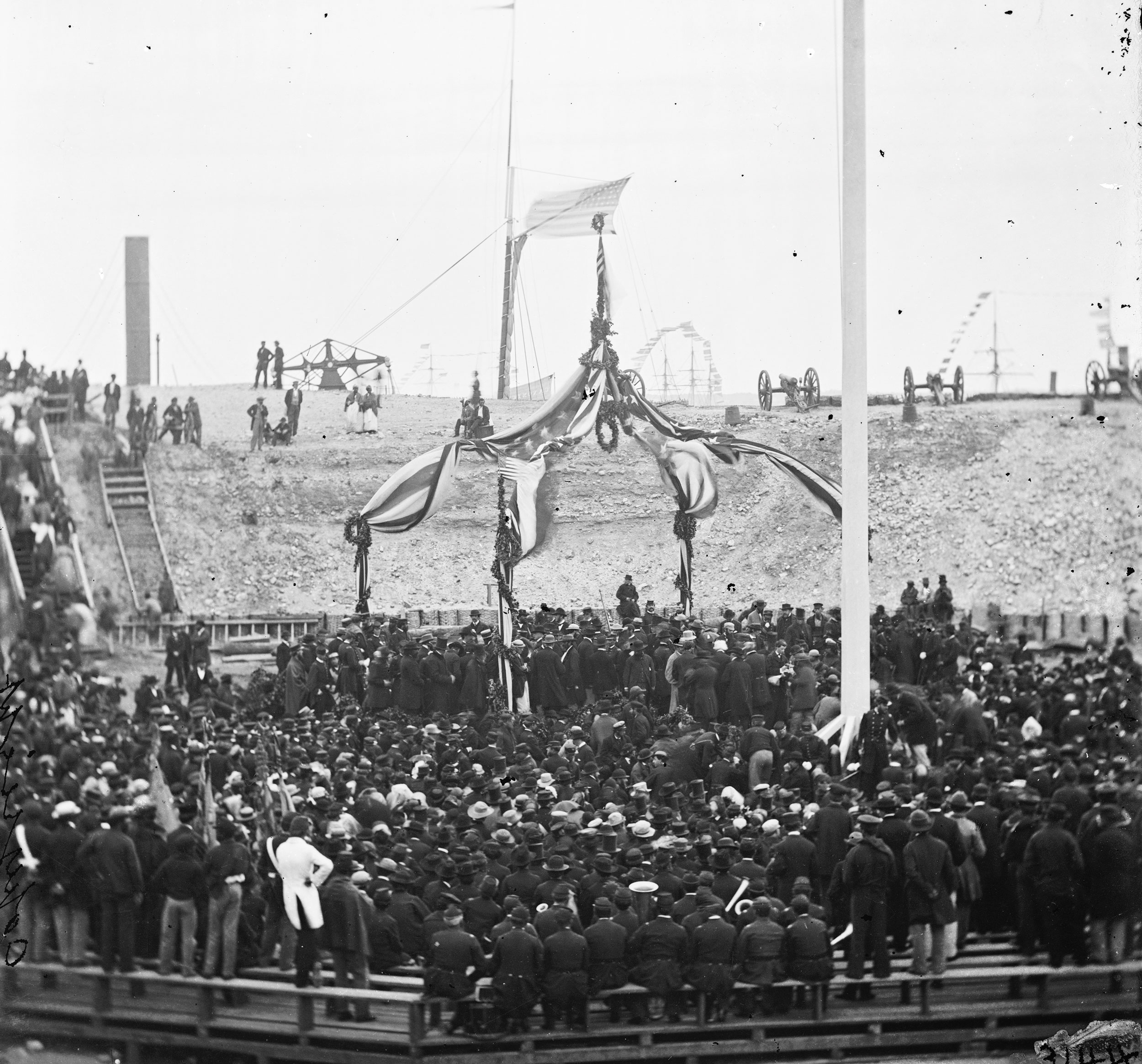 Library of Congress
A crowd of soldiers and civilians, among them abolitionist William Lloyd Garrison, gathers on April 14, 1865, to witness the raising of the U.S. flag in Fort Sumter, where the Civil War had begun four years earlier.
But then in 1861, Garrison, Douglass, and other abolitionists had made a bold decision: They would upend their traditional tactics, abandoning their anti-government stances and embracing the Union war—and its Republican leader, President Abraham Lincoln—in order to achieve their anti-slavery goals in a time of national crisis. They soon developed a concerted strategy to convince northerners that military emancipation was the only way to win the conflict. Not all abolitionists supported such an about-face: A small minority warned of the risks of allying with Lincoln, who fought explicitly to save the Union rather than to grant slaves freedom—or, needless to say, for any kind of post-emancipation rights for blacks. These dissenters waged a civil war of their own within the abolitionist movement, fighting what they saw as a betrayal of its principles. The pro-war majority had pushed on, brushing aside such concerns. Eventually, their strategy bore fruit: Garrison and likeminded reformers had helped stir up enough popular and political support for military emancipation to convince Lincoln to issue the Emancipation Proclamation in 1863, joining the Union war with an anti-slavery crusade.
Two years later, Garrison journeyed to Fort Sumter as a celebrity, a lauded hero of the fight to end slavery in America. As he sailed down the coast, he brimmed with joy, reflecting on the recent passage of the 13th Amendment and the now-inevitable demise of the slaveholding Confederacy—twin triumphs that doomed slavery as a formal institution in the nation. As Garrison saw it, his lifelong quest for justice was coming to the end. “Slavery is annihilated beyond any hope of resurrection,” he wrote gleefully to his wife. “The American Anti-Slavery Society may reasonably conclude that its mission is ended.” And “whatever else of evil” remained in the post-emancipation nation, he noted a few years later with a rhetorical wave of his hand, was “comparatively trivial.” The abolitionists, in his eyes, had triumphed totally and completely. Their war was won.3
With such grandiose proclamations, Garrison was telling only a half-truth. Abolitionists had helped win a great battle in the struggle to overthrow a brutal regime that had seemed indestructible—but not won the war itself. Slavery entailed far more than its institution; its tendrils stretched into politics, economics, and social life. Racial prejudice, social segregation, political disfranchisement, economic disadvantages—all were nefarious elements of the slave system. And abolitionists had long recognized that eradicating slavery’s effects was as central to their mission as destroying the institution itself. In its 1833 constitution, the American Anti-Slavery Society committed itself both to immediate, unconditional emancipation and to “removing public prejudice” against blacks to help them achieve “equality with the whites, of civil privileges.” The Garrison of 1833 would have laughed at the declaration by his older self in 1865 that the struggle was over.4
What had changed for Garrison and other abolitionists? It turned out that their new strategy adopted at the start of the Civil War had come at a grave cost. The often-ridiculed abolitionist minority opposed to the war had warned of the dangers of mingling with mainstream politicians. Pro-war abolitionists, they cried, would begin to conflate those politicians’ more moderate goals with their own. The Society’s radical, longer-term ideals would fall by the wayside. That prophecy had, in effect, come to pass. Garrison and his supporters helped make Union and liberty the tenets of government policy, but consequently embraced these goals as their own. They lost sight of such post-emancipation objectives as civil equality. Such was the wartime tragedy of abolitionists: By contorting themselves to help achieve emancipation, they thereby contributed to the stalling of post-emancipation advances. Through their actions, we can understand both the triumphs and the limitations of the Union war with regard to African Americans.
The abolitionists who helped shape the course of the Civil War and its aftermath had arrived at the wartime crisis after years, often decades, of reform-minded struggle. These men and women had joined abolitionism from all walks of life. Garrison, the founder of the organized abolitionist movement, was born in Massachusetts in 1805. He had developed a social conscience as a boy training as a newspaper apprentice. Determined to use his printing skills for good, young Garrison dabbled in a movement fashionable among reform-minded whites in the 1820s: colonization, which called for the (somewhat) voluntary removal of freed slaves to Africa. He also advocated the related idea of a gradual emancipation, coupled with compensation to the slaveholders for their loss of property.5
Soon, however, Garrison came across the writings of leading northern blacks such as James Forten and David Walker, who made a convincing case that African Americans were as deserving of freedom and rights within the United States as were whites. Ashamed of his former moderation, Garrison decided to found a biracial movement dedicated to immediate, uncompensated emancipation and black rights: abolitionism. He put his newspaper skills to good use, founding the abolitionist newspaper The Liberator in Boston in 1831. In its inaugural issue, the 25-year-old editor sounded his clarion cry to the nation: “I am in earnest—I will not equivocate—I will not retreat a single inch—and I will be heard.” And heard he and his American Anti-Slavery Society were. The abolitionists wrote articles about the evils of slavery, lectured across the nation, sent petitions to Congress, and even mailed radical pamphlets to the South. The vast majority of Americans, northern and southern, condemned them as rabble-rousers and traitors, hellbent on driving a wedge between them with the issue of slavery. They were spit on, attacked, and burned in effigy. One, a prominent abolitionist editor named Elijah Lovejoy, was killed in 1837 by an angry mob in Illinois.6
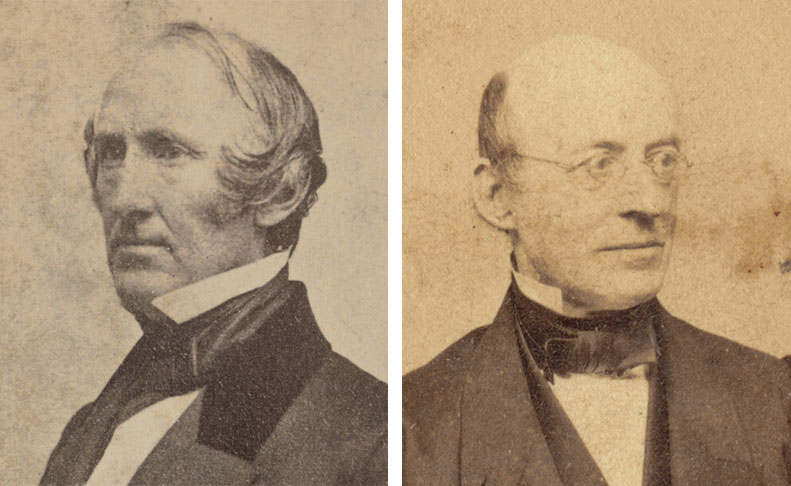 Library of Congress (Phillips); Boston Public Library
By the outbreak of the Civil War, Wendell Phillips (left) and William Lloyd Garrison (right) had achieved status as two of the country’s most ardent abolitionists, men whose radical views put them at odds with—and earned them the scorn of many fellow Americans, North and South.
Despite the rampant persecution faced by abolitionists, the movement attracted a small number of dedicated adherents in those early years. One such acolyte was a young Boston lawyer named Wendell Phillips. Phillips was a blue blood—a member of the aristocratic class known as “Boston Brahmins.” The product of an elite education, he had developed a reputation at Harvard College as a prodigious public speaker. After graduation, he became sunk in a morass of sorts, finding little moral value to his legal career. Everything changed one autumn day in 1835, when Phillips was awakened from his apathy by the sounds of a crowd nearby. Angry Bostonians, it turned out, had besieged an abolitionist meeting, calling for the head of Garrison—who had fled and sought refuge in the city jail. A curious Phillips would soon after engage in conversation with one of these radical agitators, a young woman named Ann Terry. It was she, Phillips later recalled, who “made an abolitionist of me,” imparting a purpose to his existence (and marrying him). Phillips would go on to become Garrison’s chief lieutenant in the movement, known for his soaring oratory and his devotion to black equality—to creating a truly multiracial society—with a commitment that surpassed that of most of his fellow white reformers.7
Though a spiritual sense of purpose impelled both Garrison and Phillips in their fight against slavery, neither man had an easy relationship with organized religion. Dedicated Christians were being drawn to the movement as a moral crusade. Among the most important were Abby Kelley and Stephen Foster. Kelley, a Quaker from Massachusetts, was a schoolteacher when she first heard a lecture by Garrison. Her “whole soul” filled with religious fervor, and she would take up the “divine call” of abolitionism in the late 1830s. Kelley became a fiery lecturer for both abolition and women’s rights, incurring the enmity of many a northerner. Her first major anti-slavery speech was in Philadelphia, at a meeting hall the attendees burned down after hearing from and seeing white women and black men joining hands on stage. Kelley was soon joined on her mission by her ideological soulmate Foster, a Congregationalist minister and missionary who had spurned his training to become an anti-slavery firebrand. The two young activists, who would marry in 1845, became known for their distinctive, comparatively rigid views of reform, creating a hardline wing within Garrison’s already radical movement. More than other anti-slavery reformers, the Fosters believed that righteous ends required equally righteous means. Abolitionists, they held, could not compromise in the short term to achieve their long-term goals. By doing so, reformers would corrupt themselves, settling for lesser gains while losing sight of their original, radical intentions.8
Alongside Garrison, Phillips, and the Fosters in this diverse, somewhat unwieldy abolitionist movement were a number of African Americans. Most prominent among them was the fugitive slave from Maryland who called himself Frederick Douglass. Born Frederick Bailey around 1818, Douglass knew the horrors of slavery—including those inflicted by his white father, who was his first master. He endured beatings, whippings, and deprivation, as well as the insidious psychological effects of an institution intended to strip him of his humanity and render him a laboring brute. With the aid of a plantation mistress, Douglass taught himself to read and write; he also engaged in physical resistance, overcoming a particularly cruel master in what he later called a “glorious resurrection” of his manhood—and of his sense of dignity as a human being. Eventually he escaped by sea to Massachusetts. There he became known as a powerful speaker, offering firsthand evidence of the evils of slavery. Douglass soon came to the attention of Garrison, who took him on as a protégé of sorts, sponsoring the publication of his famed slave narrative in 1845.9
As powerful personalities flocked to abolitionism in its first decades, factions formed. All abolitionists agreed on support for immediate, unconditional emancipation with some stated rights for African Americans. All rejected mainstream political parties, such as the Whigs and Democrats, as bitter foes. Abolitionists advocated for “righteous principles,” Garrison argued in 1843, while political animals cared only about the “advancement of men by any means.” They rejected even the moderately anti-slavery Republican Party, which emerged in the 1850s with the goal of preventing the expansion of slavery; that was a half-measure in abolitionists’ eyes, one that would distract the nation from comprehensive change.10
Outside of these basic principles, differences arose. Garrison and his followers came to believe that change could occur only through moral suasion of the masses, not politics. The Constitution, they argued, was irredeemably pro-slavery. Garrison thus began arguing for the temporary separation of the North from the South, in order to end what he called the “covenant with death”—the constitutional pact that bound northerners to protect southern slavery. He cemented this inflammatory position by burning copies of the Constitution at public meetings. Abolitionist opponents came to reject these ideas, instead casting the Constitution as anti-slavery. In 1840, this faction left Garrison’s American Anti-Slavery Society and formed a splinter group. Eventually, the dissidents were joined by Douglass, who had begun to chafe under Garrison’s control. In 1851, Douglass broke with his erstwhile mentor once and for all, creating a deeply personal rift between the two men.11
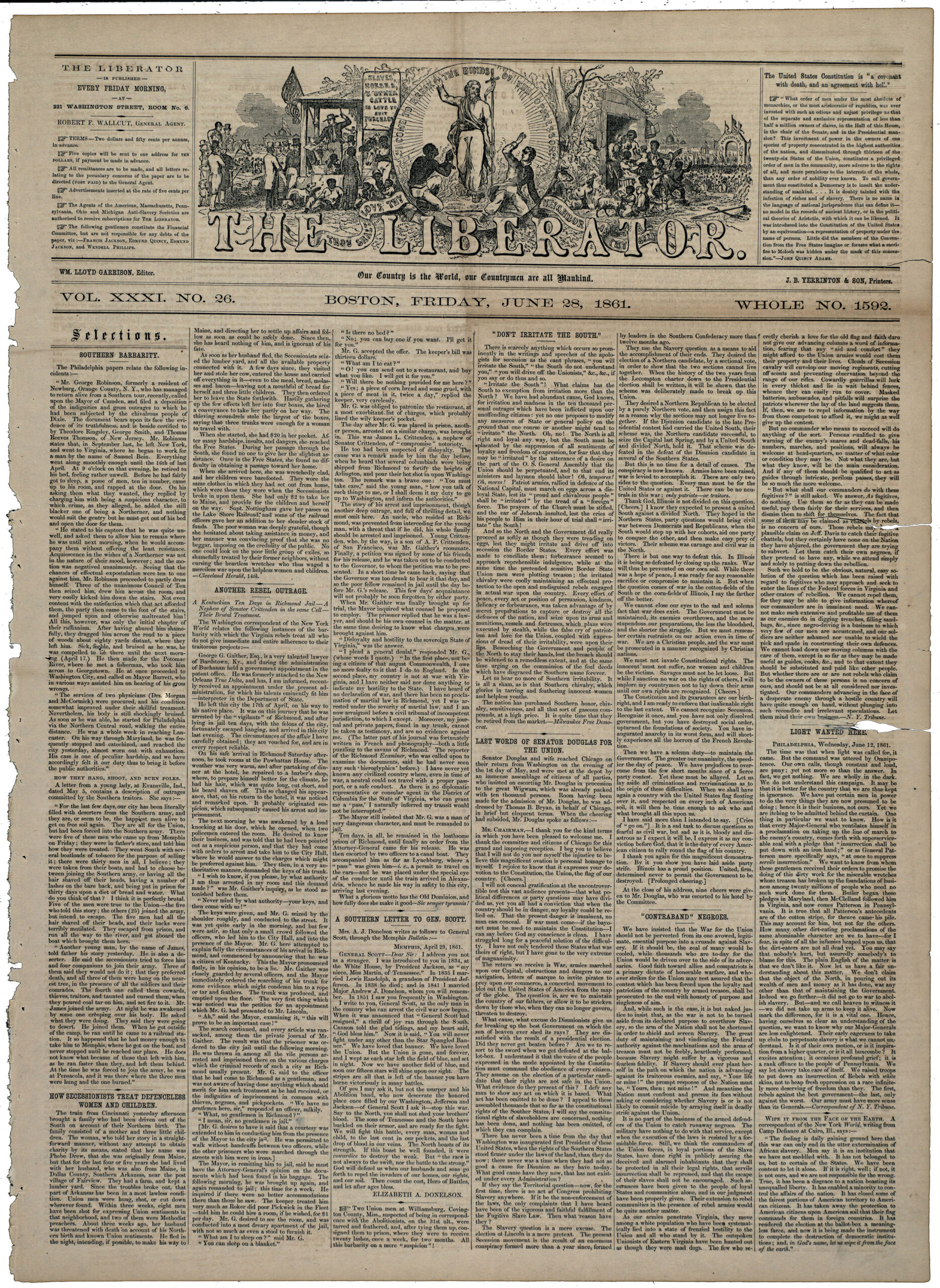 Boston Public Library
The June 28, 1861, edition of The Liberator, in which Garrison wrote he feared the new president would “restore the Union” as it was, with slavery intact.
The abolitionist movement as it thus existed on the eve of the Civil War—one that was relentlessly persecuted, opposed to mainstream parties, and torn by ideological and personal divisions—was transformed overnight by a bombardment. In November 1860, in the wake of Lincoln’s victory in the presidential election, 11 southern states would secede to form the Confederate States of America. Their goal, as their representatives reiterated in speech after speech, was to create an independent empire grounded in slavery and white supremacy. Conflict at Fort Sumter broke out the following April, inaugurating a civil war. Volunteers flocked to the Union military, rallying around the flag to defeat the rebellion.12
Abolitionists found themselves at a critical crossroads: They could either embrace Lincoln and the Union war, thus upending their longstanding tactics, or continue on their anti-politics, anti-government path. In one sense, the choice seemed obvious. Garrison and his followers had wanted the North to separate from the South in order to destroy the omnipotent Slave Power. But now that Slave Power had departed on its own initiative, freeing the North from its thrall. An existential conflict for the nation’s soul—a “death-grapple” between the government and the “Southern slave oligarchy”—was now begun, Garrison noted days after the fall of Fort Sumter. Lincoln’s government seemed the lesser evil next to a slaveholding rebellion. Famed activist Susan B. Anthony wondered how abolitionists could hope for anything but the “triumph of the less guilty party” in the conflict. A North at war with the Slave Power could destroy that entity once and for all. A tactical about-face seemed warranted.13
For some abolitionists, the choice was not so simple. First of all, as Phillips noted, to “renounce my past, thirty years of it,” and “admit my life has been a mistake” was not an easy decision. Abolitionists like him sincerely believed in their principles of opposition to the government and political parties. To abruptly shelve those ideals, he explained, would thus constitute the “most momentous decision in [my] life.” The time of national crisis was also a time of personal crisis for anti-slavery reformers like Phillips.14
Second, it seemed far from clear that Lincoln and his Union war deserved anti-slavery support. At the start, Lincoln was not fighting for emancipation. As he emphasized in an 1862 letter to Horace Greeley, the influential New-York Tribune editor, “My paramount object in this struggle is to save the Union, not either to save or to destroy slavery.” His personal dislike of slavery aside, Lincoln believed it was his constitutional duty to make the nation whole again. Whether slavery was eradicated was not his main concern. Indeed, his actions early in the war, such as maintaining the Fugitive Slave Law, tolerating the existence of slavery in the four border states that had remained in the Union, and revoking the early war emancipation edicts issued by Union generals such as John C. Frémont, seemed to indicate his preference for leaving slavery intact.15
Abolitionists did not view Lincoln as a trusted ally. As Garrison wrote in The Liberator, abolitionists feared that the president would “restore the Union” as it was—namely, with slavery intact. He would, another reformer fretted, seek “peace at the expense of a deadly compromise of principle.” In addition to worrying about Lincoln’s intentions regarding slavery, abolitionists also doubted his competence. In stark contrast to the modern view of Lincoln as an intellectual, a brilliant statesman, many Americans at the time, abolitionists included, viewed him as a backwoods bumpkin. One anti-slavery writer condescendingly noted early in the war that Lincoln lacked the “qualities to foresee the critical position of the nation”—to comprehend the “immense interests at stake” in the Civil War. Such were abolitionists’ extreme doubts about whether Lincoln deserved their backing.16
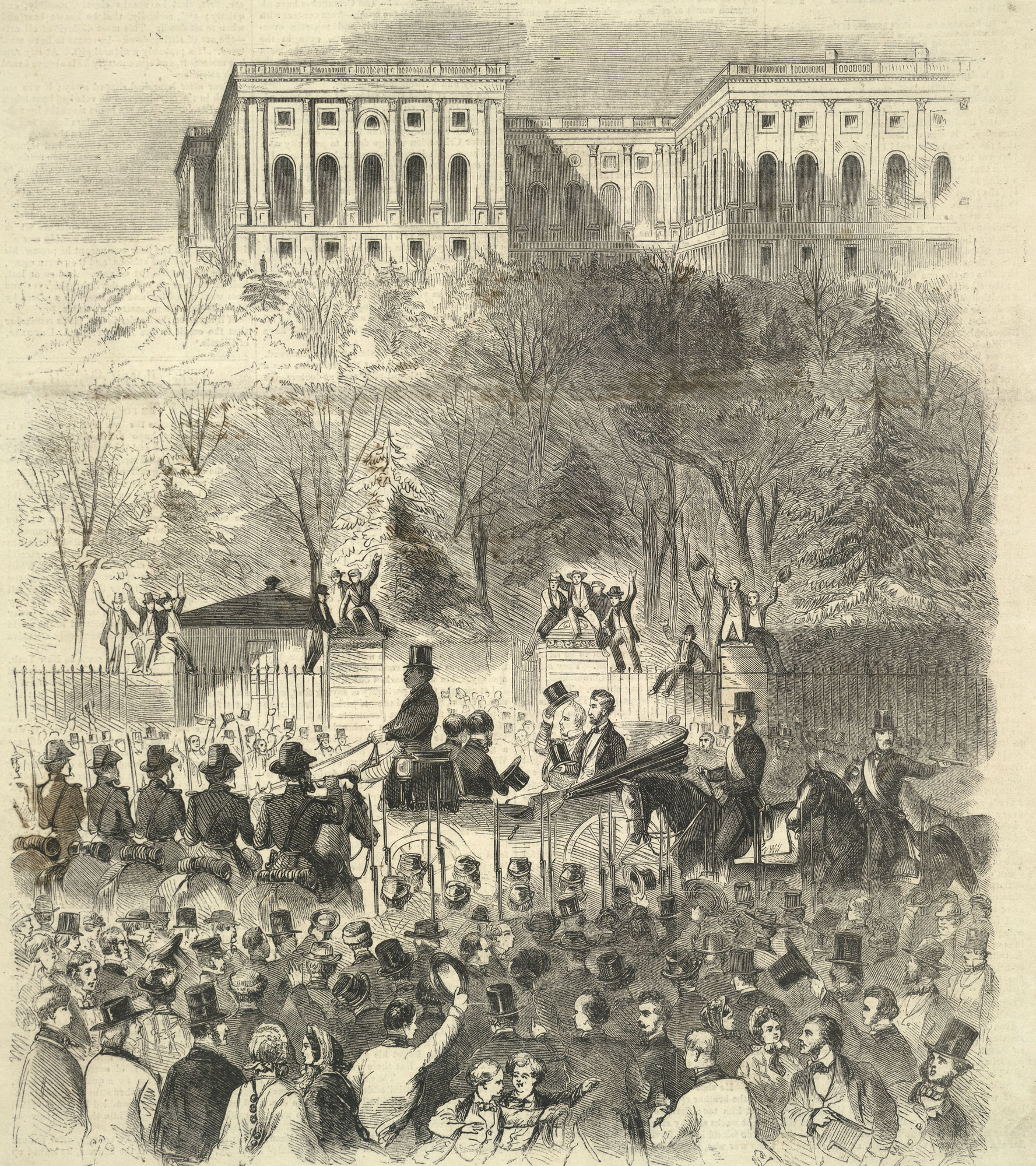 Library of Congress
During the Civil War’s early months, prominent abolitionists like William Lloyd Garrison had difficulty viewing Abraham Lincoln—who was clearly fighting to preserve the Union, not for emancipation—as an anti-slavery ally. Above, right: Lincoln’s inaugural procession passes through the streets of Washington, as depicted in a sketch published in Harper’s Weekly.
Abby and Stephen Foster, leaders of the hardline wing of reformers, decided that Lincoln and the Union war were not worthy. The concept of supporting a lesser evil—of employing immoral means to moral ends—was anathema to the Fosters. In one publication they argued, “[we] never recognized the rightfulness of choosing a moral evil, though a lesser one.” Just as importantly, they were not sure that the Union was even a lesser evil. The Lincoln administration, a fellow hardliner noted, showed no inclination to harm the institution of slavery. How could slavery be “damned, or even damaged seriously, by the present commotion?” These abolitionists thus refused to abandon the traditional anti-government stance of the movement.17
Most abolitionists came to think differently. Garrison, Phillips, and Douglass all recognized that Lincoln was not fighting to end slavery. They nevertheless saw at hand a tantalizing opportunity to bring about emancipation. “The war,” Garrison explained to Phillips early in the conflict, “must [become] a war of freedom against slavery.” They understood that slavery powered the Confederate war machine. Plantation slaves grew the crops that fed Rebel soldiers—and freed white farmers to go fight. The Confederate government also conscripted slaves to serve the Rebel armies as laborers. The easiest way to win the war, abolitionists recognized, would be to emancipate those slaves, turning the rebellion’s strength into its weakness. These abolitionists saw it as their duty to make the North see the light—to recognize that emancipation was now in northerners’ own best interests. One abolitionist argued that, rather than “stand back and wait until this is a noble war,” as the Fosters wanted, reformers had to “make it a noble war” themselves. They, Phillips added, would “help [Lincoln] to fame,” pushing him to save the Union through abolition. Dreaming of emancipation, these abolitionists concluded that the Union war was a lesser evil worth supporting.18
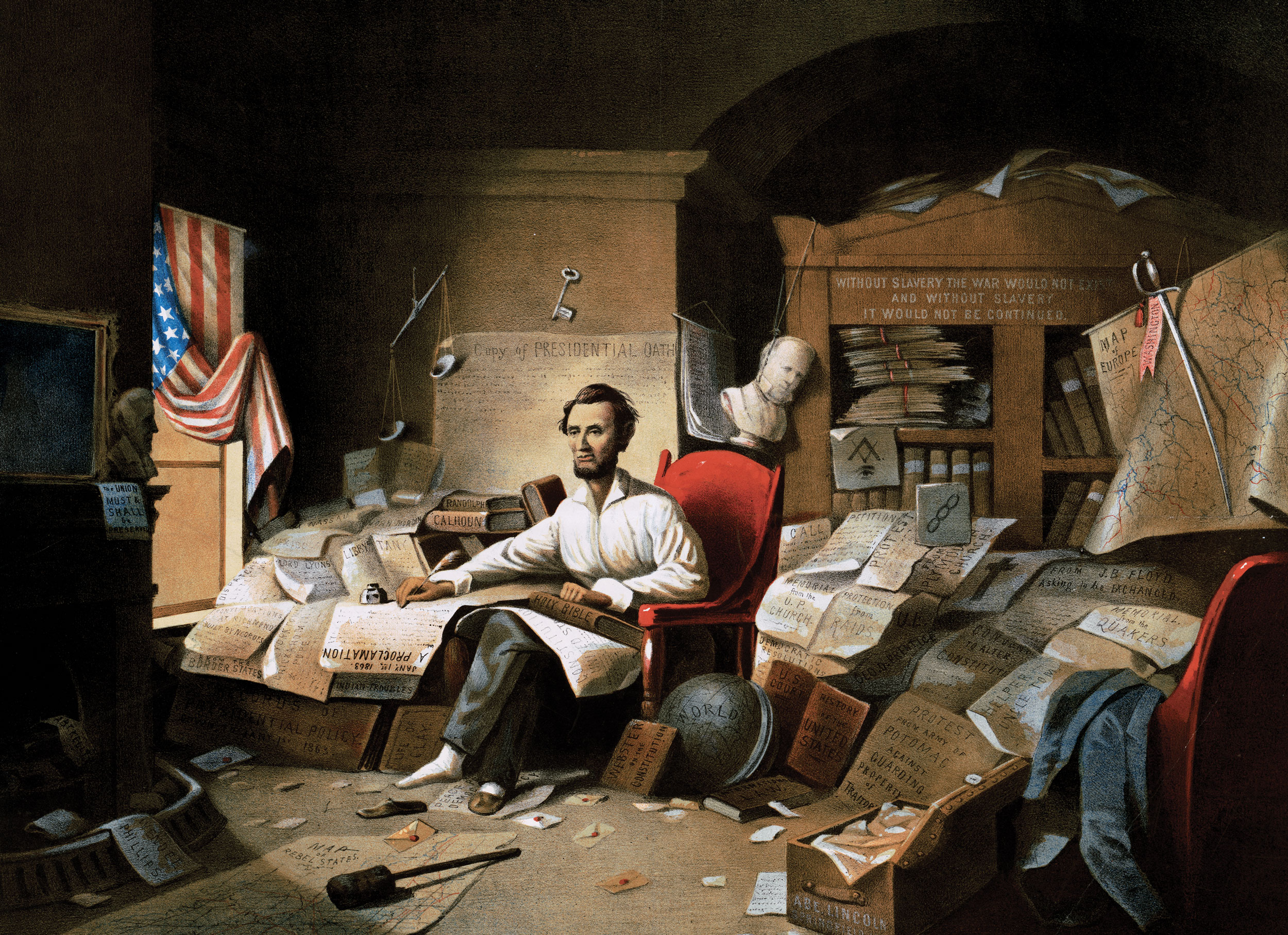 Library of Congress
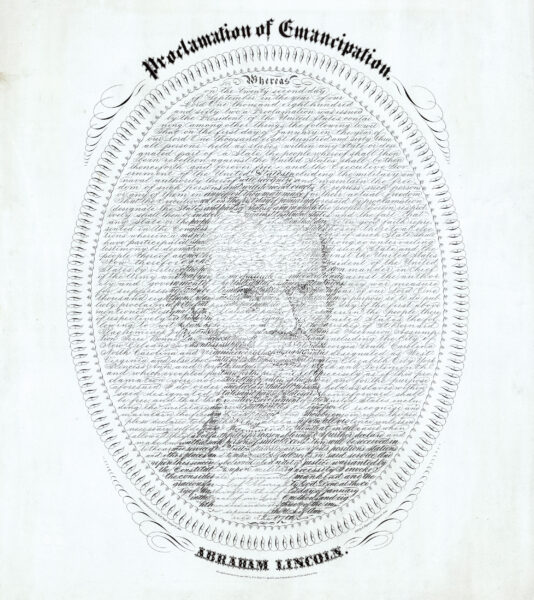
In this painting by David Gilmour Blythe, Abraham Lincoln writes the Emancipation Proclamation.
To seize the moment, the abolitionist movement—excluding the Foster wing—remade itself in the weeks after the fall of Fort Sumter. Reformers who had burned the Constitution, dismissed mainstream political parties, and mocked Lincoln now engaged an about-face. They lined up in support of Lincoln and the Union war, aiming to influence the war effort from within. Phillips, who stayed with the majority after much deliberation, gave a speech declaring that “today Abolitionist is merged in citizen—in American.” Douglass likewise gave every “persuasion of my heart” to the Union war in an article in his newspaper, Douglass’ Monthly. And in a speech a few months later, Garrison noted that he and Lincoln were both “so bad” in the eyes of slaveholders that if they “should go amicably together down South, we should never come back.” To audience laughter, Garrison concluded that if he and Lincoln must hang, they “should hang together.” Phillips, Douglass, and Garrison, men who would never have endorsed the government or put themselves in the same boat with Republicans, were underscoring how drastically the war had changed them.19
Pro-war abolitionists set to work on a unified strategy. First was to heal the schisms that divided the movement. The enmity between Garrison and Douglass, two of the leading lights in the pro-war majority, was an especially important gap, symbolizing the prewar factionalism between Garrison’s followers and opponents. Trust was a “plant of slow growth,” Garrison admitted later to his wife, “and in his case will be particularly so with me.” Nevertheless, the two erstwhile friends began speaking together again at meetings and praising each other in their respective newspapers, if only in tepid terms. The pro-war consensus that emerged in abolitionism thus transcended the rivalries of old.20
Second, these abolitionists constructed a new common platform. Instead of attacking slavery as a moral evil—the standard line for decades—reformers bowed to the exigencies of the moment by stressing the practical necessity of emancipation. “Mad idolatry of that foul system” of slavery, Garrison pointed out in an editorial, had precipitated southern secession and caused the Civil War. And that foul system, Douglass noted in his own editorial, had become the “center of this gigantic rebellion”—the core of the Confederate war effort. Logic, another abolitionist concluded, thus dictated that the “preservation of our own national existence”—the defeat of the rebellion—required abolition. Reformers even offered a legal mechanism to enact such a process: military emancipation under the constitutional war power. Invoking an argument made by former President John Quincy Adams decades earlier, they proposed that the war powers clause of the Constitution enabled Lincoln to free Confederate slaves as an act of military necessity. Garrison, the onetime burner of the Constitution, now published pamphlets championing the founding document as the basis for a wartime emancipation.21
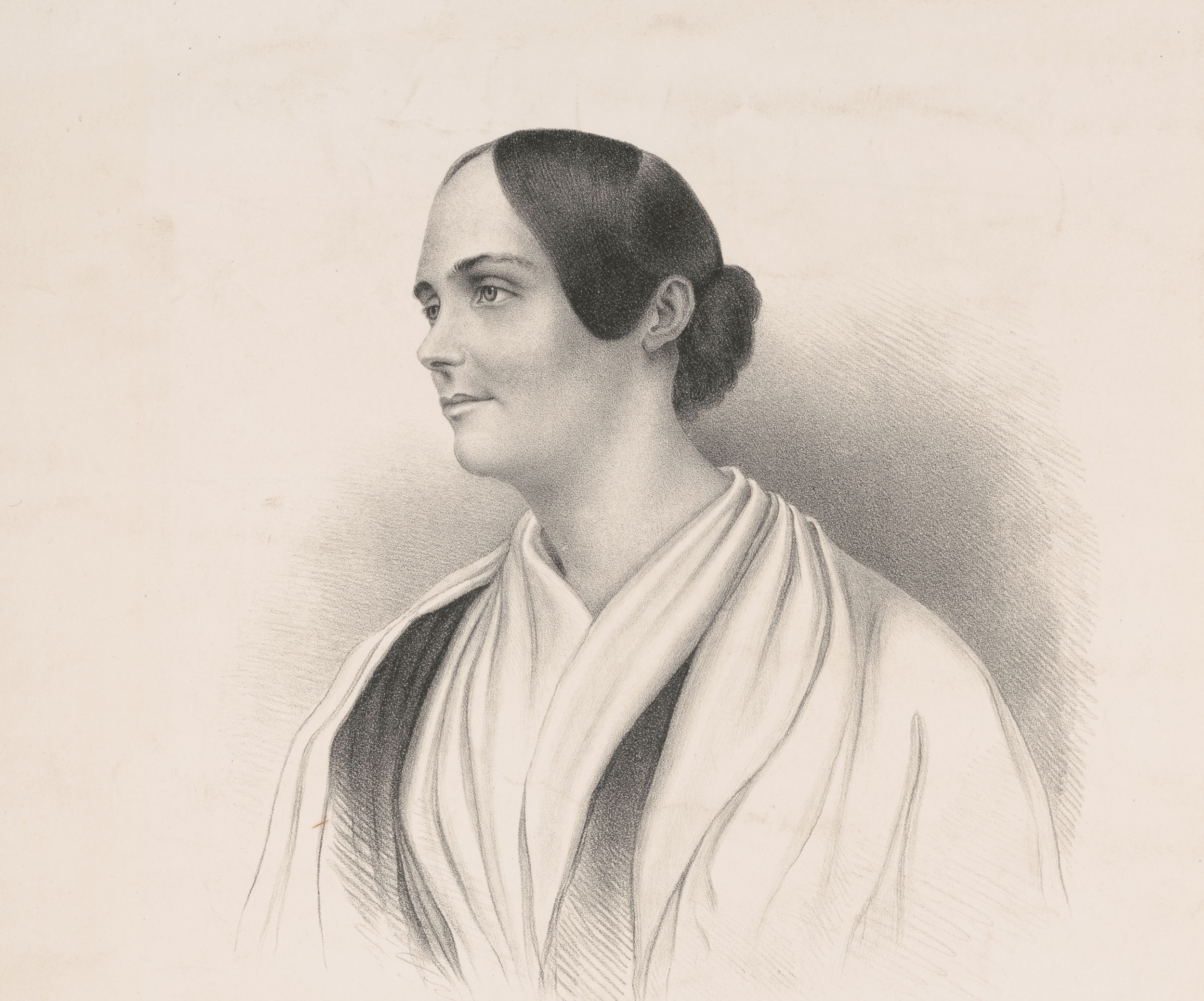 Library of Congress
While most abolitionists—including William Lloyd Garrison, Wendell Phillips, and Frederick Douglass—came to see the war as an opportunity to bring about emancipation, others, like Abby Foster (above), refused to abandon their traditional anti-government stance and back the Lincoln administration.
Finally, pro-war abolitionists drummed up support for military emancipation. The Lincoln administration, reformers realized, would never enact such a radical measure without political cover. Abolitionists needed to build enough support for the measure among northerners to move Lincoln to act. Activists reached out to sympathetic figures in the Republican Party, Senator Charles Sumner of Massachusetts, for one, to help disseminate their message. The young abolitionist Moncure Conway asked Sumner for help in publishing his book on military emancipation in late 1861. Sumner agreed, arranging a publisher and circulating the tract to political contacts. He even shared the book with Lincoln, who, Sumner reported to Conway, was “reading it with interest.” Through political friends, reformers like Conway spread their ideas far and wide in the wartime Union.22
As pro-war abolitionists healed old wounds, cozied up to Republicans, and girded themselves in the rhetorical armor of military necessity, they looked unrecognizable to the hardliner wing. The Fosters and their allies were aghast at such behavior. At a meeting in 1861, Stephen Foster wondered aloud why his erstwhile friends were “heart and soul in this war.” The Union government, he noted, was the same entity that they had together “opposed for twenty years.” In pursuing an immoral means—the Union war—to a moral end, the Fosters warned, pro-war abolitionists were making a terrible trade-off. The government was showing no interest in abolition. Even if the pro-war strategy worked, moreover, it would not be sufficient. Northerners, they argued, had to abolish slavery as a moral act of justice. Only then, Abby Foster noted, would “hate of the colored race” abate. Emancipation by amoral necessity, as pro-war abolitionists intended, would not end racism.23
Like the seers of old, the Fosters began prophesying doom for their counterparts. Garrison and company, Stephen Foster warned, were being “seduced from their allegiance to principle.” In pursuing their new strategy, pro-war abolitionists were getting in over their heads. Soon enough, the Fosters predicted, these reformers would begin to lose sight of their more radical ideals, such as black equality, dovetailing them instead with the more moderate, political goals of their newfound friends, the Republicans. In effect, the Fosters cast their fellow activists as traitors to the abolitionist movement, putting the long-term mission in peril to achieve immediate gains.24
Embracing their course, pro-war abolitionists brushed off the Fosters, dismissing their concerns as baseless. And in the short term, Garrison, Phillips, Douglass, and their followers were proven right. As the war ground on and northerners inclined toward more drastic measures to defeat the resilient, slaveholding Confederacy, abolitionist arguments began catching on in late 1861 and early 1862. Their ideas circulated in public forums and political assemblies. The abolitionists themselves, long pelted by mobs, now became celebrities, invited to speak to Congress and meet with Lincoln. In the spring of 1862, for example, Phillips became the toast of Washington, D.C., hobnobbing with political and military leaders. He met with Lincoln, making the case for military emancipation, and came away impressed. Stunned by abolitionists’ newly achieved popularity and influence, Phillips gloried to his wife, Ann, about the “enthusiasm with which [he was] received” in the capital. By mid-1862, enough northerners had come to support military emancipation—and the military situation felt desperate enough—for Lincoln to settle on implementing the war power. The Emancipation Proclamation, freeing slaves in Rebel-held areas as well as allowing for the enlistment of African Americans in the Union military, thus went into effect in January 1863, due in no small part to the pro-war abolitionists. Against all odds, they had helped strike a crushing blow against slavery—one that had seemed impossible only a few years earlier.25
In the months after the proclamation, pro-war abolitionists exulted. At last, Phillips declared, “battles are fought now for justice.” Douglass agreed, rejoicing in his newspaper that the “Star Spangled Banner is now the harbinger of Liberty.” He threw himself into recruiting black troops for the Union, including his own sons, who would go on to fight in the famed 54th Massachusetts Infantry.26
What the abolitionists called victory would soon enough be seen to have come at great cost—the cost the Fosters had foretold. Reformers had won a momentous battle, but not the war. Military emancipation did not entail a notable government commitment to black rights—an issue with which Lincoln seemed largely unconcerned in the second half of the war. From the recurring problem of unequal pay for black soldiers to the system of virtual serfdom imposed on former plantation slaves in Union-occupied Louisiana, it quickly became apparent that emancipation by necessity would not bring justice to African Americans.27
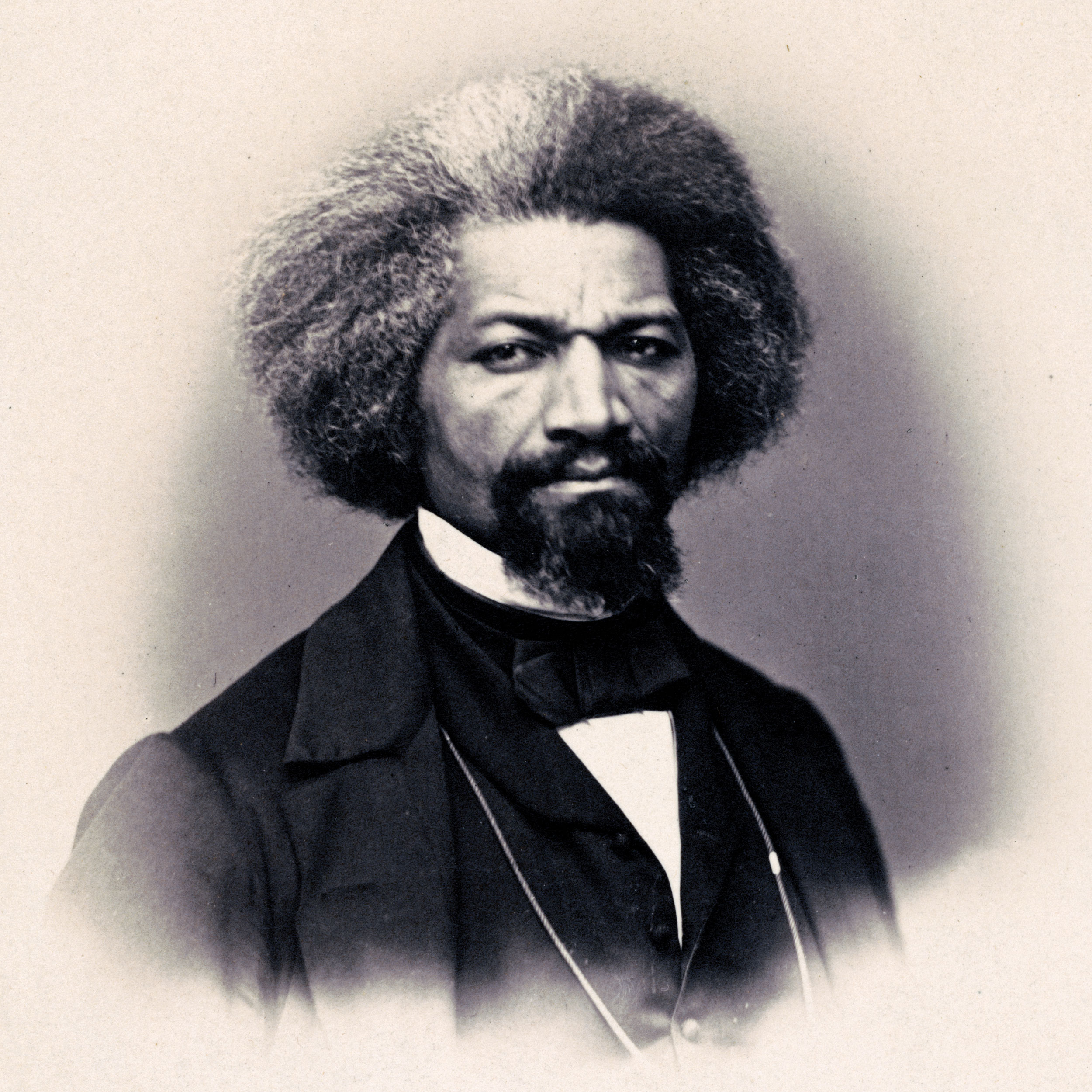 Library of Congress
Whereas William Lloyd Garrison came to view his anti-slavery mission as nearing its end after the passage of the Emancipation Proclamation, other pro-war abolitionists like Frederick Douglass (above) refused to cease their efforts “until black men shall have been admitted, fully and completely, into the body politic of America.”
In line with the Fosters’ warnings, many pro-war abolitionists, Garrison chief among them, were less and less bothered by these problems. Throughout 1863–1864, the abolitionist leader warmed to the Lincoln administration, with its politically determined goals—Union victory and, now, emancipation—having come to match his own. Whereas he had once paired emancipation with post-emancipation black rights in founding the American Anti-Slavery Society, Garrison now separated the two. He wrote in The Liberator in June 1864, the “emancipation of all who are in bondage” was all that mattered. “Time will determine whether freedom and equality are possible for whites and blacks in the same community.” With a rhetorical shrug of his shoulders, Garrison looked past a fundamental goal of the abolitionist movement. The victory of an emancipationist Union was enough. To that effect, he declared to a Republican political meeting that he was “for the abolition of the rebellion, for the abolition of Slavery, and for the abolition of [the] Anti-Slavery Society.” His mission as a reformer, now shorn of its most radical components, was nearing its end.28
Not all pro-war abolitionists wanted to shrink the anti-slavery agenda. Douglass told Garrison that the “work of [abolitionism] will not have been completed until black men shall have been admitted, fully and completely, into the body politic of America.” Such progress had not nearly been achieved, as the issue of unequal pay for black troops made clear. Disgusted by the discriminatory policies, Douglass had briefly resigned his recruiting commission in 1863; a personal meeting with Lincoln assuaged his concerns. Phillips also shared Douglass’ expansive commitment to black rights. “Never until we welcome the negro as equals,” he declared, “will the North deserve triumph.” True freedom for African Americans, he argued, meant a leveling of the playing field, eradicating the political, social, and economic effects of slavery and racism through suffrage, civil rights, and even land redistribution.29
Disappointed by the much narrower goals of the Lincoln administration, Phillips turned against the president. Joining with other disgruntled pro-war abolitionists as well as the Fosters’ hardline wing, he campaigned against Lincoln’s reelection. He also turned against his old friend Garrison, excoriating him for his complacency with the state of affairs. It was “sad to see the bitterness which old friends nurse so carefully,” Garrison’s son noted of the rift in their relationship, which would never fully heal. Satisfied with national events, Garrison quit the abolitionist movement altogether. In May 1865, in the wake of final Union victory and the passage of the 13th Amendment, he resigned the presidency of the American Anti-Slavery Society. A number of likeminded allies joined him in retirement. Only a remnant of reformers, including Phillips, Douglass, and the Fosters, remained at the anti-slavery helm.30
The collapse of the abolitionist movement in 1865 did not bode well for the postwar period in which African Americans briefly attained voting rights and political power in the occupied former Confederacy. Reconstruction was a fragile experiment, beset on the one hand by apathetic northerners longing to move on from the issue of racial equality and on the other by white southerners using violence to reestablish white supremacy. Reconstruction could hardly survive for long without the organized, united support of abolitionists, for decades the only true friends of African Americans. Stripped of numbers, money, and influence, Douglass, Phillips, and their remaining cohort could only watch as Reconstruction fell apart, ushering in a dark age of Jim Crow segregation, racial disfranchisement, and lynching.
In the end, the story of abolitionists and the Civil War is a tragic one—its soaring highs and brutal lows bound up inextricably. By transforming their movement in a time of national crisis, reformers succeeded in helping bring about emancipation—an unattainable goal only a few years before. But they scaled back their agenda and abandoned the struggle for anything beyond emancipation, and so the way was clear for the insidious effects of slavery to linger long past the formal end of the institution. In the abolitionist saga, we glimpse in their entirety the racial contradictions of the Civil War—a conflict that ended slavery but left African Americans in an oppressive limbo, not quite chattel and yet not quite citizens.
Frank Cirillo is a postdoctoral fellow and assistant editor of the Black Virginians in Blue Project at the University of Virginia’s Nau Center for Civil War History. He has previously held fellowships at the Library of Congress, the New-York Historical Society, and the Massachusetts Historical Society. His book project, The Abolitionist Civil War, examines wartime abolitionism and its drastic effects on the nation as a whole.
Notes
1. “Fort Sumter: Restoration of the Stars and Stripes,” The New York Times, April 18, 1865.
2. An excellent overview of the abolitionist movement before the Civil War is James Brewer Stewart, Holy Warriors: The Abolitionists and American Slavery (New York, 1997, orig. 1976).
3. William Lloyd Garrison to Helen Garrison, April 7, 1865, Anti-Slavery Collection, Boston Public Library; William Lloyd Garrison to Benjamin Chase, July 24, 1865, African American History Collection, William L. Clements Library, University of Michigan.
4. “Constitution of the American Anti-Slavery Society,” American Memory Collection, Library of Congress.
5. For more on Garrison’s life, see Henry Mayer, All on Fire: William Lloyd Garrison and the Abolition of Slavery (New York, 2008).
6. “To the Public,” The Liberator, January 1, 1831. See Stewart, Holy Warriors; Mayer, All on Fire, and Richard S. Newman, The Transformation of American Abolitionism: Fighting Slavery in the Early Republic (Chapel Hill, 2002).
7. Wendell Phillips, quoted in James Brewer Stewart, Wendell Phillips: Liberty’s Hero (Baton Rouge, 1986), 44.
8. Abby Kelley Foster to Alla Foster, October 1883, Kelley-Foster Papers, Worcester Historical Museum, Worcester, MA. For more on the lives of the Fosters, see Dorothy Sterling, Ahead of Her Time: Abby Kelley and the Politics of Antislavery (New York, 1991) and Stacey Robertson, Parker Pillsbury: Radical Abolitionist, Male Feminist (Ithaca, NY, 2000).
9. Frederick Douglass, Narrative of the Life of Frederick Douglass, an American Slave (Boston, 1845), 73. For more on Douglass, see David W. Blight, Frederick Douglass: Prophet of Freedom (New York, 2018).
10. William Lloyd Garrison and Maria Weston Chapman to David Lee Child, May 14, 1843, David Lee Child Correspondence, New-York Historical Society. See Stewart, Holy Warriors.
11. “On the Dissolution of the Union,” The Liberator, June 15, 1855. See Mayer, All on Fire, and Blight, Frederick Douglass.
12. For the explicit reasoning beyond southern secession, see Charles B. Dew, Apostles of Disunion: Southern Secession Commissioners and the Causes of the Civil War (Charlottesville, 2002).
13. William Lloyd Garrison to Oliver Johnson, April 19, 1861, Anti-Slavery Collection, Boston Public Library; Proceedings of the Yearly Meeting of Congregational Friends (Waterloo Meeting) (Cortland, NY, 1861), 24.
14. Wendell Phillips, quoted in George W. Smalley, Anglo-American Memories, Series I (New York, 1911), 108–112.
15. Abraham Lincoln to Horace Greeley, August 22, 1862, in Roy P. Basler, ed., The Collected Works of Abraham Lincoln (New Brunswick, NJ, 1953), 5:388–389.?
16. “The Abolitionists and the War,” The Liberator, June 28, 1861; “Anniversary Week,” The Liberator, June 7, 1861; “President Lincoln and Emancipation,” The Liberator, June 20, 1862.
17. “The Object. The Result,” Anti-Slavery Bugle, April 27, 1861; Parker Pillsbury to Wendell Phillips, May 1, 1861, Crawford Blagden Collection of Wendell Phillips Papers, Houghton Library, Harvard University.
18. William Lloyd Garrison to Wendell Phillips, April 19, 1861, Crawford Blagden Collection of Wendell Phillips Papers, Houghton Library, Harvard University; “Eloquent Tribute to Frémont,” Weekly Anglo-African, September 28, 1861; “Speech of Wendell Phillips at the Anti-Slavery Convention,” The Liberator, July 12, 1861.
19. Speech of Wendell Phillips, April 21, 1861, in James Redpath, ed., Speeches, Lectures, and Letters by Wendell Phillips (Boston, 1863), 396–414; “The Fall of Sumter,” Douglass’ Monthly, May 1861; “Mr. Garrison’s Lecture,” The New York Times, January 15, 1862.
20. William Lloyd Garrison to Helen Garrison, May 14, 1863, Anti-Slavery Collection, Boston Public Library.
21. “The War—Its Cause and Cure,” The Liberator, May 3, 1861; “How to End the War,” Douglass’ Monthly, May 1861; George B. Cheever, Salvation of the Country Secured by Immediate Emancipation (New York: John A. Gray, 1861); William Lloyd Garrison, Emancipation Under the War Power (Boston, 1861).
22. Moncure D. Conway, Autobiography: Memories and Experiences of Moncure Daniel Conway, Vol. 1 (Boston, 1904), 341.
23. “Fourth of July Celebration at Framingham,” The Liberator, July 12, 1861; “The New England Anti-Slavery Convention: Thursday, May 29,” The Liberator, June 6, 1862.
24. “Fourth of July Celebration at Framingham,” The Liberator, July 12, 1861.
25. Wendell Phillips to Ann Phillips, March 1862, Anti-Slavery Collection, Boston Public Library.
26. “The Proclamation: How to Make it Efficient,” The Liberator, January 9, 1863; “Emancipation Proclaimed,” Douglass’ Monthly, October 1862.
27. Eric Foner, The Fiery Trial: Abraham Lincoln and American Slavery (New York, 2010), 248–289.
28. “Letter from Blair,” The Liberator, July 1, 1864; “The State of the War,” The New York Times, May 12, 1863.
29. Proceedings of the American Anti-Slavery Society at its Third Decade (New York, 1864), 110–118; “The State of the Country,” The New York Times, May 12, 1863. For Douglass and Lincoln, see Blight, Keeping Faith, 165–168 and James Oakes, The Radical and the Republican: Frederick Douglass, Abraham Lincoln, and the Triumph of Antislavery Politics (New York, 2008), 208–215.
30. William Lloyd Garrison Jr. to Wendell Phillips Garrison, August 13, 1864, Garrison Family Papers, Houghton Library, Harvard University; “The Anti-Slavery Society,” The New York Times, May 11, 1865.
Related topics: emancipation