Photograph of a farmhouse near Gettysburg.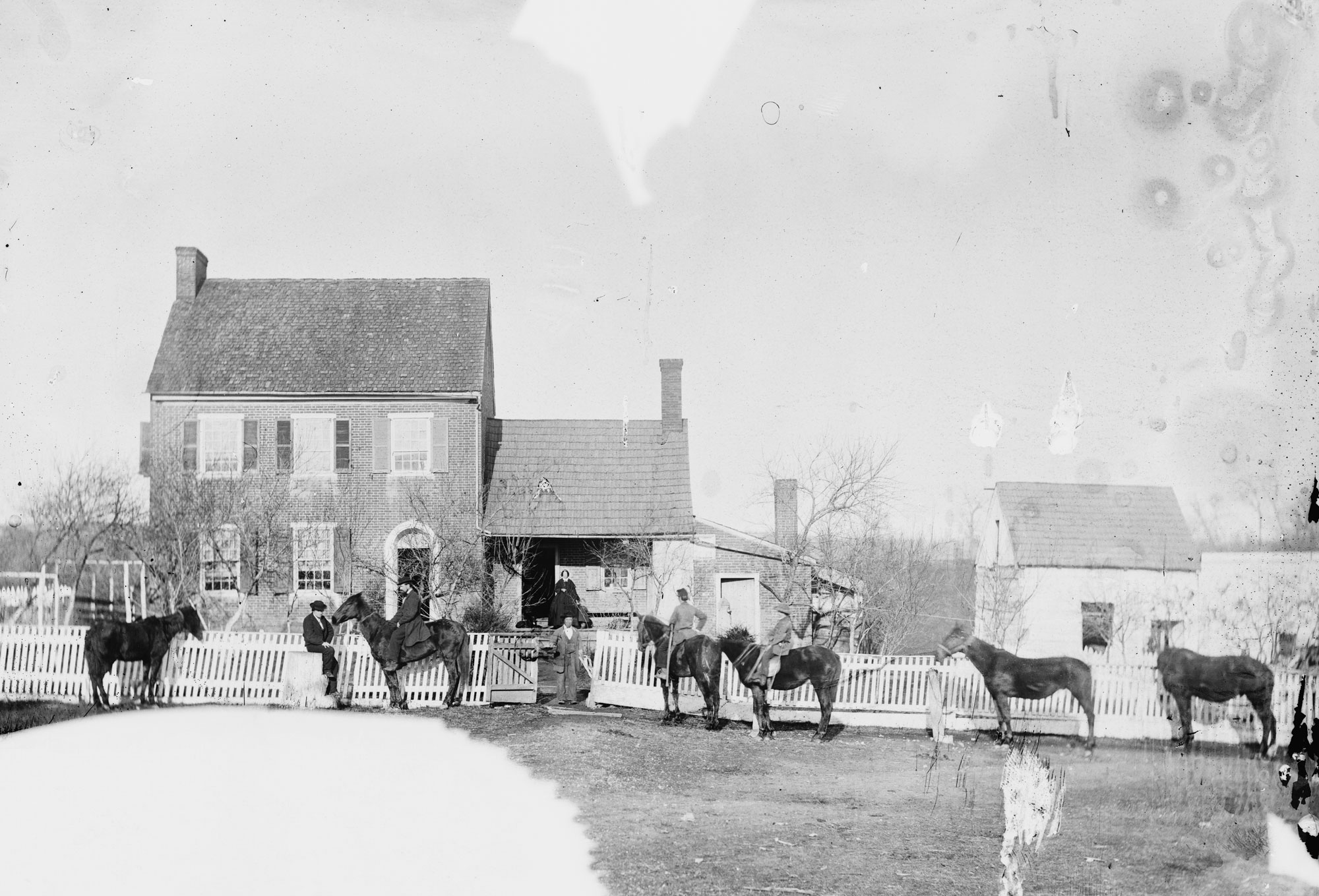 Francis Miller, The Photographic History Of The Civil War
“I heard two cavalrymen talking that morning and one of them said, ‘Well, the ball is about to open.'”
—Sarah Barrett King, Gettysburg resident, recalling a July 1, 1863, conversation
“[W]e met … Union troops pouring along the road and through the fields, coming out every street and alley … all rushing pell-mell forward, without any apparent order, with fixed bayonets, eager-eyed, stripped, perspiring and panting in the hot sun. They cursed us for being in the way, butted us back, and would have run right over us if we had not dodged out of their way.”
—Farmer Nathaniel Lightner, who journeyed into town with a friend on July 1, 1863, unaware of either army’s presence, and was caught in the tide of union soldiers on their way to join the battle
“What pen can tell or thought conceive the awfulness of the strife that has raged[?] … [T]here is a silence around us now that is ominous of tomorrow’s struggle. Thousands of brave ones lie upon their arms, girded for conflict, snatching a few moments’ rest.”
—Gettysburg resident Jane Smith, in a diary entry dated midnight, July 2, 1863
“We rushed up the cellar steps to the kitchen. The barn was in flames and cast a lurid glare through the window. The house was filled with Rebels and they were deliberately firing it …. [W]e pled with them in pity to spare our home. But there was no pity in those determined faces. They were ‘Louisiana Tigers,’ they boasted, and tigers indeed they were.”
—Amelia Harmon, age 17, who lived with her aunt in a house west of Seminary Ridge, directly in the path of the Confederate advance, on an encounter she had on July 1, 1863
Georgeanna Woolsey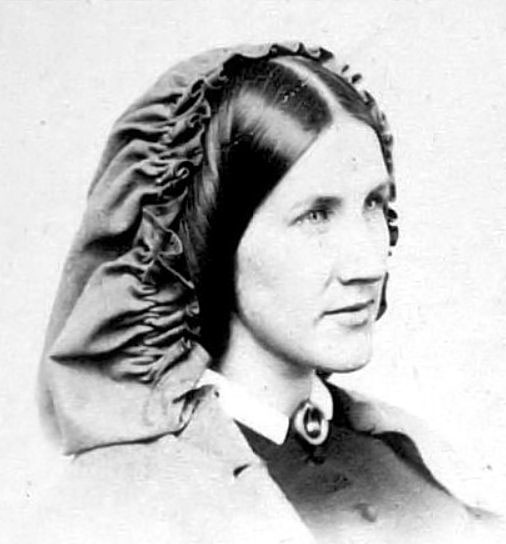 Letters of a Family During the War for the Union, 1861-1865 Vol. 2 (1899)
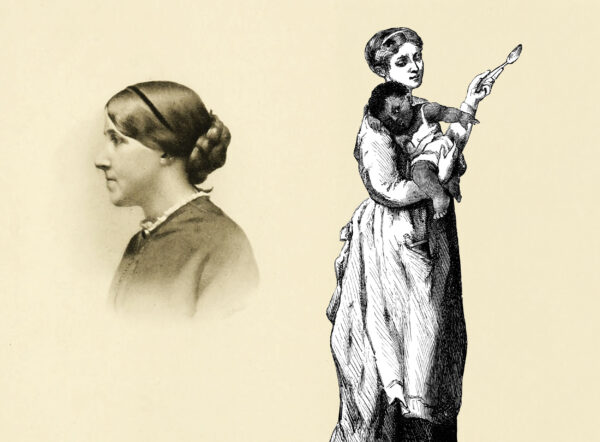
“It will be a long time before Gettysburg will forget the Army of the Potomac. Their houses are battered, some of them with great holes through and through them. Their streets are filled with old caps, pieces of muskets, haversacks, scraps of war everywhere, and even the children fling stones across the streets, and call to each other, ‘Here, you rebel, don’t you hear that shell?'”
—Georgeanna (“Georgy”) Woolsey, a U.S. Sanitary Commission nurse stationed at Camp Letterman, a military hospital located near the Gettysburg battlefield, in a letter dated August, 6, 1863
Tillie Pierce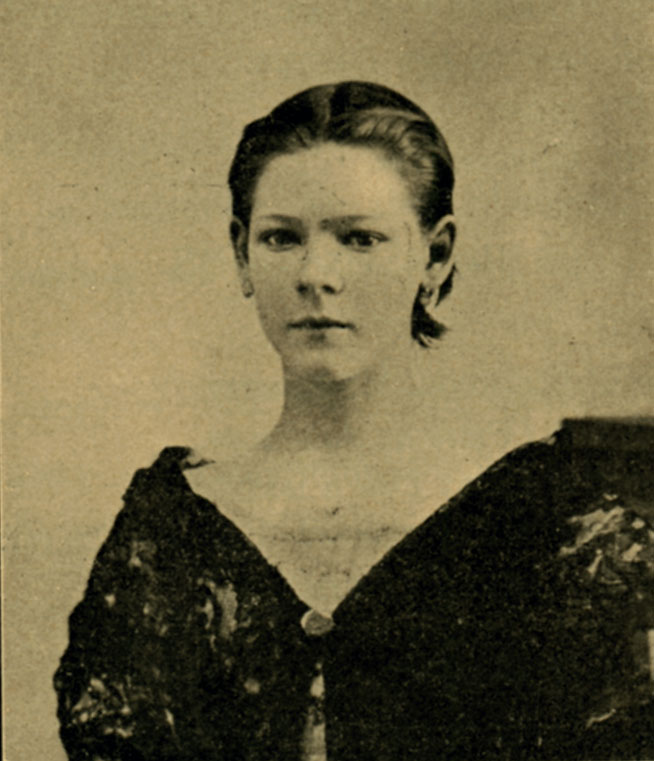 Adams County Historical Society, Gettysburg, Pa.
“By this time, amputating benches had been placed about the house…. I saw … the surgeons sawing and cutting off arms and legs, then again probing and picking bullets from the flesh. Some of the soldiers fairly begged to be taken next, so great was their suffering, and so anxious were they to obtain relief.”
—Fifteen-year-old Tillie Pierce, on the scene she encountered when arriving with friends at the Gettysburg farm of the Weikert family on July 3, 1863
Sources
Woolsey quoted in Letters of a Family During the War for the Union, 1861-1865 Vol. 2 (1899); all other quotes from John Alexander and Jim Slade, Firestorm at Gettysburg: Civilian Voices, June-November 1863 (1998).