 Jonathan W. White is professor of American Studies at Christopher Newport University and the author or editor of 21 books. His latest is Measuring the Man: The Writings of Frederick Douglass on Abraham Lincoln (Reedy Press, October 2025), co-edited with Lucas E. Morel.
What are you currently reading?
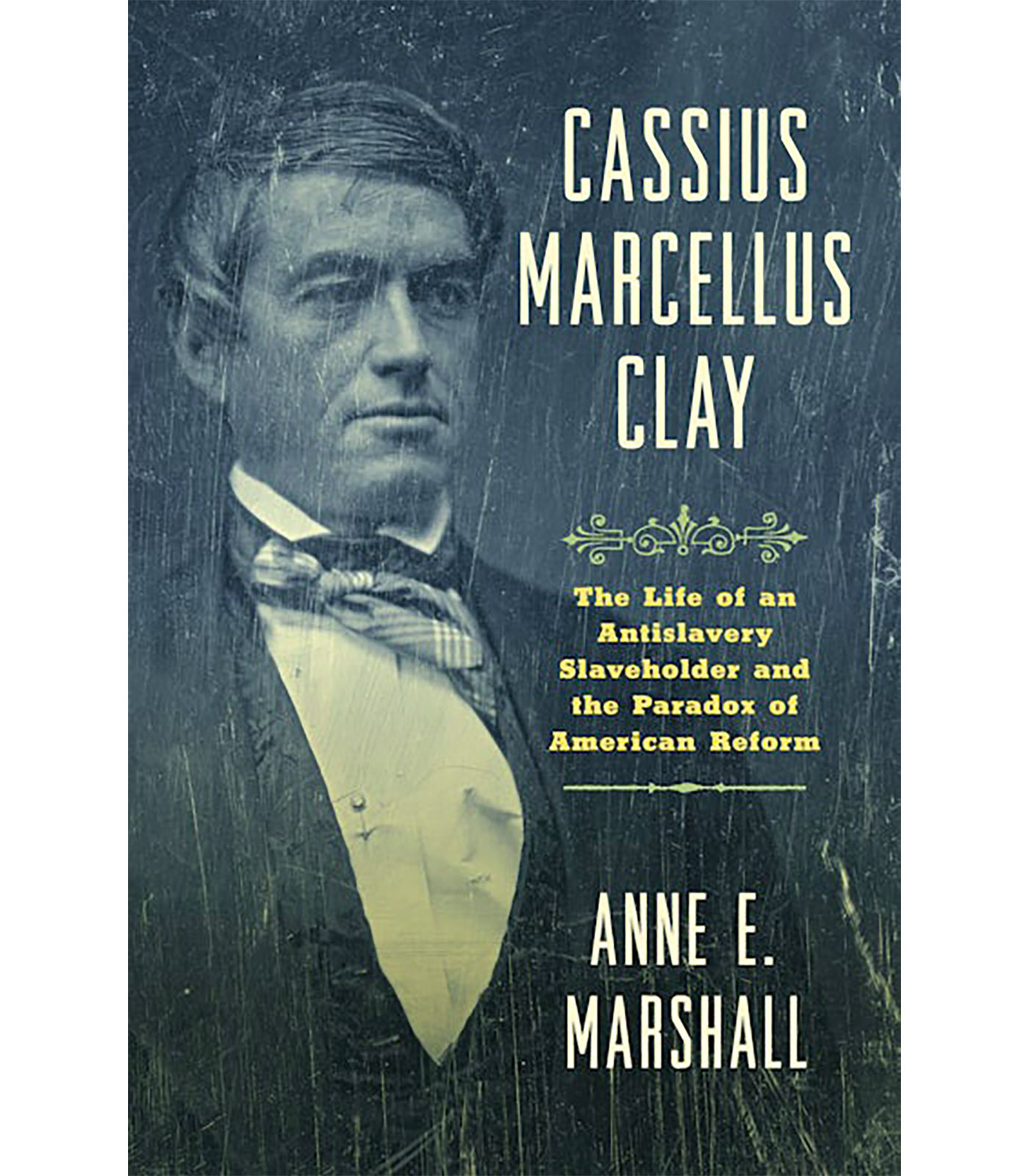
Cassius Marcellus Clay: The Life of an Antislavery Slaveholder and the Paradox of American Reform by Anne E. Marshall (forthcoming from the University of North Carolina Press).
What drew you to this book?
UNC Press asked me to write a blurb for it. I am two chapters in and can say that so far it is excellent. Marshall does a remarkable job of humanizing Clay while also capturing the complexities of his moral and political views. Chapter One ended with something that made me gasp out loud as I read it. If the rest of the book is as good as the first two chapters, I will be giving it a very high recommendation.
What was your favorite book as a child and why?
I mostly read fantasy when I was young—Tolkien, C.S. Lewis, Terry Brooks. I think my favorite book was Till We Have Faces: A Myth Retold (1956), which is Lewis’ reworking of a classic Greek myth. I don’t remember much about the book at this point, but I recall being quite moved by it. It’s one of those books I’d love to revisit now that I’m older and would appreciate it more, but it’s hard to find the time for leisure reading when there are so many new Lincoln and Civil War books to keep up with.
I don’t think I started reading history books until I was in high school. The first Civil War book I remember reading was William C. “Jack” Davis’ Battle at Bull Run (1977). I was drawn to it because my family lore has it that we are somehow related to Irvin McDowell, who commanded Union forces there. Jack has since become one of my favorite Civil War authors—and he is also an all-around great guy!
What kind of reader were you?
As a child I loved listening to books on tape. I remember really enjoying multi-tape collections of short stories by Mark Twain, Washington Irving, and Nathaniel Hawthorne. We don’t have tapes anymore, but I still love audiobooks—especially titles that I wouldn’t normally have time to read. I often fall asleep listening to classics on LibriVox that are in the public domain. Right now, I’m listening to Life and Times of Frederick Douglass, Written By Himself (1881).
You’re forming a new book group. Who would you invite and why?
There are so many great people who come to mind, but I’ll name two because of their unique engagement with Civil War books (and because I get to talk with them so infrequently). I would definitely invite Gerry Prokopowicz. Civil War Talk Radio is one of my favorite podcasts, and Gerry asks such probing questions of his guests. I’d also invite Tim Talbott of the Central Virginia Battlefields Trust. Tim regularly posts on Facebook about soldiers’ letters and diaries that he’s reading, and he very generously sends me quotes that might be useful for my research.
Where do you like reading?
I like to read in bright places, especially where there is natural light. My parents have a cabin in the Pocono Mountains of Pennsylvania, and I have fond memories of reading out by the lake. I also like to read in restaurants or coffee shops if I can get a seat by a window.
Do you have a favorite bookstore? What about it appeals to you?
When I was in graduate school at the University of Maryland around 2001, one of my friends took me to the Second Story Books warehouse in Rockville, Maryland. Going there is like walking into a Costco full of used books. In fact, I’d wager that they have more Civil War books for sale than most college libraries have on their shelves.
I’ve had some great finds there over the years. A Gospel of John printed in 1861 that was inscribed by its owner in Alexandria, Virginia. A copy of Pennsylvania at Gettysburg (1904) full of old newspaper clippings. A book about John Adams from Secretary of Defense Caspar Weinberger’s personal library. And a Lincoln book with an inscription from when it was given to JFK in April 1960.
It’s been a few years since I’ve been to Second Story. Every time I drive to Gettysburg, I tell myself that I’ll stop. But with kids in the car and a few hours on either end of the journey, it’s always a hard sell to the family.
What’s next on your reading list?
Richard Carwardine’s Lincoln’s Sense of Humor (Southern Illinois University Press, 2017) is one of my favorite books of all time. I’ll be seeing Richard at The Lincoln Forum in Gettysburg in November, so I want to read his latest work, Righteous Strife: How Warring Religious Nationalists Forged Lincoln’s Union (Knopf, 2025), before then.