 Library of Congress
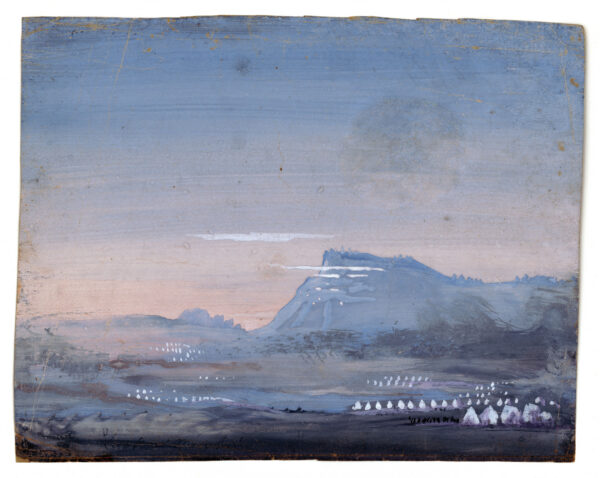
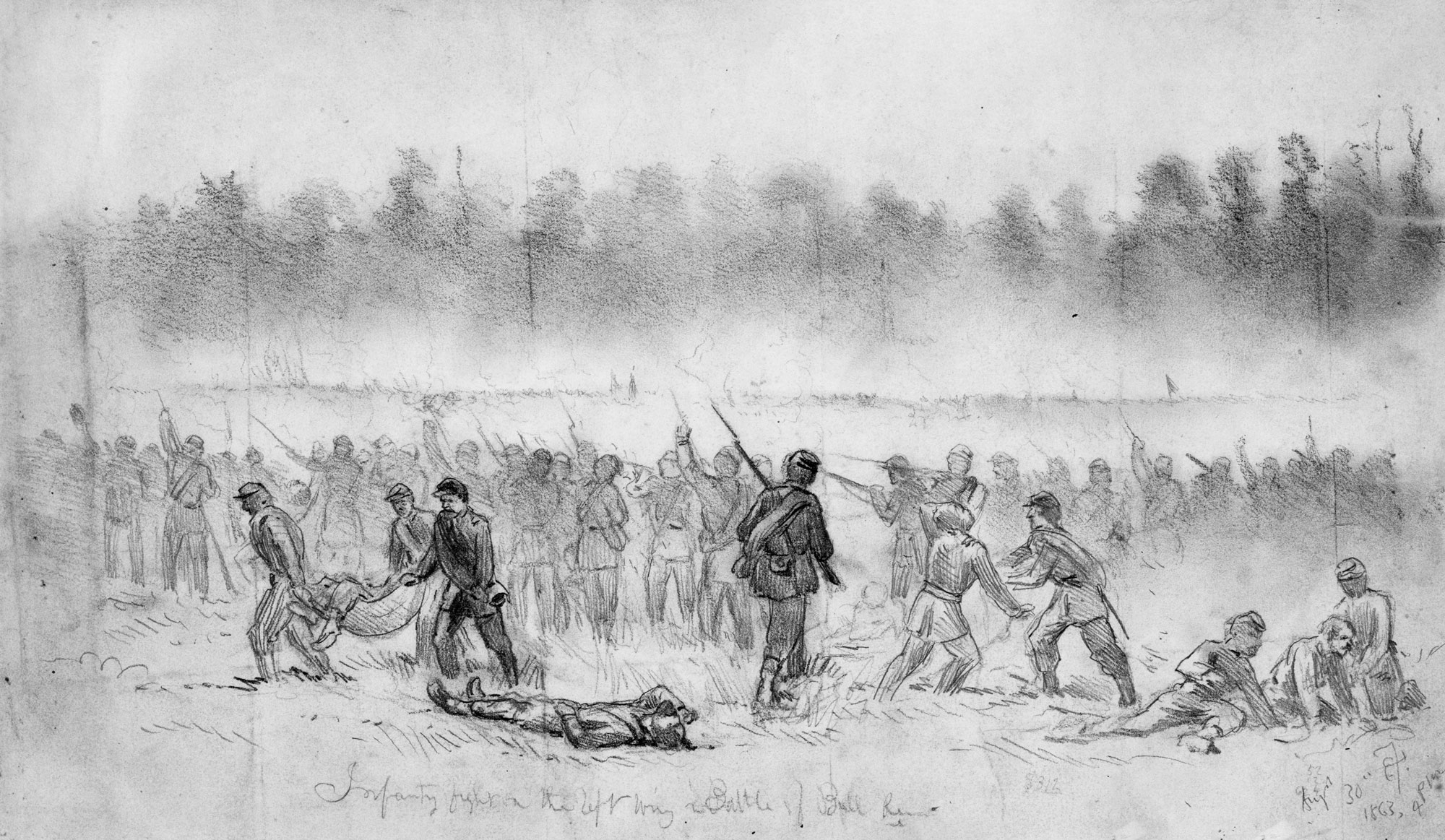
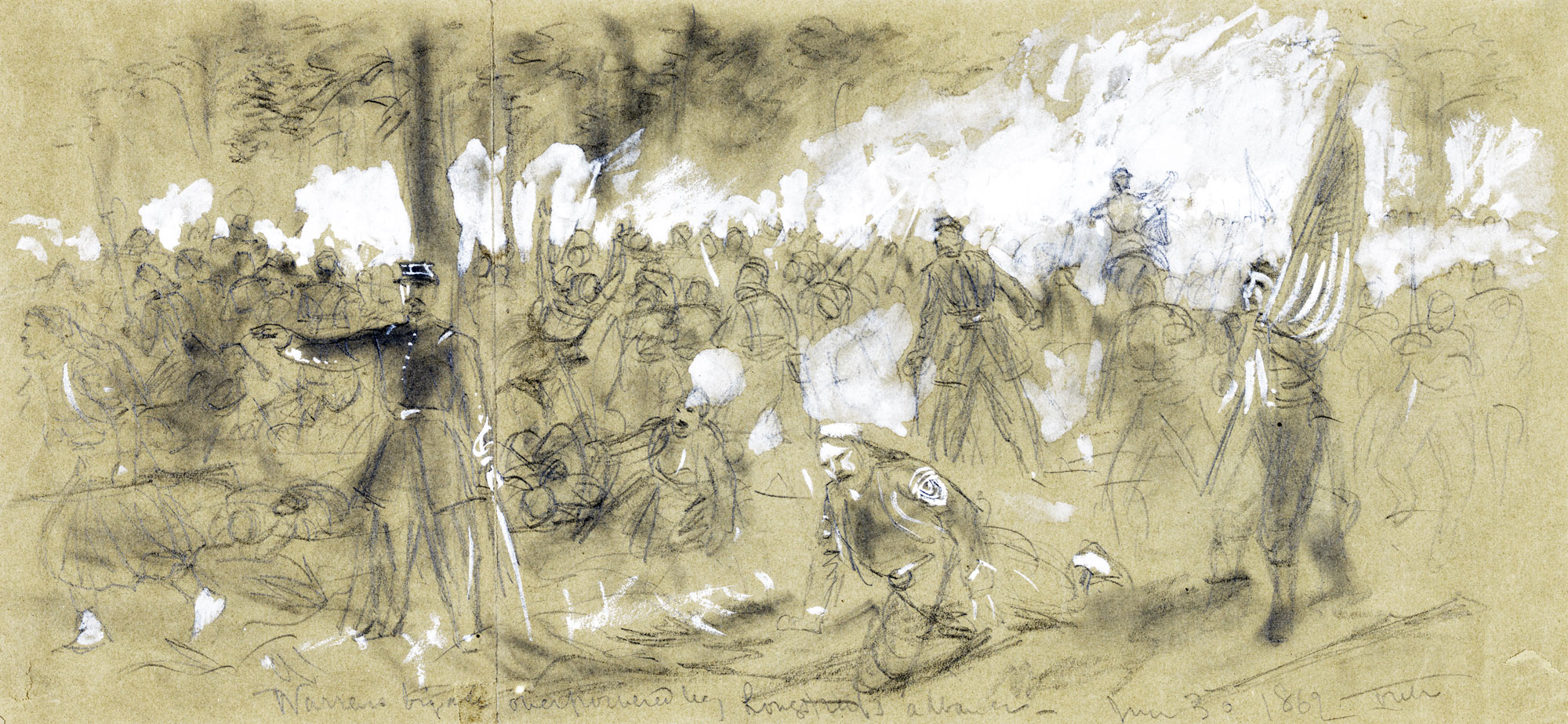
In this sketch by Edwin Forbes, Union soldiers fire on the advancing troops of James Longstreet’s corps of the Army of Northern Virginia on August 30, 1862, the second day of the Battle of Second Manassas.
In the summer and fall of 1862, Confederate forces launched seven assaults against the Union army from Virginia to Missouri aimed at severely injuring the Lincoln administration in the November congressional elections and opening the door to European intervention on behalf of the rebel nation. One of these assaults resulted in the Battle of Second Manassas on August 29–30, fought on the same ground as the Civil War’s first major land battle—a Confederate victory—in July 1861.
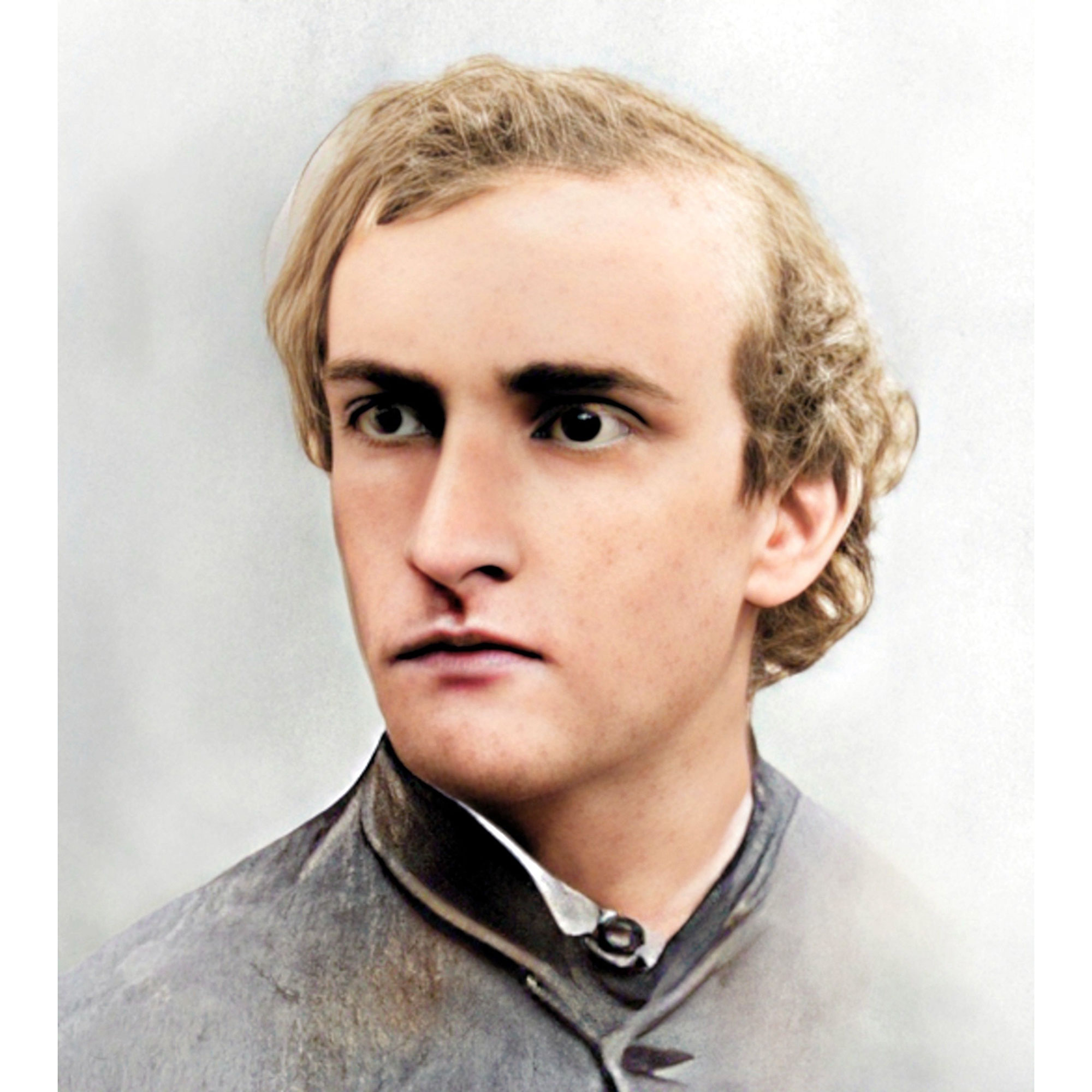
Over two days, Robert E. Lee’s Army of Northern Virginia clashed with a newly assembled Union force under John Pope called the Army of Virginia. On August 29, Pope’s men battled to a stalemate against Confederates under Thomas J. “Stonewall” Jackson. On August 30, James Longstreet launched his 28,000-man Confederate corps—which had arrived on the field the previous day without Pope realizing it—against the Union army’s weakly defended left flank. Longstreet’s massive assault broke Pope’s forces, propelling them back to Washington, D.C., a resounding success Lee used as momentum to launch his invasion of Maryland days later. Among the troops who participated in Longstreet’s attack at Second Manassas was Alexander Hunter, a young private in Company A of the 17th Virginia Infantry. Born in 1843 in Norfolk and raised near Alexandria at Abingdon Plantation (today the location of Reagan National Airport), Hunter’s education in mathematics and the classics was interrupted when he enlisted to defend Virginia from Federal invasion in 1861.
He saw heavy action with the 17th at Blackburn’s Ford, Yorktown, Williamsburg, Seven Pines, and Glendale, where on June 30, 1862, he was among more than 70 soldiers in the regiment to be taken prisoner. Hunter was sent to Fort Columbus, New York, then to Fort Warren in Boston. On July 31 he was exchanged and rejoined the 17th Virginia. At Second Manassas, Hunter and his comrades would fight as part of Colonel Montgomery D. Corse’s brigade in Brigadier General James L. Kemper’s division of Longstreet’s corps. After Longstreet ordered their advance at 4 p.m. on August 30, Corse’s brigade formed part of the force that attacked the thinly manned Union position (comprising only two brigades) on Chinn Ridge, high ground located near the intersection of Warrenton Turnpike and Sudley Springs Road.
The resulting struggle for the ridge, in which the Confederates greatly outnumbered their enemies, was short but fierce, lasting from approximately 5–6 p.m. What follows is Hunter’s vivid narrative of his experiences during the fighting, part of a larger manuscript of his wartime exploits he wrote in 1866 and that is currently part of the collections of the Virginia Historical Society. Editorial additions and clarifications appear in brackets; punctuation (in particular Hunter’s use of dashes) has been standardized throughout. As his account opens, Hunter is in the process of rejoining the 17th Virginia, he and several comrades having recently been separated from the regiment.
 The Women of the Debatable Land (1912), Colorized by Patrick Brennan
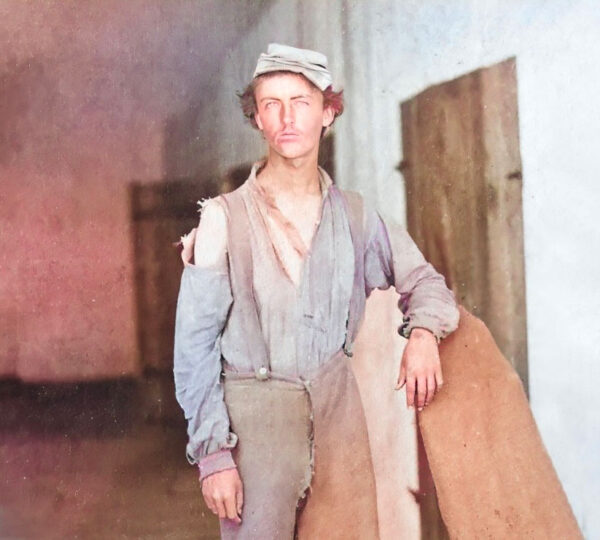
Private Alexander Hunter, 17th Virginia Infantry
The day on which perhaps the destiny of the new world would be changed had arrived at last.
“Coming events cast their shadows before.” On inquiry we found that our Brigade had taken another road in the night—and were some miles behind—and so we got beneath the shade of the trees—and amused ourselves by watching the long line of soldiers passing by. About noon believing that the Seventeenth [Virginia Infantry] was nearby we went in search—and in an hour or two found it—halted in a small cornfield which even in that short of time had been stripped of every ear of corn—and as fires were not allowed to be built, they were devoured raw. Everything appeared calm and peaceful—and the soldiers dispersed in groups, spending their time as the several fancies directed them. The forenoon wore slowly away and still we kept on our attitude of lazy waiting.
About three or four o’clock we heard the heavy rattling of musketry—and the loud report of the guns and Colonel [Morton] Marye’s clear voice rang out, “Fall in line now men, steady lads—steady Seventeenth!” The line was soon formed and we commenced marching towards the scene of action. On our way the regiment halted and every man was compelled to discard his knapsack, blanket or overcoat. They were deposited in a large pile—and the guards set over them. This stripping for the fight showed everyone that the time for action had come—and stern compression of the lip, and determined flash of the eye, as they tightened the belt of their cartridge boxes, spoke louder than words that their minds were made up—to do or to die. The men having deposited all of their superfluous equipments, the line was formed and we continued on our march.
On our way we were stopped by a high Virginia snake fence—every man seized a rail, and in a moment the fence vanished. We kept on until we reached the field of action and the firing was now fast and furious. The regiment was halted, the line formed and dressed, and Colonel Marye dismounted—and drawing his sword placed himself in position at the head of the regiment—and his loud clear tones rang sharply through the air—“Forward! Guide center—march. Dress by the colors men.” We started—and never did I see the regiment march so beautifully and keep their line so steady, even on parade.
The firing became heavy—the balls and shells whistled over our heads, and the calm, cool voice of our Colonel could be heard, “Steady men—keep cool boys—steady! Steady!” And all signs of flurry or haste would disappear—and the magnificent discipline showed itself. On we advanced, until we nearly reached a small outbuilding [on the Benjamin Chinn farm]—when suddenly a regiment of the enemy sprang up from behind a wall and let us have a withering volley at point-blank pistol range. We were not expecting it, and it came upon us with the suddenness of a thunderbolt. Col. Marye fell, his leg fractured by a bullet [his left leg would be amputated above the knee], and many were killed by the volley. All discipline was now at an end, and individual bravery fully made up for the deficiency. We all sprang forward with one ringing yell—the officers waving their swords and the men standing still only long enough to fire off their guns—though we did not fire by command or by volley—yet our salute was none the less deadly on that account. Every man took aim before his finger pressed the trigger—and the ground in our front was literally lined with the blue. Still, they stood their ground—it was a western regiment composed of the hardy, rough men of the far west—had it been a New England regiment it would have broken at our first fire. [Hunter is probably talking here about elements of Nathaniel McClean’s brigade of Ohioans that tenaciously held onto the Chinn House area, buying time for Federal reinforcements to arrive.]
It was give and take for a short time. At last with a wild yell that rose high above the din of battle we rushed right into them—right through them—they broke and scattered. Sam C[oleman] of Co. E performed an act of daring that ought to have secured his commission on the spot. Rushing in alone, among the retreating enemy, he seized the colors [a flag of the 11th Pennsylvania Infantry] from the hand of the Sergeant and brought it safely out as we were springing forward—and firing—for heavy reserves were advancing against us. Frank B[allenger] of Co. H jumped exactly before raising his gun to fire—before he could bring it up to his face he fell back in my arms, nerveless. I heard him cry out—then a rustling in his throat. Placing the canteen to his lips, I turned it up—but he only took one swallow—he was dead. Turning him over I undid his jacket and saw that the ball had hit him in the abdomen—coming out of his back—poor fellow! He unconsciously saved my life—but for jumping before the fatal ball would have accomplished its mission. But I had no time to indulge in my feelings of sorrow—the battle was now raging. Both sides had brought up their real strength, and were striving like two giants—one to overcome the other. Lying Frank gently down I started forward, firing as I went. I could see none of my company as our different reserves would rush by, they would join in the advance—and become scattered.
Seeing right in front of me two or three large [Federal] brigades advancing with cheers, arrival of their burnished arms glittering in the sun, their stars and stripes fluttering in the breeze, and their line superbly stressed—I could not resist an involuntary cry of admiration—even tho enemies. [It is unclear what Federal troops Hunter is writing about here. He may be talking of seeing the appearance of Zealous Tower’s and John Stiles’ Federal brigades rushing to bolster the Union position on Chinn Ridge.] Yet their martial appearance was truly terrific. At their front were the drummers beating the pas-de-charge, the first, and last time I ever heard that inspiring role on the battlefield. I began to think that it was time for me to get away from there—and I was just turning around when right behind me I heard a shout—a savage yell, from hundreds of throats—and turning I saw a brigade in grey coming in a terrific pace, their line irregular and broken—the red cross shaking to and fro. Forming with them I kept on at the top of my speed—and the two opposing forces met in full career. A heavy volley on one side—accompanied by a hardy hurrah—a scream of rage—with the dropping of fire on the other. We got to within 10 yards of them—and they broke—and in a second, they were running without order or form for the rear. Their guns were thrown away. They would unstrap their knapsacks as they ran—their hats would fly off—but nothing stopped them. The brigade did not suffer much—the balls generally flew over our heads—but it seemed as if every shot told. The progress of their flight could be traced by the blue uniforms. Bang! Bang! Whiz-whiz—away flew an iron tempest over us, causing the boldest to involuntarily duck their head as the ringing shot flew screaming by—as it would rake the ground just in our front.
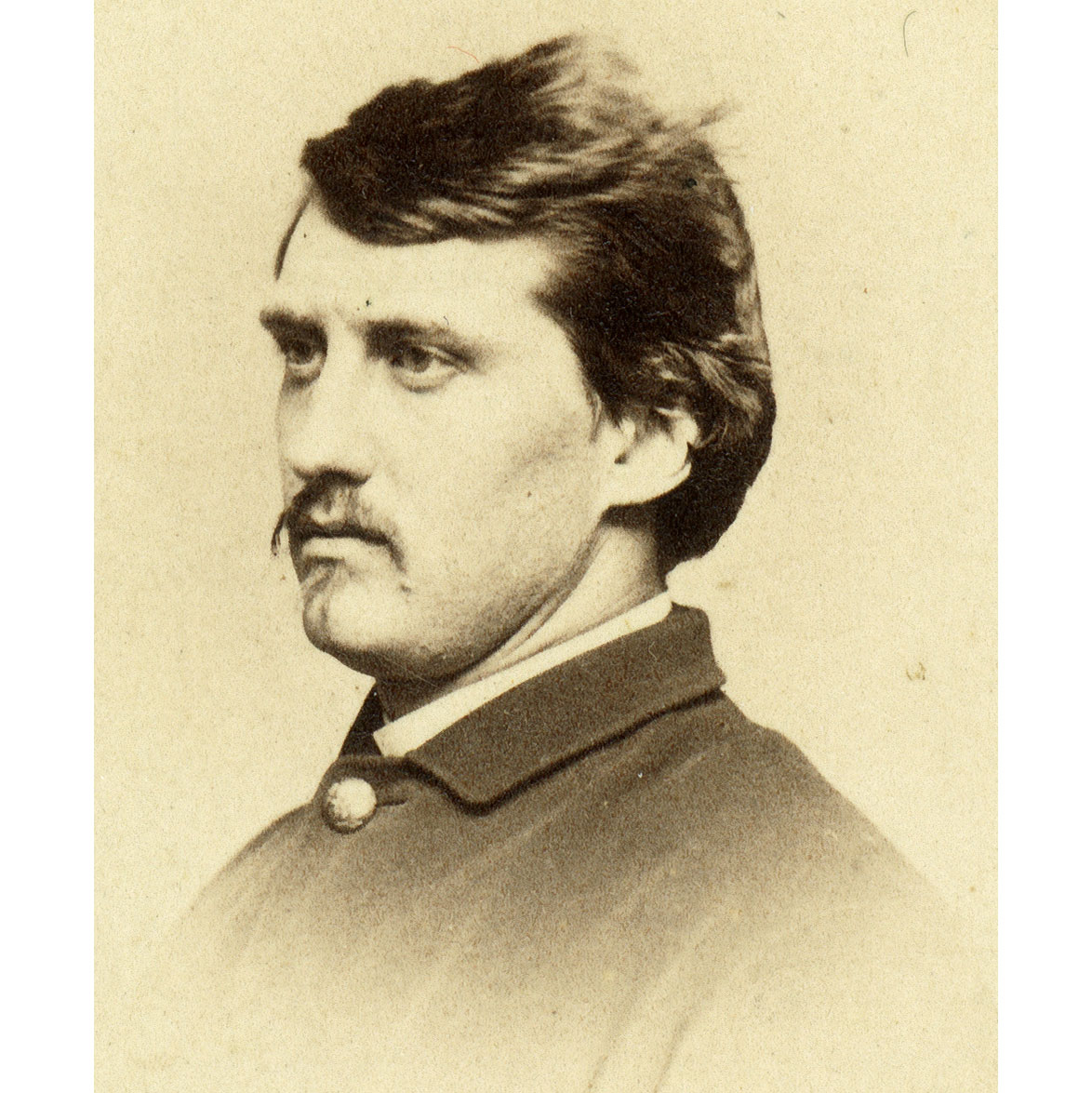
Above us on a gentle elevation, some six hundred yards off, was an eight-gun battery [Captain George F. Leppien’s 5th Maine Light Artillery] that was furiously firing—the guns hidden from view by a dense curtain of smoke. And nothing could be seen but the flash of the guns. The fighting was now terrible in front—in rear—on our right—on our left. The guns bellowed—the musketry crackled like some immense forest on fire—we could see nothing, hear nothing—but that hideous never ceasing pealing of the small arms. I cannot describe the combat—nor the plan—a soldier on the battlefield is nothing but an animated machine, whose sole purpose—and feelings—is to kill and destroy. And I can only give the scenes that came under my own eyes.
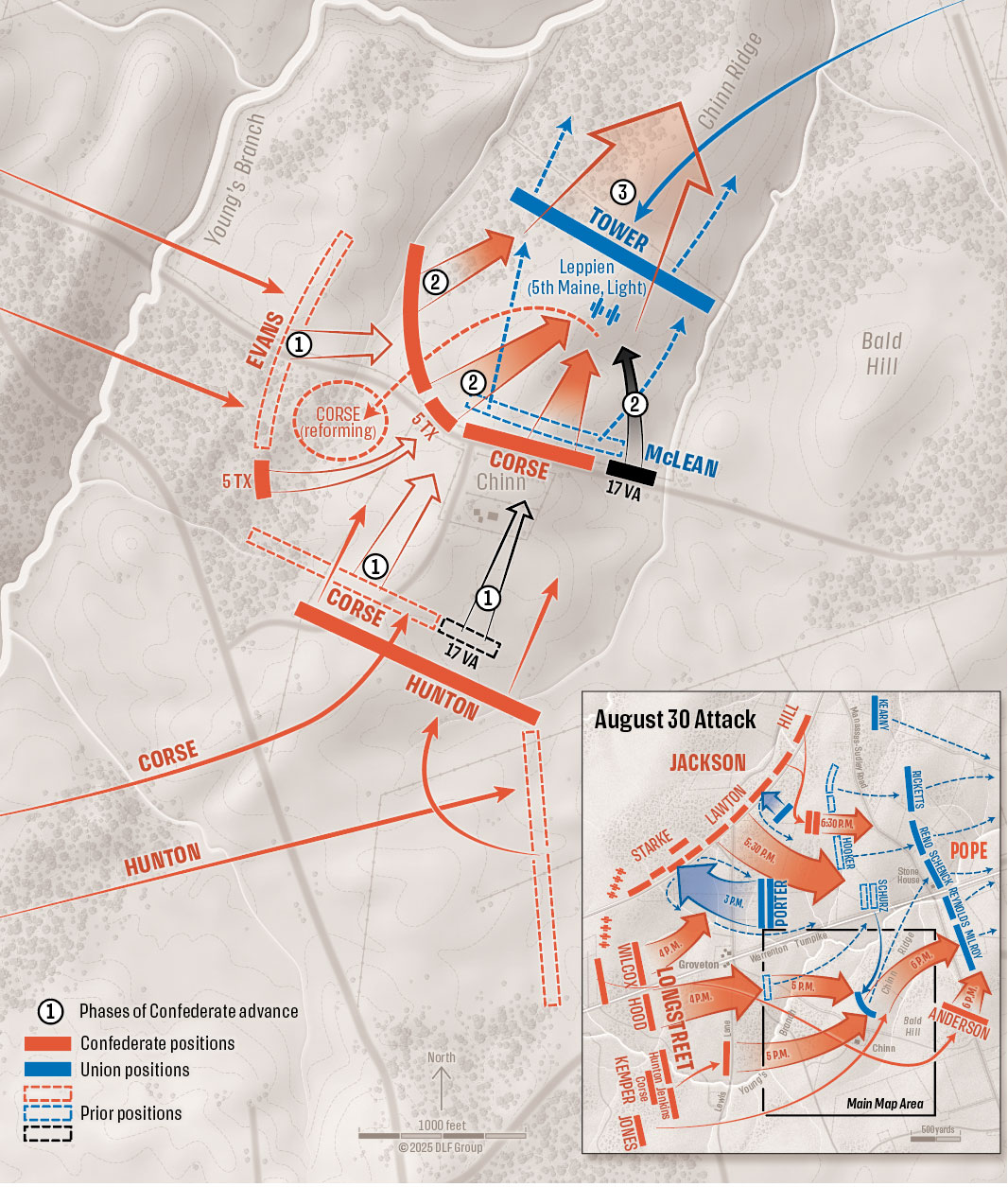
Battle of Second Manassas – Manassas, Virginia – August 30, 1862 – At about 4 p.m. on the second day of the Battle of Second Manassas, James Longstreet launched his corps against the weakened left flank of John Pope’s Union army. Among the attacking Confederates were Alexander Hunter and his 17th Virginia Infantry, positioned on the extreme right of Montgomery D. Corse’s brigade. Supported by Eppa Hunton’s Virginians, Corse’s men focused their assault on the Union position on Chinn Ridge (1). Once past the Chinn House, these Confederates—supported on their left by Nathan G. Evans’ brigade and the 5th Texas Infantry—attacked and overwhelmed the guns of George F. Leppien’s 5th Maine Light Artillery (2). In the confusion of battle, Hunter became separated from the 17th Virginia (which had pulled back to regroup), first joining the Texans’ advance, then falling in with men from the 20th Georgia Infantry. A final Confederate push (3) sent Pope’s army into retreat toward Washington.
[In the confusion of battle, Hunter became separated from his regiment and soon found himself among a Texas regiment (probably the 5th Texas Infantry, not, as he claims, the 4th Texas) that had become separated from its brigade and drifted southeast toward the fighting at Chinn Ridge.]
“Form into line men”—and the cry was taken up by the company officers—and under the heavy fire the broken line was reformed. I fell in—and asked my next ranked man what regiment and brigade I was in. “The 4th Texas Hood’s Brigade” was his reply. “Forward Texans—charge that battery!” I heard an officer say—and the whole line started—at a walk, then a sling trot, and then in a maddening race. We neared the battery—and I remember that scene was the most impressive of my life, though the glimpses of only a second’s duration—yet it seemed untold time. The veil of smoke had slowly lifted, and we could see the muzzles of the guns—their black and grim mouths pointed towards us; beside them stood the gunners—and in the midst was the flag—a very small one—lay low, drooping on its staff. It was for a second only—a horrid roar—then a shock that seemed to shake the very Earth. Then the dull thud of the balls as it tore its way through the bodies of the men—then the hiss of the grape—and the mingled screams of agony rage.
I looked around me. The ground was filled with the mangled dead and dying. “Forward boys—Don’t stop now—for the honor of the Lone Star State!” an officer cried out in front of me—and they dashed forward. Another discharge and the men fell like leaves. But the gallant Texans did not stop even now. Nothing but annihilation could repulse them as with a terrific battle cry they dashed at the guns. All order was forgotten, officers and privates were all together, each struggling to be the foremost. The last definite thing I remember were those wild men in gray crowding up to the batteries, some foaming at the mouth—they had run mad for a time. My memory is chaos—the fight with their infantry—the struggle around the guns seemed like a faint impression of a dream. And then I found myself seated astride of a cannon—with the southern cross waving in triumph—the regiment was gone—the brigade was gone—when? Where? And how I do not know, nothing was there but the flag with its handle rammed in the ground—and the lifeless forms of many of the gunners, their blue coats trimmed in red. The grass around the battery was burnt to a cinder, and still smoking.
I looked around me. I could see the enormous masses of the enemy’s reserves rushing to the front—the batteries thundering with the thick rolling smoke that half hid everything from view. And still the infernal din continued. I got among our men at last and in we went hammer and tongs—hammer and tongs! It was load your musket and fire. The only orders the officers gave was “Fire low—fire low men.” Half of the time the smoke was so thick that we could not detect the blue forms of our enemies—and could only tell where they were by their cheers and the occasional glimpse we caught of their flag—which ever and anon flaunted its brilliant colors to view. We could tell that we were fighting their reserves for their fire grew terrible—the hissing of the bullets incessant. Then it was that we played our old Rebel trick on them—scattering, so as to allow a farther interval between us. We laid flat on the ground—availing ourselves of any little inequality of the earth for our protection—and had the intense satisfaction of feeling much more safer, and hearing the cries of those who were shot much less frequently.
 Maine State Archives
George F. Leppien
I happened to drop behind a dead Yankee—as I thought—but the very first time I fired he opened his eyes and feebly said, “Sir! For the love of God don’t shoot over me I never fired a shot.” “The more fool you,” I answered. “But where are you wounded?” He showed me his hand—a ball had pierced it—and gone through his chest. Taking his handkerchief out of pocket I bound it around his hand. The other wound I saw it was useless for me to attempt to bind up—especially under such a fire. I fixed his knapsack carefully under his head, and was about to leave him when he handed me his canteen with his unwounded hand. I took it, and putting it to my lips—to my astonishment I found that it was whisky. I took none the less hearty a pull on that account however, and telling him to keep a stiff upper lip, I left him and crawled a little farther in advance, and striking against a large sized stone I loaded and fired.
Seeing a Yankee haversack a short distance off—I crawled and got it—and found it contained some boiled beef and crackers. And lying behind that rock in the middle of the bloodiest battle of the war, I fought and ate—first shooting my gun—then taking a mouthful—then loading—then firing—then eating—and never in my life did I ever have a meal, no matter how varied and its dishes to give me half as much enjoyment as those hard crackers and that beef bone. But I never expect to eat another meal with such glorious surroundings as I did that one. I fired until my shoulder was sore—and just rammed home my last cartridge when a hearty cheer and the many tramping of feet was heard behind us. And a brigade—or division, I could not see which—advanced to our relief. In a second we were on our feet and going with them—kept on with a real rebel cheer. A hasty volley met us—the enemy broke and ran—we after them firing as we ran. Grasping a gun and accouterments that lay near, my gun being too hot for use, the ammunition expended, I followed. And the excitement was now so intense that I am in the dark as to what happened next. The first definite thing that I remember was lying behind a small group of trees in company with eight or twelve men—nearly all from different regiments. I heard a childish voice say, “Boys if you say so I’ll take command of this squad.” Looking up I perceived a boy—for assuredly he was not a man—with his beardless cheek and fresh rosy face—with the two bars of a lieutenant on his jacket collar. “What regiment are you?”—“_____ Georgia,” I did not catch the number. [Most likely the young officer was from the 20th Georgia Infantry of Colonel Henry Benning’s brigade that reinforced the Chinn House assault behind Corse’s brigade.] “But look, here comes a whole regiment”; sure enough some six hundred yards in front of us was a whole regiment of Federals—marching directly towards us. I look behind—I could not see any other troops. I called out, “Lieutenant, we will have to fight! We can’t run.” “I don’t intend to” was his reply. He ordered the men to bring in plenty of spare rifles, to load them, and keep them by our sides. As the place we were had, during the [previous] evening, been the scene of the fiercest carnage, hundreds of guns lay scattered about—and soon each man had nearly a dozen muskets, all loaded and cocked, lying beside him. By this time the enemy were not [a] hundred yards off—“Steady men” cried the gallant Georgian—“Don’t fire yet—and when you do, every man fire at the colors.” We had not long to wait—and simultaneously a dozen rifles cracked—and the colors fell.
“Hurrah!” cried our improvised commander. “Keep cool—don’t get flurried boys—Gently! Gently—lie close.” A perfect storm of bullets whistled over us—and tore up the ground in every direction, causing the dust to rain like little miniature bullets, but we were in a small hollow—the ground dipped some three or four feet—and we were so safe from minnie bullets as if we were in the most elaborate bomb proof. A second time—resting our guns on the earth—we all took careful aim at the colors—fired—and a second time they fell. Another volley hurtled harmlessly by. Throwing on one side our discharged guns, to grasp the loaded ones and returned the volley. A third time their flag came down—they now advanced at a charge. The site was a bad one for us—several turned to leave—but the gallant boy placing himself in full view of the enemy, waving a sword around his head—burst in a hurrah. The contagion was infectious—turning around he exclaimed, “Men—for the honor of your states—Don’t run—keep cool—and try again. Don’t run—be men—and another volley for the Sunny South.” There was a fire in every eye as they discharged their pieces. The colors fell—on came the enemy—again we fired at pistol range, aiming at the color guard—and the fifth time it was grounded. We turned then to run—but what was to our astonishment to see the regiment right about-face, and leisurely retire. A cheer of exultation burst simultaneously from each soldier’s lips as they beheld that proud evidence of their prowess. The young Georgian turning said, “Boys—this is an event which you ought to be proud of all your life—but it is a needless sacrifice of life for us to stay here. Let’s go back.”
 Library of Congress
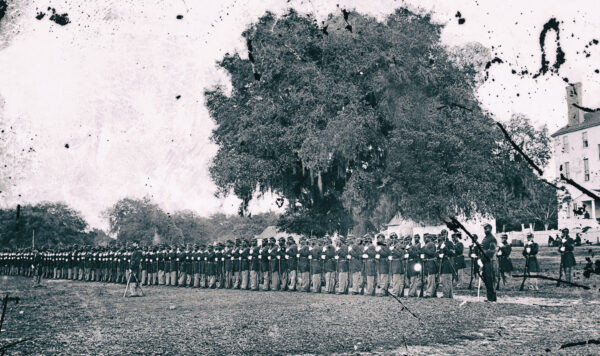
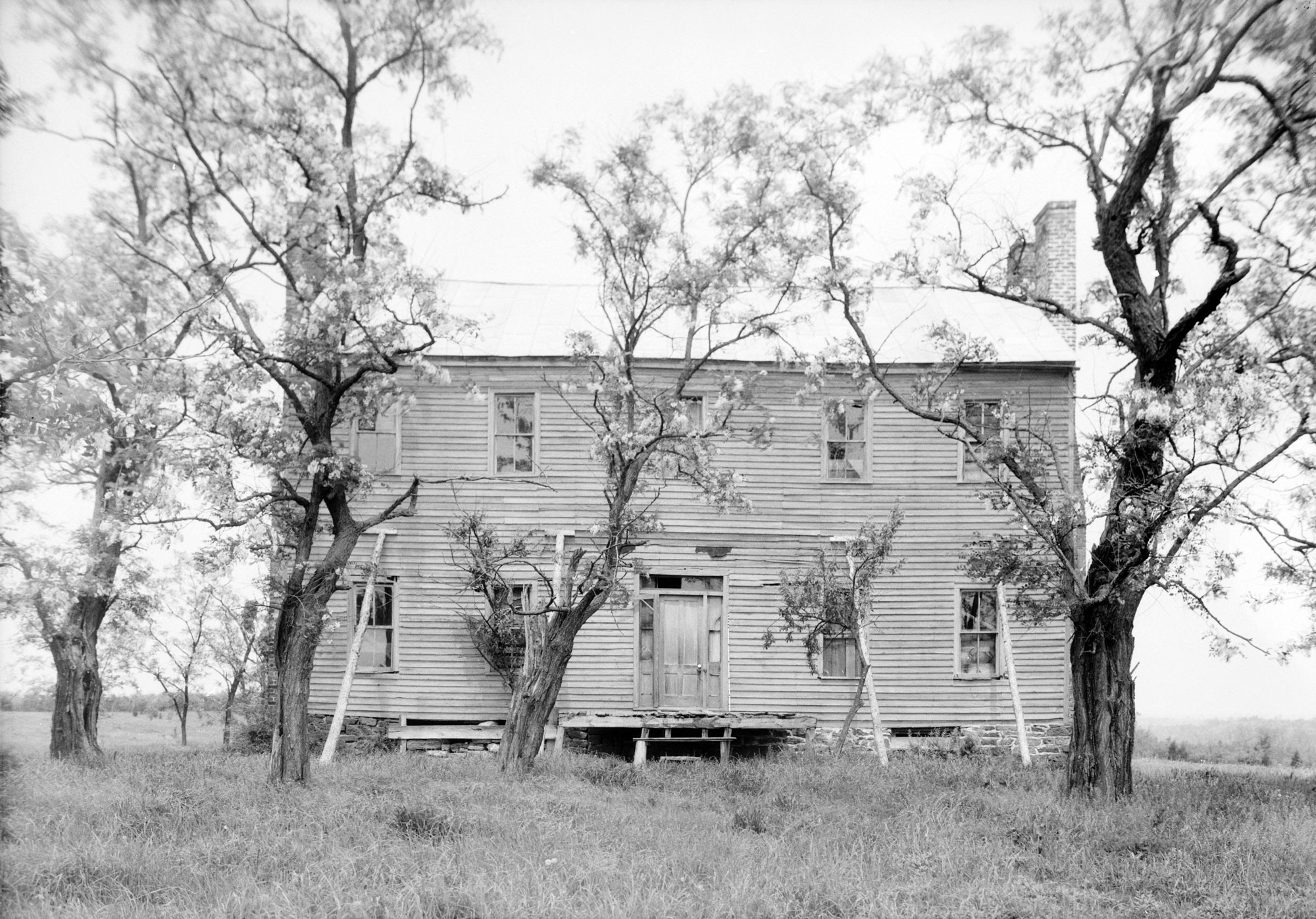
After he and his comrades had overwhelmed George F. Leppien’s 5th Maine Light Artillery, Hunter fell in with the 20th Georgia Infantry, one of the regiments that had reinforced the Confederate assault on the Chinn House (shown above in a photo from the 1930s).
We accordingly started. The battle and the various portions of the field was still being fought—all around the flash of the cannon could be seen—and the awful thunder of the guns and still more horrible rattling of the small arms. Where we were it was strangely quiet. We fell in soon with the battalion of our troops [from the 17th Virginia] who had halted out of reach of the fire to get fresh ammunition. I was painfully reminded though of the long range of the new rifles by a ball tearing two holes through my jacket, and just grazing the bone of the elbow. I took off my jacket and rolling up the sleeve, with an averted eye, expecting to behold the mangled remains of a stump—imagine to my surprise—I may say too mortification—when I perceived only a crease of the passage of the bullet—it going no deeper than just breaking the skin.
Here too I saw the gallant John A[ddison], the 2d lieutenant of our company, who had received a severe wound through the foot. It was very unfortunate to lose him—even temporarily—he was one of our most gallant officers and had acted with distinguished bravery throughout the action. I helped him a short distance to the rear and returned to the battlefield. It was now evening—the sun had set—but the shades of night had not yet fallen, when I arrived at the top of the hill where the Washington Artillery had been posted in the early part of the day. From here I had a good view of the surrounding country, and at this moment I beheld a site which I can never forget—it is daguerreotyped indelibly on my memory.
I saw the grand final charge of all our reserves [Confederate forces continuing their successful attack eastward toward Henry House Hill], numbering many thousands men, as with heart-exulting cheers they dashed forward at a run. It was a glorious sight, and one that repaid me for all the hardships that I had heretofore endured. On they dashed, passing on their way many wearied and cut up regiments who were returning slowly to the rear, but the contagion was infectious—grasping their muskets with a firmer grip—and in their noble excitement forgetting their wounds and weariness, the gallant men turned about—and swept onward with them. I was carried away like the rest and kept on, every step we took our line was augmented, until it was an army flushed with victory, not reserves hurrying to retrieve some disaster.
 Library of Congress
After briefly rejoining his regiment, Hunter got swept up in the “grand final charge” of the Confederate reserves, who swept their enemy’s forces from the field. Above: Alfred Waud’s sketch of Union soldiers being overwhelmed by Longstreet’s troops at Second Manassas.
We reached the woods, the firing was tremendous—shell and shot tearing through the branches, the sharp zip of the minie ball as it struck, the bursting shell—the cries of the men, formed a scene which would make—were it not so terrible—a man love war and destruction, for its noble excitement. We dashed in[to] the woods and one mighty volley burst from our lines. The musket roared and the flare of the guns lighted up only for an instant the surrounding foliage. This volley settled everything now. But a few scattering shots answered us and the crackling and bloody volley which our enemy the moment before had been throwing into us, ceased as if by magic, and the rumbling of the artillery could be heard as it dashed to the rear followed by their infantry. The battle was now over. Those troops who had been engaged all day, were too tired to pursue them, and sinking down on the blood-stained earth they forgot their fatigue in deep slumber.
[The overwhelming attack of Longstreet’s corps sent Pope’s army reeling back toward Washington, resulting in yet another Union battlefield defeat in Virginia. In all, Union forces suffered over 14,000 casualties at Second Manassas, twice as many as the Confederates’ toll. Pope was relieved of command less than two weeks later.]
I went back in the direction of my regiment. It was dark now and I had to pick my way carefully over the field to avoid stepping on the wounded and dead who lay like autumn leaves upon the ground. But all of my caution was ineffectual. I stumbled and fell over one of the bodies and stooping down I saw this blue uniform and putting my hand on his head I felt that half of it was gone, a shell or round shot probably. Seeing that he was dead—I took his canteen which was filled with coffee, and for the first time during the war searched the pockets of the dead. A large and apparently well filled pocket-book rewarded my pains, also a daguerreotype and packet of letters. Giving them to Lieut. P[erry], who was with me, we went to the nearest fire where to our great satisfaction proved to be the remains of our regiment. The few who had kept together seemed in the best possible spirits, cooking their captured coffee, and browning their meat over the fire and fighting their battles over again and inquiring over the absent ones, and speculating as to their probable fate. Every minute some one of their friends whom they had given up for lost would come in, attracted by the fire. A storm of congratulations would pour in upon him only to be diverted by some fresh arrival, and several times during the night after I had slumbered off, would be awakened by some voices shouting “Here’s Jim A[rchibald], or Bob B[uchanan]—come back safe.” Before I went to sleep however, Walter A[ddison] and myself saw that poor Jack Sangster was comfortably fixed up in a small shelter tent, a soft easy bed made for him—and after he drank his cup of coffee—he sank back into a pleasant sleep. His wound was very severe, though he appeared not to mind it and said it gave him no pain. The ball struck him just below the breast and passed through one of his lungs, coming out his back. His severe wound made us all feel sad.
In the morning [of August 31] when we awoke, we found our clothes drenched, and everything wet through. We managed to kindle a sickly smoky fire, and with our spirits at low ebb started to get our breakfast. The regiment was in point of numbers quite strong again. Nearly all who were separated in the battle found their way back to their companies. After we finished our meal, the drum began to beat fall in, and we filed into line. Before we started I looked back and went to see Jack. He had eaten a hearty breakfast and was getting along finely. We left for him a plentiful supply of provisions, and we gave him a hearty grip and wished him a happy and long furlough. Poor Jack. We were destined never to see him again. He was carried to Warrenton and received all the attention that the devoted kindness of those glorious noble women of the old burg could give him. He had nearly recovered when he was seized with an attack of pneumonia—which soon ended his life. After the war finding his grave in the Warrenton cemetery neglected and uncared for, I placed with a comrade’s tenderness a board—on which I had painted this inscription:
In Memory of Jack Sangster, Co. A., 17th Va. Vols. mortally wounded in battle, Manassas, Died Sept. 8th 1862, A gallant soldier, and a devoted friend. He died in the Defense of his Country.
 Library of Congress
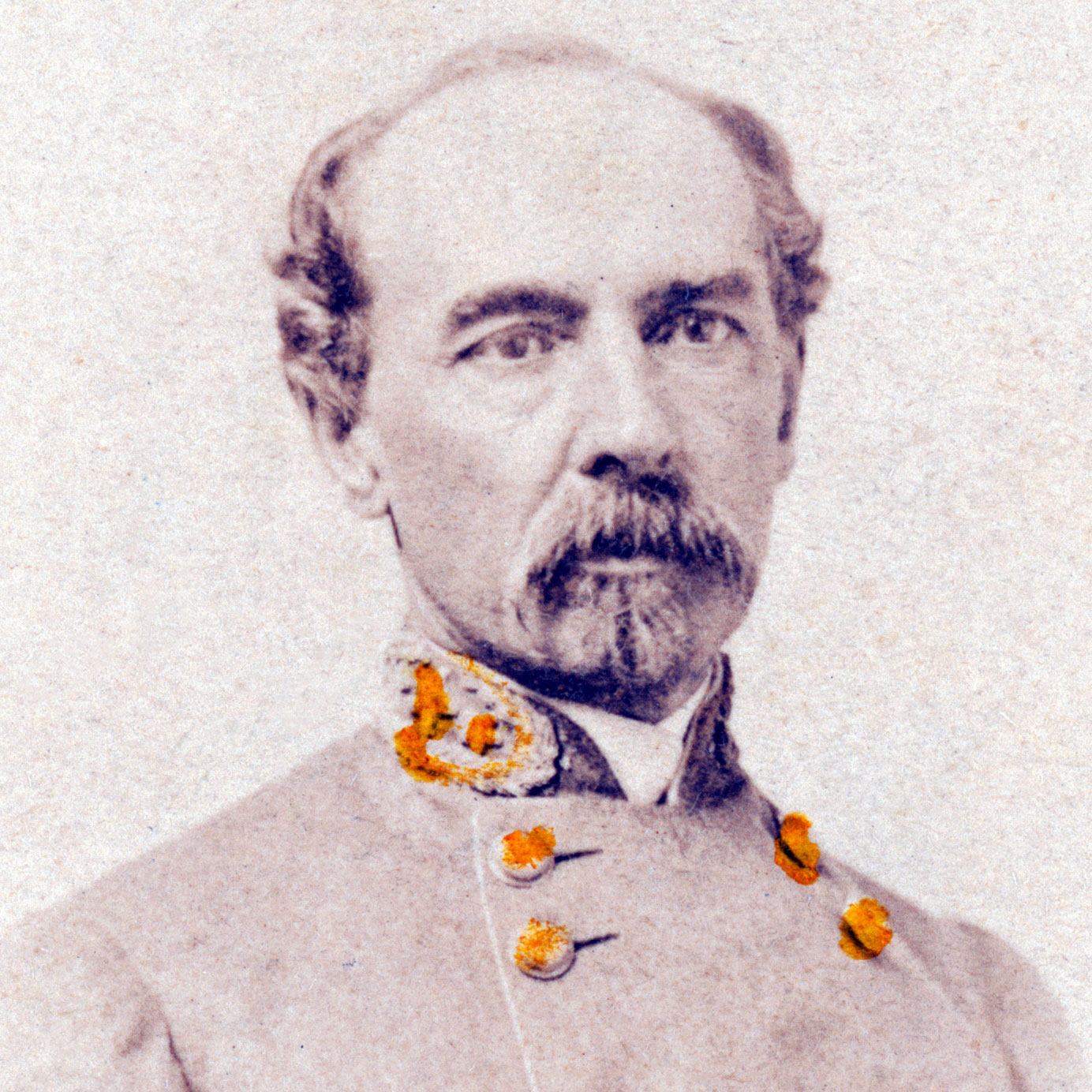
Montgomery D. Corse
Sleep quietly Jack, loving and fair hands will deck your grave, and many a fair maiden’s tear drop over your humble resting place, a fitting tribute to so brave a soldier. And in after years, many a stern man, changed so by the contact with the selfish world, who would by chance stumble over your tomb, stop and read your name, your humble epitaph, then his thoughts will fly back from this struggling universe, with its avarice, and selfishness, to the time when he too was a joyous, reckless, ragged rebel, and the image of his old comrade will arise before him, with his soldierly bearing, and jovial fellowship, his eye will grow dim, and his voice thick, as he murmurs unconsciously, “Poor Jack, you have fought your last battle. You yielded up your life a willing sacrifice upon the altar of your country, may the bright flowers blossom, and the grass remain ever green on your grave. Poor Jack.” Requesat et Pace.
Fresh off their victory at Second Manassas, Hunter and his comrades in the Army of Northern Virginia were soon engaged at the Battle of Antietam on September 17, where the young Virginian was again captured. After his release, Hunter joined the 4th Virginia Cavalry—and was taken prisoner once more. He again secured his release and rejoined his regiment, this time to remain in the ranks until the Civil War’s end.
After his return to civilian life, Hunter successfully sued to have Abington Plantation—which had been seized by the federal government in 1864 over unpaid taxes—returned to him in a case decided by the U.S. Supreme Court; worked as a clerk in the United States General Land Office, a position he held for 40 years; and wrote several books, including the 1905 memoir Johnny Reb and Billy Yank. After his death in 1914 at 70 or 71 from tuberculosis, Hunter was buried in the Confederate section of Arlington National Cemetery with full military honors. 
Robert Lee Hodge writes from his estate, “Alhalla,” near Nashville, Tennessee. He has written for The Washington Post, won an Emmy for his documentary on the Battle of Franklin (which appeared on PBS), and has eaten a squirrel at the Spotsylvania battlefield with Roger Daltrey (from The Who), to name a few of his pursuits. You can reach him at [email protected].