 Library of Congress (colorized by Mads Madsen of Colorized History)
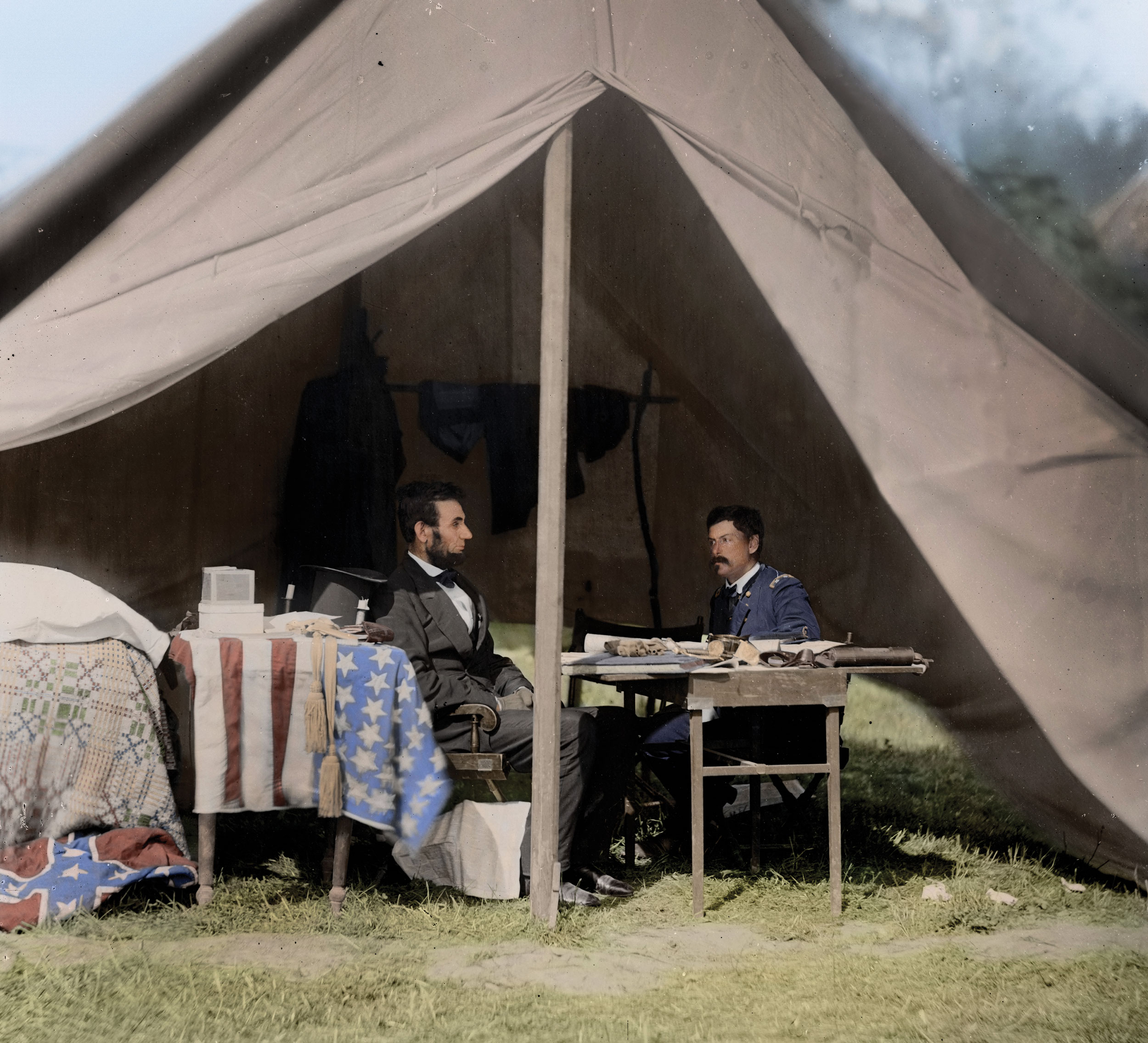
Abraham Lincoln and George McClellan meet in the general’s headquarters tent at Antietam two weeks after the epic battle there. About a month after this meeting, the commander in chief would relieve McClellan of command.
Mention George B. McClellan to most students of the civil war and the response is predictable. they know McClellan as a foil to Abraham Lincoln, a man able to organize an army but reluctant to commit it to combat. they have made up their minds about McClellan—not in his favor—and are not much interested in rethinking things. in his day, however, McClellan had many friends and political supporters as well as no shortage of critics and enemies. He had the misfortune to clash with Lincoln, another controversial figure of the time but one who became the savior of the Union, the great emancipator, and a martyr. And then there are the historians. In the anti-McClellan camp are some Civil War giants: Bruce Catton, T. Harry Williams, Stephen Sears, and James McPherson. On his defense, we have Warren Hassler’s mediocre biography, Joseph Harsh’s good but unpublished dissertation, and Ethan Rafuse’s fine revisionist study. And then there is Ken Burns. His Civil War documentary series presented thoroughly standard and conventional portraits of generals on both sides; his treatment of McClellan simply followed in the steps of Catton et al.
 Library of Congress
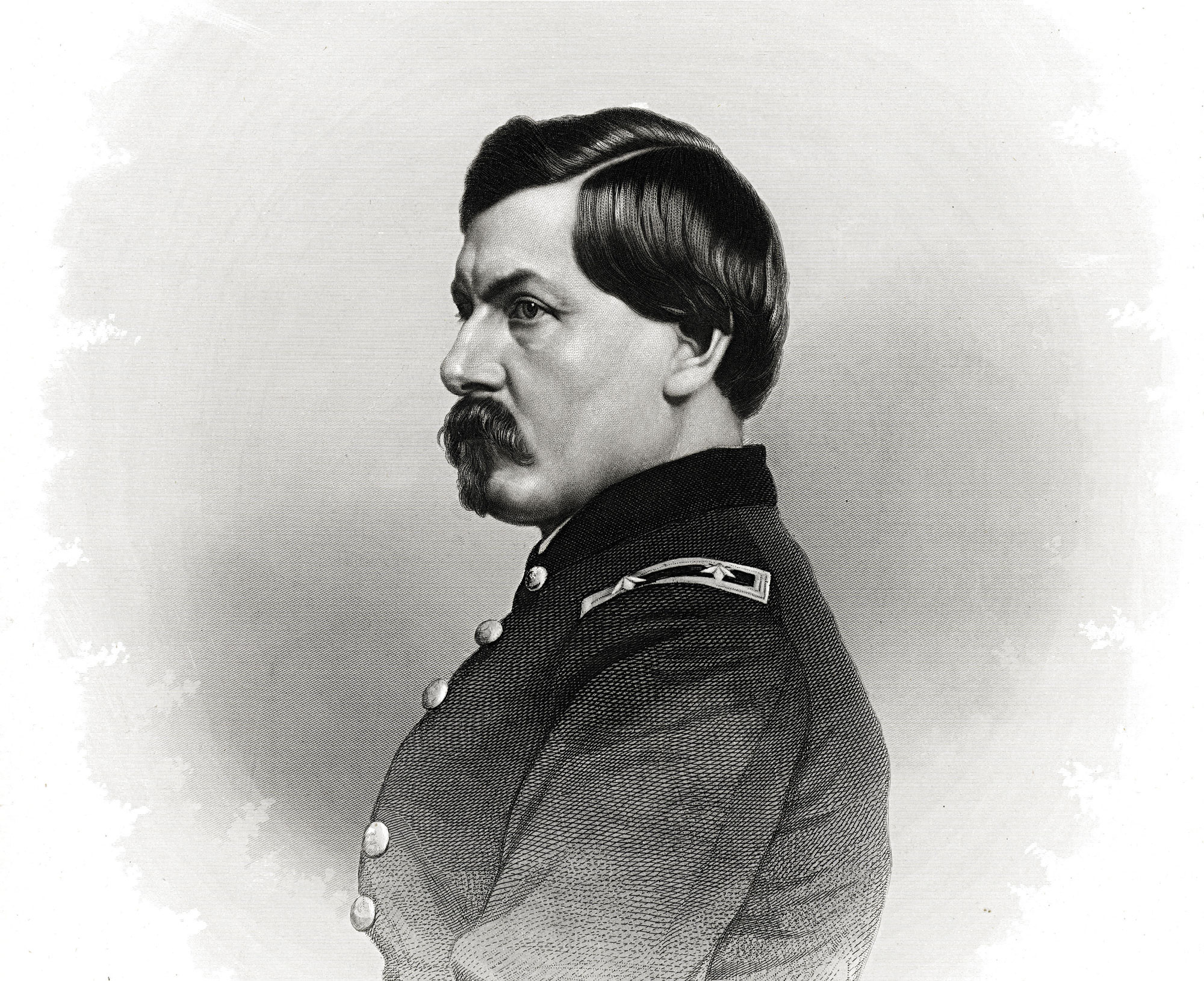
George B. McClellan
Readers of books on McClellan, Lincoln, or the Army of the Potomac (which McClellan led from its inception in the summer of 1861) wait impatiently for the president to at last remove Little Mac from command, which he did in November 1862. Indeed, they scratch their heads and wonder why it took Lincoln so long. The disastrous Peninsula Campaign in mid-1862, the incomplete victory at the Battle of Antietam that September, and the subsequent failure to energetically pursue Robert E. Lee’s withdrawing Army of Northern Virginia in the fall appear to damn McClellan’s generalship beyond redemption. This certainly captures one side of that time’s contemporary perspective without fully appreciating the complexity of Lincoln’s decision to remove McClellan—and the reaction it provoked in both the Army of the Potomac and among northerners generally.
 Harper’s Weekly
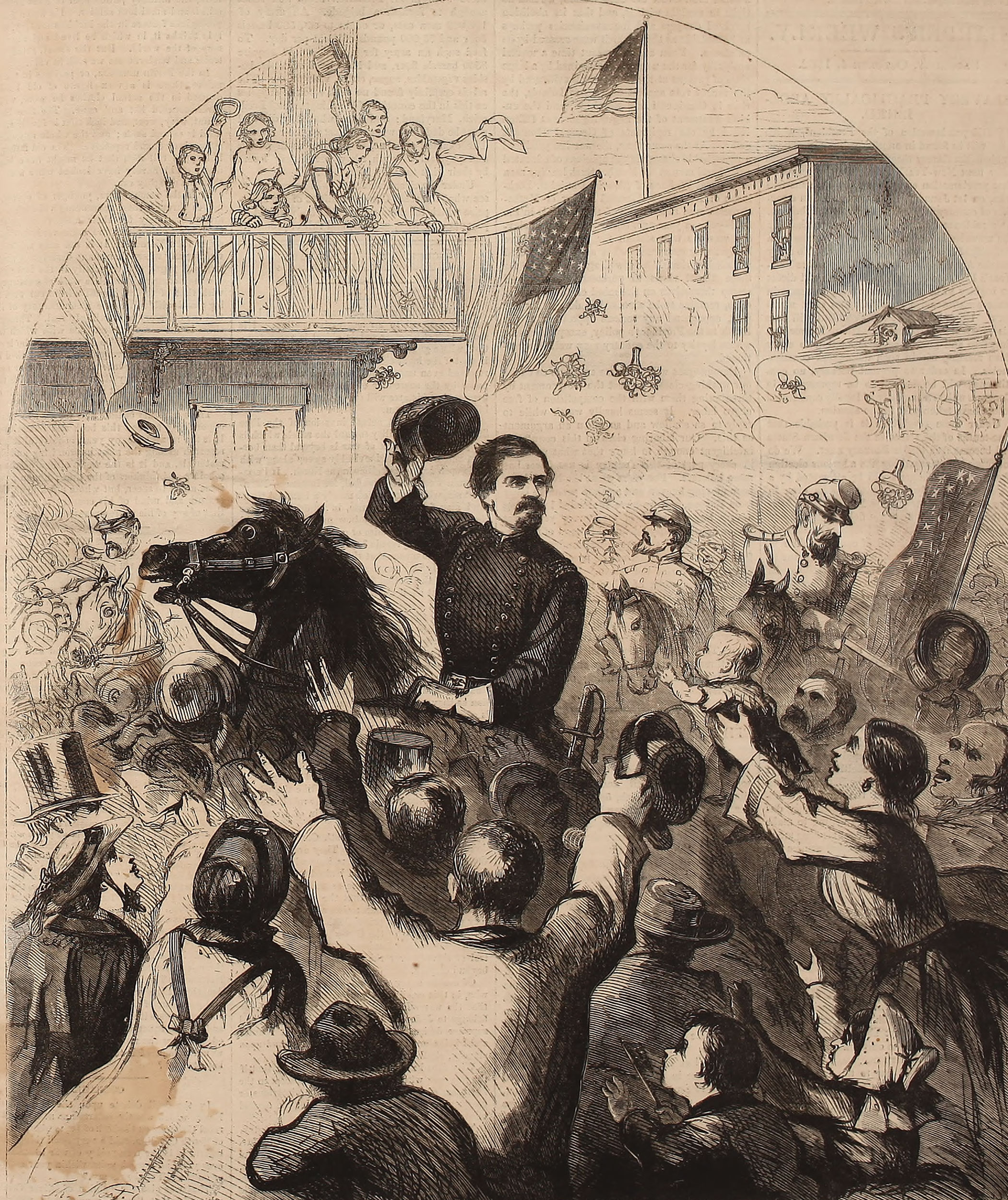
George McClellan rides triumphantly through the town of Frederick, Maryland, on September 12, 1862, only days before the incomplete Union victory at the Battle of Antietam. By mid-October, the war again appeared stalemated, and voices to remove McClellan from command grew louder.
In mid-October 1862, the war appeared stalemated, and doubts about McClellan had grown into doubts about the Lincoln administration’s ability or even its determination to defeat the rebellion. Aside from critical newspaper commentary, editors spelled out their worries in notes to the president explicitly tying the Army of the Potomac’s inactivity to potential Republican midterm election losses across the northern states. The situation was also depressing sales of government bonds, financier Jay Cooke warned Lincoln.1 On October 24, the equally hesitant and conservative Union general Don Carlos Buell was relieved of command in the western theater. Secretary of War Edwin M. Stanton believed the same should be done with McClellan, and that it would not hurt the administration in the elections. But Lincoln, though absent any confidence in Little Mac, was not ready to relieve him.
Of course, whether McClellan was ready to move against Lee was the more pressing question. On October 22, McClellan informed General-in-Chief Henry W. Halleck that he would be following Lincoln’s advice and operating east of the Blue Ridge. As it was on Lincoln, the pressure on McClellan had grown, and there remained the possibility—by this time the likelihood—that he would be removed from command. Halleck promised him 20,000 more troops, and by October 26, McClellan had begun crossing the Potomac.
 Library of Congress (2)
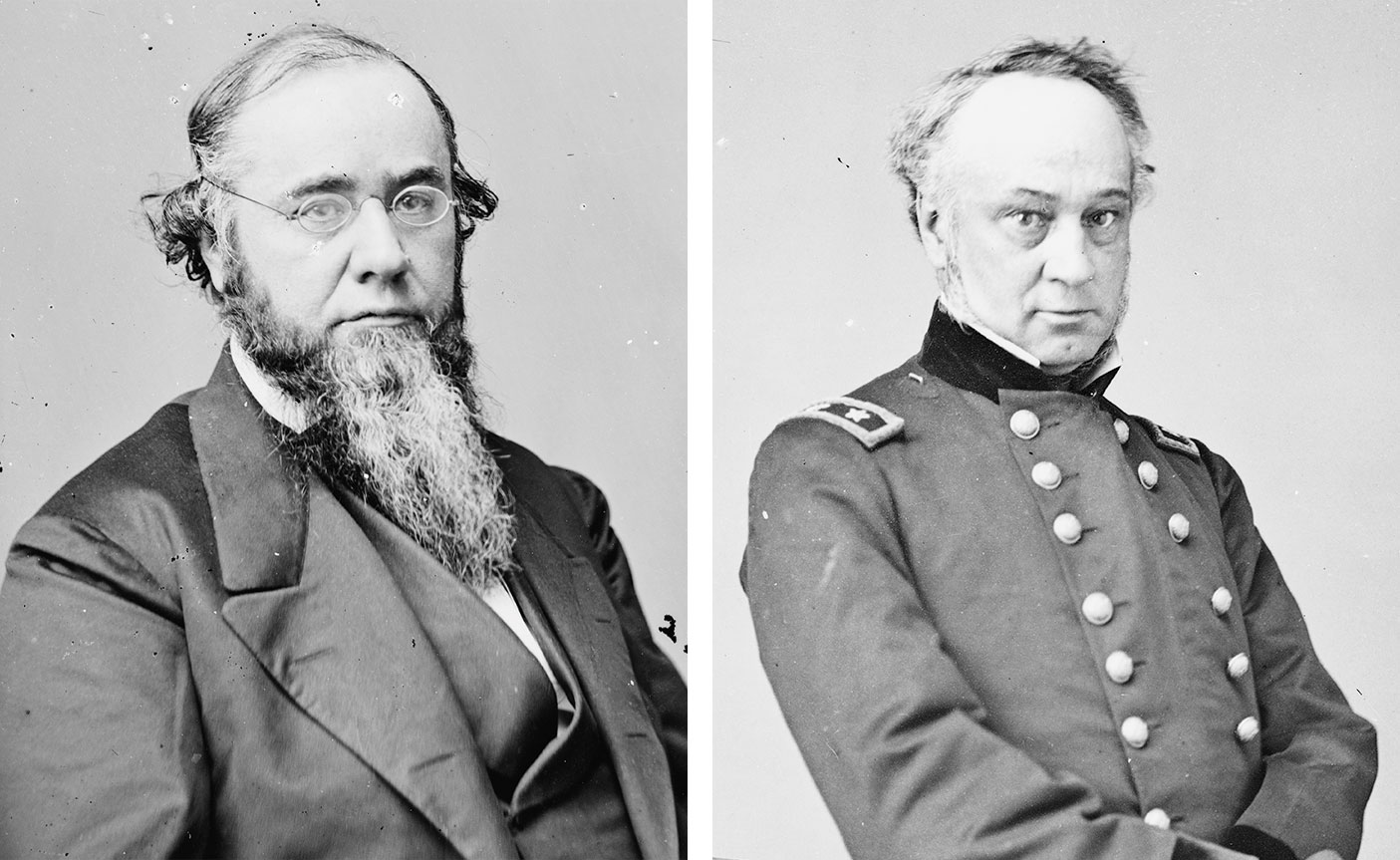
Secretary of War Edwin M. Stanton (left) and General-in-Chief Henry W. Halleck
All along McClellan had claimed to need more time for his army to be resupplied and even now his defenders in the press parroted that argument. Stanton inquired of Quartermaster General Montgomery Meigs whether there had been any undue delays in resupplying McClellan, and Meigs immediately replied that “every requisition had been promptly met.” Yet the requisitions had been “large,” there had been problems with rail transportation, and bottlenecks occurred once the supplies reached the Army of the Potomac. “I have frequently remarked that an army will never move if it waits until all the different commanders report they are ready and want no more supplies,” McClellan’s own chief quartermaster conceded. But there were real supply problems—with plenty of blame to go around—and Meigs conceded the difficulties in filling the demand for another 13,000 horses.2
Those horses were a sticking point in McClellan’s fall campaign plans and became a flashpoint in relations with Lincoln. Confederate raids over the previous several months justified strengthening the Union’s cavalry arm, and McClellan later claimed that deploying his troopers against Confederate cavalry commander J.E.B. Stuart “completely broke down nearly all of our cavalry horses.”3 Soon McClellan and Meigs disagreed over the number of mounts that had been supplied to the Army of the Potomac. Even as McClellan prepared to carry out Lincoln’s order to move and reported his supply situation otherwise improved, he pressed Halleck for more cavalry and artillery horses.
On October 25, in a note to Halleck, McClellan quoted the commander of the 1st Massachusetts Cavalry bemoaning “sore-tongue” horses and other equine maladies. Unfortunately for McClellan, Lincoln saw the message and fired off a barbed response: “I have just read your dispatch about sore-tongued and fatigued horses. Will you pardon me for asking what the horses of your army have done since the battle of Antietam that fatigues anything?”4 McClellan replied by detailing his army’s cavalry operations for the last several weeks and then closed with a barb of his own: “If any instance can be found where overworked cavalry has performed more labor than mine since the battle of Antietam, I am not conscious of it.” The president would not let the matter drop and replied with a short dispatch unfavorably comparing McClellan’s cavalry with Stuart’s horsemen. Continuing the tit for tat, McClellan outlined his troopers’ accomplishments and claimed that Stuart’s most recent raid—during which he had boldly ridden around the Army of the Potomac through western Maryland and south-central Pennsylvania—had only succeeded because he had fresh horses and had stolen more in Pennsylvania. Lincoln apologized some for his tone, but pointed to the Army of the Potomac’s “more than five weeks total inaction” and wondered whether McClellan’s cavalry horses would ever be properly rested.5
Amid this contretemps, and just as McClellan prepared to move, rumors of an impending change in command—or an even larger Washington shakeup—intensified. Both the general’s critics and defenders now believed that his days were numbered. McClellan might soon displace Halleck as general-in-chief, the New York Herald reported, and speculated that Joseph Hooker would take over the Army of the Potomac. Or perhaps, as a Philadelphia newspaper predicted, Halleck would take the field. Rumors about fallout from a recent conference of northern governors cited pressure on the Lincoln administration to make even more far-reaching though unspecified changes.
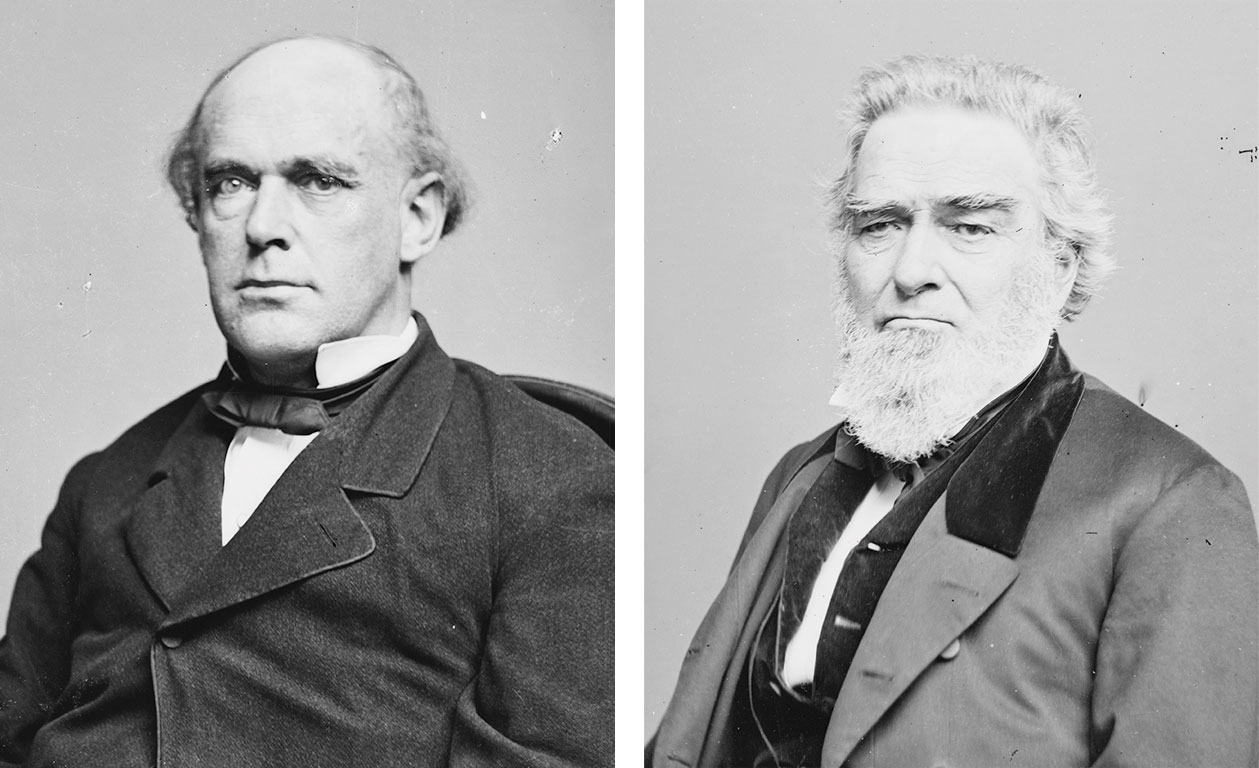 Library of Congress (2)
Attorney General Edward Bates (left) and Treasury Secretary Salmon P. Chase
A remarkably accurate piece in the Boston Herald on October 27 reported that McClellan still had a couple of “lukewarm” friends in the cabinet, but that Secretary of the Treasury Salmon P. Chase, Attorney General Edward Bates, and Stanton were insistent that he be forced to fight.6 Everyone appeared to have an opinion about McClellan and what might be needed to end the military impasse in the East. New York Tribune editor Horace Greeley, Henry Ward Beecher, and some leading New Yorkers agreed that McClellan and Halleck would have to go lest the war drag on and the rebellion gather strength. The departure of McClellan, a well-known Democrat, would hearten the more earnest Republicans, though perhaps Lincoln had stood by him so long that the political damage was done.
Lincoln’s secretary John Hay was particularly anxious about the coming elections, and this cut to the heart of the problem for many Republicans. For some time, Democrats and some conservative Republicans had warmly supported McClellan, and even the general’s friends worried about him being dragged into the partisan arena. Lusty cheers for McClellan rang out in Democratic meetings in October, most notably during the heated New York gubernatorial election. In turn, Republican charges of Democratic “disloyalty” might taint the general’s reputation. At a conservative meeting in Boston, one speaker dubbed McClellan “the glorious young Christian hero who, under God, has saved the country.” Ohio congressmen Samuel Sullivan Cox defended the war record of Democratic generals, officers, and enlisted men who had volunteered to save the Union rather than fight an abolition war. The slanders of Greeley and his ilk, Cox predicted, would eventually make George McClellan president. When arch-Copperhead Clement L. Vallandigham’s newspaper organ trumpeted McClellan’s military achievements, that could only add to Republican alarm. Many Union volunteers who followed the politics back home recognized the connection between the elections and McClellan’s status in command. Privately, McClellan welcomed Democratic electoral victories but worried about the “ultra tone” of some campaign speeches. One newspaper correspondent blasted both parties: “The scarcity of great men is painfully manifest, when one has to erect McClellan as a political name and leader, and the other can find no one but that most wretched and selfish humbug, [John C.] Frémont.”7
Disdain for party wirepullers was a luxury Lincoln could ill afford. The president had to decide what to do about McClellan as his own political stock and that of his party was falling. Reports circulated that Lincoln feared removing McClellan before the elections. The president’s big mistake, Chase had come to believe, was that he had “committed the management of the war almost exclusively to his political opponents” and in return had received little save excuses for delay. Lincoln had supposedly told a reporter that there was no reason to turn McClellan into a martyr, though as another of the president’s secretaries, John Nicolay, observed, “The President keeps poking sharp sticks under little Mac’s ribs.”8
McClellan was “mad as a ‘march hare’” over Lincoln’s acerbic cavalry horses exchanges, “one of those dirty little flings that I can’t get used to when they are not merited,” he noted in a letter to his wife.9 As the Army of the Potomac advanced slowly, McClellan was met by cheering soldiers, but many of these men had no doubt heard rumors that their commander was in trouble. A few newspaper reports sounded more optimistic, though how patient the public should be with McClellan remained an open question. Some editors deplored the renewed cries of “On to Richmond,” while others feared the Army of the Potomac was going into winter quarters. There was talk of McClellan returning to his old Peninsula Campaign route, and even his newspaper supporters hardly sounded sanguine.
 Library of Congress
McClellan’s late-October 1862 exchanges with Lincoln over the Army of the Potomac’s horses left the general—as he informed his wife, Ellen (shown here with McClellan in a wartime image)—“mad as a ‘march hare.’”
The real problem, a New Jersey Republican ranted, was that McClellan’s “blind worshipers & secession supporters” would do anything to achieve their “political or traitorous purposes at the expense … of the very life of the Nation.” In his view, “paid Reports, & subsidized correspondents” would convert “defeats & repulses” into “successes and victories for the ‘Young Napoleon’s’ peculiar benefit” and throw any blame on the cabinet and Lincoln.10 And still the president did not act. On October 28, Stanton appeared determined to force the issue. He asked Halleck pointed questions about supply problems and orders to advance. That same day, Halleck outlined in detail how army requisitions had been filled as quickly as possible; “no armies in the world while in campaign have been more promptly or better supplied than ours.” McClellan had not only dithered in pushing the army forward but also had delayed making his needs known, and many of his complaints were groundless.11 Reporters caught wind of Halleck’s report and soon dismissed supply problems as weak excuses for McClellan’s halting movements.
On November 4, Lincoln read to the cabinet an earlier letter he had written to McClellan ordering an advance, and Stanton made acerbic comments about Halleck and McClellan. Attorney General Bates suggested Halleck should command the Army of the Potomac, but the president and his advisers scotched the idea, believing Halleck shunned responsibility. News of Republican election losses (especially in New York) added to the pressures on Lincoln. In New York City, crowds waiting for election returns interpreted votes for the Democratic gubernatorial candidate Horatio Seymour as endorsements of McClellan.
The New York Times, usually a moderate voice, implored Lincoln to act. An editorial entitled “Lessons of the Day” urged him to take control of military affairs and make sure the generals recognized the need for an energetic strategy. Democratic gains should convince Lincoln to act—though one bloody battle might have to follow on the heels of another. The Chicago Tribune counted the political costs of his indecision: “The President has McClellan mainly to thank for the results of the October and November elections…. Why has he not been displaced long ago?” Deeply pessimistic over the election results in Illinois and elsewhere, Senator Lyman Trumbull feared that attempts at a “humiliating compromise” with the Confederacy would result, and could only hope the purblind Rebels would reject any such bargain.12
On November 5, Lincoln ordered Halleck to relieve McClellan and appoint Major General Ambrose Burnside commander of the Army of the Potomac. Lincoln offered no detailed explanation, but he soon made comments that summed up his thinking. On the evening of November 6, the old Jacksonian warhorse Francis Preston Blair Sr. came to the White House on a mission: to talk Lincoln out of removing McClellan. He cited the army’s devotion to Little Mac and the difficulty any successor would have in handling “so complicated a machine.” Lincoln’s down-to-earth response was that he “had tried long enough to bore with an augur too dull to take hold.” Blair persisted, warning the president against yielding to the Radical Republicans and even claiming that a successful military campaign by McClellan would divide the Democrats and turn the general into a political ally. Lincoln responded that McClellan had the “slows” and would have to go. Of course, Lincoln had been slow enough himself according to those who had long given up on McClellan. The president had retained a general who had hoped the war would end somehow with a compromise. McClellan’s “sympathies … had always been with the South,” The New York Times editorialized several days later.13
On November 7, a snowstorm blanketed the troops around the general’s headquarters at Rectortown, Virginia. McClellan sent a dispatch to Lincoln reporting a concentration of his forces near Warrenton, Virginia. In the early afternoon, he had started writing to his wife about the army’s movements but kept getting interrupted. At 11:30 that night came another interruption: Brigadier General Catharinus Buckingham (Stanton’s envoy) along with Burnside and two aides appeared with the fateful order removing McClellan from command of the Army of the Potomac. When he resumed the letter, McClellan noted how he sympathized with his old friend “Poor Burn,” who he noted “feels dreadfully, almost crazy.” But McClellan would show no emotion in front of Buckingham and the others: “not a muscle quivered nor was the slightest expression of feeling visible on my face.” He believed the president and his advisers had “made a great mistake—alas for my poor country.” Admitting to mistakes of his own, McClellan nevertheless believed he had done his duty and could not discern “any great blunders” during his tenure.14
 Harper’s Weekly
Ambrose Burnside delivers news to George McClellan of his removal from command of the Army of the Potomac on the night of November 7, 1862, as depicted in an issue of Harper’s Weekly published two weeks after the event.
In an address to the troops circulated on November 10, McClellan expressed deep pride in the army that had “grown under my care.” Aside from battles won and glory obtained, he rejoiced over having never detected “doubt or coldness” among the men—an implied contrast to the plotters in Washington who had engineered his removal. McClellan addressed the soldiers’ sacrifice and suffering and declared that, more importantly, “the strongest associations that can exist among men, unite us still by an indissoluble tie.” Were there political notes sounded? Perhaps not, but one might speculate whether the troops’ undiluted loyalty and affection for their deposed commander would influence the Army of the Potomac’s future operations and add weight to any political ambitions McClellan had. He later told a staff officer that he would “rather die than leave it [the Army of the Potomac].”15
On hearing the news, McClellan’s generals ruminated over the army’s future and their own. William B. Franklin and William F. “Baldy” Smith welcomed the change, though the conservative Franklin applauded the Democratic victories in New York and was not entirely sure a better commander could be found. George G. Meade speculated that Lincoln’s decision would backfire politically, “making a martyr of McClellan and putting him in the White House.” Andrew Atkinson Humphreys fumed over the injustice of McClellan’s departure and reportedly “wished the Confederates would get into Washington and drive the whole d—d abolition posse into the Potomac.” Denunciations of abolitionist influences became shorthand for support of McClellan and political conservatism more broadly. The general’s most ardent admirer in the army, Fitz John Porter, thought the politicians feared McClellan would bring the war to a successful conclusion. How else to explain the removal of a general in the midst of a campaign that promised great success? Other generals described an army in mourning, thunderstruck at the announcement, and even fearing the government had, in Brigadier General John Gibbon’s words, “gone mad.”16
Shock and confusion quickly filtered into the ranks. “Our favorite Genl is disgraced and insulted to satisfy the Black Republicans of the north who frightened by the recent fear that if McClellan should take Richmond it would make him the next president” and now sought to “prolong the war,” a New York volunteer wrote home.17 With McClellan preparing to bid farewell, “despair” summed up the reactions of some men. “The removal of McClellan has cast a gloom over our army such as I have never seen before,” a Pennsylvania captain lamented. A familiar sentiment reflected McClellan’s supporters’ disgust with stay-at-homes and armchair generals such as Greeley. A Vermont captain wrote: “I believe that it was the darkest day we have seen when McClellan was suspended for it is a dangerous thing to take from the Army one whom they love and worship almost, just because he cannot be driven or moved against the decisions of his own judgment.”18
However reluctant soldiers might have been to criticize “Father Abraham,” there were some who blamed him and his cabinet for demoralizing the Army of the Potomac—or zeroed in on the War Department and Stanton as the culprits. One officer believed that McClellan had been sacrificed to an irrational bloodlust: “The Administration puts me in mind of the famous dragon, which was never satisfied, except with a feast of ‘humans.’” According to another officer, Lincoln was determined to “take off his [McClellan’s] head in revenge” for being a Democrat and opposing the administration’s new emancipation policy.19
The word “mutiny” cropped up as officers and enlisted men discussed McClellan’s dismissal. Scores of officers threatened to resign, loudly declaring they would no longer serve. But resigning in the face of the enemy was a serious offense, so McClellan’s fate provoked mostly loud (and mostly empty) talk.
Despite countless expressions of dismay around the campfires, there was no real trouble; surely the men would fight under Burnside as they had under McClellan. Brigadier General John F. Reynolds observed in a letter to his sister, however much the recent turn of events had jolted the army, “it created less feeling than I feared.” Acquiescence and obedience characterized the soldiers’ response once tempers had cooled. “The feelings which newly pledged soldiers experience at the removal of their favorite general are very much like those which an ardent young man experiences when he finds himself compelled to give up the idol of his affections,” a Pennsylvania volunteer wrote. “He dreads the pain of separation and dies a thousand deaths at the bare reflection; but, when the thing is once over, he consoles himself with the idea that there are as good fish in the sea as there are out of it, and that, after all, he may find another and perhaps a better one in the end.”20
Yet some soldiers clearly shared the impatience of the politicians and the northern public. If Little Mac had failed to move aggressively, it was time to find a general who would. Perhaps McClellan simply lacked force of character, claimed one staff officer, who railed against the army’s sycophants and martinets he thought had been guilty of reinforcing the general’s natural passivity. After all, McClellan had faltered on the Peninsula, and a New York artillerist considered Antietam a “three-quarters success.” The conclusion took hold that Little Mac’s service with the Army of the Potomac had been a series of wasted opportunities.21 Even some of the general’s erstwhile supporters conceded his shortcomings, though cronies always maneuvering for promotions could be depended on to sing McClellan’s praises. One Pennsylvania colonel decided that Lincoln had perfectly good reasons for shelving McClellan; an especially acerbic critic hoped that Little Mac would never be given another command.
On the evening of Sunday, November 9, McClellan met with the headquarters staff and other officers for a glass of wine and a fond farewell. Seeking to tamp down the more strident expressions of outrage by younger staff members, McClellan reminded them of their duty to obey orders. Much affected and close to tears, McClellan spoke of the great blow that had fallen on him. He toasted the Army of the Potomac and added, “God bless the hour when I shall be with you again.”22
On November 10, McClellan rode with his staff and Burnside through the lines of assembled troops near Warrenton. “It was more like a triumph than a dismissal,” one Massachusetts officer recalled.23 Cannons fired and troops cheered—thunderously, according to several accounts. McClellan described how veterans had swarmed around him with “tears streaming down their cheeks.”24 Indeed, men did break ranks to greet their beloved commander, some even declaring they would advance on Washington should McClellan give the word. Others compared McClellan’s ride through the lines to a funeral procession for a man whose career had been sacrificed to unprincipled politicians. Officers and enlisted men alike tossed caps into the air. To one critical observer, these several days had seemed orchestrated for McClellan to enjoy a last outburst of adulation. Officers had prompted the men to shout and cheer according to schedule. But whether such scenes were contrived and evanescent mattered less than the military and political consequences of Lincoln’s decision.
 Cowan’s Auctions (cowanauctions.com)
In this watercolor by Alfred R. Waud, McClellan (with hat in hand), accompanied by Burnside, takes leave of the Army of the Potomac on November 10, 1862.
Late on the morning of November 11, McClellan and his staff left Warrenton Junction for Washington. There was a brief protest among the troops and McClellan again reminded them of their duty. At the Washington depot, McClellan shook hands and exchanged a few words with a crowd pressing around him before he left on a late afternoon train. In Philadelphia, his hometown, people gathered at the station to catch a glimpse of the famed general and local hero; a band struck up “Hail to the Chief.” McClellan appeared on the train’s rear platform and shook hands for 15 minutes; he thanked everyone for their kindness but noted his sad parting from the Army of the Potomac and declared this was no time for a speech. The Philadelphia Common Council later adopted resolutions praising McClellan’s service and pointing to his departure from the Army of the Potomac as having shown how, “having triumphed over the enemies of his country, he has also triumphed over himself, thus giving a fresh proof that he is worthy of the confidence which his countrymen have reposed in him.”25
At 4 a.m. on November 12, McClellan and his staff finally arrived in Trenton, New Jersey, though foul weather delayed any public reception. On the following day, a crowd gathered at his hotel. Acknowledging the cheering, McClellan urged people “to see that the war is prosecuted for the preservation of the Union and Constitution.” The streets filled with well-wishers, and a cornet band debuted the “McClellan Polka.”26
Generals removed from command were seldom accorded such treatment, but McClellan’s prominence and political connections explained the press coverage. Detractors and defenders alike would continue to have their say. “The country breathes freer,” The New York Times editorialized, because the president “by one bold stroke laid low the charmed myrtle.” Loyal northerners had waited patiently for so long, but now the Army of the Potomac must move. For the more insistent Republicans and especially the abolitionists, the question remained: Was the president too magnanimous and cautious? They recognized that the Democrats had taken advantage of Lincoln’s and the government’s inaction to triumph in the recent elections. The Chicago Tribune maintained that Lincoln should have taken Stanton’s advice and dismissed McClellan the day after the Battle of Antietam. It and other Republican newspapers defending the War Department recommended the release of correspondence that would highlight McClellan’s many failures.27
That delays and excuses had ultimately spelled McClellan’s doom became the standard Republican line. Recently elected U.S Representative James Garfield, a Union army veteran (who would be elected president in 1880), deemed the removal of McClellan not only better than “a decisive victory over the enemy” but “in itself a decisive victory over the rebels at home.” From statehouses and the halls of Congress came rejoicing that Lincoln had finally acted. One Illinois Republican recommended the press still “pitch into” McClellan because if Burnside faltered, there might be pressure for McClellan to take command again—or become the next president, or even assume the mantle of “military dictator.” Political considerations at times overshadowed military ones. Lincoln had not only waited too long to get rid of McClellan, Maine senator William Pitt Fessenden feared, but had been far too conciliatory toward Democrats.28
 Courtesy of Brian Scherzer
McClellan strikes a confident pose in a photo taken sometime before his removal.
By the same token, continued criticism of the president and persistent defenses of McClellan remained politically potent. History would ultimately do Little Mac justice, the New York Herald declared, favorably comparing him to Napoleon, Cincinnatus, and Washington in a single editorial.29 Whether McClellan’s removal had come about because of political differences with the administration became a bone of considerable contention. The general’s defenders interpreted the recent elections as votes in McClellan’s favor and continued to hammer away at the idea that abolition radicals had forced the Lincoln administration’s hand. Had political intriguers prevailed, men who despised McClellan because of his refusal to elevate emancipation over Union? Was there a “secret history” behind all this, as the New York Herald reported? The paper’s Washington correspondent blamed “a formidable cabal organized by the radical politicians … in and out of the Cabinet.” Chase had supposedly taken charge, and William Seward, Caleb Smith, and Montgomery Blair might be on their way out.30
Ironically, some Republicans worried that McClellan and his supporters would yet stage a coup or at the very least ally with Copperhead Democrats. The administration’s friendly newspaper in Washington vehemently denied that politics had played a role in his dismissal and ridiculed the claim that McClellan had been about to achieve some stunning battlefield success. A leading African-American clergyman, Henry McNeal Turner, said McClellan had been “Napoleonized through the papers, and crowned by the negro chattel-makers, monarch of America.”31 The general’s sympathies had always been with the Rebels, the Chicago Tribune charged. Indeed, McClellan’s loudest defenders were often men of questionable loyalty. McClellan himself may not have been disloyal, but doubts about whether his heart had been in the fight lingered, next to worries that all along he had encouraged Democratic partisans. On the heels of the Democrats’ election victories and McClellan’s removal, New Yorker John Van Buren (son of the late former president and often sarcastically referred to as “Prince John”) sang the general’s praises and predicted that Democrats would support him for president. Other partisans praised McClellan for opposing the Emancipation Proclamation and fighting for the rights of white men.
Republicans too spoke of McClellan as a likely Democratic presidential candidate while bravely declaring that his military record would surely sink his political ambitions. His removal had not, however, weakened the political storm swirling around the president. Looking for a bright side, John Nicolay was pleased that there had not been more excitement and that McClellan had arrived in Trenton without saying much along the way: “Whether he will continue to behave himself properly or not, is of course yet a question.” Nicolay expected McClellan to stay quiet in light of his military failures, but neither the Lincoln administration nor the American people had seen or heard the last of the Young Napoleon.
George C. Rable is Professor Emeritus at the University of Alabama. The author of six books on various Civil War era topics, he is currently working on a study tentatively titled, The Politics of War: George McClellan, Abraham Lincoln, and the Army of the Potomac. He is also continuously adding to his database of indexes to published Civil War primary sources that may be accessed at adhc.lib.ua.edu/rableindexes/.
Notes
1. Michael Burlingame, Abraham Lincoln: A Life 2 vols. (Baltimore, 2008), 2:429.
2. United States War Department, War of the Rebellion: A Compilation of the Official Records of the Union and Confederate Armies 128 vols. (Washington, 1880–1901), series 1, vol. 19, pt. 1:21–24, vol. 19, pt. 2:492-93 (hereafter cited as OR).
3. Ibid., ser. 1, vol. 19, pt. 1:72.
4. OR, ser. 1, vol. 19, pt. 2:484-85; The Collected Works of Abraham Lincoln, ed. by Roy P. Basler 8 vols. (New Brunswick, NJ, 1953), 5:474 (hereafter cited as CWL).
5. The Civil War Papers of George B. McClellan: Selected Correspondence, 1860–1865, ed. by Stephen W. Sears (New York, 1989), 508 (hereafter cited as MCWP); CWL, 5:477, 479; OR, ser. 1, vol. 19, pt. 2:490–491.
6. Boston Herald, October 27, 1862.
7. Boston Daily Advertiser, October 25, 1862; The New York Times, October 29, 1862; Dayton (OH) Daily Empire, November 13, 1862; MCWP, 501; Laura Stedman and George M. Gould, Life and Letters of Edmund Clarence Stedman 2 vols. (New York, 1910), 1:291–292.
8. J.W. Schuckers, The Life and Public Services of Salmon Portland Chase (New York, 1874), 458–459; With Lincoln in the White House: Letters, Memoranda, and Other Writings of John G. Nicolay, 1860-1865, ed. by Michael Burlingame (Carbondale, IL, 2000), 90.
9. MCWP, 511.
10. Oliver S. Halsted to John G. Nicolay, November 7, 1862, Abraham Lincoln Papers, Library of Congress (hereafter LC).
11. OR, ser. 1, vol. 19, pt. 1:7–8.
12. The New York Times, November 6, 1862; Chicago Tribune, November 8, 1862; Lyman Trumbull to Zachariah Chandler, November 9, 1862, Chandler Papers, LC.
13. Francis Preston Blair Sr. to Francis Preston Blair Jr., November 7, 1862, Francis Preston Blair Sr. to Montgomery Blair, March 2, 1863, Blair Family Papers, LC; The New York Times, November 10, 1862.
14. MCWP, 519–520.
15. MCWP, 320–321; William W. Teall, “Ringside Seat at Fredericksburg,” Civil War Times Illustrated 4 (May 1965): 21.
16. George G. Meade to Margaret Meade, November 7, 1862, Meade Papers, Historical Society of Pennsylvania; The Rebel Yell and the Yankee Hurrah: The Civil War Journal of a Maine Volunteer, ed. by Ruth L. Silliker (Camden, ME, 1985), 50; John Gibbon, Personal Recollections of the Civil War (New York, 1928), 96.
17. Waters W. Braman to “Dear Abbie,” November 11, 1862, Braman Papers, New York State Library, Albany; George W. Quimby to his parents, November 14, 1862, Quimby Papers, University of Vermont.
18. Benjamin F. Ashenfelter to his mother, November 12, 1862, Ashenfelter Letters, Harrisburg Civil War Round Table Collection, Army Heritage and Education Center, Carlisle, Pennsylvania; Robert S. Robertson to his parents, November 12, 1862, Roberts Papers, Fredericksburg and Spotsylvania National Military Park.
19. John Darragh Wilkins to his wife, November 13, 1862, Wilkins Papers, Schoff Collection, Clements Library, University of Michigan; Jonathan Burrell to his brother and sister, November 11, 1862, Burrell Papers, New York State Library.
20. John F. Reynolds to his sister, November 30, 1862, Reynolds Family Papers, Franklin and Marshall College; Amos M. Judson, History of the Eighty-Third Regiment Pennsylvania Volunteers (Erie, PA, [1865]), 98.
21. No Middle Ground: Thomas Ward Osborn’s Letters from the Field (1862-1864), ed. by Herb S. Crumb and Katherine Dhalle (Hamilton, NY, 1983), 88.
22. John S. Crocker to his wife, November 13, 1862, Crocker Papers, Brockett Collection, Cornell University.
23. Recollections of the Civil War, ed. by William S. Tyler (New York, 1912), 56–57.
24. MCWP, 522.
25. The New York Times, November 19, 1862.
26. New York Herald, November 14, 1862.
27. The New York Times, November 11, 1862.
28. Wild Life of the Army: The Civil War Letters of James A. Garfield, ed. by Frederick D. Williams (East Lansing, MI, 1964), 176; A Family and Nation Under Fire: The Civil War Letters and Journals of William and Joseph Medill, ed. by Georgiann Baldino (Kent, OH, 2018), 125.
29. New York Herald, November 13, 1862.
30. Ibid., November 17, 1862.
31. Freedom’s Witness: The Civil War Correspondence of Henry McNeal Turner, ed. by Jean Lee Cole (Morgantown, WV, 2013), 83.
32. With Lincoln in the White House: Letters, Memoranda, and Other Writings of John G. Nicolay, 1860-1865, ed. by Michael Burlingame (Carbondale, IL, 2000), 93.
Related topics: George McClellan