 Library of Congress
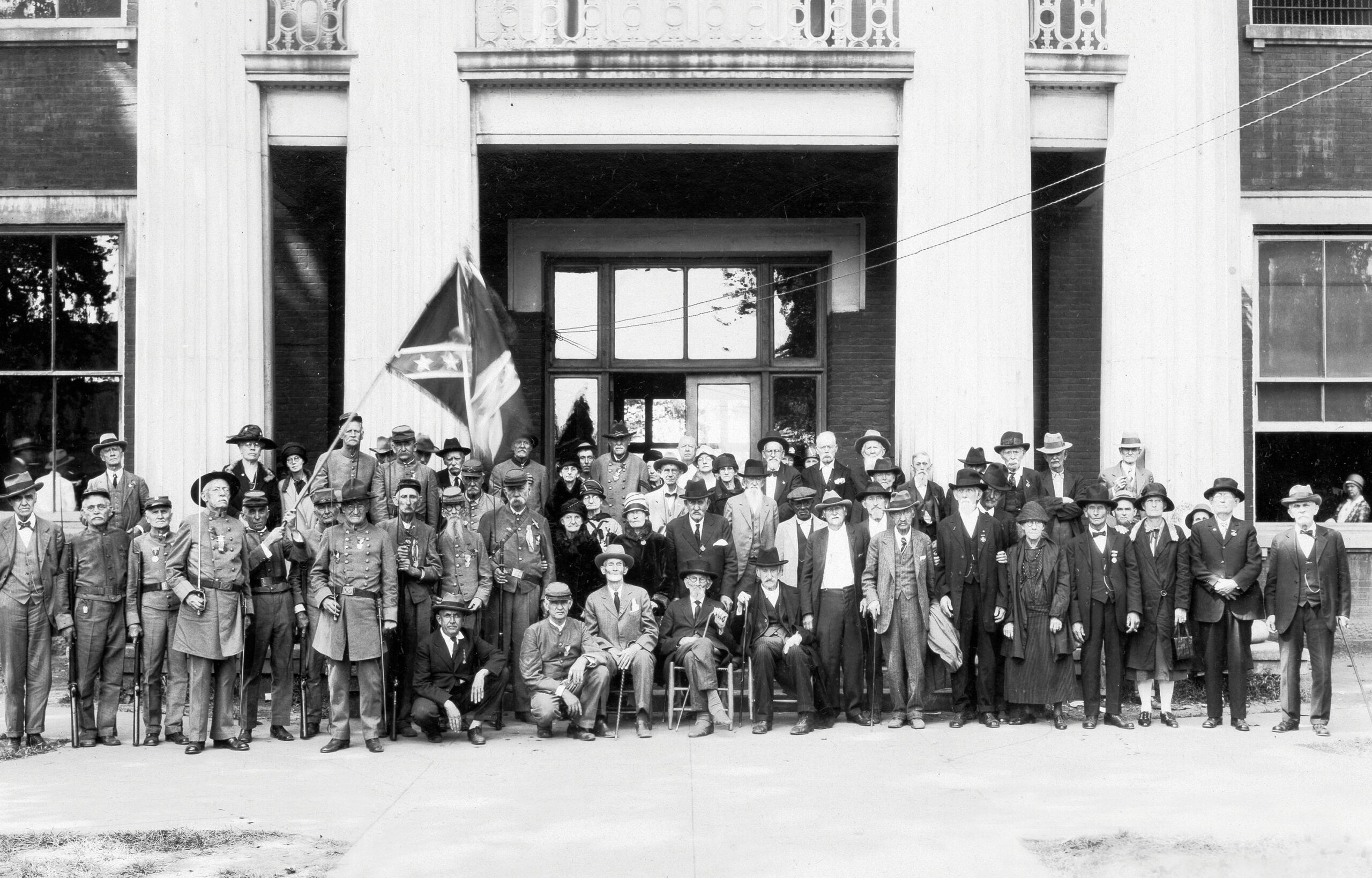
This group portrait shows the attendees of the United Confederate Veterans Tennessee Division reunion held in Murfreesboro, Tennessee, in September 1928. Before and well into the 20th century, not all the men who claimed to have served in the Confederate army were telling the truth.
“I was just a soldier,” recounted Andrew Hall in January 1943, “just one of the boys who fought and suffered as no other army has ever suffered.” In the middle of World War II, as the Battle of Stalingrad raged on the other side of the world, Hall told a reporter of how, 80 years earlier, he and his Confederate comrades had suffered as “no other army.”
A longtime resident of Albion, New York, Hall was celebrating his 100th birthday, the paper reported, and seemed nostalgic for the fighting witnessed during the American Civil War. He reminisced about his “idol” Robert E. Lee who, along with Thomas “Stonewall” Jackson, he considered “two of the best generals ever on a battlefield.” Hall was a minor celebrity, upstate New York’s last Confederate veteran (one Union veteran remained in the region). He told the reporter he believed the war would end that year with an Allied victory, but his prediction was off and he would not live to see the war end.
He died in January 1945—just days before another birthday.1 Hall would be remembered primarily as a Confederate. His gravestone in the town’s Mount Albion Cemetery was engraved “Confederate Army Civil War,” and beginning in 1953, Confederate flags provided by a South Carolina postmaster were placed on his grave annually as a “highlight” of the town’s ceremonies on Decoration Day—the holiday meant to celebrate those who died fighting for the United States against the Confederacy.2
By 1958 it became local practice to place both an American and a Confederate flag on Hall’s grave and those of five other former Confederates in Rochester, New York, area cemeteries as a sign of reconciliation.3 Such a decoration seen amid the nearby graves of Union army veterans might have implied that Confederate veterans had also fought for the United States, despite the fact that they explicitly fought against it. The small flag on Hall’s grave in the middle of far northern New York was just a part of the reshaping of how North and South remembered the past.
Hall in his lifetime had often served as a symbol of sectional reconciliation. Indeed, he is representative of a time when elderly southerners were held up as heroes to facilitate a national healing that often purposely ignored the war’s accomplishments, chief among them the enfranchisement of African Americans. As historian David Blight has argued, America in the decades after the Civil War was “a society committed to sectional reconciliation, even at the cost of forgetting the legacy and claims of its African American citizens.”4
Hall facilitated this reconciliation, attending numerous local reunions held for Union veterans—always as the only Confederate there. At one Rochester reunion, he declared he had “long since forgotten” the enmities of “the civil strife,” seemingly rendering a catastrophic Civil War a minor conflict.5
 Library of Congress
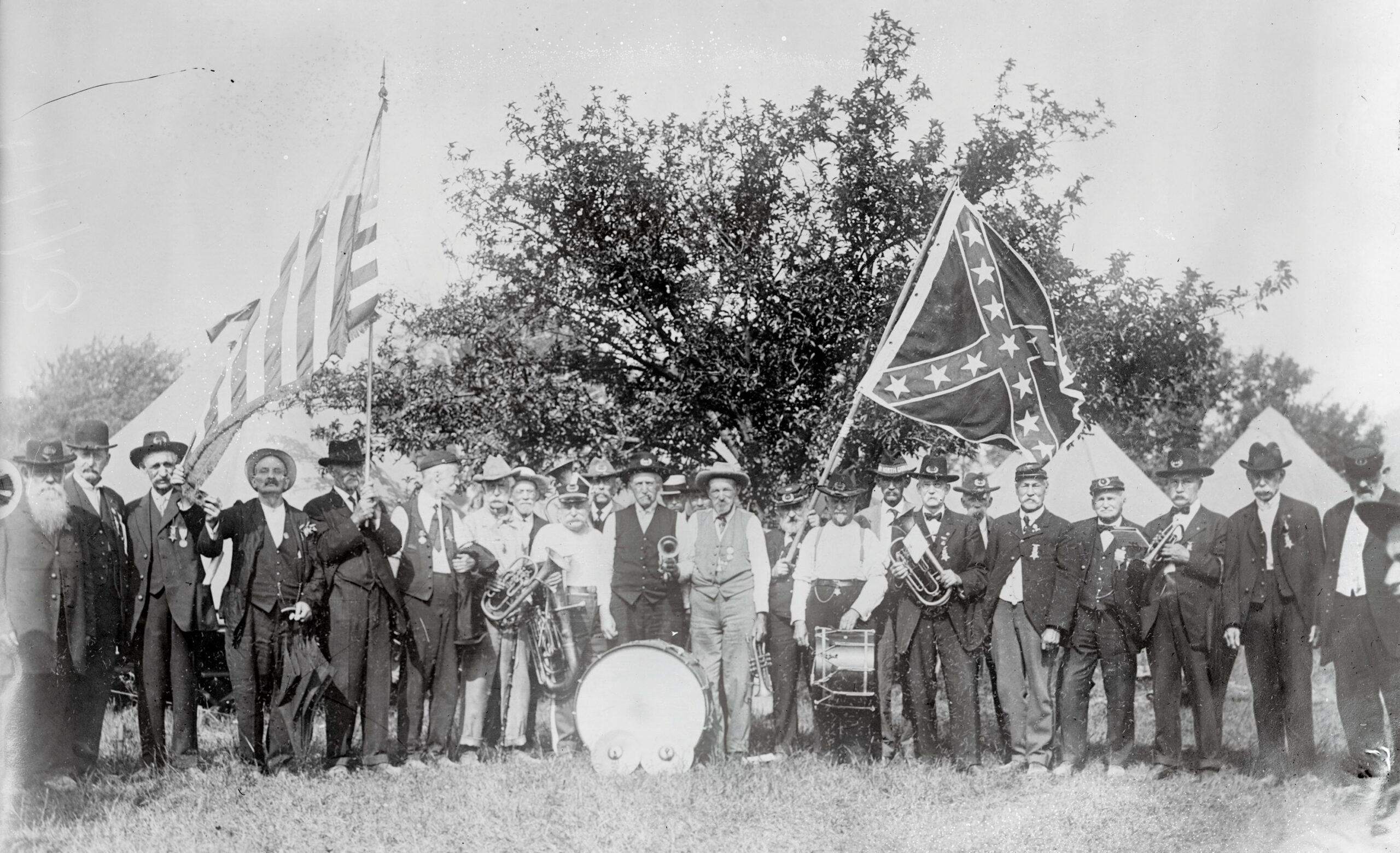
Former Union and Confederate soldiers gather in Gettysburg to mark the battle’s 50th anniversary in 1913. Such events were held up as evidence of national reconciliation, and its attendees, both northern and southern, celebrated as national heroes.
There was one major problem with New York’s “last Confederate”: Andrew Hall was a fraud.
Hall had not fought under Lee or Jackson for the Confederacy. He hadn’t fought at all. As one of his descendants put it, Hall had committed the “crime of stolen valor.”6 First, he lied about his age. According to five state and federal census reports taken between 1892 and 1915, Hall was born in 1852—making him 13 years old when the war ended. During the 1920s he appears to have changed his age and claimed to be born around 1847, which was also when he began saying publicly that he was a Confederate veteran. Over the following decade, he aged even more and said he was born around 1843. By his death in 1945, he was reportedly two days away from his 102nd birthday.7 Even from the grave Hall’s age continued to grow; a Confederate reenactor website honoring his grandson (who reenacted as a Confederate) states Hall lived to 103, making him a full decade older than his true age when he died.8 In 2016, Hall’s granddaughter discovered the lies, removed his Confederate gravestone and replaced it with a simple marker that notes his birthdate as 1852.9
 Library of Congress
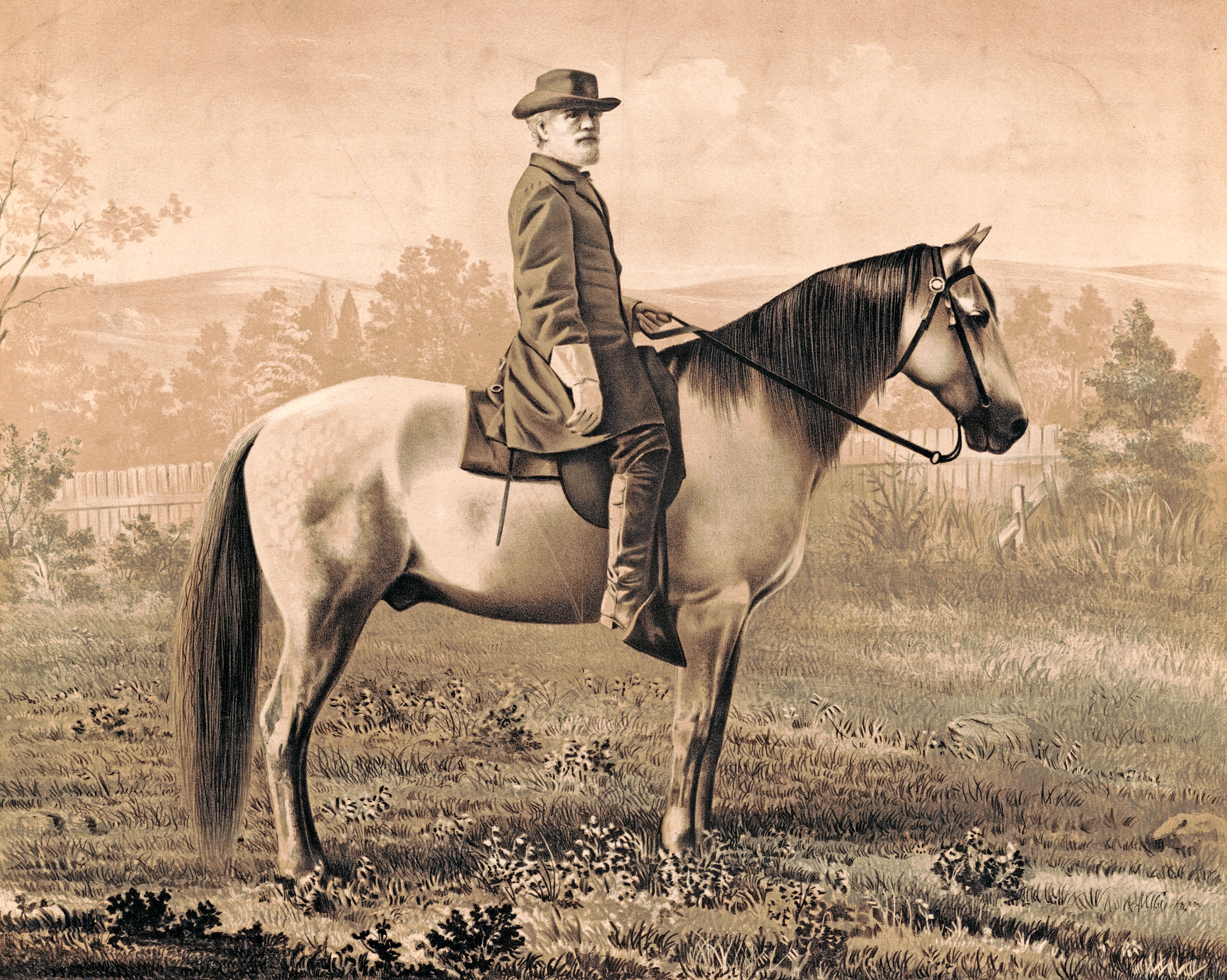
By the early 20th century, the service and battlefield performance of ex-Confederates, from generals like Robert E. Lee and Stonewall Jackson to common soldiers, were romanticized in accounts of the Civil War, sentiments that men who faked a connection to the conflict exploited to their benefit. Above: Lee and his famed warhorse, Traveller.
Hall’s age was not the only thing about him that failed to pass muster—because he didn’t muster. In various accounts dating from 1928 to 1945, not only did his birth year change, but so did the year he claimed he enlisted, the unit he claimed to serve in, and the battles he claimed to have fought in.10 In 1928, he said he had joined a South Carolina regiment at age 15, after his father was killed in battle at Bull Run.11 By 1933, he was telling reporters he had lost his father and seven brothers in the Confederate ranks (an eighth brother was wounded while serving in a Maryland unit, according to other reports).12 Two years later he claimed to have entered the war and fought at Bull Run himself when he was 17.13 By 1943, Hall was asserting he had enlisted at 18 in April 1861. Though he routinely was noted as the only Confederate soldier present at New York veterans’ reunions, there was no evidence of Hall ever enlisting in the Confederate army. The South Carolina hometown he claimed? It appears never to have existed. Interestingly, he apparently skipped the large 1938 Gettysburg reunion, where he might have run into former Confederates.14
Though it was fake, the nostalgia Hall reflected in his 1940s interview played on a growing sentiment in the United States that recalled a destructive war almost fondly. While the tales he told were made up, they played with expectations that were central to romanticized (and often false) narratives about the war. His granddaughter recalled hearing about how he took care of General Lee’s favorite horse, Traveller, and how Lee himself “removed a bullet from [Hall’s body] right on the battlefield.”15 Both tales seem improbable, given the lack of contemporary sources describing such events or Hall himself. But these tales complemented myths about Robert E. Lee as brilliant general and gentleman. They allowed upstate New Yorkers to feel connected to Lee—who by 1930 was increasingly recalled as not only a southern hero but also an American hero—despite his fighting against the United States. Hall’s depictions of Lee and Jackson could have been torn from the pages of Confederate Veteran, a magazine founded in the 1890s to honor ex-Confederates and recount their accomplishments. And well they may have been. Other details in Hall’s stories were similarly suspect. For example, he reportedly claimed to have been at the Battle of Gettysburg—despite the fact that the unit he claimed to have served in had not been there.16
 Confederate Veteran
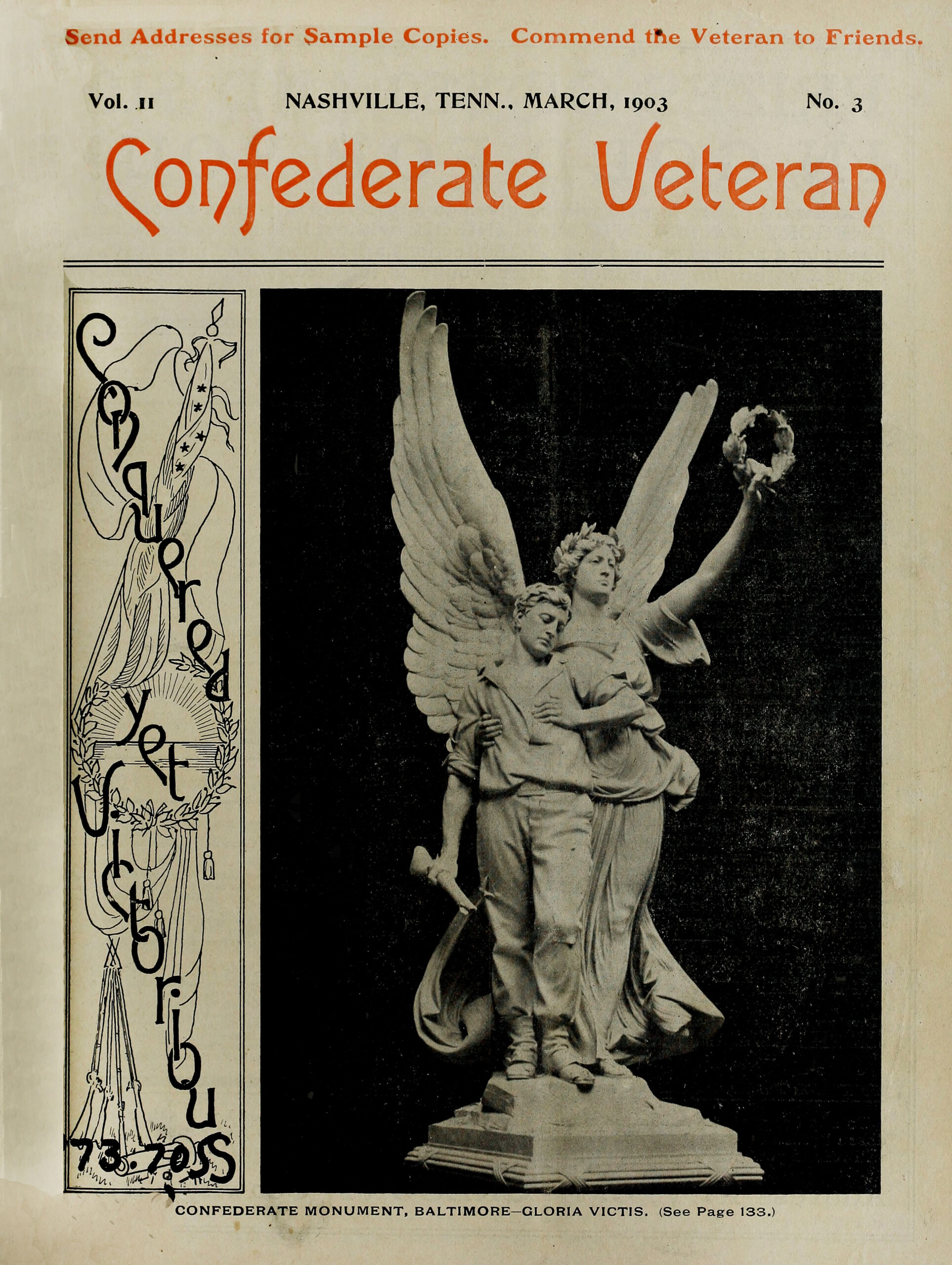
The cover of an issue of Confederate Veteran, a magazine founded in the 1890s to honor ex-Confederates.
In capitalizing on romanticized narratives of the Civil War, Hall was part of the massive revisioning of the war scholars often refer to as the Lost Cause narrative. Former Confederates, and impostors like Hall, rewrote the cause of the war so that slavery played little or no part. Indeed, Hall told one reporter in 1937, “I don’t know why we of the South and those of the North got mixed up in that war.”17 In 1860, when South Carolina, the state he claimed to have fought for, attempted to withdraw from the United States, the members of its Secession Convention listed their reasons for secession, which included “increasing hostility on the part of the non-slaveholding States to the institution of slavery,” a refusal to allow slavery in new territories, and fears that Abraham Lincoln’s recent election would result in a war “waged against slavery.” Every one of the convention’s listed grievances was somehow tied to slavery. But by the early 20th century, proponents of the Lost Cause had reframed the war to have been about preserving “states’ rights” while conveniently ignoring which states’ rights (i.e., to slavery) had been threatened.
Andrew Hall was hardly alone in claiming a false Confederate past. In fact, many of the country’s “last surviving Confederate veterans” never served. Author William Marvel established in 1991 that the last 12 men to claim to be Confederate veterans were fakes. This meant that the “last Confederate reunion” had no veterans there—though perhaps no one realized it at the time.18
Hall’s lying about military service was not unique. Because he lived in the North, Hall was unable to get a pension for his fabricated service—but the same was not true for men living in the former Confederacy. Aaron Cockerham, one of North Carolina’s last three military pensioners, was 5½ when the Civil War ended. While the Confederacy did resort to using underage soldiers at times, children that young were too small to serve even as drummer boys and were not among the teens—however young—who fought at New Market. Pension fraud was rampant in North Carolina and some of the Old North State’s pensioners definitely never served in the Confederate army.
How did these fakes not raise suspicion? Some of these “last veterans” even claimed to be more than 130 years old, so it should have been clear they were stretching the truth.19 Was the desire among Americans to be tied to the great events of the 1860s that strong? Confederates had come to be widely regarded as some of the greatest soldiers since the Spartans at Thermopylae. An expectation of heroism and valor meant that many Americans felt Confederate veterans could be trusted.
Even where individuals were suspected of lying, accepting their stories often served a purpose. For one, white southerners rewrote aspects of the past as a means to buttress white supremacy. When North Carolina liberalized its pension laws in the early 20th century, a fabricated narrative that white southerners had unanimously supported the Confederacy served a political purpose under Jim Crow. Additionally, the myth that all white southerners fought valiantly during the war was used to support arguments that whites had earned the ballot through military service while African Americans should not be allowed to vote. The impressive military service by African Americans in the United States Army was conveniently forgotten. Tales of desertion and white anti-Confederate dissenters undermined a remembered past of solidarity and military valor. Pensions also served as spoils to be awarded. Not only was liberalizing pension laws a popular political stance among veterans who voted, but those politicians in charge of pensions frequently used their power to garner votes. They often saw little reason to investigate a soldier’s record unless he was accused of desertion and voting for the other party. Promises of voting the “right way” in the future could lead a rejected pension application to be reconsidered.
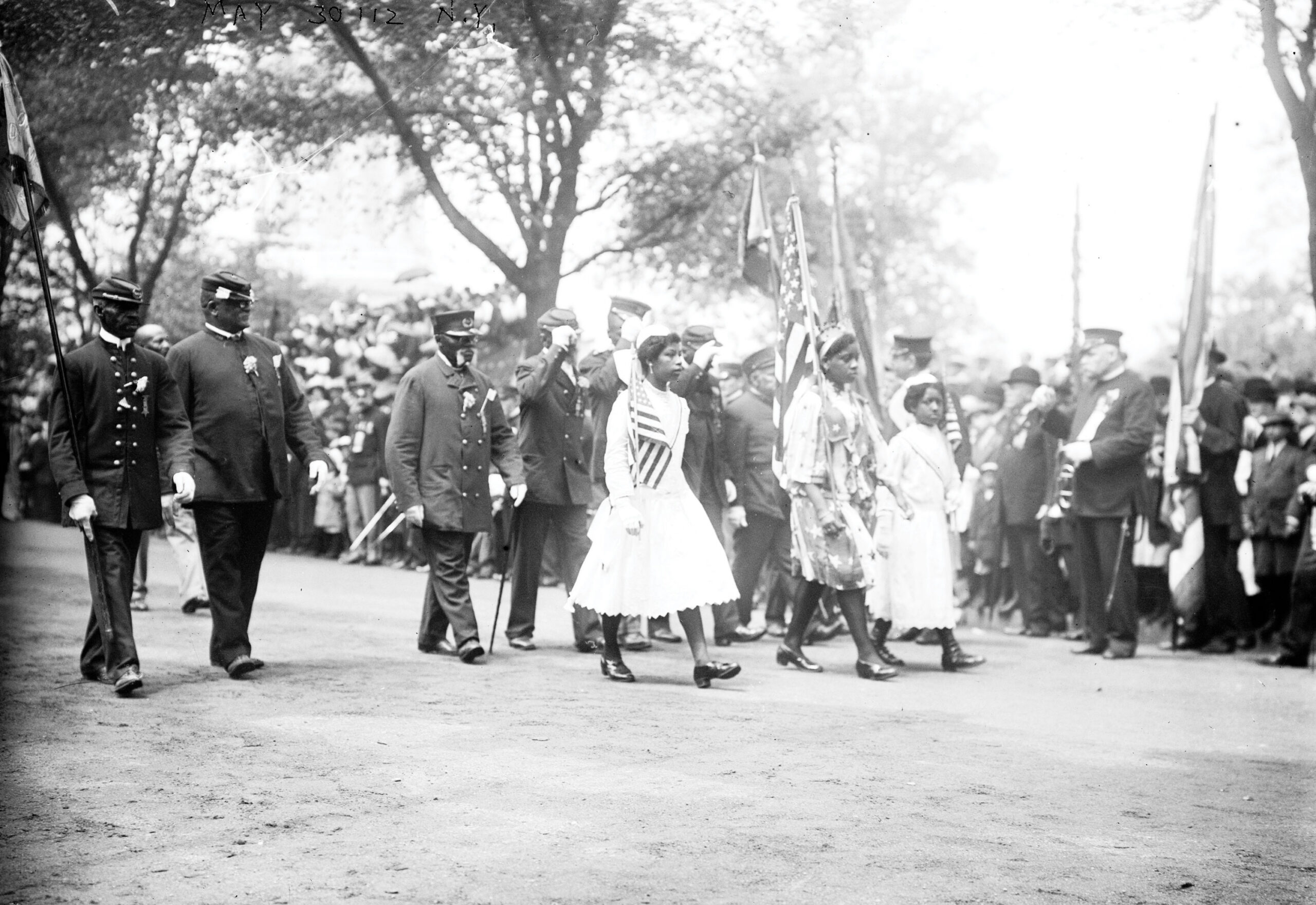 Library of Congress
One casualty of the 20th-century notion of national reconciliation between North and South was the service of African-American troops, which was increasingly overlooked. Above: Black Union veterans march during a reunion in New York in 1912.
The willingness to overlook suspect claims of Civil War service was common—and many claims still appear to need reexamination. The North Carolinian still often recognized as the state’s “last Confederate veteran” may have been a fraud. When asked his age, Samuel Bennett was incredibly consistent before 1930. According to every census from 1860 to 1930, as well as to his marriage license, Bennett was born in May 1852. When he began applying for a Confederate pension, his age started to fluctuate. In various applications he changed his birth year to 1850 and 1846, eventually settling on the former. Yet Bennett doesn’t appear in the 1850 census taken that August, three months after his supposed birth. His parents appear a few pages apart in the 1850 census living with their respective families before they married in 1851. So Bennett either lied until he was 80, and had been hidden from the census taker in 1850 to conceal his illegitimacy, or he started misleading people sometime in his late 70s to make his pension claim more believable.20
Given the numbers who faked Confederate service, Bennett probably took to lying in old age, when pensions start. It seems most plausible that he was conceived sometime around his parents’ wedding date and born nine months later. He probably changed his age so he could claim he enlisted in 1864 at age 13 instead of reporting he was only 12 when the war ended. The unit in which he claimed to serve also changed in various postwar documents and no wartime records exist to back up his assertions. Additionally, many of the events he described from the war (like digging trenches near Richmond) would have been impossible had he been with the units he claimed, as they were not with Lee’s army in Virginia.21 Despite this, Bennett’s gravestone bears the grammatically and historically problematic inscription “N.C. Last Confederate Veteran.”
So who was the last Confederate to survive in North Carolina? Ruffin Collie, the second-to-last “Confederate Veteran” according to reports in the 1940s, had no wartime record of his service and also had an evolving birthdate, although the evidence is less definitive than in Bennett’s case. Collie may have entered the military so late in the war that no record survived. Whatever the case, his service cannot be confirmed.
As Arron Cockerham (the third-to-last) was clearly a fraud, the last North Carolina Confederate whose service is verifiable by wartime records is George W. Benson.22 Benson’s stories of entering the Confederate army in May 1864 and being captured at Fort Fisher can be confirmed by Union records documenting his capture and release.23 Unlike Hall, Benson did live to see the end of World War II, dying at 102 in June 1948. Though recognized upon his death as the last Confederate veteran living in Mecklenburg County and fourth-to-last in North Carolina, he may have been last in the state.24
Andrew Hall—the impostor in New York—was not eligible for a pension, but this didn’t mean he didn’t benefit by lying. Being recognized as a Confederate veteran brought social and economic rewards. He was wined and dined and treated as a local celebrity. In 1933, when he attended the state’s encampment of the Grand Army of the Republic (the Union veterans’ fraternal organization), his trip was paid for by the local Republican County Committee Chairman. Hall’s descendants remembered that neighbors always made sure he was fed and “never went without,” and that organizations like “the American Legion and the D.A.R. were always good to him.”25
There were a few people who questioned the claims of would-be pensioners and other fake Confederates. Not surprisingly these individuals often challenged other aspects of the Lost Cause narrative as well. One of them, John Singleton Mosby, the Confederate cavalry commander nicknamed “The Gray Ghost,” rejected claims that the Civil War had nothing to do with slavery. He also challenged the expectation that every elderly white southerner had supported the Confederacy. Indeed, Mosby rarely attended reunions because they brought out so many fake veterans, and he once remarked, “I don’t reckon that of the 300 men in my command as many as 100 are still living. I only know positively of about fifteen and they are scattered all over the country. But if I had as many men as now say they were with me, I could have driven Grant out of Virginia.” Mosby guessed that some of the frauds were not even alive during the war. His claims were met with skepticism and shock. Recounting Mosby’s dismissal of reunions a few years later, The Indianapolis Star called it “rather unkind skepticism,” suggesting that some actual Confederate veterans from other units merely claimed to be of Mosby’s unit “because of the dash and daring of his army career.” The story went on that “it is not likely, however, that this was often attempted by men who had not been in Confederate service in some capacity. Mosby might have accepted their pretenses as a tribute to himself and been amused instead of angered thereby.” The Star had company in the New Orleans Item, which had also countered Mosby’s claims that there were many fake Confederates before turning to the issue of Union veterans committing pension fraud against the federal government.26
Some prominent former Confederate soldiers—like John Singleton Mosby (shown here in a wartime image)—questioned the early 20th-century belief that every elderly white southerner had supported the Confederacy. Mosby rarely attended reunions because of the impostors they often attracted. “[I]f I had as many men as now say they were with me, I could have driven Grant out of Virginia,” he remarked about the attendees at one such event.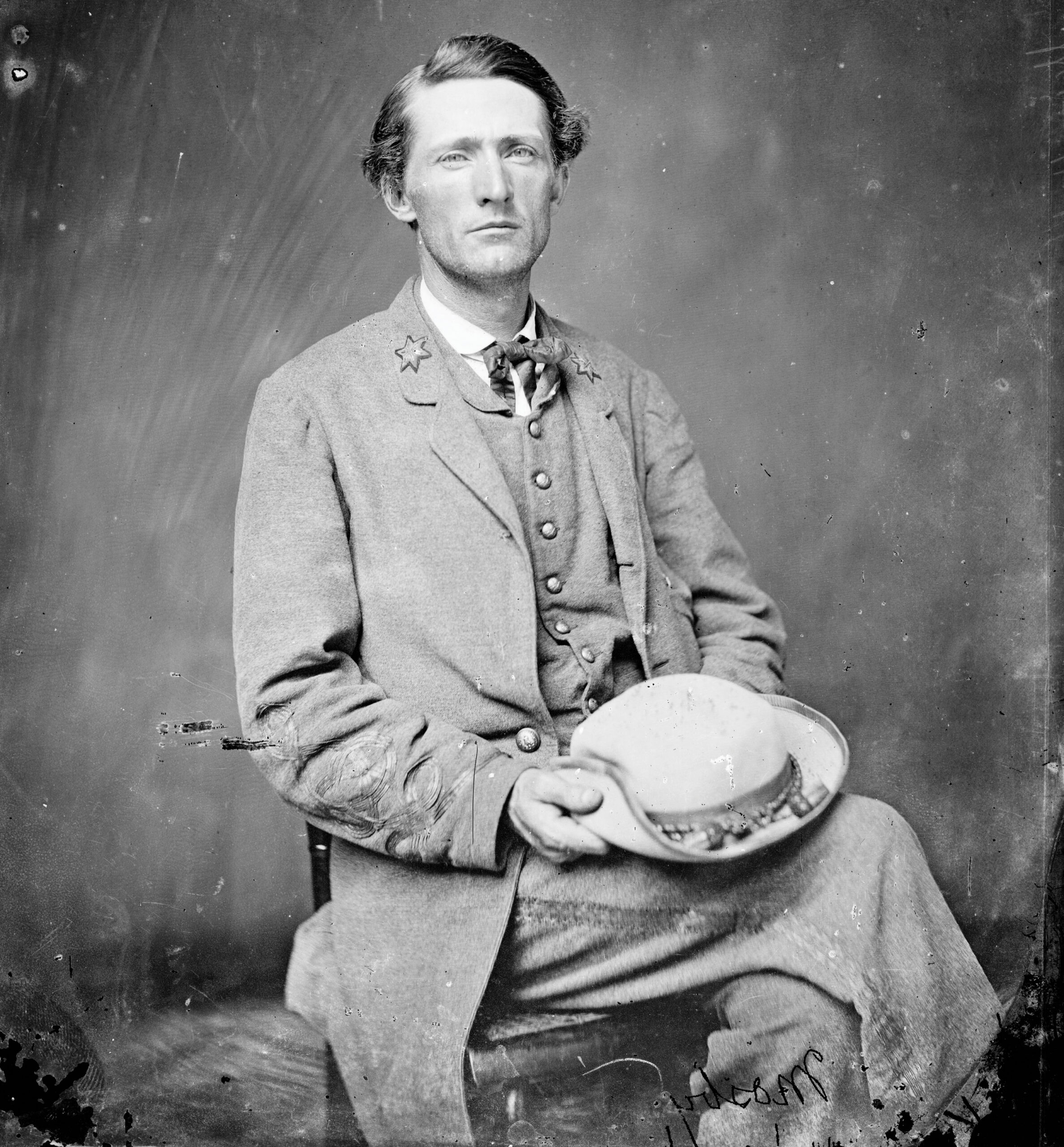 Library of Congress
There were many reasons Confederate pensions were rarely investigated. Not only did the Lost Cause rely upon celebrating these men as noble, heroic, and gentlemanly Confederates, but also pensions provided needed economic assistance to individuals who would otherwise have to be supported by individual counties. Indeed, the Confederate pension system conveniently served as both a statewide welfare system for elderly white men and a form of political patronage.
These frauds had an impact on how millions of Americans remembered the past. The myth that Confederate soldiers rarely deserted was embraced and thus encouraged a lack of investigation. Pension fraud and lies like Hall’s and Bennett’s were elements in the larger rewriting of the past going on across the country. By 1930 every elderly white southerner could claim to be a Confederate hero, and white northerners increasingly accepted Confederates as noble soldiers, whose deeds were worthy of recognition. This acceptance of a memory that increasingly ignored the cause and consequences of the war took hold and facilitated “sectional reunion” between whites.
The Lost Cause narrative sought to forget as much as it remembered about the causes of the war and the Confederate soldiers who fought in it. Frederick Douglass famously offered a different memory, trying to remind white Americans that “There was a right side and a wrong side in the late war, which no sentiment ought to cause us to forget.”28 Yet the Lost Cause mythology was premised on the Confederacy being viewed in a positive light—in celebrations of Confederate veterans and purposeful erasures of the atrocities of the war and the role of slavery as its root cause. Confederate pensions were part of the process, and just as Hall remade his past and blurred the causes of the war when he was interviewed, so did those who celebrated him as a symbol of reunion by placing Confederate and United States flags on his grave. Remembering the Civil War as one without a “right” and a “wrong side,” in which brave white men fought other brave white men, served to exonerate Confederates of what otherwise might be recalled as treason and obscure what the war was about. Celebrations of veterans convening and reconciling are pleasant to read about, if one ignores the cost of such forgetfulness. As David Blight has pointed out, “reunion was achieved at the cost of racial equality.”29 It also required the literal cost of paying pensions to those who had not earned them—and allowing men who had never fought to claim they were heroes.
After the war’s last veterans—including the fake ones—died, Hall and others continued being recalled as heroes as a means of uniting white Americans by celebrating the heroics of “both sides.” Facing criticism, in 1959 the New Yorker in charge of placing the American and Confederate flags over six graves in western New York each Memorial Day wrote, “if ever we should be a united people it is now”—this in the face of the growing Civil Rights Movement fueled by issues rooted in the Civil War.30 The tradition of marking Confederate graves with both flags continued through the 1960s and appears to have happened sporadically into the 1990s. In 1992, a woman explained to a reporter why she placed both flags on Hall’s grave: Hall “was an American too…. He just fought for the wrong side.” As if which side he fought for was almost accidental.31 Not everyone agreed with this tradition. In nearby Batavia, New York, in addition to hearing criticism for honoring a Confederate in the 1950s, the grave of a confirmed Confederate veteran had his two flags removed by “vandals” in 1969.32
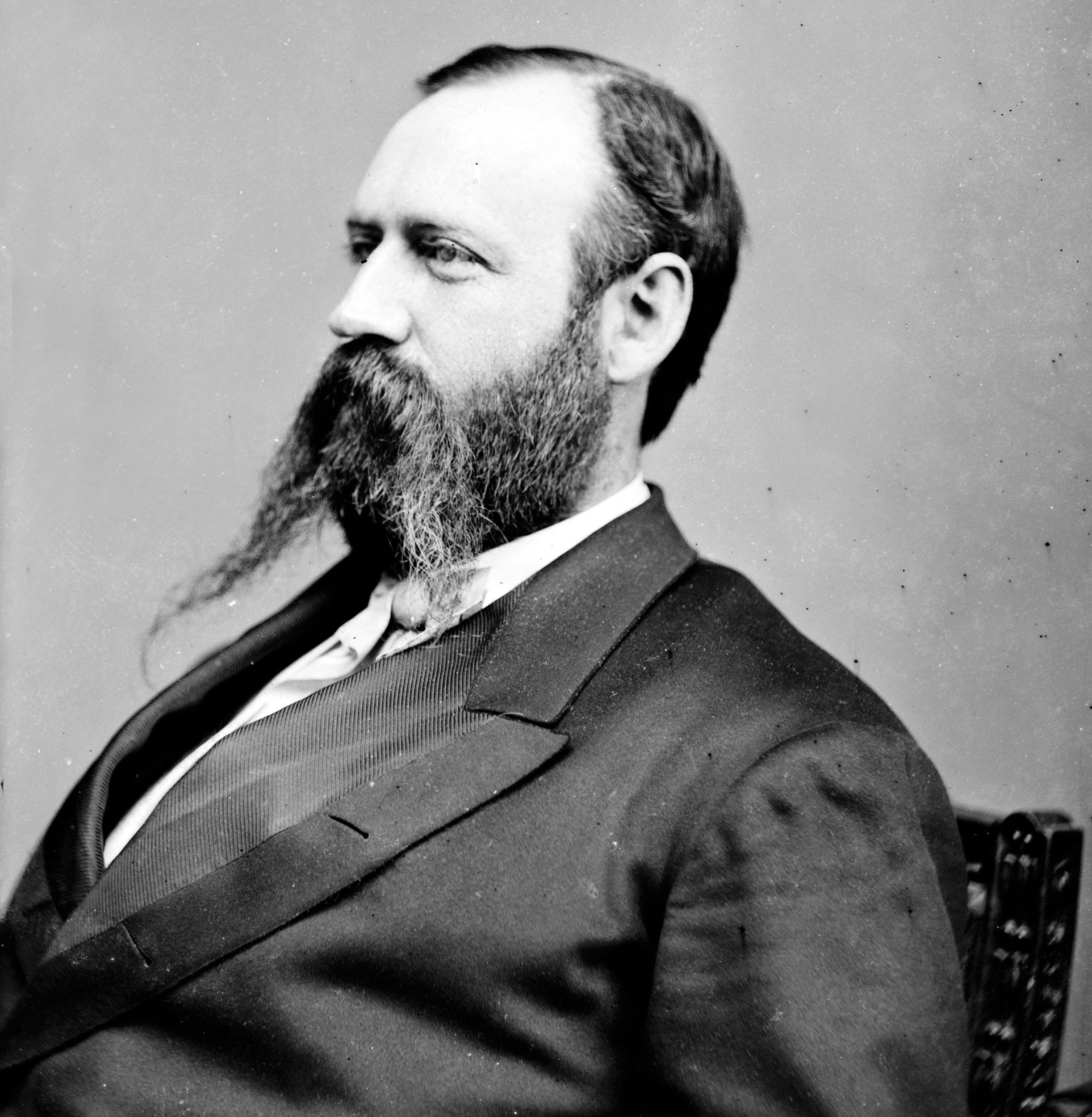 Library of Congress
Rufus Bullock
While the citizens of Albion honored their fake Confederate each Memorial Day, the grave of a once-prominent Confederate in the same cemetery went largely overlooked. Rufus Bullock, a native New Yorker transplanted to Georgia, ran the Southern Express telegraph and shipping company throughout the Civil War. As the company transported Confederate funds and supplies, Bullock also oversaw the expansion of Confederate telegraph lines. He spent much of the war as the company’s agent in Augusta, Georgia, before moving to Richmond as an agent of the Confederate Quartermaster department and leader of the Southern Express Co. Whatever his official status (there is some confusion as to whether he had a formal Confederate rank), he worked for the Confederacy on logistics throughout the conflict. He was captured with Colonel Robert Ould, who oversaw the Confederate negotiations for POW exchanges, as they attempted to escape Richmond at war’s end. Afterward, some alleged that Bullock had been part of the Georgia militia that captured the Augusta arsenal in 1861.33 Why then did a man who had actually thrown in with the Confederacy fail to get a flag like Hall’s?
Probably because the rest of Bullock’s life story did not fit the strictures of the Lost Cause. During Reconstruction Bullock served as the Republican governor of Georgia and became a staunch advocate for African-American rights. He opposed black disenfranchisement and was eventually forced to flee the state. His participation in Republican politics failed to fit into the ahistorical memory of the Lost Cause that recalled Reconstruction as a period of misrule by unprincipled carpetbaggers and a few corrupt scalawags. Ex-Confederates were not supposed to have supported Reconstruction in the mythology of the Lost Cause. And so Bullock was remembered by many former Confederates as a villain, neither having served in battle at Gettysburg or Vicksburg, nor, more importantly, having fulfilled the expectations of a Confederate after the war.
Adam H. Domby, who earned his doctorate at the University of North Carolina at Chapel Hill, is an assistant professor of history at the College of Charleston and the author of The False Cause: Fraud, Fabrication, and White Supremacy in Confederate Memory, which examines pension fraud, Confederate monuments, and Lost Cause myths.
Notes
1. “Confederate Veteran, 99, Sees Allied Win in 1943,” (Rochester) Democrat and Chronicle, January 2, 1943; “Confederate Army Veteran To Observe 101st Birthday,” (Rochester) Democrat and Chronicle, January 23, 1944; “Confederate Veteran Dies Two Days Before Being 102,” (Rochester) Democrat and Chronicle, January 23, 1944.
2. Arch Merrill, “Flags Arrive Again for Confederate Grave,” (Rochester) Democrat and Chronicle, May 26, 1968; Arch Merrill, “Henrietta Man’s Great Aunt & The South’s Memorial Day,” (Rochester) Democrat and Chronicle, May 28, 1961; “Many Memorial Day Activities in Area,” (Rochester) Democrat and Chronicle, May 30, 1966.
3. Arch Merrill, “Long Gray Line,” (Rochester) Democrat and Chronicle, May 25, 1958.
4. David Blight, Race and Reunion: The Civil War in American Memory (Cambridge, 2001), 301.
5. “One of 3 Survivors Attends Reunion of ‘Bloody Eighth,’” (Rochester) Democrat and Chronicle, August 23, 1939.
6. Frances Pecorella Pierce, email to author, July 4, 2017. Pierce’s extensive genealogical research makes clear Andrew Hall lied about his age.
7. New York State Census, Ancestry.com; Federal Census; newspapers on newspapers.com cited below.
8. “Bill Hall,” 33rd Virginia Infantry Company G (33rdvirginiacog.webs.com/warriorspast.htm), accessed August 4, 2017 .
9. Frances Pecorella Pierce, “Andrew Hall” Findagrave.com, October 2, 2016 (findagrave.com/cgi-bin/fg.cgi?page=pv&GRid=13740896), accessed August 4, 2017; emails with Frances Pecorella Pierce by author. Pierce found additional genealogical information to confirm her suspicions.
10. “Fought with Southern Army, His Brother Gave Leg For the North,” (Rochester) Democrat and Chronicle, March 4, 1928; “Civil War Veterans Convene for Annual Reunion,” The Daily Messenger (Canandaigua, NY), August 24, 1936; “Albion Man Veteran of Jackson’s Command,” Poughkeepsie Eagle-News, April 20, 1935. In 1835 he claimed to have been in “Company 1, First division, of the 6th South Carolina,” a unit designation that did not exist as Confederate companies were designated by letters and divisions were not numbered. “Orleans Hails Veterans of ’61,” (Rochester) Democrat and Chronicle, May 31, 1935.
11. “Fought with Southern Army, His Brother Gave Leg For the North,” (Rochester) Democrat and Chronicle, March 4, 1928.
12. “Civil War Days Relived as Veterans Who Helped Save Union Gather as Justice Thompson’s Guests,” (Rochester) Democrat and Chronicle, August 23, 1933.
13. “Albion Man Veteran of Jackson’s Command,” Poughkeepsie Eagle-News, April 20, 1935.
14. Jay S. Hoar, “The South’s Last Boys in Gray,” Confederate Veteran (January–February 1989), 33.
15. Jay S. Hoar, The South’s Last Boys in Gray: An Epic Prose Elegy, A Substudy of Sunset and Dusk of the Blue and the Gray (Bowling Green, 1986), 169.
16. Matthew Ballard, “Oldest Civil War vets pictured at Mt. Albion 70 years after war,” Orleanshub.com, September 5, 2015; Hoar, “The South’s Last Boys in Gray,” 33, 47. At times he appears to have changed which unit he served with.
17. “Tribute Paid Late Justice,” Canandaigua Daily Messenger, August 23, 1937.
18. William Marvel, “The Great Impostors,” Blue & Gray, 8, no. 3 (1991): 32–33.
19. Ibid.
20. Census and genealogical data from ancestry.com; Pension for Bennett, S.M. (Yancey County), North Carolina State Archives. Given the listing of “senility” on his death certificate, he may not have realized he wasn’t telling the truth. Others may have pushed through his application so as to find a means of support for an elderly man who was “entirely incapacitated for manual labor owing to old age and dieseas[e].”
21. Michael Hardy, “58th NCT update and the last Confederate soldier from North Carolina,” Looking for the Confederate War, September 25, 2007. He may actually have meant to claim he was in the 29th Regiment, in which his grandfather had served.
22. Lynn Nisbet, “Around Capitol Square” Statesville Daily Record, May 12, 1947.
23. Compiled Service Record for George W. Benson, 2nd North Carolina Artillery (36th State Troops), Compiled service records of Confederate soldiers from North Carolina units, National Archives Microfilm M270, accessible on fold3.com.
24. Pension for Benson, G.W. (Cleveland County, Gaston County and Mecklenburg County), North Carolina State Archives; “Civil War Vet Passes at 102,” Gastonia Gazette, June 15, 1948.
25. “Civil War Days Relived as Veterans Who Helped Save Union Gather as Justice Thompson’s Guests,” (Rochester) Democrat and Chronicle, August 23, 1933; Hoar, “The South’s Last Boys in Gray,” Confederate Veteran, 47.
26. “They Posed as Mosby Veterans,” Indianapolis Star, June 5, 1916; “Too Many Veterans,” New Orleans Item, October 28, 1910;
27. Adam H. Domby, The False Cause: Fraud, Fabrication, and White Supremacy in Confederate Memory (Charlottesville, 2020), 76–103; Kathleen Gorman, “Confederate Pensions as Social Welfare,” in Before the New Deal: Social Welfare in the South, 1830–1930, ed. by Elna C. Green (Athens, 1999), 24–39. For how a few formerly enslaved people were able to get smaller pensions by presenting themselves as loyal slaves see Domby, False Cause, 104–131.
28. Quoted in Ethan Kytle, Romantic Reformers and the Antislavery Struggle in the Civil War Era (Cambridge, 2014), 282.
29. Blight, Race and Reunion, 470n3 (see also 389).
30. Arch Merrill, “A Bugle Call at Fort Corners in ’68,” (Rochester) Democrat and Chronicle, May 24, 1959.
31. Michael Zeigler, “Unselfish Colors Honor the Brave,” (Rochester) Democrat and Chronicle, May 21, 1992.
32. Bob Emens, “Stars and Bars Flag Marks Rebel’s Grave” (Rochester) Democrat and Chronicle, June 2, 1969.
33. Russell Duncan, Entrepreneur for Equality: Governor Rufus Bullock, Commerce, and Race in Post-Civil War Georgia (Athens, 1994); “To the Friends of the Soldiers throughout the Confederacy,” Richmond Dispatch, July 13, 1864; “News From Richmond,” Baltimore Sun, April 17, 1865; One who Was Present, “Mr. Editor,” Daily New Era, April 10, 1868.
Related topics: veterans