 Library of Congress
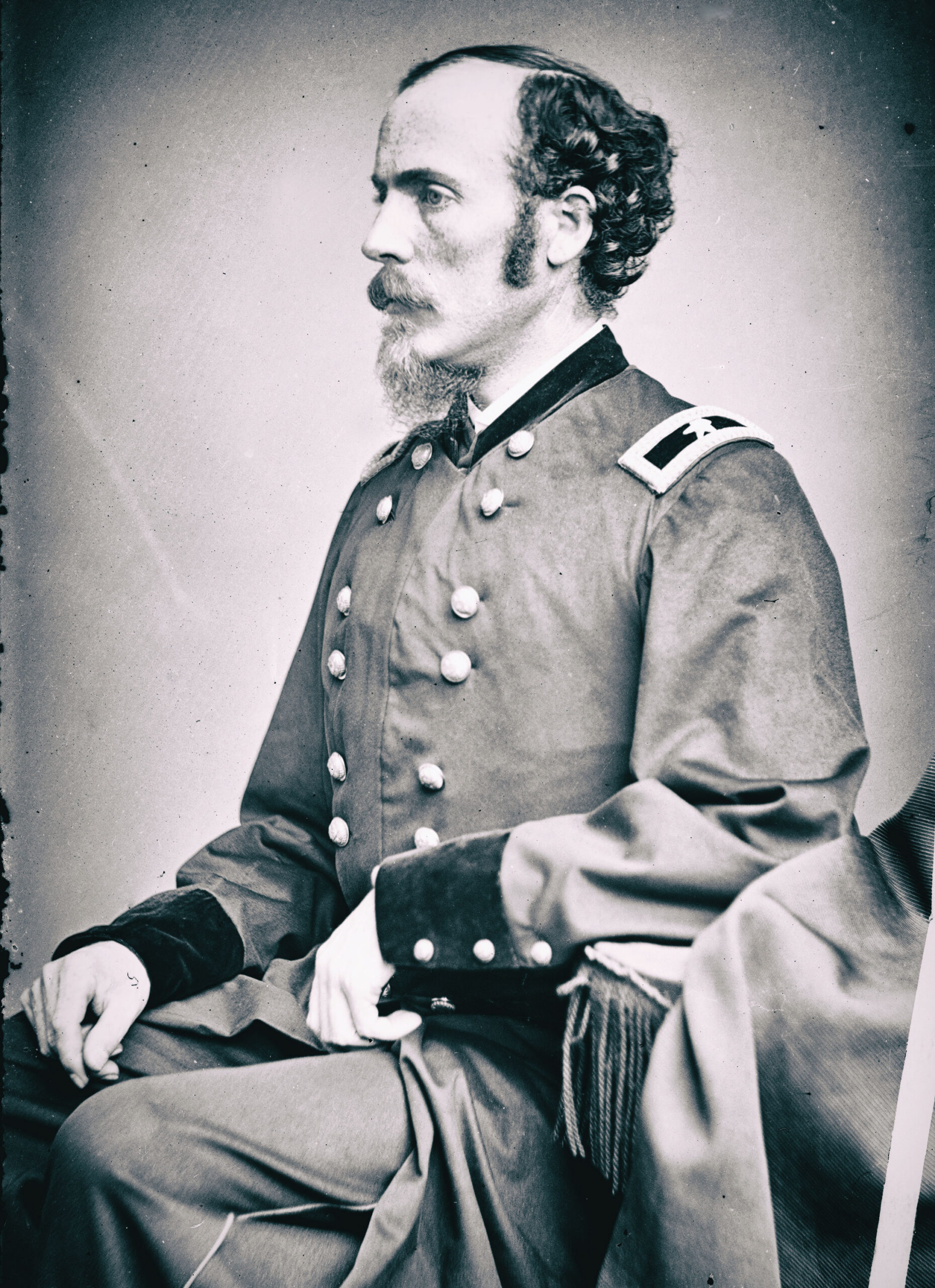
Emerson Opdycke
On November 30, 1864, a bright Indian summer afternoon, Confederate General John Bell Hood rode up a low hill outside the picturesque town of Franklin, Tennessee, along Columbia Pike. Spread out before him, and dug in along a curved line of fieldworks, abatis, and natural obstacles nearly a third of a mile long, lay Union troops commanded by Major General John M. Schofield, chiefly the XXIII Corps, Army of the Ohio, and the IV Corps, Army of the Cumberland. What else Hood saw through his field glasses was an opportunity. A line of advance entrenchments lay between the approaching Confederate columns and the town.
In Franklin itself, confusion reigned as a traffic jam of wagon trains attempted to pull back across the Harpeth River, and beyond that, to the relative safety of Federal-occupied Nashville, where the forces of the overall Union commander, Major General George H. Thomas, waited.1 Hood also felt a sense of urgency. The Federals had retreated again and again in recent days, falling back on their lines of communication with Nashville to forestall the Confederates’ efforts to flank them and not offering a stand-up fight. And yet Hood had good reason to be impatient with his own army. The night before, Major General Benjamin F. Cheatham’s corps missed a golden opportunity to defeat the enemy at Spring Hill.
It was now after 2 p.m., and only a few hours of daylight remained. If the Confederates meant to strike here and crush Schofield before he could reach Nashville, there was no time to lose. “We will make the fight,” Hood pronounced.2
 The Retreat from Pulaski to Nashville, Tenn. (1909)
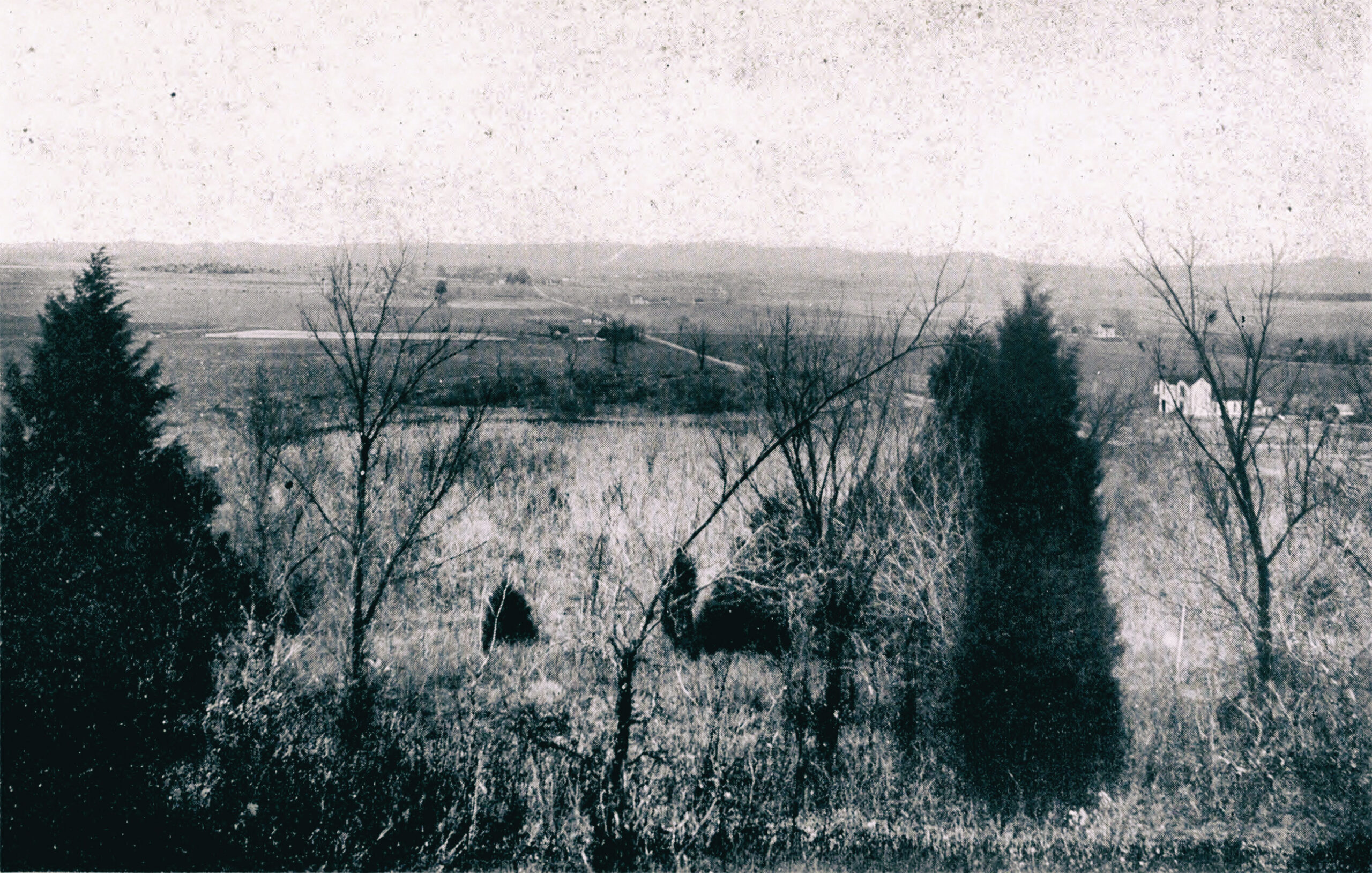
This postwar image made south of Franklin, Tennessee, shows the ground over which John Bell Hood’s Confederates moved to attack Union forces dug in around the town on November 30, 1864.
Brigadier General George D. Wagner, leading the 2nd Division of Major General David S. Stanley’s IV Corps, had drawn the unenviable duty of commanding the Federal rearguard on its harrowing march the night before from Spring Hill to Franklin. Wagner, 35, hailed from Warren County, Indiana, and before the war had been a farmer and Republican state representative and senator, prominent in state politics. He owed his initial military appointment to political influence, but his rise in command stemmed from his competence at Perryville, Stones River, and during the Atlanta Campaign. He had a reputation as a fighter, and though he lacked formal military training, he was a gritty, tough-as-nails general, respected by his peers. According to Brigadier General Jacob D. Cox, who had recently assumed command of the XXIII Corps, Wagner “had seen a good deal of active field service, and under a rough exterior had a generous and genial character.”3
By the fall of 1864, Wagner’s command consisted of three brigades: Colonel Emerson Opdycke’s 1st Brigade, the 2nd Brigade under Colonel John Q. Lane, and Colonel Joseph Conrad’s 3rd Brigade. Opdycke’s six regiments of Illinois, Ohio, and Wisconsin men were experienced veterans, but the other brigades consisted of many recent recruits and conscripts. Of the three, Opdycke’s was the best, and its colonel was certainly one of the most capable combat leaders in Schofield’s Army of the Ohio. Opdycke was 34, the son and grandson of soldiers. Born in Hubbard, Ohio, he had owned a variety of business enterprises in Warren before the war. Like Wagner, Opdycke lacked formal military training, but by now the ardently antislavery colonel had compiled a glittering combat record and demonstrated natural leadership as well as iron discipline among his men.
 USAMHI (Hood); Library of Congress
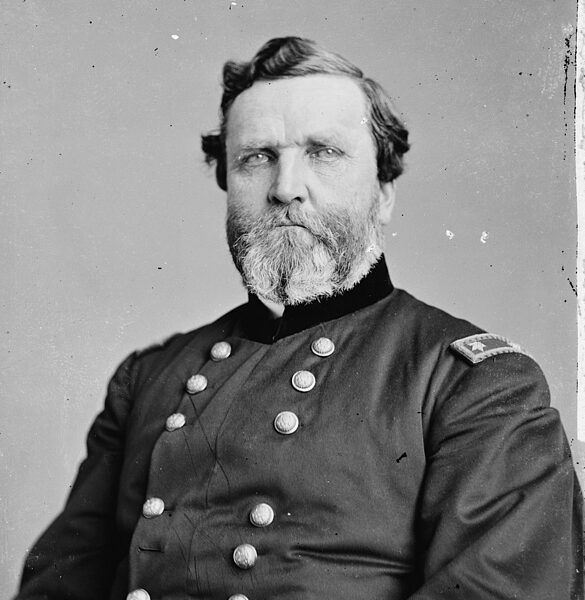
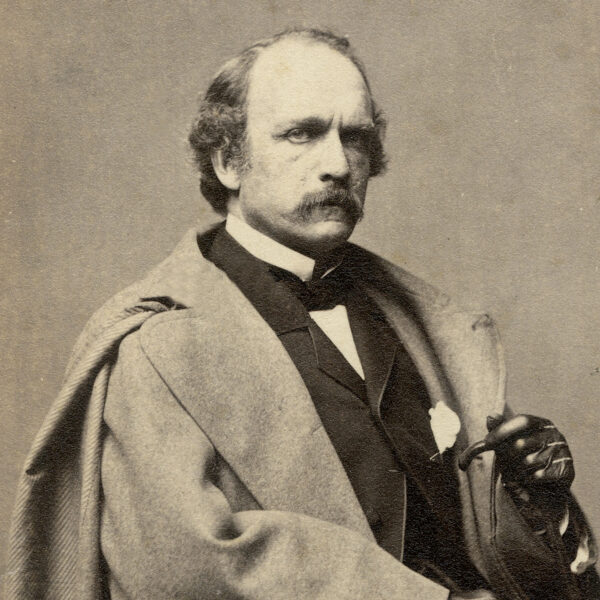
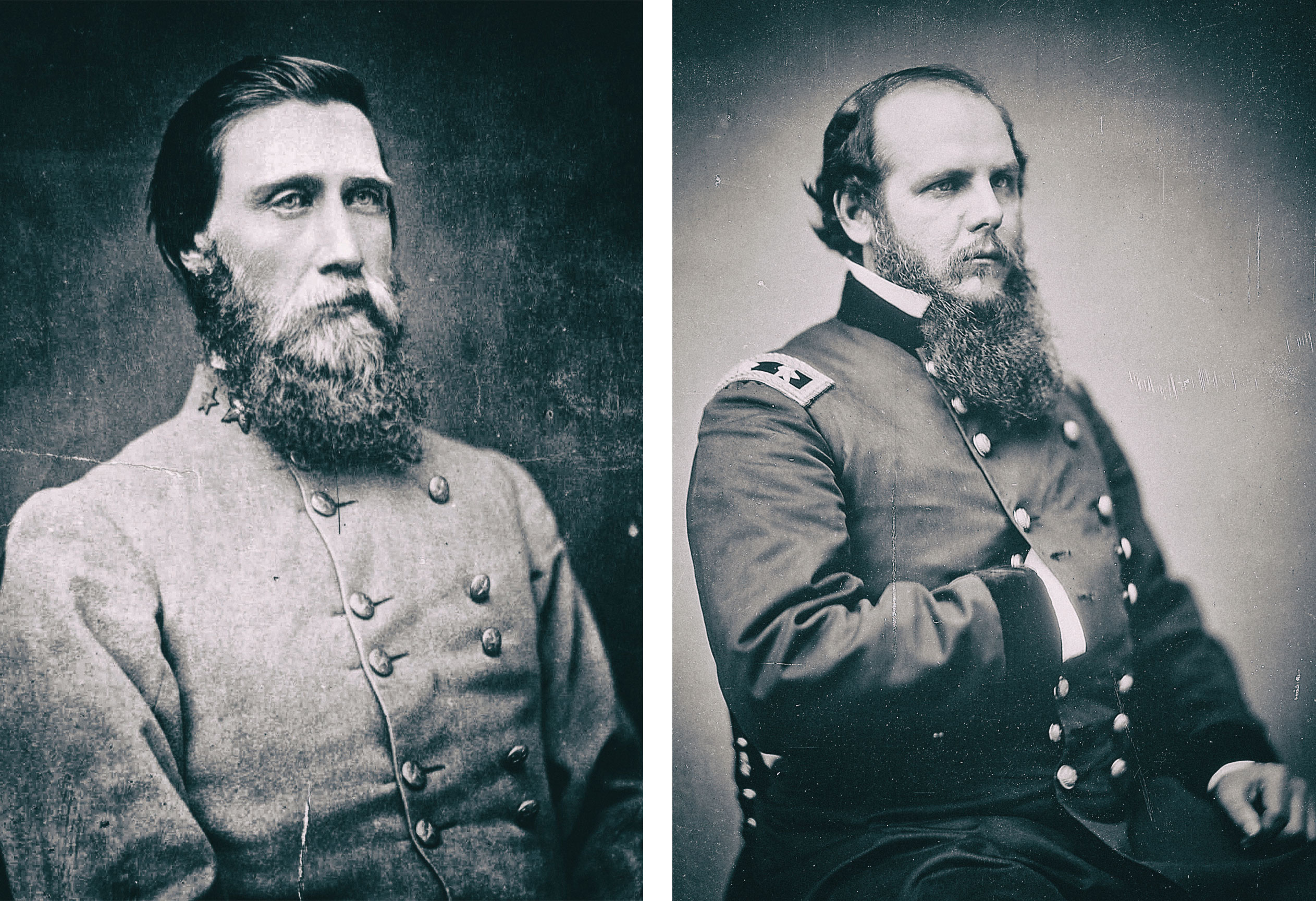
The Union and Confederate forces that clashed at Franklin both felt a sense of urgency. Union general John M. Schofield (right) hoped to complete his army’s retreat from pursuing Rebels and make it to Nashville, where Major General George Thomas and his army were positioned. Confederate general John Bell Hood (left) hoped to catch up with and crush Schofield’s troops before they could escape.
Starting as a junior officer in the 41st Ohio Infantry, commanded by West Pointer and disciplinarian Colonel William B. Hazen, Opdycke proved to be an excellent officer, even instructing fellow officers in drill and tactics. Opdycke fought bravely at Shiloh, but left the regiment in September 1862 to help recruit the 125th Ohio Infantry, in which he would earn promotion to colonel. Opdycke’s men won renown for their ferocity during the Army of the Cumberland’s desperate stand at the Battle of Chickamauga in 1863, where they “fought like tigers” according to his division commander. Opdycke led a “demi-brigade” in the assault on Missionary Ridge in November, and was among the first to reach the summit of the ridge. He was badly wounded at the Battle of Resaca in the Atlanta Campaign, but took command of the brigade after the death of the well-regarded Colonel Charles G. Harker at Kennesaw Mountain in June 1864. Abrasive and fiercely ambitious, Opdycke greatly coveted a general’s star, telling his wife in October 1864, “my promotion would have been certain, had I been in command of a brigade [at Chickamauga]. If I ever do have command of one, and then opportunity offers, I will make you the wife of a General!”4 Opdycke’s drive, coupled with a hot temper, made for a volatile combination only countered by his abilities as an exceptional combat officer.
As a IV Corps division commander, Wagner reported to Stanley in the chain of command, but while in charge of the army’s rearguard, he also answered directly to Schofield, the overall commander in the field. Tensions permeated the army’s command structure, as Cox later reported. “A very natural esprit de corps led some worthy men who served in Wagner’s division to question the justice of the criticism upon his handling of the division in the battle,” Cox would say years later, and some sensed “a disposition on the part of General Schofield and other officers of the Twenty-third corps to be unfriendly to him.” Cox dismissed allegations of an anti-Wagner bias, yet it is possible that on the morning of November 30 there may have been some tension between Wagner and Schofield. Certainly after that day, friction erupted among Wagner, Stanley, and their subordinates.5
The source of Wagner’s present frustration stemmed from his role in the army’s desperate withdrawal the day before from the village of Spring Hill to Franklin. Stanley’s lead troops, including Wagner’s division, had begun to arrive at Spring Hill in the early afternoon of November 29. Stanley immediately ordered Wagner to rush his brigades forward to the town and shore up the defenses against the approaching threat of Major General Nathan Bedford Forrest’s cavalry. Opdycke’s brigade advanced at a run, taking up a blocking position on a slight ridge north of town. Lane’s brigade slid into line on Opdycke’s right, and Brigadier General Luther Bradley’s brigade entrenched on a knoll southeast of Spring Hill, isolated from the main Federal line but occupying high ground. Forrest’s men assaulted Bradley’s line, wounding him; thus was Conrad elevated to brigade command.6 Confederate command confusion that night provided the Federals with just enough time to slip through Spring Hill, practically under the noses of Hood’s army.
With disaster averted, Schofield’s army was still beleaguered. Facing steady skirmishing from Forrest’s pursuing cavalry, Wagner’s division had no chance to pause, rest, or prepare rations all that long and weary night. Opdycke’s 1st Brigade occupied the hindmost position in the rearguard, perhaps the hardest duty in the division, and Opdycke had the grueling duty of rounding up stragglers all night, sometimes at bayonet point. Consequently, the 1st Brigade had made the trek from Spring Hill to Franklin in line of battle formation and were as hungry and perhaps even more exhausted than their companion brigades. Wagner and his commanders had reason to wonder if they were being singled out for the worst assignment in the campaign, and Opdycke felt he had drawn the shortest straw of all.
Cox, who had ridden ahead and spent the remainder of the night and next morning preparing defenses, had his men incorporate preexisting earthworks around the town, previously constructed in 1863, into a formidable complex. With dawn still a couple of hours away, the Federal army approached. Franklin, population about 2,000 in 1860, was situated on a bend in the Harpeth River, the last big obstacle the Federals had to negotiate in their withdrawal to safety. Schofield pressed ahead, overtaking Cox’s lead division on Columbia Pike, the main road leading north through Franklin to Nashville. After pausing to converse with him, a weary Schofield entrusted the disposition of the army’s defenses at Franklin to Cox.7
 The Retreat from Pulaski to Nashville, Tenn. (1909)
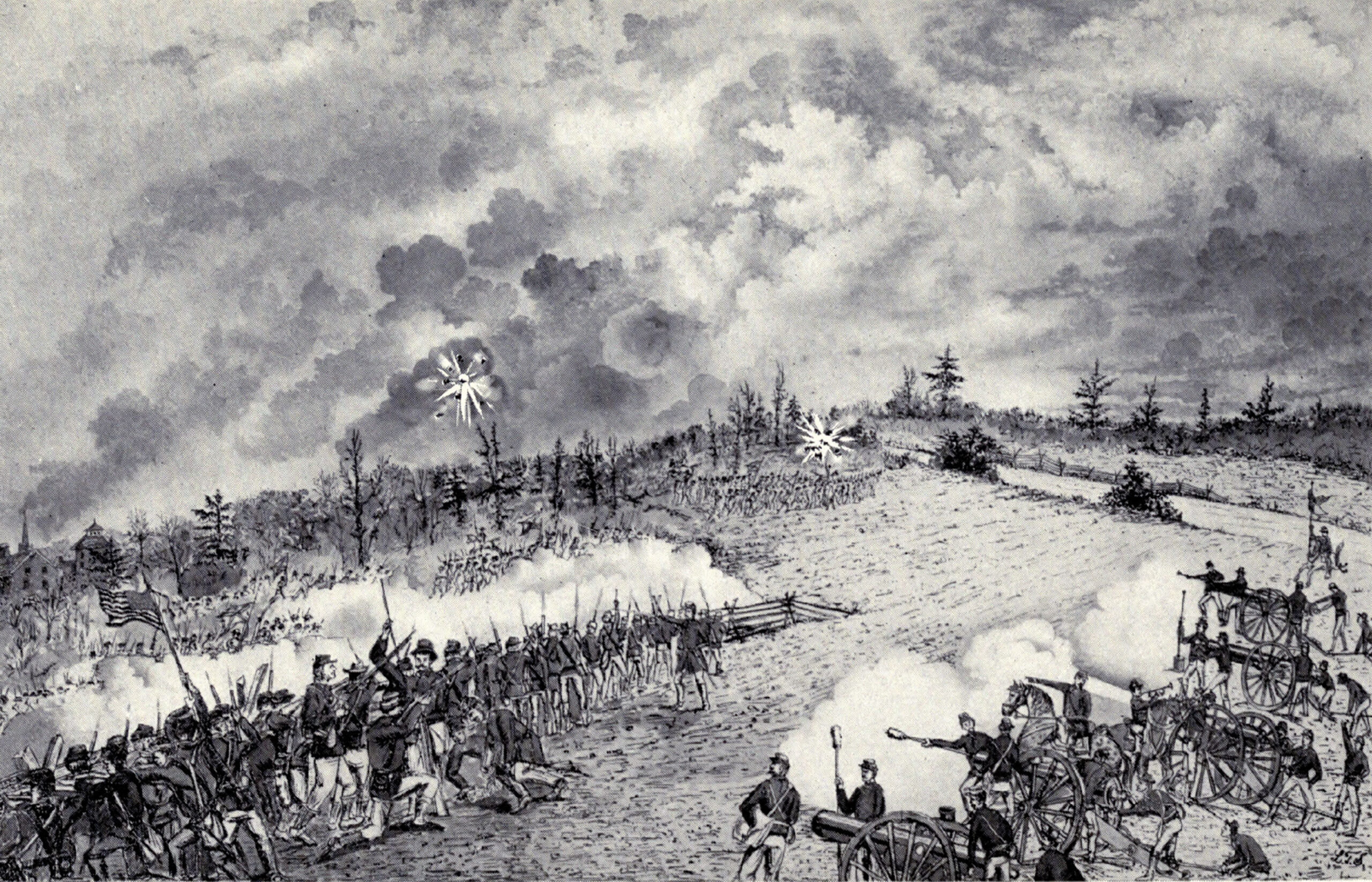
Union and Confederate troops clash at Spring Hill on November 29, 1864. Confederate command confusion that night helped allow the Union force to slip away and resume its march toward Franklin. Emerson Opdycke’s brigade, which formed the hindmost position of the Union rearguard, would spend an exhausting night and early morning keeping their retreating comrades moving.
As soon as the Federal columns began arriving in town, the men were set to work repairing and digging new earthworks for the coming showdown. They cut down trees and thickets, gathered scrap wood, brush, and other debris, including several plows, and dismantled a cotton gin and other outbuildings of the Carter House just south of town—anything to add to the defensive position. When they were finished, the works consisted of a shallow trench 2-to-3 feet deep and 4 feet wide, rising to a low barrier 4 feet high. Behind the barrier, defending troops were positioned in another 3-to-4-foot-deep trench and aimed their weapons through gaps in head logs and other debris atop the works, between 7 and 8 feet high. Aiding the defenses was a thick, thorny locust grove, which the men used to construct abatis, guarding the center-right of the Federal line just north of Columbia Pike.8 The defenses also benefited from a thick, tall hedge of Osage orange trees and man-made abatis, both presenting an imposing barrier on the Federal center and left.9
With both flanks anchored on the river, most of the Federal line enjoyed a relatively clear field of fire across the gently undulating slope and open ground facing south, the Confederates’ most likely avenue of approach. To amplify the Federals’ firepower, batteries of IV Corps artillery deployed along the line.10 Just across the river, in the Federal rear, another battery of 3-inch rifled guns jutted from Fort Granger, trained down in a commandingly high position with clear fields of fire. Elsewhere, when possible, batteries occupied higher ground that permitted them to fire over the heads of their infantry on the main defensive line.11 By 2 p.m. on November 30, the works were substantially complete, and the army trains were mostly across the Harpeth. Schofield’s final task would be to consolidate his army behind those formidable works before the Army of Tennessee arrived.
By about 11 a.m. Wagner’s rearguard columns had reached the vicinity of Winstead Hill, 10 miles from Spring Hill and 2 miles south of Franklin along Columbia Pike. Just then a courier from Stanley arrived with orders for Wagner to halt his division, and let the men eat breakfast and rest. Wagner allowed Conrad’s and Lane’s brigades to fall out and cook rations atop nearby Breezy Hill, but Opdycke and his weary brigade would have no respite. According to Wagner’s report:
I placed Colonel Opdycke’s brigade in position in the gap [between Breezy and Winstead hills] and on the high point east of the pike, with a section of artillery, to check the advance of the enemy, who was pursuing us at this time—Colonel Lane’s brigade being put in position on Colonel Opdycke’s left, and Colonel Conrad going into line to the left of Colonel Lane, General Whitaker’s brigade, of the First Division, occupying the heights on the right of the pike. The enemy soon appeared in our front in heavy force, and the command was put under arms to be ready to repel an attack.12
While Wagner deployed his three brigades along Breezy Hill, Brigadier General Walter C. Whitaker, commanding the 2nd Brigade of Brigadier General Nathan Kimball’s First Division, IV Corps, took cover behind makeshift barriers atop Winstead Hill. For about an hour the four brigades withstood long-range skirmishing from Confederate cavalry; Whitaker received orders to march to Franklin “when the road should be clear.”13 Wagner, without positive orders since Stanley’s 11 a.m. instructions to halt and feed his men, became concerned at Whitaker’s withdrawal. Perhaps thinking that similar instructions to pull back had been issued to him but somehow went astray, Wagner took it upon himself to abandon Breezy Hill and put his division on the road to town.14
With Wagner’s division soon strung out in a mile-and-a-half-long column, one of Stanley’s staff officers appeared with further orders:
HEADQUARTERS FOURTH ARMY CORPS,
Franklin, Tenn., November 30, 1864—11.30 a.m.
Brigadier-General Wagner,
Commanding Second Division:
The general commanding directs that you hold the heights you now occupy until dark, unless too severely pressed; that you relieve Colonel Opdycke with one of your brigades, and leave his and the remaining brigade as a support; and that you cross the river to the north bank after dark, at which time the position you are to occupy will be pointed out to you.
Very respectfully, your obedient servant,
[J. S. Fullerton]
Assistant Adjutant-General.15
Wagner was about half a mile from the Federal works girding the south of town when the 11:30 a.m. orders from Stanley arrived. It is possible that at some point that morning Opdycke went over Wagner’s head and complained directly to Stanley about his brigade’s treatment, evidenced by Stanley’s specific instructions to relieve Opdycke of his onerous duty.16 Cox, who was in a position to know, surmised that “[t]his was an unusual interference with the discretion of a division commander having his whole division in hand, and indicates some chafing between him [Wagner] and his subordinates which made the action of the corps commander necessary.”17 Wagner had little time to argue the point, nor to chastise Opdycke for going around him in the chain of command. “In obedience to [Stanley’s] order I returned to the position from which I had just withdrawn my command, except that I now detached one regiment from Colonel Lane’s brigade and directed it to be placed on the heights to the right of the pike [Winstead Hill] from which General Whitaker had just withdrawn his brigade,” Wagner reported.18 For better or worse, Stanley’s 11:30 a.m. orders remained the operative instructions guiding most of Wagner’s actions. To muddy affairs further, Wagner had, at 12:15 p.m., sent a courier of his own to Stanley, expressing his intention to withdraw from Breezy Hill. Stanley, operating under the premise that Cox now outranked him in command of forces on the field, declined to respond to Wagner’s message with additional instructions and reasoned that his 11:30 a.m. order remained in effect. Wagner was, in those orders, expected to “hold the heights … until dark, unless too severely pressed.”19
Opdycke, whose 1st Brigade had only just left its position between the hills, had to about face his men immediately and return. Lane and Conrad were also countermarched and returned to their previous positions on Breezy Hill, though Lane detached a single regiment to occupy the place Whitaker previously occupied on Winstead Hill. This apparent vacillation no doubt increased Opdycke’s frustration with Wagner. When Opdycke got his footsore brigade into position, he was greeted with a terrifying sight: two Confederate corps bearing down in “heavy and parallel columns of infantry, approaching rapidly,” one along Columbia Pike in his front, and the other on his left flank, along the Lewisburg Pike.20 The IV Corps journal kept by Stanley’s chief of staff confirmed that at noon, “Colonel Opdycke reaches the high knoll [Winstead Hill] two miles from Franklin; here he halts, and General Wagner is ordered to hold him in this position and support him with his other two brigades until he is seriously threatened by a superior force of infantry.”21 While Opdycke anxiously watched the approaching Confederate columns—and sent word of them to Wagner—an enemy sharpshooter’s minie ball struck his horse, narrowly missing the colonel’s thigh.22
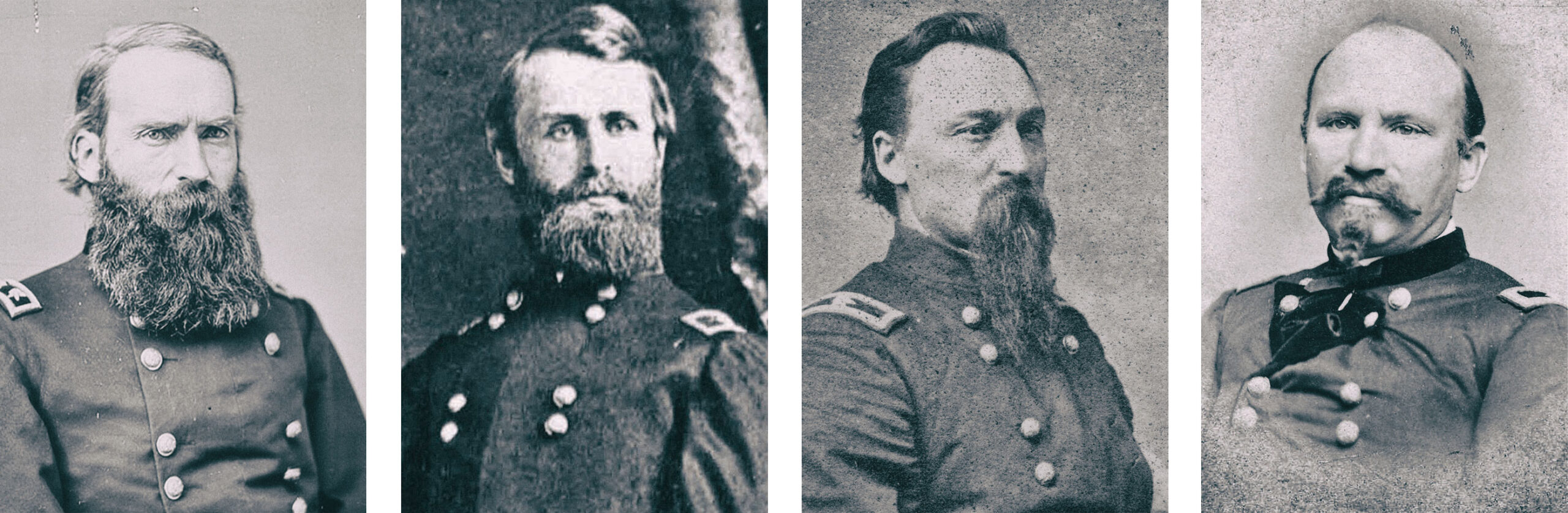 Library of Congress (Stanley); USAMHI (Cox); Tom Glass (Wagner); Missouri Historical Society, St. Louis (Conrad)
Left to right: Major General David S. Stanley, Brigadier General Jacob D. Cox, Brigadier General George D. Wagner, and Colonel Joseph Conrad.
According to Wagner: “These dispositions were scarcely completed when Colonel Opdycke sent a messenger to report to me that the enemy was moving two heavy columns of infantry against our line, one by each of the two pikes leading into Franklin, one column turning my left flank.”23 Furthermore, as recorded in the IV Corps headquarters journal, “1 p.m., General Wagner reports two large columns of the enemy’s infantry approaching Colonel Opdycke’s position, moving on the Lewisburg and Columbia pikes, and, as he cannot successfully resist the forces, he is moving his division within the bridge-head constructed by General Cox around the town of Franklin.”24
Wagner, based on his understanding of Stanley’s earlier instructions, believed that his orders were, first, to hold Winstead and Breezy Hills as long as tenable, and second, to block the Confederates’ advance, short of allowing his command to be overwhelmed. He intended to carry out those orders, namely, by alternately deploying and passing his brigades in a continuation of his earlier rearguard action. There is no indication that Wagner initially intended to make a permanent stand beyond the main Federal line.25 He could see that by 2 p.m. at least two Confederate corps were bearing down on the Federal position at Franklin. With the arrival of Hood’s army, Wagner’s tired brigades could not hope to hold back such overwhelming numbers if pressed, nor could they maintain possession of the two hills. Faced with these developments, Wagner could have interpreted his orders more expansively while remaining true to Stanley’s 11:30 a.m. instructions. He could have withdrawn to the relative safety of the Federal line, reported to Stanley or Cox, and participated in the impending battle based on new orders. Wagner’s three brigades would have added tremendously to Federal power within the defensive line.
Wagner instead chose to implement a phased withdrawal to delay the impending Confederate assault—a classic rearguard action. Should the Breezy Hill-Winstead Hill position become untenable, he had the chance to fall back and improvise a new and temporary defensive line somewhere between the hills and the town. This had the potential to buy the Federal army valuable time to continue its preparations, withdraw its remaining wagons over the river, and give the Confederates pause, possibly even disrupting the timing of any potential assault. If Hood’s approach was merely a demonstration, then nothing serious would be lost in the effort. This course of action would also fulfill Wagner’s ongoing responsibility to serve as the army’s rearguard, a role he had pursued with dogged determination since leaving Spring Hill the night before.
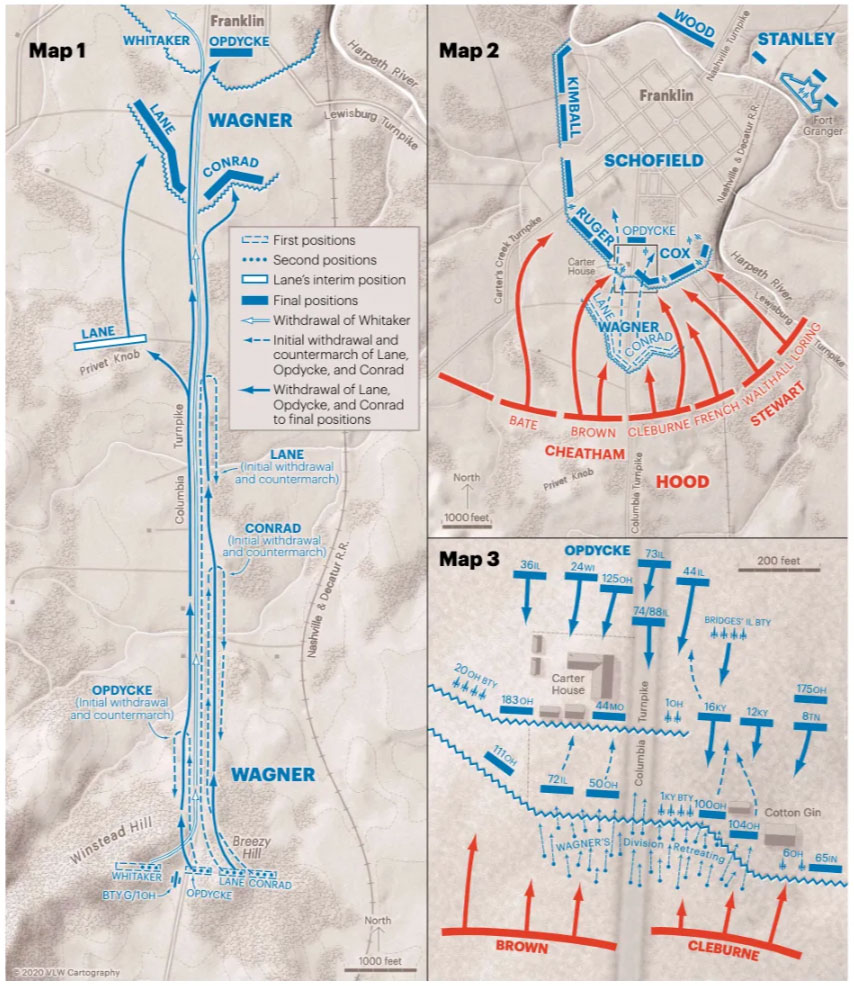 VLW Cartography
The Battle of Franklin: Franklin, Tennessee | November 30, 1864. Withdrawing toward Franklin on the morning of November 30, 1864, the rearguard of John M. Schofield’s Union force—commanded by George D. Wagner and consisting of the brigades of Walter C. Whitaker, John Q. Lane, Joseph Conrad, and Emerson Opdycke—withdrew from its positions on Winstead and Breezy hills only to be ordered to return, minus Whitaker (Map 1). Advancing Confederates soon pushed them back toward Franklin; Opdycke withdrew into town while Lane and Conrad eventually settled into a position south of the main Union line. The resulting battle saw Lane and Conrad driven back into Franklin (Map 2); a key advance by Opdycke would help turn back the Rebel breakthrough near the Carter House (Map 3).
When Opdycke’s message about the enemy’s proximity to Winstead Hill reached him, Wagner acted quickly. He reported:
I thereupon again withdrew my command and retired toward the main line of our troops, which surrounded the town, and sent an officer of my staff to notify General Stanley of my movement. I directed Colonel Lane’s brigade and a section of artillery to go into position on the hill [Privet Knob] to the right of the pike, about one mile north of Stevens’ [Winstead] Hill, where he remained skirmishing with the enemy till his right flank was about to be turned, when I directed him to leave a heavy line of skirmishers to hold the hill as long as possible, and to withdraw his brigade and go into position on the right of the Third Brigade, which had been formed on the left of the pike about 400 yards in advance of our main line, at the same time placing a section of artillery on the pike between these two brigades.26
Lane’s 2nd Brigade and the section from Battery G, 1st Ohio Light Artillery, deployed on Privet Knob, a stony hill 75 to 100 feet tall halfway between Winstead Hill and Franklin, to cover the other brigades’ withdrawal. Wagner then pushed Conrad’s 1st Brigade and Opdycke’s 3rd Brigade north up the road, bound for the main Franklin defenses. Before he reached the town, however, Wagner made another fateful decision: he ordered Conrad to post his brigade on open ground about a half mile in advance of and parallel to the main Federal line, rather than continue on into the main Federal works. Evidently Wagner wanted Conrad’s brigade to deploy and screen the withdrawal of Opdycke’s and Lane’s brigades in the same fashion as earlier—again, a textbook rearguard maneuver. There is no indication that Wagner planned for Conrad’s new line to be permanent; he gave Conrad no orders to entrench, and permitted the weary brigade to rest in place, awaiting Opdycke’s arrival as instructed earlier.27
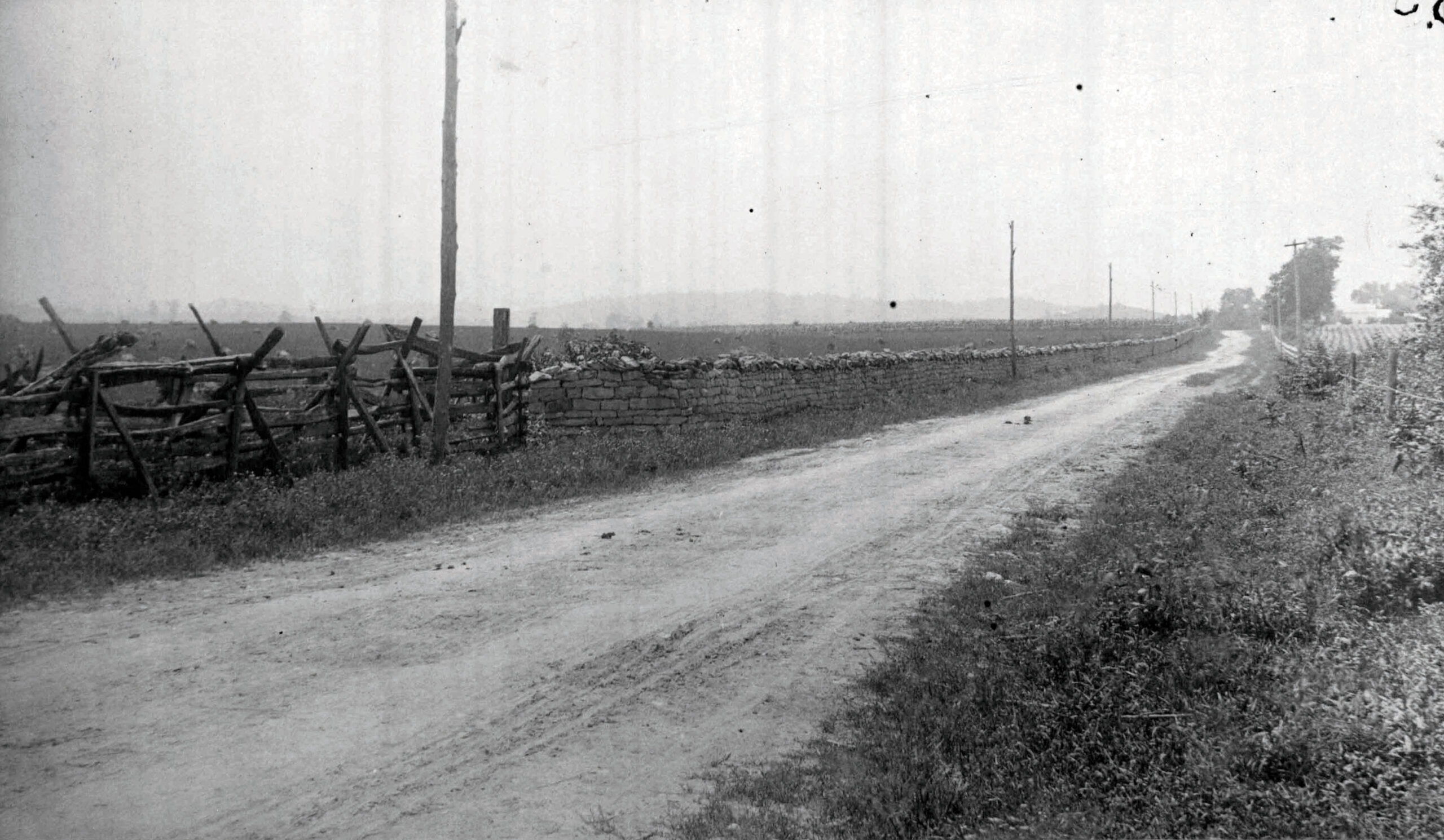 USMHI
USMHIIn the leadup to the Battle of Franklin, the Union rearguard marched back and forth along Columbia Turnpike (shown above in a postwar photo, with Winstead Hill in the distance) before withdrawing toward town.
Conrad was confused, and “sent word to the general commanding the division [Wagner] to ask him if it was expected that I should hold the line I was then on, but just as the staff officer was starting the general came up and gave me orders to hold the line as long as possible, and to have the sergeants to fix their bayonets and to keep the men to their places.”28 Conrad’s position afforded virtually no protection or defensive advantage; though the ground there rose and fell in gentle swells, it was a terribly exposed place to make a stand against the overwhelming numbers advancing upon him. Captain John Shellenberger, a company commander in the 64th Ohio Infantry of Conrad’s 2nd Brigade, said the order to halt and deploy in front of Franklin came to Wagner from Schofield, but there is no corroboration of that in the historical record. Wagner exercised his discretion in choosing this advance position, and it was a disastrous choice.29
By continuing his rearguard action of delaying, deploying, and alternately passing his brigades from one defensive pause to the next, Wagner had managed to place his division in an extremely vulnerable position in the face of imminent assault. When eventually Hood’s main attack unfolded, Wagner’s brigades, absent Opdycke, found themselves exposed, soon to be caught between armies.30
Opdycke’s later verdict on Wagner’s decision to stand and fight was scathing. “The first grand blunder and one that nearly cost us the day, was in leaving Wagner’s two brigades out to the front so long. Col’s Lane and Conrad the commanders of those two brigades assert that Wagner ordered them ‘to remain and fight as long as possible if the whole rebel army came against them, and then retire in good order to the rear of the main works.’ If W. gave such an order, he deserves to be hung. No order could be more foolish, wicked, or fatal, in their position.”31 As Conrad would describe it, Wagner may have reconsidered his orders to stand and fight, and even tried to change course at the last minute. “Just as the enemy got within good musket-range a staff officer of the general commanding the division [Wagner] rode up to me and said that the general ordered that if the enemy came on me too strong, and in such force as to overpower me, that I should retire my line to the rear,” Conrad reported. “[B]ut as the enemy was so close to me, and as one-half my men were recruits and drafted men, and knowing that if I then retired my lines my men would become very unsteady and confused, and perhaps panic-stricken, I concluded to fight the enemy on the line I then was [on]….”32
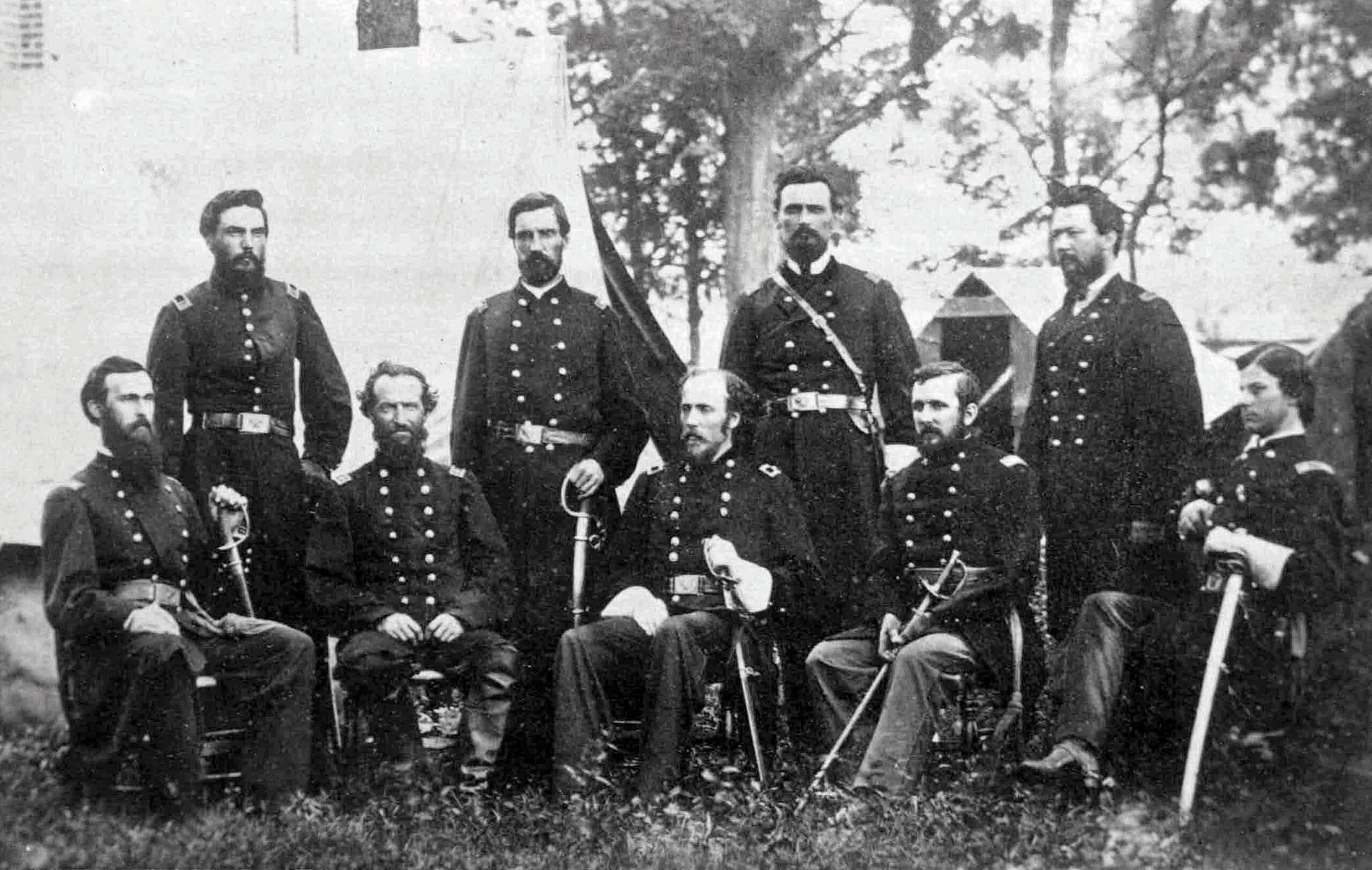 USMHI
USMHIEmerson Opdycke (seated center) and his brigade’s regimental commanders.
With Conrad in this precarious spot, Wagner next turned to the headstrong Opdycke, whose brigade had ridden up along Columbia Pike, and who fumed at the marching, countermarching, and what he saw as the mismanagement of the entire rearguard action. The relationship between them exploded in the open. Upon Opdycke’s approach, Wagner ordered the colonel to extend Conrad’s right, west of Columbia Pike. Lane’s 2nd Brigade, upon leaving Privet Knob, would fall in as well, probably on Conrad’s left, thus completing the advanced position as Wagner conceived it. Opdycke recognized the inadvisability of this deployment and “strenuously objected to this order.” In his opinion, which he voiced to Wagner in full view of his men, the division’s deployment “out on the open plain in front of the breastworks were in a good position to aid the enemy, and nobody else.” Opdycke added that his brigade, “while covering the rear of our retreating column, in line of battle, climbing over fences and passing through woods, thickets, and muddy cornfields … was entitled to a relief and an opportunity for rest and refreshment.”33
As the officers’ exchange grew more heated, Opdycke’s brigade, absent orders, kept marching along the pike and on past Wagner’s intended line. Wagner, who had earlier fallen from his horse and injured his leg, was already in a bad mood; Opdycke, not known for gentleness himself, had reached the limit of his patience.34 The men continued to dispute as they rode along the pike at the head of Opdycke’s column. Eventually they found themselves passing through the main Federal line at Franklin in a scene that must have amazed onlookers. “The ground there being fully occupied by other troops, they kept along until they came to the first clear space, about one hundred yards inside the breastworks,” Captain Shellenberger recalled. Captain Edward G. Whitesides of Wagner’s staff recounted in a postwar correspondence:
I was with Genl Wagoner [sic] when he met Genl Opdycke marching at the head of his brigade on the pike some distance beyond the point where the 2nd & 3rd Brigades had been placed in position. Wagoner directed Opdycke to prolong the line of the 3rd Brigade, Opdycke remonstrated, claiming his men had been up all night, and had no breakfast, and the position was untenable. The discussion was continued until the head of Opdyckes Column had passed in rear of the line, outside the works, Wagoner seemingly acquiescing in Opdyckes view of the matter, and without halting Opdycke moved on and placed his Command in position to rest and get breakfast at the first favorable place he could find inside the works.35
Sometime in the exchange, Wagner accused Opdycke of insubordination, but Opdycke refused to back down over what he no doubt considered his superior’s absurd orders. By the end of their debate, it was too late to order Opdycke’s brigade into line with Conrad. Wagner snapped at him, “Well, Opdycke, fight when and where you damn please. We all know you’ll fight.”36
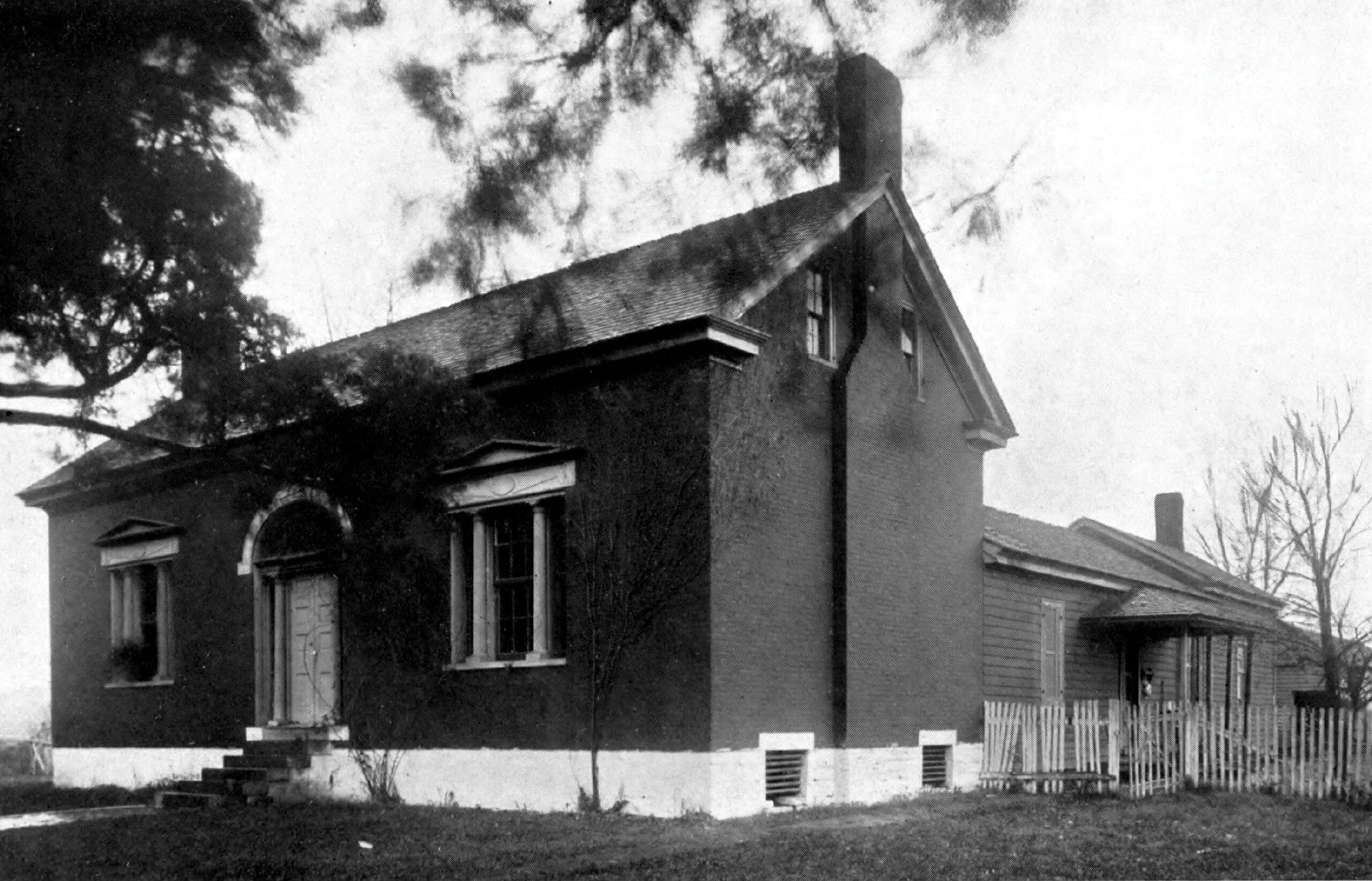 The Retreat from Pulaski to Nashville, Tenn. (1909)
The men of Emerson Opdycke’s brigade marched past the Carter House on Columbia Pike as they withdrew into Franklin. The subsequent fighting would swirl around the structure, which is pictured above in a postwar image.
Had Opdycke followed Wagner’s orders, he would not only have risked the well-being of his brigade, but would also have contributed to a command decision he judged incorrect. As Wagner’s subordinate, he was obliged to carry out orders to the best of his ability unless extraordinary circumstances indicated otherwise. An open act of insubordination in the face of the enemy could have had dire consequences for Opdycke’s career and reputation, as well as for the morale and discipline of the men in Wagner’s division. Still, relying on his own judgment and experience, the strong-willed colonel marched his men through the gap in the main Federal line on Columbia Pike.
As Opdycke led his men toward Franklin, he observed a vulnerability in the Federal defenses. With the need to keep Columbia Pike open until the last possible moment before a Confederate attack, Cox had prudently ordered that a gap remain in the line stretching across the road just south and east of the Carter House. The gap was guarded by a retrenchment, or a second line of works parallel to and behind the main Federal line, and covered by additional artillery. The retrenchment forced traffic on Columbia Pike to detour in a sharp turnout, slowing but not prohibiting the flow of wagons, animals, and men to the rear. However, that also offered assaulting Confederates a point at which to breach the Federal line. The retrenchment also left Wagner’s rearguard, still operating out in front of the defensive works, in jeopardy and without a clear line of retreat to safety. And it risked cutting off any remaining wagons, stragglers, or other latecomers still outside the perimeter and with the Confederate army on their heels.37 Noting this hazard, Opdycke marched his men until they reached a clear area about 200 yards behind the Carter House hill. There, at about 2:30 p.m., Opdycke ordered his men to stack arms, gather wood, and finally have coffee and breakfast while remaining in reserve. And, as noted earlier, Opdycke reported, “General Wagner was with me in person, and ordered me to fight when and where I thought I should be most needed without further orders…. I was familiar with the whole ground and knew that Carter’s hill was the key to it all.”38 Coincidentally, the 125th Ohio had garrisoned in Franklin earlier that year and Opdycke was indeed quite familiar with the town and its topography.
 Library of Congress
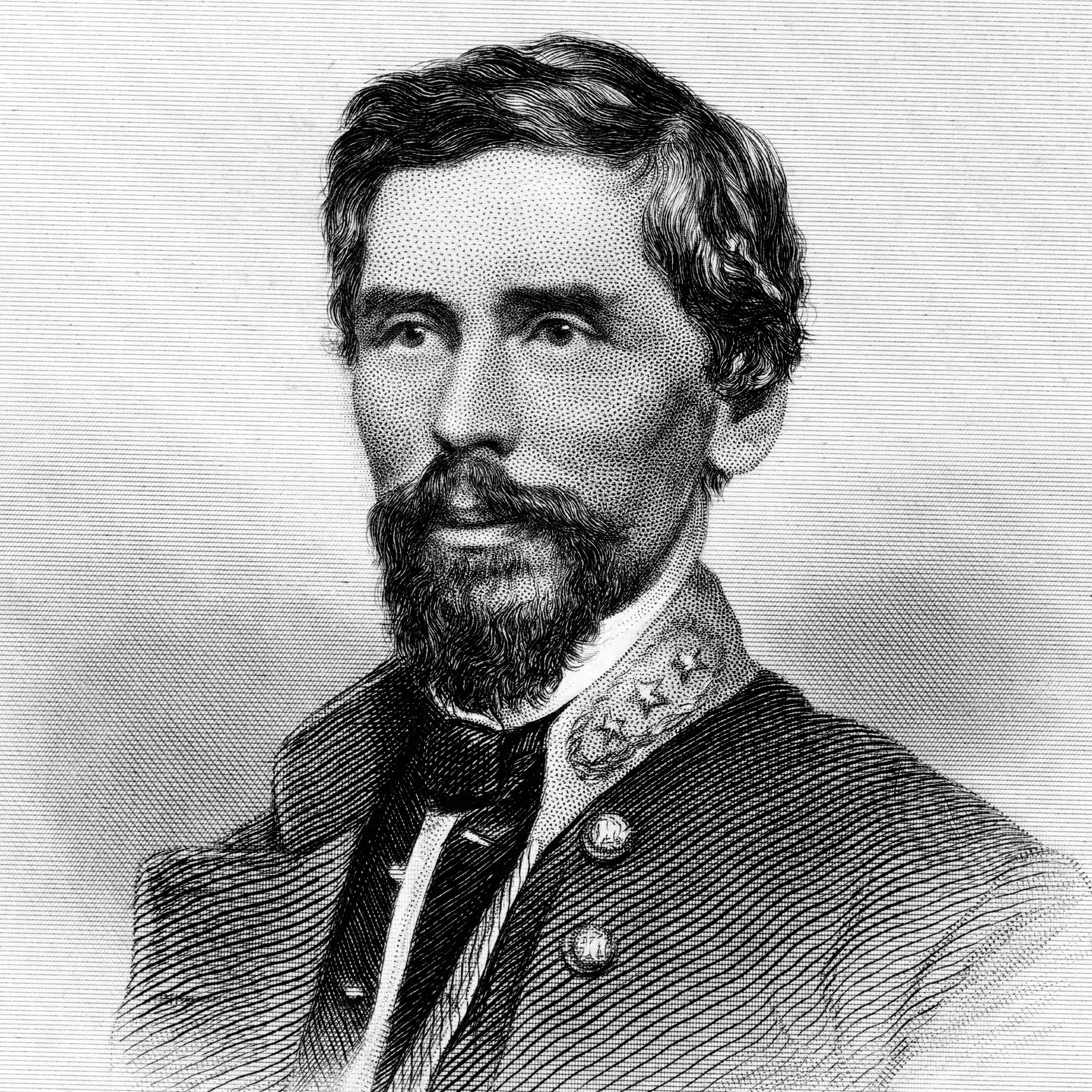
Major General Patrick R. Cleburne, whose division of Confederates helped breach the Union line near the Carter House.
Though Wagner came under harsh criticism for his actions that day, there was a certain logic to his reasoning. Rather than simply surrendering possession of the hills in front of Franklin and falling back to a safer position behind Federal lines, Wagner had authority to exercise discretion as a division commander and continue his blocking action from the previous night. As the army’s rearguard, he had primary responsibility for screening its withdrawal, buying time to prepare its defenses, and keeping Hood at arm’s length as long as possible. Should the Breezy Hill-Winstead Hill position become untenable, Wagner had time and space to fall back and improvise a new and temporary defensive line between the hills and the town. Doing so would spare the Federal army precious time to continue its preparations; a stiff resistance might also give the Confederates pause, possibly even disrupt the timing of an assault before nightfall. Cox believed the approaching Confederate columns that had provoked such anxiety all morning were merely a demonstration intended to distract the Federals from a more devious flanking maneuver. “It was evident that Hood was deploying,” Cox said, “but it might be only for the purpose of encamping in line of battle just beyond the range of projectiles, as he had done at Columbia before beginning his flanking movement.”39 A feint on Hood’s part would fit the pattern of previous days, while a frontal assault would be a deviation, at least for this campaign.
Cox, and probably Opdycke, believed Wagner would eventually withdraw his division into the works at Franklin before any potential Confederate assault. It is not certain that either man shared this assumption with Wagner, or whether Wagner agreed that he ought to maintain an advance position, or whether it should be temporary or permanent. Cox did leave it up to Wagner to choose his own course of action for the balance of his division, and thought that meant withdrawal to safety. Cox, in his postwar analysis of the battle, exonerated himself for not intervening in Wagner’s course of action, and maintained that Wagner’s passing of brigades “was one which any competent division commander handling a rear guard is presumed to be familiar with, and for which he should need neither instruction nor suggestion from his corps commander.”40 It is certain that Wagner and Cox were not on the same page that afternoon.
After their heated exchange, Wagner left Opdycke to his brigade and rode up the hill to the Carter House. Soon he was intercepted by a courier from Lane, still holding on at Privet Knob, who warned that he was about to be flanked by approaching Confederates. Wagner immediately sent Lane instructions to fall back with his artillery and join Conrad, and then rode out to the advance position.41 There he found that although Conrad had thrown out skirmishers, the brigade had not entrenched. Not having been instructed to do so, Conrad was under the impression his position was a temporary one. Then, at some point between 3 p.m. and 3:30 p.m., without consultation or confirmation from Stanley, Cox, or Schofield, Wagner decided to make the position permanent, knowing the Confederates would quite possibly make a grand assault on Franklin soon. As Conrad put it, “[G]eneral [Wagner] came up and gave me orders to hold the line as long as possible, and to have the sergeants to fix their bayonets and to keep the men to their places. I accordingly gave the same instructions to my regimental commanders, and believing an attack would soon be made on my line, I ordered my regimental commanders to build a line of works in front of their regiments, respectively. About 3.30 p.m., and as the men were very busily engaged in throwing up a work, the enemy, who had been forming his lines in front of my lines, commenced advancing on us.”42 Lane’s brigade soon began filing into place. Wagner’s window for changing his mind had closed; an orderly withdrawal was no longer realistic. With his dispositions made, Wagner rode back to the Carter House.43
As the Confederates drew near Conrad and Lane, the sound of musketry intensified from the front. Messengers from the advance position soon reported to Wagner that Conrad and Lane were about to be overwhelmed. A staff officer told Wagner, “The enemy are forming in heavy columns; we can see them distinctly in the open timber and all along our front,” to which Wagner retorted, “Stand there and fight them.” When a Cox staffer protested that Wagner’s “orders [were] not to stand, except against cavalry and skirmishers, but to fall back behind the main line if a general engagement is threatened,” Wagner apparently ignored him. Another officer, this time from Stanley’s staff, warned, “But Hood’s entire army is coming.” Wagner, leaning on a stick to help his injured leg, slammed the ground and stubbornly declared, “Never mind; fight them.” A third staff officer recalled Wagner saying, “Go back … and tell them to fight—fight like hell!”44
As Opdycke had feared, Wagner’s advance position could not withstand the weight of the Confederate attack. Soon the retreating men of Conrad’s and Lane’s shattered brigades began pouring into the main line of works, funneling through the retrenchment, mixing with the Federal defenders and, for a time, obstructing their fields of fire. The Confederates of Major General Patrick R. Cleburne’s and Major General John C. Brown’s divisions were right on their heels. “We go right after them, yelling like fury, and shooting at them at the same time,” said an officer of Cleburne’s command. “The Yanks [were] running for life and we for the fun of it, but the difference in the objects are so great that they out run us, but lose quite a number of their men before they get [away].”45 Confederate officers urged their men to follow the fleeing Federals into the works. To Wagner’s credit, he leaped into action. “Wagner by this time was on his horse riding backward and facing the disorganized brigades,” recalled Cox’s staffer, Captain Levi Scofield, “trying as hard as ever a man did to rally them. With terrible oaths he called them cowards, and shook his broken stick at them; but back they went to the town, and nothing could stop them.”46 As Cleburne’s and Brown’s troops crashed through Wagner’s advance position, the defenses beyond the Carter House and across Columbia Pike also began to crumble. Soon the main defensive line between the cotton gin and the Carter House was breached. Broken Federal regiments, screaming and dying men and horses, and shouting Confederates with fixed bayonets boiled through the yard.47
A crisis was at hand for the Federal army—and Opdycke was there. Once he had reached his reserve position behind the Carter House, he was prepared to comply with Cox’s request “to have my brigade ready.”48 When the firing south of town intensified, Opdycke ordered his men into formation, then began moving the 44th Illinois Infantry, the 73rd Illinois Infantry, and the consolidated 74th/88th Illinois Infantry east across Columbia Pike. The noise from the assault was so intense by then that officers had great difficulty getting their men to hear shouted orders. The stampede of stragglers contributed to the chaos, and in the confusion, Major Thomas W. Motherspaw, commanding the next-in-line 73rd Illinois Infantry, watched for an instant in disbelief as his men began advancing without orders. Confused, he simply shouted, “Go for them, Boys,” and mounted his horse. With a yell, the 73rd Illinois leveled their bayonets and rushed forward as Motherspaw cried, “Forward, 73d, to the works!” The 125th Ohio, Opdycke’s old outfit, saw the regiments across the pike advancing, and assumed that they must have failed to hear an order to move the entire brigade forward to the retrenchment. Opdycke was equally confused, watching in amazement as half of his brigade launched an impromptu assault. He sent an aide to try to halt Motherspaw’s advance, but it proved pointless; the 73rd Illinois was already on its way to join the other regiments headed for the breach.49
As Opdycke explained it later, a preternatural calm quickly settled over him. “[A]n awful pell mell stampede came rushing to the rear through my ranks. I was not surprised at it; I felt almost sure of some such disaster, when I knew those two brigades were to be left out there detached from other troops…. It was a fearful sight to see our whole front occupied by orderly masses of rebels, advancing rapidly, and in the most perfect order, following those two brigades right into the works.” With Confederates forming up in the yard of the house, the breakthrough spreading, and the entire line in danger of rupturing, Opdycke collected himself and sprang into action. His brigade was, perhaps, the last hope of stabilizing the hole in the line. “I had but just discovered that our troops had left the works, and the guns,” said Opdycke, “when I saw the enemy crossing the works and rushing on: then I knew that everything depended upon the courage and valor of the 1st Brigade, and gave my order ‘First Brigade forward to the works’ down came the bayonets, and with long huzza’s from the men, they rushed forward in one of the grandest charges I ever saw.”50 Along with regiments from Brigadier General James W. Reilly’s Third Division of the XXIII Corps, Opdycke’s entire brigade, along with the 125th Ohio and 24th Wisconsin, plunged into the maelstrom. Running up Carter House hill and passing the Lotz House, the brigade saw mayhem unfolding before them. Brutal hand-to-hand fighting broke out as the 1st Brigade columns enveloped the Carter House vicinity. A strong cedar fence proved an imposing barrier, nearly impervious to rifle butts or hands, but Opdycke’s men would not be deterred. Fighting with bayonets, swords, knives, hatchets, and even fists and feet, the melee was one of the most savage the men who survived it could remember. “Opdycke was in the thickest of it,” remembered Cox, “and, after he had emptied his revolver at the enemy, he used it clubbed till it was broken.”51 At one point Opdycke even snatched up a musket and used it as a cudgel. It was, according to a brigade sergeant, the “hardest, bloodiest, and most wicked fight I was ever in.”52
 Library of Congress
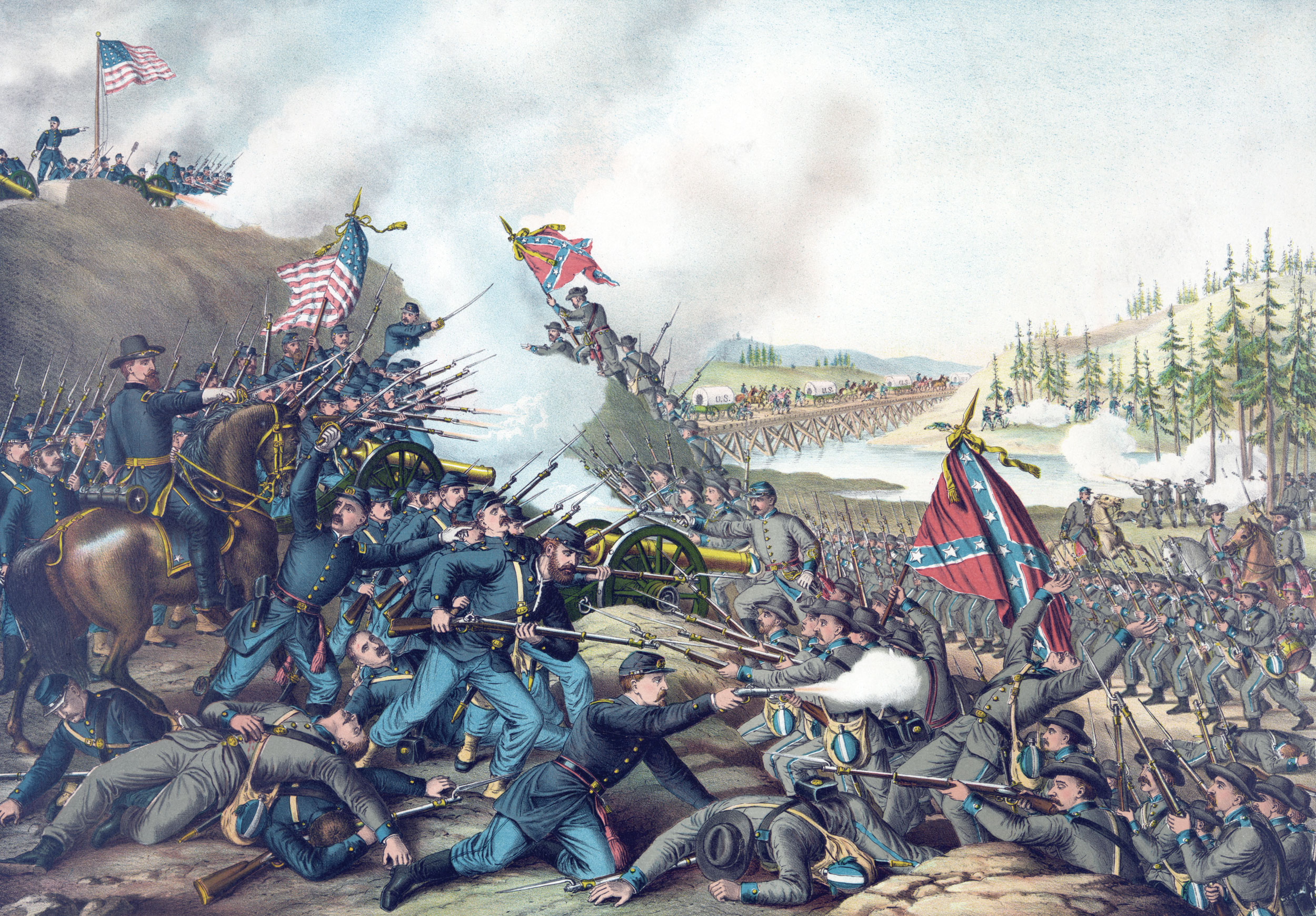
While historically inaccurate, Kurz & Allison’s chromolithograph of the Battle of Franklin does allude to the ferocity of the fighting, which was hand-to-hand in many places.
Opdycke’s timely charge occurred in echelon, a staggered formation designed to strike the enemy with successive blows, with the brigade commander arriving first, as “circumstances made this the best and most suitable of all possible movements, for the break commenced at the pike, and then kept increasing in both directions.” Opdycke’s intervention began to seal the breach at the Columbia Pike retrenchment first, then “the other regiments came up successively, just in the right time; as my last regiments occupied the works, the break was stopped.”53 Leading the 24th Wisconsin, 19-year old Major Arthur MacArthur, future father of a legendary World War II general, had his horse shot from under him in the Carter House yard. MacArthur picked himself up, brandished his sword, and kept going; he was then shot three times and sabered an enemy officer carrying a Confederate flag. The audacious Major Motherspaw was mortally wounded in the fight, along with a total of 18 officers and 217 enlisted men from Opdycke’s brigade.54
Similar scenes of desperate combat played out up and down the line, with men fighting and dying as the constant thunder of muskets, pistols, and artillery rattled the bullet-pocked walls of the Carter family homestead. Opdycke’s men loaded muskets and passed them forward, then reloaded and passed them again, pouring fire into the mass of bewildered Rebels now trapped within the Federal works between the retrenchment and the main line. A six-gun battery, abandoned by its crew in the initial confusion, was put back in action by men of the 125th Ohio, who fired canister into the throng of Confederates in the yard. Thick smoke descended like a heavy fog, and the noise was deafening. As one of Opdycke’s sergeants recalled, “I never see[n] enemy men fall so fast. Our boys shot them just like hogs.”55 The bloody episode took about 20 minutes, but it must have felt endless. “On came fresh columns of the enemy and the musketry exceeded anything I ever heard,” Opdycke told his wife days later. “[T]he powder smoke darkened the sunlight.” By the time Confederate survivors had scrambled back over the works, Opdycke’s charge had taken 394 prisoners, captured 10 battle flags, and most important, sealed the breach at its most vulnerable point. When Hood’s army finally ceased hurling itself at the defenses, Opdycke “stepped over the front of our works to see the effects. I never saw their dead and wounded lie so thickly piled one upon another; the carnage was awful.”56
 Library of Congress
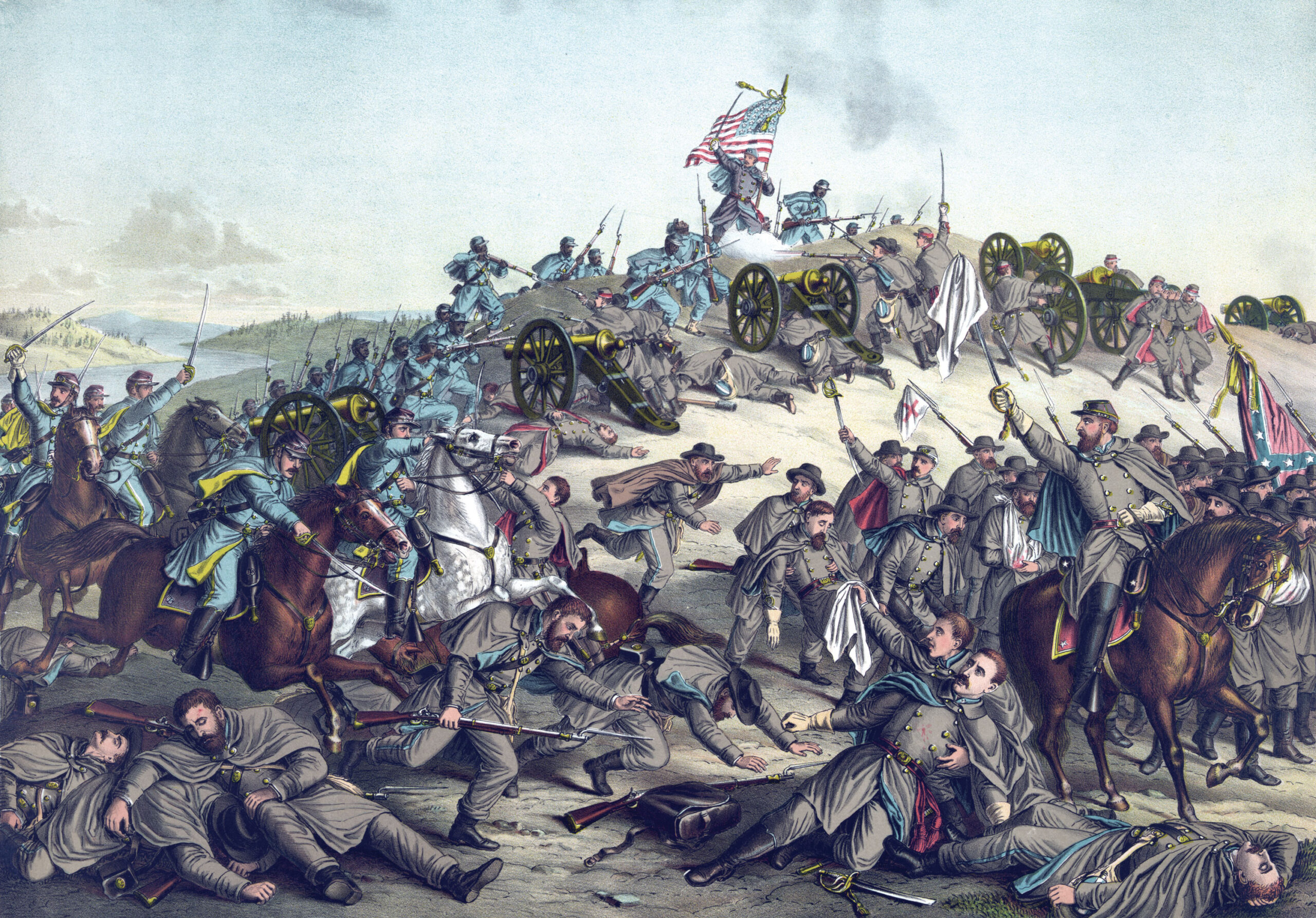
About two weeks after the fighting at Franklin, Union and Confederate forces clashed again at the Battle of Nashville (depicted above), where the combined armies of John M. Schofield and George H. Thomas handed John Bell Hood a decisive defeat—one that effectively destroyed the Army of Tennessee as a fighting force.
Though Wagner’s advanced position had been driven in and Hood’s Confederates managed to momentarily penetrate the Federal line near the Carter House, Opdycke’s quick thinking, initiative, and fearless combat leadership may have saved the Federal army at Franklin. As twilight fell and the slaughter continued, the overall momentum of Confederate attacks stalled all along the line. The battle then degenerated into disjointed assaults, close-range slugging matches, and hand-to-hand fighting near, and in some cases within, the Federal works. Elements of Lieutenant General Stephen D. Lee’s Confederate corps finally arrived from Spring Hill near twilight, with Lee himself appearing ahead of his columns at about 4 p.m., just as the first Confederate assault was getting underway. Lee’s lead division, commanded by Major General Edward “Allegheny” Johnson, struggled to deploy in the looming darkness. Though Johnson’s four brigades eventually pitched in, marching into battle by the light of torches, the Army of Tennessee’s disjointed attacks along the line failed to dislodge the Federals by nightfall. Schofield ordered an overnight withdrawal, and by dawn the Federals had escaped yet again. Two weeks later, Schofield’s and Thomas’ combined forces would rout Hood’s army at Nashville, a defeat that effectively destroyed the Army of Tennessee as a fighting force.57
Wagner’s career was ended when he asked to be relieved rather than face the shame of a formal inquiry.58 Certainly Opdycke thought he had saved the army at Franklin in spite of Wagner, and for the rest of his life fiercely maintained that the charge at the Carter House had come without any prompting or orders from above. Shellenberger agreed, saying, “[Opdycke’s] persistence in thus marching his brigade inside the breastworks about two hours later proved to be the salvation of our army.”59 “Every one here says ‘Col. Opdycke saved the day,’” Opdycke wrote to his wife after the battle. “Stanley, Wood, and Wagner assert it. Genl Cox said the same to me, and to day the immortal Thomas pressed my hand and repeated it…. Wood tells me that Thomas will send on a special demand for my immediate promotion and that Stanley has already written it.”60 Stanley, years later, attempted to claim credit for Opdycke’s charge: “In truth, my riding in front of Opdyke’s brigade just at the critical moment and calling on them to charge was a unique act, and was done by no other officer of my rank and command that I know of during the war,” he declared.61 Stanley was certainly nearby when Opdycke charged; he received a serious wound that eventually forced him to relinquish IV Corps command before the Battle of Nashville. Given Opdycke’s subsequent quest to claim primary credit, Stanley grew to dislike him intensely. “Opdyke was a very singular man; he had unusual bravery—I never saw a more daring man; but he had an ugly disposition that repelled all friendship and he was full of envy and utterly untruthful,” Stanley attested.62 Cox, who was in the fight at the Carter House, also claimed some honor for himself. Opdycke, for his part, chafed that Cox, Stanley, and others did not give him as much credit as he believed he was due in the days following the battle. “I presume when [Cox] wrote that official recomendation [sic] of me he thought I had received the order; but he then knew that I saved the army from a crushing defeat for he told me so the very night of the battle before we had been withdrawn from the works.” Opdycke, ever discontent, seethed at this denial of public accolades and the delayed promotion to brigadier general that he so longed for. “But the whole truth will appear some time: it seems to be universally known in this army and is common talk: not only that my charge saved the day but that I made it without orders from any one.”63
Andrew S. Bledsoe earned his doctorate in history from Rice University and is an associate professor of history at Lee University in Cleveland, Tennessee. He is the author of Citizen-Officers: The Union and Confederate Volunteer Junior Officer Corps in the American Civil War (2015) and co-editor (with Andrew F. Lang) of Upon the Fields of Battle: Essays on the Military History of America’s Civil War (2018). He is currently writing a pair of books on command decisions in the Franklin-Nashville Campaign.
Notes
1. Wiley Sword, The Confederacy’s Last Hurrah: Spring Hill, Franklin, & Nashville (Lawrence, 1992), 178; Eric A. Jacobson and Richard A. Rupp, For Cause & For Country: A Study of the Affair at Spring Hill and the Battle of Franklin (Franklin, 2008), 46.
2. Quoted in Sword, The Confederacy’s Last Hurrah, 178.
3. Jacob D. Cox, The Battle of Franklin (New York, 1897), 223.
4. Opdycke to his wife, Lucy, October 6, 1863, in Glenn V. Longacre and John E. Haas, eds., To Battle for God and the Right: The Civil War Letterbooks of Emerson Opdycke (Urbana and Chicago, 2003), 108.
5. Cox, The Battle of Franklin, 222–223; Sword, The Confederacy’s Last Hurrah, 170–171.
6. United States War Department, The War of the Rebellion: A Compilation of the Official Records 129 vols. (Washington, 1880–1901), Vol. 45, pt. 1, 113, 230, 268, 275, 277, 331 (hereafter cited as OR; all references are to volume 45, part 1 unless otherwise noted).
7. Cox, The Battle of Franklin, 37.
8. Jacobson and Rupp, For Cause & For Country, 199–207.
9. Osage orange is also called “horse-apple” or “bodark,” the latter derived from the species’ alternative name, “bois d’arc.” Richard L. Wynia, “Plant fact sheet: Osage orange, Maclura pomifera (Rafin.)” U.S. Department of Agriculture, Natural Resources Conservation Service, 2011 (plants.usda.gov/factsheet/pdf/fs_mapo.pdf), retrieved May 1, 2020.
10. Cox, The Battle of Franklin, 57.
11. OR, 432; Jacobson and Rupp, For Cause & For Country, 211-213.
12. OR, 231.
13. Cox, The Battle of Franklin, 65.
14. OR, 231.
15. Ibid., 1174.
16. Sword, The Confederacy’s Last Hurrah, 170.
17. Cox, The Battle of Franklin, 72-73.
18. OR, 231.
19. Sword, The Confederacy’s Last Hurrah, 172.
20. OR, 240.
21. Ibid., 149.
22. Opdycke to Lucy Opdycke, Dec. 2, 1864, To Battle for God and the Right, 249.
23. OR, 231.
24. Ibid., 149
25. Cox, The Battle of Franklin, 74.
26. OR, 231.
27. OR, 1174; Sword, The Confederacy’s Last Hurrah, 173.
28. OR, 270.
29. OR, 231, 270; Shellenberger, Confederate Veteran Vol. 36, 380; Jacobson and Rupp, For Cause & For Country, 228. Shellenberger maintains that Conrad’s position was 470 yards in front of the main Federal line. Shellenberger, The Battle of Franklin, 12.
30. Jacobson and Rupp, For Cause & For Country, 417.
31. Opdycke to his wife, December 13, 1864, To Battle for God and the Right, 257.
32. OR, 270.
33. Shellenberger, Confederate Veteran Vol. 36, 380-381.
34. Opdycke himself readily acknowledged his tendency to lose control of his emotions, a few weeks earlier confessing to Colonel Luther P. Bradley, “[a] gentleman of so fortunate temperament such as yourself may not sympathize with one whose temper is not less fortunately governed.” Opdycke to Bradley, November 8, 1864, in To Battle for God and the Right, xxvii.
35. Edward G. Whitesides to John K. Shellenberger, October 27, 1890, Shellenberger Correspondence, Library of Congress, Washington, D.C.
36. Shellenberger, Confederate Veteran 36, 381.
37. OR, 395; Jacobson and Rupp, For Cause & For Country, 211-212.
38. OR, 240.
39. Cox, The Battle of Franklin, 91.
40. Ibid., 74.
41. OR, 256.
42. Ibid., 270.
43. Rumors that Wagner “kept bracing himself on whisky” and “was plainly drunk” during the battle were hotly debated by veterans after the war, but there is no conclusive contemporary evidence of Wagner’s inebriation. The National Tribune, December 27, 1894; Sword, The Confederacy’s Last Hurrah, 176, 190.
44. Levi T. Scofield, The Retreat from Pulaski to Nashville, Tenn. (Cleveland, 1909), 32-33; Cox, The Battle of Franklin, 337.
45. Norman D. Brown, ed., One of Cleburne’s Command: The Civil War Reminiscences and Diary of Capt. Samuel T. Foster (Austin, 1980), 147.
46. Scofield, The Retreat from Pulaski to Nashville, Tenn., 37. Opdycke later told his wife, “Wagner was releived [sic] of the division and Brig Gen. [W.L.] Elliot assigned to it. W. feels deeply cut and I almost pity him.” Opdycke to his wife, December 6, 1864, To Battle for God and the Right, 253; Cox, The Battle of Franklin, 229–230.
47. Cox, The Battle of Franklin, 42
48. OR, 240; Cox, The Battle of Franklin, 95-96; Opdycke to his wife, December 13, 1864, To Battle for God and the Right, 256.
49. 73rd Illinois, A History of the Seventy-Third Regiment of Illinois Infantry Volunteers (Springfield, 1890), 433-434, 444.
50. Opdycke to his wife, December 13, 1864, To Battle for God and the Right, 256.
51. Cox, The Battle of Franklin, 99.
52. 73rd Illinois, A History of the Seventy-Third Regiment of Illinois Infantry, 449-450.
53. Opdycke to his wife, December 13, 1864, To Battle for God and the Right, 256.
54. Jacobson and Rupp, For Cause & For Country, 322-323; Charles T. Clark, Opdycke Tigers (Columbus, 1895), 353.
55. Quoted in Sword, The Confederacy’s Last Hurrah, 205.
56. OR, 241; Opdycke to his wife, December 2, 1864, To Battle for God and the Right, 250.
57. OR, 687.
58. OR, Vol. 45, pt. 2, 21, 117, 146; Cox, The Battle of Franklin, 224.
59. Confederate Veteran, Vol. 36, 381.
60. Opdycke to his wife, December 2, 1864, To Battle for God and the Right, 250.
61. Cox, The Battle of Franklin, 100.
62. D.S. Stanley, Personal Memoirs of Maj. Gen. D.S. Stanley, U.S.A. (Cambridge, MA, 1917), 212-213.
63. Opdycke to his wife, January 16, 1865, To Battle for God and the Right, 272. Opdycke partially blamed the situation on Grant and his perceived bias against the Army of the Cumberland. “Were it in any other army those appointments would have been made at once by telegram but Grant evidently holds a grudge against the Army of the Cumberland (probably for saving him at Pittsburgh Landing) and hardly a promotion has been made in it since his elevation to the Supreme Command.” Opdycke to his wife, January 11, 1865, To Battle for God and the Right, 271.