 University of Southern California, on behalf of the USC Special Collections
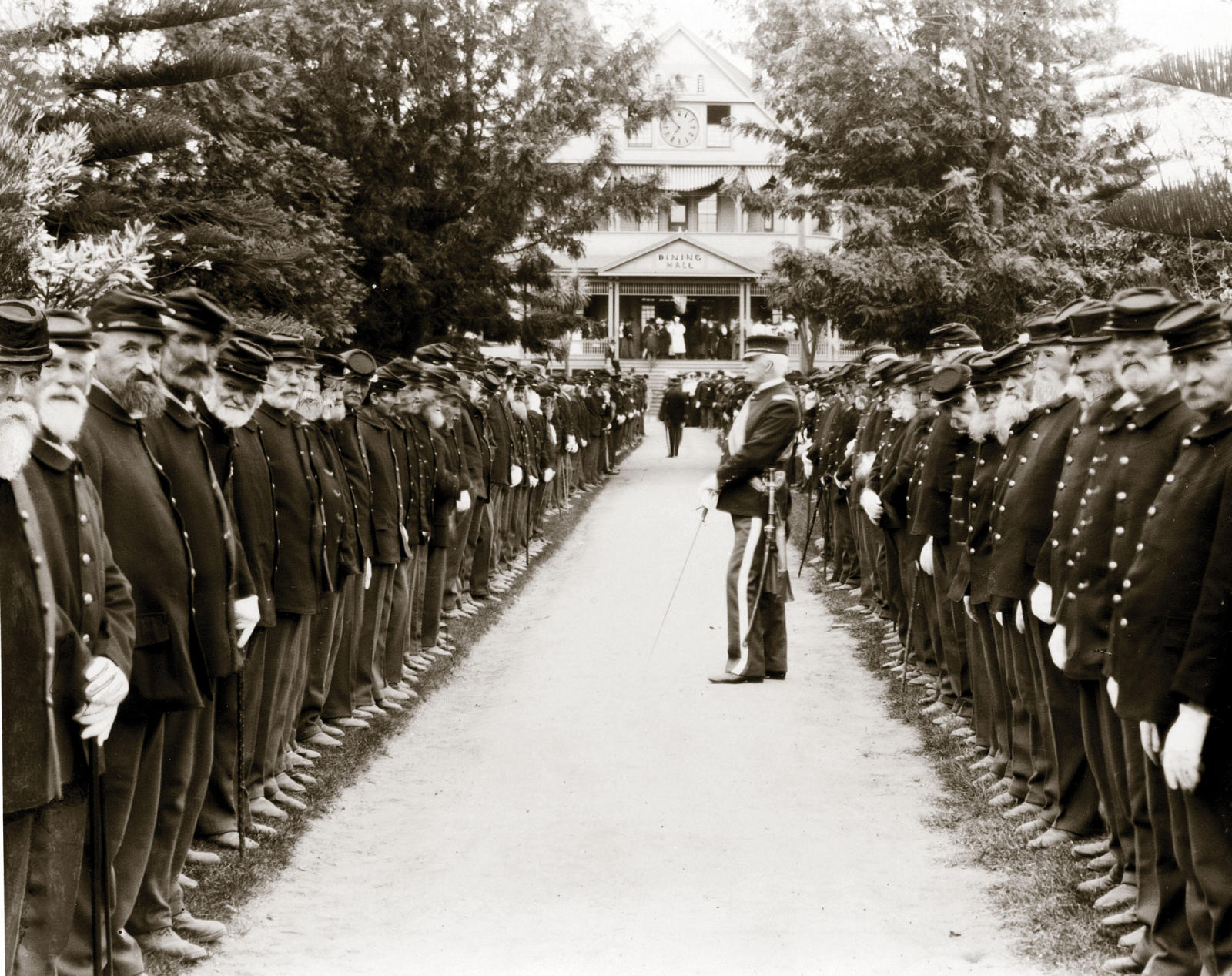
Union veterans assemble for a Memorial Day review at the Santa Monica Soldiers’ Home, circa 1905.
The old soldiers who lived in Benzonia, Michigan, “were men set apart,” according to Bruce Catton, who would become one of the village’s most famous native sons and a celebrated historian of the Civil War. “On formal occasions they wore blue uniforms with brass buttons and black campaign hats.” By the time Catton knew them, just before the First World War, most had long gray beards, which helped them project “an unassuming natural dignity.” They were “pillars … of the community; the keepers of its patriotic traditions, the living embodiment, so to speak, of what it most deeply believed about the nation’s greatness and high destiny.” Catton and the other young boys who saw them march on Memorial Day—the “pleasantest” holiday of the year, he believed—”looked at these men in blue, existing in pensioned security, honored and respected by all, moving past the mounded graves with their little flags and their heaps of lilacs, and we were in awe of them.” The “terrible names out of the history books—Gettysburg, Shiloh, Stone’s River, Cold Harbor—came alive through these men. They had been there…and now they stood by the G.A.R. monument in the cemetery and listened to the orations and the prayers and the patriotic songs, and to watch them was to be deeply moved.”1
Most of Catton’s contemporaries, not to mention the two generations that preceded them, felt the same way, at least on occasions like Memorial Day and the Fourth of July. Old soldiers wearing uniforms designed for the Grand Army of the Republic (the largest organization of Union veterans), marching down city streets, and saluting their dead comrades in town cemeteries must have felt as though they were vital parts of the communities in which they lived. During the 1880s and 1890s, monuments to veterans were, of course, raised in town squares and cemeteries and other public places throughout the North, while baseball teams in at least two Illinois towns drew their names from the men living in local soldiers’ homes. The ballclub in Quincy—home of the state veterans’ home—was known as the “Old Soldiers,” while the Danville nine honored residents of the local branch of the National Home by calling themselves the “Veterans.”
 American Heritage Center, University of Wyoming
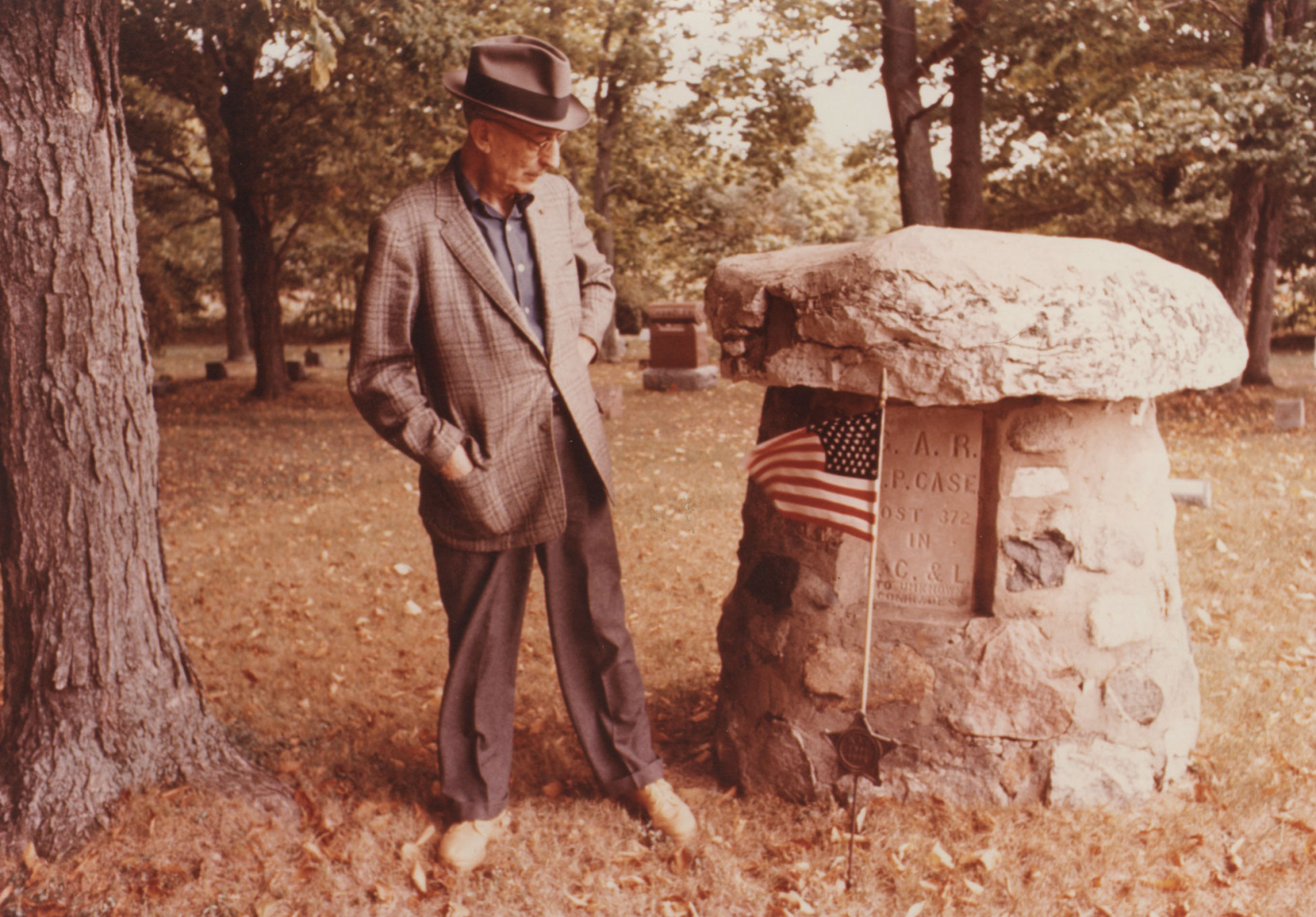
Benzonia native Bruce Catton stands beside the town’s GAR monument, where as a younger man he watched local Civil War veterans gather to commemorate their service on Memorial Day.
This should not be surprising, since military service was the most common denominator of northern men living during the Gilded Age. Forty-one percent of all northern white men born between 1822 and 1845 served in the Union army, and the numbers soared to 60 percent for those born between 1837 and 1845 and to over 80 percent for those born in 1843 and who turned 18 in the war’s first year.
Integrating also went the other way, as veterans incorporated the civilian members of the communities in which they lived into veterans’ activities, too. Grand Army of the Republic encampments, for instance, always featured an evening of stories and army food (beans, coffee, hardtack) to which families and friends were invited. By the 1880s, the state and national encampments drew at least as many civilians as veterans. One of the largest annual meetings, the Ex-Union Soldiers’ Inter-State Reunion in Baxter Springs, Kansas, attracted 50,000 veterans and non-veterans to a permanent “camp” of more than 100 acres that featured a number of buildings, a large amphitheater, running water and electricity, an electric launch for excursions on Spring River, and convenient railroad connections. Organizers offered free tents, wood, straw, and fire to veterans and widows. Local musical groups performed, nationally known speakers gave talks, and “half a mile of sideshows, restaurants, fakers, peanut roasters, juice racks, hot tamales, cider mills, lunch joints, Jew stores, cigar spindles, shooting galleries, knife racks, red lemonade, fortune tellers, faith healers, witch doctors, and a thousand other interesting, instructive and amusing features” appeared “to please the old and the young.” In addition, there were a carnival midway and a couple of dozen “shows, museums, exhibitions, vaudevilles, and spectacular sensations.” Obviously, much of this had nothing to do with veterans or with commemorating the war, yet the carnival-like atmosphere did encourage a certain connection between citizens and veterans that both no doubt appreciated.2
In dozens of towns and cities throughout the North, state and federal homes provided places for veterans and civilians to meet and to commemorate the sacrifices the former had made to save the Union. A case in point was the Northwestern Branch of the federally funded National Home for Disabled Volunteer Soldiers in Milwaukee. As many as 60,000 tourists visited each year, but the event that brought out the biggest crowds was Independence Day. By the 1870s the Home grounds, located about a half-hour buggy’s ride west of the city limits, had become the official site for the town’s celebration. The festivities included concerts by the Home band, military parades by the inmates, dances, hundreds of Chinese lanterns encircling the largest of the grounds’ four small lakes, and “picturesque and grand” illuminations scattered through the trees. Inmates and visitors competed in wheelbarrow and sack races, chased greased pigs, and played a mysterious game called “cutting down turkey.” A local newspaper described the 1879 event, attended by at least 15,000 Milwaukeeans, in detail: special trains unloaded their “human freight bedecked in gay dresses and black broadcloth” and “hundreds of wagons and omnibuses” wound out of the city toward the north entrance of the Home. “Flags fluttered from every tree,” the miniature lake sported small boats decorated for the occasion, and the grounds “fairly foamed with sight-seers”—some dressed in red, white, and blue—”like a choppy sea.” A 38-gun salute marked high noon, after which the Home band “struck up dancing music” for hundreds of couples swirling around the pavilion “at an American pace.” As afternoon gave way to evening, revelers sang patriotic and camp songs.”3
 Benzie Area Historical Museum
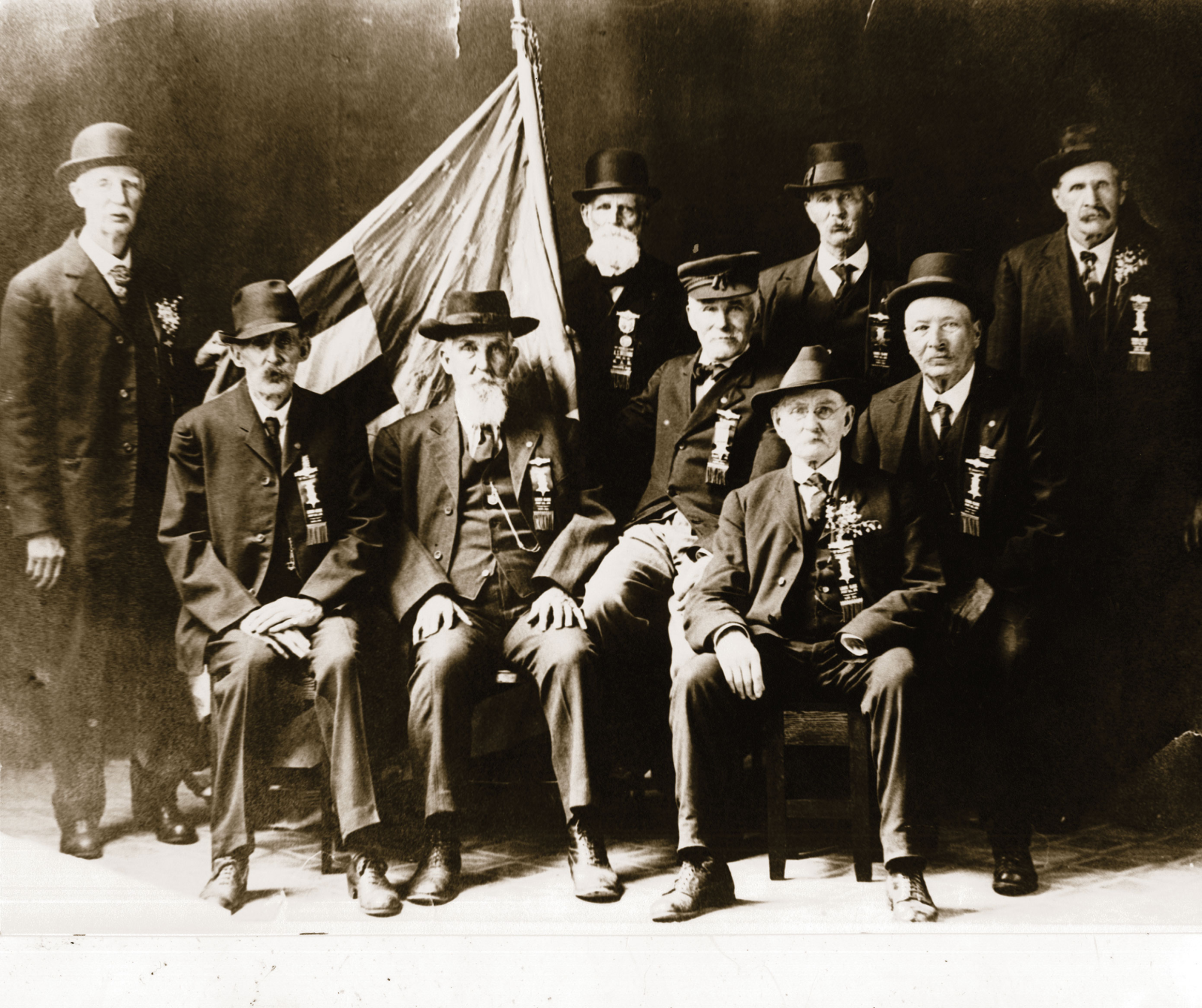
Civil War veterans (circa 1910) gather to commemorate their service on Memorial Day.
Soldiers’ homes and veterans’ organizations often invited civilians to attend plays, concerts, lectures, and other entertainments. The GAR post in Worcester, Massachusetts, not-quite-annually produced a patriotic tearjerker called “The Drummer Boy,” a Civil War melodrama loosely based on the story of John Clem. Presented in five acts, 13 scenes, and four tableaux, the play featured a large cast of caricatures and plot lines that would later appear in any number of books and movies: a northern and a southern family whose ancient friendship is destroyed by the onset of war, an enthusiastic youngster determined to become a drummer boy, a kind “old darky,” a brave Yankee spy, a sinister South Carolinian, a mother who sacrificed three sons to the Union cause, a suffering prisoner at Andersonville, and a cruel guard at the infamous prison. Veterans, family members, and non-veterans would often play the same roles for years at a time. The play typically ran for a week; over the years, it raised $30,000 for the post.4
Civilians clearly relished these interactions with veterans. The applause and respect and gratitude with which the latter were showered on their special days must have made them believe that their years of marching and fighting—of having been “touched with fire,” as one of their compatriots famously declared in 1884—had been worth it. They were reminders of those dark days when the Union was threatened, living monuments to the nation’s victory and to individual sacrifice. They had merged comfortably and honorably back into the bosoms of their communities.5
But not all old soldiers returned so easily. In fact, there were many Union veterans who helped Bruce Catton, the man and historian, see them in ways that would never have occurred to Bruce Catton the boy: “There was something fairly pathetic about these lonely old men who lived so completely in the past that they had come to see the war of their youth as a kind of lost golden age.” As Catton came to understand, although on the surface the old soldiers were considered valued members of the communities in which they lived, their relationship was not without ambiguity, and, during those long months between patriotic holidays, many veterans did not fit at all well into their towns. Scarred by both physical and emotional disabilities, separated from their non-veteran neighbors by a sense of having fallen behind their civilian neighbors in the boom times that followed the war, and resentful of the dwindling importance and influence that Catton intuited, many were isolated from the communities in which they lived.6
Most Americans would not have admitted any of this, but the evidence was certainly there. A short story published in Harper’s Weekly just after the war, despite its happy ending, showed how disabled veterans—men suffering from lost limbs, chronic disease, indeterminate but debilitating weariness, and countless other maladies—could feel isolated and alone. Captain Harry Ash was a well-to-do New Englander who had lost his left arm. Against his better judgment, he agrees to summer in Newport, and immediately feels as though his old life had vanished. The women had deserted pre-war propriety; they now talked loudly and boldly raced buggies along the beach. He is crushed when he spies his old flame, Edna Ackland, driving one of those speeding buggies. Harry withdraws from the company of these fast women and the young non-veterans who cluster around them. When he finally brings himself to confront Edna, he laments that his lost arm had left him “sadly altered—neither useful nor ornamental to the world.” Edna quickly assures Harry that she had not really changed, but had learned to drive only after learning of his amputation and because she hoped to resume the beach-side drives they had enjoyed during their pre-war courtship. Harry and Edna marry and live happily ever after, of course, but Harry’s poignant sadness and isolation was no doubt shared by many other maimed and sick veterans who did not come home to their own devoted Ednas.7
Indeed, a veterans’ newspaper called the Soldier’s Friend suggested a few years after the war that the sound of scratchy hand organs played by desperate one-armed veterans on the streets of New York was so common that, when a child asked about the source of the music being played down the block, an adult could say, “Only a soldier grinding an organ.”8
Veterans’ sadness could turn to despair and anger. In the early 1880s, a resident of a federal soldiers’ home testified before a congressional committee that the men with whom he lived “are all dissatisfied, every one of them…. We are not comfortable. We are unhappy. I would venture to say—in fact, I know it to be the case—that this petty persecution has caused men to commit suicide. I know this to be a fact, because I know my own feelings, and I can judge others by those. Often I wish I was in the penitentiary; that I was hanged or dead, or in some other place.” This unhappy old soldier was speaking about alleged mistreatment of veterans by thoughtless administrators, but his words described many thousands of other men who did not get the chance to tell their congressmen of their travails.9
 Library of Congress
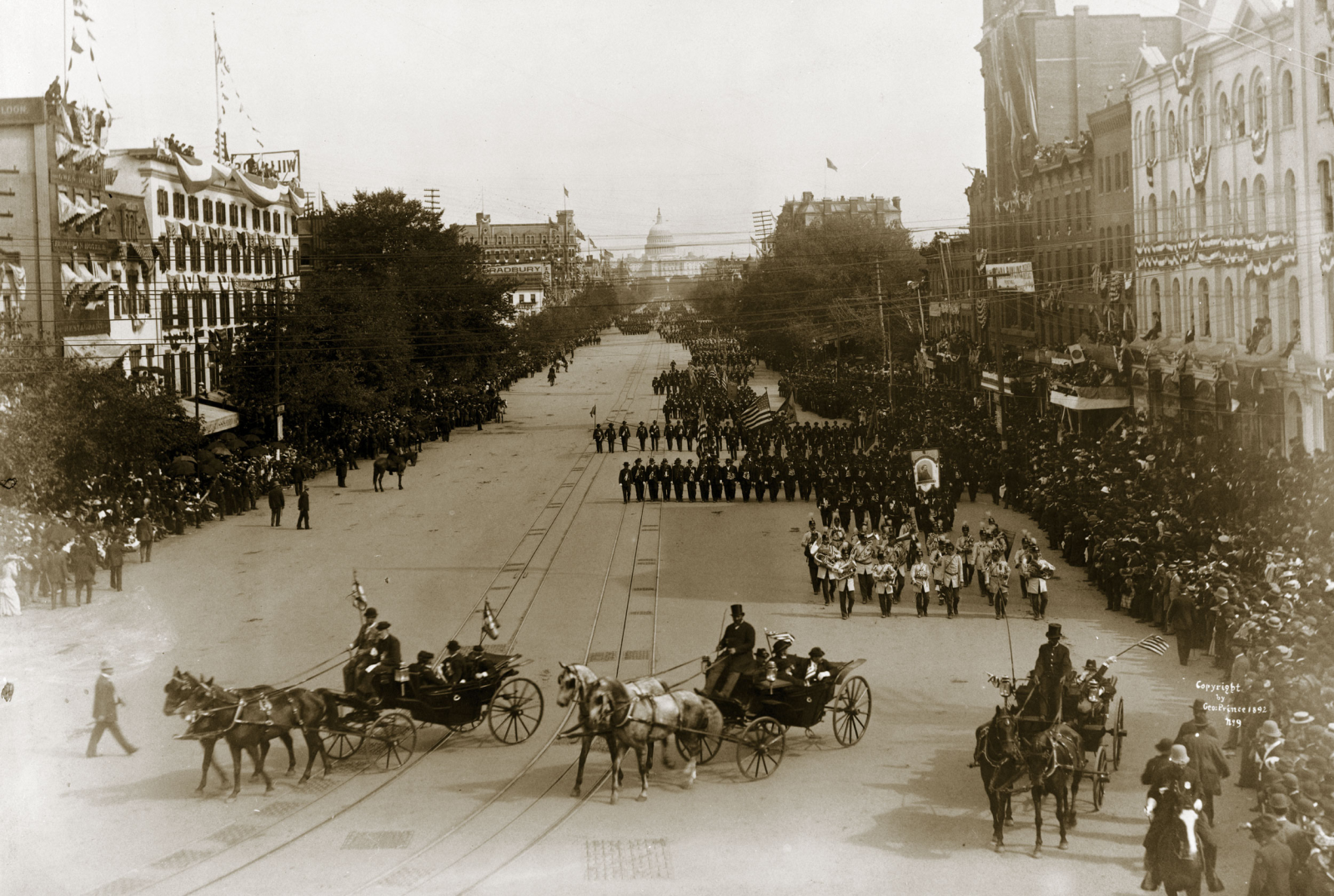
Crowds line the streets of Washington, D.C., to view the GAR parade during the organization’s 26th Annual Encampment, September 20, 1892.
The disaffection and bitterness—exasperated by pain and loneliness—led to a profound sense of isolation among some veterans. One symptom was a reliance on alcohol, which someone who knew veterans very well called “that great resource of veterans.”10 Indeed, every town or city with a soldiers’ home had a neighborhood or street known for cheap bars and even brothels frequented by the veterans. Outside the soldiers’ home near Leavenworth was a tiny village of only 30 one-story frame houses called Klondike; at least two-thirds were “whisky saloons, gambling houses, or dens of the grossest immorality”—at least according to a disapproving reformer. The equivalent row of dives and bars near the Togus, Maine, branch of the National Home for Disabled Volunteer Soldiers (NHDVS) straggled down a road called “Hayseed Avenue.” Outside the Central Branch of the NHDVS in Dayton, the vast collection of bars and brothels were simply called the “west side.” By the 1890s, over 30 clustered near the northern and southern entrances of the Northwestern Branch in Milwaukee, with 17 crowded into a two-block stretch of National Avenue that came to be called “The Line.” Some had catchy names like “Lincoln,” “Sheridan,” and “Sherman.” One resident veteran wrote disapprovingly to his son that it was “filled with old Soldiers from morning to night,” while a Kansan complained that the Klondike drew “vile women and men” to “prey on these men, to drug them, thug them, and rob them.”11
John Bettelon, the mayor of Dayton, testified in 1884 that the bars and saloons then springing up on the West Side were “as thick … as the hair on a man’s head,” and because most were beyond the city limits, there was nothing the authorities could do about them. He agreed with a questioner’s statement that the saloon keepers “lay for the men and undertake to inveigle them into their places.” The owners of these “‘dives’ and saloons” could not make a living without the old soldiers: “If the soldier has any money they are certain to go for their share of it, and they go for it in any way they can get it.” Prostitutes also plied their trade on the west side, which was notorious for robberies and other crimes.12
 Library of Congress
The campus of the Soldiers’ Home at Leavenworth, Kansas, outside of which were located a number of popular saloons and gambling houses.
In addition to the crime and disorder brought to cities by businesses catering to the baser desires of old soldiers, the prevalence of such behavior affected how civilians saw all soldiers, further isolating them from the larger community. An 1883 Milwaukee Sentinel article highlighted one problem with the public perception of the inmates, who “If we are correctly informed … are too much in the habit of over-indulgence in drink. If they are frequently seen intoxicated in the city, they will surely create the impression that rather strict discipline is needed at the Home,” and they will lose the support of the citizenry. “Every man of them who gets drunk brings disrepute upon associates,” demonstrating to the public “that the inmates of the Home are a hard lot, and to cause people to discredit reports that they are too severely dealt with.”13
The extent to which old soldiers earned reputations as drinkers and abusers of other drugs—opium addiction, in fact, was often called the “soldier’s disease” in Gilded Age America—was the extent to which they became increasingly out of step with the rest of society. As the temperance movement gained steam in the 1870s and 1880s—it would culminate in the constitutional prohibition of the manufacture and sale of alcohol in 1919—the emerging form of acceptable behavior by men did not include the hard-living, hard-partying lifestyle that was often criticized but nevertheless accepted by antebellum Americans.
This kind of isolation was, ironically, lived out in very public ways. Yet untold thousands of Union veterans endured their pain and disaffection alone and in self-imposed isolation, despite being surrounded by hundreds of other old soldiers.
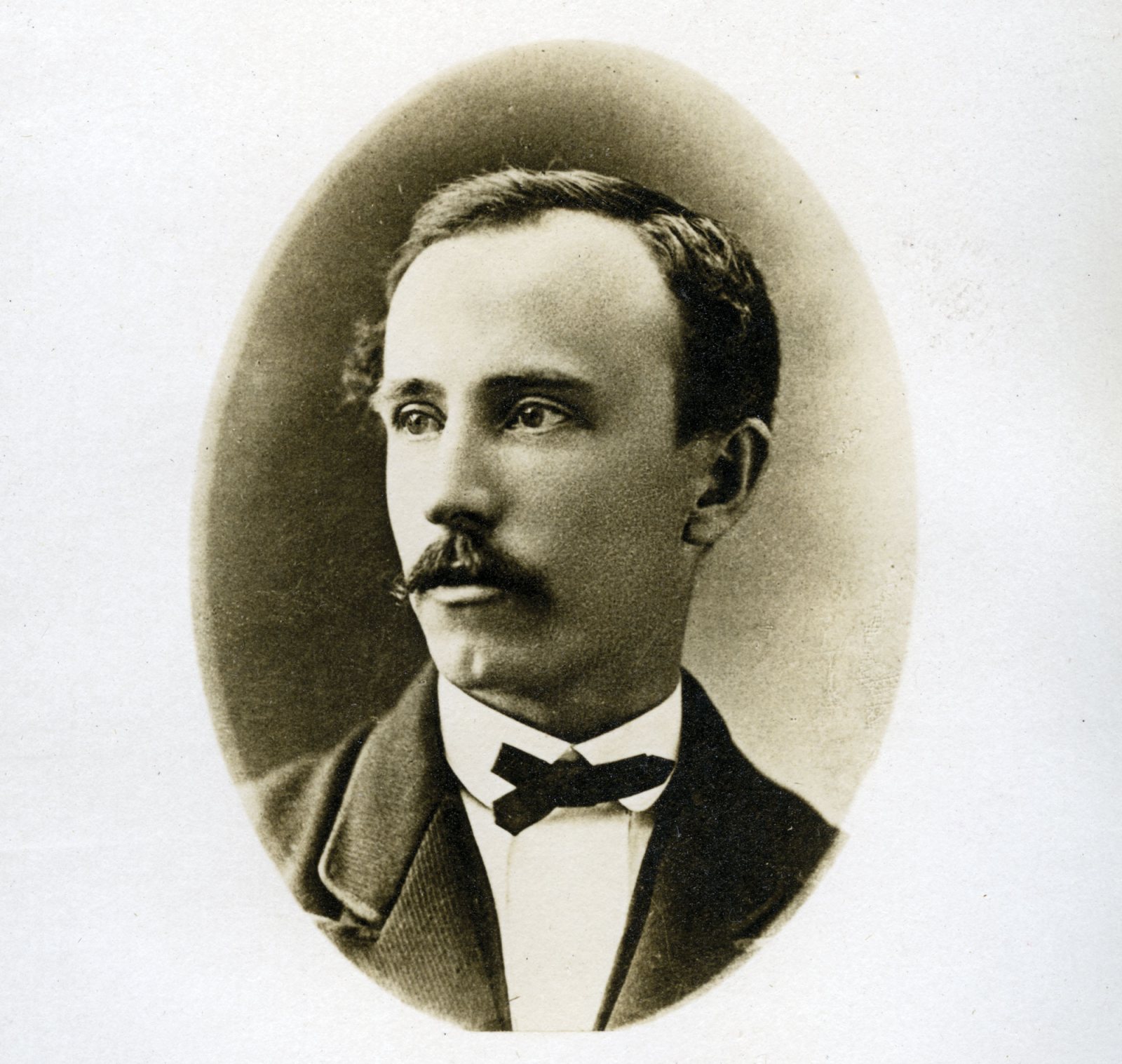
“Who enters here leaves pride and self-respect behind,” wrote Henry Clinton Parkhurst, who lived for short periods in state soldiers’ homes in Iowa, California, and New York and in federal homes in Norfolk and Dayton. Parkhurst had fought as a teenager with the 16th Iowa Infantry, spending several months at the Andersonville and Florence prison camps. Although he claimed that he had entered soldiers’ homes for personal convenience—they supported him while he finished up several writing projects—his peripatetic life, arch personality, and intolerance suggest that he might not have had many options. “Some men enter soldier-homes from necessity or for temporary convenience,” he wrote in August 1910, when he was a resident of the California soldiers’ home at Napam while “others find in a soldier-home a luxurious hotel—a glorious place where they can eat, sleep, play cards, blather by the hour, and wear out clothes, without having to work.” He spent his time writing random but determinedly bitter thoughts about his fellow veterans.14
 State Historical Society of Iowa, Iowa City, H. Clinton Parkhurst Collection
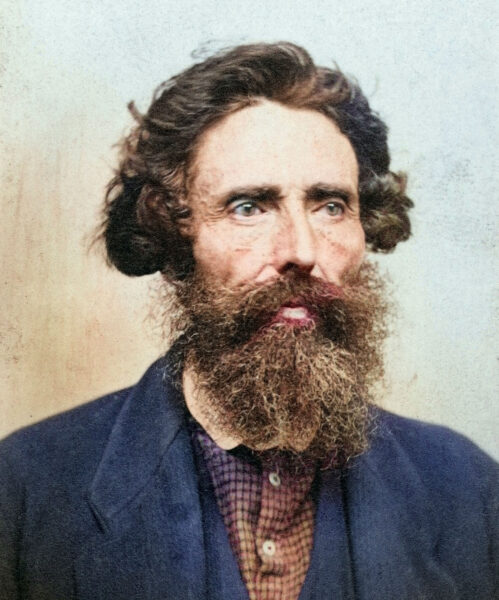
Henry Clinton Parkhurst
Parkhurst’s colorful and rage-filled outbursts in these apparently unpublished essay fragments made it clear that he hated soldiers’ homes and the old soldiers who lived in them. “It is not worth while complaining about soldiers’ homes or scribbling much about them,” Parkhurst wrote. “They are all alike—rotten with graft—and a man of intelligence who is forced to live in one of them is to be pitied.” He complained about the negligence and corruption of home officials and the short-timers, militiamen, and out and out frauds who comprised most of the residents, whom he referred to as “cattle” and “human hogs.” He claimed that out of any 100, “not more than four or five would be worth talking to [for] five minutes. They are the utter scum of civil and military life—the ignorant refuse of jails, almshouses, insane asylums and penitentiaries.” Murderers paroled from San Quentin ended up in the Home. No more than one-third had actually performed “useful military or naval service.” Deserters from the regular army and navy, paupers who had worn out their welcome in county institutions, and “weak-minded persons” were “immediately shipped to the Veterans’ Home,” with only “the flimsiest pretence of military or naval service.”15
Parkhurst’s contempt stemmed from his own hard service and from his personal belief that “no man should be maintained for life at public expense, and be allowed a pension besides, unless he could prove he had served six months at the front, in actual warfare.” Everyone else should be sent to the poorhouse. “To establish expensive places and call them ‘soldier homes,’ and then make them dumping grounds for the filth and scum of society—for professional paupers, army deserters, insane persons, tramps, jail-birds, men fresh from penitentiaries, men who have no shred or sign of military papers, or who have found or bought the papers of dead soldiers—to do this is a sham and hypocrisy and an imposition on tax-payers.” Moreover, inmates and administrators had committed and continued to commit a veritable catalog of crime and frauds. Men who had never been in the army purchased or stole discharge papers to prove their eligibility for admission; residents were appointed to positions of authority through bribery and blackmail; the sergeants who were in charge of the barracks and other areas at the Homes had, in civilian life, been pimps, gamblers, and brawlers. Murders were not uncommon but were almost always covered by Home officials, with the perpetrators hustled off to the insane asylum for veterans in Washington. After they were “cured”—usually in about a year—they were sent to another home, “to probably kill another man there.” “There are many good fellows, and many good soldiers in every soldier-home,” he reluctantly admitted, “but two-thirds of the inmates are low, dirty, lazy, ignorant, drunken, obscene European paupers and ‘dead beats’ whom it is a burlesque to call ‘old soldiers.’ … They are simply human scum, and when the last one of them is dead, it will be a blessing to the country.”16 In a rare moment of self-reflection, Parkhurst conceded that, at a certain level, he was also a “fakir like these other dead beats”; he was not physically disabled and chose to live in the homes from time to time to save money while working on articles and books. But he refused to feel guilty.
“As long as government money hangs on limbs of trees, I feel justified in helping myself to some of it. I did the country real service in dangerous times.”17
While Parkhurst’s anger and self-loathing isolated him not only from his fellow veterans, but also from his fellow Americans, Charles Morehouse spent the last year of his life isolated by pain and self-pity. Apparently dying of a bladder ailment—for which he received excruciating treatments every few weeks—he also suffered from extreme loneliness and exhibited an absolute distaste for all elements of life at the Minnesota State Home in St. Paul. “God only knows the sad and sorry memory of the following days and nights,” he wrote in a pocket calendar for 1912, the last year of his life. “Oh the pain and the hunger for the touch of a home hand and the sound of a home voice,” he mourned on the first day at the Home.18
 Library of Congress
Many veterans found soldiers’ homes uncomfortable places to live. Above: Inmates of the Soldiers’ Home in Marion, Indiana, pack the facility’s sizable dining hall during mealtime.
Morehouse hated the food, frequently recording his longing for a “home dinner” (meaning a dinner at home with his family), and felt nothing but contempt for his fellow residents, whom he considered noisy, rude, and uncouth. The visits from family members and friends seemed only to make his unhappiness and loneliness worse. Just after his son, daughter, and one or two other women visited during his second week in the Home, he reported that their departure left him “sad because it all seemed so different from what I expected—almost as [though] they do not care for me and my broken heart.”19
Morehouse was dying of a painful and embarrassing ailment, which obviously affected his response to the pitiful situation in which he found himself. He separated himself from the other veterans, refusing to refer by name to more than one or two of the others; he constantly tried to escape the confines of the Home grounds; he hated the surgeon, only barely tolerated the chaplain, and found the quartermaster “not congenial.” He described the Home in terms of what it wasn’t: his own home. He almost seemed to relish describing the “vile suppers” of weak soup and poor meat served to the old men.20
It did not help that the other men seemed to like it at the Home. Morehouse’s descriptions make it sound like a nonstop party. The other men constantly played a phonograph or some other musical device: “the music box grinds on for those who can stand it.” Early in the spring he ventured to the “Falls.” (The Minnesota Soldiers’ Home was perched on a bluff over the Mississippi near Minnehaha Falls.) He complained that the “usual amount of booze was consumed which just makes me sick.” Morehouse hated it when other the old soldiers tried to be friendly; when “Old Andy” and “Bill” “jogged up” one evening, “they with others made the night hideous.” He complained on another occasion that the “gang are keeping up the jamboree.” It was even worse when the weather warmed up; a nice Sunday afternoon in June was ruined when “in the park there was a perfect mob which set me wild.”21
Morehouse criticized everything: The noise from the nearby streetcars kept him awake, there was nothing in the Home store that he wanted to buy, he found the amateur variety shows put on by the Ladies Relief Corps to be unimpressive, and he failed to be inspired by the pedestrian sermons and poor music at church services.
By mid-April, Morehouse’s entries are dominated by day-by-day reports of the “exquisite” pain caused by his worsening bladder ailment and the excruciating and invasive treatments—called the “washing out process”—conducted every week or two by the Home surgeon or the slightly gentler doctor-friend in St. Paul (who also had the advantage of having a pretty receptionist that Morehouse talked to every visit). The pain kept him awake virtually every night, but the treatments, even when performed in town by the kindly Dr. Hedcook, were so frightful that he frequently reported not having the nerve to go to them.22
Months before he reached the final medical crisis that eventually took his life, Morehouse remarked that “this isn’t life—it is just agony” and complained sadly that “I try hard to get the Christ Spirit into my mind and actions every day—but there is but little encouragement in this place. God help us all.” After an entry describing a long, cold weekend late in April that ended with him “roost[ing] on the ragged edge of despair and pain,” his diary entries got shorter and less frequent. A few months before his death in November, he wrote, “I never thought there could be such an unreal life as this is. Where, oh where are the sweet sincerities of the olden days?”23
 Library of Congress
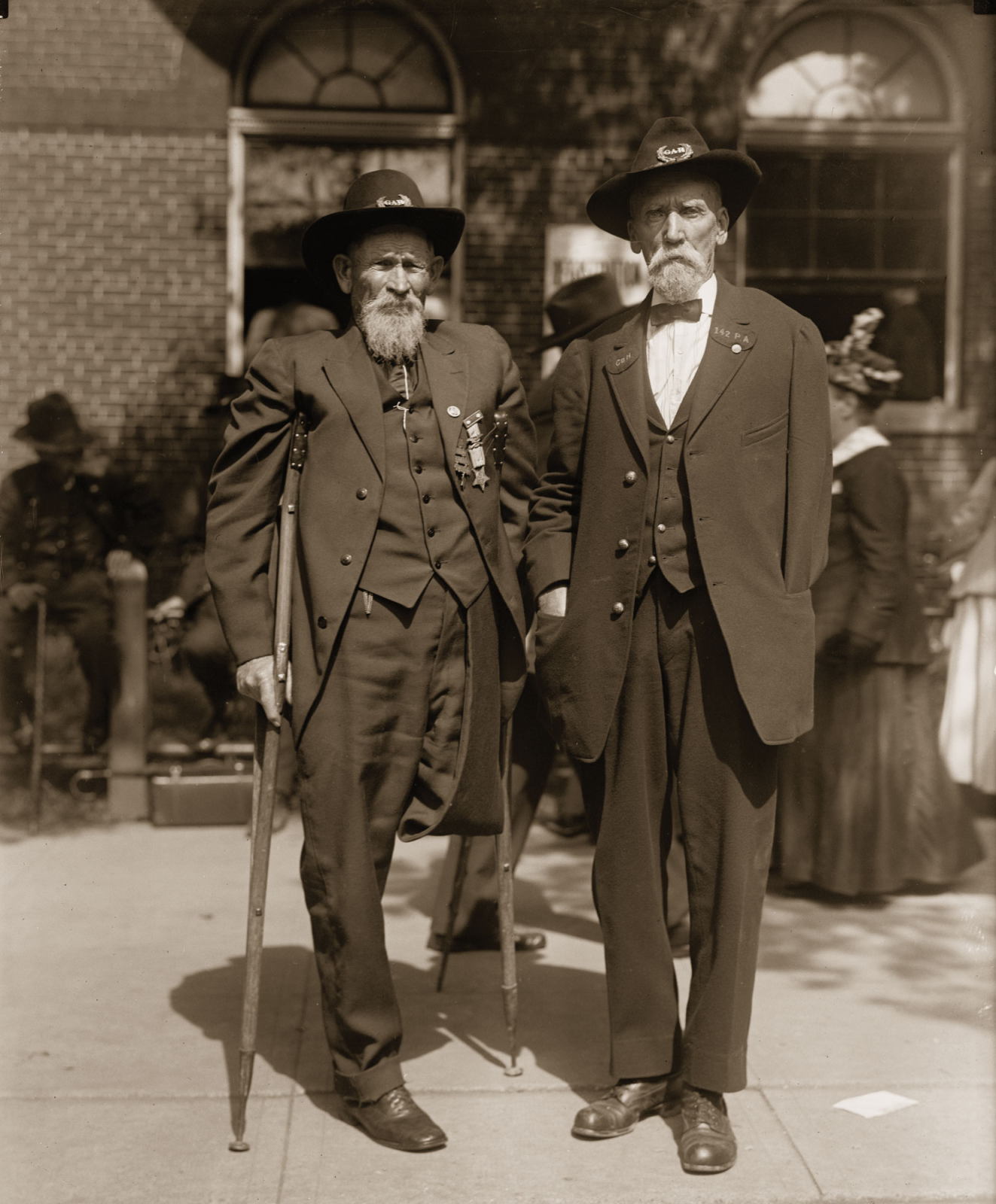
Two old soldiers photographed at a GAR event in 1915.
Parkhurst and Morehouse were hardly the sort of old soldiers that most Americans thought about on Memorial Day. Perhaps, in the two or three decades after the war, before pain and bitterness drove them into self-imposed isolation, they, too, had marched with their comrades, shared beans and hardtack at GAR campfires, and appreciated the thoughts and admiration of the public. For those men who were not wracked by pain or internal demons, the separateness may have occurred gradually and less dramatically, as both the veterans and their families and neighbors realized that there was an important part of their lives that they simply could not share. The writer Sherwood Anderson’s father had served in the Union army and was an enthusiastic participant in the GAR. He was also an amateur entertainer with a small reputation for telling usually fictional accounts of his own war service and singing (badly) war songs at ad hoc variety shows or veterans’ gatherings. In his memoir the younger Anderson harshly recounts the senior Anderson’s irresponsibility and emotional absence, yet he also reveals some empathy by admitting that his father’s desperate “veteranizing” reflected his realization that “he would never be a hero again” and that “all the rest of his life” would never measure up to those few years of his youth. The war, “that universal, passionate, death-spitting thing,” would have to last a lifetime. Perhaps, although veterans could not, obviously, forget that experience, even if they wanted to, it more easily faded from non-veterans’ consciousness.24
A correspondent to a veterans’ newspaper a few years after the war recognized the irony that Americans could express their gratitude so easily and publicly to the dead with speeches and ceremonies and by strewing their graves with flowers, while they ignored the needy veterans who still lived all around them. Remembering the dead was well and good—they had, after all, made the ultimate sacrifice for the Union—but “let us also remember him who shared in the soldier’s toils, and lived, perhaps to eke out a life of hardship bereft of limb, perhaps of sight, and, maybe, reason…. [I]n heaven’s name, while we remember the dead let us not forget the living.” During the decades after the Civil War, many old soldiers no doubt thought that Americans had, indeed, forgotten them.25
James Marten is professor and chair of the history department at Marquette University and current president of the Society of Civil War Historians. He has written or edited more than a dozen books, including Sing Not War: The Lives of Union & Confederate Veterans in Gilded Age America (University of North Carolina Press, 2011). He is currently working on a biography of James “Corporal” Tanner, a Civil War veteran, double-amputee, and famed GAR speaker.
Notes
1. Bruce Catton, Waiting for the Morning Train: An American Boyhood (Detroit, 1987), 189-190.
2. Nathaniel Thompson Allison, ed., History of Cherokee County Kansas and Its Representative Citizens (Chicago, 1904), n. p.
3. Milwaukee Sentinel, July 5, 1879.
4. Franklin D. Tappan, The Passing of the Grand Army of the Republic (Worcester, MA, 1939), 99-111.
5. Mark DeWolfe Howe, comp., The Occasional Speeches of Justice Oliver Wendell Holmes (Cambridge, MA, 1962), 15.
6. Catton, Waiting for the Morning Train, 190.
7. “The Empty Sleeve at Newport; or, Why Edna Ackland Learned to Drive,” Harper’s Weekly, August 26, 1865, 534.
8. Soldier’s Friend, September 19, 1868.
9. Investigation of the National home for Disabled Volunteer Soldiers, H. R. Report No. 2676, 48th Congress, 2d Sess., 264.
10. The Investigation of the Soldiers’ Home at Leavenworth, Kans., 32; Joshua L. Baily, “Prohibition in Kansas,” Friends’ Intelligencer 57 (March 3, 1900): 174; George J. Crosby to George Crosby, March 1, 1903, George J. Crosby and Family Papers, Minnesota Historical Society, St. Paul, Minnesota.
11. Investigation of the National home for Disabled Volunteer Soldiers, 118.
12. Milwaukee Sentinel, September 28, 1883.
13. Henry Clinton Parkhurst, “The Soldier Home Troops,” n. p. unpublished manuscript, Box 5 scrapbook, Henry Clinton Parkhurst Collection, State Historical Society of Iowa, Iowa City, Iowa.
14. Ibid., n.p.
15. “The Bug House,” n. p., unpublished manuscript, Box 5 scrapbook, Henry Clinton Parkhurst Collection.
16. Ibid., n. p.
17. March 13, 1912, Charles Morehouse Diary, Minnesota Historical Society.
18. April 3, 1912, Ibid.
19. March 28-29, 1912, Ibid.
20. March 27 and 5, April 8 and 12, and June 9, 1912, Ibid.
21. April 9, 1912, Ibid.
22. April 11 and 14 and June 8, 1912, Ibid.
23. Quoted in Gerald F. Linderman, Embattled Courage: The Experience of Combat in the American Civil War (New York, 1987), 280.
24. Soldier’s Friend, July 25, 1868.
Related topics: veterans