 Library of Congress
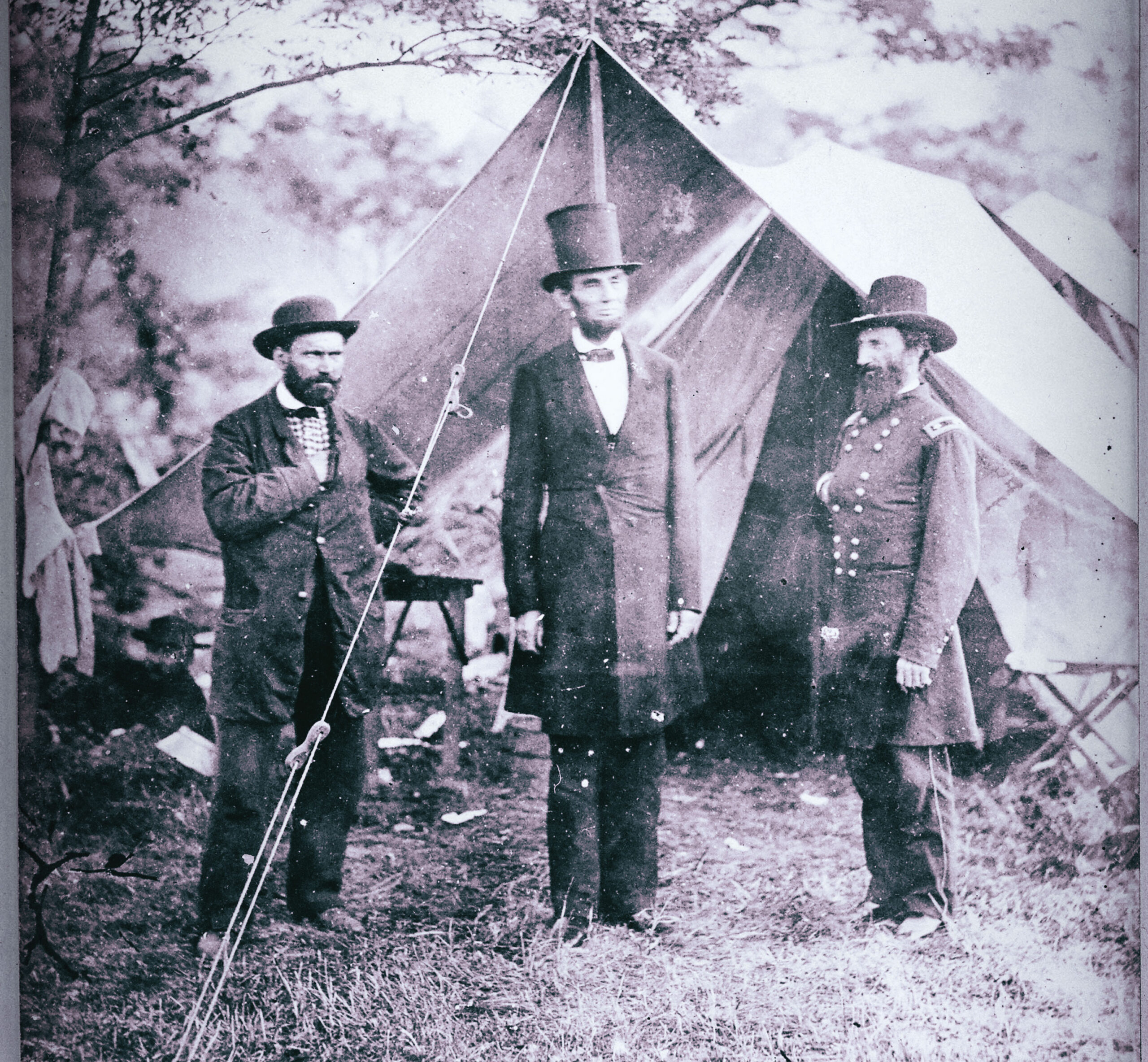
Allan Pinkerton (left) stands beside Abraham Lincoln and Major General John A. McClernand during the president’s visit to Army of the Potomac commander George B. McClellan’s headquarters in the wake of the Battle of Antietam.
On April 24, 1861, in his first unofficial act as a newly minted major general, Ohio Volunteer Militia, George B. McClellan wrote to Chicago private detective Allan Pinkerton: “I wish to see you with the least possible delay, to make arrangements with you of an important nature.” After detailing his itinerary for the next few days, McClellan added, “If you telegraph me, better use your first name alone. Let no one know that you come to see me, and keep as quiet as possible.” Thus began, properly anointed in cloak-and-dagger, a partnership between general and detective that over the next 18 months severely warped Union war-making in the eastern theater.1
Pinkerton’s National Detective Agency logo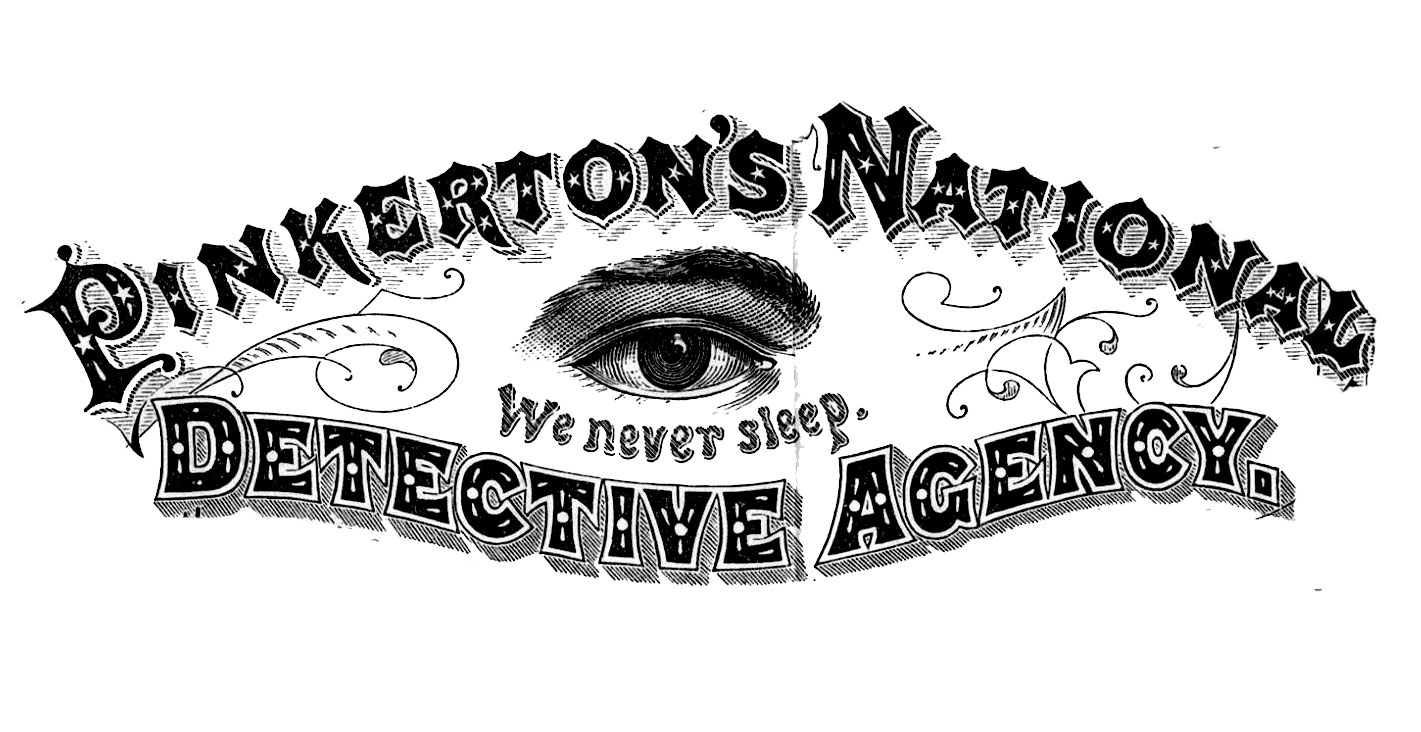 Heritage Auctions (ha.com)
Allan Pinkerton would take advantage of the Great Chicago Fire of 1871—in which he claimed to have lost all his papers and records—to reinvent himself. What is fact and how much is embroidery in his biographical accountings is not always easy to tell. A native of Glasgow, Pinkerton claimed youthful allegiance to the Scottish Chartist movement for radical political and social change. At 23—and to evade a government arrest warrant—he emigrated to America in 1842. He engaged in his trade as a cooper outside Chicago, his story went, and one day, deep in the woods cutting timber for barrel staves, he stumbled on the hideout of a band of counterfeiters. Taking credit for their arrest, he ventured a new trade in law enforcement, soon enough rising to deputy sheriff in Chicago. In 1850 he left the police to form his own private agency, to become famous as Pinkerton’s National Detective Agency. Its logo was an unblinking eye labeled “We Never Sleep”—and thus was born the cognomen “private eye.”2
 National Archives
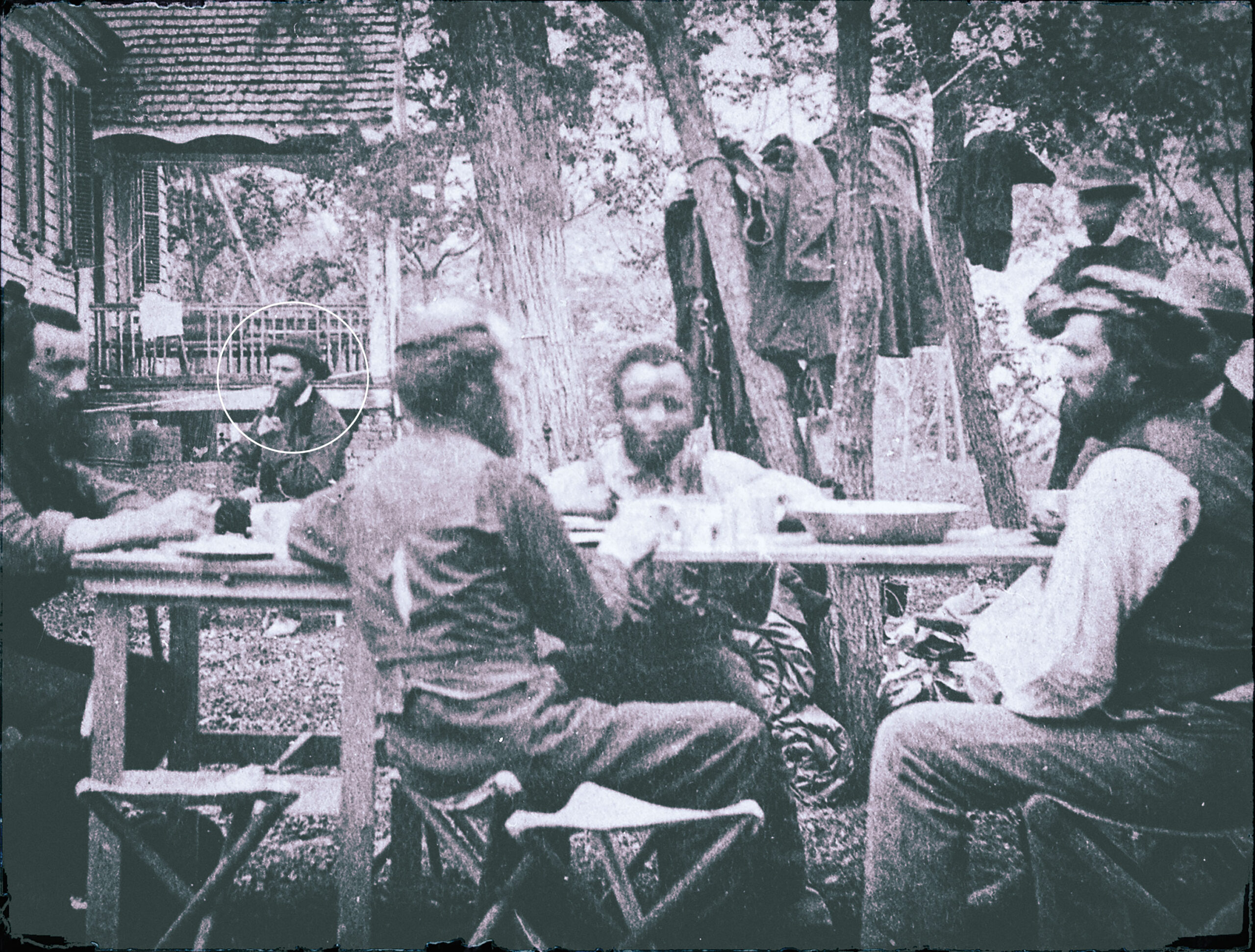
By the time he enlisted Allan Pinkerton’s assistance in April 1861, George McClellan had already done extensive business with the spy and his agency during his time in the railroad business before the war. Shown here: Pinkerton (circled) and some of his men taking a break near Cumberland Landing, Virginia, in May 1862.
In 1857 Captain George McClellan, ranked second in his West Point class, bright and ambitious, resigned from the hidebound peacetime army and made his way in the railroad business, first with the Illinois Central and then with the Ohio and Mississippi. He was soon doing extensive business with Pinkerton and his agency, to protect railroad property and search out fraud and other crime on the lines. Thus in April 1861, when now-General McClellan called on detective Pinkerton to meet with him in private, he was exercising a well-tested and well-trusted relationship.
Another figure from the Pinkerton Agency’s prewar railroad days was Abraham Lincoln, then counsel for the Illinois Central, which often employed the detective’s services. With the outbreak of war, Pinkerton pursued that connection, offering his services to the new president and enclosing a cipher for his reply in “the present disturbed state of affairs.” In passing on the letter for action, Lincoln noted, “Our Chicago detective has arrived.” Pinkerton became a familiar figure at the White House. In the earliest days of the conflict, when Washington appeared isolated, presidential secretary John G. Nicolay made note, “Pinkerton was first man to get through the rebel lines … —came up to the White House and into the Cabinet room—took off his coat and ripping open the lining of his vest took about a dozen or more letters which he had thus brought to the President from the north.”3
 Library of Congress (Greenhow); National Archives
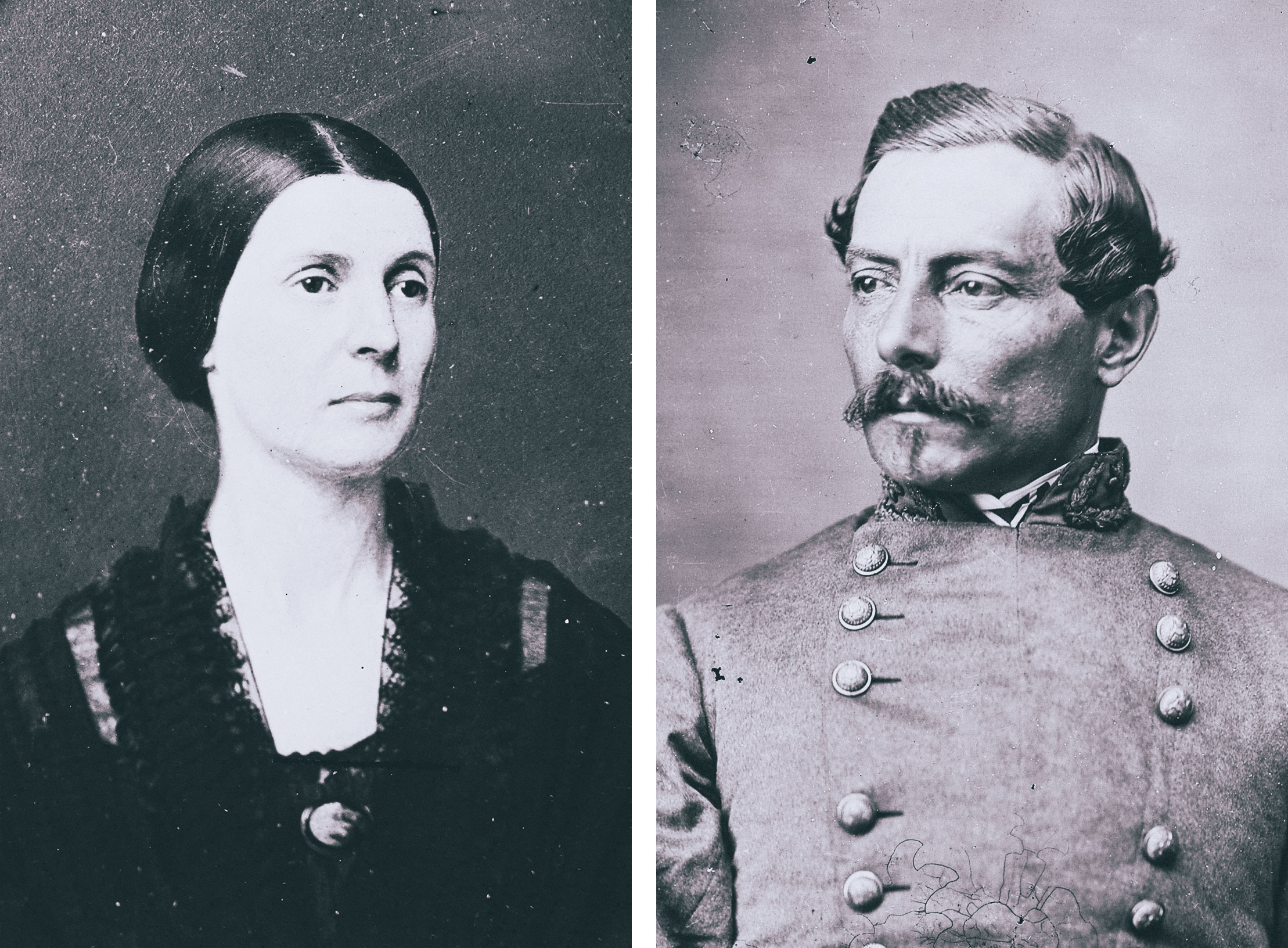
One of the first matters Pinkerton dealt with after being summoned to Washington by McClellan was local socialite Rose Greenhow (left), who had passed secret messages to Confederate general P.G.T. Beauregard (right) about the Union army’s plans in the runup to the Battle of Bull Run.
The wartime arrangement between McClellan and Pinkerton to produce military intelligence was private and unwritten. With his instinct for undercover, Pinkerton assumed the nom de guerre Major E.J. Allen in dealing with the army, but he remained unranked, a civilian, in civilian garb, and was paid off the books by McClellan for private services. (McClellan had to confirm to a government auditor that monies “advanced from private means to meet exigencies as they arose” were indeed due Pinkerton.) Often Pinkerton reported his own findings personally to the general—especially insider gossip and accountings of his exchanges with members of the Lincoln administration, including Lincoln himself. This Pinkerton spying on his own government was to McClellan ofttimes more important than Pinkerton’s spying on the Rebels.
On June 22, 1862, for example, McClellan wrote his wife, “By an arrival from Washn today (Allen) I learn that Stanton & Chase have fallen out; that McDowell has deserted his friend C & taken to S!! … that Honest A has again fallen into the hands of my enemies & is no longer a cordial friend of mine! Chase is evidently desirous of coming over to my side! Alas poor country that should have such rulers.”
The reports filed by Pinkerton’s agents and interrogators, many of them lengthy—30 or 40 pages—and highly detailed accounts of Confederate resources, postings, and armaments, often bore the letterhead of the army’s provost marshal for sending to the general. It seems unlikely that as busy a general as McClellan would have taken the time to wade through all this undigested and unorganized intelligence.
On May 6, 1861, not long after he was invited to team up with McClellan for arrangements “of an important nature,” Pinkerton wrote the general with what appears to be an offer of proof of his own bona fides in their arrangement. He began, “I learned from the President” that McClellan’s role as commander in chief in the western theater was secure. Then, “I learned that General Scott had told the President that he considered you an abler officer than Beauregard, etc., etc.” Finally, he revealed the rigor of his own investigative powers: “I do not know as you are aware that the Plot to assassinate the President was discovered by me and that it was with me he made the passage through Baltimore.” Pinkerton closed his letter with the injunction, “Please to destroy this when read.”4
The so-called Baltimore Plot, back in February, was indeed a Pinkerton discovery. Baltimore was not only a hotbed of secession but a rail bottleneck, with through travelers having to change trains at stations a mile apart, and Pinkerton picked up tips of assassins lying in wait there for the president-elect on his journey to Washington. Several similar warnings, separately delivered, offered confirmation. Lincoln reluctantly agreed to change to a 3:30 a.m. crossing of the city, with only Pinkerton and a bodyguard as escorts. For the journey he exchanged his familiar stovepipe hat for soft felt headgear described as a Scotch plaid cap. The story soon leaked and critics scoffed at a cringing chief executive and cartoonists took barbed aim. Exposing such a plot was well within Pinkerton’s skills, and in this instance his warning was not only persuasive but braced by independent sources. Precautions were fully justified, but Pinkerton’s amateurish disguising of Lincoln proved an embarrassment for the president.5
On July 21, 1861, the Federals were routed at Bull Run in Virginia, and the next day General McClellan was called east by a telegram from Washington: “Circumstances make your presence here necessary…. Come hither without delay.” By July 27 McClellan was established in Washington in command of the newly formed Division of the Potomac, soon christened by him the Army of the Potomac. Just as he had in his initial command in Ohio in May, his first unofficial act in this new role was a dispatch to Allan Pinkerton (in the guise of Major Allen): “Join me in Washington as soon as possible. Come prepared to stay and bring with you two or three of your best men.” The bond was sealed.6
Even as he was setting up his intelligence-gathering operation in Washington, Pinkerton had to take time to deal with Rebeldom’s first femme fatale, Rose Greenhow. Mrs. Greenhow, one of the capital’s leading socialites, was an espionage amateur who actually seemed to welcome attention. It was said she sent warnings to the Confederate high command on the eve of Bull Run that the Yankees were advancing to the attack. Confederate general P.G.T. Beauregard gallantly had her reporting “the intended positive advance of the enemy across the Potomac”—which is exactly what the Washington newspapers were reporting. Pinkerton arrested her, and her well-publicized jailing proved to be nothing like hard time. Pinkerton inflated her to the head of a spy ring, but by now the “Rebel Rose” had become the South’s newest heroine and the North’s newest liability. She was released, sent across the lines, and welcomed in Richmond with open arms.7
While Pinkerton was gathering staff and resources for McClellan’s benefit, the general tried his own hand at intelligence-gathering (utilizing “spies, letters and telegrams,” was how he described it) to uncover the enemy’s intentions. The prime witness McClellan turned up was a Kentuckian named Edward B. McMurdy, who claimed he had deserted from the Confederate army at Manassas and had much to tell. McMurdy said he supplied his “opinion as to the strength, plans etc. of the Rebels” in detail, after which McClellan “told me that I had saved Washington City and in all probability the very existence of the Government, and that the thanks of the nation was due me.”8
McMurdy’s boast was not as extravagant as it might appear, for it exactly reflected McClellan’s sudden, serious alarm. On August 4 he alerted his brigade commanders: “Information has been received which goes to show that the enemy may attack us within the next forty-eight hours.” On August 6 he redoubled the alert. On August 8 he announced to General-in-Chief Winfield Scott, and to Lincoln as well, “I am induced to believe that the enemy has at least 100,000 men in our front. Were I in Beauregard’s place, with that force at my disposal, I would attack the positions on the other side of the Potomac and at the same time cross the river above the city in force.” His own army, he insisted, was “entirely insufficient for the emergency.” He called for pulling all garrisons and reinforcements in the region “into one Department under the immediate control of the Commander of the main army,” i.e., himself.9
McClellan’s report angered General Scott. “I have not the slightest apprehension for the safety of the Government here,” he assured the president. Battlefield intelligence had given the Confederates some 35,000 men at Bull Run, and veteran warrior that he was, Scott knew full well the Rebels could not have nearly tripled their force over 18 days. The issue was papered over and McClellan withdrew his letter, but his rift with Scott went unhealed. Wherever McClellan had gotten the 100,000 figure—from McMurdy, from some unnamed source, from out of thin air—he found himself stuck with it. His pride ruled him. He could not (or would not) afterward portray the Rebels with any fewer men, and usually with far more.10
There is no doubt McClellan’s anxiety that August 8 was genuine. He followed his plaints to Scott and Lincoln with one to his wife, Ellen: “I have hardly slept one moment for the last three nights, knowing well that the enemy intend some movement & fully recognizing our own weakness. If Beauregard does not attack tonight I shall look upon it as a disposition of Providence—he ought to do it.” As for Scott, “that confounded old Genl always comes in the way—he is a perfect imbecile.” He was still in a state on August 16, telling Ellen, “I am here in a terrible place—the enemy have from 3 to 4 times my force—the Presdt is an idiot, the old General in his dotage—they cannot or will not see the true state of affairs.”11
There is no evidence that Allan Pinkerton contributed to this initial intelligence outburst of McClellan’s, or that he even knew of it. Pinkerton’s first detailed intelligence report to McClellan was dated October 4, 1861. Meanwhile, in the two months since the McMurdy-inspired report of early August, McClellan had come up with three fresh estimates of overwhelming Confederate manpower. On August 19 he wrote his wife, “Beauregard probably has 150,000 men—I cannot count more than 55,000!” and he prayed the week would pass without a battle. On September 8 he warned Secretary of War Simon Cameron that the Rebels had a column of 100,000 just to direct against Baltimore; he could “by no possibility” bring more than 60,000 effectives against it. On September 13 he summed up for Cameron the Army of the Potomac’s total as 81,000, and across the bottom of the page he wrote, “The enemy probably have 170,000!”12
 Library of Congress
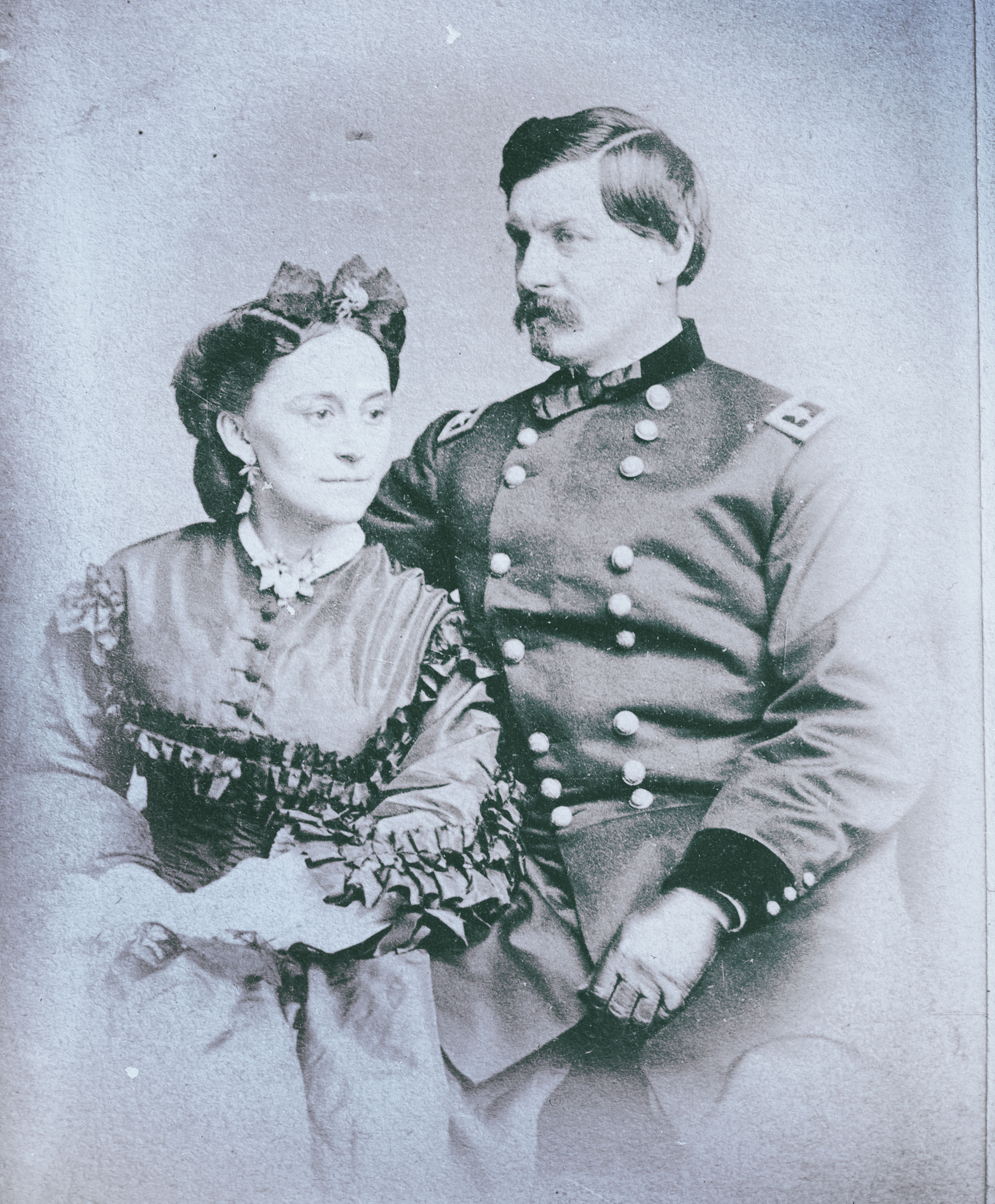
McClellan frequently shared the results of his own intelligence gathering—in which he overinflated the strength of the opposing enemy force—with his wife, Ellen. “Beauregard probably has 150,000 men—I cannot count more than 55,000!” he wrote her with alarm on August 19, 1861. Above: George and Ellen McClellan as they appeared during the war.
Where McClellan found these “pre-Pinkerton” figures is something of a mystery, but because he included one of his highest enemy counts in a letter to his wife, there is no question of his sincerity. The general treated writing to his wife as a confessional.
Pinkerton’s October 4 report to McClellan, he explained, was derived from his detectives’ spying and their interviews with “the other side”—deserters, prisoners, refugees, contrabands—and his count of 98,400 represented “the entire Rebel Force in Virginia.” This paper marked the initial counting arrangement between Pinkerton and McClellan. The plan was to identify and count individual Confederate regiments, then assign those regiments an arbitrary average troop count. This was something entirely new for Pinkerton’s detectives. They were used to dealing with civilian malefactors and witnesses to civilian crimes, holding over them the threat of jail. Now they dealt with guiltless enemy captives, who were happy enough (or ignorant enough) to hoodwink their captors, plus civilians with little grasp of military organization. Those questioned frequently told more than they knew to gain a welcome. The consequence was an overcount of regiments multiplied by an overcount of troop numbers, producing vastly overcounted results. Pinkerton added to this misbegotten scheme by “making large” his count of Rebel regiments to allow for those he had not yet identified.
Yet despite his best efforts, Pinkerton could not keep pace with the general. On October 31 McClellan reported to Secretary Cameron that “all the information we have from spies, prisoners &c agrees in showing that the enemy have a force on the Potomac not less than 150 000 strong well drilled & equipped, ably commanded & strongly intrenched.” He declared that against this enemy array he could muster for an advance but 75,285 troops, and added, for good measure, “The Infantry regiments are to a considerable extent armed with unserviceable weapons.”13
The 1861 fall fighting weather was coming to an end, but General McClellan’s invented Confederate army was to his mind such an overarching foe that he never gave thought to seriously challenging it. His one tentative prod, at Ball’s Bluff on October 21, was a fiasco, and he shut down the Army of the Potomac for the winter. On November 1 he succeeded Scott as general-in-chief, stifling the last independent command voice.
Pinkerton, for his part, now recognized that he would have to reinvent himself and his intelligence-gathering if he was to remain in McClellan’s orbit. The Confederates, for their part, must have breathed a collective sigh of relief as winter came on. Their October 1861 returns for the army facing McClellan added up to just 41,100.14
On March 17, 1862—month seven of McClellan’s command—the Army of the Potomac finally went to war, on the Virginia Peninsula leading to Richmond. On March 8 Pinkerton had presented McClellan with a paper estimating the enemy’s forces. For this new count Pinkerton changed his tactics. Rather than attempt to further refine the identification and counting of the enemy regiments and their troop counts, he abandoned that course entirely. He turned instead to what he called “medium estimates” of the troop totals at each of the various Confederate postings. He explained that “it has been impossible, even by the use of every resource at our command, to ascertain with certainty the specific number and character of their forces.” These medium estimates in their turn added up to a “general estimate” total of (not surprisingly) 150,000 Rebels, McClellan’s firmly stated count as of October last.15
This change in intelligence-gathering marked Pinkerton as a full-fledged sycophant. He was uncritical not only of McClellan’s pronouncements on the enemy but also of his own sources. The intelligence he supplied was meant to please McClellan and indeed to flatter him.
Although Pinkerton had succeeded in planting several spies behind enemy lines, their intelligence seldom included troop counts. In any event, they were soon found out and the best of them, Timothy Webster, was hanged. Secure interrogation remained the primary source for Pinkerton’s Confederate counting.
Advancing from Fort Monroe, at the tip of the Peninsula, the Army of the Potomac ran up against a Confederate battle line at Yorktown. On April 7 Pinkerton operative George Bangs interrogated a prisoner, Private Owen Allen from the 14th Alabama Infantry—apparently the best-informed private in the Confederate army. According to Bangs’ notes, “Force of enemy 40,000. Johnston 8,000 exp’d. last night. Says they have 500 guns in position…. It is understood they have brought all the guns from above and in a few days 100,000 men.” That evening McClellan telegraphed Washington, “It seems clear that I shall have the whole force of the enemy on my hands—probably not less than 100,000 men, and probably more.”
 Anne SK Brown Military Collection
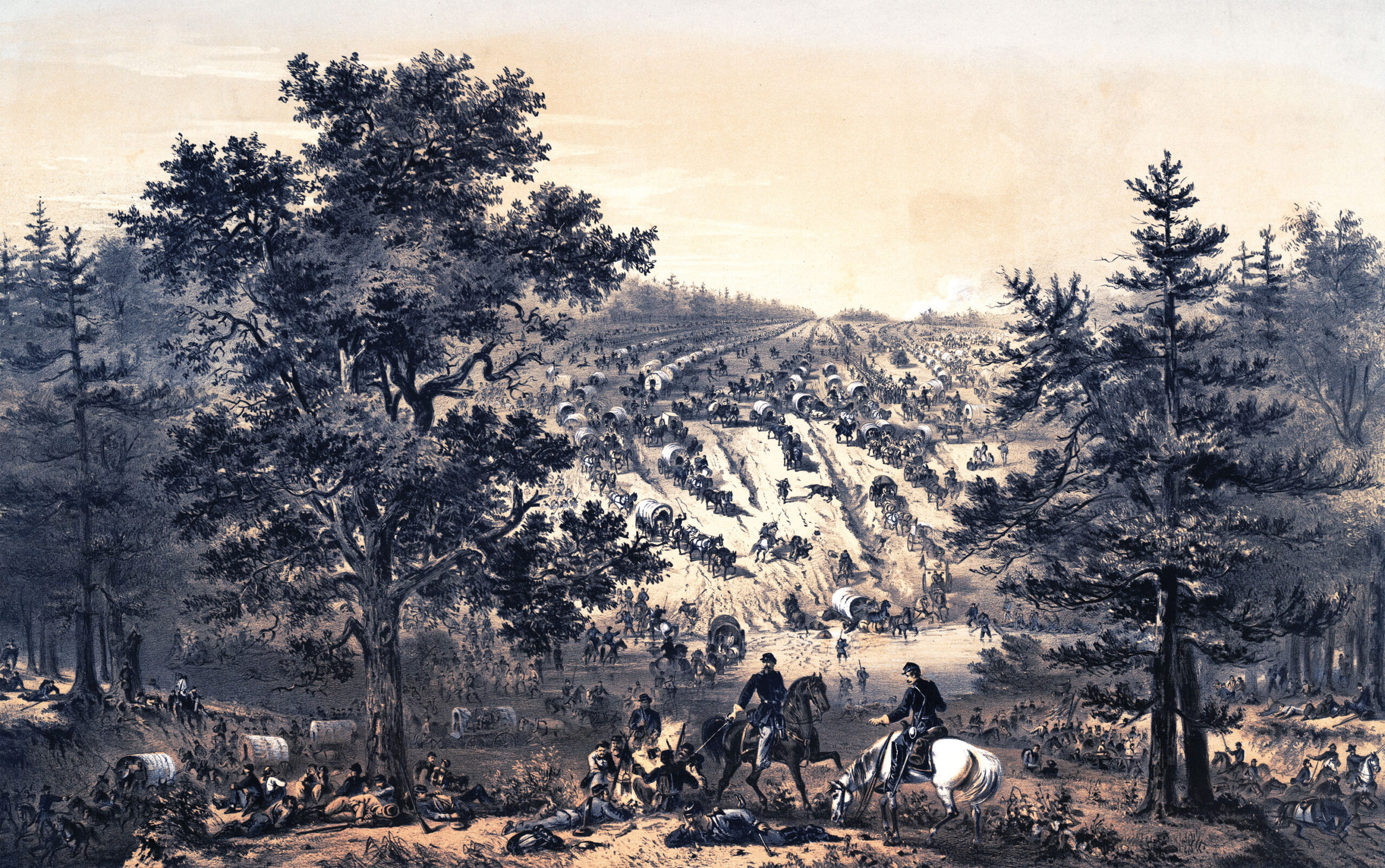
McClellan continued in his belief that he was greatly outnumbered during the Peninsula Campaign, a view Pinkerton’s own faulty reporting confirmed. Above: A wartime lithograph shows the massive Army of the Potomac advancing during the Peninsula Campaign.
Like deserter McMurdy’s tale the previous August, prisoner Allen’s story upset McClellan’s apple cart (and Pinkerton’s too) at a critical moment. These Rebel confessors were at the least seeking deals for themselves; it is also possible that the talkative Private Allen was a Confederate plant. In any case, he impelled McClellan to reject any immediate attack in favor of a monthlong siege against Yorktown, during which time Pinkerton elevated the supposed Rebel manpower to 120,000 and then as high as 180,000. While these totals were hugely inflated, they at least reflected the timely Confederate mobilization that would eventually save Richmond and the Peninsula. General Joe Johnston, outnumbered two to one, scoffed, “No one but McClellan could have hesitated to attack.”16
This became the pattern on the Peninsula: McClellan’s slow, cautious advances as the campaign’s self-proclaimed underdog. “The rascals are very strong & outnumber me very considerably,” he explained to his wife, a theme he repeated constantly to Washington. Then, in the fighting at Seven Pines on May 31, Johnston was wounded and replaced by Robert E. Lee, and it was Lee who drove the Peninsula fighting to a bloody climax in the Seven Days Battles.17
On June 15 Pinkerton reported Lee in command and “it is variously estimated that the Rebel army at Richmond and vicinity numbers from 150,000 to 200,000 … determined to make a desperate stand….” June 25, the first of the Seven Days, found McClellan at his wit’s end, telegraphing Washington that he faced a Rebel army of 200,000 and bewailing “my great inferiority in numbers….” Thus it might seem that Pinkerton and his eccentric counting had finally caught him up with his boss, but in fact McClellan’s count was reached independently. Pinkerton’s role now was simply confirmation, more firmly fixing McClellan in his underdog posture. While the Seven Days was actually fought by roughly equal armies, neither McClellan nor Pinkerton ever modified his stance on these numbers.
The collapse of the Peninsula Campaign and McClellan’s eclipse by John Pope in the Second Bull Run Campaign left Pinkerton without an active sponsor, but that did not stop him from cranking out a final Peninsula “summary of general estimates” for McClellan. It was a jumble of random observations—“The whole Richmond army numbers probably 200,000 men, and has been estimated at 250,000”; “Heard a rebel lieutenant say the rebel army numbered 190,000”; “Rebel army estimated at 250,000 by the people of Richmond.” These bore no evaluating and drew no conclusions, even tentative ones. It is hard to imagine what McClellan gained from Pinkerton’s garrulous reports—then or ever—beyond the comfort that a supposed intelligence expert agreed with his own ultra-counting of the enemy.18
Pope’s defeat returned McClellan to command of the Potomac army, and in September the Rebels carried the war into Maryland. Three Pinkerton agents tried, but failed, to reach besieged Harpers Ferry with orders, but Pinkerton himself found no role to play in either the campaign or the climactic Battle of Antietam. He had no spies embedded in the invading Rebel army, and until the fighting on the 17th was over, none of the usual prisoners, deserters, or contrabands to interrogate. Still, he remained on comfortable terms with McClellan and was welcomed at headquarters. David Hunter Strother, the army’s staff cartographer, was invited “to sup with a Mr. Allen, civilian attached to the Army. I was well received & got a good supper.”19
In Antietam’s aftermath, Lincoln grew frustrated by McClellan’s reticence concerning the battle—how it had been fought, how decisive it was, why it was not followed up. McClellan, for his part, was anxious to know his future with the reticent president. On September 22 McClellan dispatched Pinkerton to the White House to spy out Lincoln’s views. Lincoln, mixing cordiality with guile, talked the sycophant Pinkerton into spilling all of McClellan’s battlefield secrets. The episode played a part in Lincoln’s decision to relieve McClellan of command on November 5.20
 Library of Congress
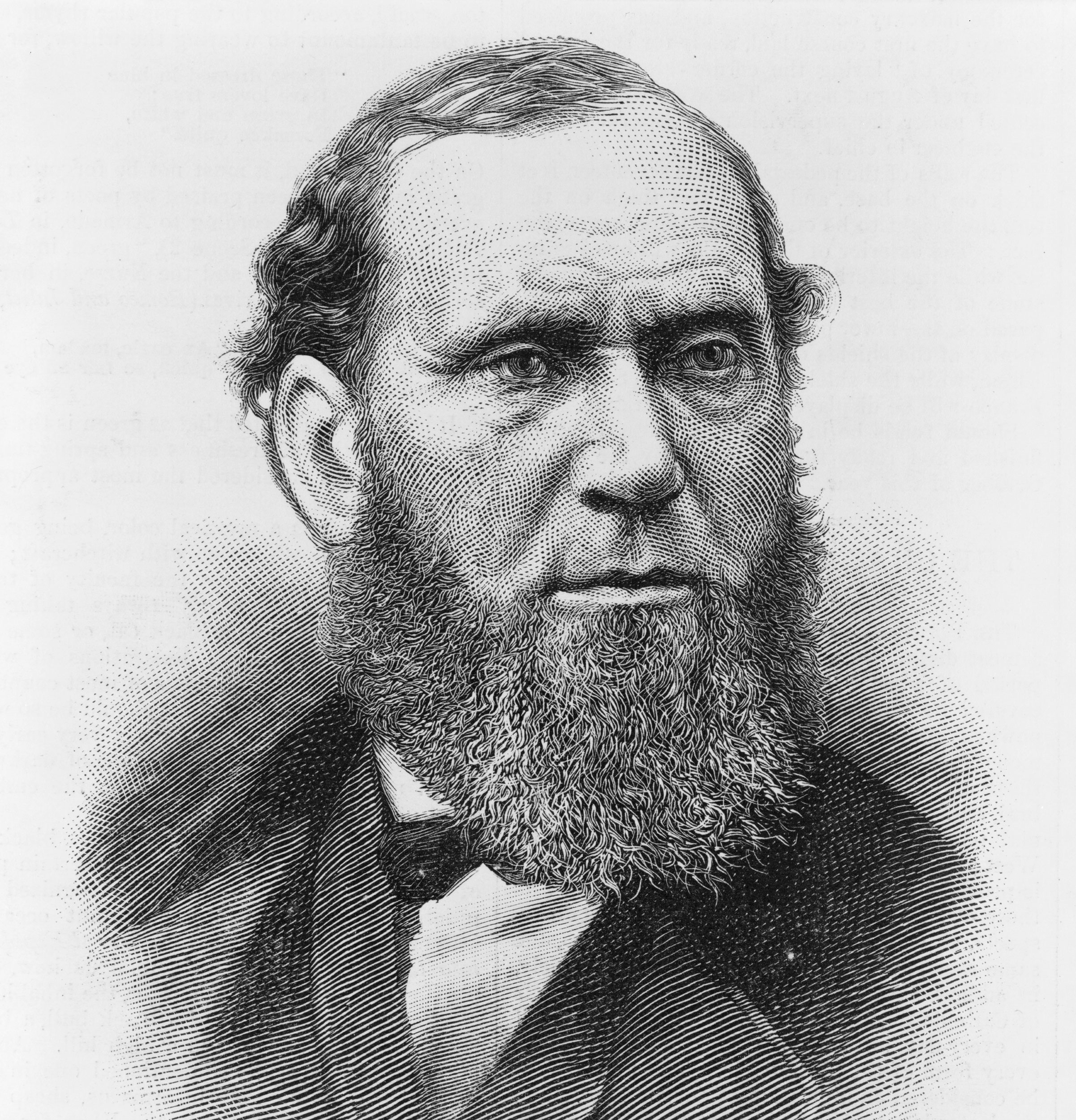
Allan Pinkerton after the war
Pinkerton departed the army alongside his patron and returned to his detective agency and chasing bank robbers and civilian defrauders. He played one last wartime role, and a bizarre one. During the 1864 presidential election he met secretly with one of McClellan’s campaign aides to warn of a conspiracy by “the friends of McClellan”—whom he named—to assassinate the president, and said the government had its version of the Pinkerton eye on all of them. McClellan dismissed the ludicrous tale as a plot to poison his candidacy. This apparently did not harm the McClellan-Pinkerton personal relationship.21
It has been noted that in his posthumous memoirs, McClellan’s Own Story, the general never mentions Pinkerton, seemingly dismissing him from notice. That claim is misleading. Before his unexpected death at 58, McClellan had only taken his manuscript to the beginning of the Peninsula Campaign. The rest of the book is a mashup of other unrelated and often undated writings of McClellan’s that the literary executor used to fill out the book. Pinkerton was one of those subordinates who stuck by McClellan faithfully, and that might well have earned him mention in a finished manuscript.
Pinkerton did not deliver much gain for the Union war effort beyond the buttressing he gave to McClellan’s distorted view of the enemy, but after the war his concept of private detecting and private police proved to be pioneering. In those years he slacked off field work in favor of writing—or at least putting his name on—a long-running series of potboilers with such titles as The Expressman and the Detective or The Somnambulist and the Detective. It was under his sons that the Pinkerton name became notorious for strikebreaking and labor violence around the turn of the century. Pinkerton was 64 when he died in 1884, before much of this reputation stuck to him. The corporate name survives today as Pinkerton Consulting and Investigations, specializing in “risk management” and “security management.” The glaring eye labeled “We Never Sleep” isn’t pictured anymore, but we can be sure it is still watching.
Stephen W. Sears is the author, most recently, of Lincoln’s Lieutenants: The High Command of the Army of the Potomac.
Notes
The basic source for Allan Pinkerton’s operations is Edwin C. Fishel’s The Secret War for the Union: The Untold Story of Military Intelligence in the Civil War (New York, 1996).
1. Allan Pinkerton, The Spy of the Rebellion (New York, 1883), 140–41.
2. James Mackay, Allan Pinkerton: The First Private Eye (New York, 1996).
3. Pinkerton to Lincoln, April 21, 1861, Lincoln Papers, Library of Congress; Lincoln to William H. Seward, May 2, 1861, Fred L. Emerson Foundation; Nicolay memo, ca. April 20, 1861, Nicolay-Hay Papers, Illinois State Historical Library.
4. McClellan to R.J. Atkinson, April 16, 1863, McClellan Papers, Library of Congress (LC); McClellan to wife, June 22, 1862, McClellan, The Civil War Papers of George B. McClellan, Stephen W. Sears, ed. (New York, 1989), 305; Pinkerton to McClellan, May 6, 1861, McClellan Papers, LC.
5. The Baltimore plot is summarized in David Herbert Donald, Lincoln (New York, 1995), 277-279; and Michael Burlingame, Abraham Lincoln: A Life (Baltimore, 2008), 2: 32-39.
6. Lorenzo Thomas to McClellan, July 22, 1861, United States War Department, The War of the Rebellion: A Compilation of the Official Records 129 vols. (Washington, 1880-1901), 2:753 (hereafter cited as OR); McClellan to E.J. Allen [Pinkerton], July 20, 1861, National Archives.
7. Beauregard to Augusta J. Evans, March 24, 1862, OR 51:2, 688.
8. McMurdy to Henry W. Halleck, September 16, 1862, National Archives.
9. McClellan to commanders, August 4, 1861, McClellan Papers, LC; McClellan to Irvin McDowell, August 6, 1861, OR 5: 553; McClellan to Scott, August 8, 1861, McClellan, Civil War Papers, 79-80.
10. Scott to Simon Cameron, August 9, 1861, OR 11:3:4.
11. McClellan to wife, August 8, 16, 1861, McClellan, Civil War Papers, 81, 85-86.
12. McClellan to wife, August 19, to Simon Cameron, September 8, 13, 1861, McClellan, Civil War Papers, 87, 96, 100.
13. Pinkerton to McClellan, October 4, 1861, McClellan Papers, LC; McClellan to Cameron, October 31, 1862, McClellan, Civil War Papers, 116.
14. Confederate return, October 1861, OR 5:932.
15. Pinkerton to McClellan, March 8, 1862, OR 5:736.
16. Bangs report, April 7, 1862, McClellan Papers, LC; McClellan to Edwin Stanton, April 7, 1862, OR 11:1:11-12; Pinkerton to McClellan, May 3, 1862, OR 11:1:268; Pinkerton to Andrew Porter, June 15, 1862, McClellan Papers, LC; Johnston to Robert E. Lee, Apr. 22, 1862, OR 11:3:422.
17. McClellan to wife, June 22, 1862, McClellan, Civil War Papers, 305.
18 Pinkerton to Andrew Porter, June 15, 1862, McClellan Papers, LC; McClellan to Stanton, June 25, 1862, McClellan, Civil War Papers, 310; Pinkerton to McClellan, August 14, 1862, OR 11:1:271.
19. Strother journal, September 11, 1862, West Virginia University Library.
20. James D. Horan, The Pinkertons: The Detective Dynasty That Made History (New York, 1967), 130-133.
21. Stephen W. Sears, George B. McClellan: The Young Napoleon (New York, 1988), 383.