 Library of Congress
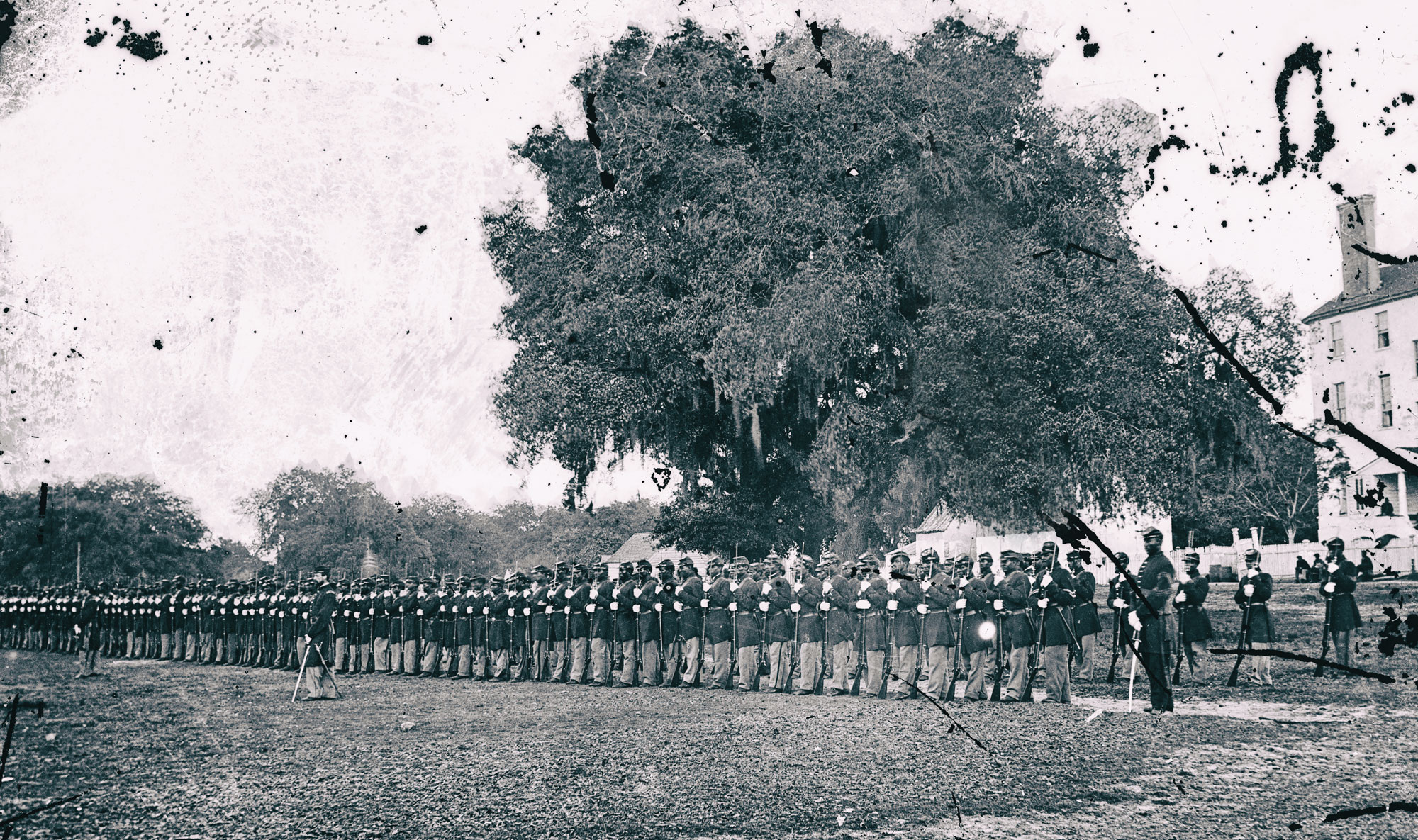
The soldiers of the African-American 29th Connecticut Infantry pose for a photo—taken by Samuel A. Cooley— in Beaufort, South Carolina, where they were stationed in 1864.
On February 23, 1865, the Confederate leadership committed an act that violated the principles upon which they had promised to fight the war.
Confederate agents in Virginia delivered to the United States 14 black Union soldiers for exchange as prisoners of war. Four days later, when U.S. naval commanders in the West Gulf Blockading Squadron proposed that free black sailors and soldiers fighting in the Confederacy’s Trans-Mississippi Department be treated as prisoners of war, Confederate military officials agreed.
These two moments in the waning days of the American Civil War have been missing from standard narratives of the conflict, but their importance needs to be understood. They signified that the Confederate government officially and publicly recognized freeborn black soldiers as legitimate combatants, even though the Confederacy had always determined not to do so. Confederate officials made this concession because Union officials had successfully deployed a ritual of retaliation to protect its freeborn black soldiers fighting in the Department of the South.
 Library of Congress
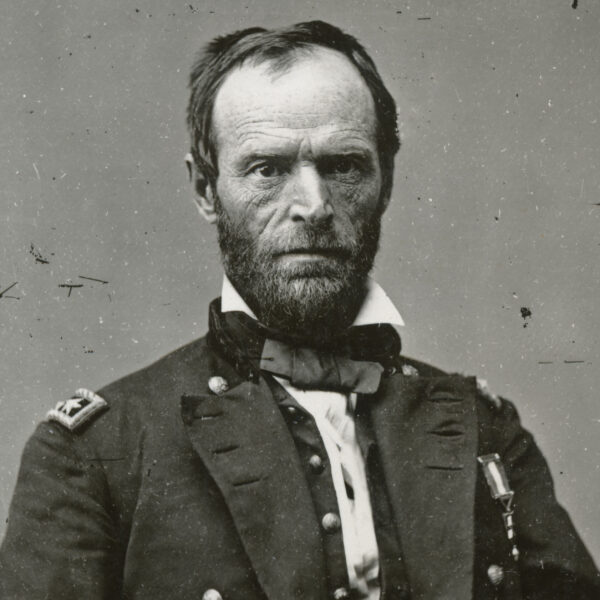
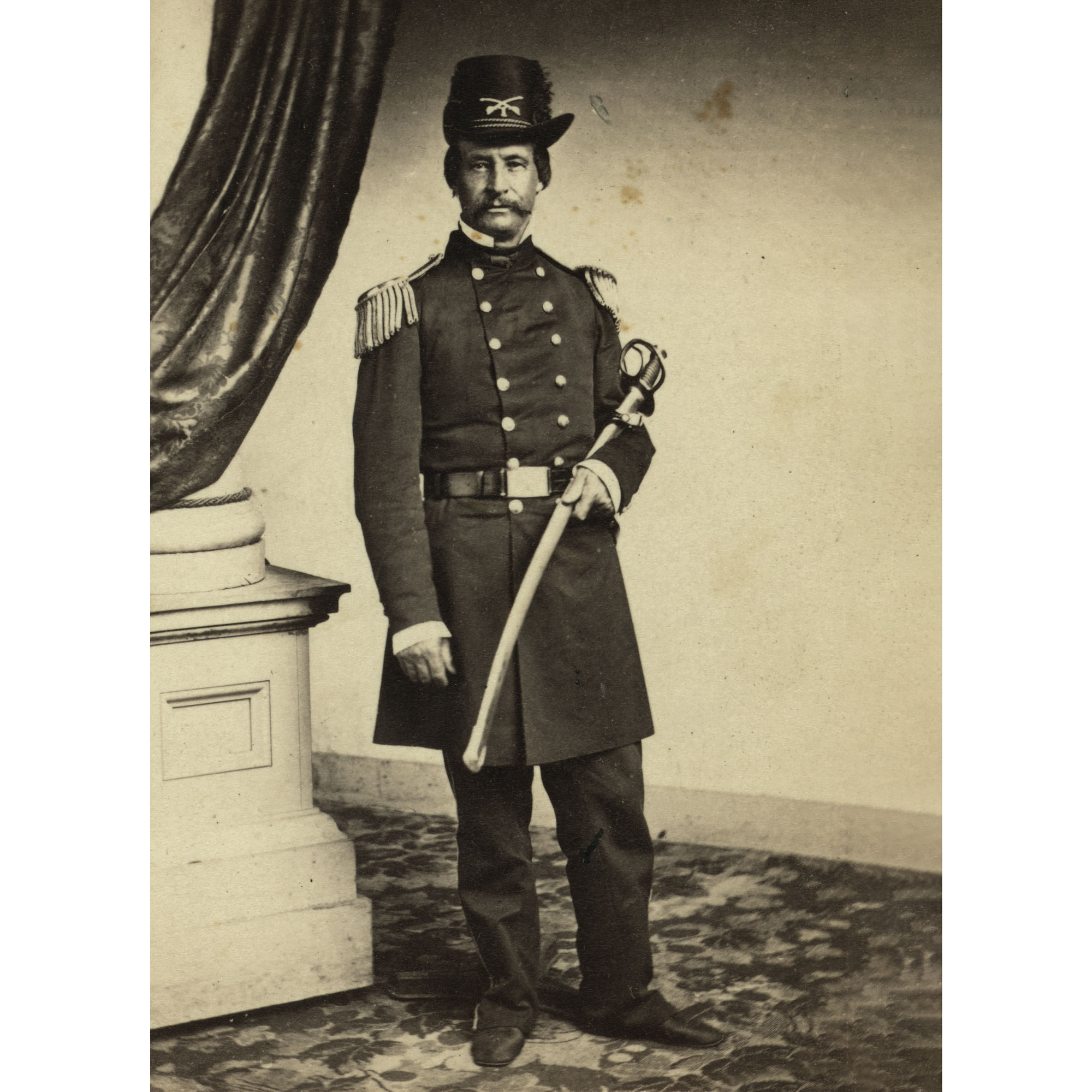
Soon after assuming command of the Department of the South in 1862, Major General David Hunter (above), who believed that liberating slaves and arming freedmen was key to defeating the Confederacy, began organizing military companies of black men from the Sea Islands.
The story of the Confederacy’s critical policy change begins in 1862, when the abolitionist and regular army officer Major General David Hunter took command of the Department of the South, which encompassed the Atlantic islands and coasts of South Carolina, Georgia, and Florida. Hunter believed that liberating slaves and arming freedmen was key to defeating the Rebels. He had a grand strategic vision: He planned to arm black men living on the Sea Islands, send them on raids to liberate inland slaves and destroy resources, and create Federal regiments of emancipated slaves that would occupy rebellious areas. On May 6, 1862, Hunter began organizing military companies of black men from the islands, forcibly conscripting them; some who resisted were shot and killed. The regiment went into camp at Hilton Head, South Carolina, and began to drill. On August 5, one company, on picket duty on St. Simons Island, fought off a Confederate raiding party.
When Confederate president Jefferson Davis heard about Hunter’s regiment, he instructed General Robert E. Lee to send a letter of inquiry to the commanding general of the United States Army. Lee wrote that the Confederate government desired to fight a civilized war, but that the United States was fighting a “savage war” marked by “merciless atrocities.” Lee said that arming slaves to fight against their masters was instigating servile insurrection. The United States had 15 days to respond with either a correction of the facts or a disavowal of Hunter’s policy. If that did not happen, Confederate authorities would retaliate. Lee enclosed a sample order that proclaimed Hunter and all the commissioned officers in his command to be felons rather than public enemies entitled to prisoner of war status.
The 15 days passed. On August 21, 1862, the Confederate War Department issued General Orders No. 60, which declared Hunter to be an outlaw, meaning that he had no legal rights anywhere in the Confederacy. Anyone could assault or kill him with impunity. The order also announced that any captured U.S. commissioned officer who drilled, organized, or instructed slaves, with a view to their armed service in the war, was not recognized as a prisoner of war, but would be executed as a felon.
President Abraham Lincoln’s administration did not immediately respond because Hunter’s regiment was unauthorized and not officially mustered into the Union army. It was disbanded. But Lincoln and Republicans in Congress were by this time committed to a policy of freeing enslaved people in rebellious areas and recruiting them into military service. In November, the first of these units of black troops was mustered into United States service: the 1st South Carolina Infantry.
 Library of Congress
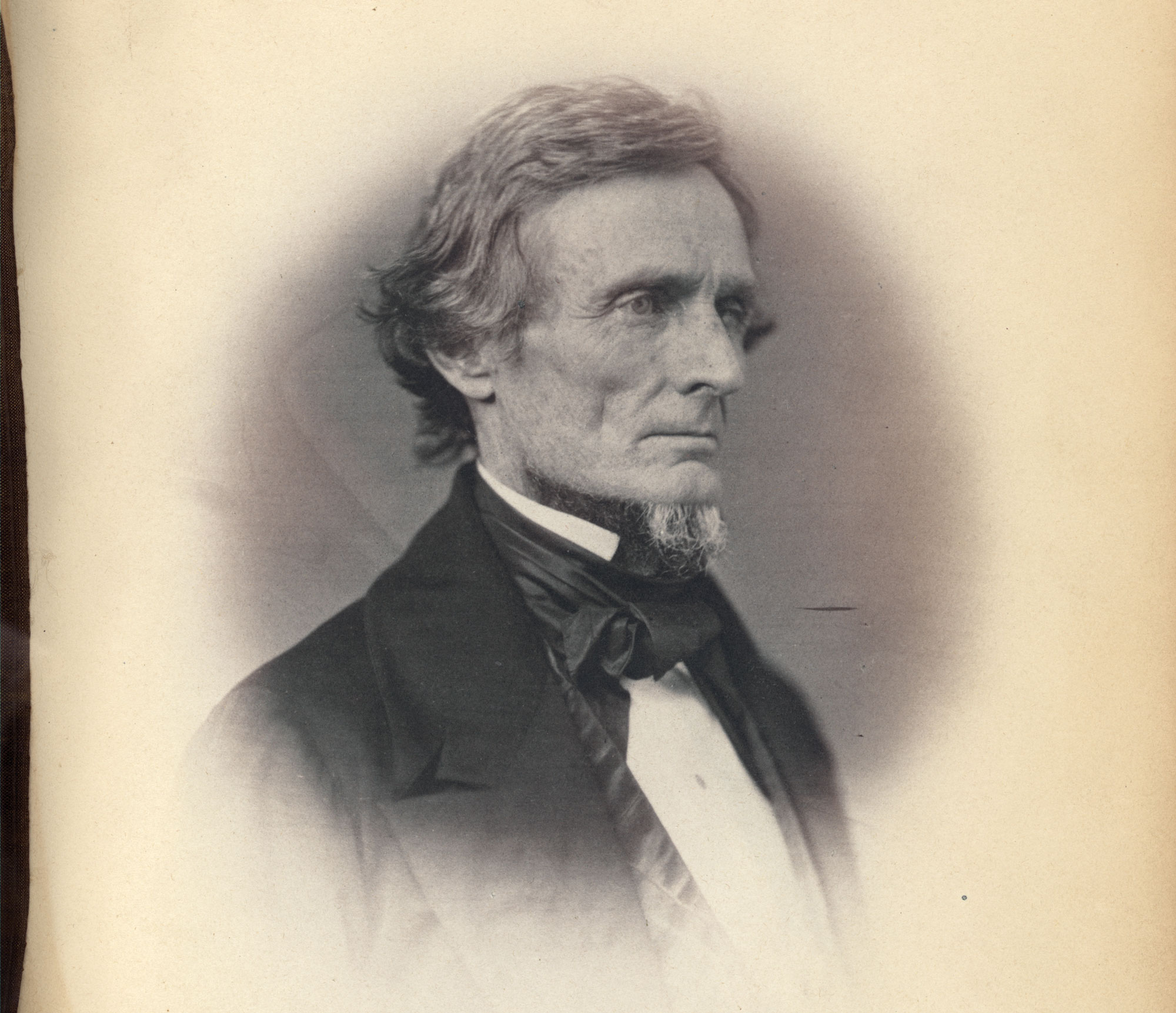
 Confederate president Jefferson Davis, who ordered military authorities to deliver captured black Union soldiers to state governors for trial according to the laws of each state.
Activist anti-slavery commanders in the Department of the South immediately deployed Company A of the 1st South Carolina for a raid along the Georgia–Florida coast. The soldiers made 13 landings between November 3–10, 1862, breaking up Confederate picket stations, destroying nine saltworks, taking corn and rice, burning buildings, killing horses, and bringing 155 slaves away from the mainland. The 62 men of Company A also successfully fought off an attack from 80 Confederate soldiers.
The same day Company A returned from its expedition, a Confederate captain with a few men from the Lamar Rangers landed on St. Catherines Island for a raid and encountered six black men in Federal uniforms carrying muskets. The Rebels killed two of them and captured the other four, turning them over to Brigadier General Hugh Mercer, the Confederate district commander in Georgia. Mercer wrote his superiors asking permission to execute the captives as a measure of deterrence. Confederate Secretary of War James A. Seddon responded on November 30. “Slaves in flagrant rebellion are subject to death by the laws of every slave-holding state,” he wrote. “They cannot be recognized in any way as soldiers subject to the rules of war and to trial by military courts; yet for example and to suppress any spirit of insubordination it is deemed essential that slaves in armed insurrection should meet condign punishment.”1 Seddon instructed his subordinates to summarily execute the prisoners and others captured in the future under similar circumstances.
Although the Confederate War Department had authorized local commanders to summarily execute black prisoners in Federal uniform, Jefferson Davis preferred state officials to handle black soldiers and their white officers according to state laws. In his view, if the black men from the Carolina and Georgia islands were slaves engaged in insurrection rather than legitimate combatants, states should prosecute them and implement the mandated death penalties. On December 23, 1862, he issued a proclamation that the War Department incorporated the next day into General Orders No. 111. Davis said Lincoln’s preliminary Emancipation Proclamation, issued that September, proved that the United States cared nothing for “the laws of nations, the dictates of reason and the instincts of humanity,” and therefore deterrence required “the terms of just retribution.” The orders instructed military authorities to deliver slaves captured in arms to state governors for trial according to the law of each state and gave identical instructions for commissioned officers “found serving in company with armed slaves in insurrection.”2
 Library of Congress
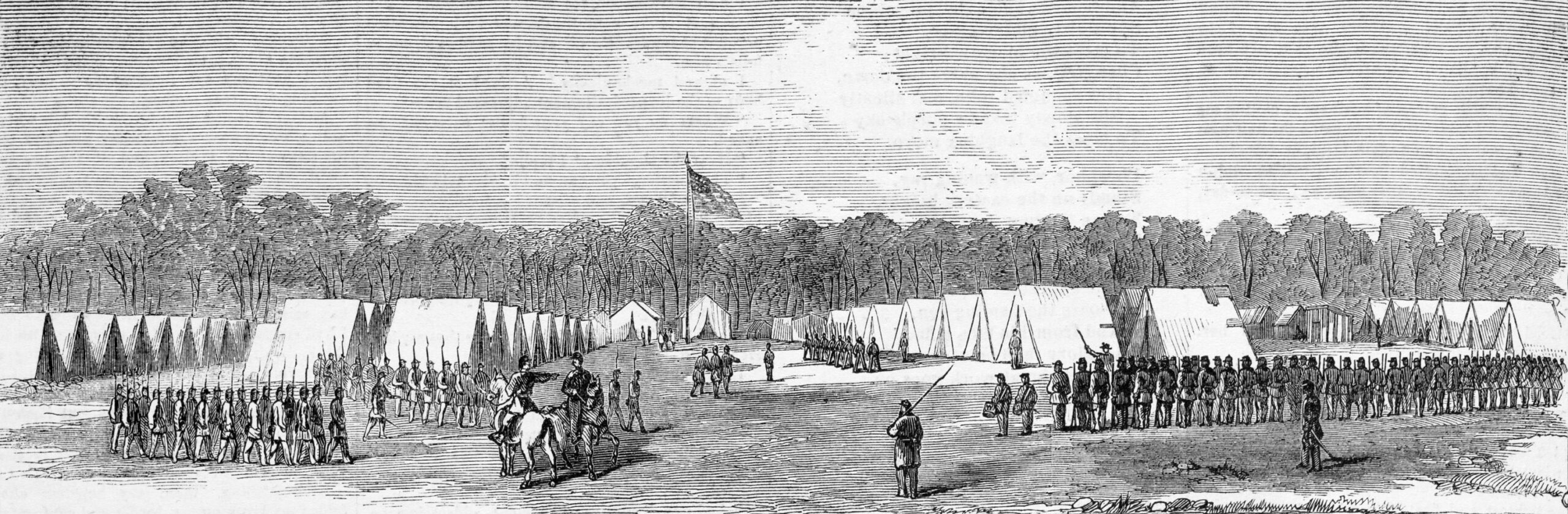
 Not long after David Hunter’s unauthorized unit of freed slaves was disbanded, the first authorized regiment of black troops, the 1st South Carolina Infantry, was mustered into United States service. Above: The camp of the 1st South Carolina Infantry on Port Royal Island, as depicted in a sketch from Frank Leslie’s Illustrated Newspaper.
Davis then dropped a bombshell on the Confederate Congress that would expose divisions among Confederate politicians about appropriate retaliation for the Federal enlistment of soldiers who were former slaves. After Lincoln’s Emancipation Proclamation went into effect on January 1, 1863, Davis sent his annual presidential message to Congress. The proclamation, he declared, encouraged an inferior race to assassinate its masters by an “insidious recommendation ‘to abstain from violence unless in necessary self-defense.’”3 Davis proposed to deliver all commissioned officers of the U.S. Army (not just those commanding black troops) who were captured in states covered in the Emancipation Proclamation to state authorities to be tried as criminals for exciting servile insurrection.
Although all Confederate civilian and military officials were united in their outrage over U.S. recruitment of black troops, they were divided over the appropriate response. The Confederate Congress held a series of secret sessions in February and March and rejected Davis’ dangerous (and impractical) idea, which violated international laws of war. Senator Thomas J. Semmes, a Louisiana lawyer and a member of the Committee of the Judiciary, wrote the report explaining that captured U.S. officers remained “public enemies” who were not subject to the municipal laws of the states. An invading army and all its members entered a territory openly under authority from a belligerent government. Under British and American precedents, an army was not obligated to obey any law of an invaded country and that army’s laws replaced local law in territories it temporarily controlled. Thus, local laws regarding servile insurrection were not binding on U.S. officers and they could not be tried and punished for the crime, just as they could not be tried and punished for murder, arson, or robbery while acting as public enemies. Retaliation was a belligerent right that could only be implemented by Confederate authorities.
 Library of Congress
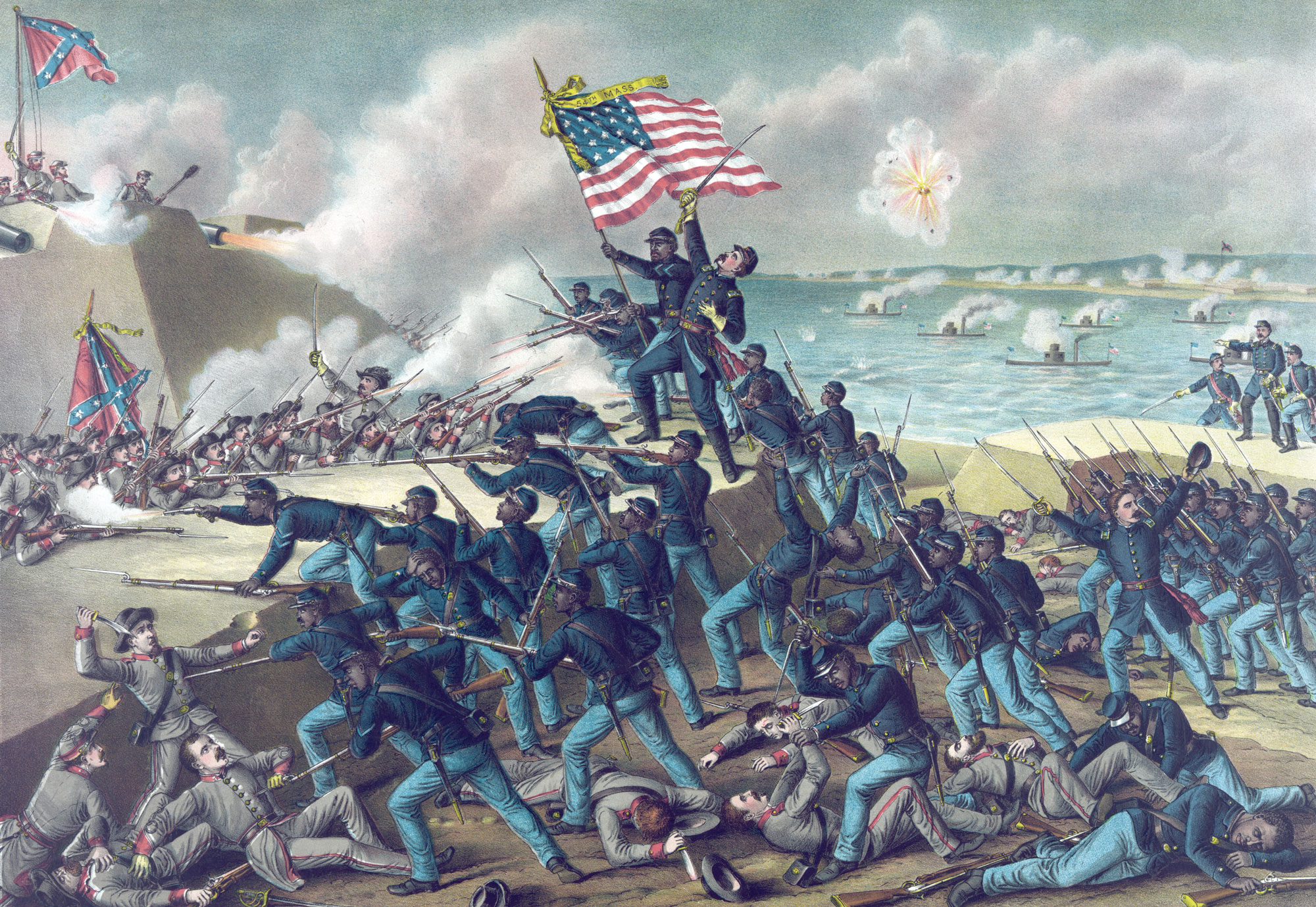
Confederates captured African-American soldiers from the 54th Massachusetts Infantry during a skirmish on James Island and at the Battle of Fort Wagner (depicted above) on Morris Island—as well as three black sailors from the Union gunboat Isaac Smith—which prompted the first true test in the Department of the South regarding how Confederate authorities would treat black prisoners of war.
The Senate then debated alternative procedures for the retaliation. Mississippi Senator James Phelan argued that U.S. officers in command of black troops were not entitled to the right of surrender and proposed to authorize officers and soldiers of the Confederate States to “take the life of such officer at any time and under any circumstances.”4 His colleagues rejected this plan. The final Congressional resolution on retaliation, passed May 1, 1863, announced that a Confederate military court should try U.S. officers who commanded black troops for inciting servile insurrection and put them to death or otherwise punish them. Black men taken in arms against the Confederacy, even if they were born free in a northern state, would be delivered to state authorities in the states where they were captured.
The Confederate legislators clearly made no distinction between men who were born free and were northern citizens, and men who had been enslaved in southern states. All that mattered was that if the soldier was black, he was not a legitimate combatant.
The Confederate Congress debated and passed its retaliation resolution at the moment in time that Union commanders in the Department of the South escalated the size and scope of their raids on the coastal mainland of South Carolina and Georgia. On June 2, 1862, two companies of the 2nd South Carolina Infantry under Colonel James Montgomery (formed around a group of freedmen recruited from a refugee camp at Key West, Florida), guided by Harriet Tubman, steamed 25 miles up the Combahee River. They confiscated cotton and horses and opened sluices to flood fields. They burned four plantation houses, six mills, and 34 outbuildings. They liberated 725 slaves.
Confederates did not capture any prisoners during the Combahee River Raid, but General Hunter wanted to protect the black troops under his command from the threatened Confederate retaliation. He ordered Montgomery to send any Confederate prisoners he captured—soldier or citizen—in irons to Hilton Head to hold as hostages to ensure the proper treatment of any black soldiers the Confederates might capture. He also received permission from the U.S. War Department not to exchange prisoners in his theater of the war and to put those he held in “close custody.” The U.S. agent for exchange of prisoners also gave formal written notice to his counterpart that the federal government would protect all its soldiers, regardless of color, and would retaliate if any of them were harmed.
Although both the Confederate and U.S. governments had threatened retaliation over the issue of black troops, there had not been a test in the Department of the South. Since the executions on St. Catherines Island in November 1862, the Rebels had not had the opportunity to take any black prisoners. The test came when the 54th Massachusetts Infantry, recruited from black men living in the Northeast and Midwest and under the command of Colonel Robert Gould Shaw, son of a prominent abolitionist family, arrived in theater. Some of the enlisted men had been enslaved in southern states earlier in their lives, some had been born free in northern states.
 Library of Congress
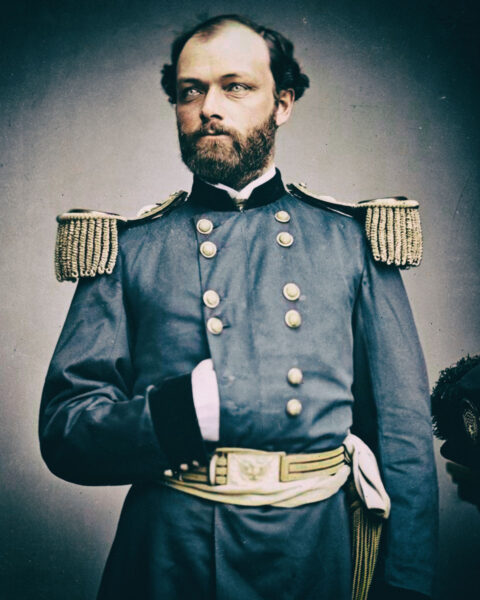
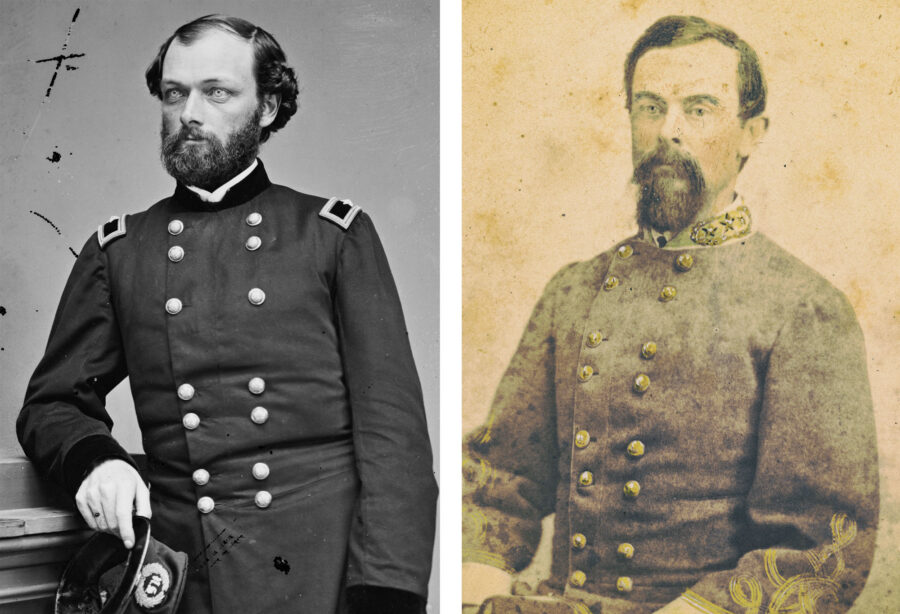
Quincy A. Gillmore (left) and Johnson Hagood
The 54th Massachusetts joined the 2nd South Carolina on a raid that burned the village of Darien, Georgia, on June 11, but the role of black troops in the Department of the South shifted immediately afterward, when Major General Quincy A. Gillmore replaced Hunter. Gillmore was to do what Hunter had failed to do: capture Charleston. Gillmore was not interested in raids or liberating slaves. He was an artillery technologist who hoped to pound Confederate defenses into submission. He decided to attack Morris Island, a narrow strip of land that guarded the approach to Charleston Harbor. He included the 54th Massachusetts in a diversionary landing on James Island, which contained the main Confederate defensive lines shielding the prized city from an infantry attack.
On July 16, 1863, at 3 a.m., two companies of the 54th were on picket on the extreme right of the Federal line when six companies of skirmishers from the 25th South Carolina Infantry began to probe the Federal position. The pickets and skirmishers exchanged fire for several minutes, and then the main body of Confederate infantry and an artillery battery arrived on the scene. The pickets of the 54th conducted a fighting retreat. They fell back through Solomon Legare’s plantation and its main house. A detachment from the 5th South Carolina cavalry rode after them and drove them toward a marsh. Near the house, the Rebels captured 13 men of the 54th, none of whom happened to be from Massachusetts.
The prisoners were instead from Pennsylvania, Ohio, Illinois, and Michigan, ranging in age from 18 to 38, and included laborers, a farmer, a cook, a barber, a teamster, and a seaman. Confederate brigadier general Johnson Hagood, in command on James Island, wrote his superiors, “Thirteen prisoners Fifty-fourth Massachusetts, black. What shall I do with them?”5 He thought two of them were escaped slaves, the others born free. After receiving instructions, he stripped them of their uniforms, tied them up in a gang (the treatment given runaway slaves), and sent them to Charleston.
For the first time in the Department of the South, the Confederacy was in a position to implement its plan for retaliation. Before officials could act, however, Rebel troops captured more prisoners from the 54th when it fought as the lead regiment in the July 18 attack on Fort Wagner, an enormous sand earthwork on Morris Island. Confederates captured no white officers but at least 73 black soldiers. One of them, Daniel States, a farmer from Pennsylvania, lay wounded, and when Confederate soldiers brought him into the earthwork, an officer ordered the guards not to kill him and took their names to ensure they did not do so.
The northern organizers and promoters of the 54th were wealthy and influential Republicans, and they pressed the Lincoln administration to act to protect the black prisoners. The U.S. War Department issued General Orders No. 252 on July 31, 1863, which demanded that Confederates treat all U.S. soldiers as prisoners of war without distinction of color. “To sell or enslave any captured person, on account of his color, and for no offence against the laws of war, is a relapse into barbarism and a crime against the civilization of the age,” it read.6 The order announced that the United States would put a Confederate prisoner of war to hard labor for every U.S. soldier sold into slavery and would execute a Confederate prisoner of war for every U.S. soldier put to death.
Historians are very familiar with General Orders No. 252, but they question its efficacy, because they do not consider it within the specific context for which it was issued: the protection of the black prisoners from the 54th Massachusetts held in the Department of the South. The Lincoln administration took concrete actions to support the retaliation order in South Carolina. The international customs of war, which sanctioned the use of retaliation, demanded that a combatant have official information before implementing retaliation. The U.S. War Department did not have official information about the number, names, and fate of the black soldiers from the 54th who were missing after the regiment’s assault on Wagner. Secretary of War Edwin Stanton did, however, have names and exact location for three captured black sailors of the Union navy.
 National Archives
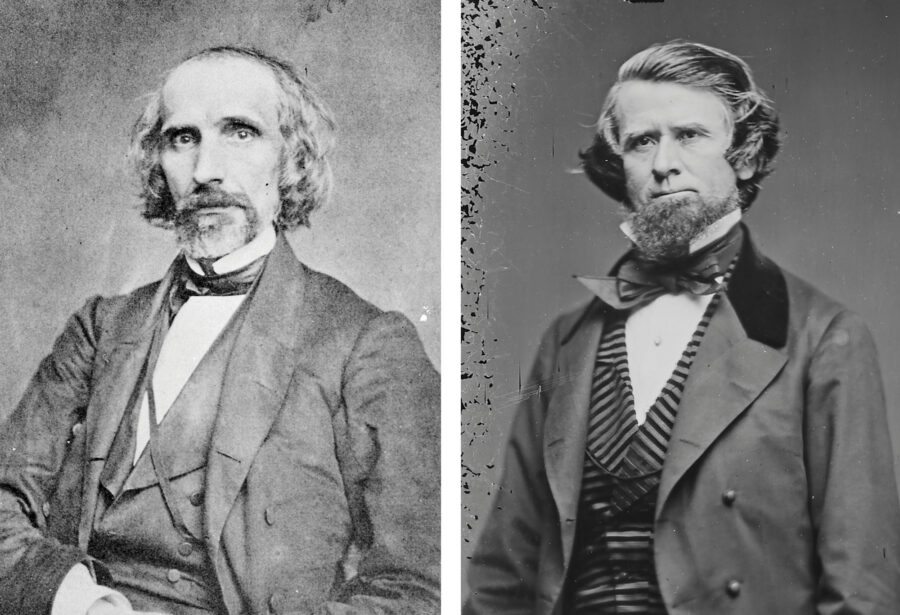
Though James A. Seddon (left), the Confederate secretary of war, urged that none of the captured soldiers from the 54th Massachusetts be brought to trial, South Carolina Governor Milledge Bonham (right), to whom the prisoners had been turned over, instructed his attorney general to try prisoners who appeared to be slaves or free blacks born in Confederate states.
Orin H. Brown, William H. Johnson, and William Wilson were New Yorkers serving on the gunboat Isaac Smith when Confederates captured its crew on the Stono River near Charleston on January 31. The white officers and sailors were immediately paroled, but the three freeborn black men were put in a small cell in the Charleston County Jail. Just before the Federal assault on Fort Wagner, they managed to get a letter delivered to the U.S. Consul in Nassau, the Bahamas, informing authorities about their situation. Secretary of the Navy Gideon Welles sent their letter to Stanton.
On August 8, Stanton ordered the U.S. commissioner for prisoner exchange, Major General Ethan Allen Hitchcock, to select three Confederate prisoners from South Carolina to be confined in close custody as hostages in order to secure the lives of the three sailors. The Lincoln administration used the fortuitous timing of the information about the black sailors to signal the Confederate government about its serious intent to protect free northern-born black prisoners in South Carolina. A clerk in the Confederate War Department noted on August 13 that the U.S. held South Carolina soldiers as hostages for “free negroes.” The Lincoln administration drew its line for the Department of the South: It would protect black men born free.
The Confederacy received the message. The Davis administration swerved from its intended course because of Lincoln’s retaliation order, the South Carolina hostages, and its own internal divisions over the legality of executing black men who were born free. South Carolina governor Milledge Bonham specifically requested that Confederate authorities turn over to him the “armed free Negroes from the Federal State of Massachusetts.” On August 1, Secretary of War Seddon had ordered that it be done. The Confederate Congressional resolutions clearly stated that free blacks as well as former slaves were subject to state trials.
The Confederate War Department was, however, deeply divided. Assistant Secretary of War John A. Campbell, a former justice of the U.S. Supreme Court, and Robert Garlick Hill Kean, a University of Virginia law graduate and head of the Confederate Bureau of War, believed that free blacks born in northern states were legitimate soldiers. Kean was blunt. “It is very clear the United States have the right to enlist any of their own citizens,” he wrote. “They have long in those states regarded negroes as citizens, as in Massachusetts, allowing them the right of suffrage.”7 Historical precedent, he conceded, was on the side of the Lincoln administration. Free blacks had served in the army in the War of 1812.
Confederate authorities also recognized the international publicity attending the soldiers of the 54th Massachusetts, who enjoyed the patronage of financially and politically powerful northern Republicans, and they worried about the diplomatic ramifications of executing any of them. They cautioned Bonham about the “grave international questions involved.” The Confederate commander of the Department of South Carolina, Georgia, and Florida, General P.G.T. Beauregard, sent his chief of staff to remind Charleston’s provost marshal that “should the prisoners be enslaved or executed, retaliation would fall alone upon the military forces of the Confederacy.”8 On August 10, Bonham promised Seddon that he would delay action regarding the men born free in the North until he heard back from the War Department. Seddon thought it would be best not to bring any of the captured black soldiers from the 54th to trial. “Or, if condemned, that your powers of executive clemency be exercised to suspend their execution,” he wrote, “to allow the possibility of arrangement on this question, so fraught with present difficulty and future danger.”9
Bonham ignored this advice and instructed his attorney general to try prisoners who appeared to be slaves or free blacks born in Confederate states. On September 8, the Charleston District Police Court, a five-man tribunal, tried the four black prisoners of the 54th Massachusetts who were alleged to be former slaves from Virginia and Missouri. Bonham had appointed two prominent Charleston lawyers and former state legislators as counsel for the defense, and they were well prepared with arguments that echoed the concerns that Kean and Semmes had made during the Confederate policy debates. They questioned “the jurisdiction of the court, as a Civil Tribunal, to try offenses committed by persons engaged as soldiers in the act of war, and in the ranks of the enemy.”10 The court unanimously decided it had no jurisdiction.
Confederate authorities decided to distinguish between black Federal prisoners born in slavery and those born free in northern states. They tipped their hand to the U.S. War Department on August 25 during negotiations over prisoner exchanges. When the U.S. agent demanded that white officers and their black troops be treated as prisoners of war and exchanged, his Confederate counterpart said his countrymen would “die in the last ditch” before giving up the right to return recaptured property to slavery, but “they were willing to make exceptions in the case of free blacks.”11
Meanwhile, the prisoners from the 54th Massachusetts languished in the Charleston jail. Federal military officials in the Department of the South knew about the decision of the Charleston Police Court. Although the free black prisoners had not been executed or sold into slavery, they were still in the possession of the State of South Carolina, which implied they were felons, rather than in the possession of the Confederate military, which would acknowledge that they were legitimate prisoners of war. The Confederacy wanted the prisoners back, but Bonham refused to hand them over.
Confederates showed their change in policy through their treatment of the next group of black prisoners taken in the Department of the South. On February 7, 1864, Federal forces landed at Jacksonville, Florida, as part of an expeditionary force to gather supplies, cut off the supply of beef from Florida that fed Confederate troops, and register loyal Union voters. The troops included the 54th Massachusetts, the 8th United States Colored Troops (USCT), made up mostly of freeborn black men from northern states recruited in Philadelphia, and the 1st North Carolina, a regiment filled mostly with escaped slaves from the coastal regions of North Carolina and Virginia. On February 20, these black soldiers fought in the Battle of Olustee. It was a disastrous defeat for the Federals, who left a large number of wounded men on the field. Confederate soldiers, until their officers stopped them, murdered an unknown number of wounded black men where they lay.
After the wave of atrocities was over, Confederate officials at Olustee implemented the new policy of treating captured free blacks as prisoners of war. They brought black wounded soldiers off the field last, refused medical treatment to some, and performed unnecessary amputations on others. Black and white captives were then loaded into boxcars, 40 to a car, and taken by train to Lake City and Tallahassee. When the prisoners were well enough to travel, they went to Camp Sumter, the new Confederate military prison opened that February in Andersonville, Georgia. They arrived in small groups, in various states of recovery from their wounds, over the next five months.
 Harper’s Weekly
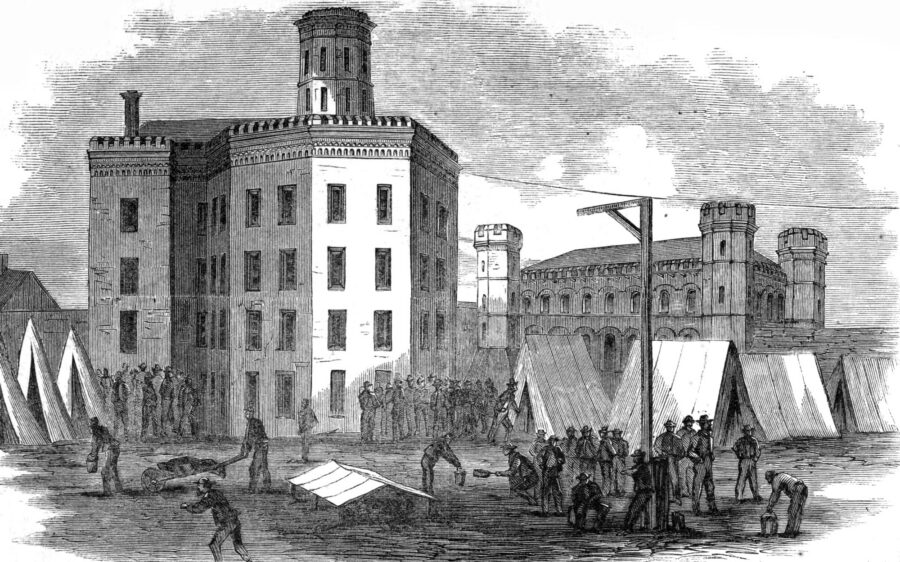
“The privations of the white soldiers are nothing in comparison to ours, in our destitute condition, being as it were without friends, and in the enemy’s hands, with an almost utter hopelessness of being released, and not having heard from our families or friends since we were captured,” wrote the black Union soldiers held in the Charleston jail (shown above) in a letter that made its way north and was published in the New-York Tribune.
Typical of the disarray of the Confederate command structure relative to its prisons, commanders at Camp Sumter were shocked when the trains bringing prisoners to the prison discharged black men on March 14. They had no warning and no instructions. Lieutenant Colonel Alexander W. Persons, in command of the post, asked a superior what he was supposed to do. “Until further orders treat them as prisoners of war,” was the response.12 Seventy-one black soldiers captured at Olustee eventually ended up in Andersonville. They camped near the prison’s south gate, on a slope near the ditch prisoners used as a toilet.
The presence of black soldiers in Andersonville legitimized them as combatants under the laws of war, but prison officials were determined to mark them with a separate status from the white prisoners. Their wounds were not treated and they were put to manual labor. Confederate sergeants sometimes punished the laborers by whipping them with a leather strap attached to a staff. They gave Isaac Hawkins of the 54th, a 29-year-old sailor from Medina, New York, lashes across the entire back of his body. Thirty-three of the 106 black soldiers eventually imprisoned at Andersonville, or 31%, died—close to the overall death rate there of 29%.
The Confederacy had not yet communicated to U.S. authorities that they were treating freeborn black soldiers as legitimate combatants. They were forced to do so after a Federal officer who had been held as a prisoner in Charleston and released on August 3, 1864, brought with him a letter from 40 soldiers of the 54th Massachusetts with their names attached. These were the men in the Charleston jail who had been captured the year before in the actions on Sol Legare and Morris Islands. “The privations of the white soldiers are nothing in comparison to ours, in our destitute condition, being as it were without friends, and in the enemy’s hands, with an almost utter hopelessness of being released, and not having heard from our families or friends since we were captured.”13 The officer sent a copy of the letter to the New-York Tribune. The paper published the note on August 10 and asked Massachusetts journalists to circulate widely the list of names, which included two soldiers from the 55th Massachusetts Infantry and the black sailors from the Isaac Smith. One notable name was James Caldwell, a blacksmith from Battle Creek, Michigan, and the grandson of Sojourner Truth.
Governor Bonham still held these captives as state prisoners as he sought a way to put them on trial. The new surge of publicity forced the Confederate War Department’s hand. On August 31, Secretary of War Seddon admitted to Bonham that the Congressional retaliation resolutions were defunct because of the “embarrassments attending” the problem of free black prisoners, and the “serious consequences which might ensue from the rigid enforcement of the act.” He instructed other state governors to consider free blacks captured in Federal uniform as prisoners of war and treat them similarly to white captives “except in some trivial particulars indicative of inferior consideration.”14
The U.S. War Department learned of the Confederate concession a little over a month later. On October 9, 1864, Confederates paroled and released to the Union exchange agent three lieutenants captured in command of black troops. “These are the first deliveries of this class of prisoners,” the agent wrote Hitchcock.15 Several days later, during an exchange of naval prisoners, Confederates delivered the three New Yorkers from the captured Isaac Smith and two other black sailors from the Charleston jail.
Robert E. Lee twice put the new Confederate policy in writing for Lieutenant General Ulysses S. Grant. On October 3, he proposed to exchange prisoners from the armies operating in Virginia. “I intend to include all captured soldiers of the United States of whatever nation and color under my control,” he said. “Deserters from our service and negroes belonging to our citizens are not considered subjects of exchange and were not included in my proposition.” Grant rejected the offer. “The Government is bound to secure to all persons received into her armies the rights due to soldiers,” he said. Two weeks later, during a retaliation correspondence resulting from Confederates using black prisoners to labor on fortifications around Richmond, Lee admitted that if “colored soldiers not slaves” were included in the work party, it was a “mistake” made without the sanction of the Confederate War Department and would be “corrected.”16
On December 8, Governor Bonham turned over to the Confederacy all the black prisoners he held from the 54th Massachusetts. They traveled by train to join their comrades who had been transferred in September from Andersonville to a stockade in Florence, South Carolina. The integration of all the black prisoners from the 54th into the Confederate military prison system reflected the fact that the Confederate government had officially changed its stance on the status of black soldiers from northern states.
The Confederate Congress made it legal on February 8, 1865, when its members amended the original retaliation resolutions. Originally, the Confederacy threatened to retaliate if the United States “employed negroes in war.” Now, it would happen if the United States “employed negro slaves.” Repealed were the sections that required military courts to execute or punish white officers and that required Confederate officers to deliver black prisoners to state authorities. Two weeks later, Confederate exchange agents delivered 14 black U.S. soldiers to the Union exchange agent in Virginia.
In light of the Confederate concession, the Lincoln administration authorized the exchange of all prisoners of war held in the Department of the South. Twenty-seven prisoners from the 54th Massachusetts were still held in the Confederate military prison in Florence. One of them was Daniel States, the wounded soldier whose life was saved at Wagner by the Confederate officer who wrote down the names of his guards.
The designated exchange point for the Federal prisoners was Wilmington, North Carolina. Between February 22 and March 4, 1865, Confederate officials delivered 8,684 prisoners of war, 120 of them black Union soldiers, at a railroad crossing on the Northeast Cape Fear River. The prisoners from the 54th arrived in boxcars that stopped right at the point where guard outposts marked the extent of the Federal lines outside Wilmington. They saw a black Union soldier on picket by the side of the railroad and knew their prison ordeal was over. They walked to the camps of Federal regiments stationed at the river, who had made banners wreathed in evergreens that read “We Welcome You Home Our Brothers,” and had cooked rations and coffee to feed them. Of the 13 soldiers of the 54th captured on Sol Legare Island on July 16, 1863—the first free black prisoners in the Department of the South—nine had survived to see this moment.
Black captives who were former slaves, with a few exceptions, were excluded from the exchanges that occurred near the end of the war. The Confederate government did not hold trials for them and publicly execute them in mass numbers as its original resolutions threatened, but it never conceded they were legitimate soldiers. The Confederate military always viewed and treated them as servile insurrectionists and recovered property. Confederate soldiers often murdered them on the battlefield. Confederate military officials used them as slave laborers, returned them to their former owners, or sold them at auction. According to the research of historian Caroline Newhall, there were at least 2,323 black captives from 48 different usct regiments; the Confederate military enslaved 1,900 of them. The United States recovered 201 black prisoners through exchange and 384 through liberation by Union forces. The number of black soldiers who died in Confederate military captivity is a confirmed 273, but the probable total is 686, a mortality rate double that of white captives.
The failure of the United States to effectively protect its formerly enslaved black soldiers has obscured its successful protection of free black soldiers born in northern states. The Confederacy made an important concession that it did not want to make, ultimately sparing the lives of men like Daniel States. The story of freeborn black prisoners in the Department of the South shows that retaliation under the right circumstances worked to alter policy and practice during the American Civil War.
Lorien Foote is the Patricia & Bookman Peters Professor in History at Texas A&M University. She is the author of four books and the editor of three collections about the American Civil War. Her most recent publications include Rites of Retaliation: Civilization, Soldiers, and Campaigns in the American Civil War (University of North Carolina Press) and, with Earl J. Hess, The Oxford Handbook of the American Civil War. Her digital humanities project explores the escape of 3,000 Union prisoners of war from the Confederacy: ehistory.org/projects/fugitive-federals.html
Notes
1. James A. Seddon to P.G.T. Beauregard, November 30, 1862, in United States War Department, The War of the Rebellion: A Compilation of the Official Records 129 vols. (Washington, 1880–1901), Ser. 2, Vol. 4: 954 (hereafter OR).
2. General Orders No. 111, December 24, 1862, OR, Ser. 2, Vol. 5: 795–797.
3. Extract from President’s Message, January 12, 1863, OR, Ser. 2, Vol. 5: 807.
4. Journal of the Congress of the Confederate States of America, 1861–1865, Vol. 3 (Washington, D.C., 1904), 211.
5. Hagood to Nance, July 16, 1863, OR, Ser. 2, Vol. 6: 123–124.
6. GO 252, July 31, 1863, OR, Ser. 2, Vol. 6: 163.
7. Edward Younger, ed., Inside the Confederate Government: The Diary of Robert Garlick Hill Kean (Baton Rouge, 1985), 91.
8. Luis F. Emilio, A Brave Black Regiment: History of the Fifty-Fourth Regiment of Massachusetts Volunteer Infantry 2nd edition (Boston, 1894), 404–405.
9. Seddon to Bonham, August 14, Seddon to Bonham, September 1, 1863, OR, Ser. 2, Vol. 6: 190–194, 202, 245.
10. Howard C. Westwood, “Captive Black Union Soldiers in Charleston What to Do?” in Black Flag Over Dixie: Racial Atrocities and Reprisals in the Civil War, ed. by Gregory J.W. Urwin (Carbondale, 2004), 43.
11. Meredith to Hitchcock, August 25, 1863, OR, Ser. 2, Vol. 6: 225.
12. Testimony of Alexander W. Persons, August 30 and September 28, 1865, Trial of Henry Wirz, House Executive Document No. 23, December 7, 1867, United States, 40th Congress, 2nd Session (1867–1868), 460.
13. “Colored Soldiers in South Carolina,” New-York Daily Tribune, August 10, 1864.
14. Seddon to Bonham, August 31, 1864, OR, Ser. 2, Vol. 7: 703–704.
15. Mulford to Hitchcock, October 9, OR, Ser. 2, Vol. 7: 956.
16. Lee to Grant, October 3, Grant to Lee, October 3, Lee to Grant, October 19, 1864, OR, Ser. 2, Vol. 7: 914, 991, 1011.