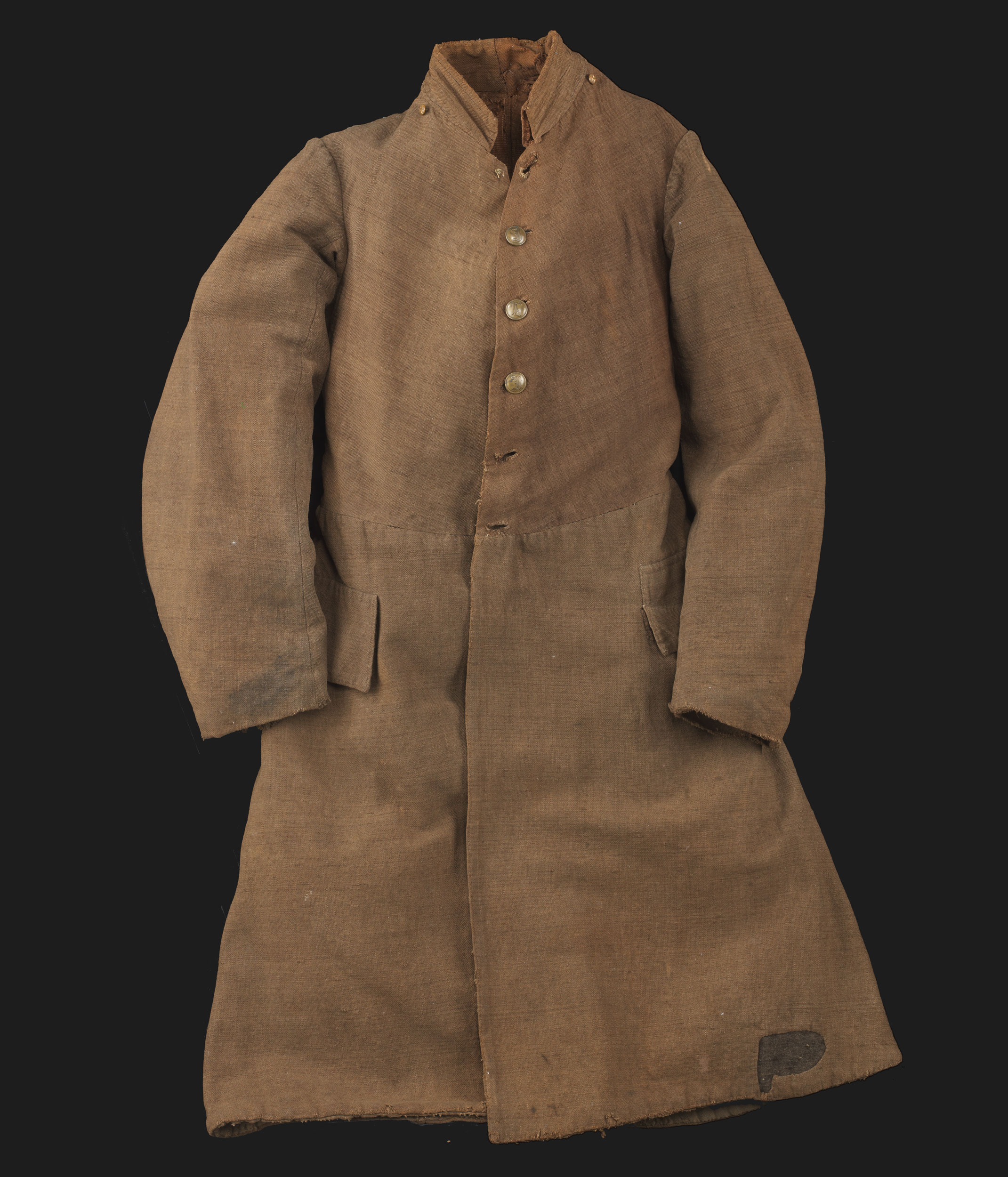
 Hugh Talman, National Museum of American History
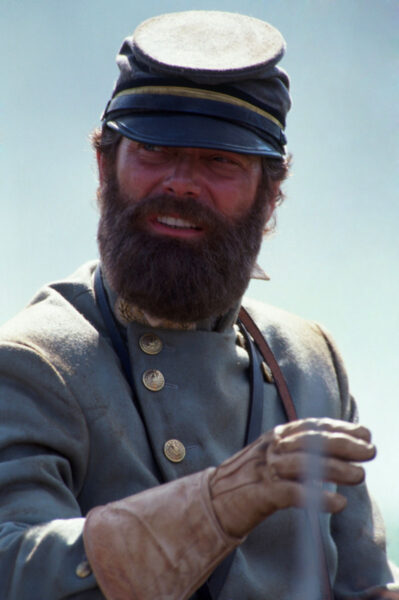
“Butternut” clothing—its distinctive brown-gray color the product of dye from the nuts of butternut trees—was a common sight among Confederate soldiers and sympathizers during the war. This butternut frock coat was worn by a Confederate soldier in the 26th South Carolina Infantry.
but•ter•nuts | noun | A term applied to the Confederate soldiers during the late Civil War, so called from the color of their clothes, a cinnamon color, which color is obtained from the skins of the butternut.1
American Beech. White Ash. Eastern Hemlock. Northern Red Oak. Sugar Maple. Each one standing tall as a silent sentinel in America’s woodlands and mountainsides. A towering force known to grow up to 100 feet tall, the butternut or white walnut tree is often found in the well-drained soils of streambanks, coves, and hillsides. Native to North America, its range extends west from New Brunswick to Minnesota and southward into northern Alabama and northern Arkansas. Each spring, the tree produces small yellow-green blossoms, which give way to lemon-shaped, green-hulled nuts that fall to earth in late summer or early autumn. Squirrels, birds, and deer nibble on its nuts. And the tree has long been valued by indigenous peoples as a source of food, dye, and medicine, and, later, by wave after wave of European settlers. Prized by generations of American furniture and cabinet makers, the butternut’s wood has a rich, warm, golden color that is soft yet durable. The tree’s edible nuts are rich, oily, and buttery in flavor. When simmered in warm water, the nut’s hulls release a dark brown substance that can be used to dye wool, cotton, or flax a yellow-brown or brown-gray color. In the early 19th century, that color was a familiar sight across parts of the Ohio River Valley, where dresses and shirts dyed this plain and serviceable yellow-brown tone—often called “butternut”—were worn by many of the region’s poor farmers.
In the decades following the American Revolution, Americans had streamed westward across the Appalachian Mountains and into the vast interior of the continent. Pushing out indigenous peoples, white families and whole communities set off from New England and upstate New York, making their way along the rugged roadways toward the Great Lakes and into the Old Northwest. Transplanting the cultural geography of the Northeast itself, they founded new towns that echoed the names of old Yankee settlements, sowed wheat, and planted apple orchards. At the same time, ambitious young men, newly married couples, and small farming families—often of Scotch-Irish decent—left the Upper South in search of a new life in the Ohio River Valley. The colder climate rendered cotton cultivation impractical, yet these southern migrants recreated much of the agricultural world they had known by planting corn, raising hogs, and imagining the western territories as possible ground for the expansion of slavery. With their iconic yellow-brown homespun clothing, these southern migrants soon earned the nickname Butternuts. The new settlers of the Ohio River Valley were different from the start. As historian Daniel Walker Howe wrote, “Yankees and Butternuts spoke with different accents, ate different foods, and practiced agriculture differently…. Yankees believed in public education; Butternuts, in individualism and low taxes. Yankees thought the Butternuts lazy; the latter resented Yankee condescension.” And, of course, they had diametrically opposed views on the institution of slavery.2
The division only intensified as the country drifted toward civil war. In Ohio, residents split sharply between pro-Union factions and the anti-war Copperheads, the latter led by Clement Vallandigham, a state legislator from Dayton who became a two-term member of Congress. A fiery advocate of states’ rights and outspoken opponent of President Abraham Lincoln, Vallandigham pronounced congressional Republicans “belligerent” during an 1861 speech before the U.S. House of Representatives, and firmly advocated “a choice of peaceable disunion upon the one hand, or Union through adjustment and conciliation upon the other.”3 Later, in 1863, he dismissed the Emancipation Proclamation, saying a “war for the Union was abandoned; war for the Negro openly begun…. With what success? Let the dead at Fredericksburg and Vicksburg answer.”4 Such political views garnered widespread sympathy among the southern-leaning, Scotch-Irish descendants who had made their home in the Ohio River Valley at the start of the 19th century. Covering a July 1863 event at which Vallandigham spoke, a startled New York Times reporter wrote, “when the day arrived, there were enough ‘butternuts’ here to make even Jeff Davis turn pale, had they not been his fast friends. They came prepared and bragging that they were going to whip every Union man out of the place.” A “few boys” from the 3rd Ohio Infantry in attendance, however, confronted their political foes and “tore off their butternut coats.”5 Immersed within this divisive political climate, pro-secessionists and anti-Unionists became known throughout the nation as Copperheads or Butternuts.
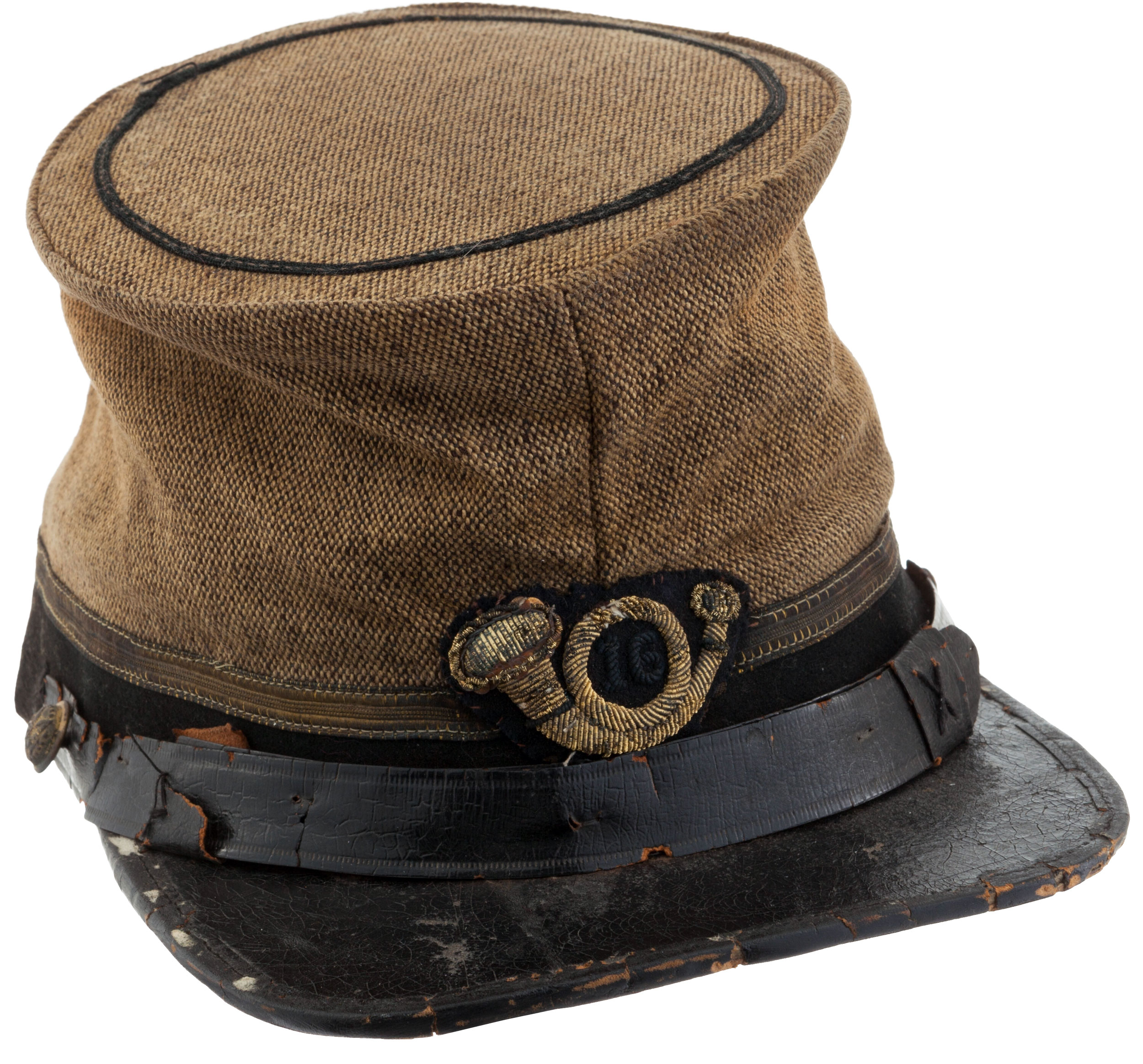 Heritage Auctions (ha.com)
A Confederate officer’s butternut-dyed forage cap
To publicly display their political allegiance, Vallandigham supporters donned clothing dyed with butternut or black walnut, which produced a color reminiscent of Confederate soldiers’ brown-gray uniforms. Women showed their political allegiance by wearing decorative brooches and pins made from butternut hulls and other nuts, pits, and seeds. As one early 20th-century academic theorized: “In cutting a butternut transversely and removing the kernel, there were found the outlines of two perfect hearts joined together. Wearing the butternut badges, they explained that they represented the Northern heart and the Southern heart which could not be torn asunder by war.”6 The brown-gray color of butternut hulls became forever associated with the Confederacy, and the term Butternut or Butternuts began to appear in many late-19th-century dictionaries. Published in 1890, John S. Farmer’s Slang and Its Analogues Past and Present wrote, “the sympathisers with the South in the North and the Middle States during the American Civil War; the term was derived from the colour of the uniforms worn in the early part of the war by Confederate soldiers in the West, which, being homespun, were dyed brown with the juice of the Butternut….”7
In 1915, as the nation faced the prospect of yet another protracted war—this time, with Germany—the United States Department of Commerce issued an alarming report predicting an acute shortage of “aniline,” or synthetic, dyes. “Since August 1, 1914, in consequence of the outbreak of hostilities in Europe, this foreign supply has been interrupted and constantly threatened with nearly complete cessation…. Some important dyes are totally unobtainable. Prices have mounted from 25 to 50 per cent on such dyestuffs as can be delivered,” reported Secretary of Commerce William C. Redfield.8 Encouraging American manufacturers to “fall back upon its own resources,” the American Leather Chemists Association reminded the nation “of our neglected forest supplies” and the people who once “peeled bark, dug roots, chipped wood and made dyes.” Although more subdued in color than the modern aniline dyes popular with consumers, yellow oak, black walnut, Osage orange, yellow wood, mesquite, staghorn sumac, alder, red gum, locust, bluewood, and dogwood could be used to produce dye. Butternut, or Juglans cinerea, the association noted, “was formerly a valuable dye material…. The tree is found in all northern states east of the Mississippi River, and even westward, and it grows also in most of the southern states.” Explicitly connecting the tree to its earlier Civil War history, the report wrote, “the ‘Confederate jeans,’ the cloth much used for Confederate uniform[s] in Tennessee and Kentucky during the Civil War, was with the bark of this tree. It was not the historic ‘confederate gray.’”9 Despite the logistical challenges of importing aniline dyes between 1914 and 1918, the Great War did not spur a resurgence of butternut gray among fashionable or patriotic Americans.
Today, the butternut tree is becoming increasingly rare and is considered a “species of concern” or a “sensitive species” in several states. Facing habitat destruction and highly susceptible to a fungal pathogen known as butternut canker, the United States Forest Service estimated that 77 percent of the butternut trees in North Carolina and Virginia have died in recent decades. Since the 1980s, the number of butternut trees has declined 44 percent across its range.10 Despite its reduced numbers, the United States Department of Agriculture still includes butternut on its list of “Native Plant Dyes” and expressly connects the brown-gray color back to the “famous gray coats that the Confederate Army wore during the Civil War.”11
Tracy L. Barnett is a visiting assistant professor of history at Old Dominion University in Norfolk, Virginia. She has a doctorate in American history from the University of Georgia. Firearms—their meaning to men and their availability in 19th-century America—are the center of her scholarship.
Notes
1. John Russell Bartlett, Dictionary of Americanisms: A Glossary of Words and Phrases Usually Regarded as Peculiar to the United States, Fourth Edition (Boston, 1877), 88.
2. Daniel Walker Howe, What Hath God Wrought: The Transformation of America, 1815–1848 (New York, 2007), 136–139.
3. Speech of Hon. C.L. Vallandigham, of Ohio, Delivered in the House of Representatives, February 20, 1861 (Washington, 1861), 3.
4. Cincinnati Enquirer, January 20, 1863.
5. The New York Times, August 18, 1863. Emphasis in the original.
6. Edward Conrad Smith, The Borderland in the Civil War (New York, 1927), 329.
7. John S. Farmer, Slang and Its Analogues Past and Present: A Dictionary, Historical and Comparative, of the Heterodox Speech of All Classes of Society for More Than Three Hundred Years. With Synonyms in English, French, German, Italian, Etc., Vol. I (n.p., 1890), 398.
8. “Government Report on American Coal-Tar Dye Industry,” The Chemical Trade Journal and Chemical Engineer, Vol. LVI, No. 1452 (March 20, 1915): 261.
9. “Abstracts,” The Journal of the American Leather Chemists Association, Vol. X, No. 8 (August 1915): 435.
10. Randall S. Morin, Kurt W, Gottschalk, Michael E. Ostry, Andrew M. Liebhold, “Regional patterns of declining butternut (Juglans cinerea L.) suggest site characteristics for restoration,” Ecology and Evolution, Vol. 8, Issue 1 (December 2017): 546–559.
11. “Native Plant Dyes,” United States Department of Agriculture (Accessed: March 14, 2026): fs.usda.gov/wildflowers/ethnobotany/dyes.shtml