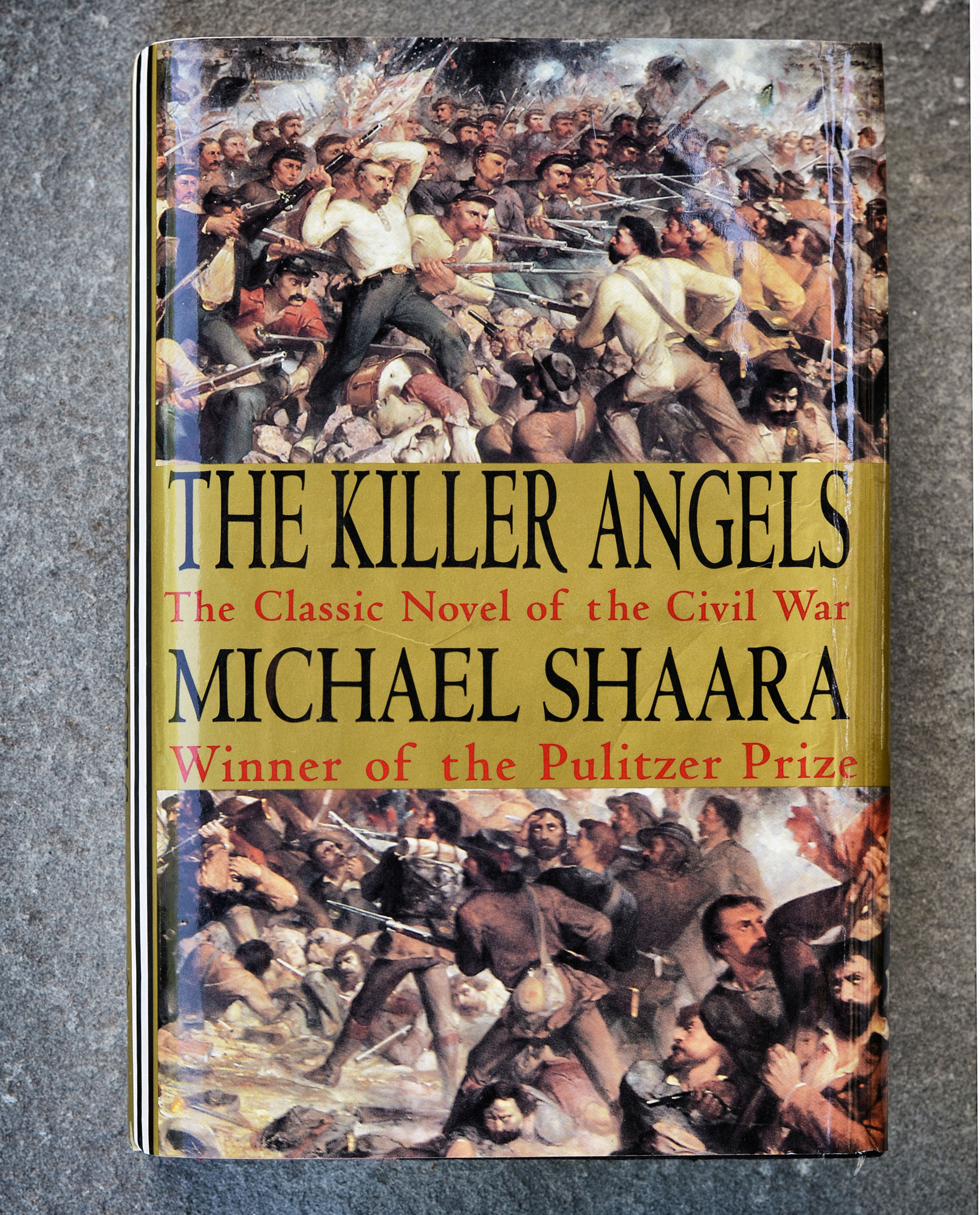
The Killer Angels: The Classic Novel of the Civil War by Michael Shaara, Winner of the Pulitzer Prize
Michael Shaara’s 1974 Pulitzer Prize-winning novel The Killer Angels—a riveting account of the Battle of Gettysburg, told from numerous, richly imagined perspectives—is one of the most important and influential works of Civil War literature.1 It inspired Ken Burns’ seminal documentary The Civil War, and historian James McPherson calls it “a superb recreation of the Battle of Gettysburg.” Scholar Stephen B. Oates is even more effusive: “If I had to choose just one book that best captures the Civil War, this would be it.”2
These praises are understandable—and justly deserved—when considering The Killer Angels‘ undoubted literary merit. The novel’s battle scenes, especially its portrayals of Little Round Top and Pickett’s Charge, are vivid and compelling. Historical figures including Robert E. Lee, James Longstreet, and Joshua Lawrence Chamberlain come to life and capture readers’ imaginations in Shaara’s skillful depictions. The novel portrays in unforgettable ways the courage, loyalties, and doubts of men caught in the crucible of war.
But The Killer Angels is in another important sense a failure. The novel’s interpretation of the Civil War—in McPherson’s words, “what the war was about, and what it meant”—is infected throughout with Lost Cause mythologizing and historical distortions.
How we retell the story of the Civil War profoundly affects more than our collective memory of the most critical period in American history. Shaara’s novel fosters a Lost Cause misremembering of the Civil War, and thus fails to contribute to a historically accurate and morally sound national self-understanding. If we as a people are serious about a better understanding of the Civil War and its enduring legacies, we would do well to remove The Killer Angels from its prominent, privileged place in the canon of Civil War literature.
At first glance, The Killer Angels might not seem to be entangled in ideological questions, given that Shaara claims in the novel’s preface that he wrote The Killer Angels for the same reason that Stephen Crane wrote The Red Badge of Courage: “to know what it was like to be there, what the weather was like, what men’s faces looked like” (XIII).
Shaara also says that, because of conflicting accounts of the battle and the war itself, he “avoid[ed] historical opinions” by going back “primarily to the words of the men themselves, their letters, and other documents” (XIII). In other words, Shaara tells us that he is offering a literary re-creation of the Battle of Gettysburg, similar to The Red Badge of Courage‘s depiction of the Battle of Chancellorsville. This promise, along with the story’s multiple Union and Confederate narrators, implies that The Killer Angels will have an even-handed approach.
But Shaara gives much more than a gripping account of men caught in the confusing, terrifying welter of war. Instead, characters offer explanations for their actions, contemplate the reasons behind the conflict, and consider Gettysburg’s legacy.3
The Killer Angels is, then, a novel of interpretation. And that interpretation too often and too thoroughly perpetuates Lost Cause lies.
Historian Alan T. Nolan does not overstate the matter when he says that the history of the Civil War “is surrounded by vast mythology … generally referred to by historians today as ‘the Lost Cause.'” Arising from southern partisans’ postwar need to rationalize their tragic and destructive attempt to secede, the resulting highly tendentious revision of their prewar history and motives “became a national phenomenon. In the popular mind, the Lost Cause represents the national memory of the Civil War; it has been substituted for the history of the war.”4
A careful reading of The Killer Angels reveals a thorough substitution of Lost Cause mythology for history. This essay will not recount every distortion, but will instead focus on how Lost Cause advocates dealt with race and slavery. A novel that conveys Lost Cause lies about these critical issues fails as even a fictional exploration of the war.
The attack on historical truth starts with denials that slavery caused the Civil War. “No argument in the Lost Cause formula became more an article of faith,” explains historian David W. Blight, “than the disclaimer against slavery as the cause of the war.”5 Aware of the moral stain that slavery left in the war’s aftermath, former Confederates tried to shed that stigma by moving other reasons for secession to the forefront.6
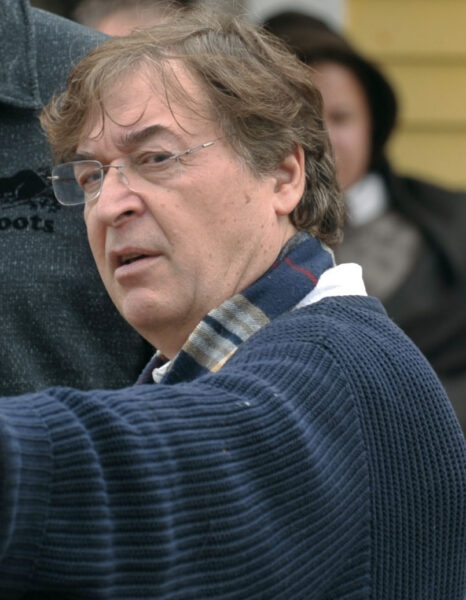
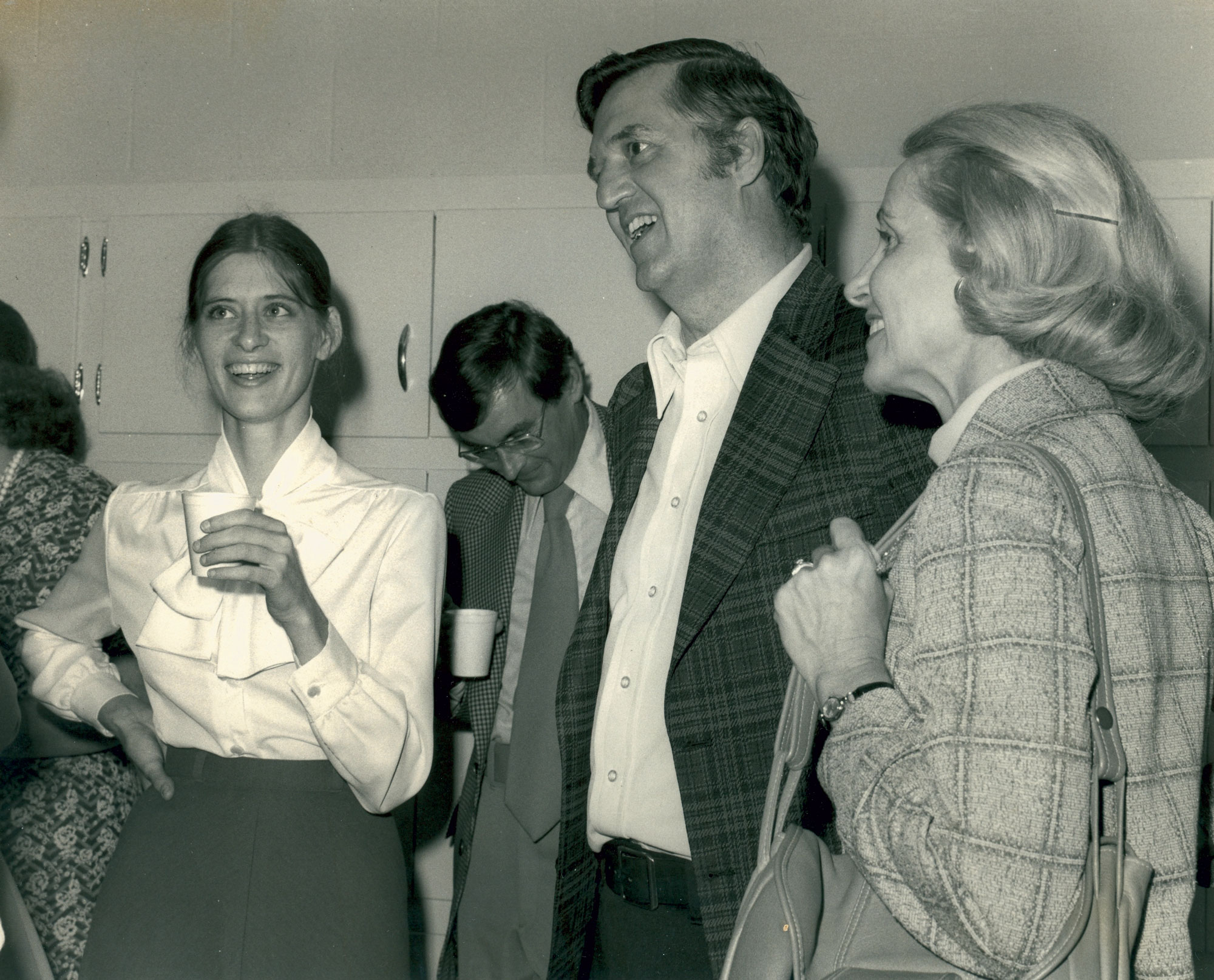 Courtesy of The Michael Shaara Papers, Broward County Library, Bienes Museum of the Modern Book, Fort Lauderdale, Florida
Michael Shaara (second from right) at a February 17, 1976, event at the University of Southern Mississippi, where he was honored for his Pulitzer Prize-winning novel The Killer Angels.
In The Killer Angels, slavery plays no part in any southerner’s reasons for fighting. Instead, Confederate after Confederate emphatically denies any ties between slavery and secession. In a scene that takes place on the evening of June 30, 1863, Lieutenant Colonel Moxley thunders at British army observer Lieutenant Colonel Arthur Fremantle that the South was fighting for “freedom from the rule of what is to us a foreign government” (65). Later in the same scene Major General George Pickett blithely explains that secession was like an individual resigning from a club to preserve his privacy (66). Brigadier General James L. Kemper is amazed that Fremantle could think the war was over slavery (66), just as Brigadier General Lewis Armistead is disgustedly incredulous that Europeans could believe such a thing (255). A group of unnamed Confederate officers chat and agree over what “a shame it was that so many people seemed to think it was slavery that brought on the war, when it was really a question of the Constitution” (66). A Union officer relates that captured Confederate infantrymen declared “they wasn’t fightin’ for no slaves, they were fighting for their ‘rats.’ It finally dawned on me that what the feller meant was their ‘rights'” (170-71).
Nothing in The Killer Angels suggests that these denials are intended to be understood by the reader ironically; these passages stand as straightforward expressions of the characters’ convictions. Shaara thereby accomplishes in the middle of the war what southern partisans achieved only afterward: the stripping away from history of slavery as the single most important cause of the conflict.
The depiction of Robert E. Lee is similarly problematic. While The Killer Angels departs from Lost Cause orthodoxy in depicting Lee as greatly hampered by a heart ailment and unaccountably fatalistic during the Gettysburg Campaign, other facets of Shaara’s portrayal cleanse this most iconic of southern figures of the taint of slavery. Shaara says that Lee “does not own slaves nor believe in slavery” (XVI), but this claim is seriously misleading.
Lee did not personally own slaves, but he also delayed manumitting the Custis family slaves, as required by his father-in-law’s will, for as long as possible in order to financially benefit his sons. More important, while he was troubled by the burdens he thought slavery imposed on both blacks and whites, he also considered the institution part of a divine plan for the betterment of blacks. In fact, historian Michael Fellman persuasively argues that when viewed in proper historical context, Lee’s theologically grounded passive acceptance of slavery “was not an antislavery but a proslavery position.”7
Furthermore, Shaara’s Lee justifies the war in starkly Lost Cause terms. He claims that the war was “forced” upon the South (183). After the fighting concludes on July 2, Lee mournfully ruminates on his decision to violate his oath to the Constitution. His ennobling explanation would please any Lost Causer: “He fought for his people, for the children and the kin, and not even the land, because not even the land was worth the war, but people were, as wrong as they were … they were his own, he belonged with his own” (263). Later, Lee also reflects on why southerners were fighting, and reassures himself that his soldiers “came here ready to die for what they believed in, for their homes and their honor” (268).
It’s true that Shaara has Lee’s trusted subordinate, Lieutenant General James Longstreet, think to himself at one point, “The war was about slavery, all right” (255). But the narrator then immediately states that slavery is not why Longstreet is fighting. The passage reflects Lost Cause mythology in a subtle but important way. Many postbellum southern partisans denied the war was fought over slavery by describing the practice in terms that left it “an impersonal force in history … beyond all human responsibility…. [N]o Southerner fought in its defense, and no Northerner died to end it.”8
A similar view of slavery and responsibility occurs here. Longstreet acknowledges that slavery is connected to the war, but the narrator decouples Longstreet from any moral liability that would flow from fighting on its behalf. In the moral universe of The Killer Angels, slavery does exist, but because not a single southerner fights to preserve or extend the institution, no southerner bears responsibility for its evils or the war’s bloodshed and destruction.
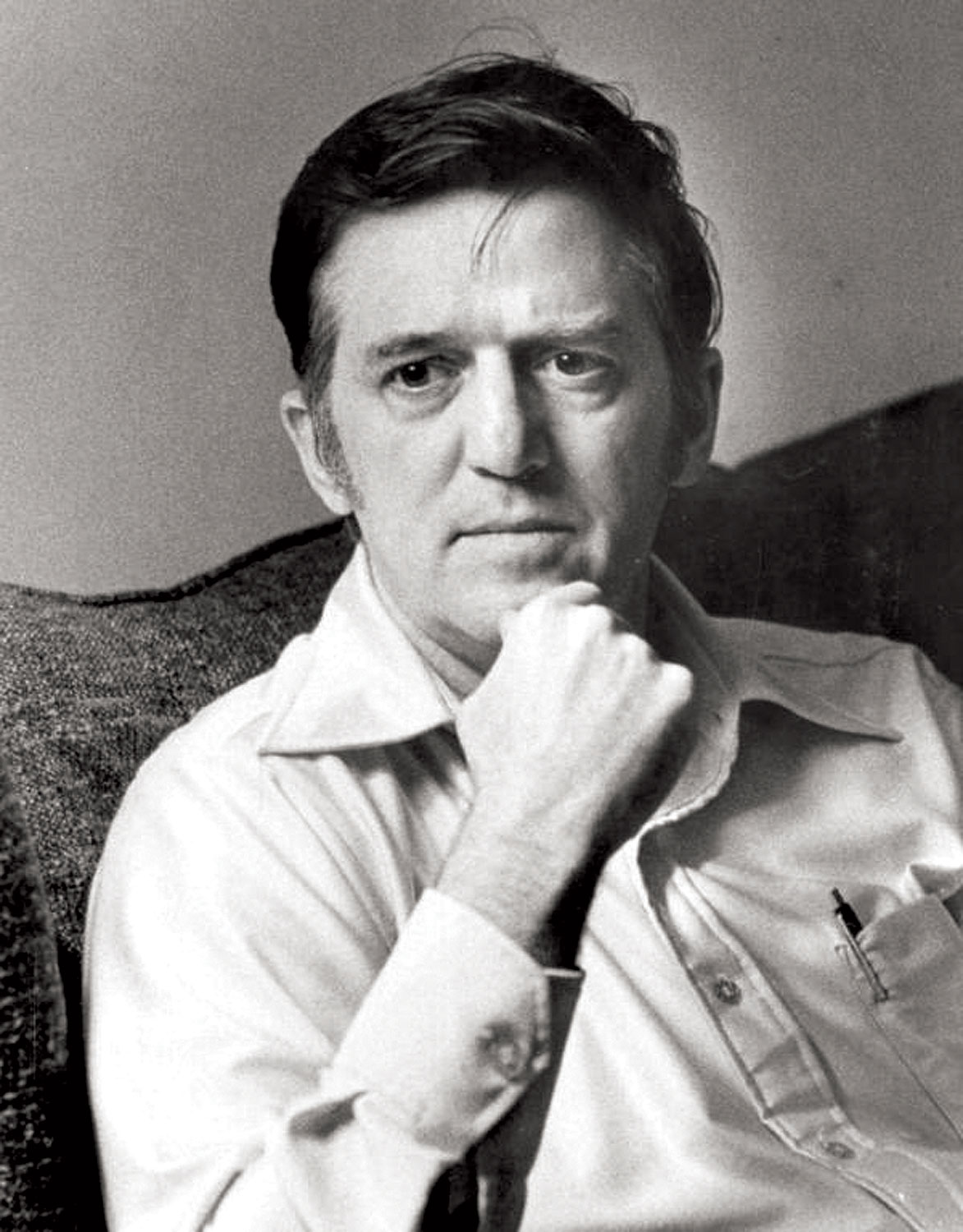 State Archives of Florida, Florida Memory
Michael Shaara
Shaara’s Confederate characters aren’t the sole representatives of Lost Cause mythology. Union colonel Joshua Lawrence Chamberlain, arguably the novel’s central character, is the only one to express discomfiting views about blacks. For Chamberlain, the escaped and wounded slave found by men from his 20th Maine Infantry verges on inhuman. The slave has to Chamberlain a “[l]ook of animal strength” (168) and his eyes roll “horselike” in terror (171). Moreover, when he is near the slave, Chamberlain acknowledges “a crawly hesitation, not wanting to touch him … a flutter of unmistakable revulsion” (169).
In a conversation with his regiment’s veteran sergeant, Kilrain, Chamberlain soon recalls his angry prewar confrontation with a visiting slaveowner, in which Chamberlain objected to the idea that “a Negro was not a man” (177). This conflict between Chamberlain’s beliefs and his experience with the escaped slave is a deeply compelling and realistic moment in The Killer Angels. But it also pulls off the remarkable feat of transferring problems of race entirely to the Union side of the conflict. If a central aim of Lost Cause mythologizing is to eliminate African Americans as a direct cause of the war, this illustrates a method to achieve it: Draw attention away from the southern form of racism that led to secession.
But Chamberlain serves as a mouthpiece for Lost Cause thinking in another, equally disturbing way: the extolling, as Blight puts it, of Confederates as “exemplary men” who through no fault of their own chose “the wrong, or doomed, side in a great war.”9 In the novel’s final pages Chamberlain remembers witnessing Pickett’s Charge:
It was the most beautiful thing he had ever seen. No book or music would have that beauty. He did not understand it: a mile of men flowing slowly, steadily, inevitably up the long green ground, dying all the while, coming to kill you, and the shell bursts appearing above them like instant white flowers, and the flags all tipping and fluttering, and dimly you could hear the music and the drums, and then you could hear the officers screaming, and yet even above your own fear came the sensation of unspeakable beauty (342).
A moment later, Chamberlain’s brother Thomas, a junior officer in his regiment, wonders how the Confederates could fight so hard for slavery, prompting Chamberlain to realize that he “had forgotten the Cause. When the guns began firing he had forgotten it completely. It seemed very strange now to think of morality, or that minister long ago, or the poor runaway black” (343). He then looks at the carefully laid out rows of Confederate dead and feels “an extraordinary admiration. It was as if they were his own men who had come up the hill and he had been with them as they came…. He felt a violent pity” (344).
These evocative passages show why The Killer Angels is so well regarded as an account of the war experience. But they are also deeply problematic, because even if Shaara casts a reconciliationalist light by blurring Chamberlain’s sense of divide between the two armies, Lost Cause themes are also present as Chamberlain pays tribute to the southern attackers: They are heroic, honorable, and worthy of “extraordinary admiration” (344).
The cause of the war—the attempt to establish a separate country built on enslaving human beings—becomes irrelevant to Chamberlain as he looks upon these fallen foes. Chamberlain is no longer gazing upon men pledged to destroying the nation he was fighting to preserve, since Chamberlain now imagines himself marching alongside them. It’s hard to imagine a more valorizing depiction of the Confederate war effort.
Chamberlain’s sense of having been among the charging Confederates also serves as a powerful metaphor for how reconciliation was co-opted by Lost Cause proponents. The story of how, as Blight puts it, “Southerners found they could transform loss on the battlefield into a reunion on terms largely of their own choosing” is a complicated one, and I will not summarize it here. What matters is The Killer Angels‘ final scene shows Chamberlain literally forgetting “the Cause,” the fundamental moral distinctions between the sides, and the slaves whose fate had been the reason for the war. The effect is to equalize the North and South as participants in the conflict.10
Even if The Killer Angels represents a Lost Cause interpretation of the war, is it unfair to hold a work of historical fiction to the same standards as nonfiction history? After all, the objection might run, Shaara is an artist, not a historian, and thus is entitled—as he declares in the novel’s preface—to interpret characters as he sees fit (XIII).
But Shaara exceeds that license when he so seriously contradicts the known and established history of the war. In other words, when artists portray historical episodes and figures imaginatively, when their art purports to re-create history, those interpretations must be, at a minimum, factually consistent with what is reliably known.
Furthermore, a work of art’s ideological content can be assessed independently from its aesthetic value. We rightly appreciate, for example, the cinematic significance and sophistication of D.W. Griffith’s The Birth of a Nation while simultaneously rejecting it as a viable interpretation of the Civil War and Reconstruction due to its vile racism. (Of course, the film remains relevant as an example of how Americans have in the past understood the war and Reconstruction.)
The Killer Angels obviously does not set forth Lost Cause myths to the same extent as The Birth of a Nation. But the difference is one of degree, not type. Furthermore, because the novel’s Lost Cause elements are entwined so thoroughly with some of the most revealing, resonant battlefield depictions in American literature, it’s easy to gloss over the distortions. Shaara might not have “consciously changed any fact” (XIII) pertaining to the fighting at Gettysburg itself, but he did indeed elide a host of important truths about the war’s causes and meaning.
Early in The Killer Angels Shaara describes the heart disease that is slowing killing Robert E. Lee, who would die in 1870 at the age of 63, as “a sick gray emptiness” filling his chest (74). This is an apt metaphor for the deeply injurious effects of the Lost Cause, even today, on our collective memory of the Civil War. There is no better time than the sesquicentennial period, with great public and scholarly attention focused on the ways in which the war continues to shape our national consciousness, to strive for an understanding that is free of the moral and historical rot of the Lost Cause.
Michael Shaara’s The Killer Angels stands alongside Stephen Crane’s The Red Badge of Courage and Shelby Foote’s Shiloh as a remarkable literary depiction of the battlefield realities of the Civil War. But it is long past time to acknowledge that this book—filled with the misrepresentations, fabrications, and heavy sentimentality of the Lost Cause—is seriously deficient, and even harmful, as a fictional exploration of the causes and meaning of the conflict. Perhaps we are still awaiting a work of literature that captures the experiences of those who fought the Civil War while also remaining faithful to historical truths. If so, then to rework Abraham Lincoln’s famous formulation from his December 1862 Annual Message to Congress, we as a people will do better when we can all imagine better.
Thom Bassett, a native of South Carolina who now lives in Rhode Island, is a lecturer in the Department of English and Cultural Studies at Bryant University as well as a regular contributor to The New York Times’ “Disunion” Civil War blog. He is at work on a novel. This essay is dedicated to the memory of Michael Fellman.
My Favorite Gettysburg Book
Historians offer their picks for their favorite book about the Battle of Gettysburg.
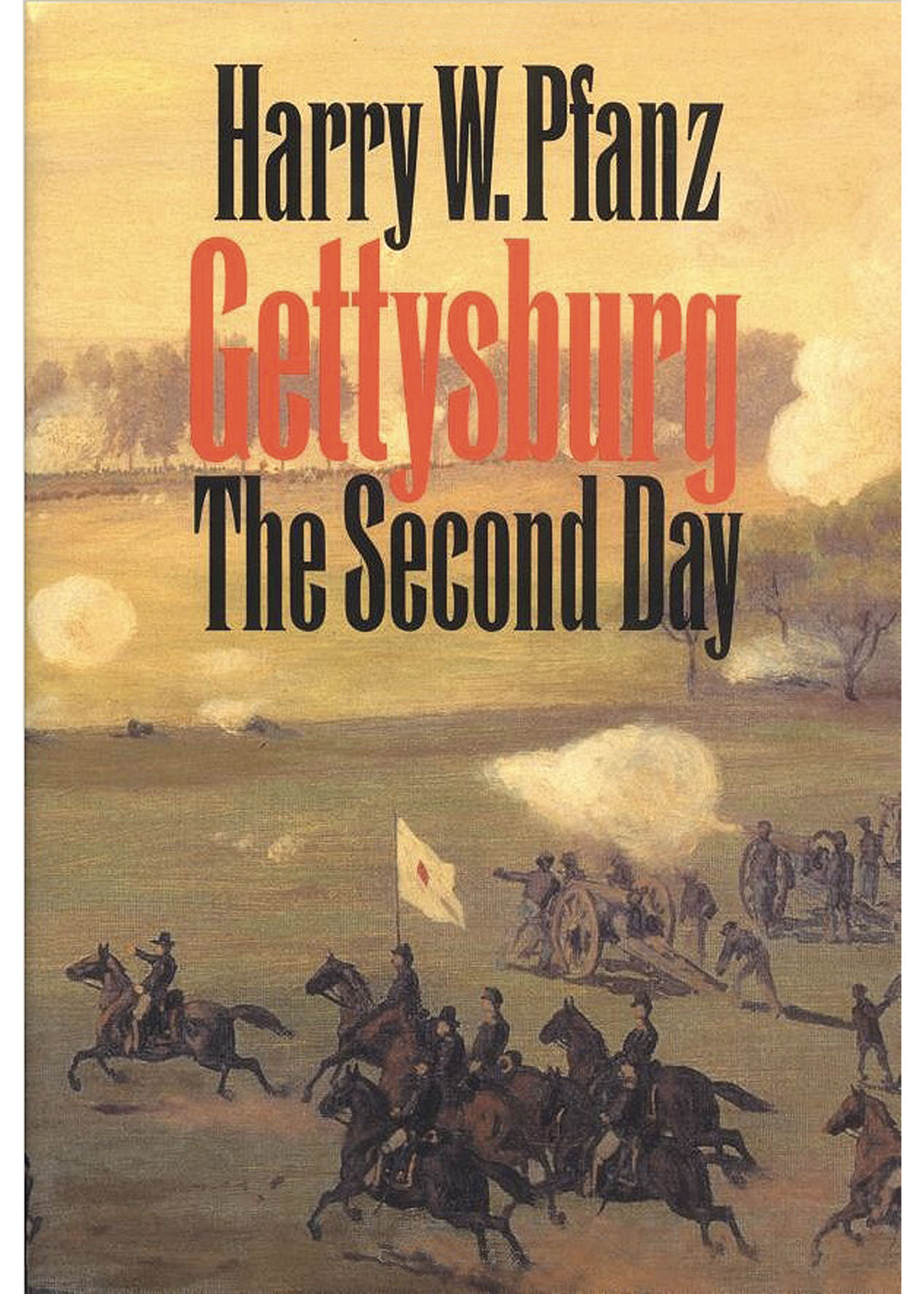
Gettysburg: The Second Day
By Harry W. Pfanz
(1987)
“Combines great storytelling and deep research that vividly brings the horror of Civil War combat to life.”
–Eric J. Wittenberg, author of Plenty of Blame to Go Around (2006) and One Continuous Fight (2008)
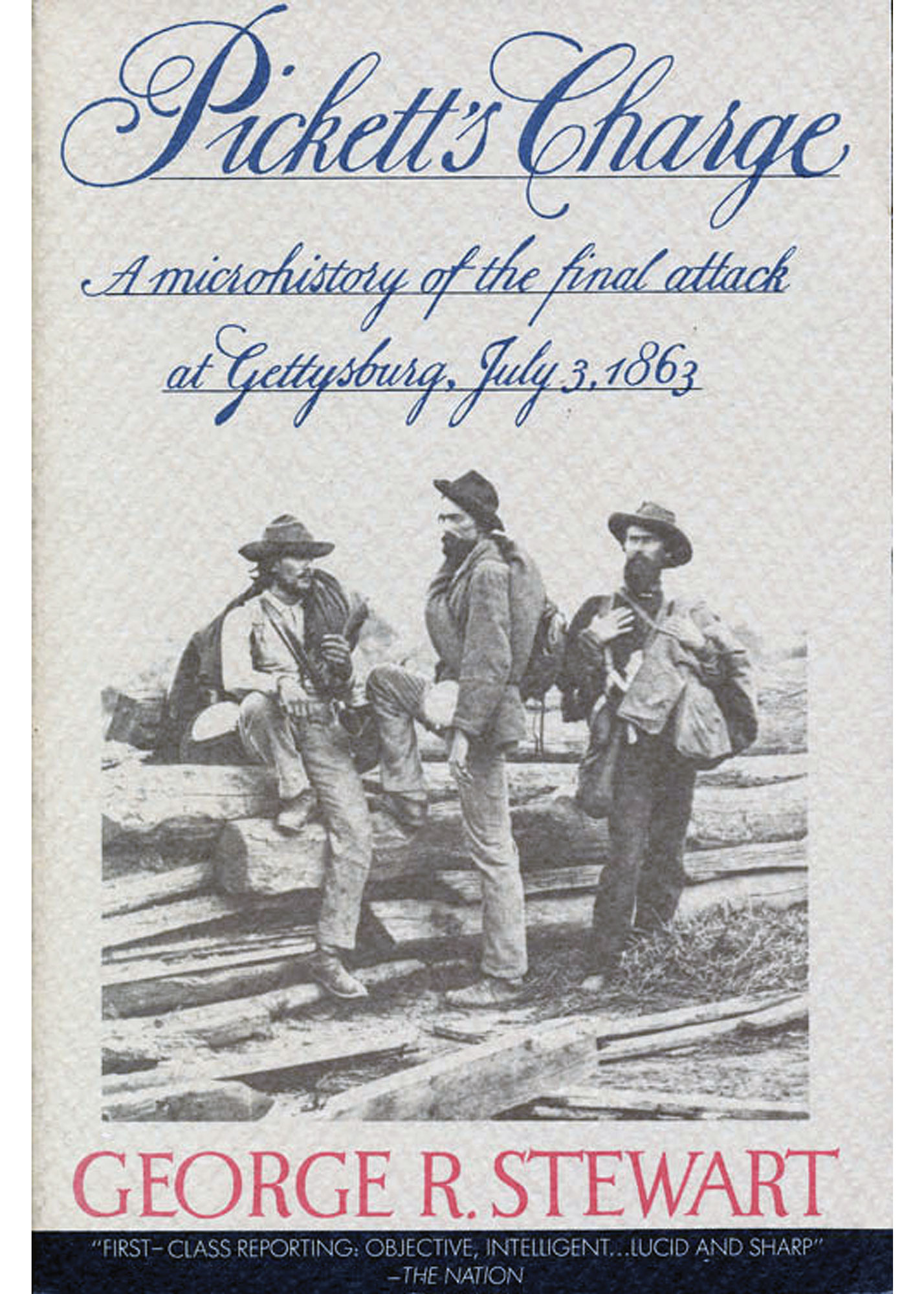
Pickett’s Charge: A Microhistory of the Final Attack at Gettysburg, July 3, 1863
By George R. Stewart
(1959)
“Elegantly written, the book’s dramatic tension sustains itself from first page to last, despite the fact that the reader knows the tragic outcome of the Confederate assault on Cemetery Ridge.”
–Glenn W. LaFantasie, author of Twilight at Little Round Top (2005) and Gettysburg Requiem: The Life and Lost Causes of Confederate Colonel William C. Oates (2006)
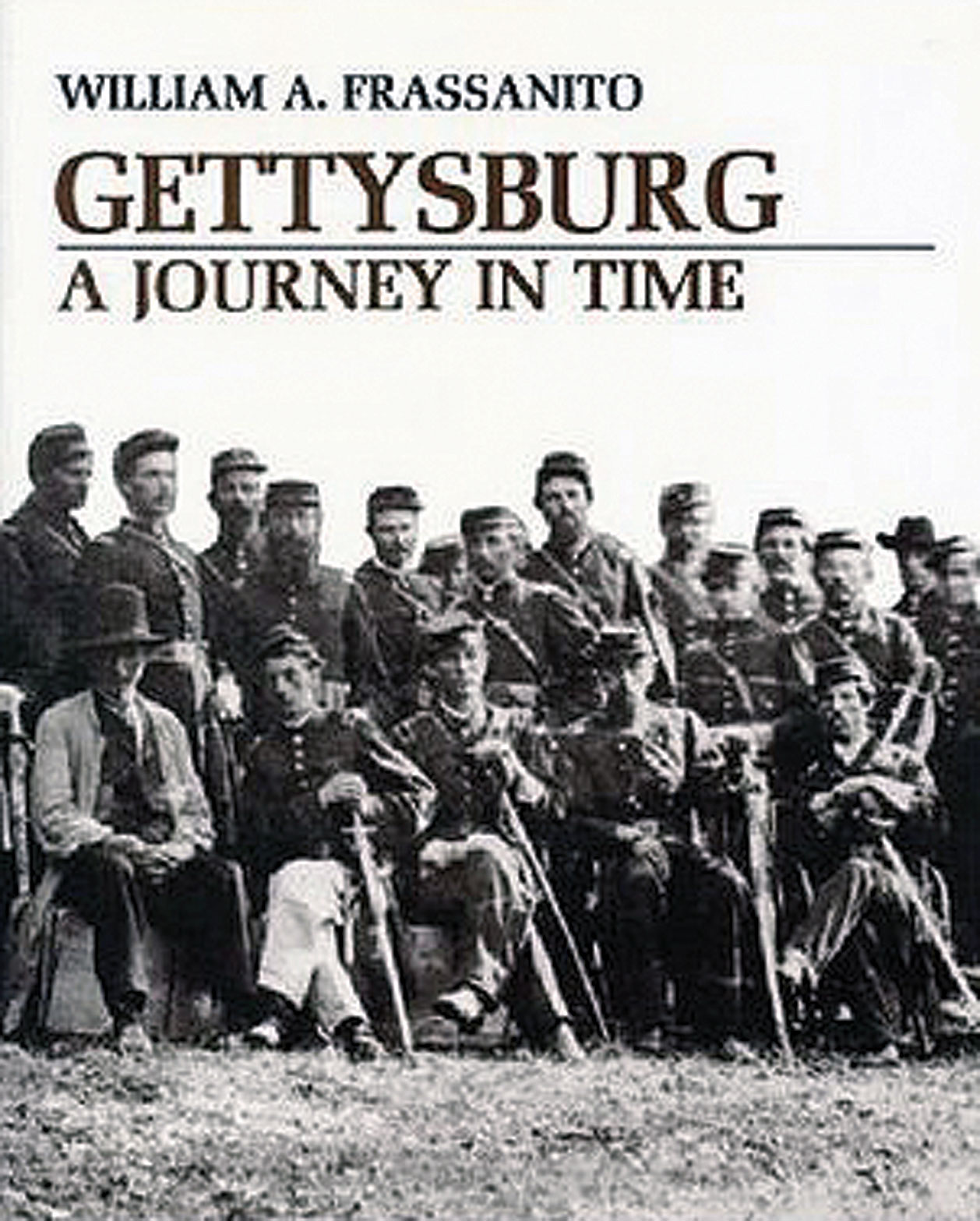
Gettysburg: A Journey in Time
By William Frassanito
(1975)
“This book shattered my image of Civil War photographers as men who simply captured the past. They were inventors of history.”
–Peter S. Carmichael, director of The Civil War Institute at Gettysburg College
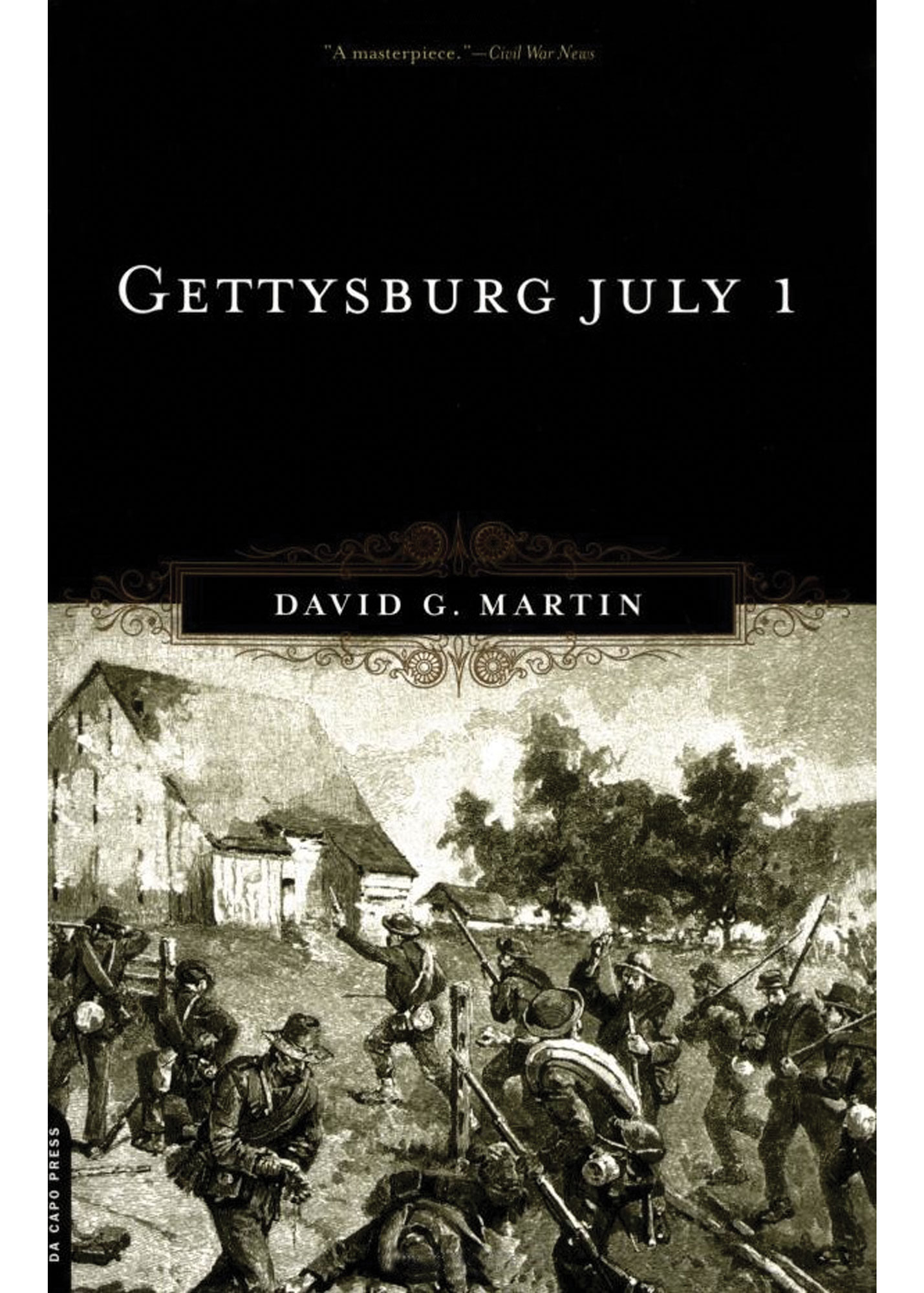
Gettysburg July 1
By David Martin
(1995)
“My favorite treatment of what is, in my opinion, the most dynamic and thought stimulating of the three days of fighting. It possesses both the depth that serious students of this battle demand and a presentation accessible enough to draw in budding Gettysburg readers like I was when I first read it.”
–Andrew Wagenhoffer, editor of the website Civil War Books and Authors
Glory Road
By Bruce Catton
(1952)
“Although relatively brief, Catton’s treatment of Gettysburg has remained in my mind since I first read it as a boy. His description of the Iron Brigade coming onto the first day’s field ranks among the best passages in any book I have read on the Civil War.”
–Gary W. Gallagher, author of Becoming Confederates: Paths to a New National Loyalty (2013)
Notes
1. Michael Shaara, The Killer Angels (New York, 2003). All parenthetical page citations in the text are to this edition of the novel.
2. Ken Burns, “Four O’Clock in the Morning Courage,” in Ken Burns’s Civil War: Historians Respond (New York, 1996), 157; “My Favorite Historical Novel,” American Heritage 43 (October 1992): 102.
3. Craig A. Warren, Scars to Prove It: The Civil War Soldier and American Fiction (Kent, OH, 2009), 122.
4. Alan T. Nolan, “The Anatomy of the Myth,” in The Myth of the Lost Cause and Civil War History eds. Gary W. Gallagher and Alan T. Nolan (Bloomington, IN, 2000), 12.
5. David W. Blight, Race and Reunion: The Civil War in American Memory (Cambridge, MA, 2001), 282.
6. Gary Gallagher, Causes Won, Lost, and Forgotten: How Hollywood & Popular Art Shape What We Know About the Civil War (Chapel Hill, NC, 2008), 19.
7. Michael Fellman, The Making of Robert E. Lee (New York, 2000), 74.
8. Blight, Race and Reunion, 91.
9. Ibid., 358.
10. Ibid., 258, 264-66, 388.