 Library of Congress
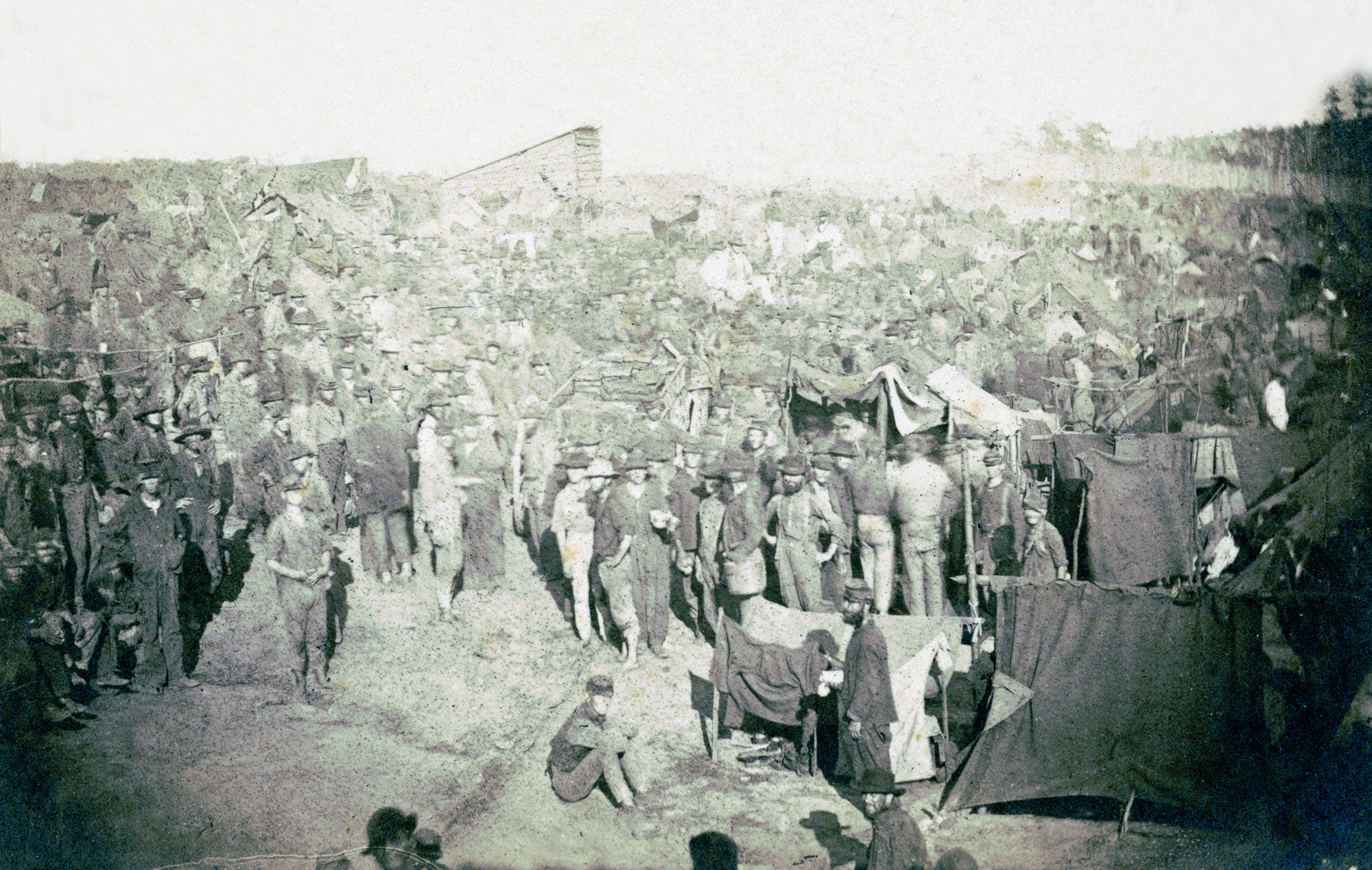
Photographer A.J. Riddle captured this view of the prison at Andersonville in August 1864 from a guard tower near the camp’s north gate.
Of the more than 150 sites that held prisoners of war during the Civil War, Camp Sumter Military Prison, more commonly known as Andersonville, was the largest—and deadliest. Opened in southwest Georgia in February 1864 as a more secure place to keep captured Union troops than Richmond, the prison at Andersonville boasted a remote location and proximity to a railroad line.
Soon overwhelmed by prisoners, the camp—designed to hold 10,000 men— was expanded in July 1864. This, too, proved insufficient. Andersonville’s population swelled in the summer of 1864, leading to severe overcrowding and deteriorating conditions. That September, with William T. Sherman’s army occupying Atlanta, Confederate officials began sending Andersonville prisoners to other camps in South Carolina and Georgia.
By the time the prison closed in May 1865, approximately 45,000 total prisoners had been held captive at Andersonville. As the images on the following pages attest, the prison was notorious for good reason— and left an indelible mark on the men, both Union captives and Confederate staff, who experienced it.
 Library of Congress
Details of Andersonville Prison
The Camp
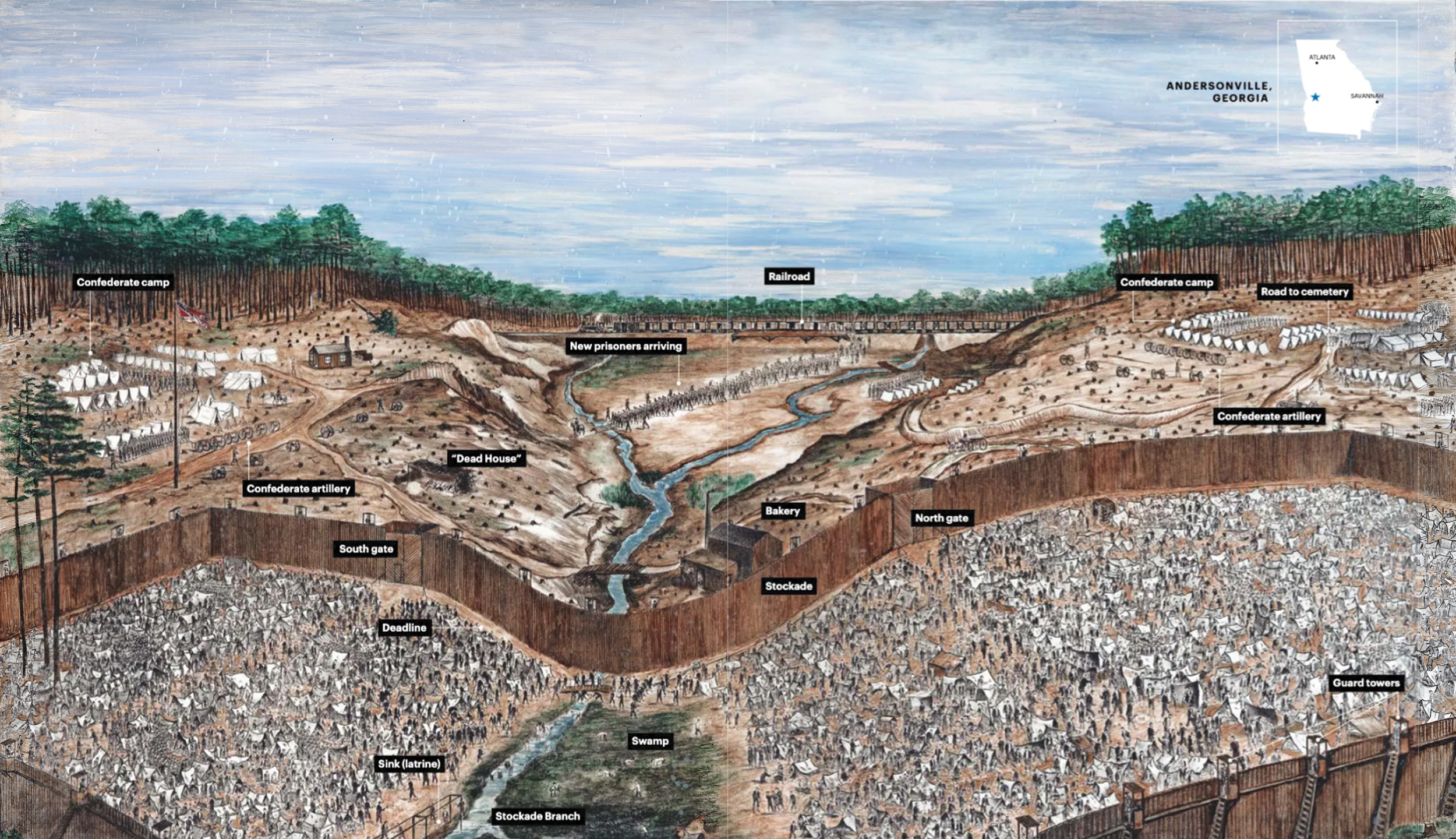
When the prison at Andersonville opened in February 1864 it consisted of an enclosed field that measured roughly 17 acres, four of which were uninhabitable swampland. The camp’s July 1864 expansion added another nine acres of livable space.
A 16-foot-high stockade of heavy timbers surrounded the prisoners’ area, with an inner perimeter, or “deadline,” marked by a low wood railing approximately 15 feet inside the stockade; Confederate sentries, stationed in a series of towers positioned along the camp’s perimeter, were authorized to shoot any prisoner who crossed the line to approach the wall.
Stockade Branch, a small stream that served as the prisoners’ main water supply for both drinking and bathing, cut across the middle of the camp and quickly became polluted. While later improvements, including a bakery and some barracks, attempted to alleviate the prisoners’ condition, life at Andersonville remained miserable—and deadly. Shown here is a drawing of the prison, made by Andersonville survivor Thomas O’Dea, as it appeared in August 1864.
 Library of Congress
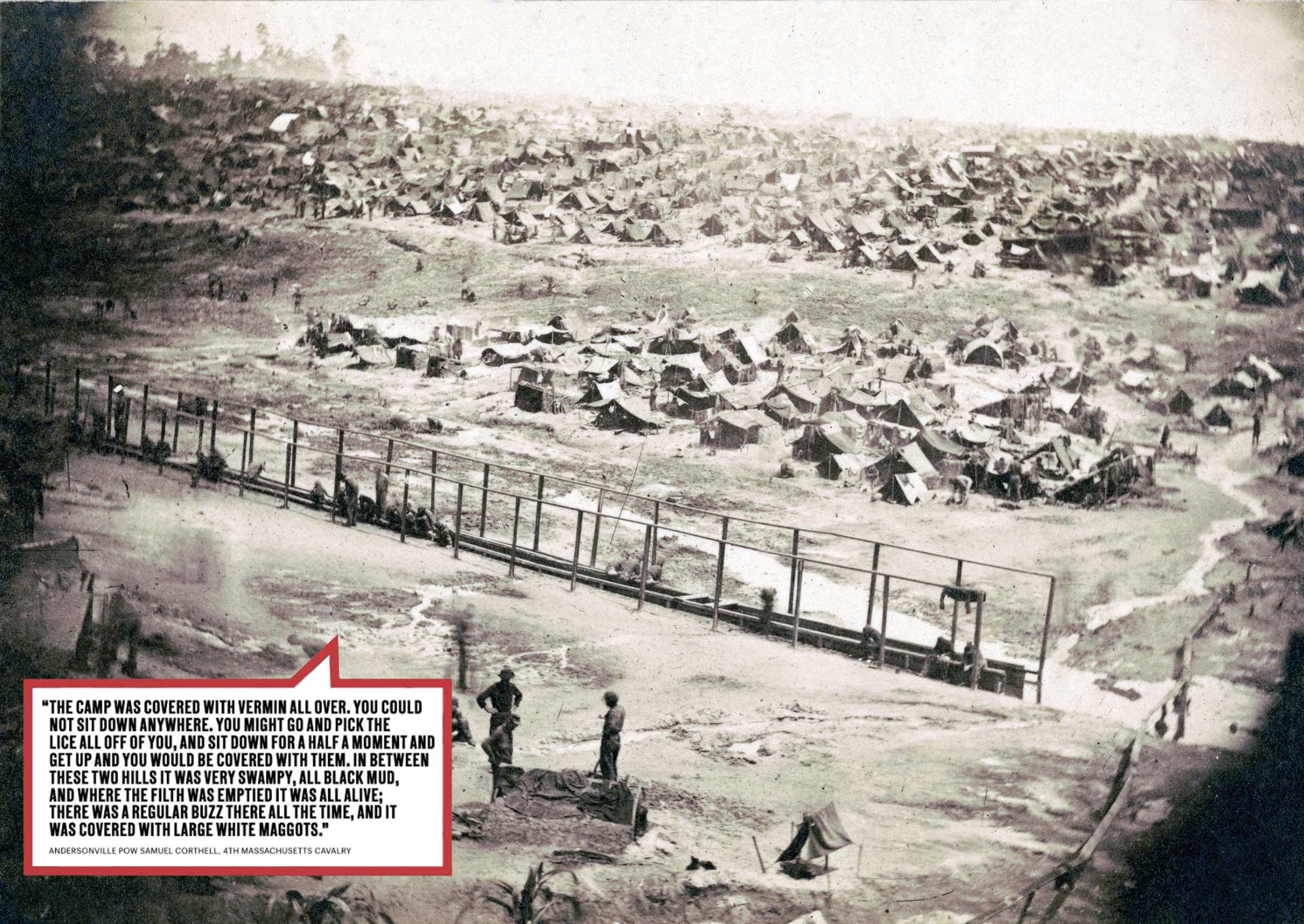
This A.J. Riddle image, taken from along the east wall, shows the camp’s sink, which was nicknamed the “Invalid’s Retreat” by the prisoners.
The Conditions
On July 22, 1864, recently captured Wisconsin soldier David G. James arrived at Andersonville. “When the gate was opened and we got a view of what was before us, the scene was indescribable,” he later wrote. “Over thirty thousand men … without shelter; some naked, others bareheaded, barefooted, deformed, and almost unrecognizable as human beings. To a man looking at it from a distance, it gave the appearance of a huge ant-hill, with one moving mass of humanity only visible.”
Once confined, James and other Andersonville prisoners faced meager rations of cornmeal and meat, lived in rough shelters of branches and cloth, and tried to form social networks among fellow captives—both for moral support and protection from other prisoners, some of whom roamed the camp, attacking others in search of valuables. As James noted (and the following statistics show), overcrowding was a significant problem, especially during the late summer of 1864. Yet even when the prison’s population ebbed during the war’s final months, it remained a challenge to survive in camp.
Andersonville Figures
[June 16 – September 8, 1864]
Average number of prisoners per acre housed in stockade: 1,127
Average square feet of stockade occupied per prisoner: 39.19
[April 1, 1864 – April 30, 1865]
Highest number of prisoners received in a single day: 1,208
[April 6, 1864 – May 4, 1865]
Number of Andersonville prisoners transferred to other locations: 39,084
Most prisoners transferred out of Andersonville on a single day during this period: 3,840
Prison Population
Highest head count of prisoners on a single day: 32,911
Lowest head count of prisoners on a single day: 22
[First day of the month, April 1864 – May 1865]
April: 7,147
May: 10,148
June: 19,087
July: 26,321
August: 31,601
September: 31,578
October: 8,151
November: 4,179
December: 1,301
January: 4,697
February: 5,217
March: 5,708
April: 3,320
May: 44
The Prisoners
As the following images suggest, the 45,000 Union soldiers who spent time at Andersonville suffered a variety of fates. The lucky ones were transferred to other prisons with their health intact; nearly a third did not leave the camp alive.
James F. Landon, Darwin King, Stephen F. Glaze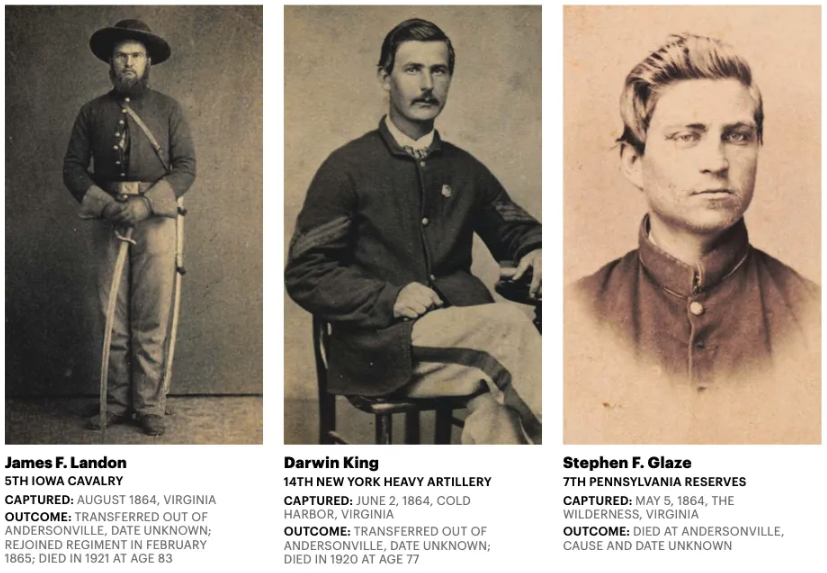 Library of Congress (Glaze), Collection of Ronald S. Coddington (Landon, King)
William Holmes, Adrian Fay, Israel Fearing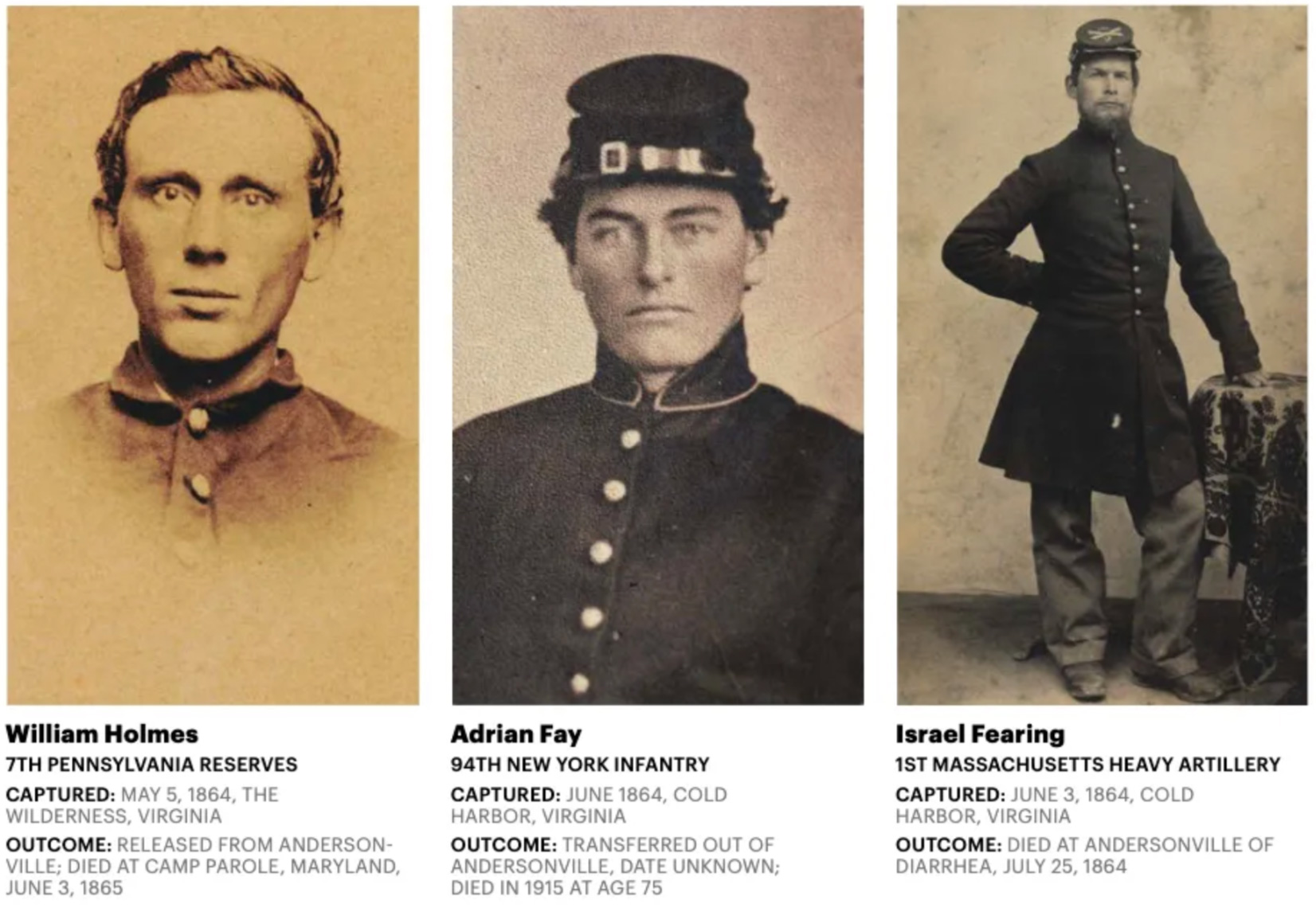 Library of Congress (Holmes, Fay); Collection of Ronald S. Coddington (Fearing)
Edward Risley, Squire Whittaker Jayne, and Davidson McCampbell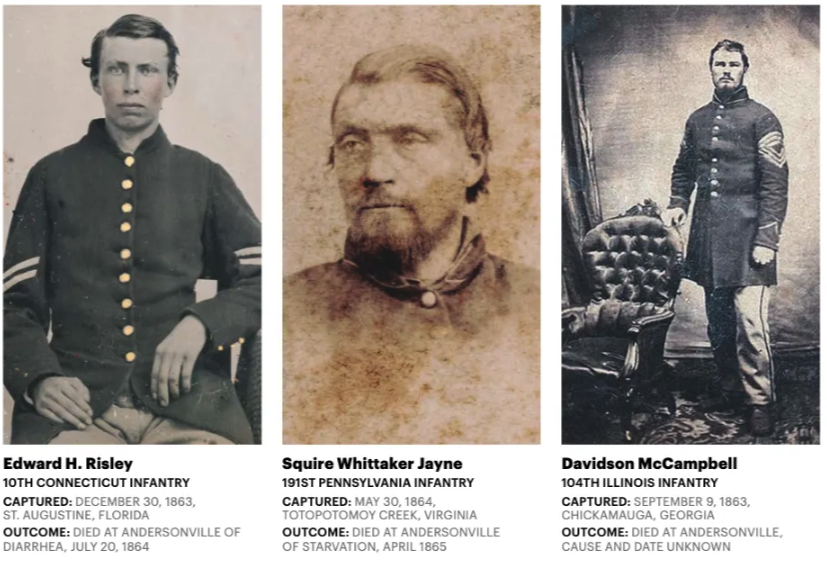 Cowan’s Auctions (Risley, McCampbell), Library of Congress (Jayne)
Jacob Landis Jr. and Nathan Hopkins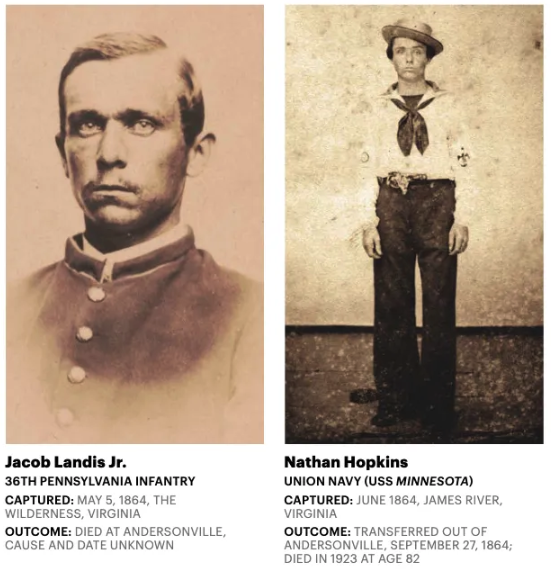 Library of Congress (Landis), Collection of Ronald S. Coddington (Hopkins)
Andersonville Figures
[April 1864 – April 1865]
Number of prisoners who escaped from Andersonville: 351
Number of escaped prisoners who were recaptured: 188
Largest number of prisoners to escape on a single day: 23
Largest number of escaped prisoners recaptured on a single day: 10
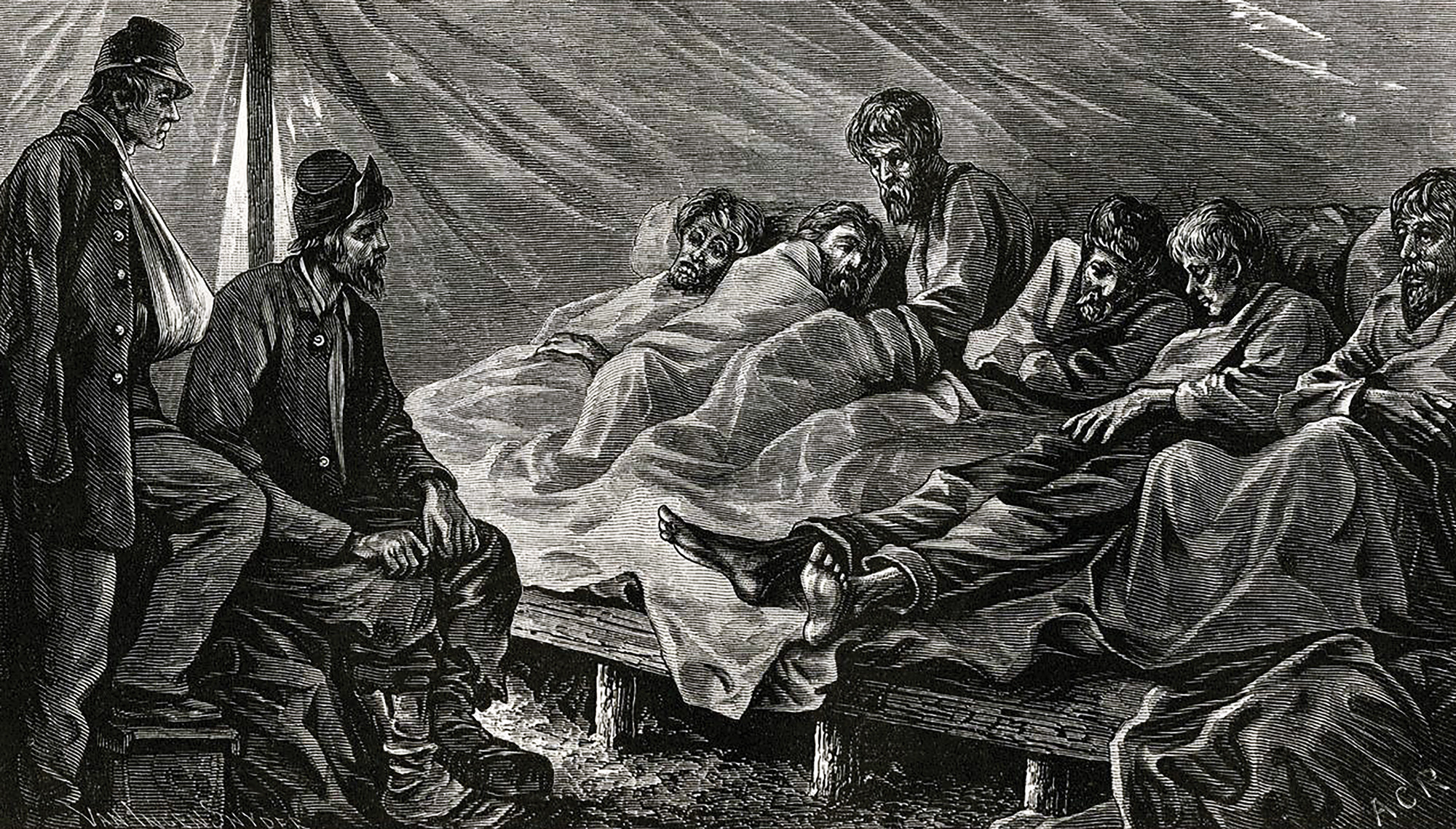 Library of Congress
Sick POWs crowd the camp hospital.
The Casualties
During the course of its existence, Andersonville prison had three different hospitals to treat sick captives, who suffered from a myriad of illnesses due to a lack of sufficient space, shelter, hygiene, food, and potable water. The first hospital occupied up to an acre of space inside the prison stockade. As the prison population swelled, this hospital was taken down and replaced by a second one located outside the stockade at the prison’s southeast corner.
A third and final hospital, which occupied about five acres, was constructed outside the southern side of the stockade. At full capacity, 15 Confederate doctors worked at this facility, each of them assisted by a paroled prisoner.
The sheer number of sick prisoners overwhelmed the staff’s ability to treat them. Each surgeon was assigned to examine roughly 500 prisoners a day, but the hospital could only admit 200 a day, leaving all but the sickest to be turned away—and captives perished at an alarming rate as a result. By the time the prison ceased operation in May 1865, more men had died at Andersonville than at any other Civil War prison camp.
 Library of Congress
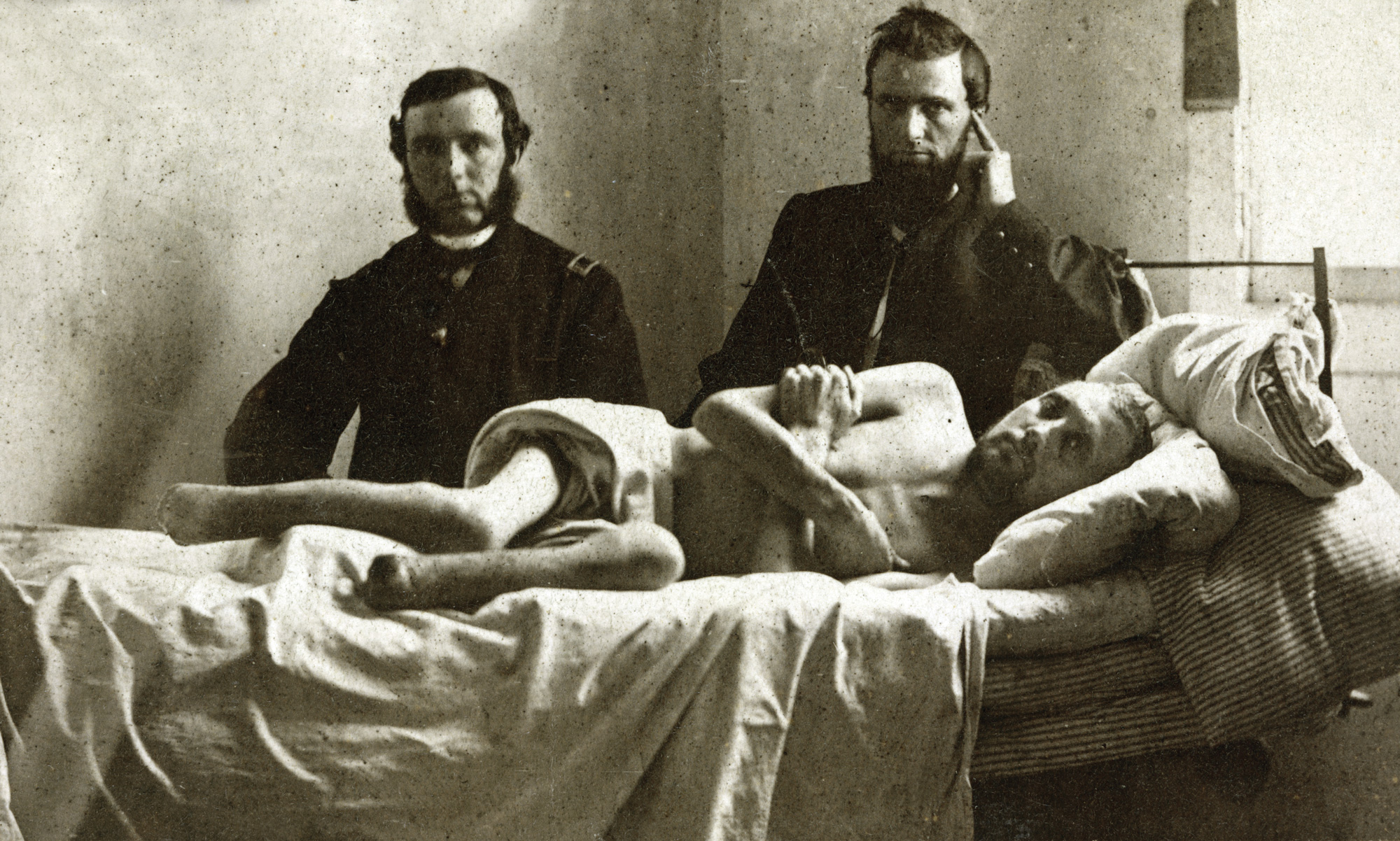
Prisoner Calvin Bates, whose “feet decayed so that both of them … [were] cut off at the ankle with scissors,” in a photo taken shortly after his release.
Andersonville Figures
[February 1864 – May 1865]
Number of prisoners who died in captivity: 12,920
Death rate for prisoners: 29%
Largest number of deaths in a single month: 2,982
Largest number of deaths on a single day: 130
Leading Known Causes of Death
Diarrhea: 5,492 (43%)
Scorbutus (scurvy): 3,661 (29%)
Dysentery: 1,305 (11%)
Anasarca (severe edema): 406 (4%)
Pneumonia: 242 (2%)
Debilitas (weakness): 222 (2%)
Other Miscellaneous Causes of Death
Gangrene: 57
Gunshot: 8
Laryngitis: 2
Psychosis: 1
Freezing: 1
 Cowan’s Auctions (Fairbanks), Library of Congress
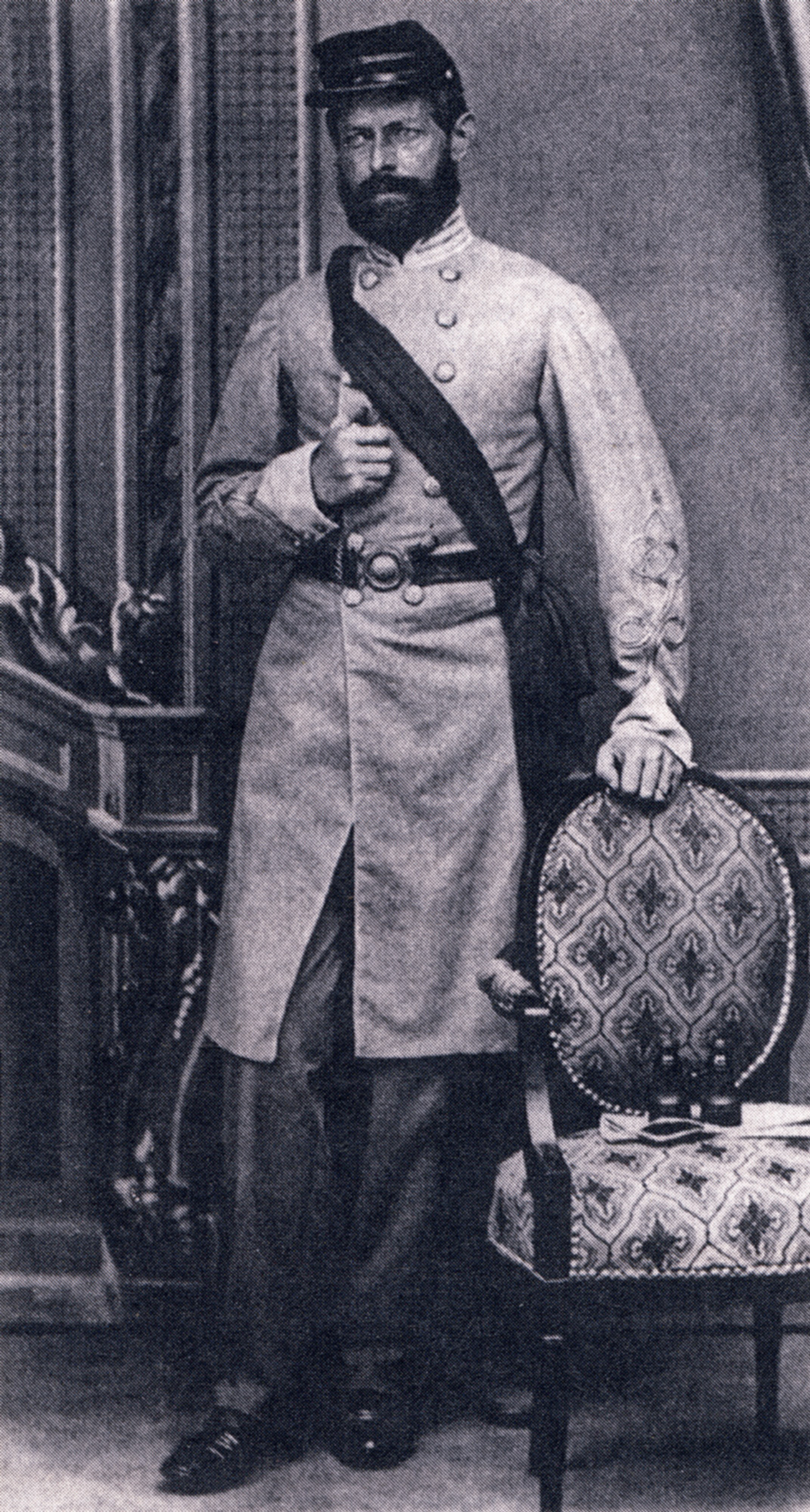
(Left )A sketch of prisoner Oliver B. Fairbanks as he appeared during his captivity. (Right) A group of prisoners buries their recently deceased comrades in a shallow trench outside the stockade in 1864.
 Library of Congress
Captain Henry Wirz
The War Criminal
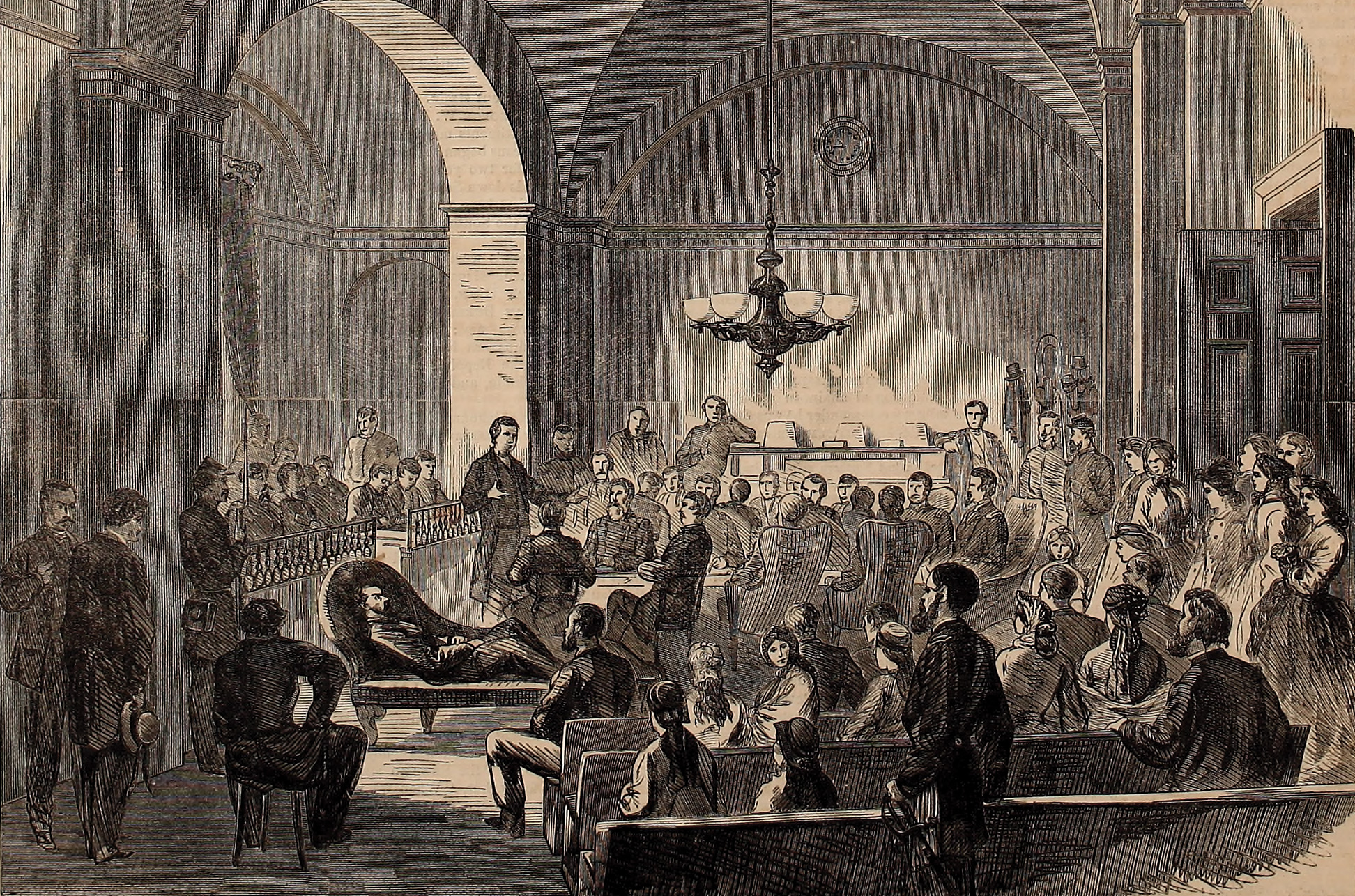
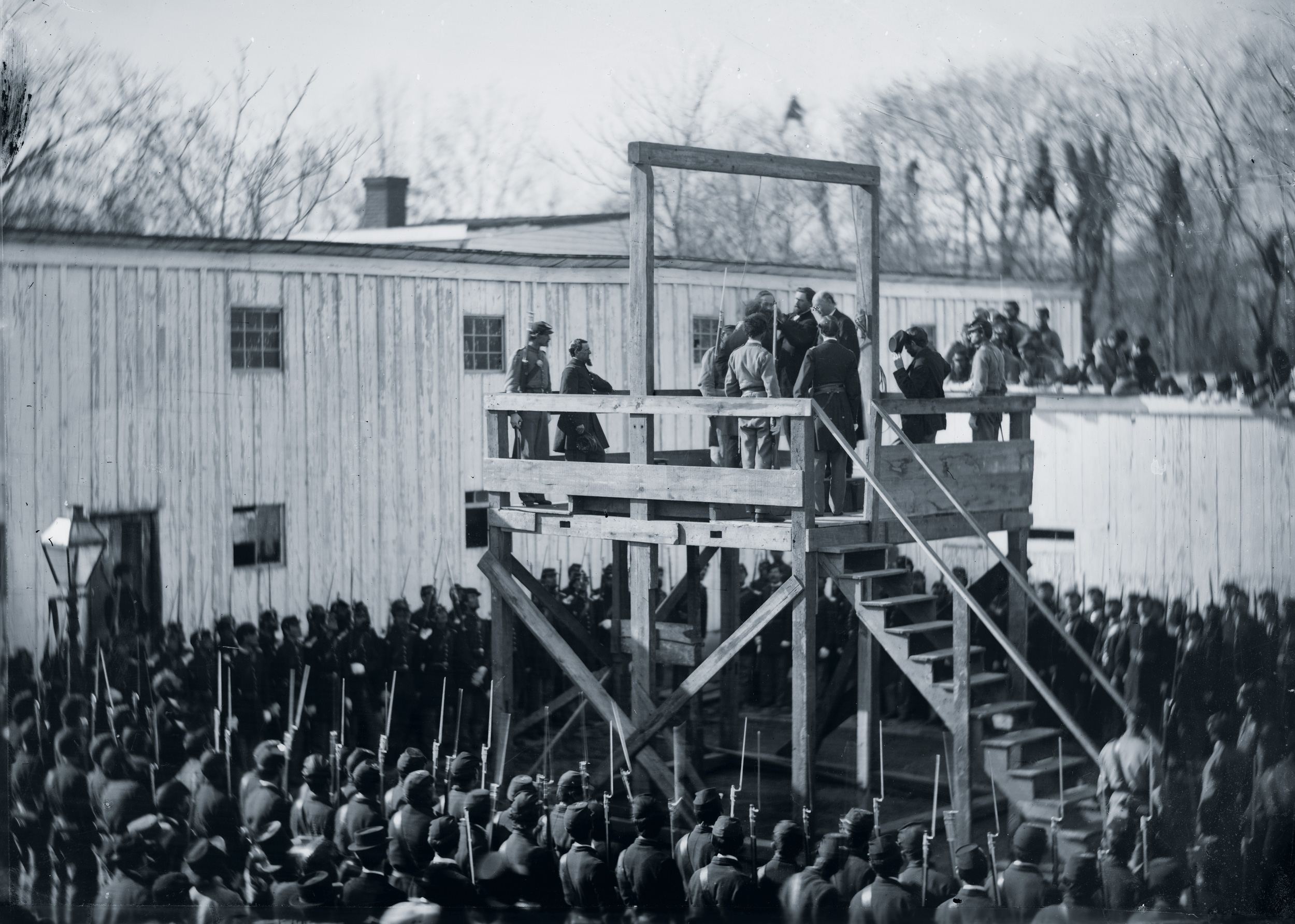
Within a month of Robert E. Lee’s surrender at Appomattox Court House, Andersonville prison’s commandant, Captain Henry Wirz, was arrested by a contingent of Union cavalry and forwarded to the Old Capitol Prison in Washington, D.C., where he would be put on trial for “conspiring … to injure the health and destroy the lives” of Andersonville POWs. Between August and October, 158 witnesses—many of them former Andersonville captives—testified against Wirz, alleging myriad acts of inhumanity and cruelty, from providing prisoners with insufficient quarters and food to physical abuse and even murder.
In his report of the proceedings, Judge Advocate General Joseph Holt portrayed the Swiss native as “rather … a demon than a man,” whose “work of death seems to have been a saturnailia of enjoyment.” In early November, Wirz, 41, was found guilty of conspiracy and 11 of the 13 acts of personal cruelty of which he was accused and sentenced to death. He was hanged on the morning of November 10.
The Demon of Andersonville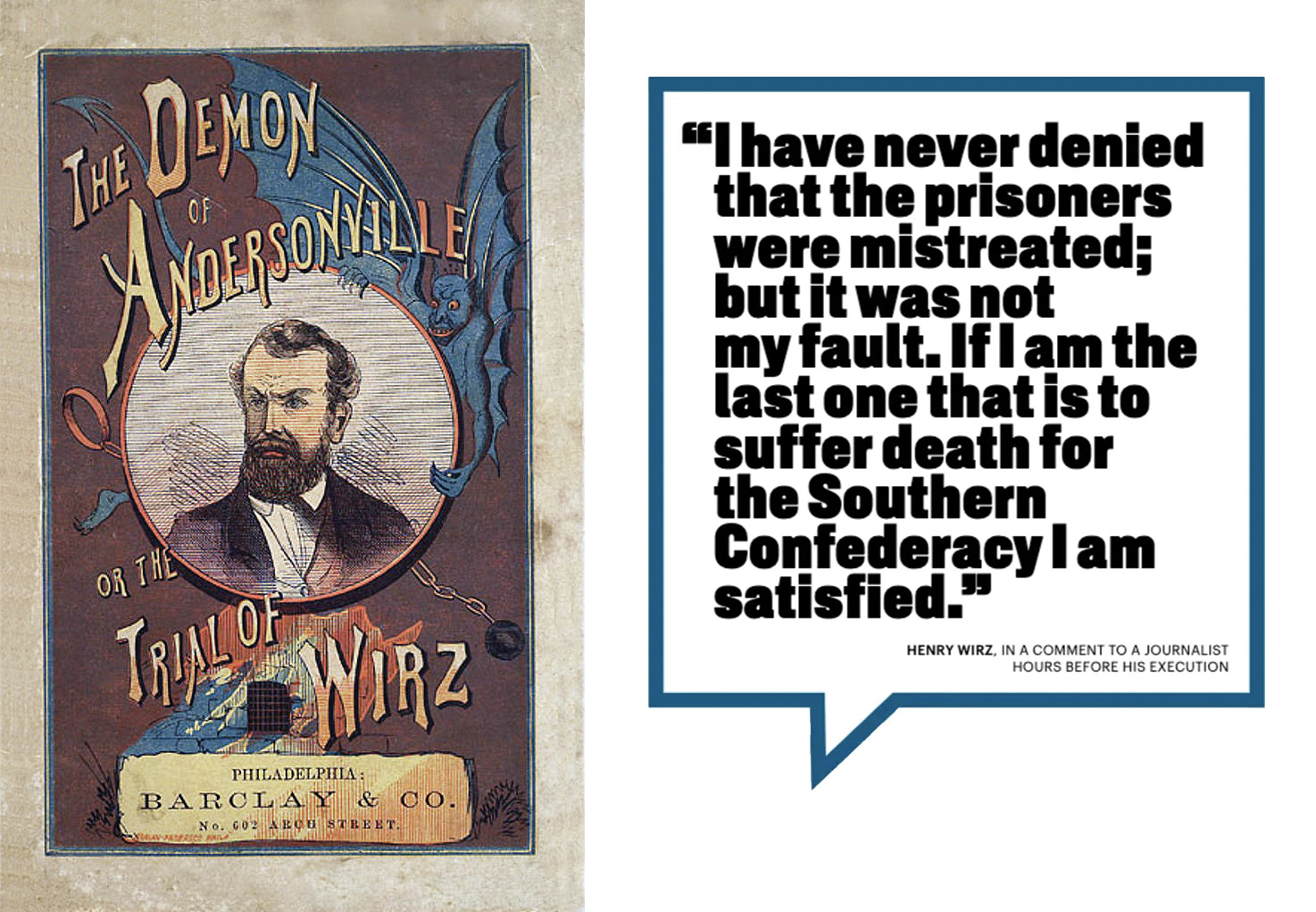 Cowan's Auctions
 Harper's Weekly
Wirz’s trial, which occurred between August and October 1865
 Library of Congress
Wirz’s execution in Washington, D.C., on November 10, 1865
He was one of only two men tried, convicted, and executed for war crimes committed during the Civil War. In time, some writers would portray Wirz as a scapegoat who received insufficient food and medical supplies from the Confederate government. Wirz also found support among members of organizations such as the United Daughters of the Confederacy, who in 1909 erected a monument to Wirz at Andersonville. On its southern side are inscribed the words “Discharging his duty with such humanity as the harsh circumstances of the times, and the policy of the foe permitted Capt. Wirz became at last the victim of a misdirected popular clamor.”
 Library of Congress
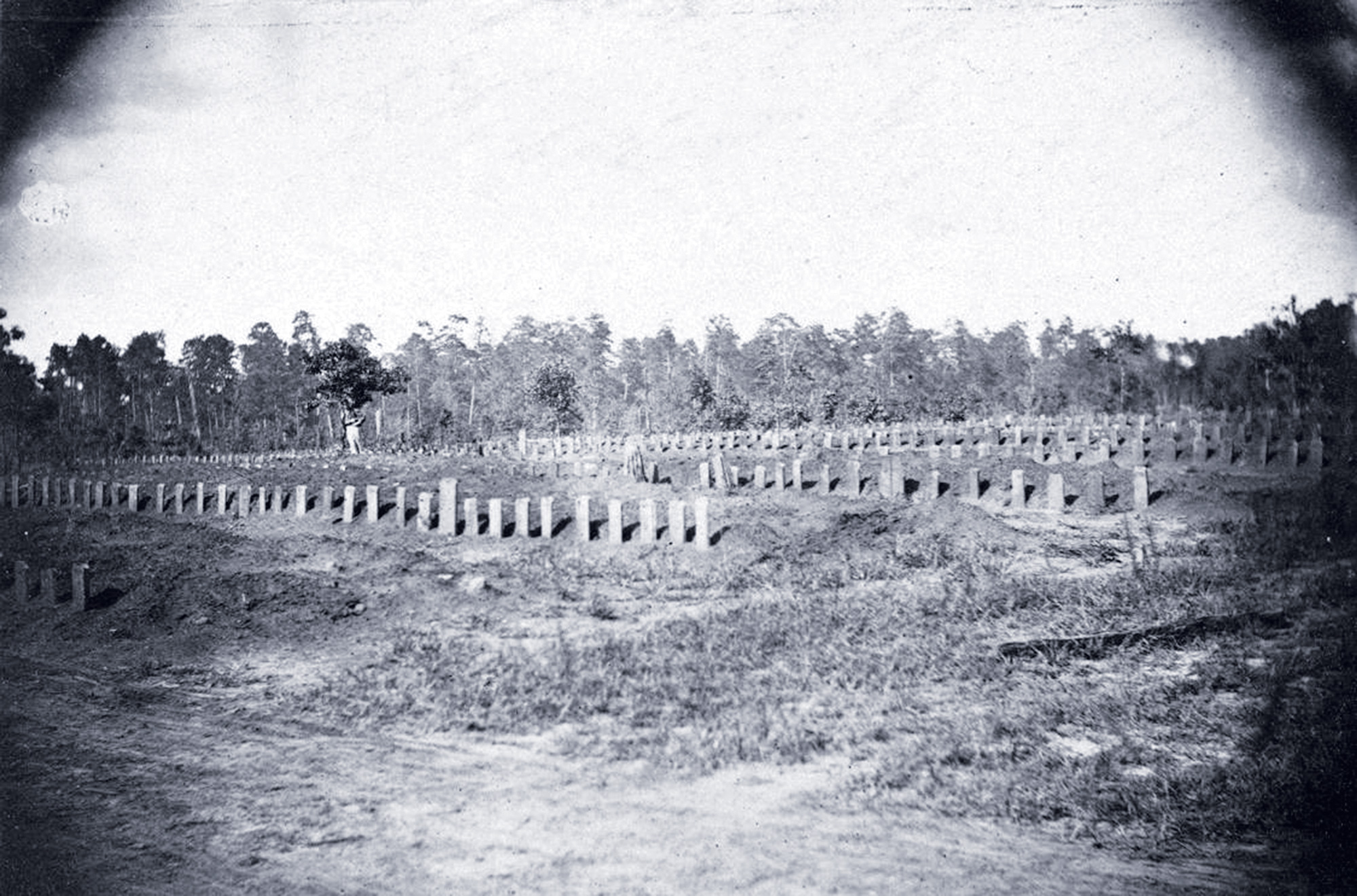
The cemetery at Andersonville as it appeared during the prison’s operation.
The Cemetery
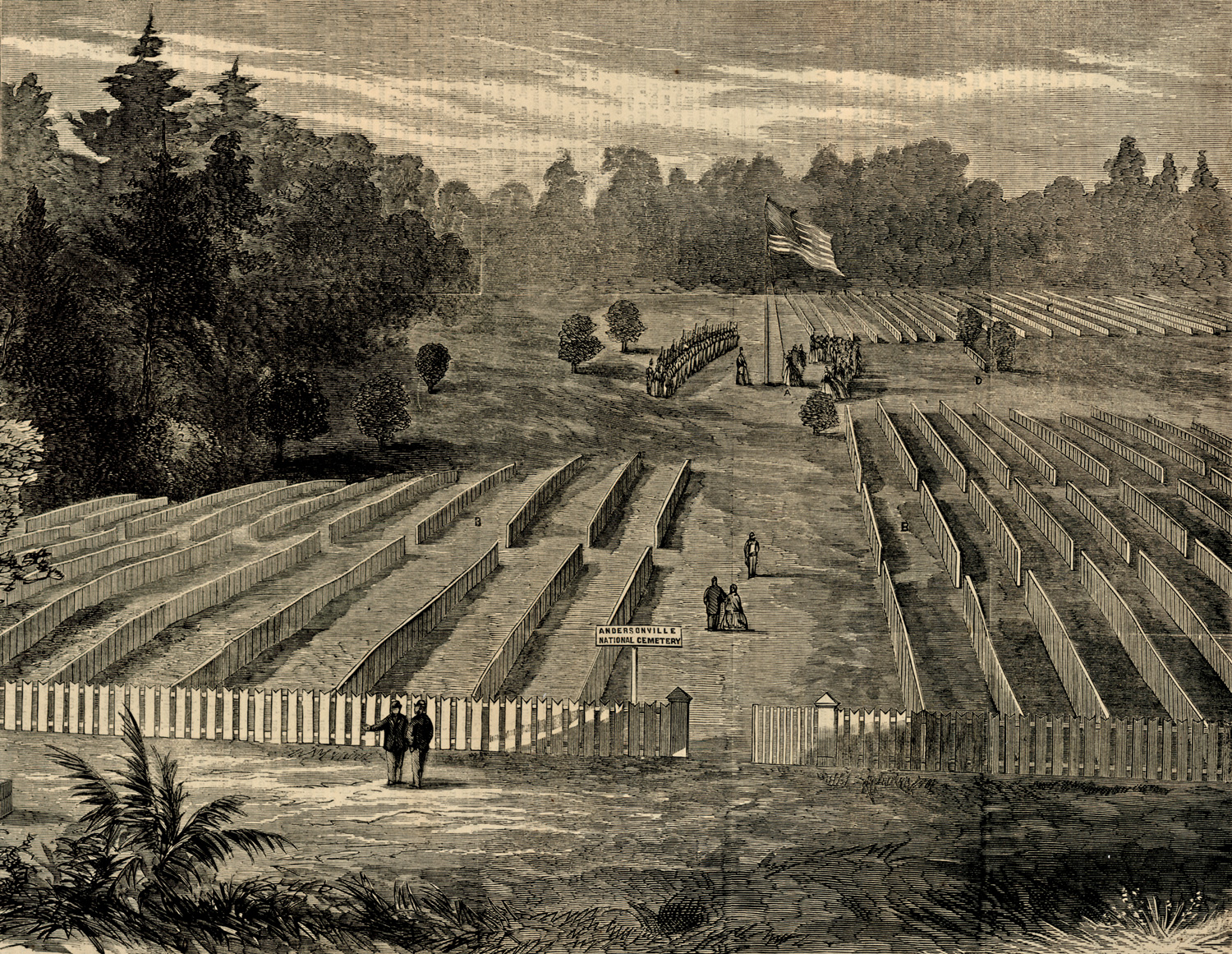
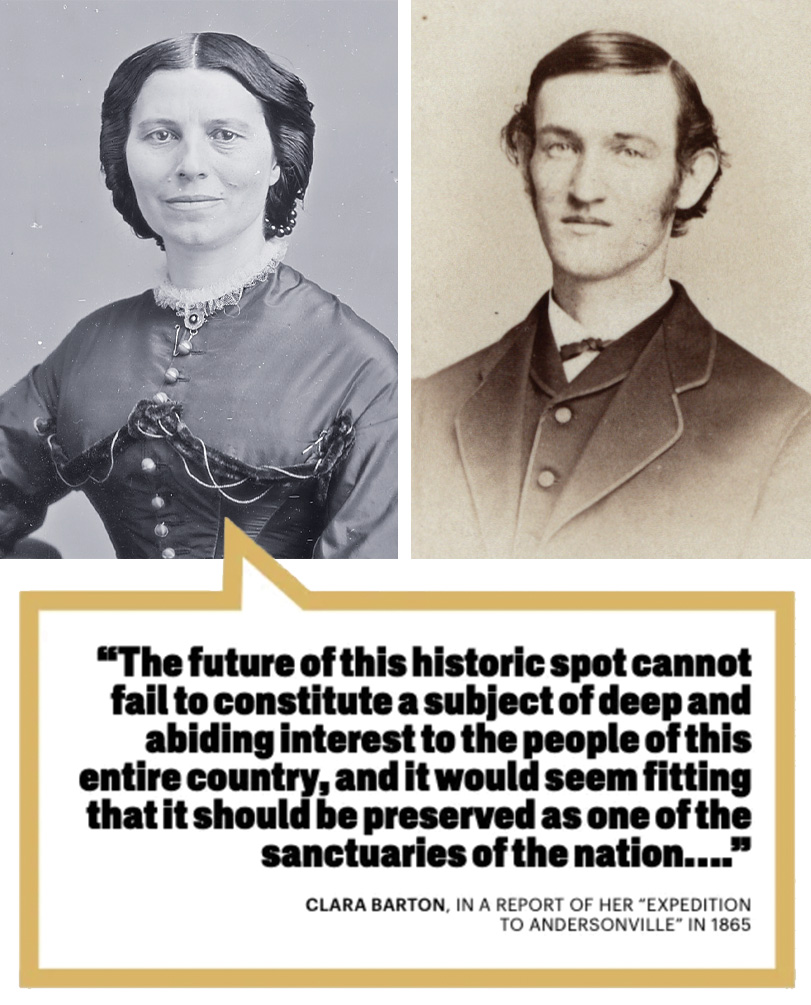
In the summer of 1865, in the wake of the federal government appropriating the camp’s burial ground to establish it as a national cemetery, famed nurse Clara Barton traveled to Andersonville to assist in identifying and marking the graves of the nearly 13,000 POWs who had died in captivity there. Among her assistants was Union veteran and Andersonville survivor Dorence Atwater.
 Library of Congress
Clara Barton, accompanied by Dorence Atwater, raises the U.S. flag at the refurbished Andersonville cemetery in the summer of 1865.
During his time at Andersonville, which began in March 1864, Atwater had been charged by the camp’s Confederate surgeon to keep a running list of the names of prisoners who perished. Unbeknownst to his captors, the Connecticut native secretly compiled a second copy of the list, which he successfully hid in the lining of his coat and kept with him after his release from captivity in early 1865. With Atwater’s knowledge and Barton’s determination—and a team that included over 40 headboard carvers—the Andersonville graves were marked in about a month.
The following year, New York Tribune publisher Horace Greeley would publish Atwater’s list in full. “This record was originally copied for you because I feared that neither you nor the Government of the United States would ever otherwise learn the fate of your loved ones whom I saw daily dying before me,” wrote Atwater in the pamphlet’s introduction. “I could do nothing for them, but I resolved that I would at least try to let you sometime know when and how they died. This at last I am now able to do.”
 Ken Lunnd/ Wikimedia Commons
The cemetery as it appears today.
Subsequent efforts helped identify additional graves at Andersonville, resulting in fewer than 500 of the graves being marked as “unknown.” In later years, a four-foot-tall brick wall was constructed to surround the 27-acre cemetery, which also witnessed a variety of monuments erected in honor of the dead. “Andersonville becomes an object lesson in patriotism,” noted a former prisoner at the dedication of one of these monuments in 1907. “To this retired and beautiful spot will thousands resort in the long years to come, to learn again and again lessons of heroic sacrifice made by those who so quietly sleep in these long rows of graves.”
 Library of Congress (Barton), Harper's Weekly; Connecticut State Library
Clara Barton and Dorence Atwater
 Library of Congress
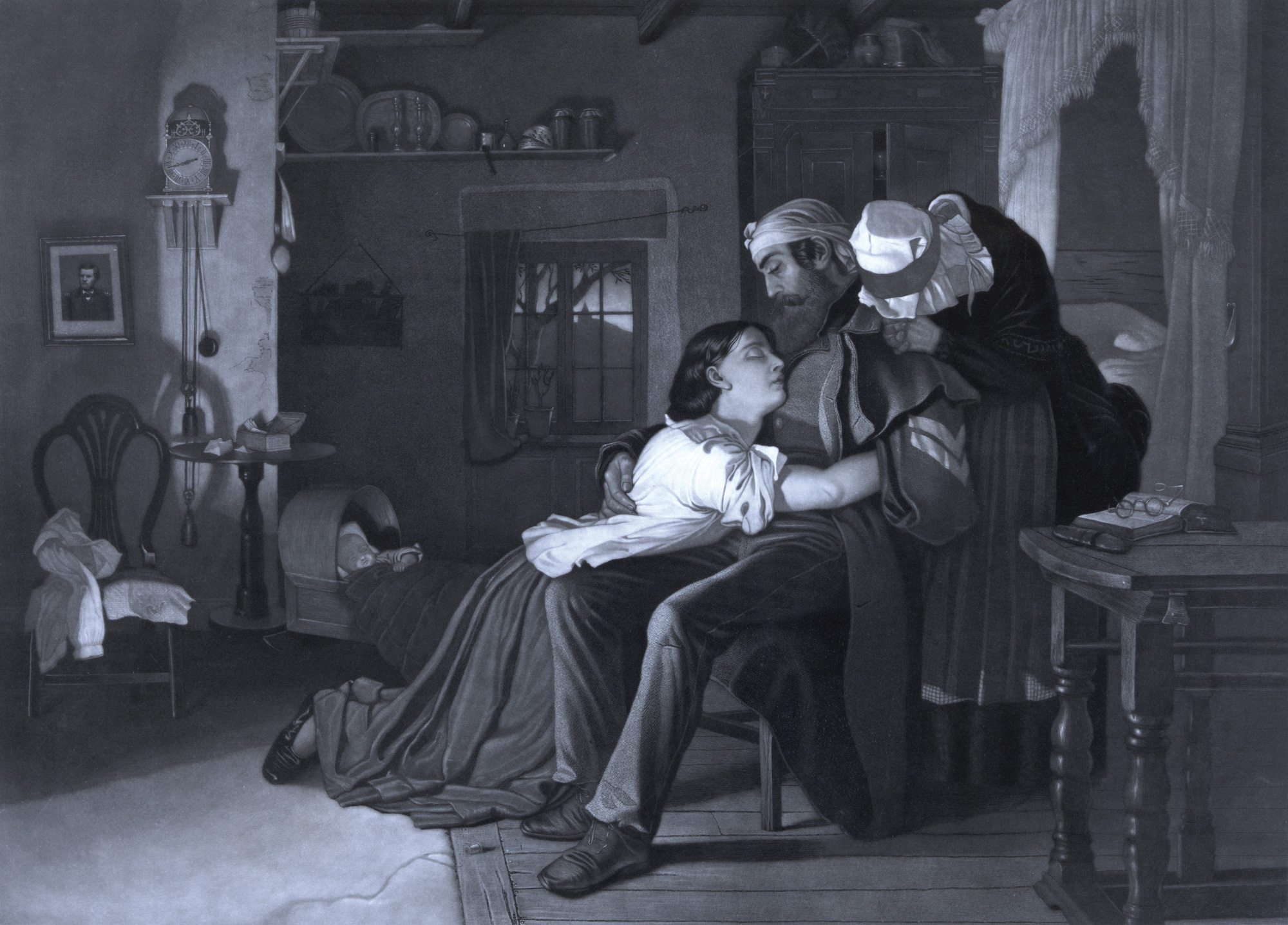
William Sartain’s Home from Andersonville, printed circa 1866
The Survivors
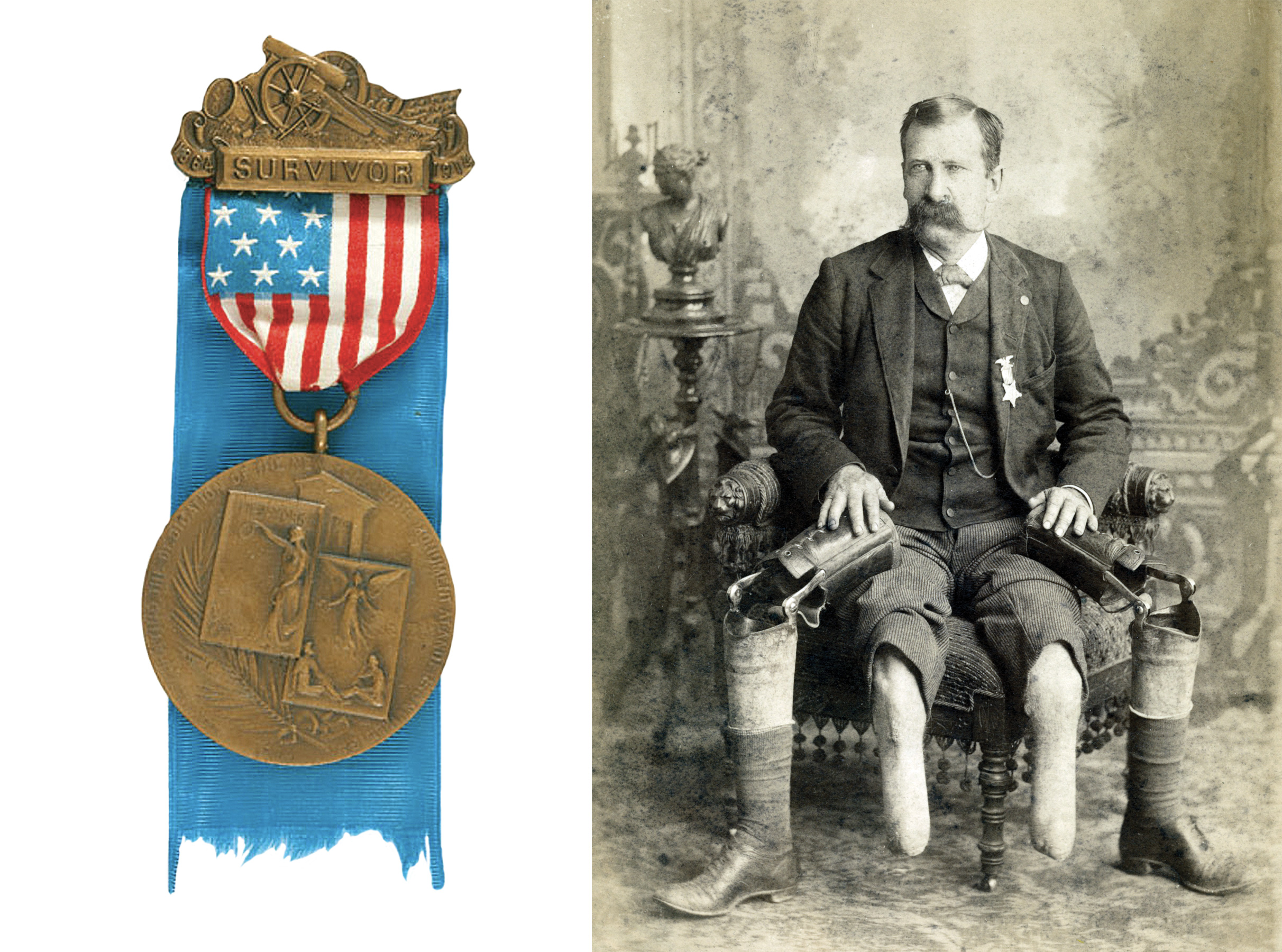
After the war, the surviving Andersonville prisoners returned home. Some of them—still weakened from their ordeals—did not live long. And those who did often failed to recover fully, carrying with them a variety of physical and psychological maladies—like chronic diarrhea, scurvy, rheumatism, what would now be known as post-traumatic stress disorder (PTSD), and even insanity—resulting from their time in captivity.
Approximate number of Prisoners who survived captivity at Andersonville: 32,000
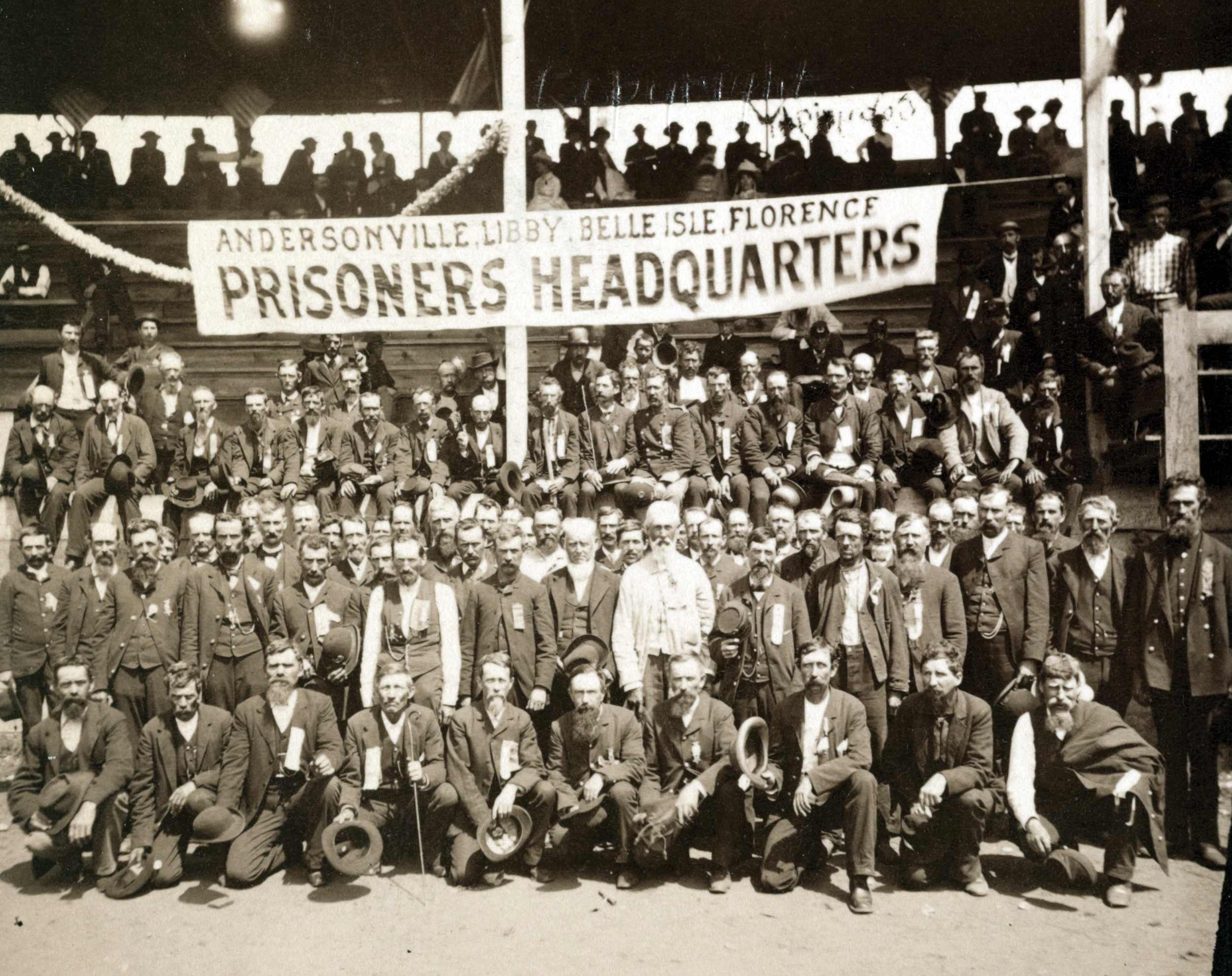
A number of ex-prisoners wrote accounts (some of them exaggerated) of their experiences at Andersonville, works replete with themes of heroism and martyrdom that were prompted in part by the feelings of marginalization felt by Andersonville survivors among Civil War veterans as a whole. Many others joined the Andersonville Survivors Association and the National Association of Union Ex-Prisoners of War, organizations that, in the words of the constitution of the latter group, met to “perpetuate the name and fame of those who have fallen in the prison pens of the South” and “to bind together in the most friendly ties the survivors.” Members of both organizations were politically active, helping to secure federal pensions for ex-prisoners and pushing to shape the public memory of their wartime ordeals. So effective were they in the latter effort that when members of the Andersonville Survivors Association debated whether to drop “Andersonville” from their name in 1880, those who objected noted that the word “was now regarded as the synonym of cruelty and torture all over the country.”
 Cowan’s Auctions (medal); Library of Congress
Left: An Andersonville Prison Survivor’s Medal. Right: Andersonville survivor John January, whose legs were amputated after he developed gangrene while in captivity.
 Library of Congress
A gathering of ex-Union prisoners who had been held at various Confederate camps, including Andersonville, in 1884.
Sources
Dorence Atwater, A List of the Union Soldiers Buried at Andersonville (1866); Dedication of the Monument at Andersonville, Georgia, October 23, 1907 (1908); Evening Star (Washington, D.C.), November 10, 1865; Kevin S. Nicholson, “After Andersonville: Survivors, Memory and the Bloody Shirt,” The Gettysburg College Journal of the Civil War Era Vol. 8, Article 4 (2018); Proceedings of Crocker’s Iowa Brigade at the … Tenth Biennial Reunion (1902). With thanks to Jennifer Hopkins, lead park ranger at Andersonville National Historic Site, for her assistance.
Related topics: prisons and prisoners