 Library of Congress
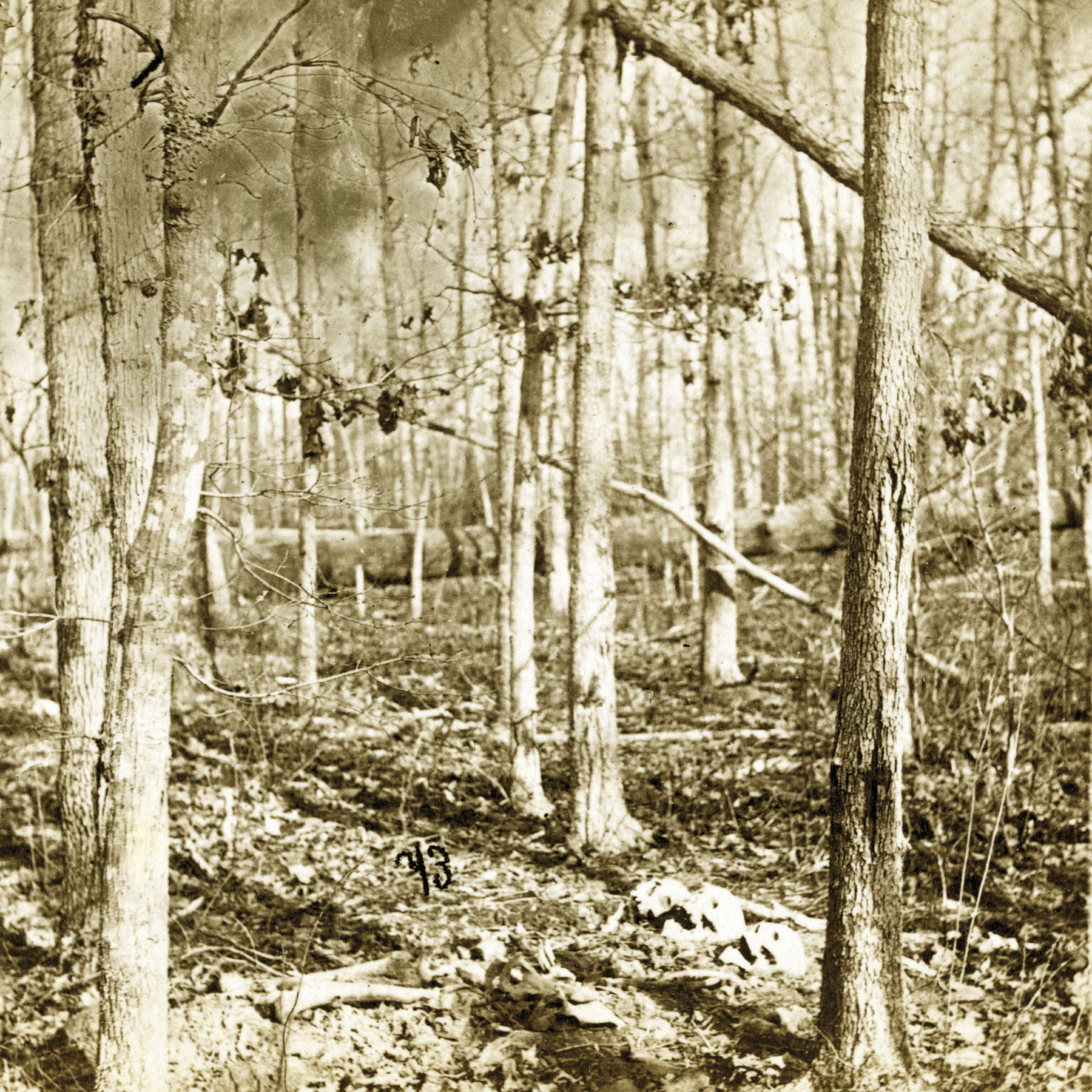
The Wilderness of Spotsylvania in 1865.
The wilderness of Spotsylvania was a place that lent itself to mythmaking.
This large, forested region about halfway between Washington, D.C., and Richmond, Virginia, saw more than its fair share of action during the Civil War. From the spring of 1863 to the spring of 1864, the Union Army of the Potomac and the Confederate Army of Northern Virginia conducted three campaigns—Chancellorsville in May 1863, Mine Run in November–December 1863, and the Battle of the Wilderness in May 1864—either wholly or partly in the Wilderness.
Traditionally, historians have made two claims about the Wilderness and how it affected combat and strategy. First, it was a unique landscape that caused unique combat conditions. Typically, they paint a picture of one vast forest full of thick vegetation resulting from the activity of the local iron industry. Often paired with this physical description of the Wilderness is the idea that the forest had an aura or mystique about it. A malevolent landscape, associated with death and destruction, fires and hell and even the supernatural, the Wilderness was a truly terrible place in their estimation. These extraordinary characteristics in turn imposed certain conditions on combat, namely the inability to see for any distance, properly maneuver or maintain a battle line, or use artillery and cavalry profitably, conditions that created an unprecedented experience in the Battle of the Wilderness. Second, historians have asserted that the Wilderness landscape gave the Confederates an advantage, because of their superior knowledge of the region and the forest’s effect in neutralizing superior Federal numbers, especially with regards to artillery. A desire to exploit these advantages then led Robert E. Lee to try to trap the Union army in the Wilderness in May 1864 at the outset of Ulysses S. Grant’s Overland Campaign.
 Library of Congress
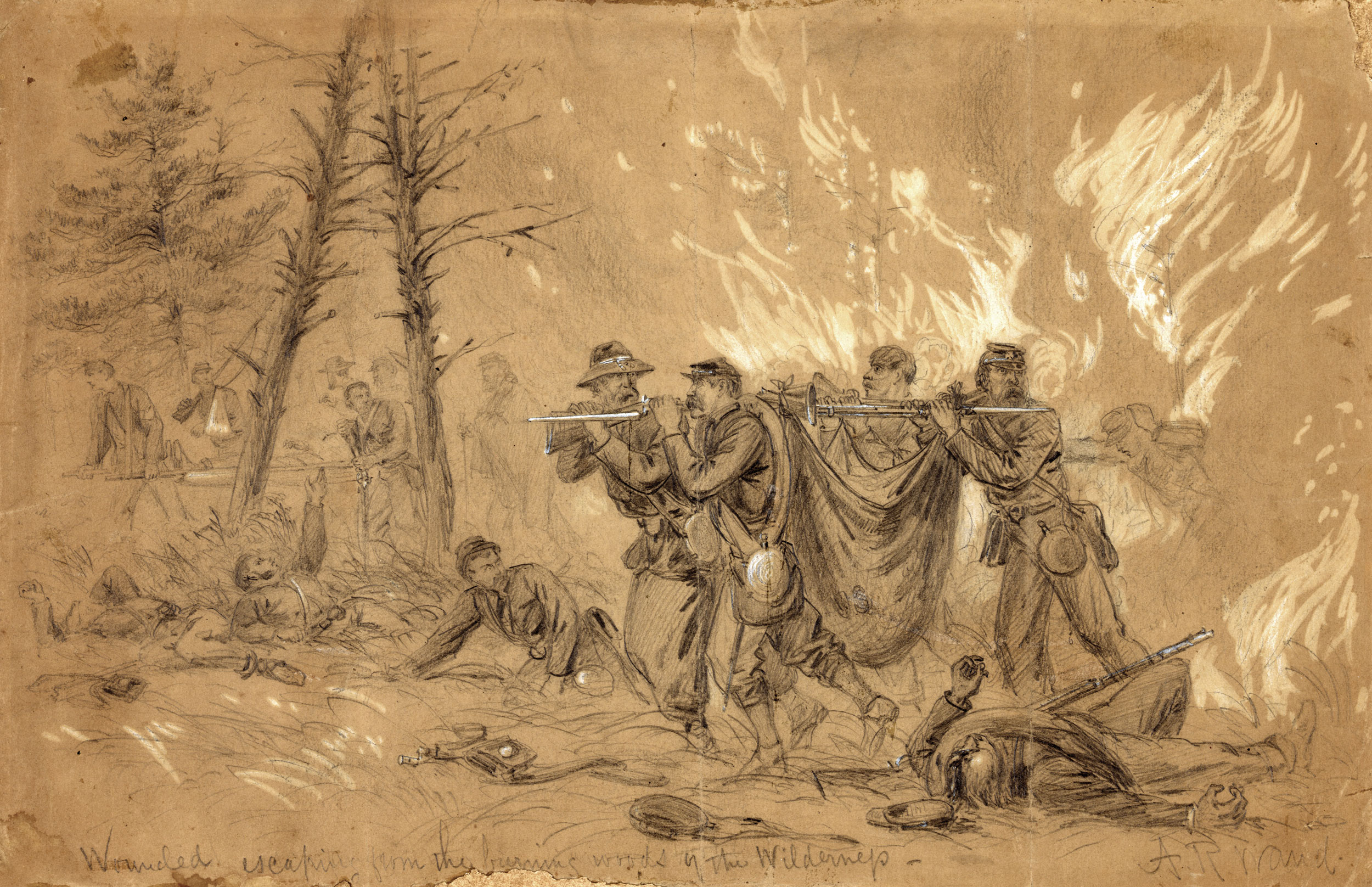
In this sketch by Alfred R. Waud, Union soldiers rush to carry wounded comrades from the burning woods in the Battle of the Wilderness. The site of three campaigns during the Civil War, the Wilderness developed a reputation as a malevolent landscape associated with death and destruction.
Together these two claims constitute the Wilderness myth, which started forming during the war and blossomed in the postwar years. Moreover, the reach of this myth cannot be overestimated, as elements of it can be found in many accounts of the Battle of the Wilderness as well as in general histories of the war.
It is first crucial to understand that the Wilderness was not the wooded monolith so often portrayed. Rather it was a patchwork of open areas and forest of varying density that reflected a long collaboration between man and nature. Its topography was not uniform, some areas being flat and some hilly, with runs and swamps thrown in in good measure. Its origins were also more complex than the traditional interpretation suggests. While mining enterprises and iron works certainly caused some deforestation, they were not the only culprits. Tobacco cultivation deforested the region early on and sapped the soil’s fertility. Local planters then abandoned the exhausted fields, allowing the forest to reclaim the land. With the tobacco fields depleted, enterprising men then turned to mining and iron works to squeeze a profit from the Wilderness’ worn-out land, producing further deforestation. The construction of several plank roads during the 1850s resulted in another measure of deforestation and subsequent second-growth forest. This last round of deforestation probably gave the Plank Road corridor the extra-thick covering of saplings that veterans of the Battle of the Wilderness recounted. The combination of these activities—tobacco cultivation, mining, and road building—left the land forested on the whole with thickets in various stages of maturity and density. It is also worth noting that abandoned fields covered in stunted trees, like those in the Wilderness, were present in various parts of Virginia. So, while it is safe to say that the Wilderness was a difficult landscape, it was certainly not a unique one.
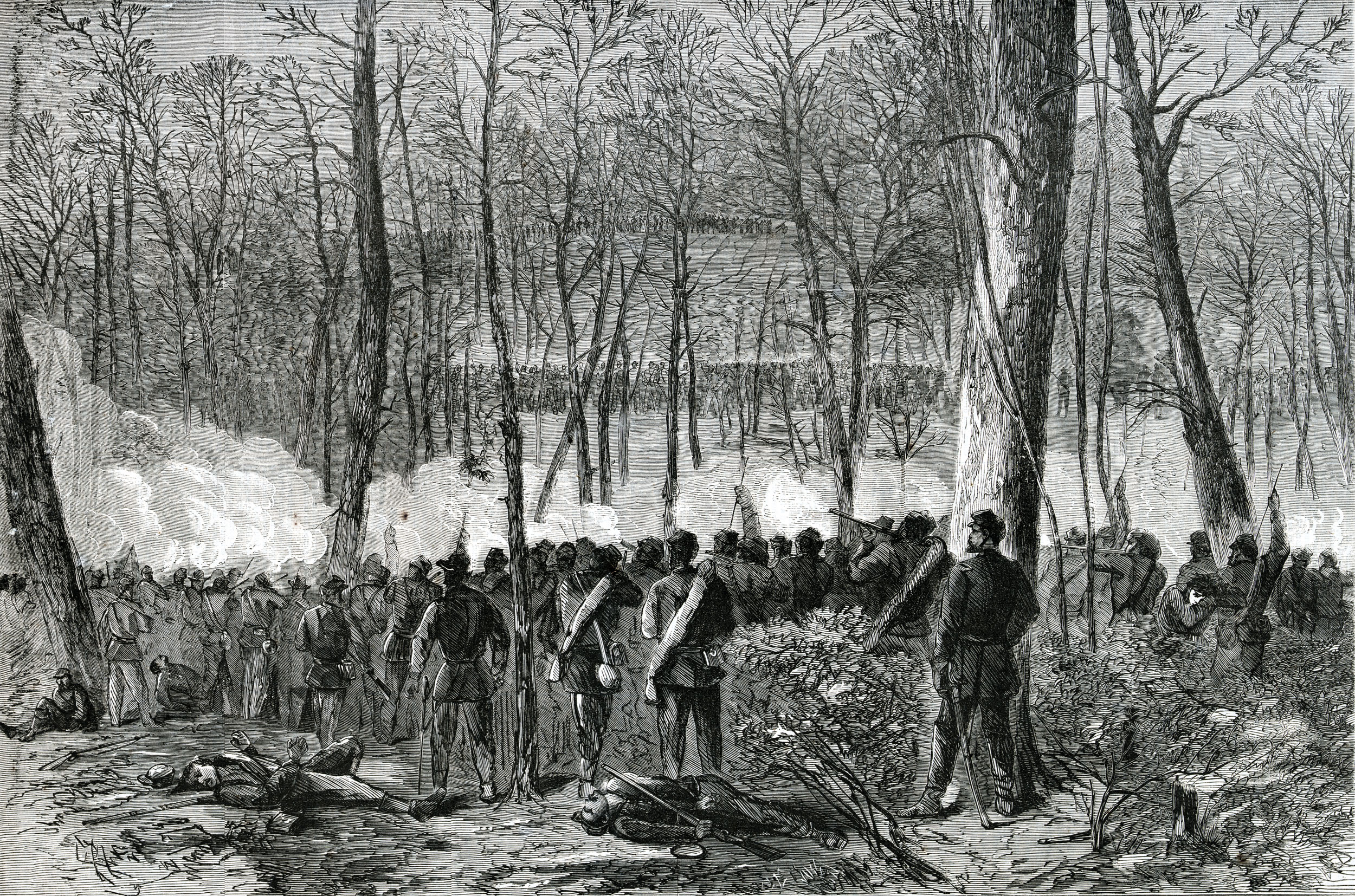
Given the fact that the Wilderness had a varied landscape, it should come as no surprise that it produced a variety of combat conditions. It should also astonish no one that other Civil War battlefields were also wooded, and that they caused many of the same problems the soldiers and armies experienced at the supposedly unparalleled Battle of the Wilderness, such as limited visibility and maneuverability and reduced opportunities for the use of artillery.1
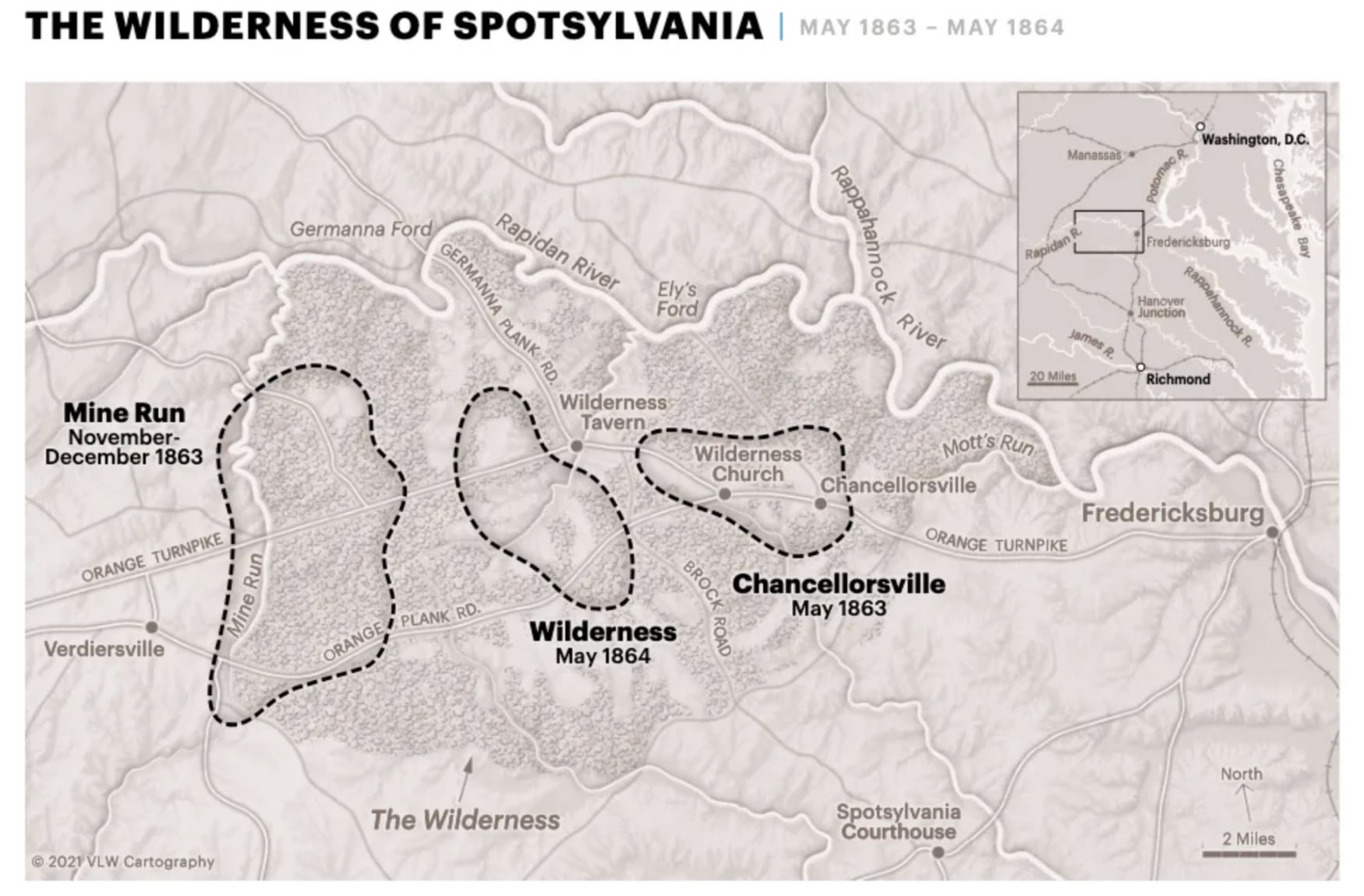
Between the spring of 1863 and the spring of 1864, the Wilderness of Spotsylvania—located west of Fredericksburg, about halfway between Washington, D.C., and Richmond, Virginia—was the site of three campaigns fought between the Army of the Potomac and the Army of Northern Virginia: Chancellorsville in May 1863, Mine Run in November–December 1863, and the Battle of the Wilderness in May 1864. By war’s end, a mystique enveloped the forest as a place of destruction, suffering, and death.
Comparing the Battle of the Wilderness to Chancellorsville, which was also fought in the Wilderness region, and to Chickamauga, which was fought in a wooded area of Georgia, reveals several things about the nature of combat in the Wilderness. First, the Battle of the Wilderness shared certain similarities with both Chancellorsville and Chickamauga. All three engagements produced high casualties and featured forest fires, trees torn by bullets and shells, and the use of makeshift field fortifications. The three battles also furnished numerous examples of how trees and underbrush can hamper movement, disorient troops, and disrupt troop formations. These problems seem to have been common to all battles fought in the woods. All three of these wooded battlefields also provided excellent screens for troop movements. Anecdotal evidence suggests that the Battle of the Wilderness had the worst combat visibility of the three followed by Chickamauga, and then Chancellorsville. Much of this had to do initially with the thickness of the woods, although the addition of smoke from the musketry, artillery fire, and burning woods would have only aggravated the problem. Chancellorsville had the largest open space of the three, and artillery was able to shape that battle in a way not possible at Chickamauga or the Battle of the Wilderness. At Chancellorsville, cannon in fairly large numbers was used offensively, while at the other two battles, it was mostly confined to the defensive in the small open areas available on those battlefields. In contrast, at Chickamauga and especially at the Battle of the Wilderness, infantry tended to dominate the fighting. In the end, the Battle of the Wilderness was not so much an exception as it was a manifestation of the tactical problems Civil War armies faced operating in a forested region.
It is also worth noting that the Wilderness battlefield, for all the challenges it presented, was not necessarily the most difficult landscape a Civil War soldier might encounter. The experience of John Henry Otto of the 21st Wisconsin Infantry underscores this point. His unit, which had fought in the western theater, marched past the Wilderness on its way to Washington in 1865. He reported that a “good many of the Officers and soldiers wished to see the grounds and the lay of the memorable battleground where Grant and Lee’s armies fought so desperate without any decisive result, and of which so much has been talked and written about.” What they beheld disappointed them. While Otto observed that “everything denoted that a fearfull struggle had taken place here,” he “found the battlefield no more of a wilderness” than what his unit had encountered “in numbers of battles out west and south.” In fact, Otto claimed that he “would rather fight on the wilderness battlefield, than in the Cedarswamps at Stone river, or in the swamps and briars below Kenesaw Mountain, Georgia, or in the swamps of the Pocotaligo and Tullafinny rivers in South Carolina.”2
If there is something exceptional about the Wilderness, it is the mystique that grew up around the forest during and after the war. Historians have often conveyed it, even if they never put a name to the aura the region invoked.3 This mystique—which no other battlefield of the war could match—went beyond battle conditions and was an amalgamation of multiple elements that created something that none of its individual parts could have produced.
It began with a name. Unlike many battlefields, the Wilderness had a title that carried specific negative connotations, indicating a forest, empty of man and beyond his control. The name also set the Wilderness apart as a distinct region. Many Union and Confederate soldiers who entered the Wilderness in the spring of 1863 had no inkling that they had stepped into a place marked by a special name and physical characteristics. At first, the Wilderness was just a forest like any other, but soldiers began to attach the name to the place and soon certain conditions to the name as well. By the time of the Overland Campaign in the spring of 1864, the soldiers in both armies called it the Wilderness and the region became increasingly portrayed as a woebegone, gloomy, malevolent labyrinth of a forest.
In the contemporary accounts of the Battle of the Wilderness and later in postwar writings, the Wilderness became increasingly associated with death and destruction. The remains of the old Chancellorsville battleground, the high casualties, the destruction of vegetation, and the corpses, skeletons, and graves that littered the Wilderness combined to cast the region as a place where the shadow of death lingered. The Wilderness also became connected to the fires that ravaged the battlefield and engulfed the wounded. Such scenes caused some postwar writers to compare the Wilderness to hell itself. For instance, Horace Porter, a member of Grant’s staff, remembered that during the Battle of the Wilderness “forest fires raged; ammunition-trains exploded; the dead were roasted in the conflagration; the wounded, roused by its hot breath, dragged themselves along, with their torn and mangled limbs, in the mad energy of despair, to escape the ravages of the flames; and every bush seemed hung with shreds of blood-stained clothing. It was as though Christian men had turned to fiends, and hell itself had usurped the place of earth.”4 These images of death and destruction, fire and hell, formed important elements in the Wilderness mystique. The supernatural also found its way into the Wilderness picture, as postwar writers, such as Union veteran Morris Schaff, portrayed the Wilderness as haunted or even as a spirit itself that could lash out and change the course of battle and with it the destiny of the nation.
There were many woods in which Civil War soldiers fought yet there was only one Wilderness. Only one carried the name. Only one became the malevolent woods where one would find death and hell with accompanying spirits. Why was this the case? It is undeniable that terrible things happened in the Wilderness. Thousands of men died there, not a few of them at the hands of the merciless flames. Yet, in the end, there were other battlefields noted for slaughter and other engagements where forest fires took their toll. What made the Wilderness different?
 Library of Congress
One element of the Wilderness myth is that Robert E. Lee benefited from the landscape in his clash with Ulysses S. Grant in May 1864. In truth, the Wilderness (depicted here in a wartime sketch by Alfred R. Waud) hindered Lee’s army during the heavy fighting as much as it did Grant’s.
Unquestionably, the size of the Wilderness set it apart and awed those who entered it. Moreover, repeated visits to the forest led the soldiers’ understanding of it to evolve. The Wilderness name evoked the animus between man and untamed nature, while the landscape provided a gloomy backdrop for the fighting. Any analysis of why the soldiers set the Wilderness apart would be incomplete, however, without acknowledging the supreme importance of the Battle of the Wilderness. Without that bloody engagement it is doubtful the region would have earned the notoriety it did. Depictions of the Wilderness became decidedly negative in the battle’s aftermath, and in its travails, the mystique was born. Of all the many claims that the Wilderness was unique in this or that respect, it is this mystique, above all its other characteristics, that made the Wilderness most distinctive. It is the one thing that sets the Wilderness apart from any other battlefield, and is a major reason why people are drawn to the battles fought there. The Wilderness’ wounds have healed, the armies have left, the dead have returned to Mother Earth, but the Wilderness mystique lives on—and will as long as people remember what happened in that Virginia forest so long ago.
But what of the other Wilderness myth: that the Confederates benefited from the woods and for this reason Lee sought to trap the Federals there in May 1864? Like the notion that it was a unique landscape or that it produced unprecedented combat conditions, the claim that the Wilderness favored the Confederates tactically is largely unsubstantiated. Historian Earl Hess has challenged this traditional interpretation, asserting that the Wilderness hindered Lee’s army as much as it did Grant’s, prevented either army from gaining a decisive victory, and hampered Confederate flank attacks. In short, Hess concluded that “Lee’s offensive tactics were muffled by his choice of battlefield.”5
My own investigation confirms Hess’ findings. First, the two armies were more or less equally familiar with the area. Second, the Wilderness caused similar problems for both armies, except for the fact that the Confederates had access to a better road network, which initially made it easier for them to deploy their forces. Hess is also correct about the Wilderness disrupting both Confederate flank attacks and limiting their success, although I would add that given the difficult battlefield, a flank attack made the most of the limited opportunities available to the Confederates.
Ultimately, the Wilderness was not a good place for the Confederates to fight because of any natural advantages it afforded to them alone. By and large it caused the Confederates as much grief as it did the Federals. They enjoyed no special familiarity with the region. Nor could they see through the undergrowth better or move through the thickets with greater ease. If it was good place for the Confederates to fight it was because they made it so by aggressively taking advantage of the limited opportunities the Wilderness afforded.
Given that it did not benefit the Confederates, it should surprise no one that Lee’s actions and remarks about the Wilderness from the Chancellorsville and Mine Run campaigns the year before suggest that he had no desire to trap the Union army in that forested region. During the Chancellorsville Campaign, Lee attacked Joseph Hooker’s army in the Wilderness because the latter chose the field and Lee wanted to take the initiative. At Mine Run, Lee could have fought the Union army in the woods but chose instead to withdraw to a good defensive position along Mine Run in an open stretch on the edge of the Wilderness.
The reports for these campaigns demonstrate that Lee understood the character of the Wilderness well. Nevertheless, the conclusion that Lee intentionally engaged the Union army there to take advantage of the area’s environmental characteristics seems fanciful given that Lee constantly complained about how the Wilderness put him and his army at a disadvantage. It is plain that, far from a favorite battlefield, the Wilderness was both a challenge and seemingly a constant headache for Lee and his army. Assuming that Lee was not using the Wilderness as an excuse to cover his own or his army’s shortcomings, then his reports show that he did not find the Wilderness a good battleground, much less an ideal place to trap the Federal army. Lee’s actions do not show that he had gone out of his way to fight in the Wilderness in the 1863 campaigns and, despite the claims that Lee actively sought to catch the Union army in the Wilderness in May 1864, there is nothing to suggest he would have had any such aim.
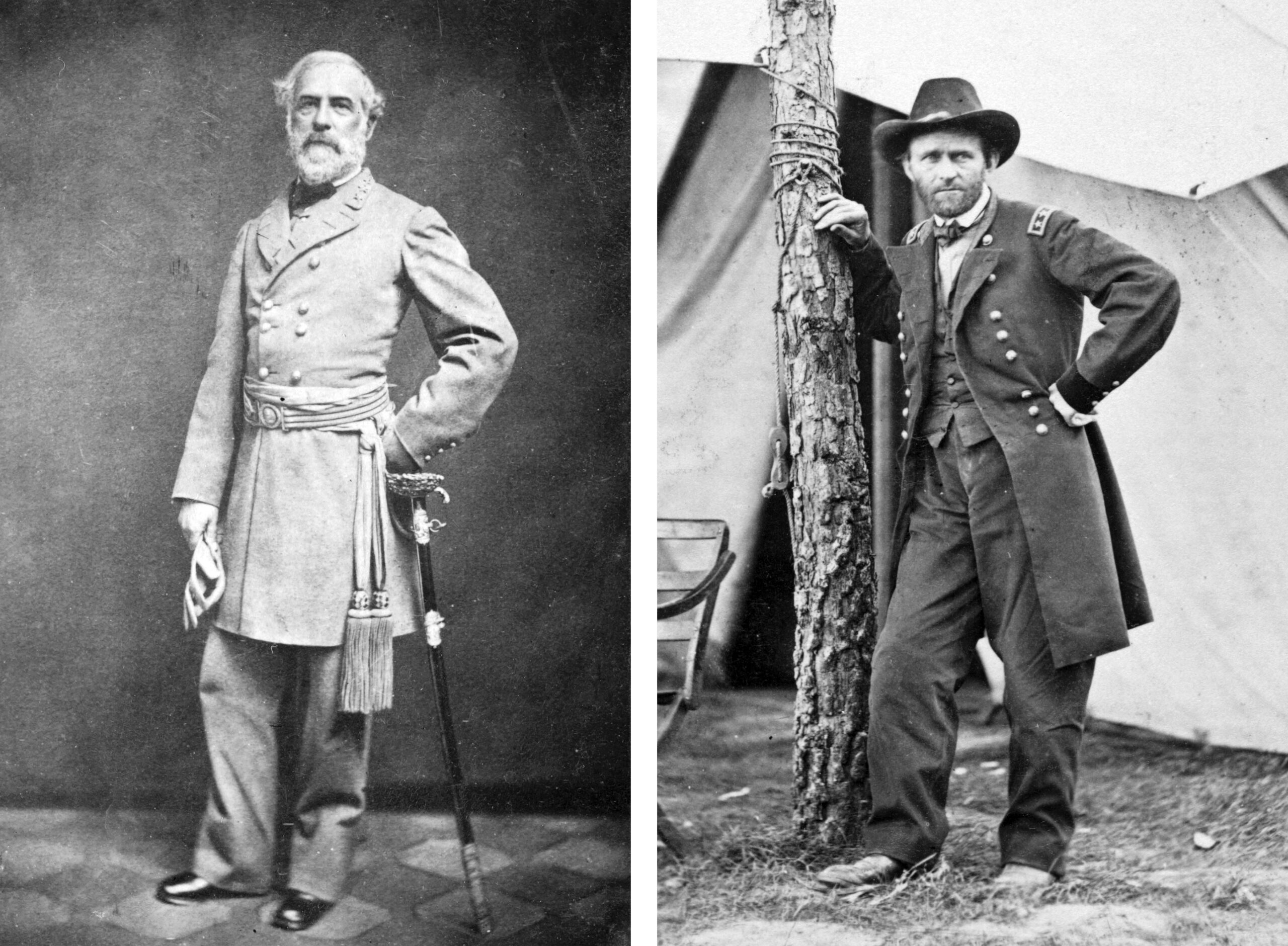 Library of Congress
There is nothing to suggest that Robert E. Lee (left) intended to trap the Union army in the Wilderness in May 1864. At the same time, there is no evidence that Lee’s opponent, Ulysses S. Grant (right), had any concerns about fighting the Confederates in the Wilderness.
The limited contemporary evidence from the Battle of the Wilderness suggests that Lee was committed to bringing on an engagement as soon as his army was ready, and that he was flexible as to where it would be fought. A May 4 order to corps commander Richard Ewell provides a window into Lee’s thoughts. The order explained that “if the enemy moves down the river, [General Lee] wishes to push on after him,” but “if he comes this way, we will take our old line,” most likely meaning the Mine Run entrenchments. The order concluded that Lee wanted “to bring [the enemy] to battle as soon now as possible.”6 Clearly, Lee was open to various options, depending on the Federals’ movements, but battle was the end goal, though not necessarily in the Wilderness. The next day Ewell reported receiving orders from his commander explaining that Lee “preferred not to bring on a general engagement before General Longstreet came up,” suggesting that he wanted to unite his army before committing to a decisive battle. Yet there is no mention of trying to trap the Federals in the Wilderness. Ewell in turn told several of his brigade commanders that they were “not to allow themselves to become involved [in sustained combat], but to fall back slowly if pressed.”7 Lee’s postwar testimony also suggests that he wanted to engage the Federals but was not particular about the location. An 1868 letter explained that “notwithstanding the demonstrations made against our front and left at the opening of the campaign of ’64, I believed Genl. Grant would cross the Rapidan on our right, and resolved to attack him whenever he presented himself.”8 Again, there is no mention here of trapping the Union army in the Wilderness.
It is also interesting that the intended victims of Lee’s supposed trap showed little concern about the Wilderness. When George G. Meade, the commander of the Army of the Potomac, reported to Grant that the Confederates were positioning themselves in a line of battle opposite his forces in the Wilderness, Meade’s first reaction was to attack them while halting the army’s march “until this movement of the enemy is developed.” He did not think the Confederates intended to fight there but instead were “trying to delay our movement.” Meade betrayed no concern about stopping the Union advance in the middle of the Wilderness. Grant’s response to him was simple: “If any opportunity presents itself for pitching into a part of Lee’s army, do so without giving time for disposition.” Again, there is no worrying about the Wilderness, only an injunction to attack the Rebels, to bring them to battle as soon as possible. Later Meade sent word to Grant that he thought “Lee is simply making a demonstration to gain time,” in which case he meant to “punish him.” In particular he boasted that if Lee was “disposed to fight this side of Mine Run at once, he shall be accommodated.”9 Once more, there is no evidence in this dispatch that the Union army commanders were concerned about fighting in the Wilderness. If they had been so troubled about such a possibility, they surely would have expressed it or acted in some way to avoid such a fate. Of more concern to them was the fact that at least a portion of Lee’s army had left its formidable Mine Run defenses and consequently appeared vulnerable. Even if they had unexpressed hopes of avoiding a fight in the Wilderness, the allure of engaging the Confederates away from their entrenchments was enough to make the Federals abandon such worries.
Some authors have claimed that Chancellorsville was the model Lee looked to in May 1864. They argue that he intended to pin or trap Grant and Meade in the Wilderness with part of his army in order to attack them in the flank with the other, just as he had done with great success at Chancellorsville.10 While this is possible, the actions of both sides suggest that their experience at Mine Run is what guided them at the Battle of the Wilderness. Meade and Grant were willing to fight Lee in the Wilderness because they wanted to prevent his army, or at least a part of it, from getting back to the Mine Run entrenchments. In effect, they sought to avoid the stalemate and potential bloodbath the Army of the Potomac had faced in 1863, their actions suggesting that they saw Lee’s army being away from Mine Run as an opportunity, even if it meant fighting in the thick woods of the Wilderness. This bellicosity forced a battle that neither Lee nor the Federals were prepared to fight.
If anything, one gets the sense that the fight that developed at the Battle of the Wilderness escalated in a way that Lee had neither planned nor wished for, as the Confederates were unable to avoid the general engagement that Lee had sought to postpone until after concentrating his army. Despite his reputation for aggression, his orders and Ewell’s report suggest that Lee wanted to repeat what he had done during the Mine Run Campaign: namely locate the Union army’s position and delay a full-scale battle until he could concentrate his own forces. Then, if the Federals turned toward him, he would withdraw to Mine Run with the hopes of forcing Meade and Grant to attack him there. While he did want to bring on a battle as soon as possible, nothing suggests that Lee was wedded to the idea of trapping the Army of the Potomac in the Wilderness. After all, at Mine Run Lee had also reported that he had intended to give battle. Yet this desire to engage the enemy did not necessarily mean fighting in the Wilderness and certainly did not preclude him from retreating to Mine Run. If indeed the Mine Run experience was informing operational decisions, then bringing on a fight in the Wilderness would have been seen as a boon for the Union army and a misfortune for Lee’s. Perhaps, it was the Army of Northern Virginia rather than the Army of the Potomac that ended up trapped in the Wilderness.
If the contemporary records show no sign of Lee trying to trap the Union army in the Wilderness, then where did this traditional interpretation spring from? Union soldiers came away from the Battle of the Wilderness recounting the difficulty of fighting in the tangled landscape. The lingering question, though, was why they had failed to defeat Lee’s army. William Swinton, a wartime correspondent for The New York Times, sought to answer this question in a report published only days after the battle’s end. In it he, too, described the many natural obstacles the soldiers faced, but he also drew some conclusions that were to have a lasting influence on how historians portrayed the battle, as well as the Wilderness itself. Swinton argued that it was a unique engagement, citing the lack of visibility, the inability to maneuver, and the impossibility of employing artillery and cavalry effectively as reasons for the Federals’ failure to obtain victory. He suggested that the possibility of fighting a battle in the Wilderness was a major drawback to Grant’s selected route of advance south, an option the Federals would have avoided had the Confederates not forced the issue. He then wondered whether Lee had meant only to delay the Union advance or had desired all along to engage in a decisive confrontation in the Wilderness. Swinton ultimately reasoned that the fierce nature of the fight as well as the advantages the Confederates enjoyed—such as crowding the Union forces into unfamiliar woods to cancel out their strength in numbers—suggested that Lee meant to force a fight in the Wilderness.11
Swinton later perfected his interpretation in his 1866 Campaigns of the Army of the Potomac, which was not only one of the first histories of the war in Virginia but also the first to convey the Wilderness myth. Much of what he wrote echoed the sentiments of his wartime report, but Swinton made a few key additions. He emphasized that the Wilderness was an unusual if not unique forest, a byproduct of mining operations. It was also a terrible place to fight a battle. Swinton no longer surmised but now affirmed that Lee had tried to trap the Union army there to benefit from the advantages it would give the Confederates. To these conclusions he added the element of mystique, calling the Wilderness “a region of gloom and the shadow of death,” a “horrid thicket” where “lurid fires played” and in which “the crackle and roll of musketry like the noisy boiling of some hell-caldron … told the dread story of death.”12 Here, then, was the Wilderness myth fully formed within a year after the war’s end.
Many subsequent historians have echoed Swinton’s arguments in one form or another. They often employed the Wilderness as either a handy club for bludgeoning their enemies’ reputations or a ready shield for defending their own—at times utilizing it for both. In their accounts of the Battle of the Wilderness, Union writers used the region to excuse the Federal army’s shortcomings and to either criticize or defend Grant’s performance.13 By contrast, Confederate historians used it to highlight their own deeds and particularly to glorify Lee’s generalship, which was standard fare in Lost Cause writings.14 Suffice it to say that the way the Wilderness was remembered became entwined with the reputations of important generals and the explanations of vital campaigns.
Ultimately, the Wilderness myth was the product of hindsight. The need to make sense of the May 1864 battle drove the myth’s formation, but the longevity of Swinton’s interpretation depended upon its undeniable appeal. It was a myth that could speak to both Confederates and Federals, and all veterans of the war in Virginia could glory in having fought on the worst battlefield of the war under the most trying conditions. Even well after the passing of those who fought in the Wilderness, this myth remains compelling both to historians who retell it, and to readers of Civil War history who love the epic tale of a terrible battle between the two great generals of the war in a malevolent landscape. And so it endures. The Wilderness, however, was blamed for that for which it was blameless and has since come down in history as a stumbling block of a battlefield craftily chosen by Lee. Here the Confederates could run roughshod over their Federal opponents in the dreadful and gloomy woods. In reality, the Wilderness was a battlefield that created very difficult combat conditions, but many of the claims surrounding it were unfounded, despite their wide-ranging influence in the annals of the war.
Adam H. Petty is a historian and documentary editor with the Joseph Smith Papers. He is the author of The Battle of the Wilderness in Myth and Memory (LSU Press, 2019).
Notes
1. See Earl J. Hess, Civil War Infantry Tactics: Training, Combat, and Small-Unit Effectiveness (Baton Rouge, 2015), 89.
2. John Henry Otto, Memoirs of a Dutch Mudsill: The “War Memories” of John Henry Otto, Captain, Company D, 21st Regiment Wisconsin Volunteer Infantry, eds. David Gould and James B. Kennedy (Kent, OH, 2004), 371–372.
3. Of all the modern historians, none captures this mystique better than Bruce Catton. No doubt this is because of Catton’s literary style and his heavy reliance on memoirs and regimental histories, sources which simply reek of this mystique. See Bruce Catton, A Stillness at Appomattox (Garden City, NY, 1953), 55–92.
4. Horace Porter, Campaigning with Grant (New York, 1897), 73.
5. Earl J. Hess, Trench Warfare under Grant & Lee: Field Fortifications in the Overland Campaign (Chapel Hill, 2007), 39–41.
6. U.S. War Department, The War of the Rebellion: A Compilation of the Official Records of the Union and Confederate Armies, 127 vols., index, and atlas (Washington, D.C.: 1880−1901), ser. 1, 36(2):948 (hereafter cited as OR).
7. OR 36(1):1070
8. Robert E. Lee to William L. Smith, July 27, 1868, Lee Family Papers, Virginia Historical Society, Richmond.
9. OR 36(2):403−404.
10. Mark Grimsley, And Keep Moving On: The Virginia Campaign, May−June 1864 (Lincoln, NE, 2002), 30; Edward Steere, The Wilderness Campaign: The Meeting of Grant and Lee (Mechanicsburg, PA, 1960), 86−87; Gordon Rhea, The Battle of the Wilderness, May 5−6, 1864 (Baton Rouge, 1994), 90.
11. “The Great Campaign,” The New York Times, May 13, 1864. See also J. Cutler Andrews, The North Reports the Civil War (Pittsburgh, 1955), 531, 731n23.
12. William Swinton, Campaigns of the Army of the Potomac (New York, 1866), 417−418, 428−429, 438−439.
13. Andrew A. Humphreys, The Virginia Campaign of ’64 and ’65 (New York, 1885), 10−11; Francis A. Walker, History of the Second Army Corps in the Army of the Potomac (New York, 1887), 409; Adam Badeau, Military History of Ulysses S. Grant from April, 1861, to April, 1865, 3 vols. (New York, 1881), 2:96−97, 130.
14. See Joan Waugh, U.S. Grant: American Hero, American Myth (Chapel Hill, 2009), 185–186, 189; Brooks D. Simpson, “Continuous Hammering and Mere Attrition: Lost Cause Critics and the Military Reputation of Ulysses S. Grant,” in The Myth of the Lost Cause and Civil War History, ed. Gary W. Gallagher and Alan T. Nolan (Bloomington, IN, 2000), 148, 157.