 Library of Congress
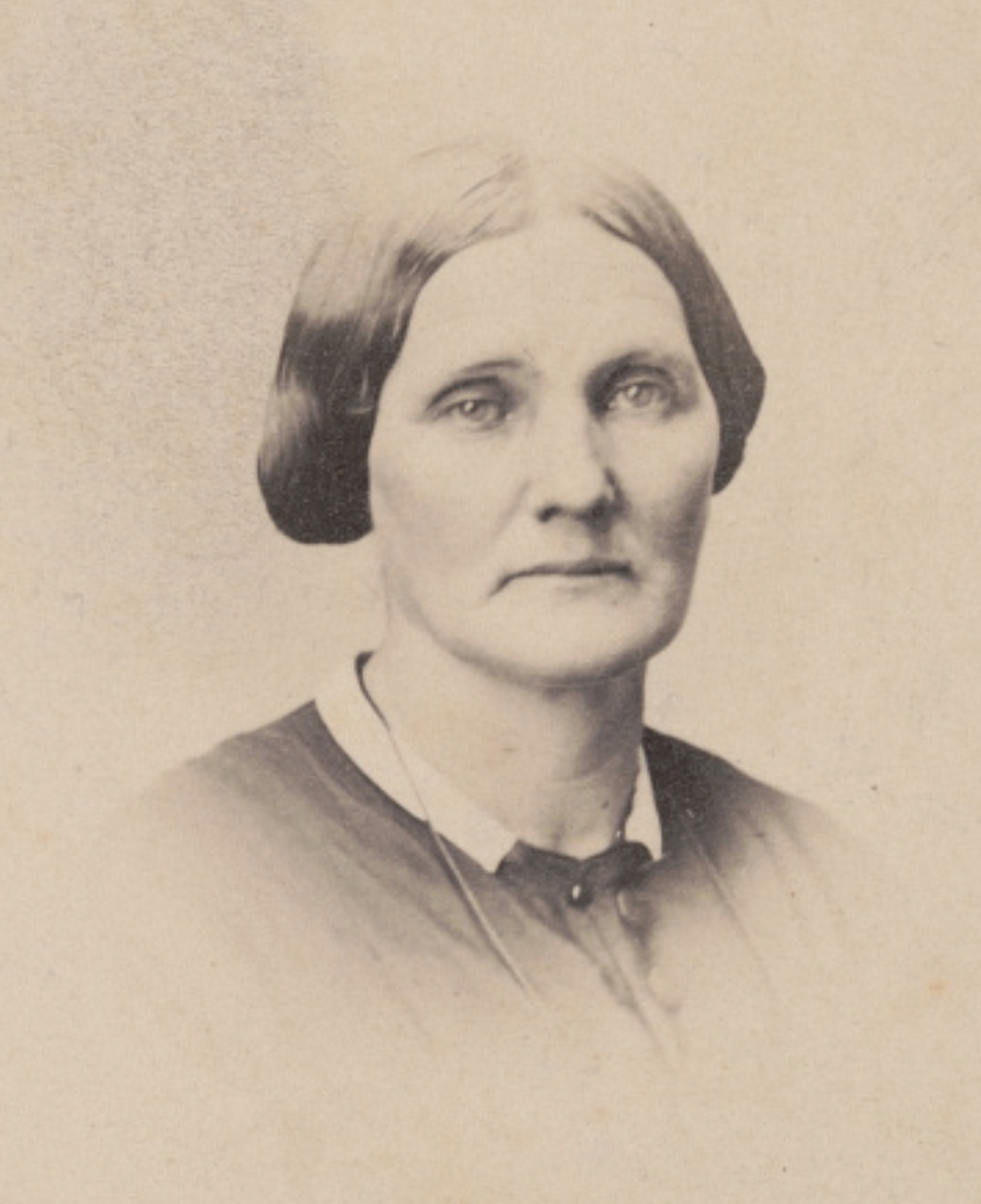
Mary Ann “Mother” Bickerdyke
A wounded Union soldier lay abandoned in the freezing mud after the battle at Fort Donelson in February 1862. Scared but not resigned to his fate, the man moaned into the darkness with the hope that someone would come to his aid. At last, a woman knelt beside him, lifted his head, and placed a cup to his lips. The scene would later be memorialized as both a lifesaving measure and maternal devotion. What did Mary Bickerdyke use to comfort and revive?
Mary Ann “Mother” Bickerdyke—a Sanitary Commission Agent, hospital matron, and trailblazing nurse for the Union army—was extolled in memorial literature for bringing “tea, coffee, soup and gruel, milk punch and ice water” to battlefield hospitals, prepared “in large quantities, under her supervision, and sometimes by her own hand.”1 Throughout the war, she was reliably equipped with “soups, tea, coffee, milk punch, stimulants, rags, bandages, and whatever else might be needed.”2 For Bickerdyke and those familiar with her work, milk punch was a tool in her therapeutic arsenal, and was explicitly grouped with stimulants and surgical supplies.
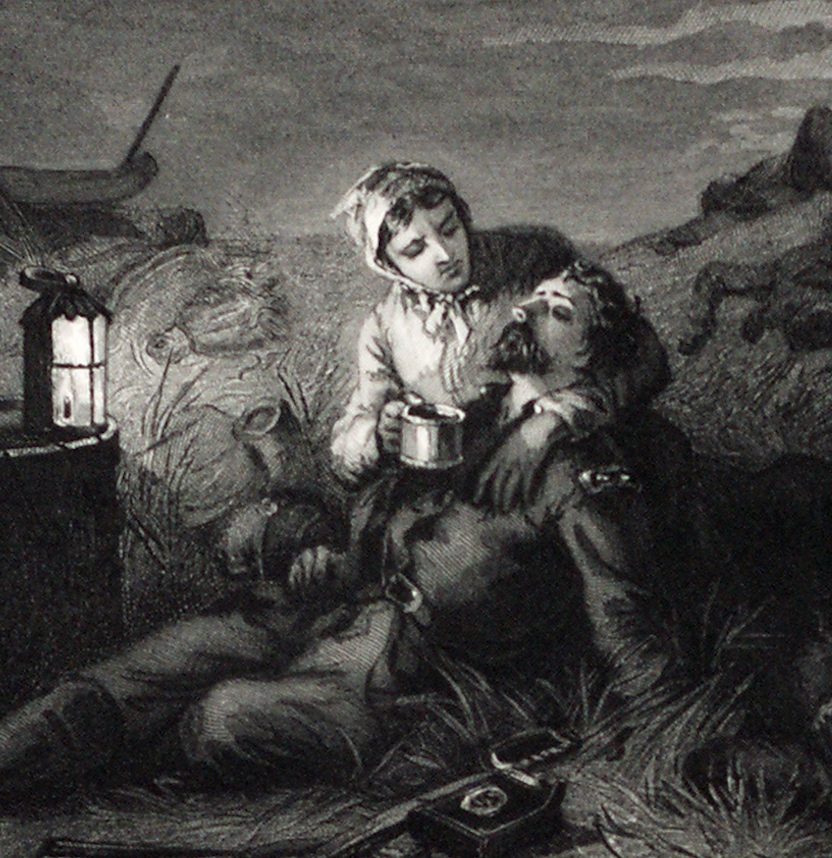
In her unpublished memoirs, Bickerdyke recounted her efforts at Fort Donelson, and took note of the therapeutic preparation she used to temporarily alleviate suffering and bring immediate comfort. Refusing to ignore the cries that she heard in the distance, she “started out with a lantern, and canteen, filled with hot milk punch, and an escort, and went in the direction of the moan.”3 Her efforts and insistence on following her intuition saved the lives of two Union soldiers.
 USAHEC
Mother Bickerdyke tends to a wounded soldier in the field.
Before the war, Bickerdyke worked in Galesburg, Illinois, as a botanic physician, a medical reform designation rooted in the movement associated with Samuel Thomson. Thomsonian medicine rejected bleeding and mercury in favor of botanical preparations and stimulants designed to preserve what its practitioners called a patient’s “vital heat.”4 Disease was interpreted as coldness and obstruction. Thomson opined “heat is life, and cold death.… [C]old [is] the enemy.” Patient recovery required warmth, stimulation, and nourishment.
Within that framework, alcohol functioned as a diffusible stimulant. Thomson’s own rheumatic drops relied on alcohol as a solvent and activating agent.5 Properly dosed, spirits were believed to revive circulation and counteract chill. Mother’s milk punch was just one of many uses for medicinal alcohol during the Civil War. Milk punch—milk fortified with brandy, sugar, and sometimes spices—fit seamlessly into this therapeutic logic. The brandy stimulated circulation in cases of shock or exposure. The milk supplied calories and protein in a digestible form. In a single cup, a soldier received warmth and sustenance, which is precisely what 19th-century botanic practitioners believed a collapsed body required.
Bickerdyke was not the only practitioner to use milk punch. Sectarian and orthodox physicians treated hemorrhagic collapse and prostration with small, repeated doses of alcohol. After Surgeon General William A. Hammond’s reforms, official army diet tables included “experimental diet” plans that included whiskey, wine, and milk punch among therapeutic beverages administered at a surgeon’s discretion.6 Here, Bickerdyke’s practice converged with mainstream military medicine even as it reflected her adherence to more botanical logic.
The use of milk punch as mother’s medicine reveals something about the medical authority and sovereignty of female practitioners on the battlefield. Fellow sanitary agent Mary Livermore wrote that Bickerdyke’s “measures and methods have been peculiarly her own,” and that soldiers were “dear to somebody, and she would be a mother to them.”7 The maternal framing of her actions shaped public memory about her. The cup she raised was battlefield pharmacology administered with the care only a mother could provide.
Scholarship on Civil War medicine has emphasized that the conflict served as a crucible for professional adaptation, administrative reform, and therapeutic experimentation. Historians such as Margaret Humphreys have demonstrated that wartime medical practice was not static but deeply shaped by environment, logistics, and evolving clinical judgment.8 Bickerdyke’s milk punch belongs in that story. It illustrates how practical therapeutics operated alongside orthodox practice and how nourishment itself became medical technology in a war defined as much by exposure and disease as by bullets.
 Bar-Tenders’ Guide (1862)
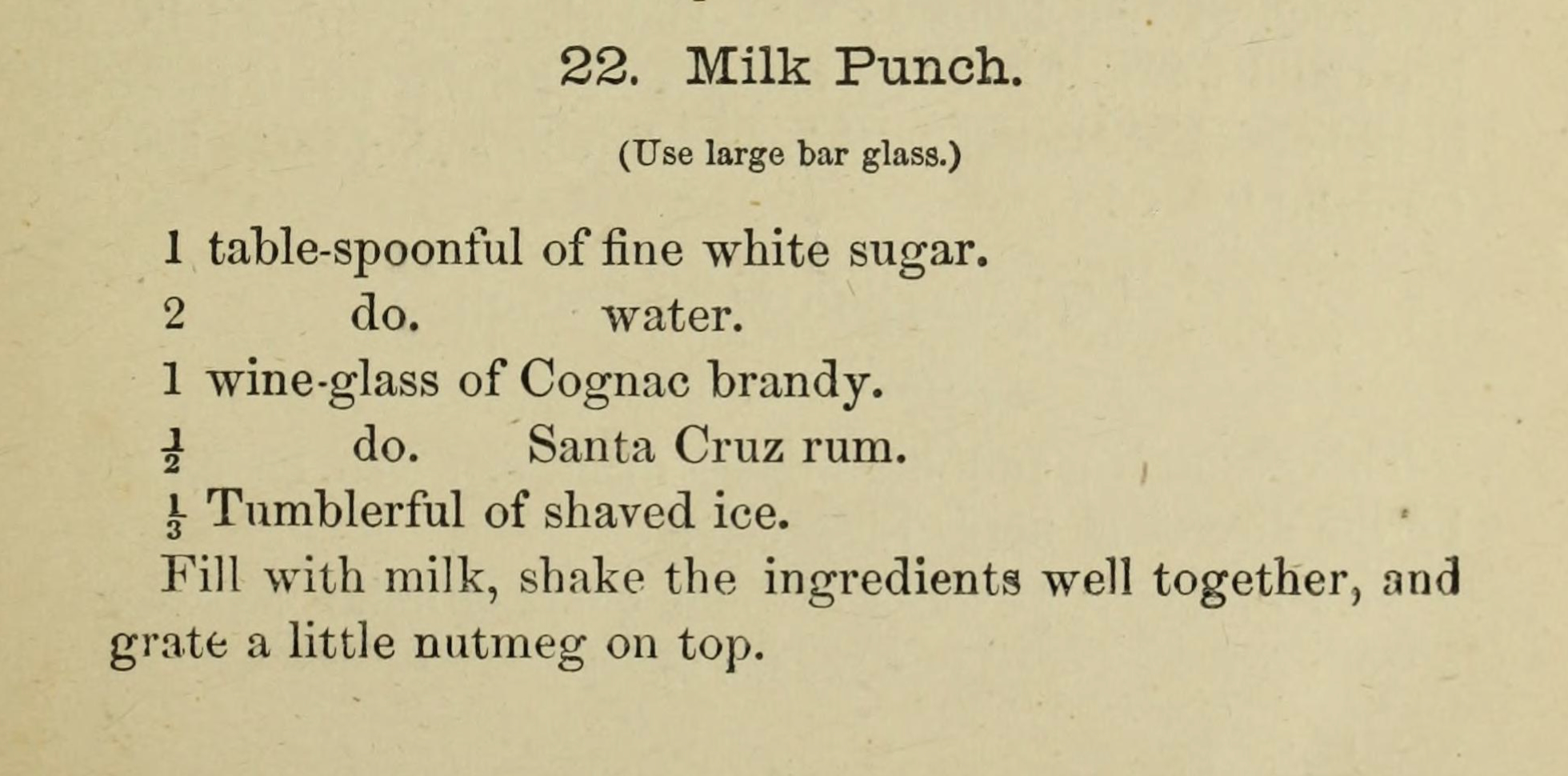
In this recipe from Bar-Tenders’ Guide: A Complete Cyclopedia of Plain and Fancy Drinks, “do” refers to “ditto” or the same as the previously listed amount.
To celebrate the recent publication of my book exploring how Mary Bickerdyke used her public reputation as “Mother” to gain access to and thrive within medical institutions, I experimented with historical recipes for milk punch to test out the efficacy of Bickerdyke’s medicine (the book writing process, after all, had me nearly collapsed). An 1862 Bar-Tenders’ Guide: A Complete Cyclopedia of Plain and Fancy Drinks provided a basis for our modern reinterpretation of this drink. This Civil War–era recipe suggests that a hot milk punch, like one Bickerdyke might have prepared, uses the same recipe “with the exception that hot milk be used, and no ice.”9 The result was certainly restorative: creamy, caloric, and quite “punchy.”
The drink was delicious and strong, and it is clear why Bickerdyke relied on it. In a single swig, a weakened soldier received warmth, calories, and a stimulant that was a precise combination of a 19th-century prescription for shock, exposure, and exhaustion. In our household, the concoction has acquired a fitting name: “Mother’s Medicine.” The phrase captures something essential about Bickerdyke’s wartime practice. What looked to observers like simple maternal kindness was, in fact, practical battlefield medicine that was a portable and potent potable grounded in the therapeutic logic she had learned and practiced long before the war.
Cheers to your health!
Megan VanGorder is an assistant professor of history at Illinois State University whose latest book is A Mother’s Work: Mary Bickerdyke, Civil War-Era Nurse (University of North Carolina Press).
Notes
1. Mary Livermore, My Story of the War: A Woman’s Narrative of Four Years Personal Experience as Nurse in the Union Army (Hartford, 1887), 484.
2. Ibid., 494.
3. “II. Cairo, Memoir,” n.d., MssCol 19224, box 3, folder 9, images 36–37, MAB Papers, Library of Congress.
4. Samuel Thomson, New Guide to Health; or, Botanic Family Physician (Boston, 1822), 183.
5. Ibid., 251.
6. United States Army Surgeon General’s Office, United States Army General Hospital Diet Table (Washington, D.C., 1862).
7. Livermore, My Story of the War, 172–173.
8. Margaret Humphreys, Marrow of Tragedy: The Health Crisis of the American Civil War (Baltimore, 2013).
9. Jerry Thomas and Christian Schultz, Bar-Tenders’ Guide: A Complete Cyclopedia of Plain and Fancy Drinks (New York, 1862), 20.
Related topics: food and drink, medical care, women