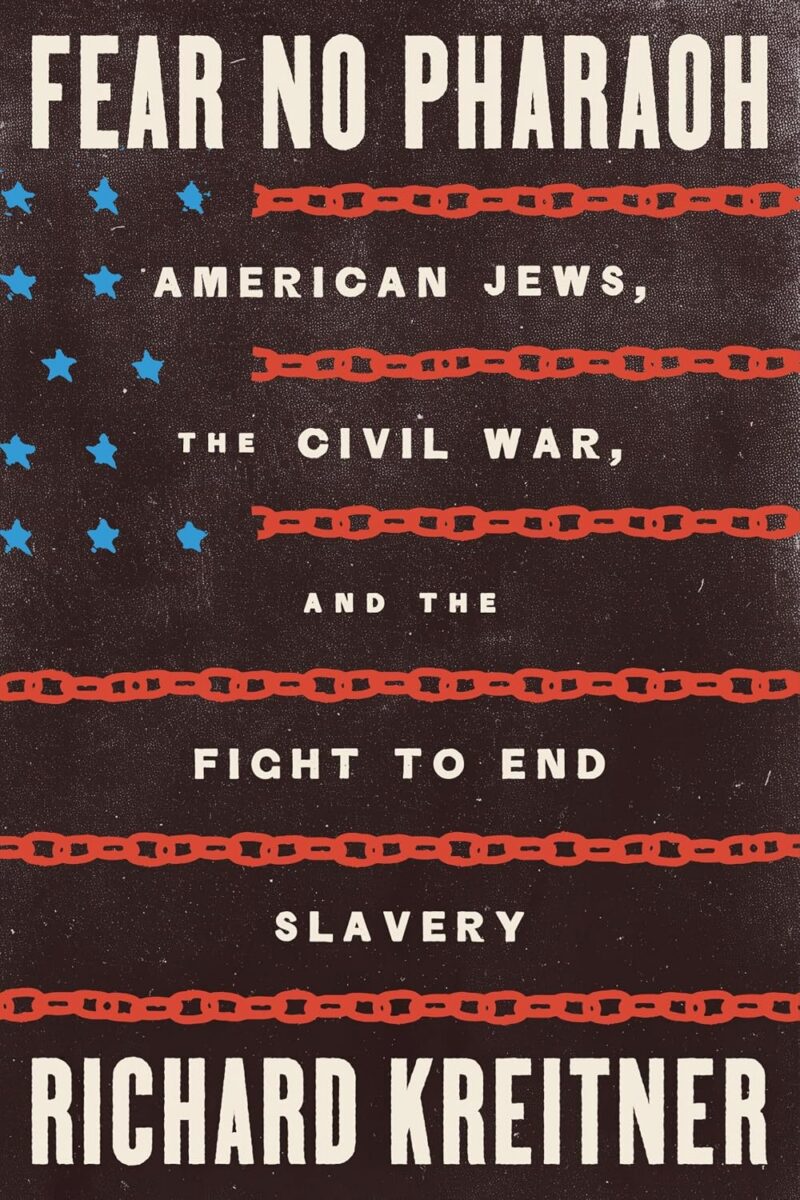
No group of people exists as a monolith, and, as Robert Kreitner’s Fear No Pharoah ably demonstrates, that includes American Jews during the U.S. Civil War. Kreitner’s work follows the experiences of several notable Jewish men and women before, during, and immediately after the conflict and discusses how their individual perspectives shaped their loyalties and allegiances.
Kreitner is hardly the first historian to consider American Jewry during the nation’s defining struggle. But his book expands upon the signal contributions of Bertram W. Korn’s classic study American Jewry and the Civil War, not only by extending the narrative frame beyond the narrow confines of the war years themselves, but by considering the experiences of Jewish abolitionists and noncombatants, too.
The cast of characters is rich. The author poises Judah Benjamin, former United States Senator, Confederate Secretary of War, and Confederate Secretary of State as an example of a dyed-in-the-wool proslavery advocate against August Bondi, who battled alongside John Brown to keep Kansas free in the 1850s and then served in the Union army until serious wounds ended his military career.
Ernestine Rose is profiled by Kreitner as a steadfast atheist but ethnically Jewish woman, who devoted her life to activism: supporting causes such as abolitionism and women’s suffrage. Jewish religious leader Morris Jacob Raphall defended the scriptural merits of slavery, even though he became an ardent Unionist.
Other, more reform-minded Rabbis like David Einhorn supported the abolition of slavery based on their understanding of Judaism. Kreitner details the lives and backgrounds of these and other individuals, following them as the conflict moves towards its conclusion and beyond.
The book is organized chronologically, unpacking important themes such as patriotism, nativism, gender, and ideas about whiteness. Kreitner also discusses how nineteenth century Americans reached for and made comparisons between those held in bondage on southern plantations and those enslaved in Egypt. Krietner is careful to point out that both antislavery and proslavery advocates—and both Jews and Gentiles—drew self-comparisons to the Israelites depicted in Exodus to serve whichever ideology they subscribed to.
Kreitner’s exhaustively researched book (culminating in thirty-five pages of citations) is written in a fair and even-handed manner. The author does not shy away from the uncomfortable reality that American Jews bought, sold, and owned enslaved people—and were just as responsible for their acts as Gentile participants in the “peculiar institution.”
Recovering the complexity of American Jewry during the nation’s struggle over slavery, Fear No Pharaoh is a valuable contribution to both Civil War and Jewish-American history.
John Campbell is a graduate student in history at Sam Houston State University.