 Library of Congress
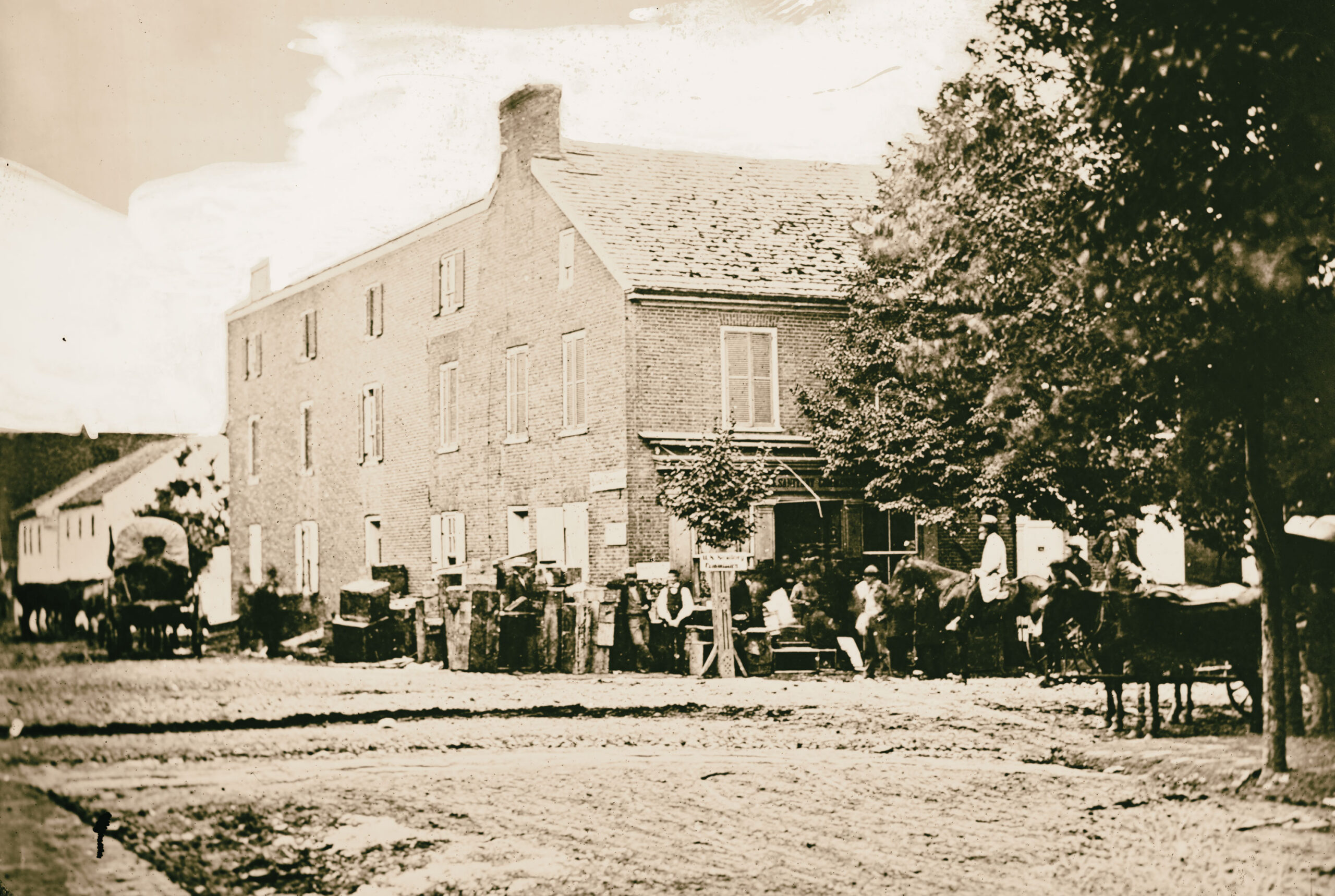
U.S. Sanitary Commission headquarters at Gettysburg
The United States Sanitary Commission (USSC) was a civilian relief organization authorized by the federal government in June 1861. Primarily concerned with caring for sick and wounded soldiers, the USSC’s thousands of male and female volunteers worked in hospitals, established and staffed convalescent camps, set up lodges to temporarily house soldiers traveling to and from the front, and transported and distributed a variety of items—including medicines, clothing, and food—to army camps. One of its largest relief efforts was at Gettysburg, where USSC supply wagons began arriving at Union lines while the battle was still being fought—the sight of which reportedly prompted one Union surgeon to exclaim, “Thank God, here comes the Sanitary Commission; now we shall be able to do something.” For weeks afterward, USSC agents helped care for the wounded. The massive scale of their efforts is hinted at in the figures that follow, which represent only a portion of the articles of sustenance and clothing the organization distributed at Gettysburg.
USSC Relief Efforts in Gettysburg by the Numbers
Articles of Sustenance
11,000 pounds of fresh poultry and mutton
3,600 pounds of preserved fish
400 gallons of pickles
6,430 pounds of fresh butter
8,500 dozens of eggs
675 bushels of fresh vegetables
48 bushels of berries
116 boxes of lemons
46 boxes of oranges
850 pounds of coffee
831 pounds of chocolate
426 pounds of tea
6,800 pounds of white sugar
3,800 pounds of concentrated beef soup
12,000 pounds of concentrated milk
12,900 loaves of fresh bread
20,000 pounds of ice
1,250 bottles of brandy
1,168 bottles of whisky
1,148 bottles of wine
600 gallons of ale
100 pounds of tobacco
Articles of Clothing
7,143 pairs of drawers
10,424 shirts
1,007 blankets
2,659 handkerchiefs
2,300 sponges
1,500 combs
250 pounds of soap
4,000 pairs of shoes and slippers
5,818 pairs of stockings
1,200 crutches
3,500 fans
Source
Charles J. Stille, History of the United States Sanitary Commission (1866)