George Meade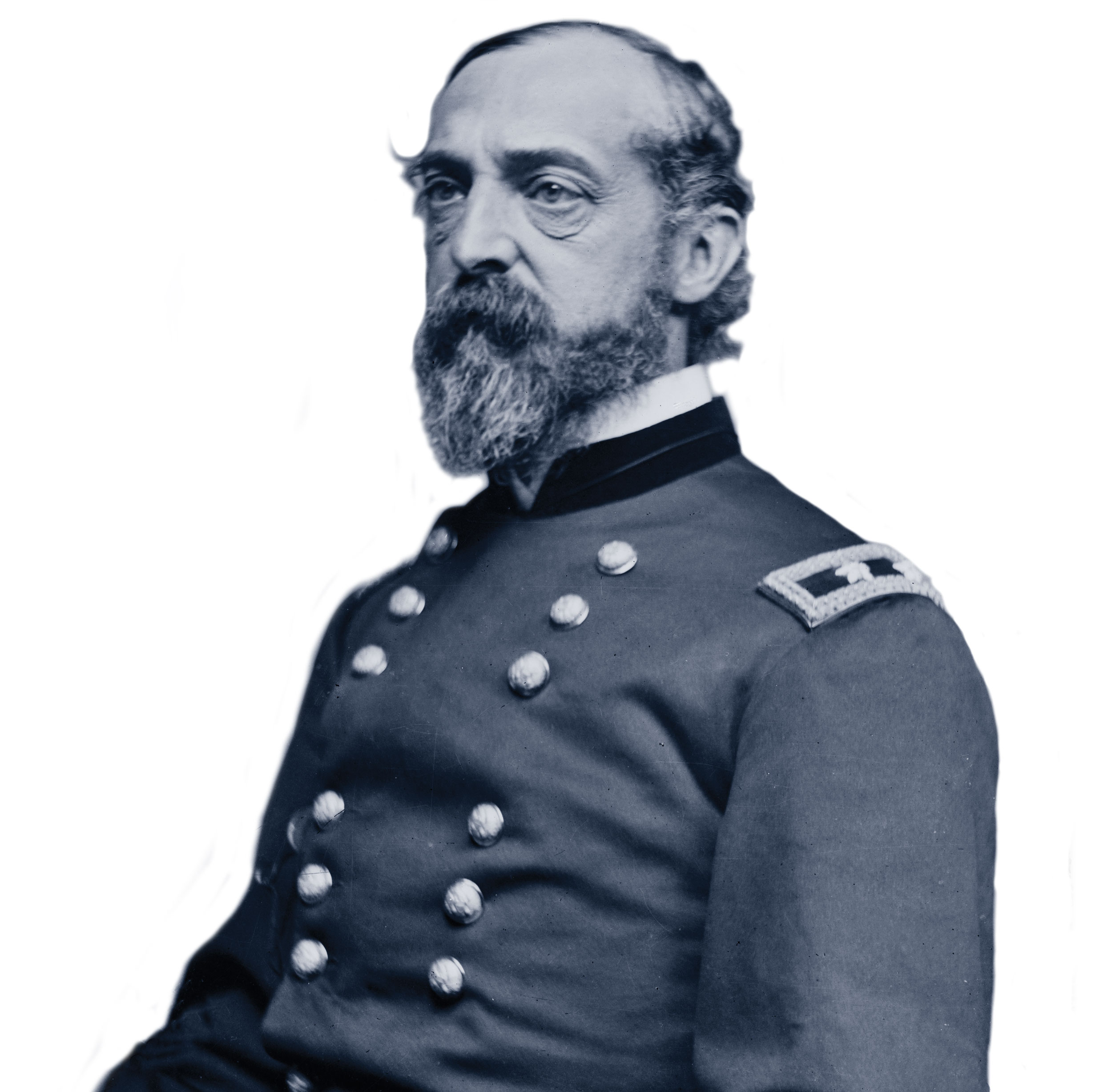 Library of Congress
“The devil! I shan’t have time to smoke my cigar.”
The reaction of Union general George G. Meade (above) after learning Secretary of War Edwin Stanton, General Ulysses S. Grant, and other dignitaries were soon to arrive in camp, as overheard by staff officer Theodore Lyman, who wrote about it in a letter to his wife, October 17, 1864
Woman with a pipe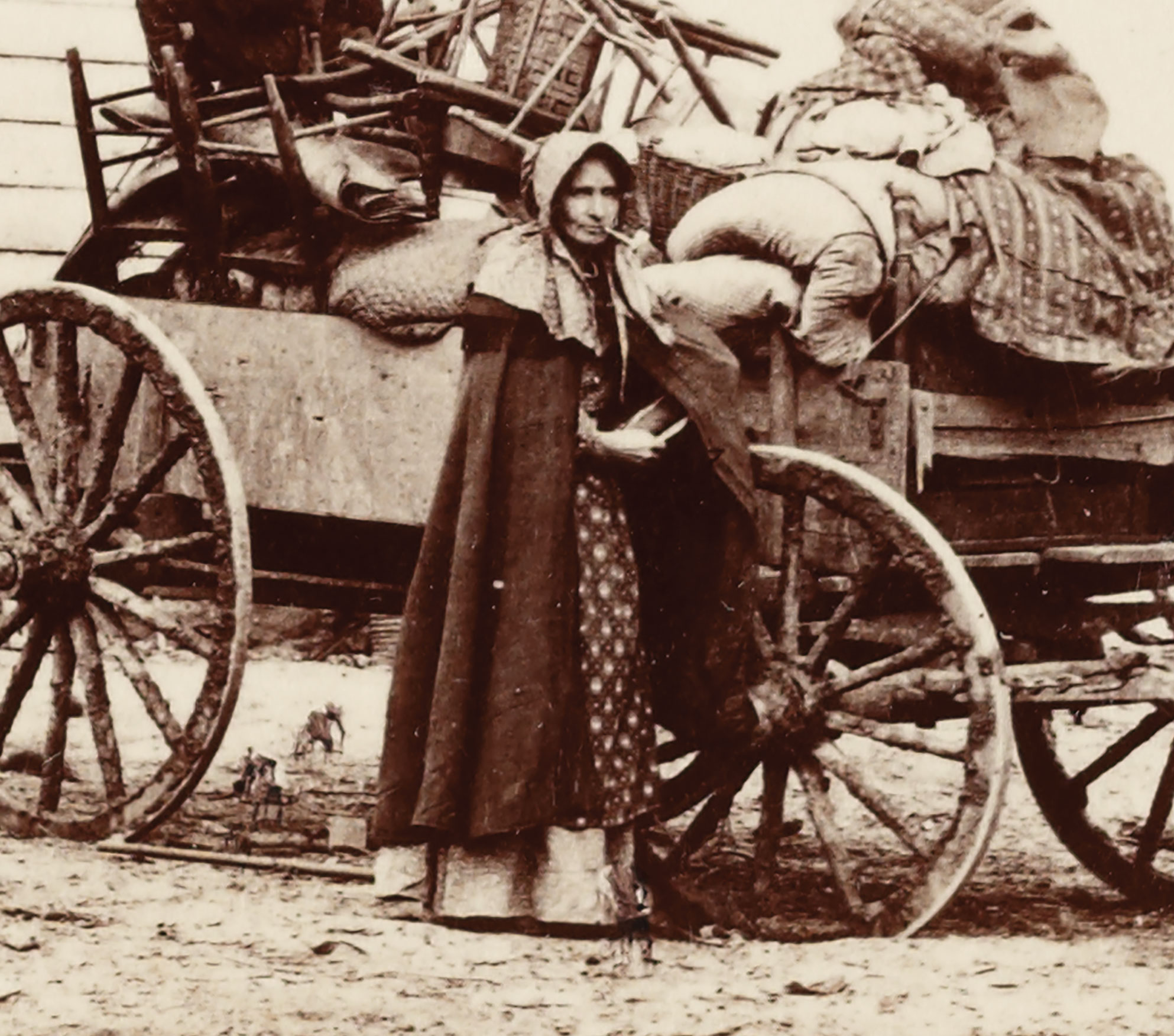 Library of Congress
“I sat down by a fire, in company with three young women, all cleanly dressed and powdered to death…. Each of them had a quid of tobacco in her cheek about the size of my stone inkstand, and if they didn’t make the extract fly worse than I ever saw it in a country grocery, shoot me.”
Illinois soldier Charles Wright Wills, on an encounter with local women in Scottsboro, Alabama, in his diary, March 1864
“I have no doubt many of us use too much tobacco. I have been thinking of restricting myself to say twelve pipes full per day. When I get home I will reform. So all the boys say of their bad habits.”
Union chaplain Hallock Armstrong, in a letter to his wife, June 18, 1865
Civil War soldiers smoking cigars.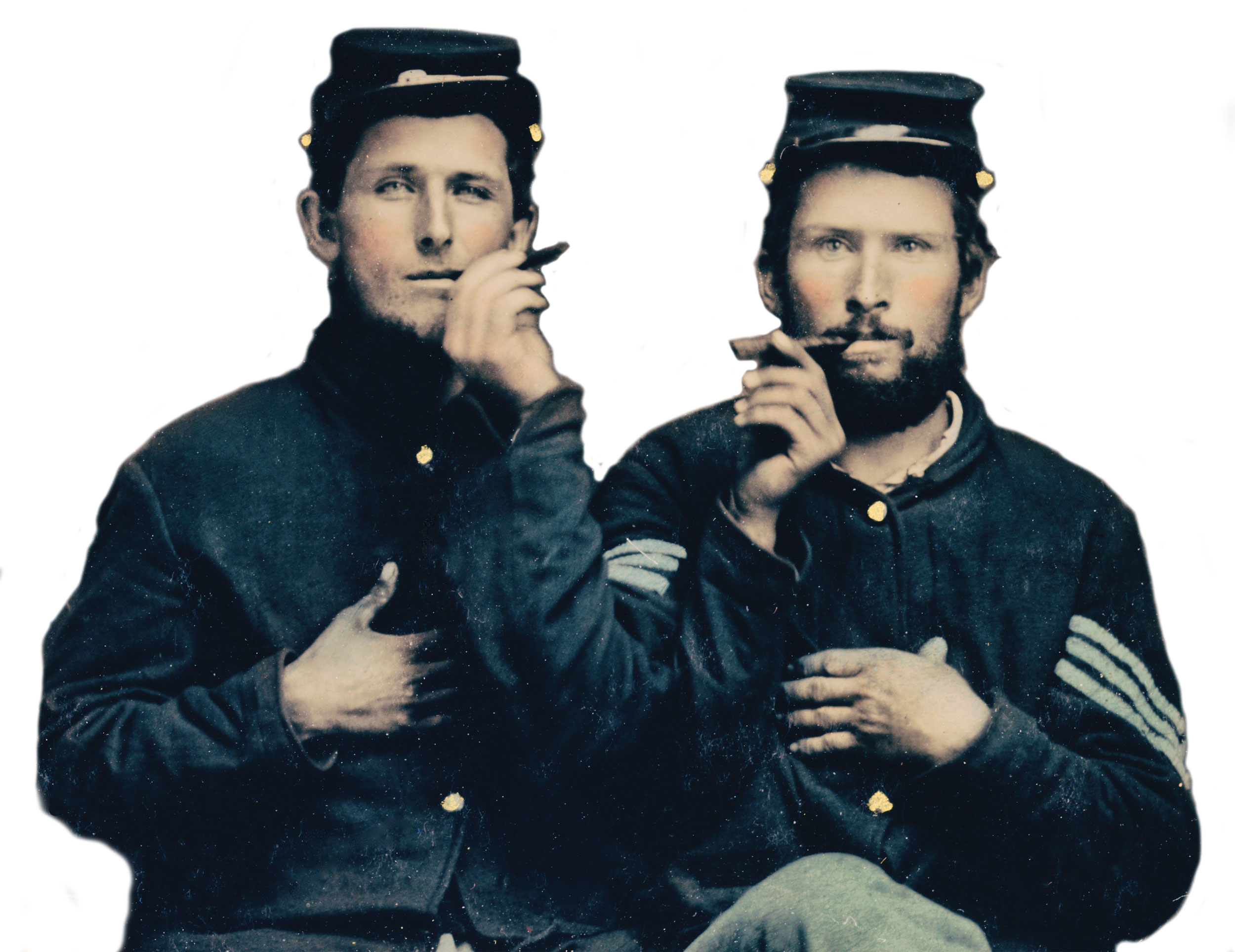 Library of Congress
“I’m sorry you feel so bad about my smoking. I think, after you had spent a night or two on picket and saw the comfort the soldiers draw from a pipe or cigar as they sit round the fire, you would say, ‘I forgive you—smoke, at least while you are in the army.’”
Oliver Willcox Norton, 83rd Pennsylvania Infantry, in a letter to his cousin, February 27, 1862
“You must excuse me for not answering your last sooner, for we have been marching, digging, and fighting all the time. I must close and smoke my pipe.”
An Alabama artillerist stationed outside of Atlanta, in a letter to Confederate nurse Kate Cumming (below), August 4, 1864
Confederate nurse Kate Cumming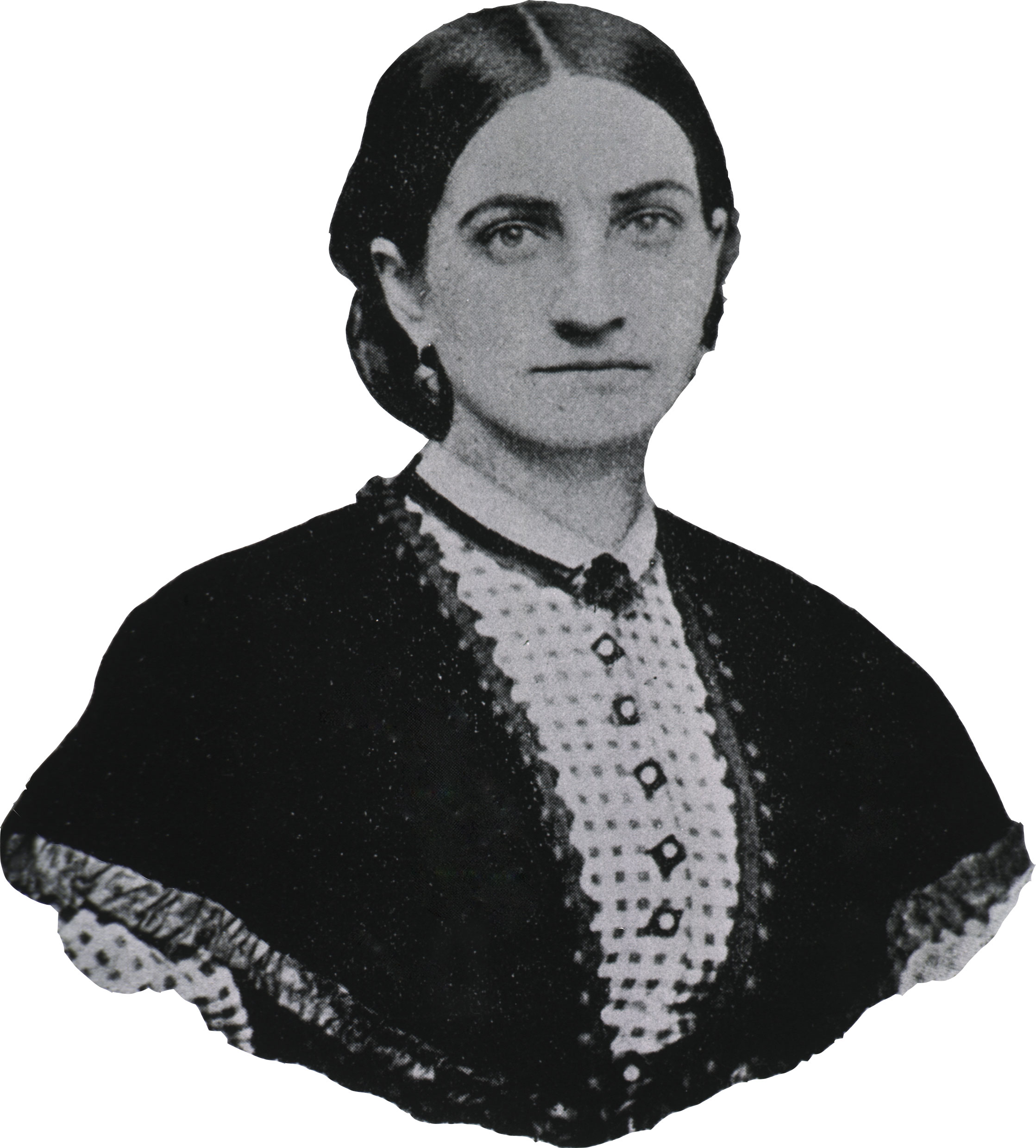 U.S. National Library of Medicine
“The craving for tobacco is constant, and not to be allayed, like that of a mother for her children.”
Colonel Thomas Wentworth Higginson on the habits of the 1st South Carolina Infantry, a regiment comprised of former slaves, in his diary, December 30, 1862
Sources
Meade’s Headquarters, 1863–1865 (1922); Army Life of an Illinois Soldier (1906); Army Letters, 1861–1865 (1903); Army Life in a Black Regiment (1870); Letters from a Pennsylvania Chaplain at the Siege of Petersburg (1961); Kate: The Journal of a Confederate Nurse (1998).