 Library of Congress
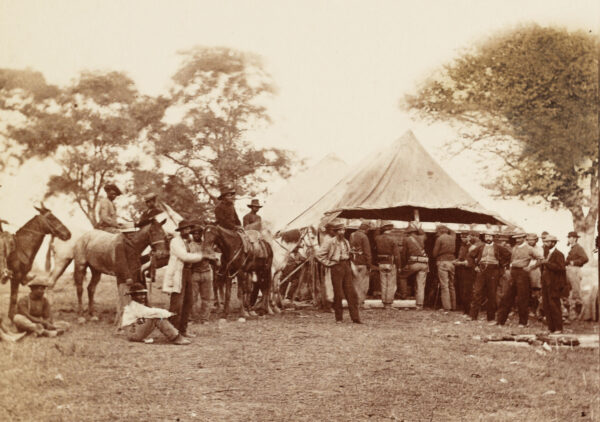
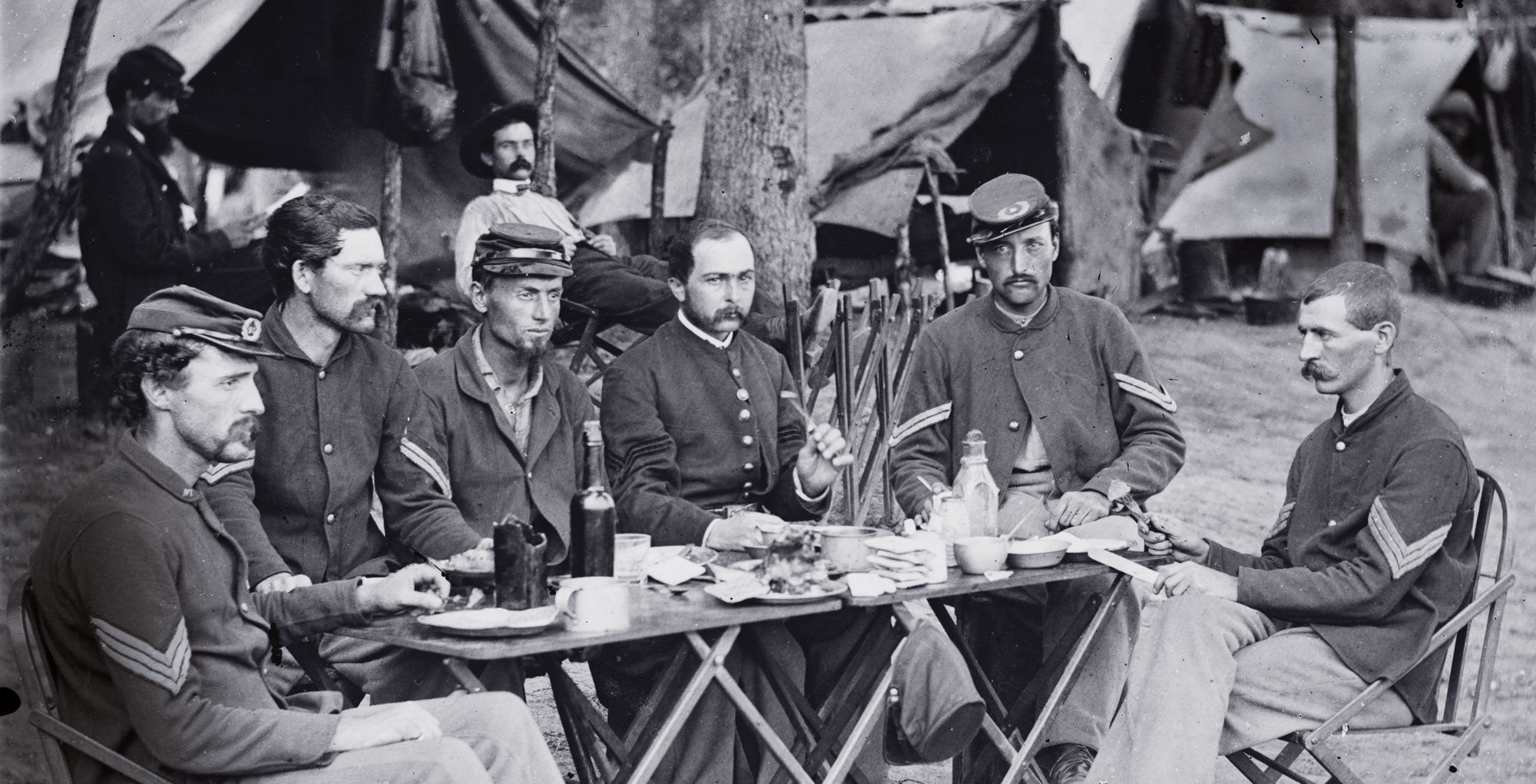
A group of soldiers sits down for a meal in camp
“Clear, fat, salt pork is the back-bone of the army ration…. Fat pork of excellent quality, with beans and coffee, seldom fails.”
—From the report of the resident secretary of the U.S. Sanitary Commission, July 9, 1861
“We have eaten so much salt pork of late that we are inclined to speak in grunts, prick up our ears, and perform other animal demonstrations.”
—H.T. Chase, 10th Rhode Island Infantry, June 3, 1862, on the salt pork rations he and his comrades received while in Washington, D.C. The pork “would almost motion to us when to come to dinner,” he added.
Civil War soldiers at camp.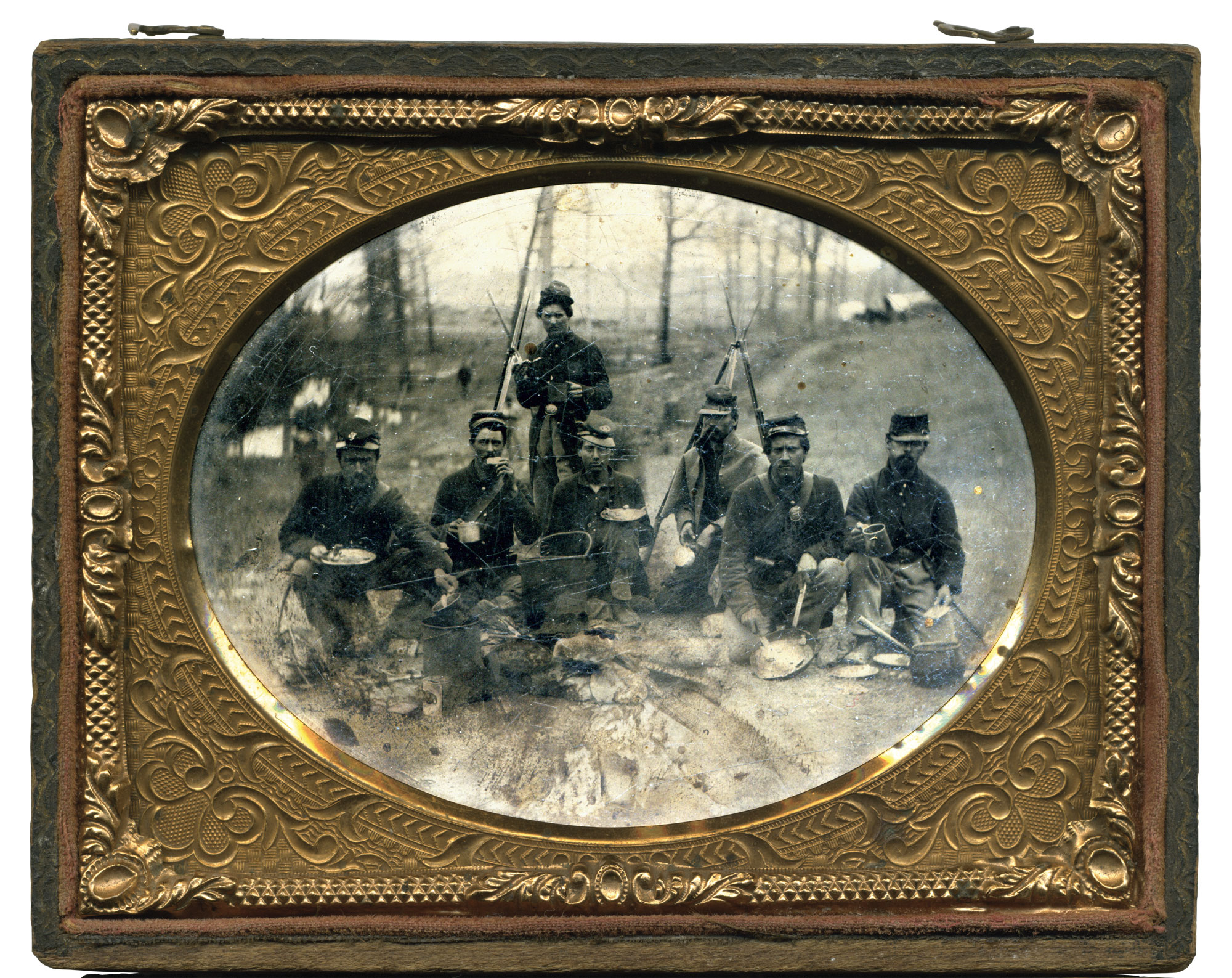 Paul Russinoff Collection
“Here, salted pork, with bread to match, was served to all around, / To keep them all in fighting trim, in mind and body sound. / This was to them a novel change, though a substantial fare, / Its quality being fat and raw, instead of rich and rare.”
—A member of the 15th New York Engineers, in a postwar poem about the regiment’s service
“Many of us have since learned to call it an indigestible ration, but we ignored the existence of such a thing as a stomach in the army, and then regarded pork as an indispensable one. Much of it was musty and rancid, … and much more was flabby, stringy, ‘sow-belly,’ as the men called it, which, at this remove in distance, does not seem appetizing, however it may have seemed at the time.”
—Massachusetts artillerist John D. Billings, in his memoir of the war
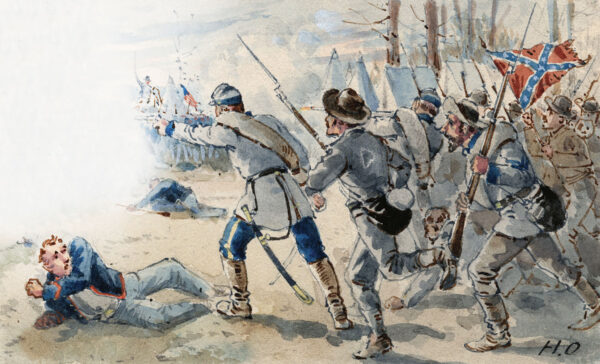
Illustration of Union soldiers in the mess hall.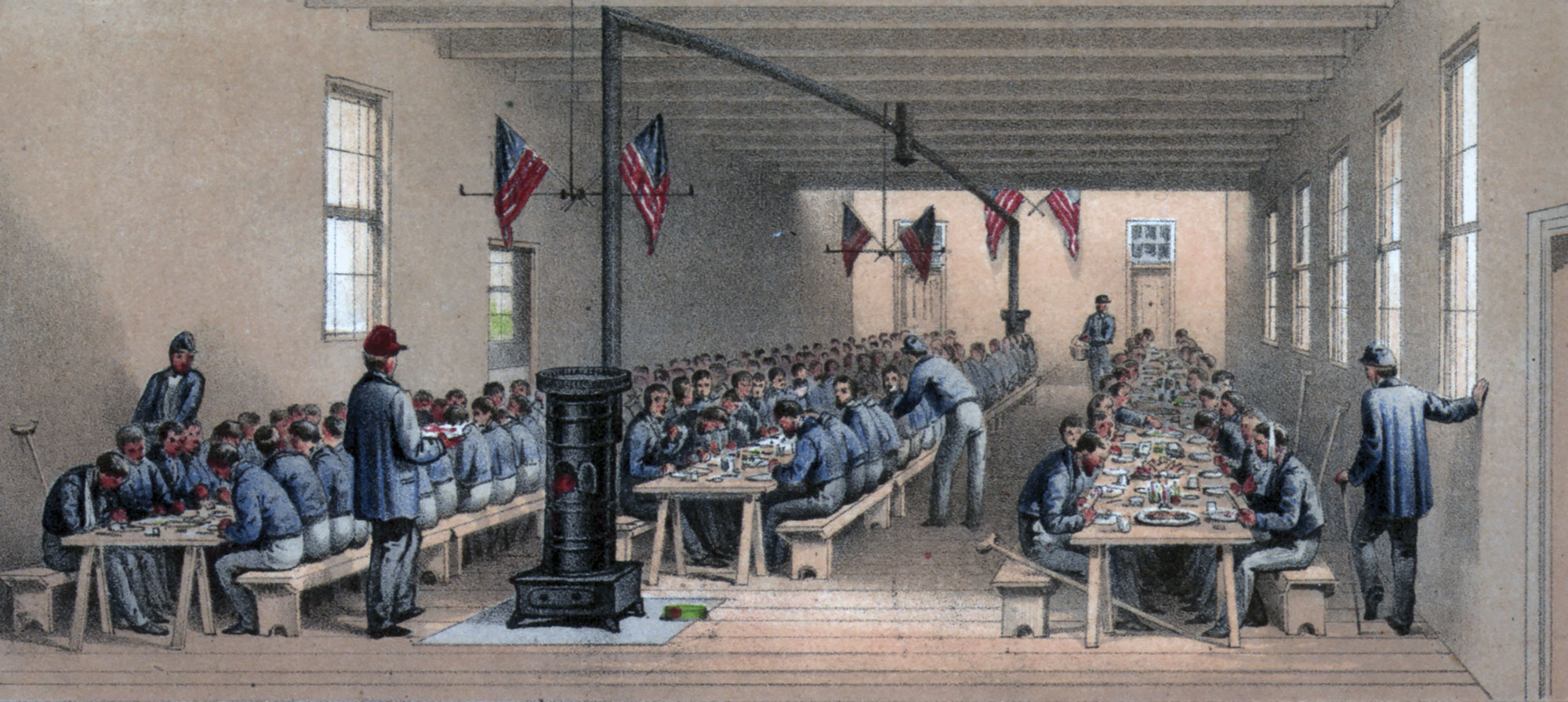 Library of Congress
“In our encampment at Meridian Hill, I was compelled to condemn the salt pork no less than three different times…. [T]he men will rather abandon it entirely than get sick, as they know they will, by using it. As a natural result, it could be seen thrown around in all directions, thus adding another infecting effluvial agent to the camp.”
—Union army surgeon C.F.W. Haase, in a report titled “Experiences in Camp Life” from the summer of 1861
Sources
The American Medical Times, Vol. 3 (July–December 1861); Hard Tack and Coffee (1887); History of the Ninth and Tenth Regiments Rhode Island Volunteers (1892); Life in the Union Army by a Two Years’ Volunteer (1864); The American Medical Times, Vol. 3 (July–December 1861).
Related topics: food and drink