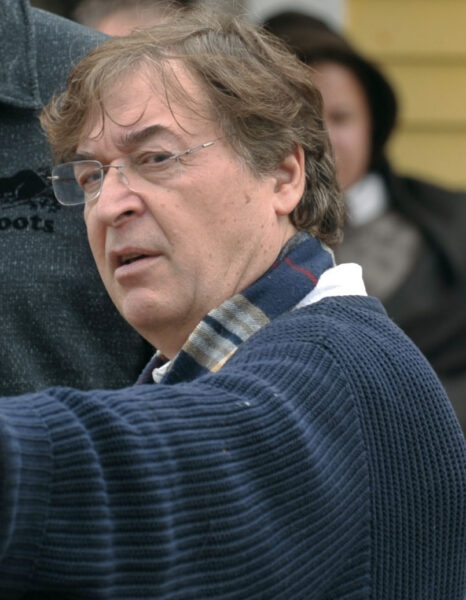
Portrait photograph of Larry J. Daniel Kathy Daniel Patterson
In May, the University of North Carolina Press published Conquered: Why the Army of Tennessee Failed by historian Larry J. Daniel. The book—Daniel’s seventh Civil War title—focuses on the inner workings of the Confederacy’s key western army, offering a reassessment of the force’s performance and fate. We recently sat down with Daniel to learn more about his research.
You’ve written several books about the Army of Tennessee. How is Conquered different?
Three of my six books have been traditional battlefield histories: Island No. 10: Struggle for the Mississippi Valley (1996), Shiloh: The Battle That Changed the Civil War (1997), and Battle of Stones River: The Forgotten Conflict between the Confederate Army of Tennessee and the Union Army of the Cumberland (2012). While I do go into grand strategy and operational movements in Conquered, I chose to take a broader war and society approach. I did this for two reasons. First, I wanted to go beyond the battlefield to balance the argument. Second, I wanted to avoid my book simply being an updated extension of Thomas Connelly’s epic two-volume history of the Army of Tennessee, Army of the Heartland (1967) and Autumn of Glory (1971).
It is hard to believe that Connelly’s work is now 50 years old. He took a top-down, high command approach. I saw this as an opportunity to take a fresh look at the subject. I was forced to cut 130 pages from the original manuscript (one of the painful realities of publishing today), so I could not spend time simply rehashing standard battlefield narratives. In that respect, I followed the example of Joseph T. Glatthaar’s study of the Army of Northern Virginia, General Lee’s Army: From Victory to Collapse (2009), as a model. I hope I did not shortchange the battles, but I wanted to explore new dimensions and keep the book to a single volume.
Why, as you note in the book’s subtitle, did the Army of Tennessee fail?
Connelly’s answer to that question was inept generals and a dysfunctional command structure; he was partially correct. I contend that the failure of the army was much more complicated and went beyond personalities. There were competing influences that affected the army’s culture, including religion, the politics of race, sectionalism, the intrinsic connection with Mississippi (which siphoned off manpower and protected the Army of Tennessee’s flank), the inability of geography (the Cumberland Mountains, the Tennessee River, etc.) to stop the Army of the Cumberland, and the breakdown of the home front, which added tremendous stresses on the soldiers, to mention a few. I wanted to examine the army’s and region’s DNA to get to the root causes of failure.
What sources did you find particularly useful or important in your research?
No one can truly understand the personality of the Army of Tennessee without delving into the letters and diaries of its soldiers. Only then can the reader grasp how their loyalties ebbed and flowed during the war. Unfortunately, students of the western theater face a particular challenge when it comes to sources. Unlike the Army of Northern Virginia, about which there is a huge store of extant resources, many in Richmond’s The American Civil War Museum alone, the primary sources for the Army of Tennessee are scattered from Texas to Ohio. While all of the Alabama Civil War newspapers are online, several important Georgia papers are not. Researchers of the western theater should be prepared to cast a wide net for sources.
The group Historians of the Civil War Western Theater has been a tremendous asset in my research. Its members meet annually as a kind of think tank to discuss the latest scholarship, talk about our current projects, and share sources. The value of networking with historians such as Tim Smith, Dave Powell, Sam Elliott, John Marszalek, James Lee McDonough, Richard McMurry, Brian Wills, and Steven Woodworth cannot be underestimated.
Did you learn anything about the Army of Tennessee that surprised you?
William W. Freehling’s 2001 book, The South vs. the South: How Anti-Confederate Southerners Shaped the Course of the Civil War, was an eye-opener for me. Kentucky contributed 25,000 troops to the Confederacy and 50,000 to the Union, but 187,000 Kentuckians of military age sat out the war. The state’s feeble response to the Confederacy, I contend, hurt the Army of Tennessee more than the de facto loss of border state Maryland hurt the Army of Northern Virginia.
Ohio gave more troops to the Union than the states of Kentucky, Tennessee, Arkansas, and Mississippi combined gave to the Confederacy. The only way to mitigate this huge reserve of raw manpower was for Kentucky to give as many troops to the Army of Tennessee as Tennessee did. That meant that Kentucky would have needed to provide not just a single brigade (the Orphan Brigade), but two divisions! Such a response, of course, did not come close to happening.
Confederate general Patrick Cleburne’s proposal to enlist slaves into the army has long been recognized by historians, but I discovered that, despite the army’s best efforts to keep it quiet, it had leaked out into the ranks and was openly discussed around campfires. It caused Army of Tennessee soldiers to question how desperate their plight must be if the generals were considering such a radical proposal. Not only general officers, but also several field officers turned bitterly on Cleburne, denouncing him as an abolitionist.
I was also surprised to learn that a near riot occurred in Cleburne’s division in January 1864. Sentinels were pushed down, and an officer was attacked. At one point the mob grew to 2,000 soldiers. It was a nasty affair. Excessive drinking, especially among officers, became a serious problem during the winter of 1863–1864 under William J. Hardee’s temporary command. Say what you want to about Braxton Bragg, but he kept the lid on the Army of Tennessee.
Which of the western war’s events or participants are most in need of further study?
Updated biographies of William Rosecrans and P.G.T. Beauregard are both needed. I wish that someone would do for the Vicksburg Campaign what Albert Castel did for the Atlanta Campaign—write a book that explores how the military shapes politics and how politics shape the military. Richard McMurry is nearing completion of his biography of Joseph E. Johnston, which will be required reading for western historians. Let’s face it, the western battles have been fully explored. With Dave Powell’s and Glenn Robertson’s current multi-volume sets on the Battle of Chickamauga, is it really necessary to keep churning out more material on that subject? Of course, that never stopped anyone from writing another book on the Battle of Gettysburg. The point is, western historians are going to have to get more creative. The low-hanging fruit has all been taken. We need more authors like Earl Hess and Kenneth Noe, who are not afraid to get off of the beaten path.
What’s up next for you? Do you have another project in mind?
Perhaps editing a book. I would like to edit the letters of William Preston Johnston, son of Confederate general Albert Sidney Johnston, who was Jefferson Davis’ aide-de-camp and had an office directly across from the Confederate president. His letters to his wife are quite revealing. Unfortunately, the letters are sometimes difficult to decipher. I’ll have to decide if it is doable.