Civil War Union soldier and a horse.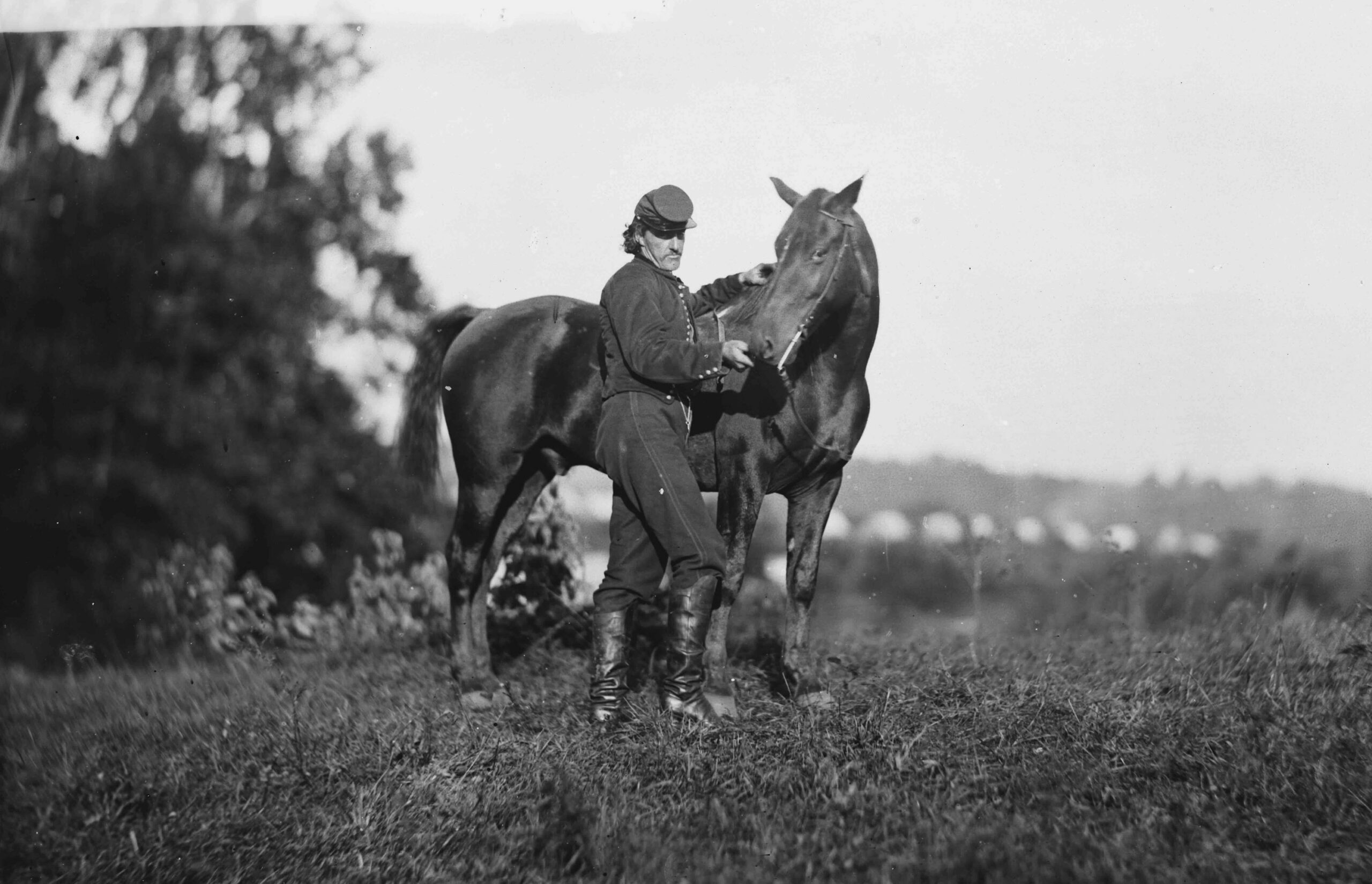 Library of Congress
I will come directly to the point by saying that the horse was a hero.” So wrote former Union artillerist John D. Billings in his memoir of the war, Hardtack and Coffee, on the importance of horses to Civil War armies. Throughout the conflict, both sides maintained a nearly insatiable need for the versatile and vital animal that, as Billings put it, “was good for any kind of service,” from cavalry mounts to pullers of artillery, supply wagons, and ambulances. (Whereas the Confederacy called for cavalrymen to supply their own horses, and Union officers were required to do the same, the Union army usually purchased horses for its cavalry directly.)
Though nearly 4.7 million horses were in the loyal states at the beginning of the conflict, a number of factors—including hard usage, disease, exposure to battle, and, in the words of Union quartermaster general Montgomery Meigs, “[i]gnorance and carelessness of raw soldiers”—led to their increasing mortality (an estimated half of all horses employed for army service died during the war) and scarcity. Horses killed or wounded required quick replacement, while those otherwise worn down were sent to depots for rest, treatment, and, it was hoped, recovery.
The cycle of loss and replacement was such that, in September 1864 alone, the Union army saw 500 new horses supplied to it per day. Shown here are statistics associated with that army’s procurement and treatment of the animal Meigs called “essential to the efficiency of the troops.”
Civil War Army Horses by the Numbers
(All dates midyear to midyear, unless otherwise noted. Expenditures are rounded to the nearest dollar.)
57,576: Number of horses “condemned and sold, died, lost by capture, destroyed, worn out, etc.” (1862–1863)
50%–60%: Approximate number of “disabled and broken down” horses treated at depots that returned to military service
635,685: Horses purchased for the Union army during the war
30,277: Number of horses that died at depots (1864–1865)
28,091: Horses captured by the Union army (1862–1864)
$100/$185: Low and high wartime prices paid for army horses
$102,864,915: Money spent on the purchase of army horses
$65,625: Amount spent on hiring veterinary surgeons (1861–1864)
$27: Price charged by railroad companies to transport one carload of (approximately 14) army horses 50 miles by rail
4 Months: Average service time of a cavalry horse (before its loss) in the war’s final year
$216,442: Amount spent on medicines for horses and other animals during the same period
53,794: Number of army horses sold by the government after war’s end (May–October 1865)
26: Pounds (14 of hay and 12 of grain) of forage, or food, a horse required per day
$51,153,170: Spent on forage by the army (1861–1864)
$292,569: Spent on straw by the army during the same period
$357,275: Amount spent on forges, blacksmiths, and shoeing tools during the same period
Sources
Hardtack and Coffee (1887); United States War Department, The War of the Rebellion: A Compilation of the Official Records 129 vols. (Washington, 1880–1901), Series III, Vols. 2, 3, 4, 5.
Related topics: animals