Library of Congress
The outcomes of Civil War military engagements—like the Battle of Chickamauga, depicted in a sketch by Alfred R. Waud—often depended on crucial choices or acts.
Contingency is one of the most complicated aspects of thinking historically about Civil War battles. As a historian and college professor with a particular interest in understanding combat in the 19th century, I try to emphasize to my students how important it is to understand, as best as possible given the limitations of our sources and comprehension, and to work out why and how the war unfolded on the battlefield and beyond, all of which determined what followed. Knowing how historical figures made decisions and why they acted on them in the ways they did is essential to understanding the significance of battles, military leaders, and decisions in war.
What, exactly, is contingency? A basic definition of contingency is how past events, circumstances, contexts, and outcomes influence possible futures within the context of that past. The study of contingency in history, and particularly in military history, requires us to accept that past events were not predetermined. As the esteemed Civil War historian James M. McPherson writes, “[A]t numerous critical points during the war things might have gone altogether differently.”1 The decisions that created and shaped military operations—subject to interpersonal friction, fog of war, chance, weather, logistics, incomplete or erroneous information, and human frailty—are all important ways for historians to get at the “why” of it all.2
Getting students to completely comprehend the complexity and contingency of war from the perspective of its combatants is one of the most difficult issues in teaching the military history of the American Civil War. Ken Noe and Carol Reardon, among other historians, advise us to explore the viewpoints of conflict and to view wars as puzzles or mosaics made up of various elements.3 Put another way, the outcomes of Civil War conflicts often depended on crucial choices or acts. They were complex, terrifying, perplexing, and unclear. For the participants, they were disjointed experiences that lacked cohesion and, in some cases, lacked even clarity. The majority of what we know about Civil War battles and leaders comes from more than 150 years of looking back. The careful consideration and comprehension of the choices, alternatives, and context of military events, and of the leaders who shaped these factors, can open up our understanding of the Civil War. Students need to be prepared to participate in context-based reasoning, empathy, and sensible evidence interpretation in order to achieve this understanding.4
How does this translate into a classroom exercise or an in-depth battlefield tour? This kind of work has been done, and done expertly, by professional military educators for years. Participatory military history activities are also elements in the curricula at universities around the country. “Staff rides” date to the 19th century and have been incredibly effective for decades in teaching military experts, historians, and students about the intricacy and contingency of combat. The goal of such exercises, according to the U.S. Army Center of Military History, is to introduce students to the “dynamics of conflict, especially those forces which interact to cause victory and defeat” and also to the so-called “face of battle” or “the eternal human components of warfare.”5 Certainly, a key element of the exercise is seeing the ground, walking it, and experiencing the sensations and perspectives of battle in a very personal way.
Not all faculty or battlefield guides have the opportunity or patience to build a staff ride or implement it in their curriculum, but many of the techniques and principles that go into the professional staff ride are readily adaptable to a classroom environment for undergraduates or graduate students, or to capable enthusiasts of all stripes. I have conducted simulation exercises for the battles of Gettysburg, Chickamauga, and Antietam, and (at least until COVID-19) regularly taught a semester-long, in-depth undergraduate seminar focused on the Battle of Chickamauga and the Chattanooga Campaign. I have the advantage of living in Tennessee 30 minutes from Chickamauga, which is an invaluable resource for the kinds of teaching methods described here. (We will resume the Chickamauga seminar at Lee University in Fall 2023, when I look forward to taking students onto the field again.)
 Library of Congress
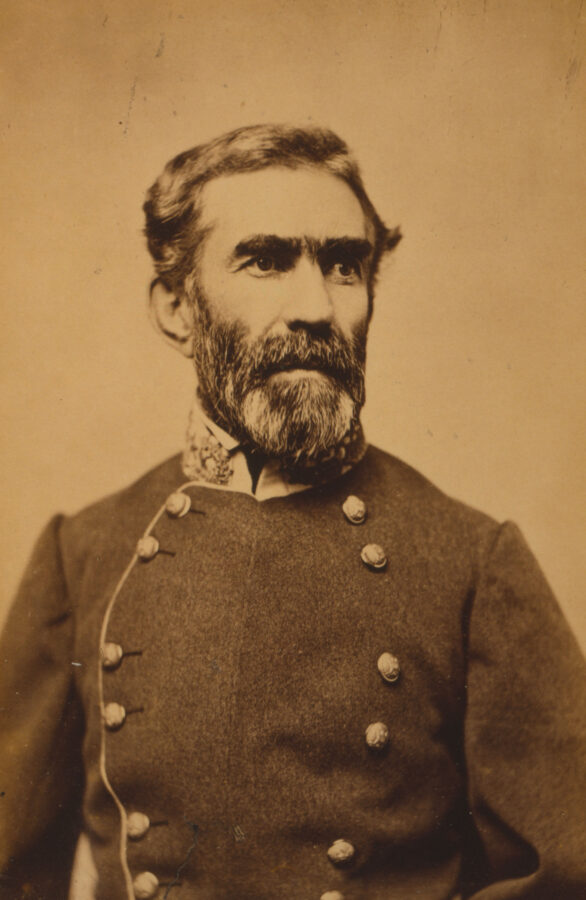
Braxton Bragg
I will illustrate here one of the battlefield teaching points I use at Chickamauga. First, some context: During the night of September 19–20, 1863, the Confederate Army of Tennessee under the command of General Braxton Bragg had, after a hard day’s fighting and marching, managed to initiate a battle near Chattanooga, along Chickamauga Creek, with Major General William S. Rosecrans’ Union Army of the Cumberland. Lieutenant General James Longstreet, who arrived that night from the Dalton, Georgia, railroad station, had advice for Bragg. After Bragg made the quick decision to restructure his force, Longstreet and Lieutenant General Leonidas Polk were given “wing” command of the two halves of the Army of Tennessee. Bragg planned an attack for the next morning, intending for Polk, who was in charge of the newly formed right wing, to launch a frontal assault on the Federals’ left flank. After Polk’s assault got going, each division along the Confederate line would follow suit.
In order to roll up the Union line from north to south, Bragg wanted Polk to outflank or defeat Major General George H. Thomas’ XIV Corps. After defeating Thomas, Polk was to head south and team up with Longstreet and the left wing to wipe out the remaining elements of the Army of the Cumberland. Bragg decided to forgo convening a council of war with all his corps commanders, possibly because of the toxic command climate in his army. Instead, Bragg called Polk to his headquarters, where he briefed him on his strategy. After the conference, Polk strangely decided to consign the vital instructions for the next morning’s assault to a written dispatch before retiring to his tent for the night. He believed the orders would reach corps commander D.H. Hill, but they never did because the courier became disoriented and gave up.6 This command confusion constitutes a major teaching point on staff rides and battlefield excursions; for students of war, seeing the difficulty of Chickamauga’s terrain can be more effective than reading about it.
In the morning, after an appallingly long delay, Polk’s assault began about 9:45 a.m. By this time, Bragg was enraged. John Breckinridge and Patrick Cleburne’s divisions were bloodily repulsed by fierce Federal resistance from their solid defensive positions; Rosecrans’ left held, and Polk’s onslaught had sputtered to a halt by noon. Thomas, who was in control of that area of the battlefield, was nonetheless alarmed by the ferocity of the Confederate assaults. Throughout the morning, Thomas messaged Rosecrans repeated requests for support. Rosecrans misunderstood him and instead believed that a gap had somehow emerged in Thomas’ line close to Major General Joseph J. Reynolds’ division. In an effort to fill this imagined gap, a frazzled and agitated Rosecrans ordered Brigadier General Thomas J. Wood’s division out of its position close to the Brotherton Farm near the Federal center.
Rosecrans’ instructions to Wood were contradictory and unclear: “The general commanding directs that you close up on Reynolds as fast as possible, and support him.”7 Wood, who was confused because a different division was in his way, asked Daniel McCook, the closest senior commander, for clarity. Rosecrans’ instructions, McCook assured Wood, were nondiscretionary, and McCook would fill Wood’s position with extra units from his XX Corps. Around 10:40 a.m., Wood received Rosecrans’ command, and he started his withdrawal at roughly 11 a.m. As it turned out, McCook wouldn’t have enough time to keep his assurances to Wood.
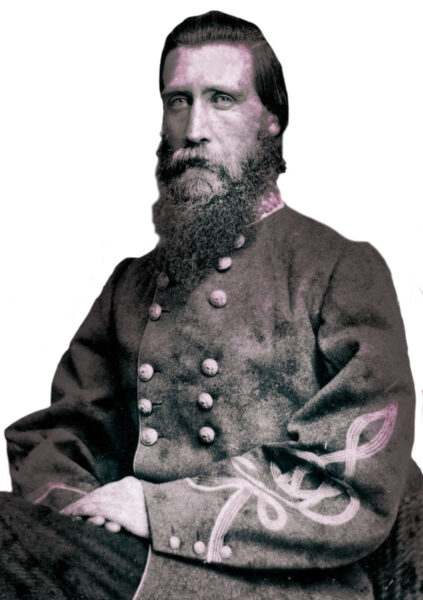
By chance, at 11:10 a.m., Longstreet’s corps’ assault began. Longstreet’s corps, now under John Bell Hood’s leadership, consisted of eight brigades in five lines of 10,000 men, including the soldiers Longstreet and Hood had recruited from Virginia. Longstreet’s assault targeted the gap in the Federal line at the precise moment and location where it was most vulnerable by traversing the LaFayette Road and the Brotherton field. The line was torn apart by the attack’s intensity, and the Army of the Cumberland was eventually driven off the field. By early afternoon, more than half of the army had fled up the roads to Chattanooga. Rosecrans too withdrew to Chattanooga to reorganize his broken army and prepare the city’s defenses. Again, knowing the ground and understanding physical spaces in which these key decisions and mistakes occurred is not possible without actually going to the spot where Longstreet’s breakthrough happened.
I also assign students specific individuals to follow through the battle, and ask those students to reflect on their experiences on the battlefield by posing questions, such as:
– What did you learn about your individual’s participation in the battle, and how did his decisions or actions shape the outcome?
– Were you confused, and does that confusion tell you something about the nature of battle in the Civil War?
– How does your experience correlate with how historians have written about your individual or this battle?
These questions push the boundaries of what is typically possible in a standard classroom environment by encouraging students to think historically about contingency, complexity, perspective, and battle. And, while my battlefield studies and excursions are mainly intended to teach college students about the Civil War, I hope these techniques also work for lifelong learners fascinated by the decisions that shaped the conflict.
Andrew S. Bledsoe is associate professor of history at Lee University in Cleveland, Tennessee. He is the author of Citizen-Officers: The Union and Confederate Volunteer Junior Officer Corps in the American Civil War (LSU Press, 2015); the co-editor, with Andrew F. Lang, of Upon the Field of Battle: Essays on the Military History of America’s Civil War (LSU Press, 2019); and author of the forthcoming Decisions at Franklin: The Nineteen Critical Decisions That Defined the Battle (University of Tennessee Press).
Notes
1. James M. McPherson, Battle Cry of Freedom: The Civil War Era (New York, 1988), 858.
2. Thomas Andrews and Flannery Burke, “What Does It Mean to Think Historically?” Perspectives on History, January 2007.
3. Carol Reardon, “Writing Battle History: The Challenge of Memory,” and Kenneth W. Noe, “Jigsaw Puzzles, Mosaics, and Civil War Battle Narratives,” both in Civil War History 53 (September 2007): 252–263, 236–243.
4. Andrew S. Bledsoe, “Beyond the Chessboard of War: Contingency, Command, and Generalship in Civil War Military History,” The Journal of the Civil War Era 9, no. 2 (June 2019): 275–301.
5. William Glenn Robertson, The Staff Ride. CMH Pub 70-21 (Washington, D.C., 2014), 3–6.
6. Powell and Friedrichs, The Maps of Chickamauga (El Dorado Hills, CA, 2009), 138–139.
7. United States War Department, The War of the Rebellion: A Compilation of the Official Records 129 vols. (Washington, 1880–1901), Series I, Vol. XXX, pt. 1, 635.