LIVING HISTORY
 Jimell Greene
Bryan Cheeseboro
Thank you for running the profile of Bryan Cheeseboro in your latest issue [“Living History: The Hands-On Historian,” Vol. 11, No. 1]. I’ve always enjoyed reading the Living History column, and this latest installment is among my favorites. It was interesting to learn about Cheeseboro’s path to becoming a Civil War reenactor and archivist. And it is good to know that people like him are out there helping to keep interest in the history of the conflict alive and well.
The Monitor keeps getting better and better. I look forward to every issue.
Bob Nelson
Via email
* * *
There is no doubt that Civil War reenacting is infected with racism (perhaps more so than society at large). But has Bryan Cheeseboro, as a black reenactor, considered that some of the hostility he has encountered is motivated not by racism, but by concerns about historical accuracy? Black units in the Civil War were segregated, which means that if there is a black reenactor in a line of white reenactors, the effect is inauthentic (or what reenactors call “farby”).
John Braden
Fremont, Michigan
* * *
Thank you very much for the article about Bryan Cheeseboro, who should be applauded for his work. His observations on the state of Civil War reenacting especially hit home with me. I would have liked to have heard more about the efforts by some reenactors to recruit him as a “black Confederate” soldier, though the fact that it’s happened doesn’t surprise me given the prevalence of that myth today.
Keep up the great work at the Monitor!
K.M. Jennings
Via email
* * *
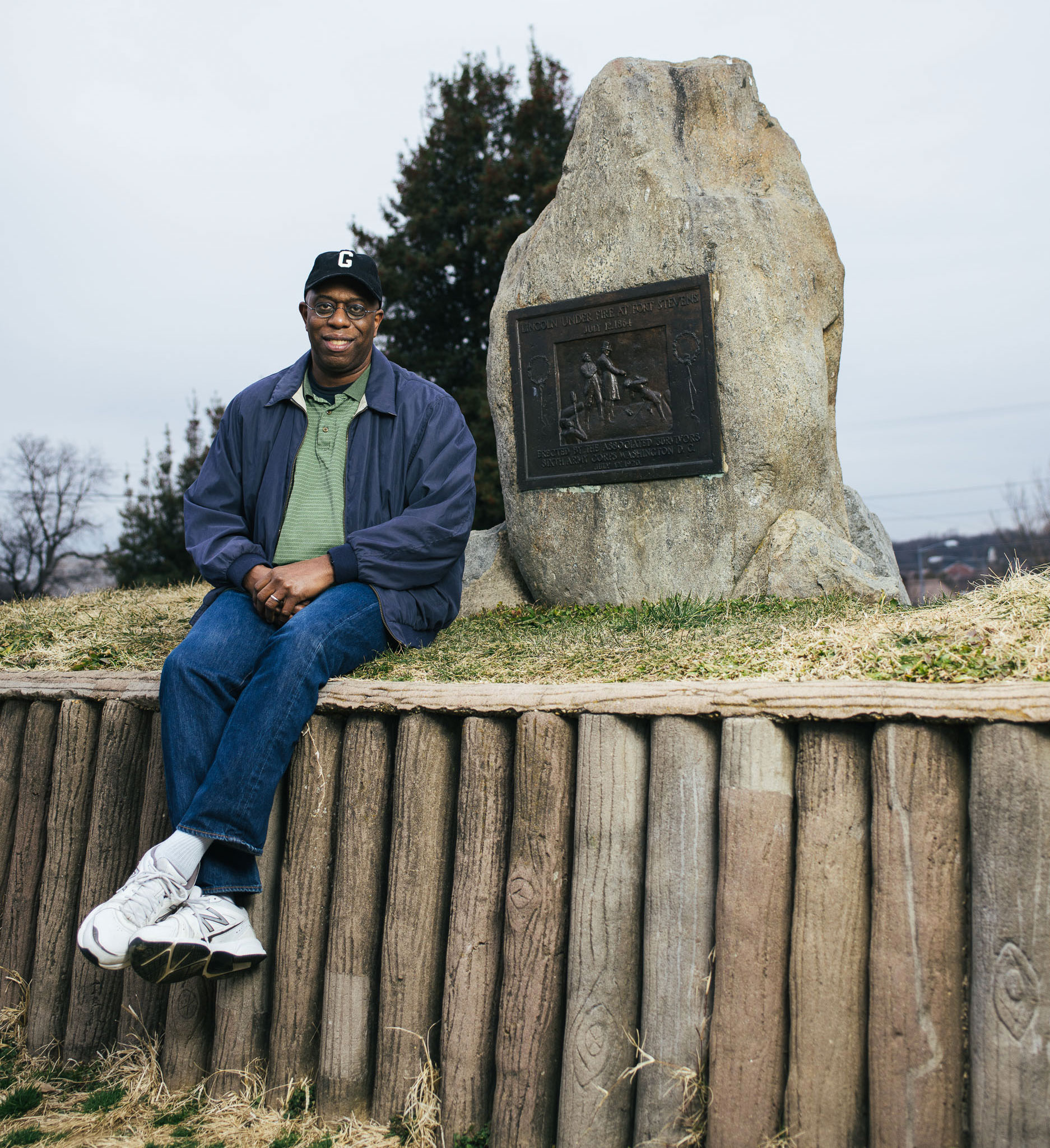
I read the article about me in the current issue of the Monitor and I enjoyed it very much. I am really honored to be featured in the magazine and recognized for my accomplishments. But I must admit I found a mistake in the piece that was concerning.
In the caption accompanying my photo on p. 23, the site of Fort Stevens, one of the 68 fortifications constructed during the war that made up the Civil War defenses of the capital, is described as being “outside Washington, D.C.” The truth is that it’s actually inside D.C. During the war, the place known as Washington City was a smaller entity inside the District of Columbia—as in Washington City, District of Columbia. The town of Georgetown (originally Georgetown, Maryland, which dated from the 1750s) was a separate entity from Washington City. The rest of D.C. was a long-forgotten area known as Washington County, a rural farmland of about 5,000 people in 1860. This countryside was basically taken over by the army to build the defenses of Washington. This included not just Fort Stevens, but Fort Reno, Fort De Russy, Fort Slocum, and Fort Totten. Where I’m standing in the photo published in the article—and where the house in which I grew up, just down the street from there, is located—used to be Washington County, D.C. In 1871, all three parts of D.C. were consolidated to create Washington, D.C., as we know it today. At that point, Georgetown became a neighborhood and Washington County ceased to exist.
I’ve spoken to other people from D.C. who have told me they never heard about Washington County. But I can admit that while it’s an interesting fact to know, it doesn’t have great significance in the narrative of American history.
Bryan Cheeseboro
Via email
REBEL ARMADA
I recently subscribed to the Monitor and I was, frankly, amazed at the inaccuracies in the Spring issue, specifically the article on Liberty Ships by Noah Andre Trudeau [“Rebel Armada,” Vol. 11, No. 1]. I will admit that the errors I noted may not be the only ones. But I was struck by the repeated references to the “air force” and “Army Air Force” in the article. It is well known that as of 1943, this service was still named the Army Air Corps. (The term “Air Force” was not adopted until 1947, four years after the events recounted in the article.) After this I read more warily, and the next error I found was more one of omission. Trudeau repeats common slanders about Confederate general Nathan Bedford Forrest (carefully phrasing a reference to him as “he is spoken of” as the first Grand Wizard of the KKK). Merely repeating such propaganda without gloss, explanation, or expansion is questionable in a “history” magazine. (Ought not the Congressional inquiry regarding Forrest’s involvement with said organization have been mentioned? Even if—or perhaps especially if—Trudeau disagrees with the Congressional verdict?) Our subscription has a bit yet to run. I do hope that the articles improve.
Nancy St. Cyr
Via Facebook
Ed. We asked Noah Andre Trudeau if he’d like to respond. He writes, “Regarding Ms. St. Cyr’s first point, I’ll note that prior to the direct U.S. involvement in WWII, the ‘air force’ was a component of the United States Army with a mission that was largely supportive of and subordinate to ground activities, a role reflected in its name, the Army Air Corps. While the entire U.S. military underwent massive expansion after Pearl Harbor, the Army Air Corps found itself tasked with significant missions and activities that could not be handled within the AAC setup. The answer was a new management structure called the Army Air Force. The AAC continued to exist but in a diminished role, largely logistical. At the time General Nathan Bedford Forrest III was killed in 1943, he was flying a plane that was part of the United States 8th Air Force. So I stand by my shorthand use of Army Air Force in the article. As to her second point, my use of period descriptions (1940s and present day) of certain figures is meant to illuminate how they were viewed then and now. Just as I suspect that some Civil War Monitor readers would have problems with the 1940s language, so too do I imagine that the current language poses problems for others.”
ABOUT THAT LETTER …
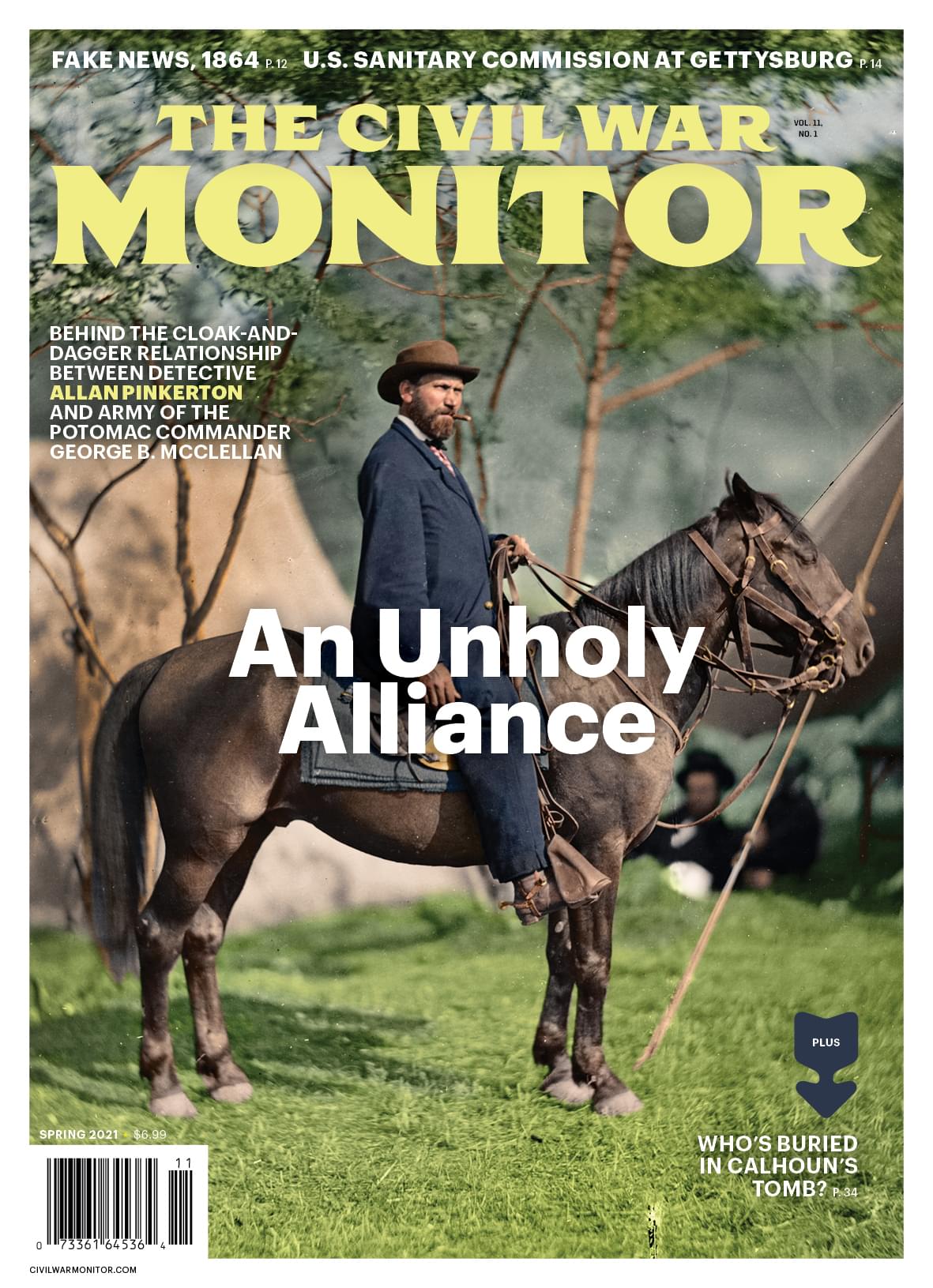
I would like to comment on Tim Trout’s letter in the Spring 2021 issue of The Civil War Monitor [“Dispatches,” Vol. 11, No. 1], in which he makes some questionable claims. First, he states that the 19th Georgia Infantry, Company A, served in the Army of Northern Virginia and was with Joseph E. Johnston when he surrendered to William T. Sherman. That would have been unlikely, as Johnston commanded what was left of the Army of Tennessee. Trout then claimed he has read the memoirs of A.P. Hill and Robert E. Lee, neither of whom ever wrote memoirs. Lee refused to do so and Hill was killed in action at the end of the war. Trout then asserts that Lee “never owned slaves but inherited them from his wife’s family.” In other words, Lee owned slaves. Lots of slaveowners inherited their slaves! Finally, Trout tries to draw a moral equivalence between the Union and the Confederacy on slavery by noting that “the North also had slaves, including Ulysses S. Grant’s father-in-law,” a man who happened to reside in Missouri, a Border State claimed by the Confederacy, along with Kentucky. Discounting the three slaveholding Border States, which could properly be considered as southern, the only northern state with slavery was Delaware, which had about two thousand slaves. New Jersey had a handful of elderly former slaves officially labeled “indentured servants for life” to ensure that their masters could not legally cast them out when the Garden State abolished slavery. This compares rather favorably to the 3.8 million slaves in the South!
Dennis Middlebrooks
Brooklyn, New York
KUDOS
I am a subscriber to The Civil War Monitor, and am glad to be one. My subscription began in 2018, and I’ve since obtained miscellaneous back issues (I am glad the premier issue was still available) and all of your special issues. I look forward to future issues. Might I suggest coverage of Appomattox as a topic in future articles. In addition to being the site of Robert E. Lee’s surrender, there were other events that took place there of importance.
I believe the Monitor has a great future. I wish you continued success!
Allen G. Gaines
Apex, North Carolina
Ed. Thanks for the kind words, Allen, as well as for your suggestion that we cover Appomattox in future issues. Please note that we have run articles relating to Appomattox in the past, including pieces by Stephen Cushman in our Spring 2015 issue and William Marvel in our Fall 2019 issue. If you haven’t already done so, you may be interested in adding these to your collection of Monitor back issues; both are available for sale at our online store.
Letters to the editor: email us at [email protected] or write to The Civil War Monitor, P.O. Box 428, Longport, NJ 08403.