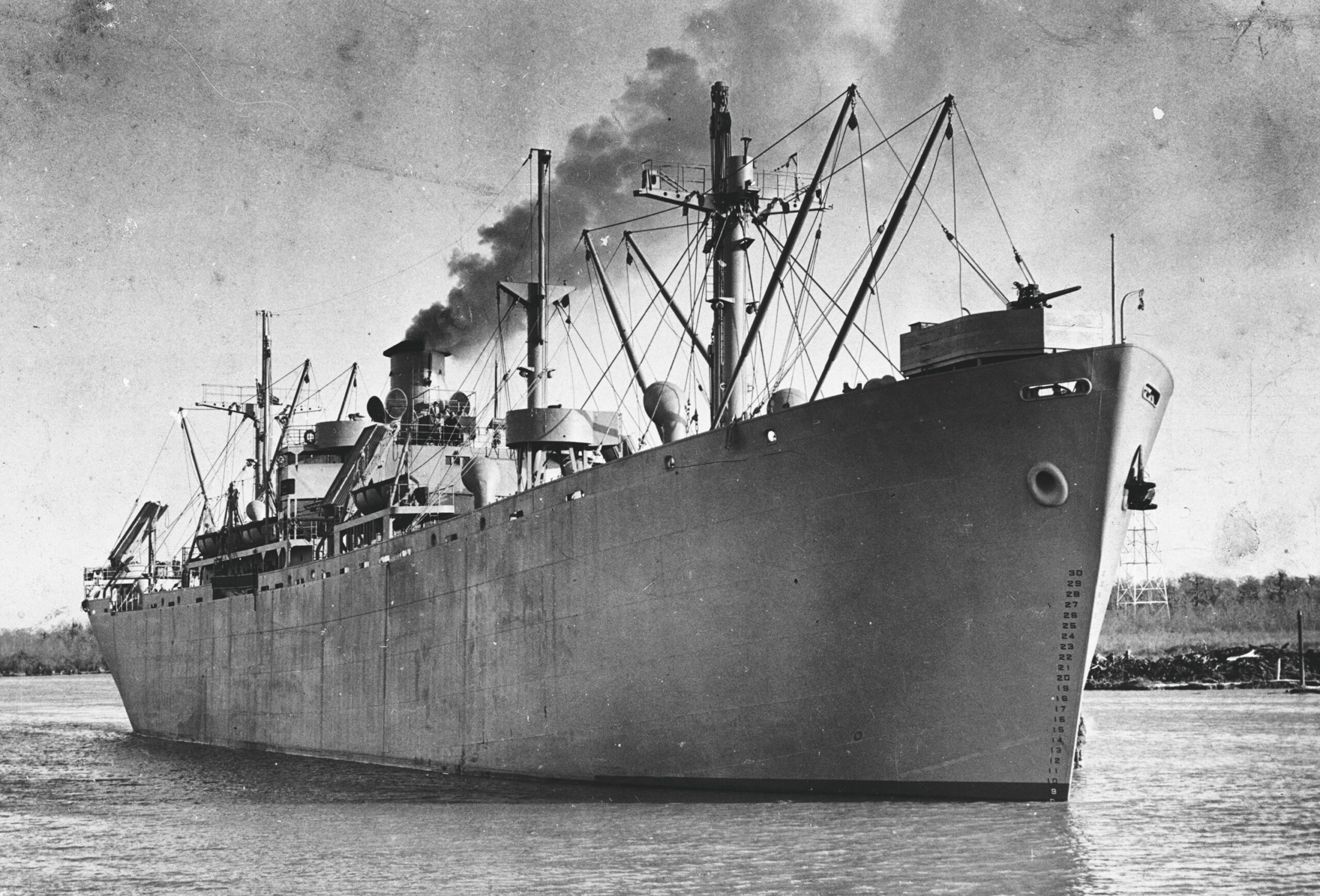
 Naval History and Heritage Command
A recently completed Liberty Ship leaves the Delta Shipbuilding Co., New Orleans, Louisiana, during World War II. Of the more than 2,700 such ships built during the war, a number were named after “Confederate heroes.”
America’s embrace of its Civil War legacies has undergone profound change in the 21st century. Even in the midst of a pandemic and nationwide demonstrations for racial justice, reexamination continues regarding the future of Confederate monuments, named places, and symbols. Missing from these actions is exploration of a three-year stretch in the last century when the United States government—officially and publicly—wholeheartedly showcased men termed “Confederate heroes.”
This story springs from the period, dramatic and highly charged, when the United States was entering World War II expecting to fight a two-front war. Organizing and equipping the forces needed was one problem, keeping them supplied once they had crossed two oceans was another. One solution was the program known as the Liberty Ships: basic, no-frills cargo vessels that, relying on American production ingenuity and know-how, could be built faster than had been thought possible and in unimagined quantities. In the years it operated (1941–1945), more than 2,700 Liberty Ships entered service. Overlooked amid all the details and impressive output was that the effort provided more than 2,700 naming opportunities.
Naming the ships was overseen by the United States Maritime Commission’s (USMC) Ship Naming Committee, which decided early on that most of the Liberty Ships would be “named for deceased persons who have made notable contributions to the history and culture of America.”1 According to the Kansas Historical Society, there were more than 60 approved categories, including one (category 46) tagged: “Confederate heroes.” Name suggestions came to the committee from all points of the social-political compass throughout the country—civic leaders, special interest groups, individuals, school children, Liberty shipyard management, the media, and the committee itself.
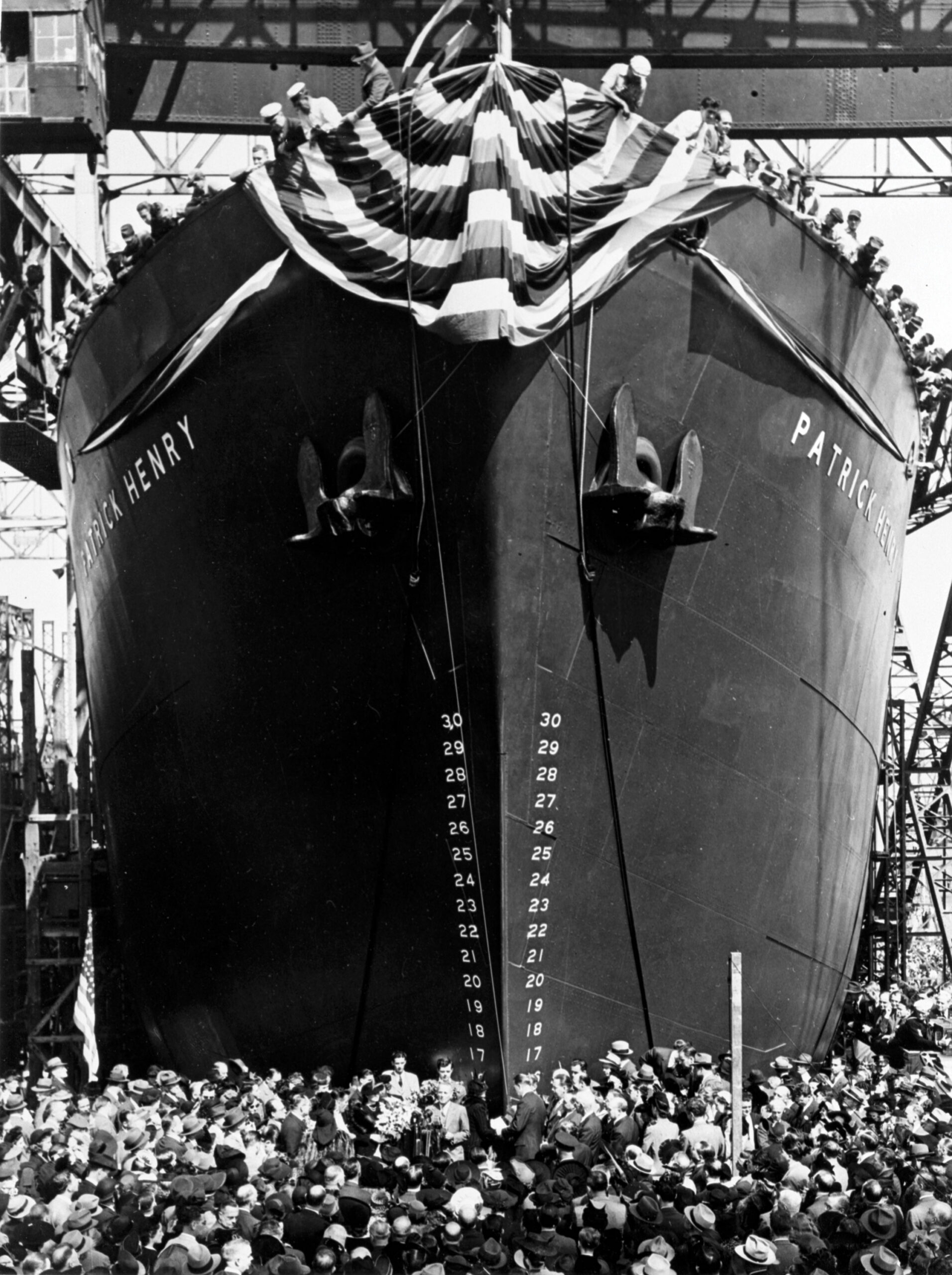 Library of Congress
A crowd gathers in September 1941 to watch the SS Patrick Henry, the first of the Liberty Ships to launch, leave Bethlehem-Fairfield Shipyard in Baltimore, Maryland.
As the building and launching process began to accelerate, the USMC became increasingly sophisticated in wielding its naming authority to buttress the war effort. The USMC recognized that matching a ship name to a region, religious or ethnic communities, female gender, or broader culture audience could help intensify war support among those groups.2 The initial funding and operations of the Liberty Ship program preceded the United States entering the war. Planners realized that once the nation entered a global conflict, all existing naval facilities would be fully engaged building and maintaining warships, so the Liberty Ship program was to be handled by shipyards yet to be built. One of them was in Wilmington, North Carolina, where shipyard construction began on February 3, 1941, with the first two keels being laid on May 22. Everything was going smoothly until local officials received the approved name list from the USMC. On it were seven individuals—five from South Carolina, and one apiece from Rhode Island and New Jersey. Tar Heel pride kicked in and a fierce lobbying effort was mounted that involved the state’s two U.S. senators and a half dozen of its congressmen. The result: The USMC added a new name to the list, Zebulon B. Vance.
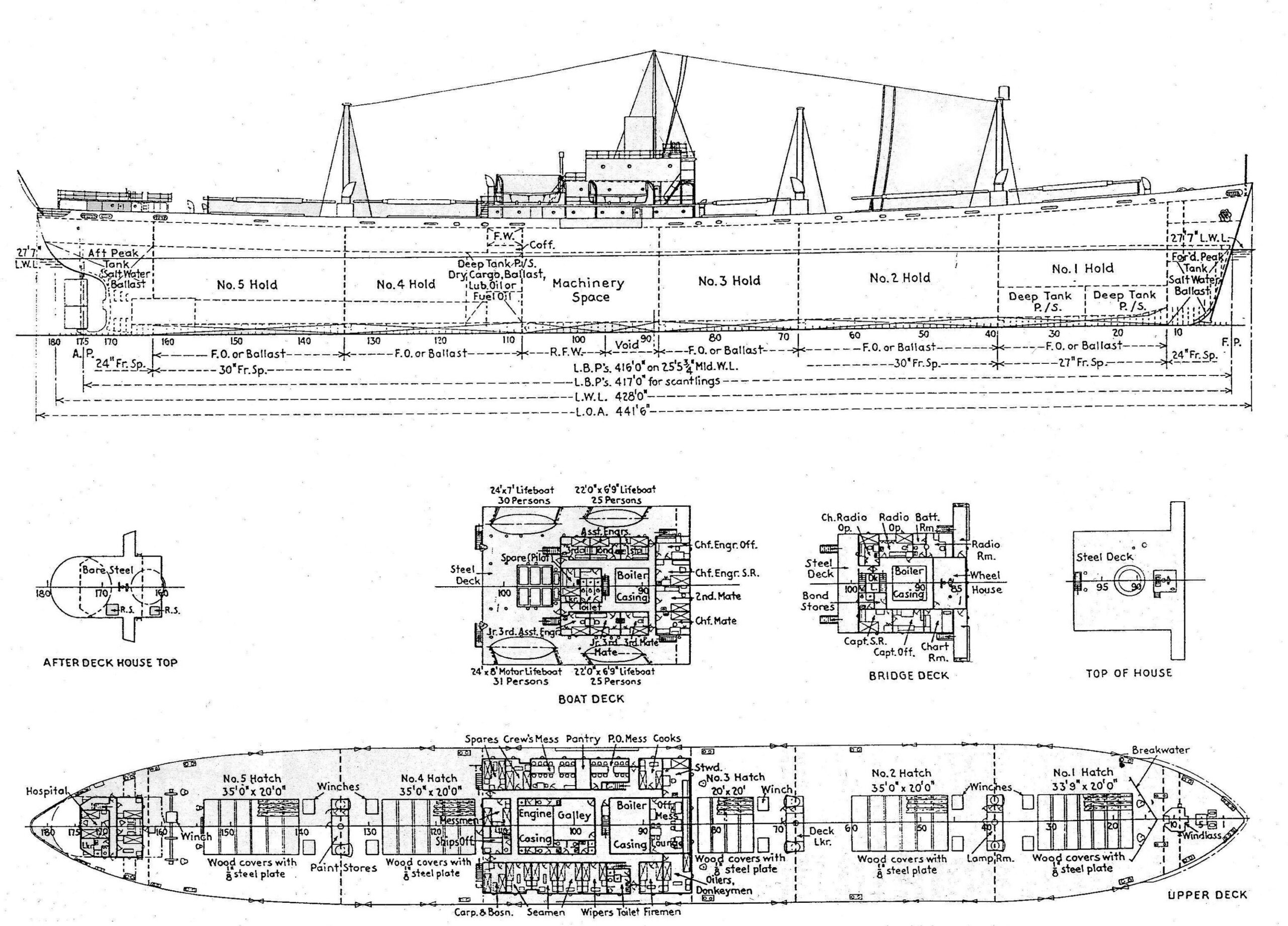 Library of Congress
The profile plan of a Liberty Ship.
Zebulon B. Vance was launched at noon on December 6, 1941—the 12th Liberty Ship to enter service that year.3 The lines in Wilmington started to form at 10 a.m. and by midday the crowd was estimated at 13,000. An Army B-18 bomber made a flyover. Among the featured speakers was Governor James Melville Broughton, whose wife, Alice, was the ship’s sponsor—the person who swung the champagne bottle that released the 10,500-ton vessel for its stern-first slide down the tallow-greased slipways.4 By all accounts Alice Broughton did her job with an enthusiastic swipe that “exploded squarely between the ‘7’ and ‘8’ foot markings on the Vance.”5 A mesh net wrapped around the bottle kept the shards inside, but everyone standing nearby got splattered with bubbly. In a speech extolling the vessel’s namesake, Vance was praised as “one of the most prominent figures in the history of the United States and of North Carolina.”6 The shipyard’s in-house newsletter described him as “one of the most remembered and beloved citizens in all the history of the Old North State, … who was North Carolina’s governor during the War Between the States and who ran much needed Confederate supplies through the Yankee blockade….”7 He also governed in the Reconstruction era.
The couple took their show on the road to Brunswick, Georgia, to launch Donald W. Bain in 1944, whose namesake was described by Broughton as “a good old North Carolina Scotsman of honesty, integrity and courage.”8 Bain’s Civil War-time appointment to the state militia was honorary as he was an important aide to Governor Vance. The shipyard band that day played “many Southern favorites, including ‘Dixie’ and ‘Carolina Moon.’ The Governor sang one chorus of the latter—to the delight of the launching crowd.”9
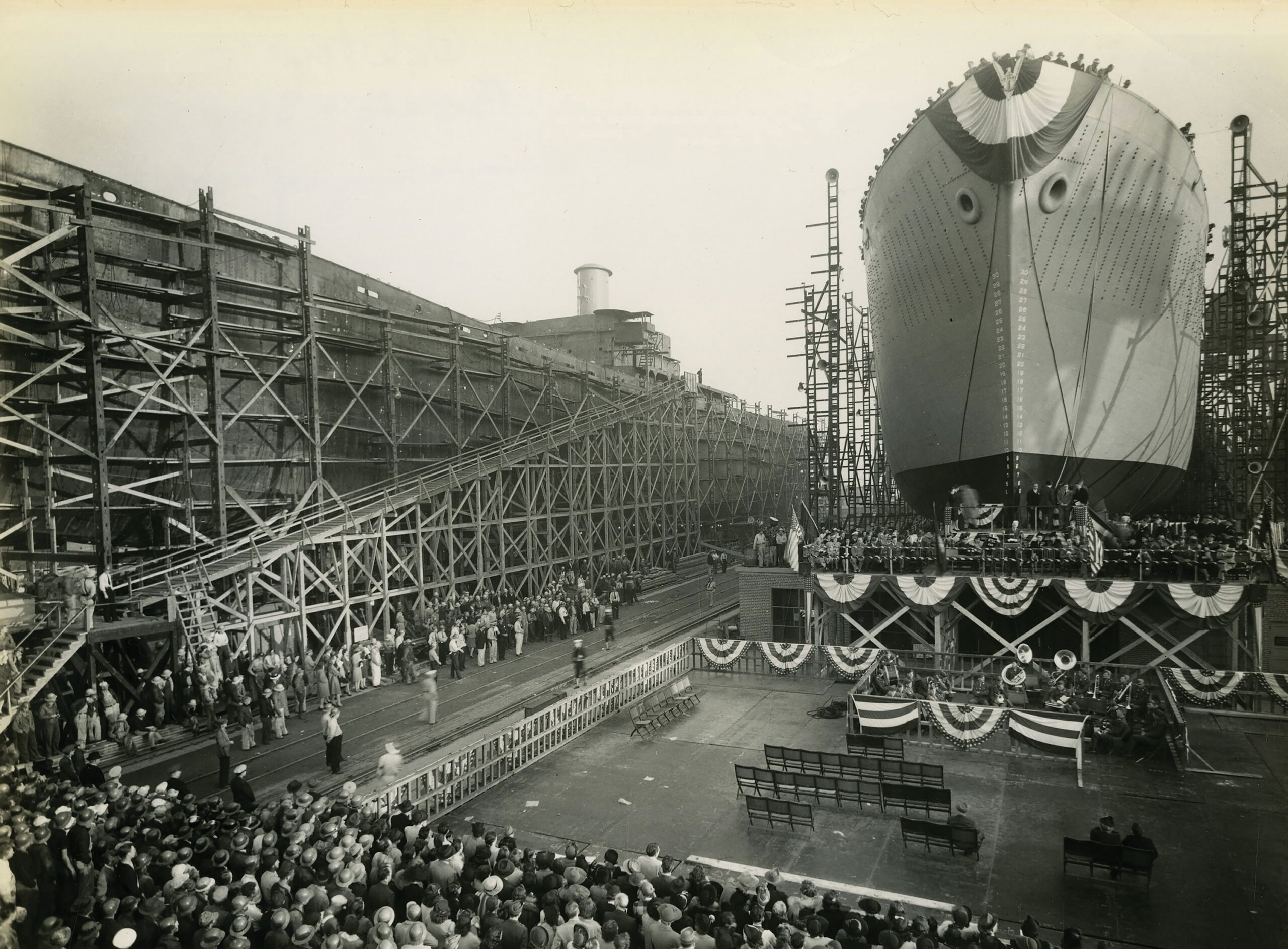 Georgia Historical Society
Of the 18 shipyards created as part of the Liberty Ship program, eight lay within the historic Confederacy and one in a border state (Maryland). All but five of the Confederate-named ships were built in those shipyards. Shown here: A Liberty Ship prepares to launch from a shipyard in Savannah, Georgia.
Zebulon B. Vance was the first Liberty Ship named after a Confederate Civil War participant, to be followed by 84 more. Of the 18 shipyards created as part of the Liberty Ship program, eight lay within the historic Confederacy and one in a border state (Maryland). All but five of the Confederate-named ships were built in those shipyards. Each launch was a special occasion, when win-the-war patriotism would be aroused, local cultural identity reinforced, and the southern narrative of the Civil War perpetuated.
The Vance led off a subgroup of 31 whose contributions to the Confederacy were predominantly political, civilian, or naval. There was one named after Jefferson Davis, “honoring the president of the Confederacy,”10 and another for Alexander H. Stephens, “named for Davis’ vice president of the Confederacy.”11 (Stephens was in the news in 2020 for his 1861 declaration regarding “the great truth that the negro is not equal to the white man; that slavery subordination to the superior race is his natural and normal condition.”12)
There were times when the ship launchings comingled Confederate memory with current patriotic events. The namesake for Robert M.T. Hunter was hailed as a “vigorous champion of the cause of the Confederacy,” someone who “was outspoken in the defense of the South.” At that same launch ceremony, there was an “added feature of the simple but beautiful and inspiring ceremony … [involving] the raising of the flag of the United States on the new flag pole in the yard…. In the flag-raising held in connection with the launching, a John Wagener Benedictine Military School cadet corps bugler played ‘To the Colors’ … as the flag was hoisted.”13
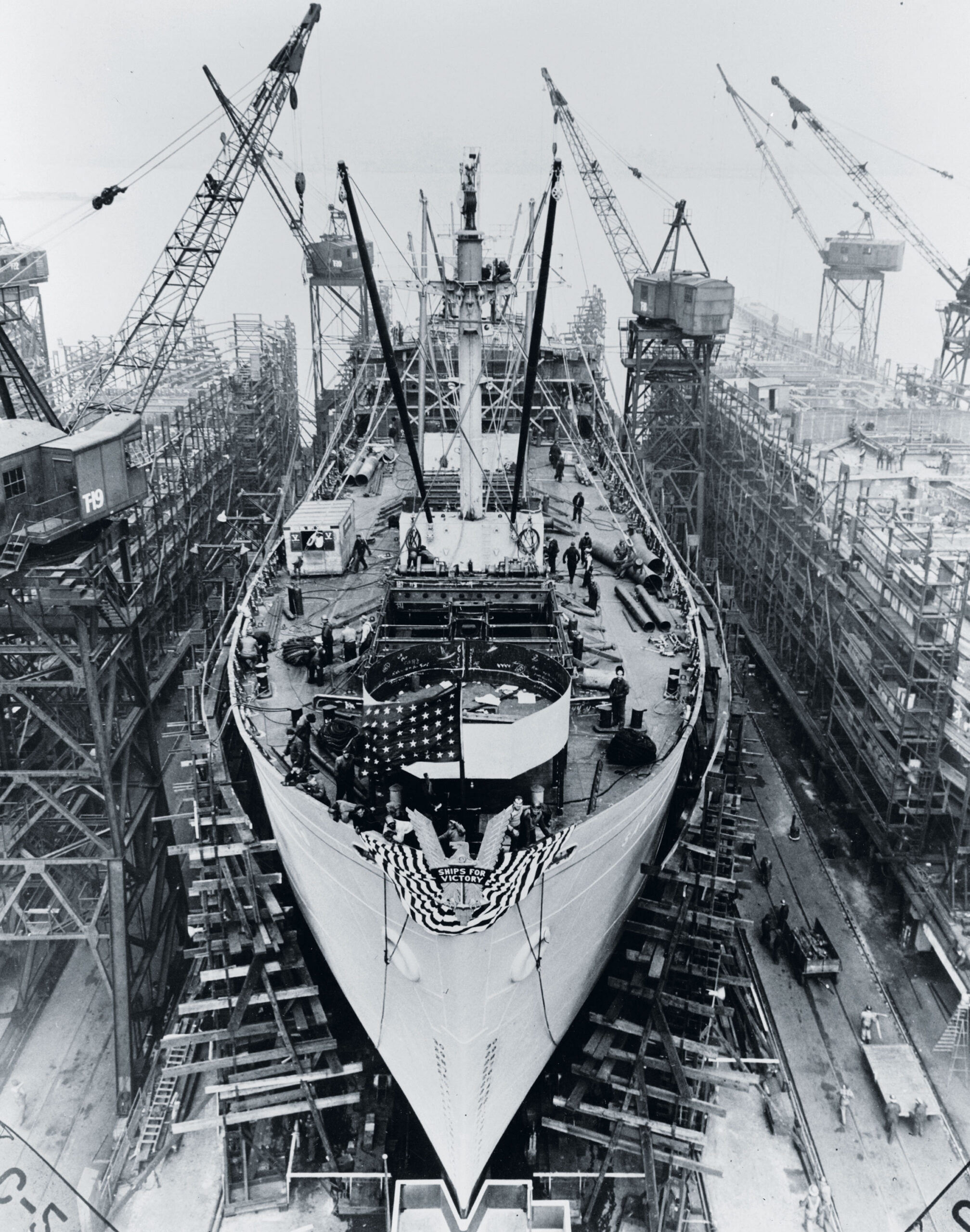 Library of Congress
At the launching ceremonies for the 85 Liberty Ships named for Rebels, speakers often mingled Confederate memory with current patriotic events. Above: a Liberty Ship under construction.
Other Liberty Ships that honored primarily non-military Confederates were: Benjamin H. Hill (“who helped organize the Confederate government”14), John Goode Jr. (“a member of the Second Virginia Cavalry, [who] also served in the Congress of the Confederacy”15), Joseph E. Brown (“the outstanding Georgia statesman and social benefactor”16), John A. Campbell (“a southern statesman during the War Between the States”17), George Davis (“twice elected a senator to the Confederate Congress before being appointed attorney general by President Jefferson Davis”18), John H. Reagan (“the famous Texan who … served as postmaster general and treasurer of the Confederacy”19), William L. Yancey (“He was in the politics of the country what ‘Stonewall’ Jackson was to the army in the field”20), Albert G. Brown (“who … resigned from the United States Senate … to [advise] other southern senators … to secede from the Union”21), Henry S. Foote (“Confederate congressman”22), Charles M. Conrad (he “gave to the Confederate cause a full and determined support”23), William A. Graham (“a member of the senate of the Confederacy”24), Lucius Q.C. Lamar (“the Confederate statesman”25), Edward Sparrow (“one time Confederate general and a senator of Louisiana”26), Augustus H. Garland (“Confederate congressman”27), Uriah M. Rose (“he steadily refused to take the oath of loyalty to the federal government as he had sworn to support the Confederacy”28), Clement Claiborne Clay (whose likeness was used on the Confederate one dollar bill from 1862 to 1863), Pierre Soule (“appointed Brigadier General with the view of organizing a French legion to serve in the Confederate army”29), and Robert Toombs (“a backer of the secession movement”30). Judah P. Benjamin played many roles during the war—among them, attorney general, secretary of war, and secretary of state—but he was singled out at the Judah P. Benjamin launching as “the financial genius of the administration while [Jefferson] Davis was serving as President.”31 In a special missions category are two ships, Jacob Thompson and John E. Ward; the first named after a “Mississippi congressman who was … one of two secret agents sent to Canada by the Confederate [government]”; the second, after a man whose modern biographer describes his wartime activities on behalf of the Confederate government as “shadowy.”32
Five of these World War II cargo ships bore names of men with connections to the Confederate navy: Stephen R. Mallory (“as Secretary of the Confederate Navy, [he] evinced an eminent administrative ability”33), John M. Brooke (“who revolutionized ship construction with his suggestion of making the famed Merrimac an iron-clad vessel”34), Matthew J. O’Brien (“first engineer on the famed raider, Alabama”35), John Maffitt (“captain of the Confederate cruiser Florida, [with] which he rendered gallant service”36), and Matthew Maury (“His distinguished part in the Confederate war is fresh in the memory”37).
Just as Liberty Ships were all built to the same template, so too were the launching ceremonies organized according to a set plan. The bottle-breaking sponsor was joined by matrons of honor, a flower girl, and a cleric who gave the invocation, with a master of ceremonies presiding. Sometimes these positions were shared and often present were additional guest speakers, there usually to hammer home a patriotic message. More often than not, these little pageants were cast by shipyard employees and their families. When Judah P. Benjamin went down the slipway in 1942, its co-sponsors were the wives of the shipyard superintendent and the welding foreman.38
Occasionally there were special guests and guest stars. The sponsor for the 1942 Houston launch of Joseph E. Johnston was Ruth Roosevelt, whose husband was Elliott Roosevelt, an air force officer and son of President Franklin Delano Roosevelt. “This is one of the greatest moments in my life, especially since it is happening in Texas,”39 she said, prompting loud cheers from the crowd. Present when Henry L. Benning made its launch was “Ann Aston Thoron of Washington, a great-great-granddaughter of the general.” Benning was described as “an ardent secessionist. His record as a field officer and as a brigadier general of the Southern Army was distinguished.”40 The sponsor for John C. Breckinridge was “Mrs. Arnold A. Willcox of Washington, D.C., daughter of Breckinridge Long, assistant United States Secretary of State, and a lineal descendant of John C. Breckinridge, [who] christened the Liberty ship bearing the name of her distinguished ancestor…. The SS John C. Breckinridge went down the ways amidst a deafening din of construction. So great was the clamor that the introduction of Mrs. Willcox could scarcely be heard and the crash of the champagne bottle, which sent the proud ship speeding to the water, was drowned in the hammering chorus raised against the Axis.”41
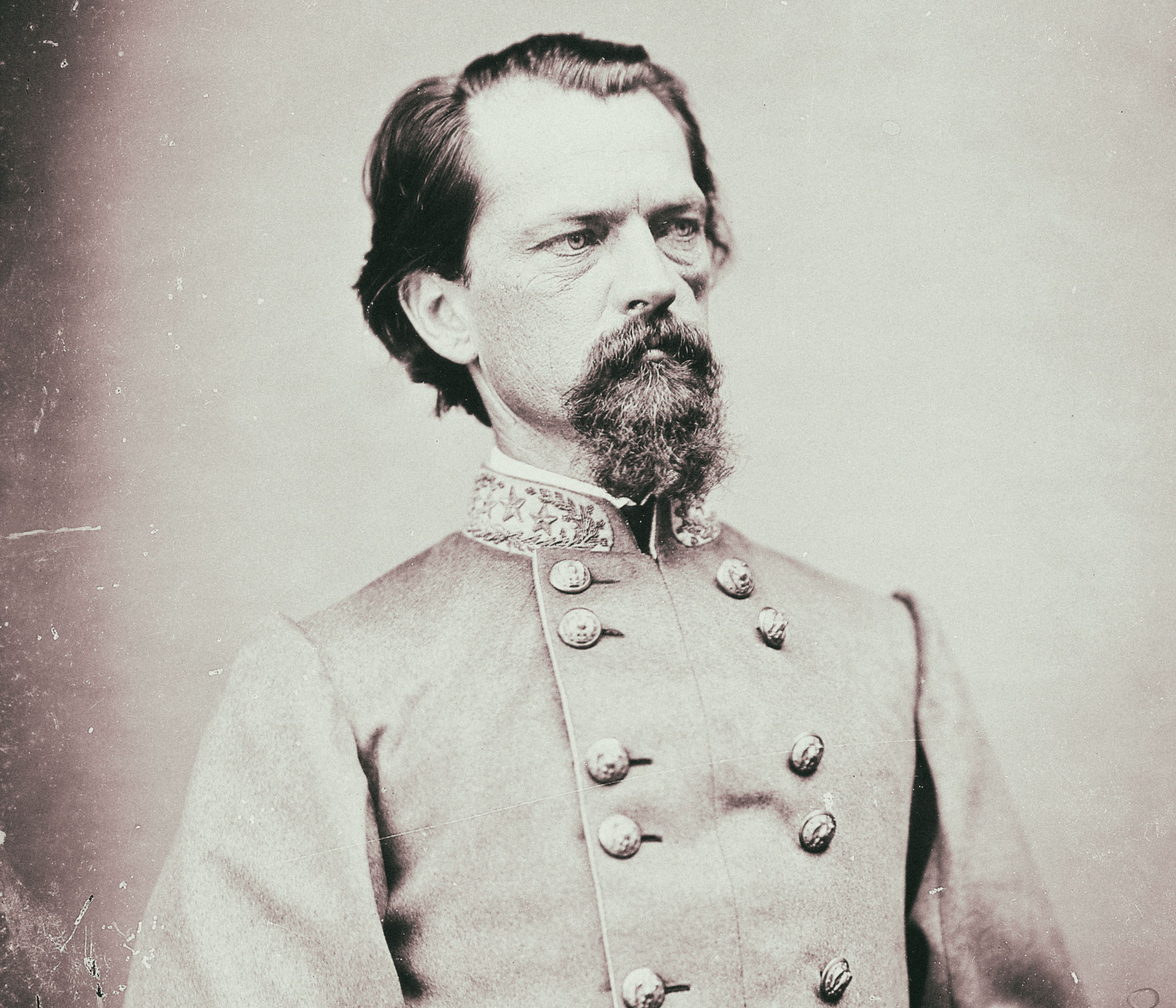 National Archives
Some Confederates, like John B. Gordon (right), stood out for additional praise as their namesake ships were launched. One speaker at the launch of SS John B. Gordon proclaimed that the Rebel general’s “outstanding virtues were direct action, whether on fields of battle, in halls of state, on public forums, or in simpler walks of life.”
A great-great-granddaughter did the honors (a great-niece was matron of honor) when Sul Ross launched in 1944; and a daughter, Miss Lou Rayburn, christened William M. Rayburn in 1943, with her sister as matron of honor. Their brother, Speaker of the U.S. House of Representatives Sam Rayburn, was invited but couldn’t leave Washington to attend.42 Present to launch Robert F. Hoke was a daughter and six grandchildren. The Wilmington launch of Risden Tyler Bennett included the daughter of the soldier who fought at Gettysburg and served under Stephen D. Ramseur. Mrs. Mary Bennett Little was prominent in the United Daughters of the Confederacy; her granddaughter was the sponsor, her niece a matron of honor, joining Mrs. Little’s two sons and a daughter on the launch platform—with 13 other relatives nearby. Afterward, she presented the Bennett’s captain with a picture of her father in his Confederate uniform, advising him, “When you get in a tight spot, you can ask the Colonel what to do.”43
Soldiers make up 54 of the 85 Confederate-named Liberties. Robert E. Lee was already claimed by a working vessel, but he was a presence nonetheless, the subject of Douglas Southall Freeman’s four-volume biography and revered throughout the South. His Richmond statue was then four decades old, while his equally supersized Charlottesville statue was barely 20. Even though there was no USMC shipyard in Virginia, a majority of the Army of Northern Virginia hierarchy is represented on the Liberty list, most needing next to no introduction to southern newspaper readers:
T.J. Jackson (“the great Confederate general ‘Stonewall’ Jackson”), A.P. Hill (“named for Ambrose Powell Hill, a Confederate general”), and James Longstreet (“the famous Confederate general”) were launched in 1942. The following year came Jubal A. Early (“the Confederate general who took his forces into suburbs of Washington before being turned back in 1864”), Richard S. Ewell (“a general in the Confederate army”), William D. Pender (“an outstanding Confederate general…. He died from wounds received in the battle of Gettysburg”), Matt W. Ransom (“he served in all of the important battles with the army of Northern Virginia”), George E. Pickett (“one of the South’s most outstanding heroes”), William N. Pendleton (“the eminent Southern clergyman and Confederate soldier”), and John B. Gordon (“Georgia’s Civil War hero, governor, and United States Senator”).44
Also honored from the Army of Northern Virginia high command were Lee’s principal cavalry commanders, on the ships Wade Hampton (“a distinguished American military officer”); J.E.B. Stuart (“Confederate cavalry general and hero”), and Fitzhugh Lee (“the Virginia warrior”).45
John B. Gordon stands out for the additional praise lavished at the time his namesake vessel was launched in Brunswick. The company’s in-house newsletter declared him “one of the South’s military heroes, a brilliant paragon of human rights…. Pages could, and have been written about the ‘Chevalier Bayard of the Confederacy.’” A speaker that day from the John B. Gordon Sons of Confederate Veterans Post proclaimed that his “outstanding virtues were direct action, whether on fields of battle, in halls of state, on public forums, or in simpler walks of life.” It was noted that nearby Camp Gordon honored “the civilian soldier of a by-gone day who fought his state’s battles upon bloody fields and in tumultuous reconstruction days of peace.” Connecting past with present, a speaker insisted that in “1861 there was one emergency for the South and one emergency for the North; today there is no line of demarcation in our common cause.”46 In June 2020, a number of Gordon’s descendants petitioned Georgia’s governor to remove the “bronze statue at the state Capitol of the former governor, in full Confederate regalia, standing vigil on horseback pointed defiantly north.”47
Continuing the eastern theater theme were these ships: James Johnston Pettigrew (“… an outstanding Confederate general…. He … fought at Gettysburg …, and was wounded…. On the retreat into Virginia that followed he … received wounds from which he died three days later, July 7, 1863”), William Ruffin Cox (“who commanded a brigade at Appomattox”), Thomas L. Clingman (who “entered the Confederate army as Colonel … and soon became Brigadier General”), John S. Mosby (“the famous Confederate guerrilla leader”), Augustus S. Merrimon (“a captain in the Confederate Army”), Francis S. Bartow (“one of Georgia’s outstanding Confederate soldiers and one of the South’s greatest statesman”), Robert Battey (“the Confederate major whose surgical discoveries helped save the lives of many wounded soldiers”), Thomas J. Jarvis (who “served in the Civil War, ascending to the rank of captain”), Edward P. Alexander (“a noted Confederate soldier”), and Robert F. Hoke (“said to have been Robert E. Lee’s choice as his successor”).48
There were occasions when the privilege of naming a Liberty Ship was dangled as a prize for a significant effort supporting the war economy. A 1942 Louisiana scrap metal drive resulted in three winning schools whose students selected the name of Leonidas Polk, “a famed general in the Confederate Army, bishop of Louisiana, who joined Johnston to oppose Sherman’s march to the sea, and was killed by a cannon ball while reconnoitering on Pine Mountain, Georgia.”49 The schools got to send one representative each to Leonidas Polk’s launching at the Delta Shipbuilding Co. yard in New Orleans. Wilbur Bracken told her story to the local newspaper on her return, “bringing a plaque presented to her school for its scrap-gathering ability and wearing a gold wristwatch, given her for her part in the ceremonies.” Lunch had featured something called muskrat meat, which Bracken tactfully described as tasting “kind of like steak.”50
 Library of Congress
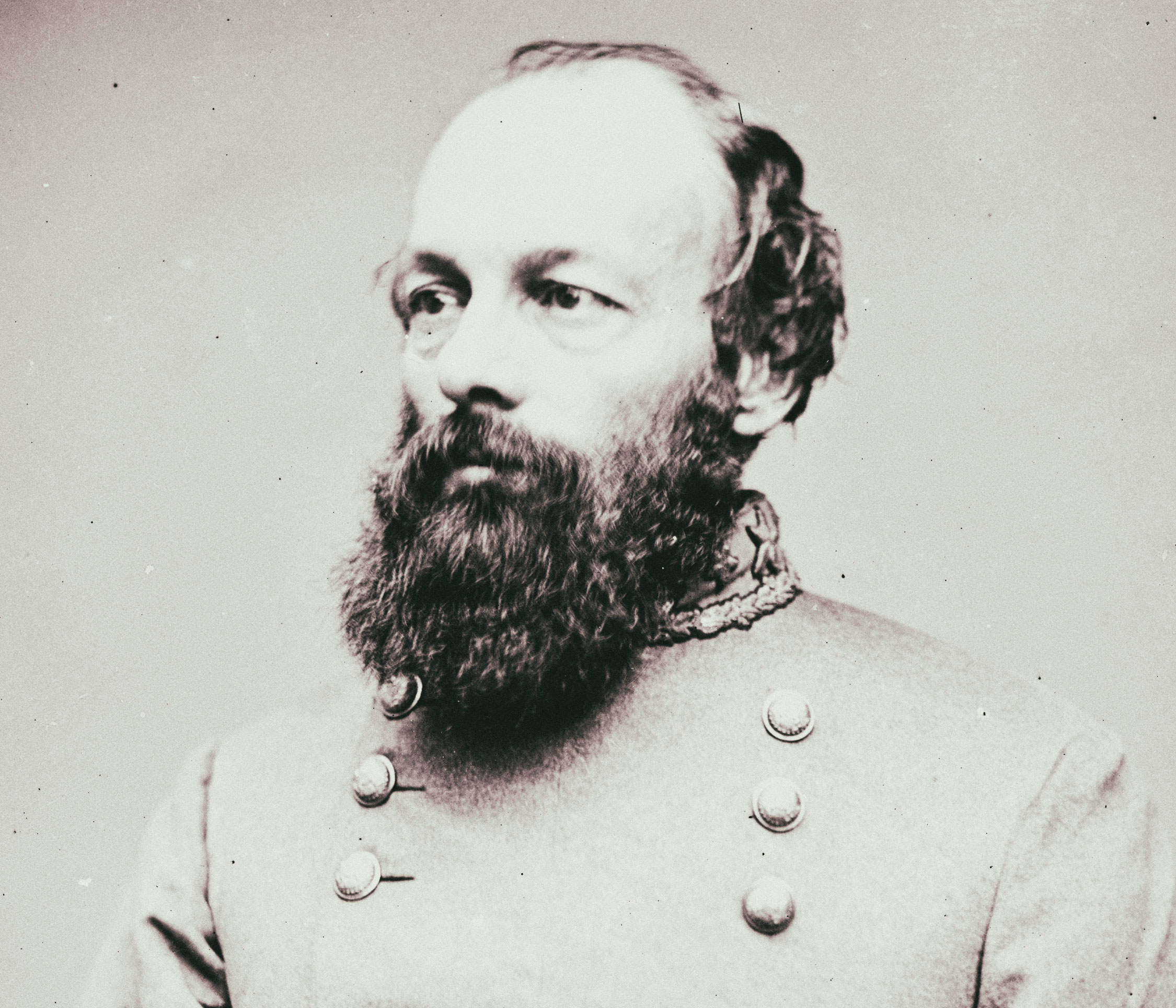
E. Kirby Smith (above) was among the more prominent Confederates active in the war’s western theater to be honored by the Liberty Ship program. “One of Florida’s own sons … Edmund Kirby Smith gained renown not only as a military officer during the Civil War, but was recognized as one of the South’s leading educators,” noted a speaker at the launch of SS E. Kirby Smith.
Another Confederate general active in the western theater honored by the Liberty Ship program was E. Kirby Smith. “One of Florida’s own sons … Edmund Kirby Smith gained renown not only as a military officer during the Civil War, but was recognized as one of the South’s leading educators…. In 1861 he was made a major in the United States Army but resigned when Florida seceded to join with the Confederate Army. He took a prominent part in the battle of Bull Run and in 1864 defeated General Banks in his Red River campaign. He was the last general to lay down his arms at the close of the war.”51 Well after his death he was feted by his birthplace with a statue placed in the U.S. Capitol’s National Statuary Hall Collection (one of two allowed to each state), where he joined a dozen fellow Confederates, seven of whom also had Liberty Ships honoring them. In 2016 the Florida Legislature voted to have it removed, and in 2019 the governor began the process of installing a new statue of educator Mary McLeod Bethune.
Other western theater Confederates honored with Liberty Ships included Joseph E. Johnston (“His record in this fateful War Between the States will live long in our hearts”), David S. Terry (“commanded a Confederate regiment from Texas”); Daniel H. Hill (“the only high ranking general of the Confederacy who in every battle in which he fought never retreated but always advanced”), William D. Bloxham (“He served throughout the civil war as captain of his company”), Sidney Lanier (“he was employed in the Signal Service”), Joseph Wheeler (“His chief distinction … was gained as a cavalry raider, and in this branch of the service he was without a superior”), T.A. [Thomas Alexander] Johnston (“he was a cavalryman at 16 under Gen. Sterling Price and participated in many civil war battles”), J.L.M. Curry (“a Lieutenant Colonel in the Alabama Cavalry”), Howell Cobb (“a member of the Confederate Congress, and afterward served as a brigadier-general”), William Crane Gray (a “chaplain of the First Tennessee Regiment”), Edwin G. Weed (“he volunteered in the Confederate army before reaching his sixteenth year”), and John Ireland (“a lieutenant colonel in the Confederate army”). A granddaughter was on hand to sponsor the launch of the Samuel G. French (who “in 1863 served in the West …, participating in the defense of Jackson and Atlanta, and fighting in the battle of Kennesaw Mountain…. He was also … active in the movement which rid the State of its corrupt carpet-bag government”).52
Also in this Liberty Ship fleet were: John B. Hood (“a hard fighter on the Confederate side”), L.H. McNelly (“He took part in hundreds of skirmishes … and once … McNelly and 40 scouts captured 800 Federal soldiers”), William W. Loring (“He rose to the rank Lieutenant-General in the Confederate army”), Robert Lowry (“[He] served with distinction in the Confederate army in command of a Mississippi regiment”), Joe C.S. Blackburn (“In 1864 he raised a cavalry company which operated under his command as a semi-independent guerrilla force along the Mississippi”), Horace H. Lurton (“enlisted as a private in the Confederate Army”), Walter Q. Gresham (“a Galveston lawyer who was a private in the Confederate Army”), John Morgan (“the famous Confederate warrior … known throughout both armies as a synonym for energy, daring and skill”), John B. Floyd (“one of the earliest appointed brigadier generals in the rebel army”), and Henry Watterson (“an aide to … Nathan Bedford Forrest”).53
On November 13, 1943, the Wainwright Shipyard in Panama City, Florida, was the site for the launching of the Nathan B. Forrest, named “in honor of one of Dixie’s best remembered heroes of the Civil War.”54 Past and present blended in a powerful patriotic moment. As a prelude to the event a shipyard employee (co-sponsor for the launch) was given the Air Medal for her son, then a POW in Germany. The principal sponsor was the wife of the colonel commanding nearby Tyndall Field, an air force training facility. In the course of the event, the audience was told that the Civil War general’s grandson Nathan B. Forrest III, an Army Air Force brigadier general, had been shot down flying a B-17 over Germany and was presumed killed in action.55
Forrest was hailed as “one of the most amazing soldiers of the Confederacy.” The main speaker extolled him as “one of the most effective cavalrymen of the Civil War. The secret of his successes he epitomized in one brief sentence: ‘The man who gets there fustest with the mostest men.’ Books upon books have been written on military strategy and tactics but none has improved his.”56 Among its selections on the day’s program the Tyndall Field band played Dixie.
Fast forward to 2017, when a large equestrian statue of Forrest (installed in 1905) in downtown Memphis, Tennessee’s Health Sciences Park was removed after years of legal maneuvering, leaving behind the formidable base beneath which lay the bodies of Forrest and his wife, Mary Ann. Efforts to find a new resting place were underway, as was a plan to remove a bust of the general from the Tennessee State Capitol, in Nashville. And while the governor no longer has to issue an annual proclamation declaring July 13 Nathan Bedford Forrest Day, the day of observation remains on the state calendar. Throughout the South street names and school names are being changed. Forrest is now referred to as “a slave trader, brutal slave master,” “the Ku Klux Klan’s first grand wizard,” and of his many military engagements the one most remembered is Fort Pillow, where many surrendered African-American Union soldiers died. In June 2020 Paul Fanlund, editor of the Madison, Wisconsin, Capital Times, wrote, “Confederates under the command of Nathan Bedford Forrest murdered them in an act of racial hatred.”57
 Library of Congress
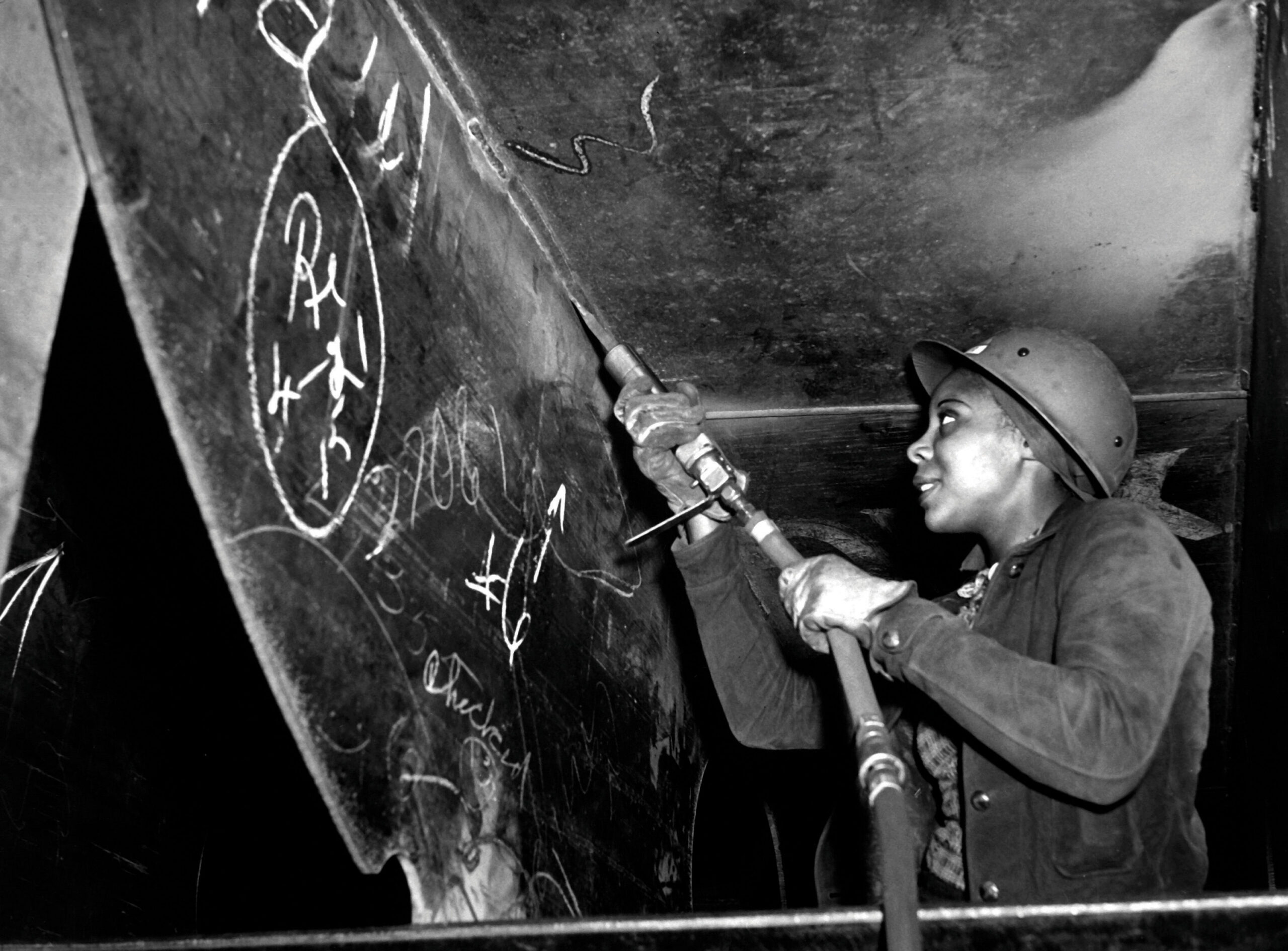
A worker assists in the construction of the Liberty Ship named after agricultural scientist and inventor George Washington Carver.
Most of the Liberty Ships survived the war; only two Confederate-named vessels were destroyed. Wade Hampton was part of a convoy bound for Murmansk, Russia, and sunk by a U-boat 250 miles east of Greenland on March 1, 1943. Seventeen days later Walter Q. Gresham was sunk by a U-boat off Greenland’s southern tip.58 The surviving ships entered the postwar private sector (a few with name changes) or were parked as a strategic reserve, and just about all of them made their last call at the salvage yard by the end of the 1960s.59 The oddest fate was reserved for James Longstreet which, after completing three successful missions, was tossed ashore by a storm off New Jersey in 1943 and pulled from active service. In 1945 it was towed to an isolated section of Cape Cod Bay to be scuttled in shallow water and serve as a target for testing military munitions. As late as 2018, pieces of what remained of the now entirely submerged vessel could be seen at extreme low tide.
Throughout World War II the USMC had but one overall objective—to win the war. Its control of the Liberty Ship naming process was one of the tools it used to build war support among specific regions or groups. Contradictions or conflicts between constituencies were ignored. So, while 85 Liberty Ships honored “Confederate heroes,” another 18 celebrated noteworthy African Americans, two of them of Civil War-era fame—Frederick Douglass and Harriet Tubman.60 Stage star Anne Brown Heard, sponsor for the Douglass, urged a “continuation of the fight for justice, even after the war is won.”61
The USMC could rightfully be proud of its part in the victory. Part of the price the nation paid was a public validation of the carefully honed southern story of the Civil War—one that emphasized the noble character, honor, and courage of its participants, omitting the words “slavery” and “treason.” At the same time African Americans might have seen 18 of their heroes honored on a national stage, symbols in their own right of service to country, courage, cultural contributions, and intellectual accomplishments. In 1945, victory in war washed over all other considerations, but a reckoning with history had only been postponed.
Noah Andre Trudeau is the author of numerous military history articles and eight Civil War history books, including The Last Citadel (1991), Like Men of War (1998), and Gettysburg: A Testing of Courage (2002). His latest book, Lincoln’s Greatest Journey, tracks the experiences of Abraham Lincoln while at City Point, Virginia, in March-April 1865.
Notes
1. National Archives, Record Group 178, Central Correspondence Files, Memo: January 15, 1946.
2. At least 105 Liberty Ships were named after women.
3. It would be followed this day by two more, both in Baltimore, Maryland.
4. Depending on the river configuration, Liberty Ships were either launched stern first or sideways.
5. Sunday Star News, December 7, 1941.
6. Ibid.
7. North Carolina Shipbuilding Corp., Shipyard Bulletin, Fourth Quarter 1941.
8. Brunswick Mariner, May 26, 1944.
9. Ibid.
10. The Montevallo Times, August 6, 1942.
11. Anniston Star, July 13, 1942.
12. Austin-American Statesman, January 18, 2020.
13. Savannah Morning News, March 20 and 29, 1943.
14. Atlanta Constitution, February 8, 1944.
15. Ibid., August 11, 1943.
16. Savannah Morning News, August 22, 1943.
17. The Brunswick News, August 13, 1943.
18. Wilmington Morning Star, December 31, 1942.
19. Houston Chronicle, August 3, 1943.
20. The Clarke County Democrat, August 13, 1863.
21. The Times, October 17, 1943.
22. Greenfield [MA] Recorder-Gazette, February 28, 1944.
23. The New Orleans Daily Democrat, February 13, 1878.
24. Wilmington Morning Star, July 27, 1942.
25. The Clarion-Ledger, March 6, 1943.
26. The Times, March 21, 1943.
27. News-Pilot, July 23, 1943.
28. Margaret T. Rose, Journal, p. 40. As quoted in Allen W. Bird II, “U.M. Rose Arkansas Attorney,” Arkansas Historical Quarterly, Vol. 64, No. 2 (Summer 2005): 176.
29. The Times-Democrat, March 30, 1870.
30. Savannah Morning News, March 20, 1943.
31. Anniston Star, July 13, 1942.
32. The Times, August 5, 1943 (Thompson); William Montgomery Gabard, “The Civil War Career of John Elliott Ward,” Georgia Historical Quarterly (Summer 1971): 202.
33. The Morning Star and Catholic Messenger, November 16, 1873.
34. Panama City News Herald, February 24, 1944.
35. Houston Chronicle, November 20, 1943.
36. The North Carolina Shipbuilder, November 1, 1943.
37. The Charleston Daily News, February 4, 1873.
38. Fore & Aft, Alabama Dry Dock & Shipbuilding Co., Mobile, Alabama, July 10, 1942.
39. Houston Chronicle, November 16, 1942.
40. Cumberland Evening Times, February 22, 1943.
41. Savannah Press, April 22, 1943.
42. Houston Chronicle, April 8, 1944 (Ross); Houston Chronicle, October 14, 1943 (Rayburn).
43. Savannah Evening Press, July 22, 1944.
44. The Times, April 24, 1942 (Jackson); Abilene Reporter News, October 16, 1942 (Hill); Houston Chronicle, October 31, 1942 (Longstreet); Wichita Daily Times, March 23, 1943 (Early); The Daily Sun, March 30, 1943 (Ewell); Wilmington Morning Star, March 1, 1943 (Pender); The Sunday Star-News, February 7, 1943 (Ransom); Houston Chronicle, March 31, 1943 (Pickett); Houston Chronicle, April 4, 1943 (Pendleton); Jackson Herald, October 28, 1943 (Gordon).
45. New Orleans Time-Picayune, November 7, 1942 (Hampton); Houston Chronicle, November 20, 1942 (Stuart); San Antonio Express, March 17, 1943 (F. Lee).
46. Brunswick News, November 16, 1943; Brunswick Mariner, November 20, 1943.
47. Atlanta Journal Constitution, June 24, 2020.
48. Wilmington Morning Star, December 23, 1942 (Pettigrew); Baltimore Sun, January 9, 1944 (Cox); The Raleigh Times, November 4, 1897 (Clingman); The Greenville News, October 3, 1943 (Mosby); Nashville Banner, August 7, 1943 (Merrimon); The Butler Herald, June 8, 1944 (Bartow); Wilmington Morning Star, December 1, 1943 (Battey); Wilmington Morning Star, June 15, 1943 (Jarvis); The Indiana Gazette, April 29, 1910 (Alexander); Wilmington Morning Star, April 11, 1943 (Hoke).
49. Dansville Breeze, February 27, 1943.
50. Webster Review, The Signal Tribune, January 12, 1943.
51. Panama City News Herald, December 30, 1942.
52. Houston Chronicle, November 16, 1942 (Johnston); Lancaster Intelligencer, August 21, 1889 (Terry); The Roanoke Rapids Herald, January 14, 1943 (D.H. Hill); The Miami News, April 13, 1911 (Bloxham); The Times-Picayune, September 12, 1881 (Lanier); Daily Mountain Eagle, February 7, 1906 (Wheeler); The Columbus Telegram, February 6, 1934 (T.A. Johnston); The Tennessean, February 13, 1903 (Curry); Richmond Dispatch, October 12, 1868 (Cobb); The Christian, August 11, 1944 (Gray); The Tampa Times, January 22, 1924 (Weed); Waco News-Tribune, March 31, 1944 (Ireland); The Baton Rouge Advocate, March 15, 1944, The Wainwright Liberator, March 18, 1944 (both French).
53. Staunton Spectator, September 2, 1879 (Hood); The Eagle, November 9, 1943 (McNelly); Chicago Tribune, December 31, 1886 (Loring); The Western Carolina Enterprise, January 26, 1910 (Lowry); National Archives, Record Group 178, miscellaneous biographies (Blackburn); The Leaf-Chronicle, July 15, 1914 (Lurton); Lubbock Morning Avalanche, January 16, 1943 (Gresham); The Evening Sun, May 4, 1943 (Morgan); The Daily True Delta, September 10, 1863 (Floyd); Richmond Daily Register, December 22, 1921 (Watterson).
54. Panama City News Herald, November 14, 1943.
55. This happened on June 13, 1943.
56. The Wainwright Liberator, November 13, 1943.
57. Knoxville News Sentinel, July 5, 2020; Times-Picayune, January 3, 2018; Capital Times, June 24, 2020.
58. In addition, one sank from storm damage, one from a collision, three were torpedoed but repaired, one wrecked in a bombing raid, and one already damaged by a torpedo became part of the Mulberry Harbor system employed on D-Day. After the war two became part of a breakwater or artificial reef.
59. Two remain as floating museums, neither named after a Civil War figure.
60. Three of the African-American Liberty Ships were built and launched in “Dixie” shipyards—in Wilmington, North Carolina, Brunswick, Georgia, and Houston, Texas.
61. Baltimore Afro-American, May 29, 1943.
Related topics: naval warfare