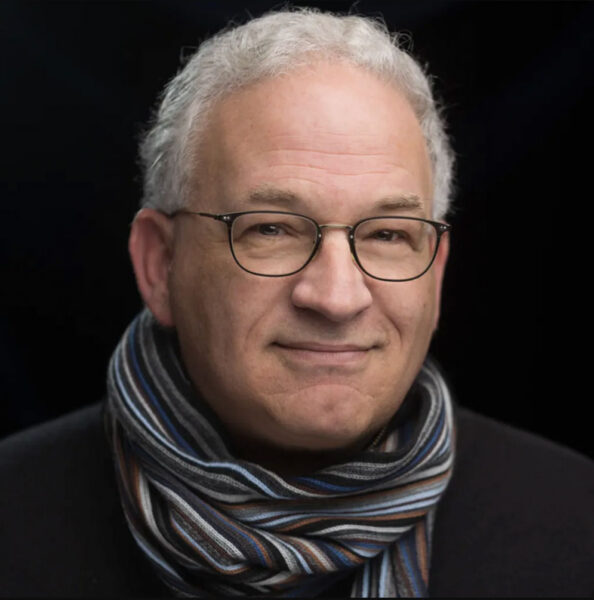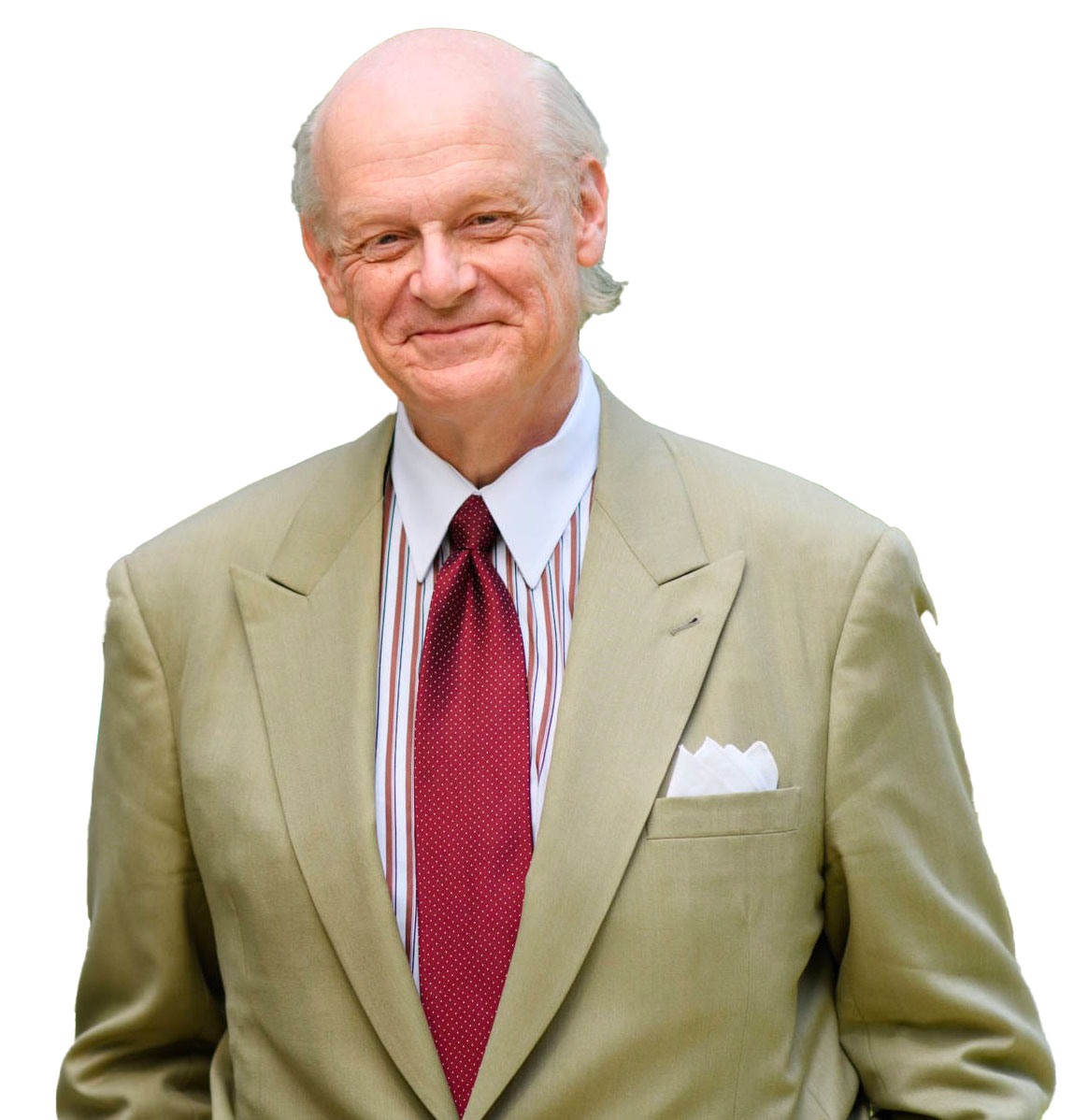
Allen C. Guelzo is professor of humanities at the Hamilton School of Classical and Civic Education at the University of Florida, and lives in both Gainesville and Gettysburg, Pennsylvania.
What are you currently reading?
I’m midway through Dan Bannister’s opus Lincoln and the Common Law (Human Services Press, 1992), which compiled summaries of common-law cases handled by Abraham Lincoln during his career as a trial lawyer. I don’t need to explain to you that this is tedious reading, and much of it is written by a lawyer who expected that the book’s readership would be other lawyers. For instance: It will help you to know the difference between a capias and an assumpsit before you begin. I’m forcing my way through it because I want to understand as much as I can about Lincoln’s law career. I think it will also help me to explain to myself why I didn’t become a lawyer.
What drew you to this book?
Until the debut of the Lincoln Legal Papers in the 1990s, we had little practical idea of what Lincoln’s professional practice looked like. Roy P. Basler’s groundbreaking edition of The Collected Works of Abraham Lincoln (Abraham Lincoln Association, 1953) excluded all but the most marginal papers from Lincoln’s law practice. And no wonder, since most of the case materials were squirreled away in the cobwebbed basements of central Illinois county courthouses, and in many of them, it was not clear what role Lincoln actually played. Bannister’s book, and the subsequent publication of The Papers of Abraham Lincoln: Legal Documents and Cases (UVA Press, 2008), along with Mark Steiner’s marvelous book about Lincoln’s practice, An Honest Calling (Northern Illinois University Press, 2009), dramatically lifted the curtain on what were, after all, the 24 central years of Lincoln’s life.
What’s the last great Civil War book you read?
Looking back no further than 2022, I’d put my finger, for “great” books about the Civil War era, on Matt Gallman’s The Cacophony of Politics: Northern Democrats and the American Civil War (UVA Press), which is a really wonderful exposition of the northern Democratic political opposition. (Bear in mind that I have a high level of interest in the politics of the war, rather than just its battlefields.) But if we’re talking about books specifically about the war as “the war,” I’d select Scott Hartwig’s inexhaustibly detailed second volume on the 1862 Maryland Campaign, I Dread the Thought of the Place: The Battle of Antietam and the End of the Maryland Campaign (Johns Hopkins University Press, 2023).
What was your favorite book as a child?
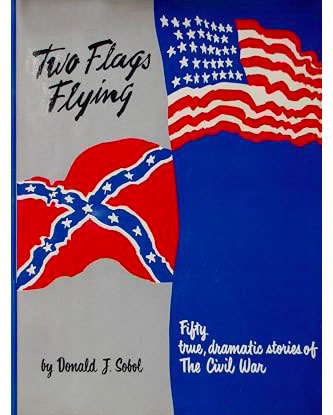
Donald Sobol’s Two Flags Flying: Fifty True, Dramatic Stories of The Civil War (Platt & Munk, 1960), a gift of my maternal grandmother for my seventh birthday. Why a favorite? Read it and you’ll find out. Especially read the chapter on David Dixon Porter and his mystery ironclad. If more children read books like this, we wouldn’t be wondering why they’re growing up on Facebook instead.
What kind of reader were you?
Incessant. I began keeping reading lists when I was in seventh grade, and have done so ever since, and they will stand as proof of incessant. The lists are probably evidence of a hard-core OCD problem on my part, but it’s the sort of thing later historians are so grateful for, since they are—most of them—OCD themselves.
You’re forming a new book group. Who would you invite and why?
Brian Matthew Jordan, Jonathan White, and Howell Keiser for the Civil War, Walter Russell Mead and Jane Kamensky for general American knowledge, Joe Horowitz for American music, and my old teachers Mike Zuckerman, Alan Kors, Janet Hirt, and Bruce Kuklick because they ask the most interesting questions. I might invite my oldest friend and now co-author James Hankins, but only if he promises to open the group with a quotation from Petrarch.
Where do you like reading?
Anywhere. I’d be reading on the way to my first job interview, or in the tumbrel to the guillotine.
Do you have a favorite bookstore?
The bookstores I loved are almost all now gone, destroyed by the double-whammy of the internet and Amazon. But as a Philadelphia boy, there was no bookstore quite like William H. Allen’s dimly lit second-hand book-cathedral at 2031 Walnut St. in Philadelphia—not even Leary’s at 9th and Market, nor Charles Sessler’s at 1314 Walnut. I could have lived there, and George Allen quite possibly would have allowed it. A vigorous second is a survivor of that Golden Age, Baldwin’s Book Barn of West Chester, Pennsylvania. It was from Old Man Baldwin that I bought Harry Jaffa’s Crisis of the House Divided: An Interpretation of the Issues in the Lincoln-Douglas Debates (Doubleday, 1959) for a few bucks in 1980, took it home, stayed up most of the night reading it, and became a convert to the idea that Lincoln was a man of ideas. It was the O.M. who saw me ogling the five volumes of Samuel P. Bates’ History of Pennsylvania Volunteers (B. Singerly, 1869–1871) that he kept on the shelves behind the counter. “How much,” I asked. “One hundred dollars,” the O.M. replied. “I haven’t got that,” I replied. “Here,” he said, “take ’em and send me a check when you can.” There hasn’t been a deal like that since the Louisiana Purchase. Right after Baldwin’s, I’d give a prize to the Paul family’s Prairie Archives in Springfield, Illinois. If there’s a book on Lincoln they don’t have, you probably don’t need it.
What’s your favorite Civil War book no one else has heard of?
Amos Judson’s History of the 83rd Regiment Pennsylvania Volunteers, published in 1865 before the genre of regimental memoirs had hardened into self-praise and self-congratulation. Chapters 18 through 20 are, without peer, the most poker-facedly hilarious descriptions in the entire literature of the Civil War of why young adolescent males decided to become soldiers. It rivals Twain and exceeds Ambrose Bierce, Charles Farrar Brown, and David Locke. Judson died in 1913, after a long and otherwise utterly unnoticed career in the Treasury Department, so it was a one-off literary performance.
What’s next on your reading list?
That would be telling.