Major Lyman Sawin Hapgood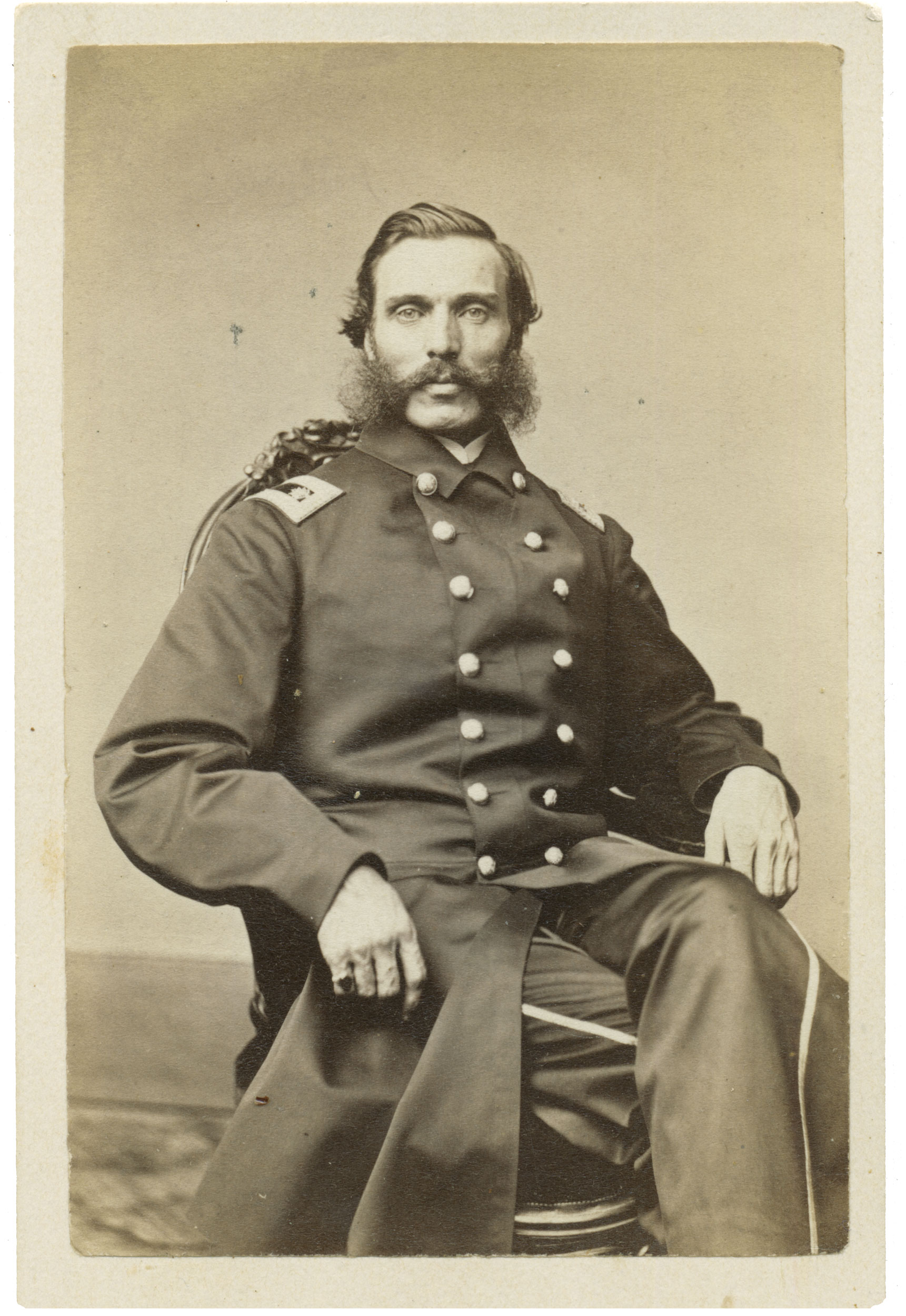 Ronald S. Coddington Collection
The sight of a paymaster and his clerk riding through the streets of Washington, D.C., on a summer’s day in 1863 likely attracted little attention considering the usual hustle and bustle of the Union capital. The two men were headed to Mason’s Island (known today as Theodore Roosevelt Island), located in the middle of the Potomac River across from Georgetown. There, the paymaster, with the help of his clerk, would distribute funds to the men and officers of the 1st U.S. Colored Infantry who were encamped on the narrow strip of land.
The paymaster was Major Lyman Sawin Hapgood (pictured above), a 40-year-old Maine native who had settled in Boston and prospered as a banker before the war.
He was an ardent abolitionist—“My most earnest desire,” he once wrote, was “for the complete and triumphant success of universal liberty to all men without regard to race, color or condition”—and had helped organize the Republican Party in his adopted city in the 1850s.
And the slightly older clerk who rode with Major Hapgood that day? He was a struggling writer who worked as a part-time copyist in the same building as Hapgood and often accompanied him on his official sojourns in the Washington area to pay the troops.
His name? Walt Whitman.
Ronald S. Coddington is publisher of Military Images, a magazine dedicated to showcasing and preserving photos of Civil War soldiers and sailors.