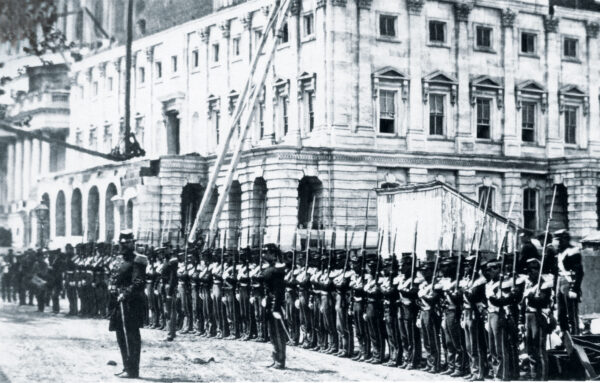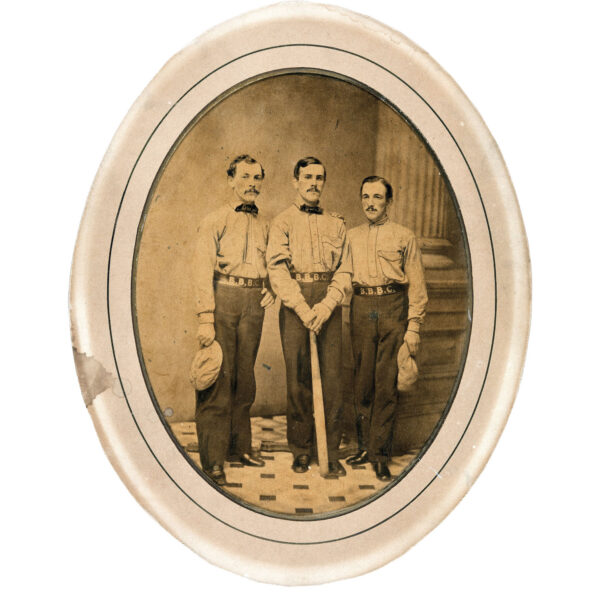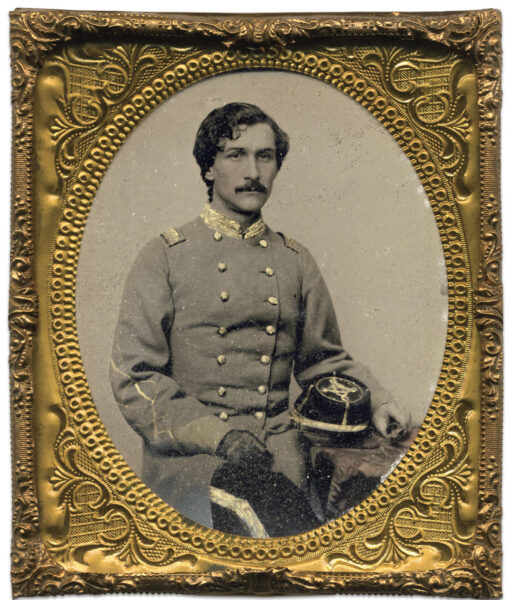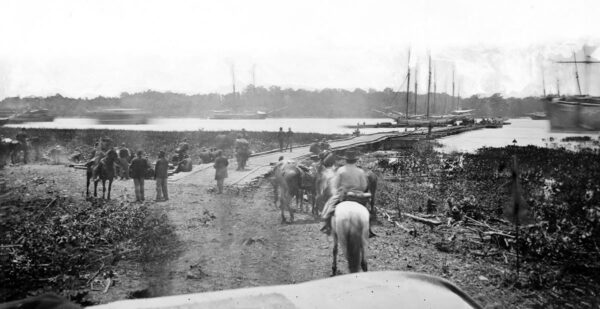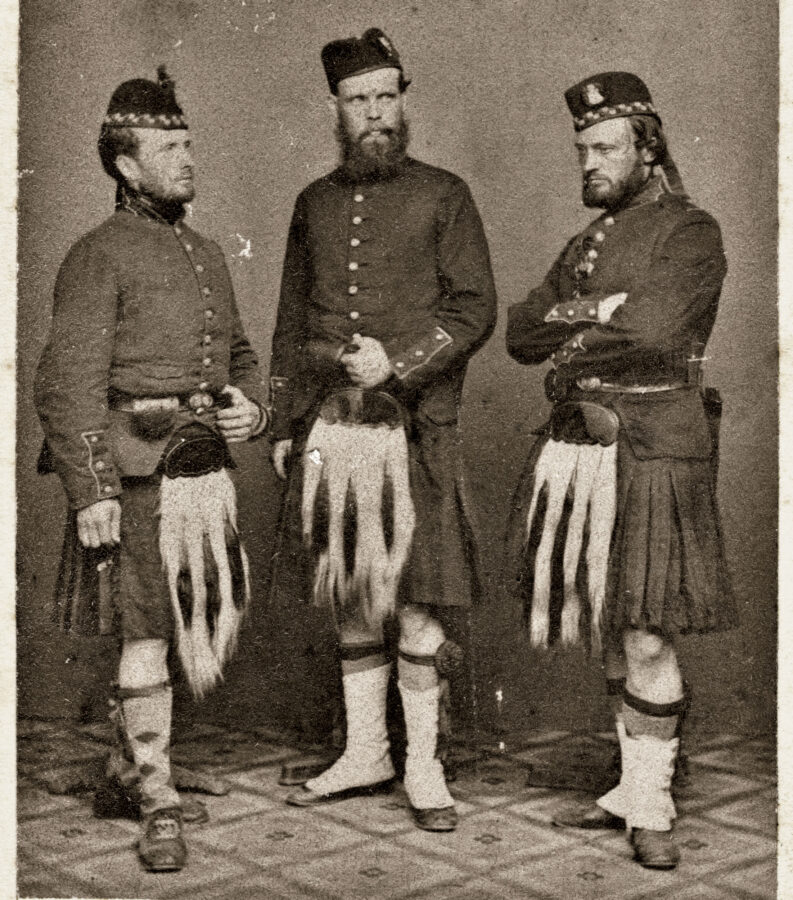
These Highlanders of the 79th New York State Militia, a Scottish-American regiment from New York City, visited Mathew Brady’s studio in Washington, D.C., in June 1861, when their regiment was encamped on the grounds of Georgetown College.
Their Highland dress includes tartan kilts, large sporrans with three strands of black horsehair, red and white hose with red garters, and shoes with broad silver buckles. The Glengarry cap worn by the man in the center is missing the band with red, white, and blue dicing; he and the man on the right wear white leggings over their hose.
The kilts, sporrans, hose, and buckles were occasionally mixed with regulation clothing in camp—or like here, on the occasion of a photograph—but not in battle or active campaign.
The 79th saw action in numerous operations in the eastern and western theaters, including the battles of First Bull Run and Antietam, Ambrose Burnside’s “Mud March,” the defense of Knoxville, and the brutal fighting in The Wilderness. The fate of these unidentified Highlanders is not known. But the regiment’s losses over the next four years—502 killed, wounded, and missing—earned it the grim distinction as one of the war’s “Three Hundred Fighting Regiments” listed by William F. Fox in his 1889 treatise, Regimental Losses in the American Civil War, 1861–1865.
Ronald S. Coddington is publisher of Military Images, a magazine dedicated to showcasing and preserving photos of Civil War soldiers and sailors.