Lafayette Hewitt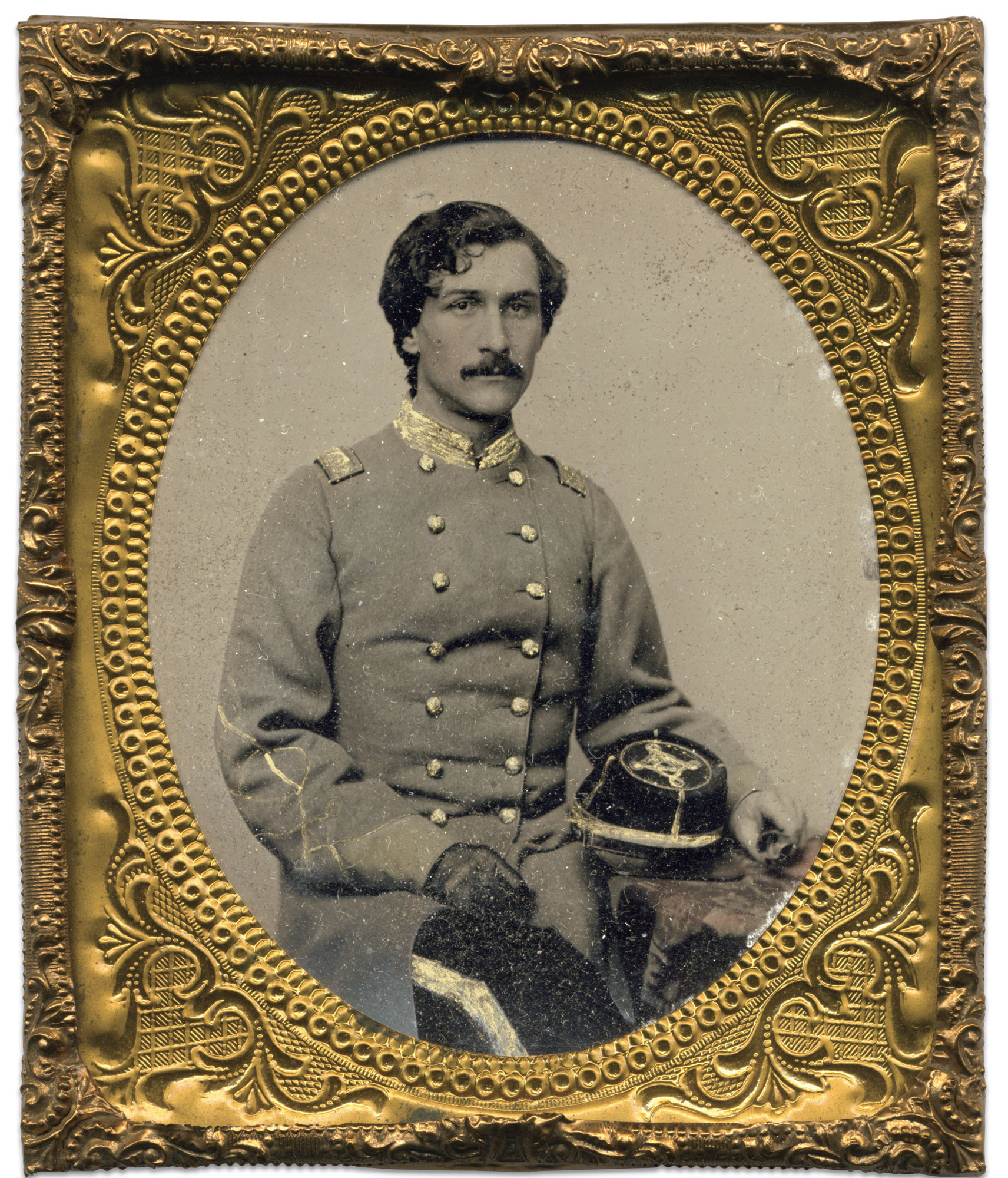 Brian Boeve Collection
Some Civil War soldiers aspired to high rank; others refrained from senior leadership, preferring to remain among enlisted men. The latter group included an unlikely warrior—a bookish, retiring, and reclusive Kentucky native with the marvelous military name of Lafayette Hewitt.
“Fayette,” as he was known to friends, was a young academic star who had pursued a career as an educator before the war. His talents attracted the attention of fellow Kentuckian Joseph Holt, postmaster general for President James Buchanan. Hewitt went to work for Holt in late 1860, but resigned after the election of Abraham Lincoln, and a few months later made his way to Richmond to help establish the new Confederate Post Office Department.
But Hewitt really wanted to be a soldier. In late 1861, he was commissioned a captain and assistant adjutant general in the Confederate army. In early 1863, he joined the staff of fellow Kentuckian Benjamin H. Helm, who commanded the famed all-Kentucky Orphan Brigade, so called after its ranks were decimated at the Battle of Stones River on January 2, 1863.
Hewitt distinguished himself with the Orphans in battle at Jackson, Mississippi, and Chickamauga. During the Battle of Atlanta on June 22, 1864, an officer in the 5th Kentucky Infantry praised Hewitt’s bravery and “cool judgement,” qualities “of which real generals are made.” Along the way, Hewitt refused a promotion to colonel that would have taken him away from his Kentucky brothers.
Hewitt survived the war and returned to his home state, where he served in various civic roles, including state auditor, before dying in 1909 at age 77. Perhaps his most enduring legacy is the thousands of pages of original reports, correspondence, and other papers related to his beloved Orphan Brigade that he donated to the U.S. War Department in 1887. They are now housed in the National Archives.
Ronald S. Coddington is publisher of Military Images, a magazine dedicated to showcasing and preserving photos of Civil War soldiers and sailors.