Library of Congress
Lieutenant General Ulysses S. Grant sits outside his headquarters at City Point, Virginia, in 1864 beside his wife, Julia, and son Jesse.
Ulysses S. Grant is no stranger to the Library of America series, which has been publishing authoritative editions of great American writing since 1982. Almost three decades ago the Library of America published Memoirs and Selected Letters, which includes Grant’s Personal Memoirs along with 174 letters he wrote from 1839 to 1865. Grant’s writing also appears in the four-volume series The Civil War: Told by Those Who Lived It and in Reconstruction: Voices from America’s First Great Struggle for Racial Equality. And he appears and reappears in the works of other writers in the Library of America series.
He is the target of a clever put-down in The Education of Henry Adams and an unseen antagonist of the young partisans in William Faulkner’s The Unvanquished. Grant appears in several works by Mark Twain: In “The Babies,” he becomes the subject of one of Twain’s funniest banquet toasts; in Twain’s autobiographical Civil War tale “The Private History of a Campaign That Failed,” reports of Grant’s approach help convince the narrator that soldiering is not for him; and in a speech called “General Grant’s Grammar,” Twain, now the spectacularly successful publisher of the Personal Memoirs, rightfully praises the book as a “unique and unapproachable literary masterpiece.”1 William T. Sherman writes about Grant in his Memoirs of General W. T. Sherman with a fascinating mixture of gratitude, admiration, rivalry, and disappointment. The letters Abraham Lincoln wrote to Grant included in Speeches and Writings, 1859–1865, begin with the president admitting that “you were right, and I was wrong” about the Vicksburg Campaign, and conclude with Lincoln urging Grant on after the fall of Richmond: “Let the thing be pressed.”2 And with splendid economy Herman Melville offers his own portrait in “The Armies of the Wilderness”: “Like a loaded mortar he is still: / Meekness and grimness meet in him— / The silent General.”3
 Library of Congress
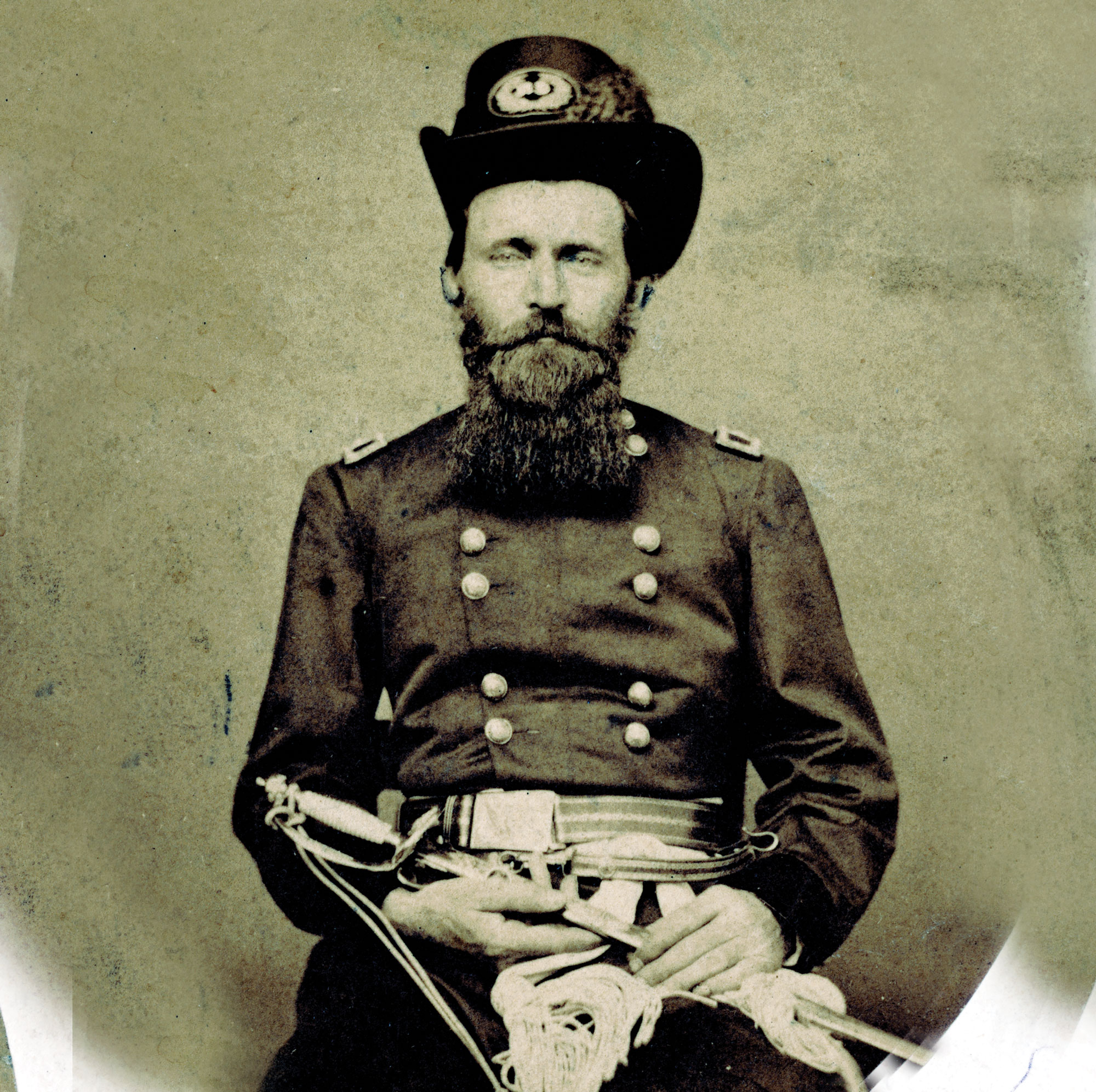
Grant as he appeared in October 1861.
Not surprisingly, Grant has also been the subject of numerous biographers, most recently Ron Chernow. In light of the renewed public interest in Grant’s life, Library of America decided to supplement its Memoirs and Selected Letters volume with a short special publication that would appeal to readers interested in the private Grant. The result is My Dearest Julia: The Wartime Letters of Ulysses S. Grant to His Wife, a selection of 85 letters featuring an illuminating introduction by Chernow. Unfortunately, none of Julia Dent Grant’s letters to Ulysses are known to survive—it is possible that she destroyed them after his death, while taking care to preserve the letters he wrote to her. Of the letters collected in My Dearest Julia, 32 were written from June 1844 to February 1854, during Grant’s first stint in the army, and 52 date from May 1861 to April 1865. The Grants had little need to write to each other after the Civil War, when they were rarely apart for more than a few days. A tragic exception provides the coda to My Dearest Julia, in the form of a moving farewell letter Grant wrote on June 29, 1885, a few weeks before his death.
The letters in My Dearest Julia record Grant’s love for his wife and children, his brutal initiation into the realities of battle in Mexico, and the miserable homesickness that drove him out of the peacetime army. But what do they tell us about the Civil War? Grant did not discuss military plans in his letters home, nor did he write much about his superiors and subordinates. Nevertheless, as the selection of 12 letters printed here show, his marital correspondence provides valuable insight into his wartime experiences. The texts of the letters in My Dearest Julia are taken from The Papers of Ulysses S. Grant, edited by John Y. Simon and John F. Marszalek (32 volumes, 1967–2012), and are reprinted by permission of the Ulysses S. Grant Association. (Citations of their original printings in The Papers of Ulysses S. Grant are provided in the reference notes to this article. The texts preserve Grant’s original spelling and punctuation.)
Grant’s first army posting after graduating from West Point in 1843 was to Jefferson Barracks outside of St. Louis, a few miles from White Haven, the family plantation of his Academy friend Frederick T. Dent. During a visit to White Haven early in 1844 Grant met Julia Boggs Dent, Frederick’s younger sister. They soon became engaged, but were unable to marry until Grant returned from the war with Mexico in 1848. Their first child, Frederick Dent Grant, was born in 1850, followed by Ulysses S. Grant Jr. in 1852, Ellen Wrenshall Grant in 1855, and Jesse Root Grant in 1858. During their 37-year marriage, Ulysses and Julia would spend eight years in the White House, and then travel around the world, but their first decade together was not easy. Sent by the army to the Pacific Coast, Grant became restless, bored, and homesick, and he resigned his commission in 1854. He returned to Missouri and worked a small farm near White Haven, earning money by selling firewood on the streets of St. Louis. In 1860 the family moved to Galena, Illinois, where Grant went to work as a clerk in a leather goods store managed by his younger brother Orvil.
 Library of Congress
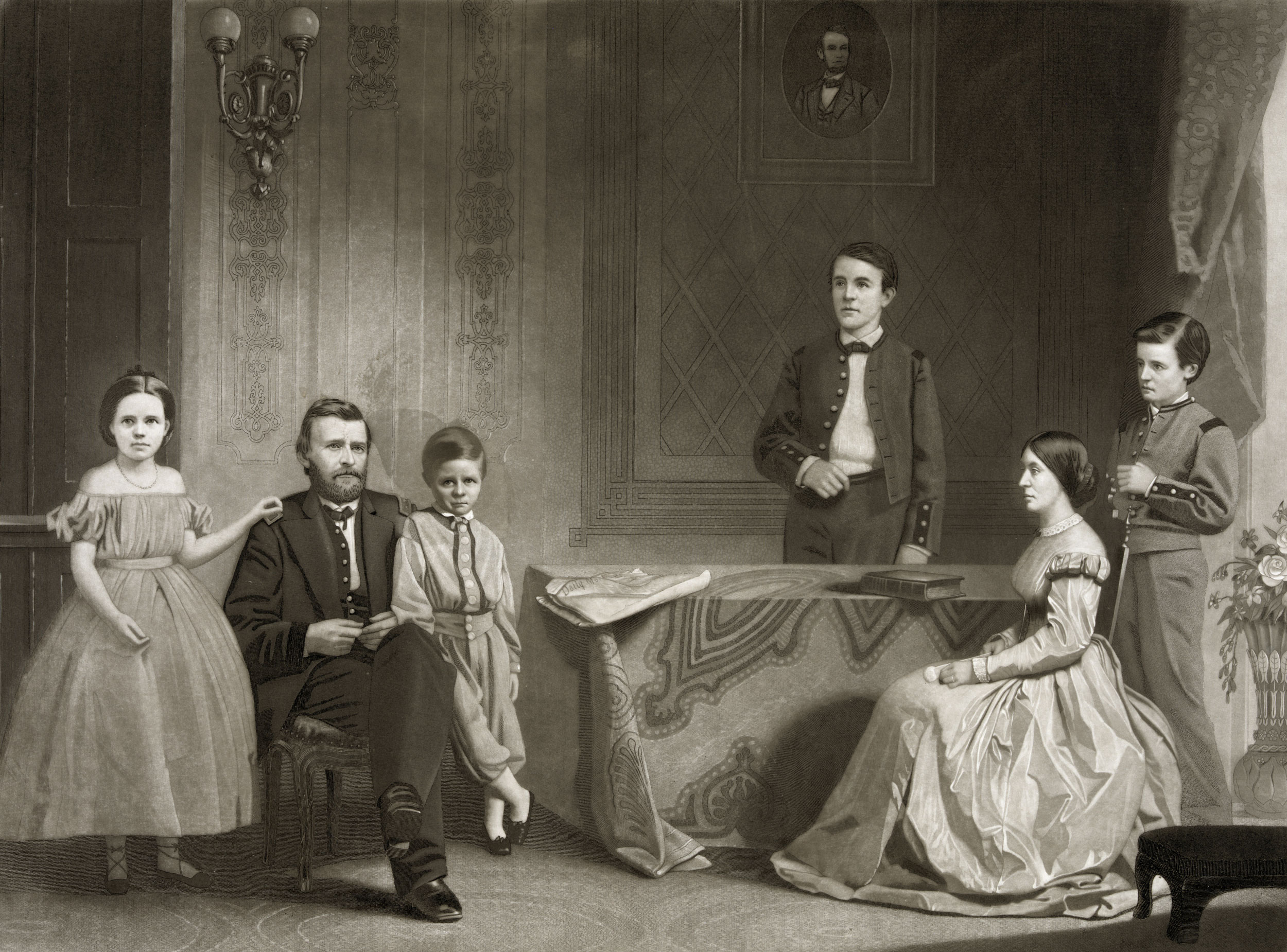
In this post-war print by William Sartain, Ulysses S. Grant and his wife, Julia, sit at home surrounded by their children, Ellen, Jesse, Frederick, and Ulysses Jr.
His life was transformed by the outbreak of the Civil War in April 1861. Less than a month after the firing on Fort Sumter, Grant wrote to Julia from Springfield, where he was serving as a military aide to Richard Yates, the governor of Illinois.
Camp Yates, May 6th 1861
Dear Julia;
There is nothing special to write but you will want to hear often from me during my absence. I too would like to hear from you but so far I have not had the scrape of a pen from you. I presume by Thirsday I shall be on duty in Freeport, mustering in a Regiment there, and if so will be within three hours of Galena and of course will go home. How soon I shall be relieved entirely I do not know. There is no necessity for any volunteers who feel the slightest reluctance about going for already near thirty thousand more have offered their services from this state than can be accepted. There is no doubt but the secessionest contemplated making an attack upon this state but the preperations that have been made here will probably prevent it. We expect here that the next few days will develop a decidedly active policy on the part of the Administration, not perhaps in the way of direct attack, but in stoping all communication with the rebels.
Evrything has been managed most admirably so far in not bringing on a conflict whilst our troops were entirely without drill and totaly unaccustomed to camp life and the proper use of fire arms.—As people from the Southern states are allowed to travel freely through all parts of the North and cannot fail to see the entire unanimity of the people to support the Government, and see their strength in men and means, they must become soon dishartened and lay down their arms. My own opinion is there will be much less bloodshed than is generally anticipated. I believe there will be an attack made on some of the Southern forts and a few decided victories gained when the masses in the south will lay down their arms and the leaders in the rebelion flee to other parts, for their country’s good. The worst to be apprehended is from negro revolts. Such would be deeply deplorable and I have no doubt but a Northern army would hasten South to suppress anything of the kind.—Kiss all the children for me. Tell Orvil that when I draw pay here it may be better than our currency, at all events I shall not draw anything until I am relieved, and as I did not bring enough with me to pay my board until my return I shall have to draw for from 10 to 20 dollars, depending upon how long I may have to remain. This place, during its present crouded state is more expensive than New York and living abominable.
Love to all
ULYS.4
In May 1861 expectations of a rapid Confederate collapse were widespread in the North, and it is not surprising that Grant shared them. What is particularly ironic is his vision of northern armies hastening south to suppress “negro revolts.” Within two years of writing this letter Grant would lead an army of emancipation deep into the lower Mississippi Valley, and within four years he would send a division of African-American troops to occupy the fallen Confederate capital.
Grant was promoted to the rank of brigadier general in August 1861, and his first great victory was forcing the surrender of Fort Donelson, Tennessee, and its 12,000-man Confederate garrison on February 16, 1862. Promoted to major general, he became second in seniority in the western theater to his immediate superior, Major General Henry W. Halleck. Grant wrote to Julia eight days after the fall of Donelson. (“Johnson” was Confederate general Albert Sidney Johnston, who would be killed at Shiloh; “Gen. Buells Army” was the Union Army of the Ohio under Brigadier General Don Carlos Buell; “Mary” was Grant’s younger sister, Mary Grant.)
Fort Donelson, Feb. 24th 1862.
Dear Julia,
I have just returned from Clarkesville. Yesterday some citizens of Nasville come down there ostensibly to bring surgeons to attend their wounded at that place but in reality no doubt to get assurances that they would not be molested. Johnson with his army of rebels have fallen back about forty miles south from Nashville leaving the river clear to our troops To-day a Division of Gen. Buells Army reported to me for orders. As they were on Steamers I ordered them immediately up to Nashville. “Secesh” is now about on its last legs in Tennessee. I want to push on as rapidly as possible to save hard fighting. These terrible battles are very good things to read about for persons who loose no friends but I am decidedly in favor of having as little of it as possible. The way to avoid it is to push forward as vigorously as possible.
Gen. Halleck is clearly the same way of thinking and with his clear head I think the Congressional Committee for investigating the Conduct of the War will have nothing to enquire about in the West.
I am writing you in great haste a boat being about leaving here. I will write you often to make up for the very short letters I send.
Give my love to all at home and write frequently. Tell me all about the children. I want to see rascal Jess already. Tell Mary she must write to me often. Kiss the children for me and the same for yourself
ULYS.5
 Library of Congress
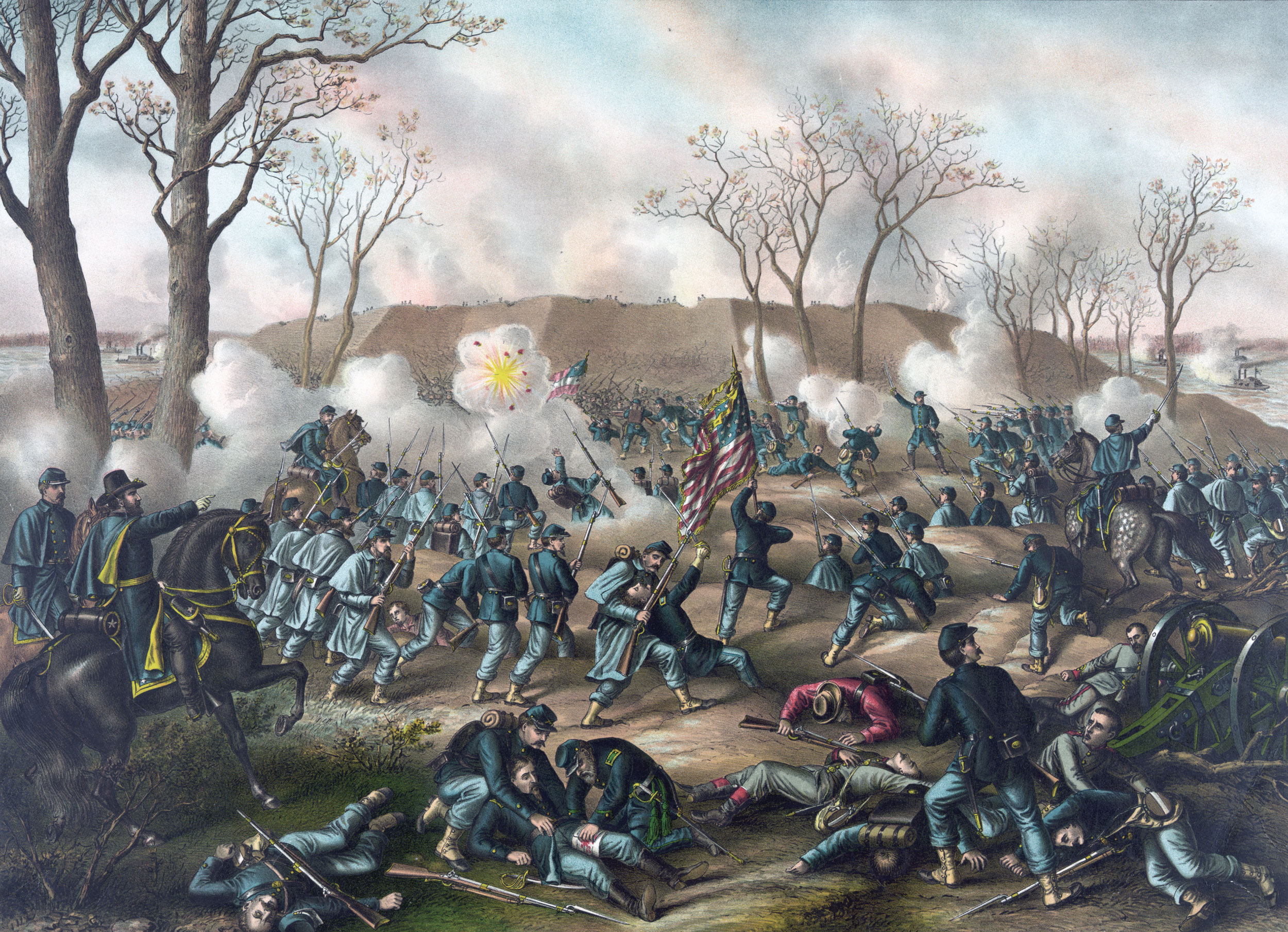
In this Kurz & Allison lithograph, Ulysses S. Grant (on horseback at left) directs Union forces in their attack on Fort Donelson on February 16, 1862. Forcing the surrender of the fort’s Confederate garrison represented Grant’s first great victory, which saw him promoted to major general soon thereafter.
The optimism Grant displays here is understandable. Who at the time wouldn’t want to believe that “Secesh” was “on its last legs in Tennessee,” or that rapid and decisive maneuvers such as the Fort Henry expedition could save armies from “hard fighting”? And who wouldn’t want to avoid “terrible battles” such as Belmont and the fighting outside Fort Donelson? Letters such as this remind us of an essential truth of history: It is lived forward, but remembered backward. Grant does not know that the war’s first great bloodbath is about to happen at Shiloh, but from our melancholy future perspective, we always will.
A month after Shiloh, Grant wrote to Julia from northern Mississippi. (James Casey was the husband of Julia’s sister Emma; “Fred” was their son Frederick, now almost 12; John Dent was Julia’s older brother; “Aunt Fanny” was Frances Gwinn, Julia’s aunt.)
Camp Near Corinth Miss.
May 16th 1862
Dear Julia;
I do hope all suspense about the approaching conflict will be ended before it is time for me to write you another letter. We are moving slowly but in a way to insure success. I feel confidant myself and believe the feeling is general among the troops.
What move next after the attack upon Corinth is hard to predict. It must depend to a great extent upon the movements of the enemy.
Jim Casey is here. He arrived to-day. He is very anxious to have you visit them and says that if you come down he will go with you and Emma to St. Louis on a short visit. I have no objections to the arrangement. They also want Fred. to spend his vacation with them. All were very much pleased with Fred. for his modesty and good sense.—Your father sent Emma a bill of sale for the negroes he gave her. To avoid a possibility of any of them being sold he ought to do the same with all the balance. I would not give anything for you to have any of them as it is not probable we will ever live in a slave state again but would not like to see them sold under the hammer.
Aunt Fanny is back in Mo. She says that Mo. is a better place than she thought it was until she tried Ohio again.
John Dent is going back to the country. Poor John! I pitty him. Dont tell him that I say so though I am anxious to see you and the children once more.
I enjoy most excellent health and am capable of enduring any amount of fatigue. But I want to see this thing over. As I have before said I think the hard fighting in the West will end with the battle of Corinth, supposing all the time that we are successful. Of that, our success, I have no doubt. Kiss all the children for me. I know they are all good and well behaved. Does Jess find any one to fight now that I am away? Give my love to all at home. Write often but dont find fault if you do not receive my letters. I write often enough. Remember me to Mrs. Van Dyke and Mrs. Tweed.
ULYS.6
Kiss for yourself
 Library of Congress
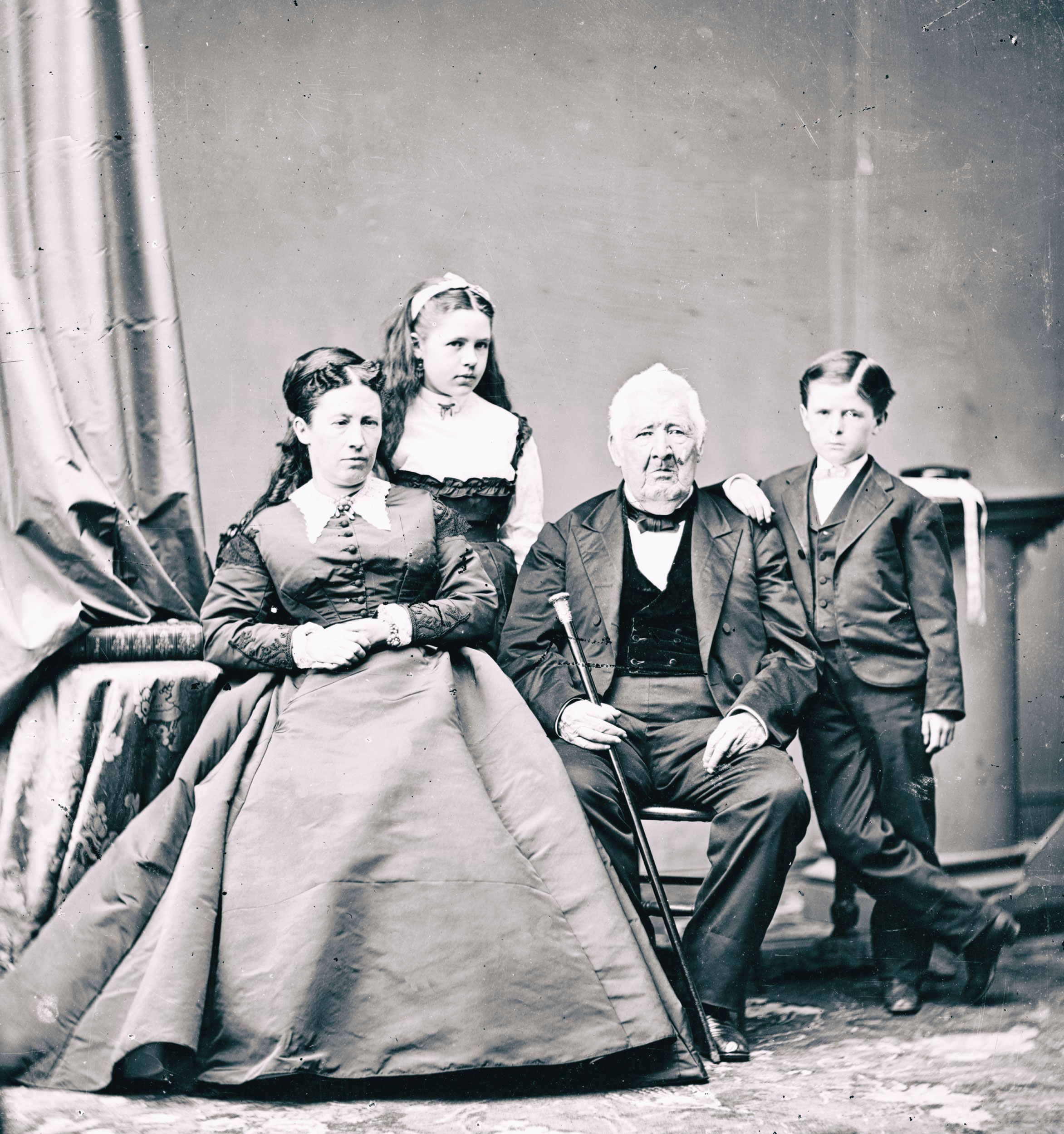
Grant had married into a slaveholding family, and the four enslaved persons whom Julia’s father had deeded to her before the war were emancipated during it. Above: Julia Grant sits alongside her father, Frederick Dent, and her children Ellen and Jesse.
Grant had married into a slaveholding Missouri family, an experience that did nothing to lessen his dislike of slavery. His father-in-law had deeded four enslaved persons to Julia before the war; they were emancipated during the conflict.
In his memoirs, Grant wrote that until the Battle of Shiloh he had believed a decisive Union victory could bring about a sudden Confederate collapse, but afterward “I gave up all idea of saving the Union except by complete conquest.”7 Yet in this letter Grant still holds out hope that the capture of Corinth will end “the hard fighting in the West.” In the short run the Union occupation of the town on May 30, and the onset of brutally hot, dry summer weather, marked the beginning of a lull in the fighting in northern Mississippi that would last until September.
Grant wrote to Julia again a few days after the Confederates retreated from Corinth. (“Col. Lagow” was Clark B. Lagow, one of Grant’s aides; William Wrenshall Smith, Julia’s cousin, was a businessman from Pennsylvania who would visit Grant in November 1863 and write a vivid account of the Battle of Chattanooga8; “Jess” is Jesse Root Grant, the Grants’ four-year-old son.)
Camp Near Corinth, Miss.
June 3d 1862
Dear Julia,
So confidant was I that I should be starting home by tomorrow or next day, with all my staff, that I let Col. Lagow start last evening with W. W. Smith, your cousin. Necessity however changes my plans, or the public service does, and I must yeald.—In a few weeks I hope to be so stationed that you can join me. Where is hard to say. May be Memphis. I wish Mary would come with you if the latter place should be my destiny and bring all the children to remain until after their vacation. She could then return with the three oldest and let them go to school. As soon as I know definately you will be informed when, where and how to join me. Wm Smith will call to see you on his way to Washington Pa and will deliver Jess’ pistol. Tell Jess he must hurt nobody with it but all the little boys may look at it.
I will move up to-morrow into Corinth Corinth is a new town of but about three years growth, neatly built and probably contained about 1500 inhabitants. Now it is desolate the families all having fled long before we got possission, windows broken furniture broken and destroyed, and no doubt the former occupants destitute and among friends but little better off than themselvs. Soldiers who fight battles do not experience half their horrors. All the hardships come upon the weak, I cannot say innofensive, women and children. I believe these latter are wors rebels than the soldiers who fight against us. The latter mostly are heartily tired of the war. This is the evidence of prisoners and deserters who come in at least.
It is now pretty certain that we will take near 10.000 prisoners, 20,000 stand of arms and now doubt a greater number of men have deserted and will be lost to the rebel army than the whole number taken.
Give my love to all at home. Kiss the children for me and accept the same to yourself.
ULYS.9
Grant’s sympathy for the hardships suffered by the inhabitants of Corinth did not prevent him from adopting “hard war” policies in the years to come.
The exact nature and extent of Grant’s drinking problem is a mystery, and likely to remain so. Not surprisingly, his letters to Julia contain very few references to alcohol. Referring to himself and his staff officers, Grant wrote on April 30, 1862: “We are all well and me as sober as a deacon no matter what is said to the contrary.”10 Seven months later he would assume a more defensive tone. (“Bowers” was Captain Theodore S. Bowers, one of Grant’s aides.)
Oxford Miss.
Dec. 13th 1862
Dear Julia,
Bowers is here just returning and I take advantage of the occation to write you a few lines. I did intend moving Hd Quarters south to Springdale to-day but as it looks so much like rain and there is no special necessity for it I will not move until Monday or Teusday next. I have had no letter from home since we left Lagrange nor no letter for you, from any quarter, except one from Ford enclosed in one to me. The bottle of Bourbon sent by Mrs. Davies I sent over to Gen. Sherman. Myself nor no one connected with the Staff ever tasted it.
Kiss Jess for me. Remember me to Lagow.
ULYS.11
What Sherman thought of the bourbon is not known.
 Library of Congress
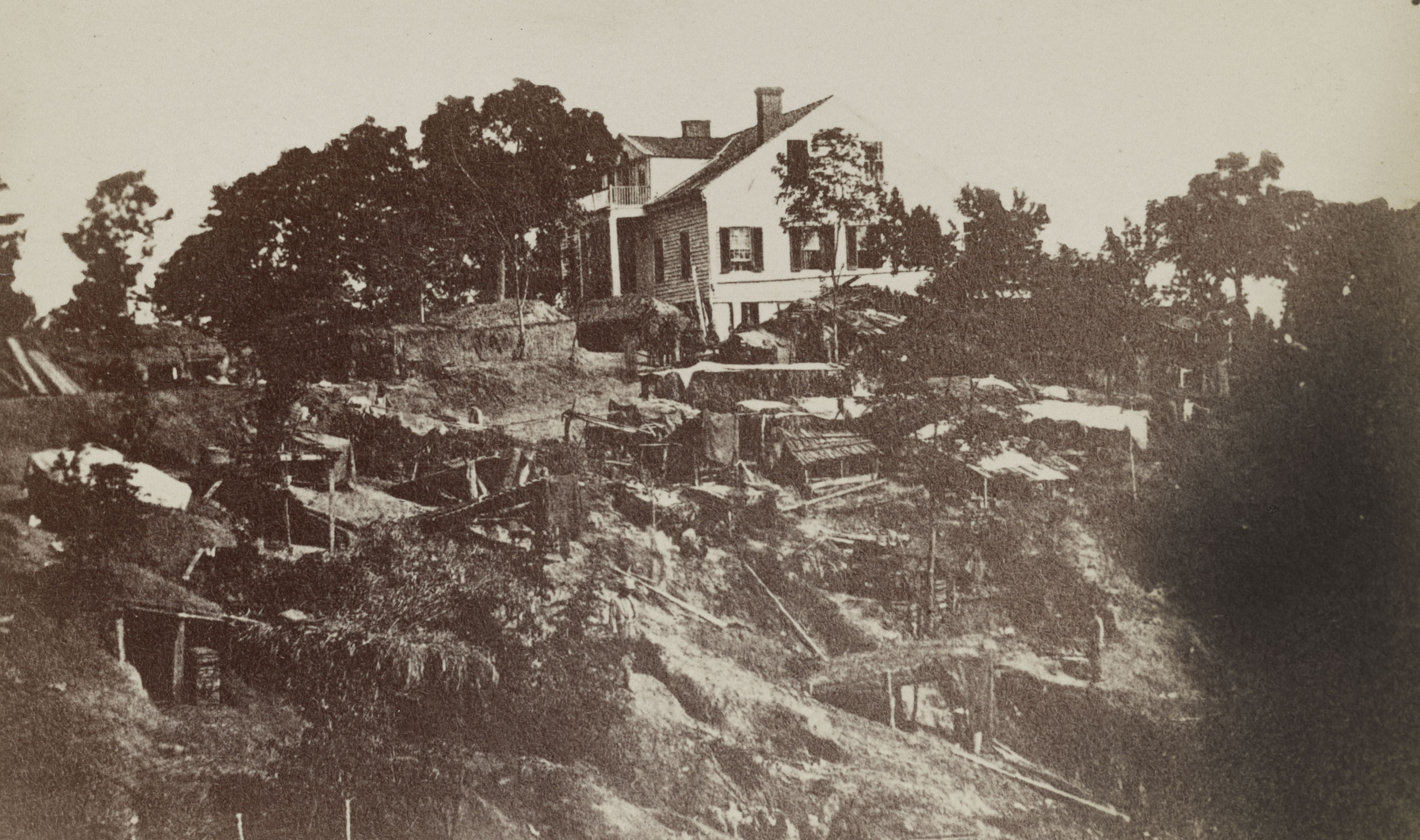
On the heels of his victories at Vicksburg and Chattanooga, Grant was elevated to the rank of lieutenant general in March 1864 and headed east to take command of all Union armies and oversee the defeat of Robert E. Lee. Above: Union trenches as they appeared during the siege of Vicksburg.
President Lincoln told Senator Charles Sumner in January 1863 that he now feared “‘the fire in the rear’—meaning the Democracy, especially at the Northwest—more than our own military chances.”12 Grant wrote about Copperhead disloyalty and how it should be treated from his headquarters along the western bank of the Mississippi:
Before Vicksburg Miss
Feb.y 14th 1863.
Dear Julia,
I have written two or three letters in the last two days and therefore have but little to add now. One thing however was suggested by the letter you forwarded to me from home that I forgot to mention in my letter to you. They say that $82 00 has been received for the children and you speak of sending more by express. Do you not remember that I put fifty-two dollars in a letter that was to have been taken by Col. Carpenter? What ever became of that? I am remarkably well. Hope in the course of ten days more to be making a move. My confidance in taking Vicksburg is not unshaken unless if our own people at home will give their moral support. At present however they are behaving scandalously. A soldier now geting home to Illinois, Indiana or Ohio there is no way of geting him back. Northern secessionest defend and protect them in their desertion. I want to see the Administration commence a war upon these people. They should suppress the disloyal press and confine during the war the noisy and most influential of the advocates.
Kiss the children for me. The same for yourself. I will address my next letter to Covington.
ULYS.13
Victory at Vicksburg in July and Chattanooga in November 1863 elevated Grant to the rank of lieutenant general and the command of all the Union armies in March 1864. Later that month he established his headquarters in the field with Major General George G. Meade’s Army of the Potomac in anticipation of the forthcoming spring campaign. While Sherman advanced into Georgia, Grant would remain in the East and oversee the defeat of General Robert E. Lee’s Army of Northern Virginia. On May 4 the Army of the Potomac crossed the Rapidan River and began marching through the scrub forest and dense undergrowth of the Wilderness of Spotsylvania. Grant and Meade hoped to fight Lee in open country where their numerical superiority in men and artillery could be fully exploited. Instead, Lee chose to attack the Union forces in the Wilderness. After two days of ferocious fighting, Grant moved his troops south toward Spotsylvania Court House.
 Library of Congress
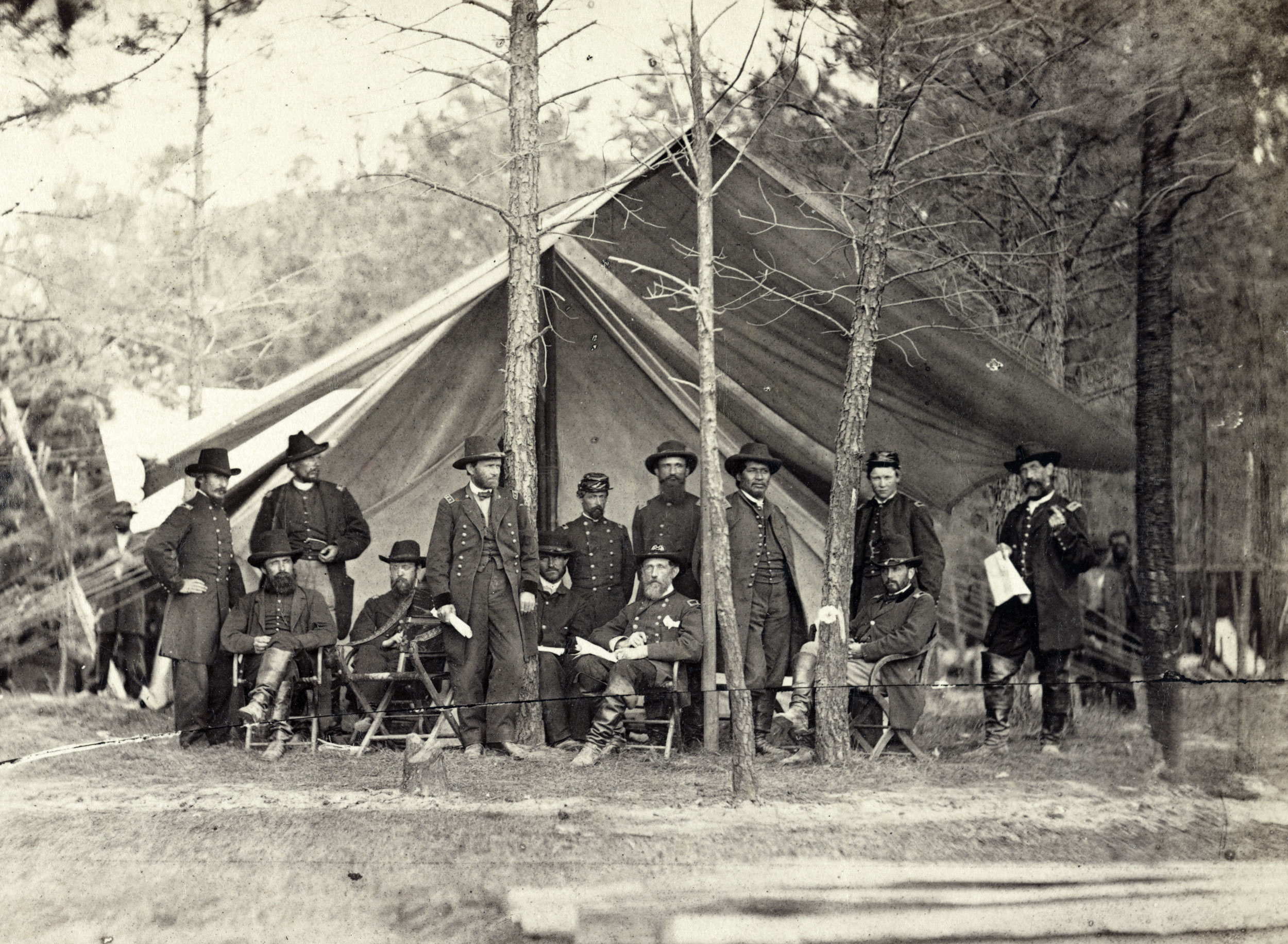
Grant (center, standing against tree) and his staff during the Army of the Potomac’s campaign against the Army of Northern Virginia in the summer of 1864.
Near Spotsylvania C. H. Va.
May 13th 1864
Dear Julia,
The ninth day of battle is just closing with victory so far on our side. But the enemy are fighting with great desperation entrenching themselves in every position they take up. We have lost many thousand men killed and wounded and the enemy have no doubt lost more. We have taken about eight thousand prisoners and lost likely three thousand. Among our wounded the great majority are but slightly hurt but most of them will be unfit for service in this battle. I have reinforcements now coming up which will greatly encourage our men and discourage the enemy correspondingly.
I am very well and full of hope. I see from the papers the country is also hopeful.
Remember me to your father and Aunt Fanny. Kisses for yourself and the children. The world has never seen so bloody or so protracted a battle as the one being fought and I hope never will again. The enemy were really whipped yesterday but their situation is desperate beyond anything heretofore known. To loose this battle they loose their cause. As bad as it is they have fought for it with a gallantry worthy of a better.
ULYS.14
 Library of Congress
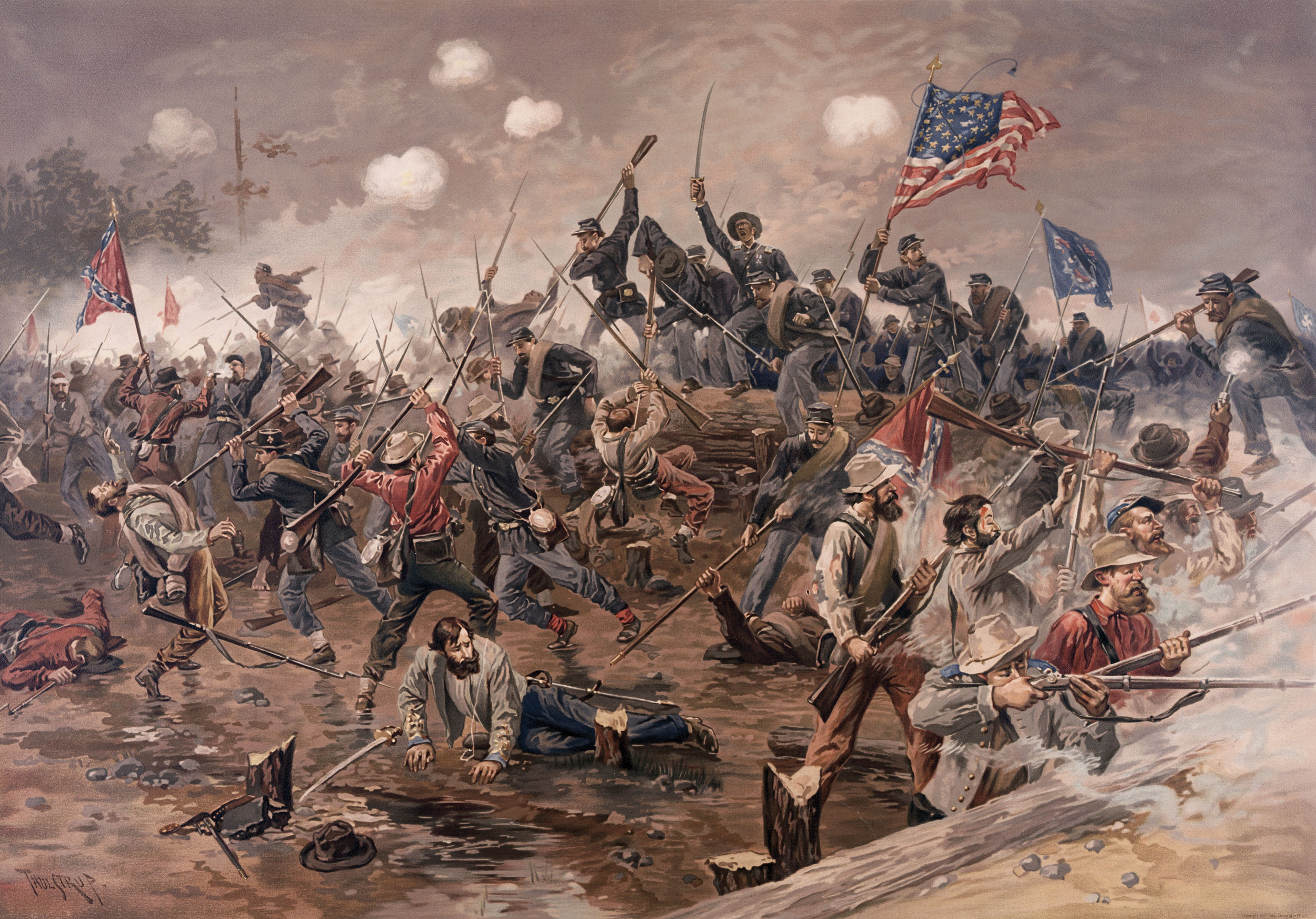
“We have lost many thousand men killed and wounded and the enemy have no doubt lost more,” Grant wrote to his wife the day after the bloody Union assault on the “Mule Shoe” salient in the Confederate lines near Spotsylvania Court House (depicted above) on May 12, 1864. Still, he continued, “I am very well and full of hope. I see from the papers the country is also hopeful.”
Grant wrote this letter the day after the mass Union assault on the “Mule Shoe” salient in the Confederate lines near Spotsylvania Court House began a nightmarish close-quarters struggle that ended 22 hours later in a renewed stalemate between the two armies. He seems in awe of the ferocity of the battle, almost as if he has unleashed a force unto itself that he can no longer control. Grant’s remarks on the “gallantry worthy of a better” prefigure the Appomattox chapter of his memoirs, where he described the Army of Northern Virginia as “a foe who had fought so long and valiantly” for a cause Grant believed was “one of the worst for which a people ever fought.”15
Nineteen days later Grant wrote to Julia as he awaited news from the front lines, which had moved south to Cold Harbor. Few of his Civil War letters carry such a sense of the immediacy of battle as this one, which characteristically shifts between the sound of gunfire and family news. (Little “Nellie” is their eight-year-old daughter, Ellen, who had accompanied her mother to the recent New York Sanitary Fair. Alexander Sharp was the husband of Julia’s sister Ellen; “Fred.” was Julia’s brother Lieutenant Colonel Frederick T. Dent, who was serving on Grant’s staff; Grant’s brother Orvil was at the Union supply depot at White House, Virginia.)
June 1st 1864
Dear Julia,
There has been a very severe battle this afternoon and as I write, now 9 O’clock at night firing is still continued on some parts of the battle line. What the result of the days fighting has been I will know but little about before midnight and possibly not then. The rebels are making a desperate fight and I presume will continue to do so as long as they can get a respectable number of men to stand.
I send pay accounts for May to Washington by Col. Bowers, who starts in the morning, with directions to send you $800 00 of it. April pay I sent all to Jones in liquidation of my indebtedness. In June I hope to pay all up.—I see by the papers dear little Nellie acquitted herself very handsomely at the Sanitary Fair. I would like very much to see you and the children but cannot hope to do so until this Campaign is over. How long it will last is a problem. I can hardly hope to get through this month.—With the night booming of Artillery and musketry I do not feel much like writing so you must excuse a short letter this time. Dr. Sharp is with me apparently enjoying himself very much. Fred. has been suffering intensely for several days with rheumatism. He has to lay upon his back in the ambulance unable to turn himself. I think he will be well in a day or two. Orvil Grant is at the White House and will probably be here to morrow.
My love to all. Kisses for yourself and the children.
ULYS.16
The Union offensive at Cold Harbor on the evening of June 1 gained some ground at the cost of 2,000 casualties, but failed to break through the Confederate defensive positions. Grant would write to Julia again from Cold Harbor, but did not mention the failed assault on June 3, which cost the Union another 7,000 men killed, wounded, or missing and became the only attack he expressed regret for ordering.
Unable to break Lee’s lines at Cold Harbor, Grant moved the army south toward Petersburg, a vital Confederate rail depot and supply center, and succeeded in pinning the Army of Northern Virginia down in a siege of the city. For months, the opposing sides dug miles of trench lines and periodically clashed in battles that brought no decision.
In late March 1865 Grant sent this telegram to Julia as the Army of the Potomac prepared to launch another offensive against the western flank of Lee’s Petersburg defenses. (“Mrs. Rawlins” was Mary Rawlins, the wife of John A. Rawlins, Grant’s assistant adjutant general since 1861.)
By Telegraph from Hd Qurs A P Mar 30 1865
To Mrs Grant
I wrote to you today—Tell Mrs Rawlins that the Genl is not going much in the rain.
This weather is bad for us but it is Consoling to know that it rains on the enemy as well
U S GRANT
Lt Genl17
One wonders if the former Army of the Potomac commander George B. McClellan would have made the same observation about the rain falling on both sides. Grant’s passing remark calls to mind the passage in his memoirs where he recalled discovering an abandoned Confederate encampment in Missouri in July 1861 and realizing that his opponent “had been as much afraid of me as I had been of him.”18 Part of what made Grant a great commander was his awareness that the afflictions and difficulties of war are shared by both sides.
Grant did not write to Julia about Lee’s surrender at Appomattox Court House on April 9, probably because he anticipated that he would see her in person in the near future. This letter, written the day Petersburg finally fell to the Army of the Potomac, gives us a glimpse of Grant in a moment of triumph:
Apl. 2d 1865
Dear Julia,
I am now writing from far inside of what was the rebel fortifications this morning but what are ours now. They are exceedingly strong and I wonder at the sucsess of our troops carrying them by storm. But they did do it and without any great loss. We have captured about 12,000 prisoners and 50 pieces of Artillery. As I write this news comes of the capture of 1000 more prisoners. Altogether this has been one of the greatest victories of the war. Greatest because it is over what the rebels have always regarded as their most invincable Army and the one used for the defince of their capitol. We may have some more hard work but I hope not.
Love and kisses for you and Jess.
ULYS.19
A few weeks later Grant would be sent to North Carolina on an “important duty,” as he calls it in the next letter: ordering Sherman to withdraw the surrender agreement he had made with General
Joseph E. Johnston that offered major political concessions to the Confederates. Before leaving Grant reflected on the Union’s ultimate victory.
Apl. 21st 1865
Dear Julia,
It is now nearly 11 O’Clock at night and I have received directions from the Sec. of War, and President, to start at once for Raleigh North Carolina. I start in an hour. Gen. Meigs, Maj. Leet, Capt. Dunn, (Dunn is Capt. and Asst. Adj. Gn.) and Major Hudson go with me. I will write to you from Morehead City or New Berne.—I do hope you will have moved to Phila by the time I return. I can run up to Philadelphia easily; but to get to Burlington I have to give notice of my going to secure a train to take me the last end of the way.
I find my duties, anxieties, and the necessity for having all my wits about me, increasing instead of diminishing. I have a Herculean task to perform and shall endeavor to do it, not to please any one, but for the interests of our great country that is now begining to loom far above all other countries, modern or ancient. What a spectacle it will be to see a country able to put down a rebellion able to put half a Million of soldiers in the field, at one time, and maintain them! That will be done and is almost done already. That Nation, united, will have a strength which will enable it to dictate to all others, conform to justice and right. Power I think can go no further. The moment conscience leaves, physical strength will avail nothing, in the long run.
I only sat down to write you that I was suddenly required to leave on important duty, and not feeling willing to say what that duty is, you must await my return to know more. Love and kisses for you and the children.
U. S. GRANT20
Which nations did Grant envision dictating “conform to justice and right” to? An obvious candidate is the France of Napoleon III, whose opportunistic intervention in Mexico, which had begun in 1862, Grant considered unjust and outrageous.
Once in North Carolina, Grant found time to write to Julia about conditions in the South. It is not hard to see in this letter the general who, at Appomattox Court House, had permitted the soldiers of Lee’s army to take their horses and mules home for the planting.
In the Field Raleigh Apl. 25th 1865
Dear Julia,
We arrived here yesterday and as I expected to return to-day did not intend to write until I returned. Now however matters have taken such a turn that I suppose Sherman will finish up matters by to-morrow night and I shall wait to see the result.
Raleigh is a very beautiful place. The grounds are large and filled with the most beautiful spreading oaks I ever saw. Nothing has been destroyed and the people are anxious to see peace restored so that further devastation need not take place in the country. The suffering that must exist in the South the next year, even with the war ending now, will be beyond conception. People who talk now of further retalliation and punishment, except of the political leaders, either do not conceive of the suffering endured already or they are heartless and unfeeling and wish to stay at home, out of danger, whilst the punishment is being inflicted.
Love and Kisses for you and the children,
ULYS.21
The next day Johnston signed surrender terms similar to those Grant had given Lee. And for the next 12 years, as commanding general of the army and then as president, Grant would struggle with the war’s legacy, a struggle that continues to this day.
Derick Schilling is an associate editor at Library of America.
Notes
1. Mark Twain: Collected Tales, Sketches, Speeches, & Essays, 1852–1890, ed. by Louis J. Budd (New York, 1992), 907.
2. Abraham Lincoln: Speeches and Writings, 1859–1865, ed. by Don E. Fehrenbacher (New York, 1989), 478, 696.
3. Poets of the Civil War, ed. by J.D. McClatchy (New York, 2005), 59.
4. Papers of Ulysses S. Grant, ed. by John Y. Simon, volume 2 (Carbondale, IL, 1969), 23–24.
5. Papers of Ulysses S. Grant, ed. by John Y. Simon, volume 4 (Carbondale, IL, 1972), 284.
6. Papers of Ulysses S. Grant, ed. by John Y. Simon, volume 5 (Carbondale, IL, 1973), 123–24.
7. Ulysses S. Grant: Memoirs and Selected Letters, ed. by Mary Drake McFeely and William S. McFeely (New York, 1990), 246.
8. The Civil War: The Third Year Told by Those Who Lived It, ed. by Brooks D. Simpson (New York, 2013), 569–581.
9. Simon, Papers of Ulysses S. Grant, 5: 137–138.
10. Simon, Papers of Ulysses S. Grant, 5: 102–103, reprinted in My Dearest Julia (New York, 2018), 109–111.
11. Papers of Ulysses S. Grant, ed. by John Y. Simon, volume 7 (Carbondale, IL, 1979), 23–24.
12. Simpson, The Civil War: The Third Year Told by Those Who Lived It, 39.
13. Simon, Papers of Ulysses S. Grant, 7, 324–325.
14. Papers of Ulysses S. Grant, ed. by John Y. Simon, volume 10 (Carbondale, IL, 1982), 443–444.
15. McFeely and McFeely, Ulysses S. Grant: Memoirs and Selected Letters, 735.
16. Papers of Ulysses S. Grant, ed. by John Y. Simon, volume 11 (Carbondale, IL, 1984), 5.
17. Papers of Ulysses S. Grant, ed. by John Y. Simon, volume 14 (Carbondale, IL, 1985), 272–273.
18. McFeely and McFeely, Ulysses S. Grant: Memoirs and Selected Letters, 164.
19. Simon, Papers of Ulysses S. Grant, 14, 330.
20. Ibid., 428–429.
21. Ibid., 433.
Related topics: Ulysses S. Grant