 Library of Congress
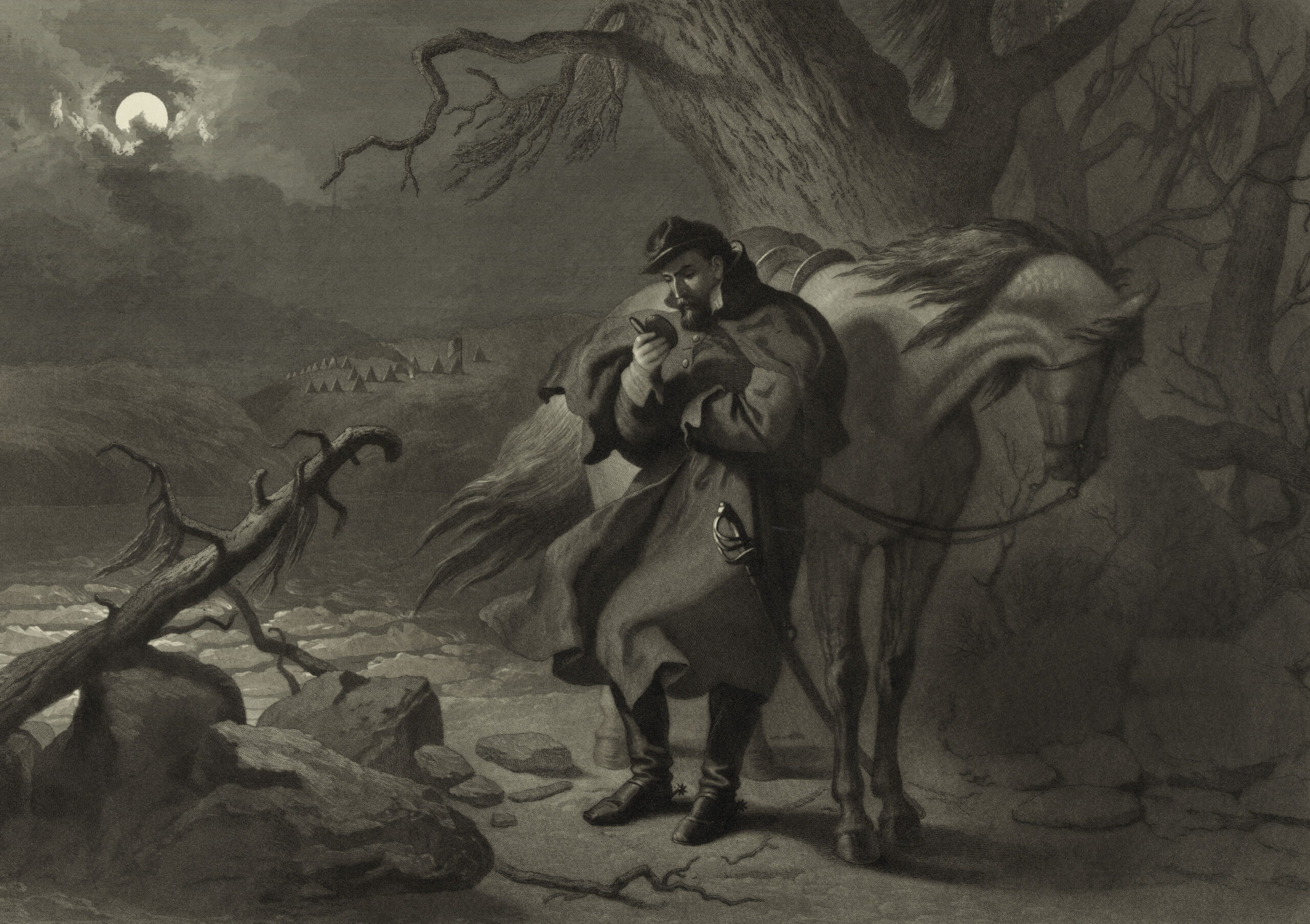
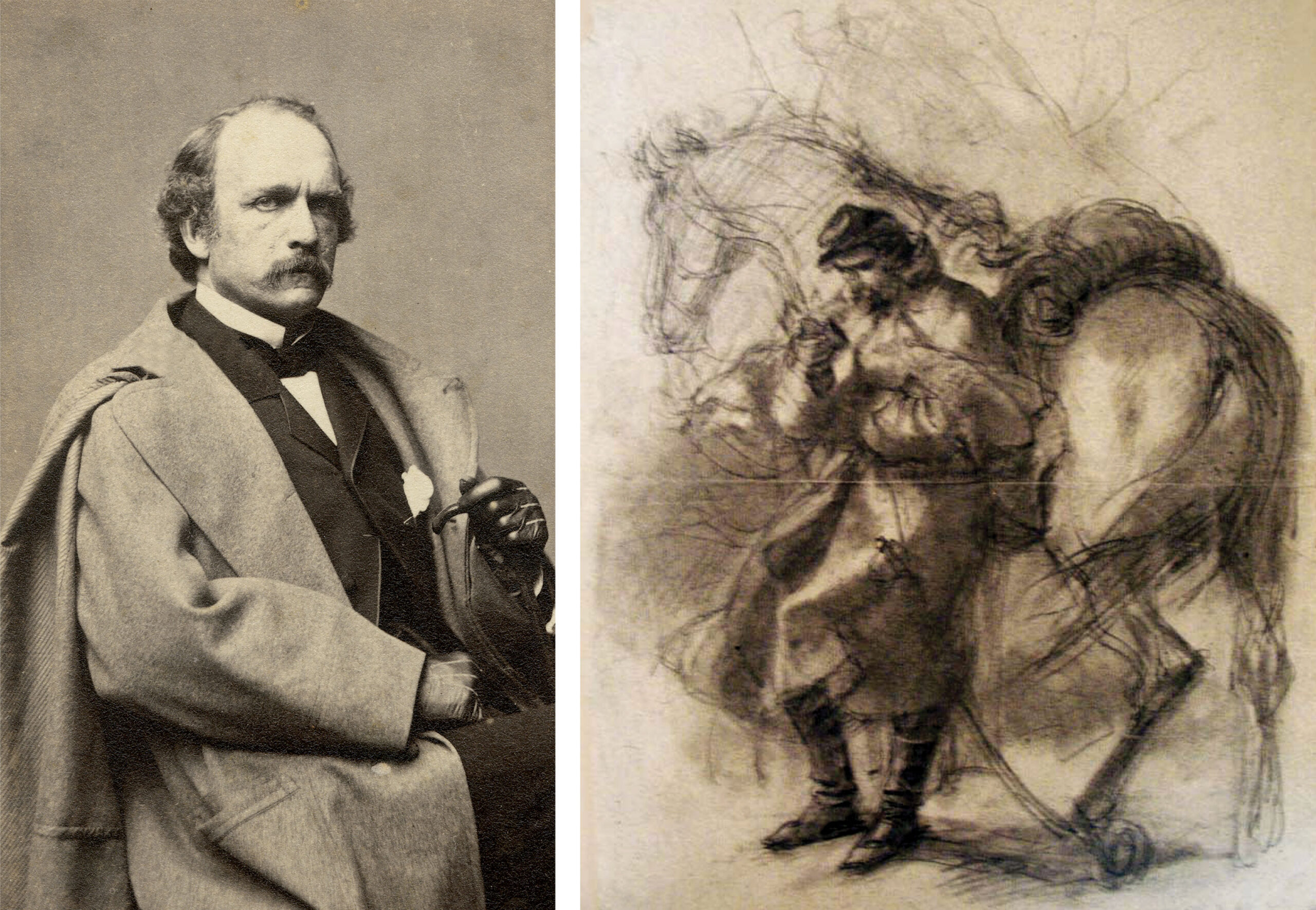
John Sartain based this 1866 engraving of a lone Union soldier, titled “Thinking of Home,” on a sketch (shown below) by F.O.C. Darley.
One of the first things that strikes you about his sketches is their wonderful clearness of idea…. Nothing is left to chance; all is certainty. He never guesses, he knows.” So wrote The National Magazine in an 1850s profile of artist Felix Octavius Carr “F.O.C.” Darley. Born in Philadelphia in 1822, Darley taught himself to sketch at an early age, and his work soon became known among the city’s publishers, who hired him to illustrate a number of volumes. In 1848, the young artist moved to New York, where his reputation continued to grow as his illustrations appeared in a variety of notable magazines and books, including the novels of Washington Irving and James Fennimore Cooper.
 Jeff Kraus Collection (antiquephotographics.com); Graphic Arts Collection, Department of Rare Books and Special Collections, Princeton University Library
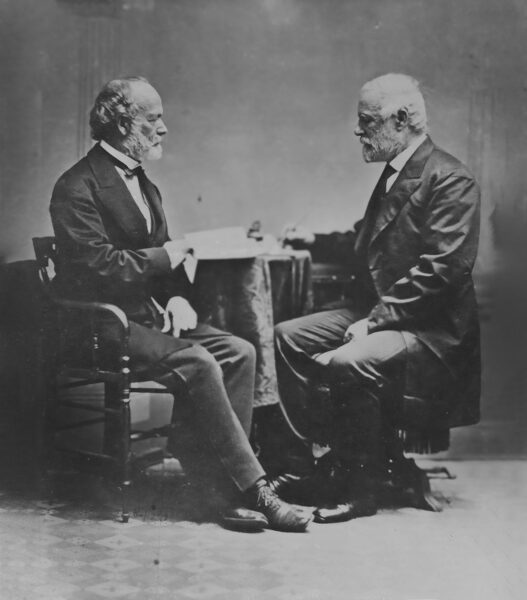
F.O.C. Darley (left) and his sketch on which John Sartain based his work “Thinking of Home.”
By the outbreak of the Civil War, Darley was widely considered to be the finest illustrator in the country. Unlike fellow artists like Winslow Homer, Alfred Waud, and Edwin Forbes, Darley did not head to the front lines in 1861 to sketch the Union armies and their battles. The conflict did, however, become a prominent subject of his work, and his dramatic depictions of the struggle and its participants—examples of which are highlighted on the following pages—appeared widely, from the pages of Civil War histories to soldiers’ certificates and bank notes.
Taking in Darley’s work, it is easy to understand why one 19th-century art critic thought the illustrator must have sketched with a “magic pencil.” Darley died at his home in Delaware in 1888.
Death of Union brigadier general Nathaniel Lyon at the Battle of Wilson’s Creek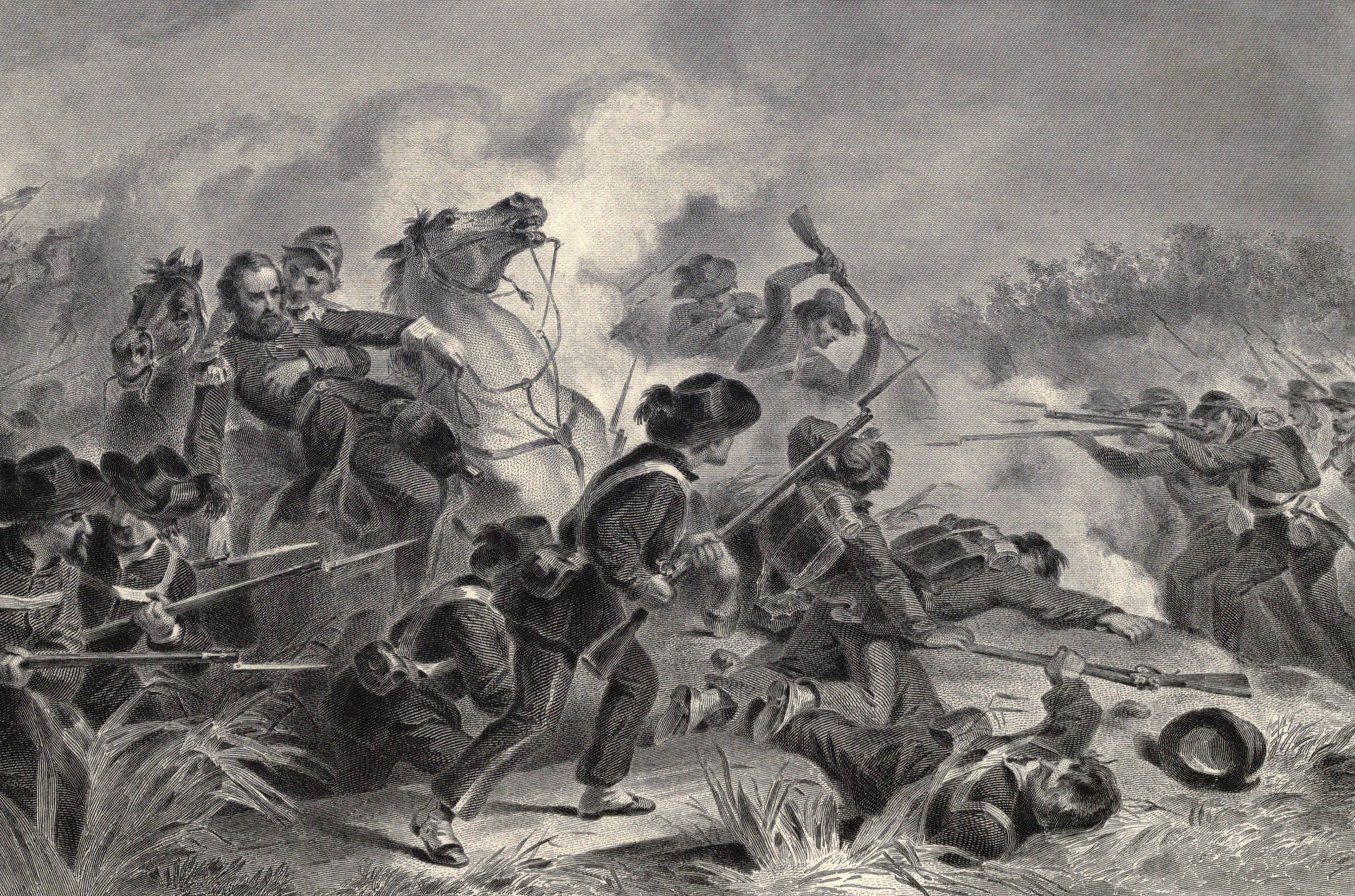 The War with the South
Engravings based on Darley’s sketches of early war battle scenes adorned the pages of the multivolume work The War with the South, the first volume of which was published before the conflict had ended. Shown here are Darley’s renditions of (above) the death of Union brigadier general Nathaniel Lyon at the Battle of Wilson’s Creek; (next three below in order) the demise of Confederate brigadier general Felix Zollicoffer at the Battle of Mill Springs; the chaotic Union retreat at the Battle of Bull Run; and the rescue of Union colonel Edward Baker’s body during the Battle of Ball’s Bluff.
The demise of Confederate brigadier general Felix Zollicoffer at the Battle of Mill Springs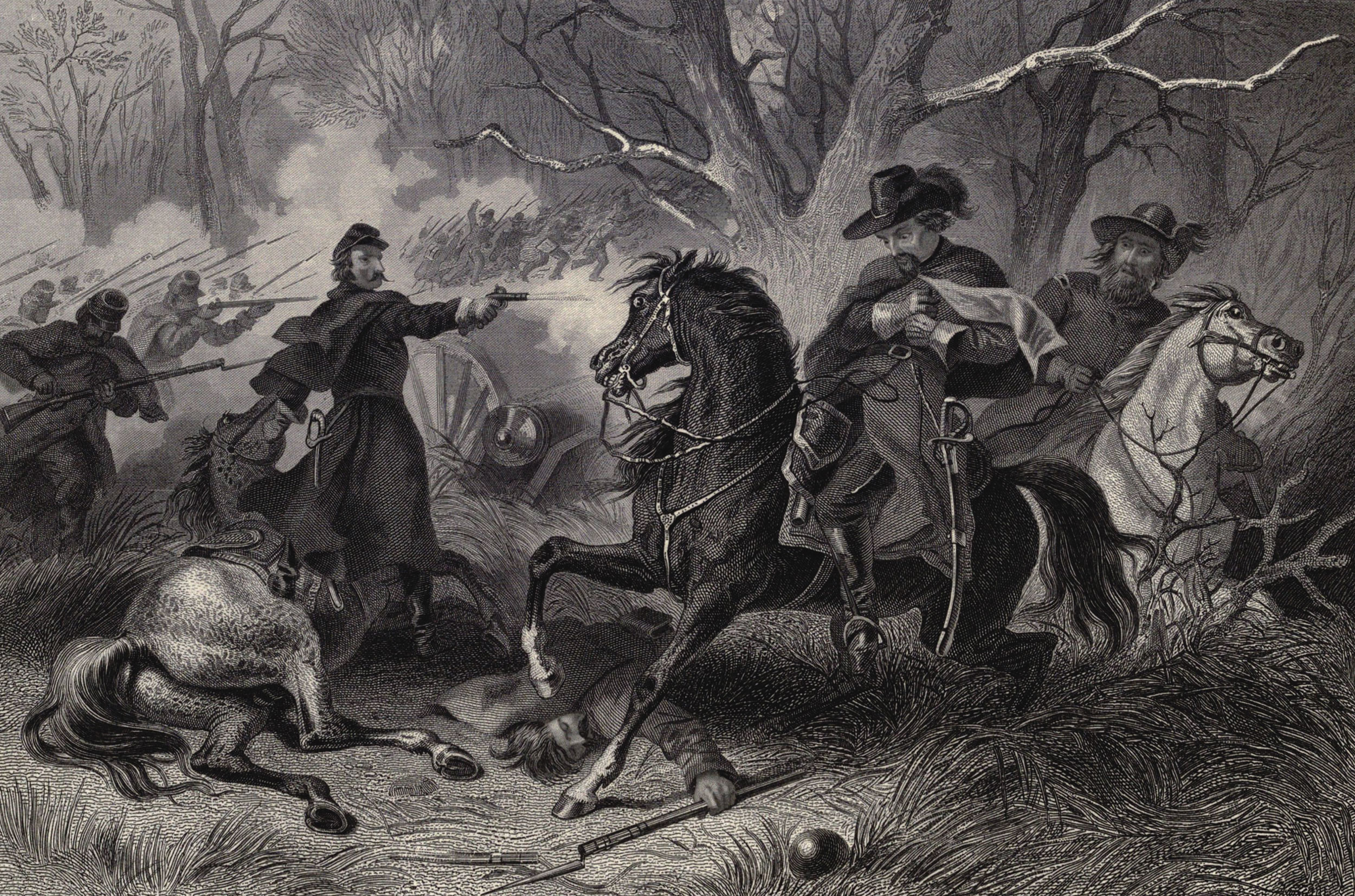 The War with the South
Union retreat at the Battle of Bull Run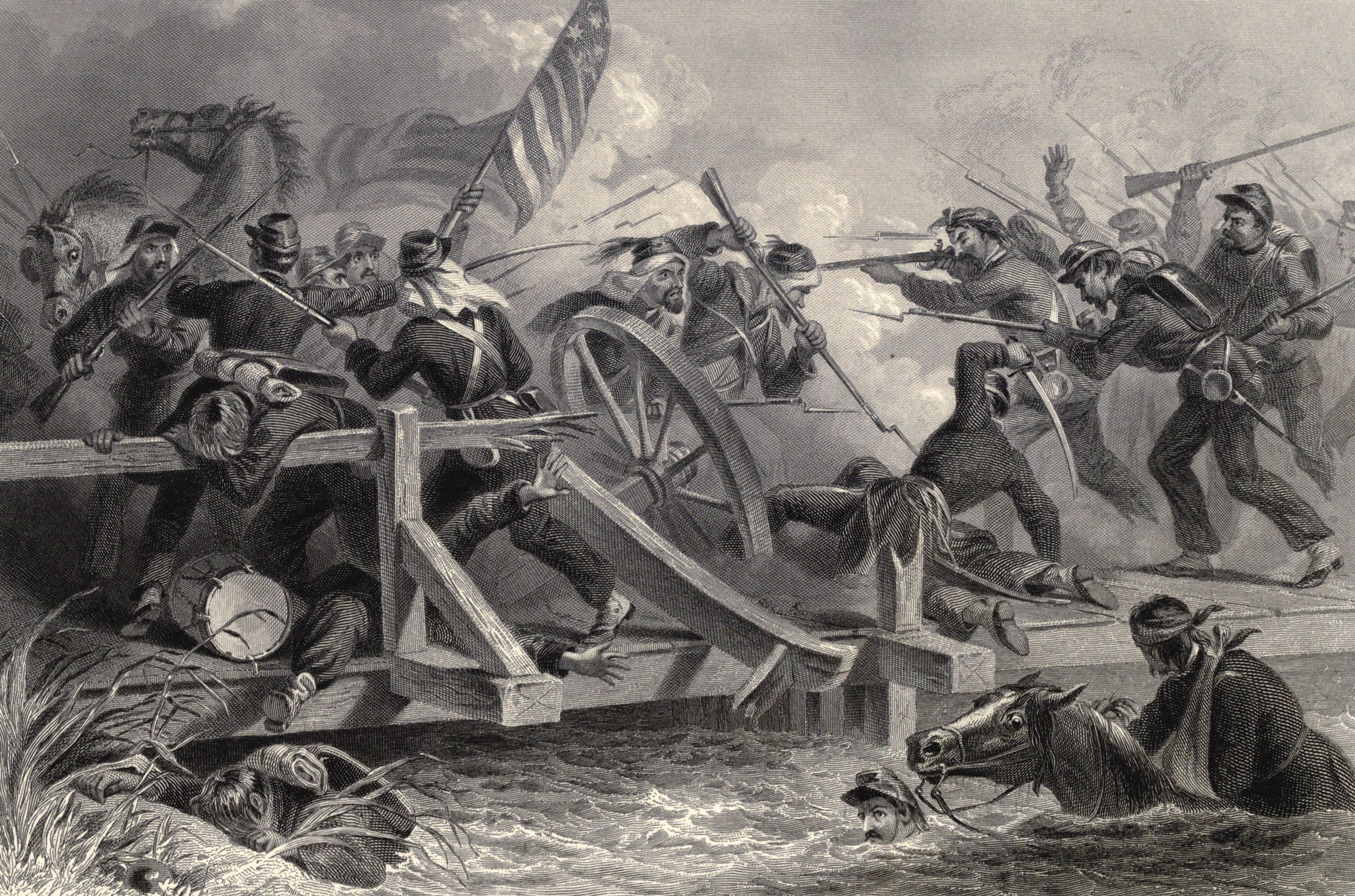 The War with the South
Rescue of Union colonel Edward Baker’s body during the Battle of Ball’s Bluff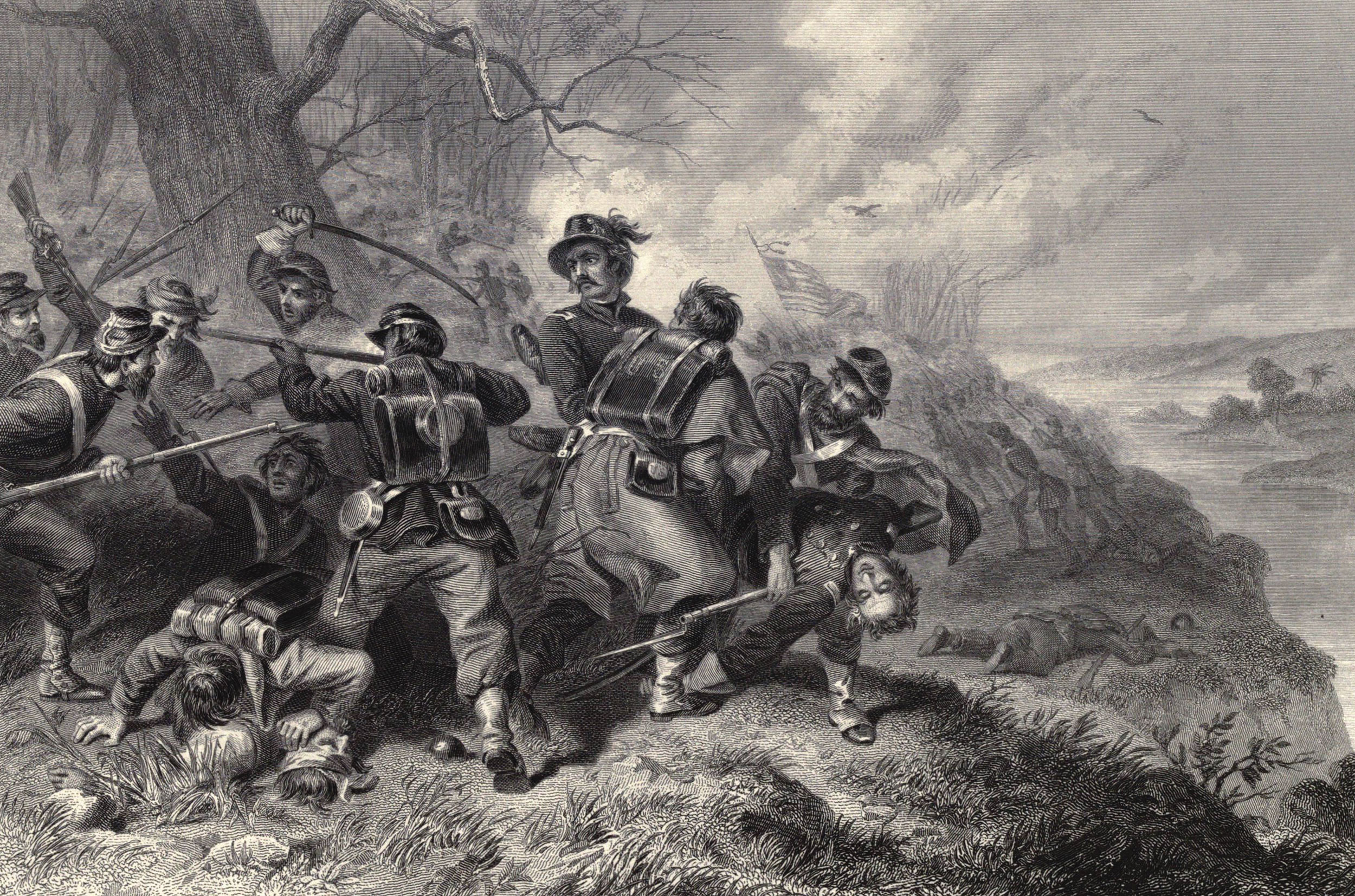 The War with the South
Also appearing in The War with the South was this engraving (below) of a Darley scene depicting the moment attacking forces under the overall command of Brigadier General Ambrose Burnside overran the Confederate defenses during the February 1862 Battle of Roanoke Island, a decisive Union victory.
Engraving of a Darley scene depicting the moment attacking forces under the overall command of Brigadier General Ambrose Burnside overran the Confederate defenses during the February 1862 Battle of Roanoke Island.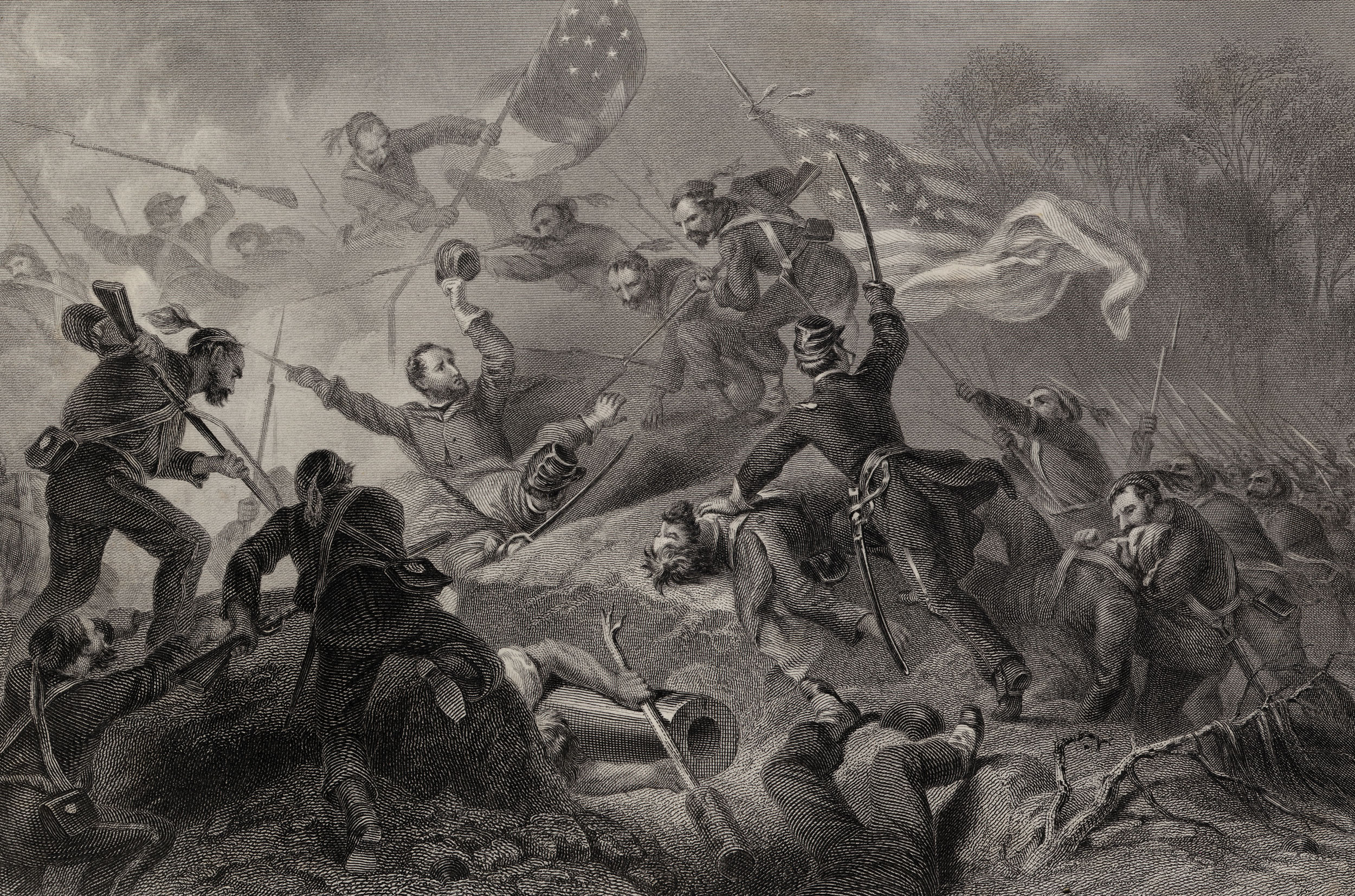 The War with the South
Darley’s The Trophy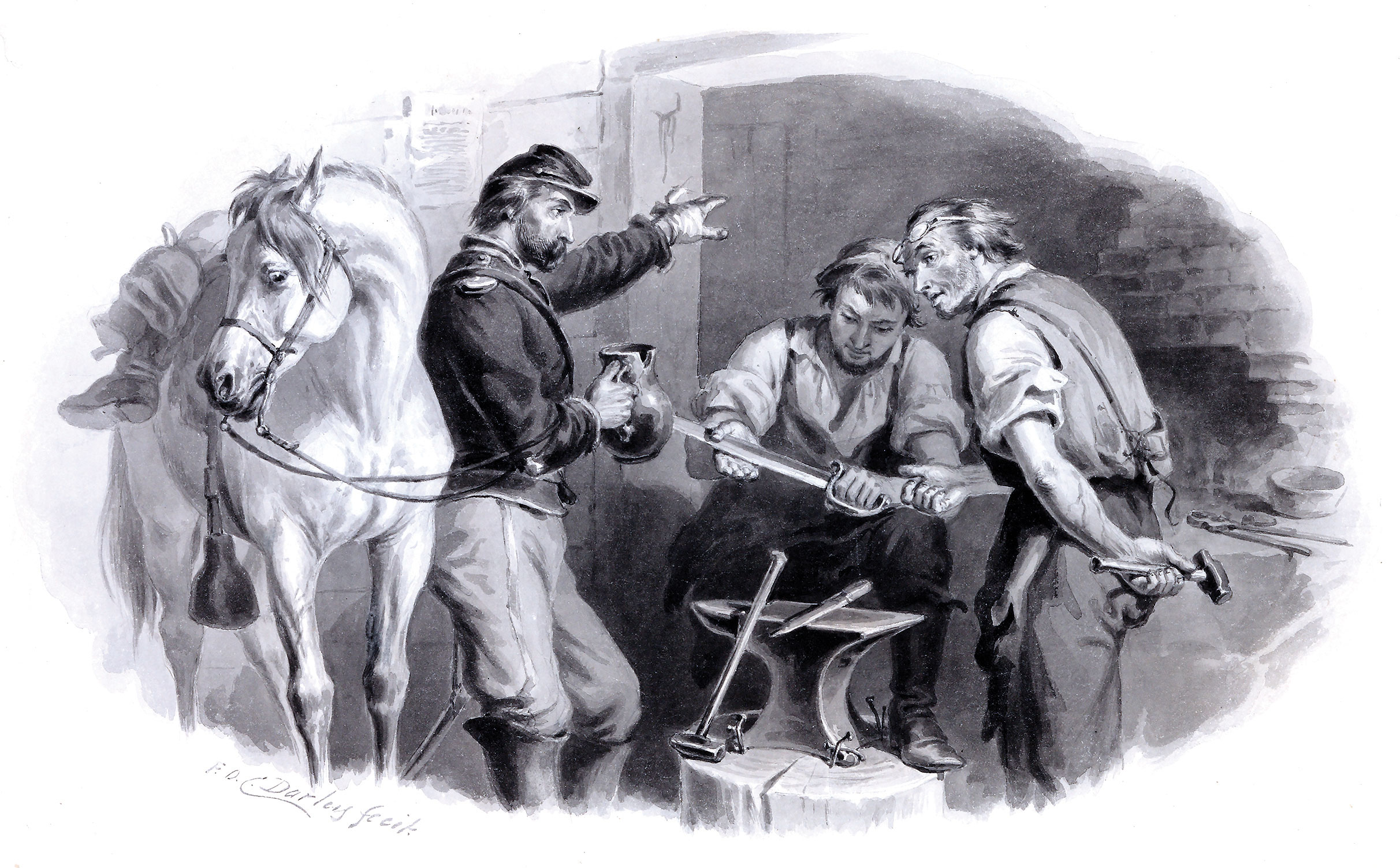 Collection of Mark Tomasko
Darley’s The Trophy (above), in which a Union soldier shows his sword to a pair of blacksmiths, was engraved for use on both a Union military scrip produced by the Continental Bank Company (below, lower right) and—with a sign that reads “proclamation of the Irish republic” added to the upper left—an Irish National Bonds certificate issued by the Fenian Brotherhood. (below, upper right)
This document (below left)—a “Testimonial of Honor in grateful remembrance of the Courage and Patriotism … displayed in the late War for the suppression of rebellion and the preservation of Constitutional Liberty”—issued to Rhode Island Civil War veterans included engravings of Darley’s works Volunteer’s Return in the upper left portion, and Volunteer’s Departure in the upper right portion.
Three Civil War era documents featuring illustrations by FOC Darley. Collection of Mark Tomasko (3)
Darley’s illustrations—many of them depicting non-military scenes—appeared throughout My Story of the War, Civil War nurse Mary Livermore’s 1888 memoir of her experiences during the conflict.
African-American refugees in search of freedom pass by a Union soldier to board a boat on the Mississippi River.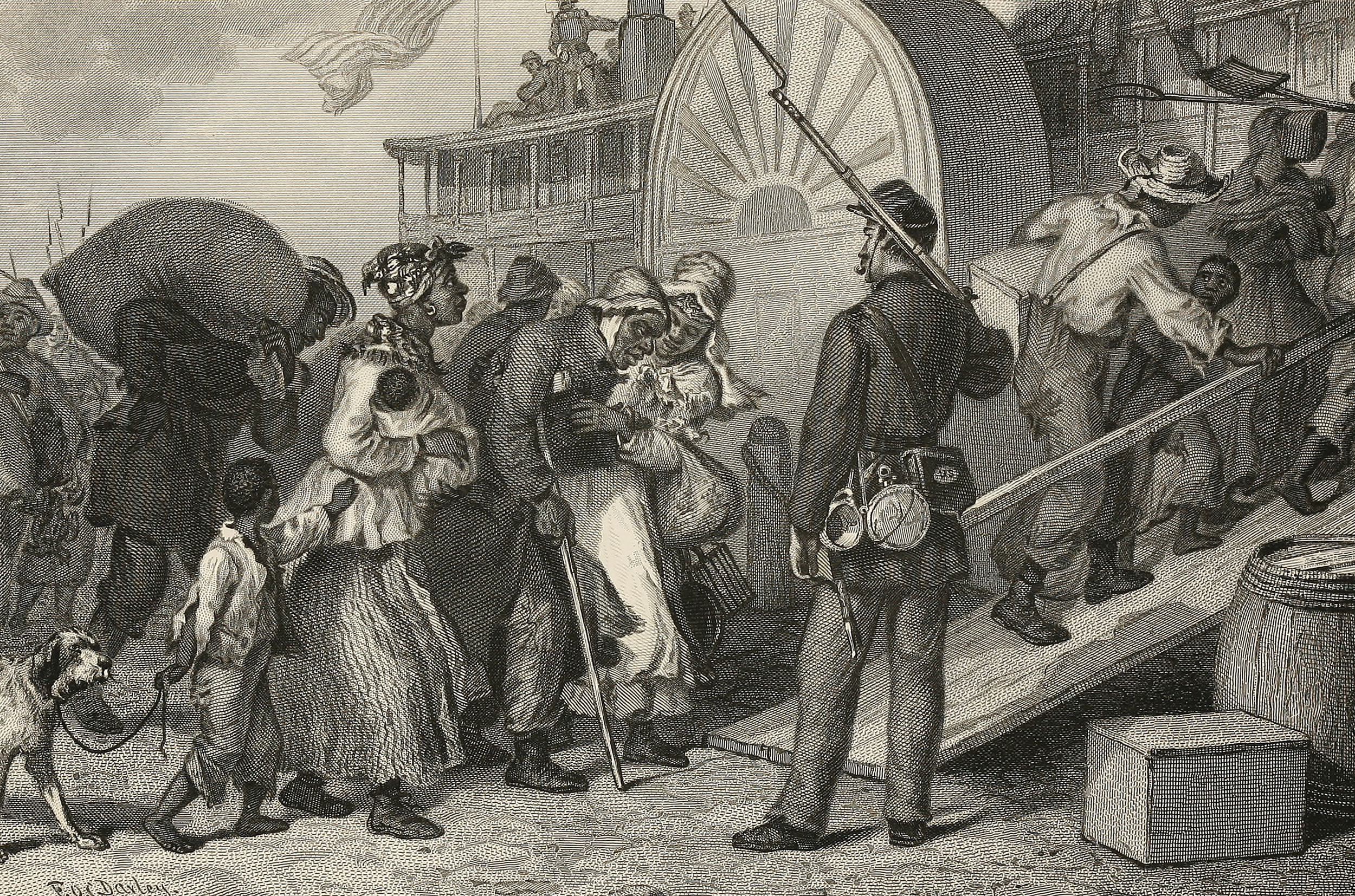 My Story of the War
Above: African-American refugees in search of freedom pass by a Union soldier to board a boat on the Mississippi River in 1862. Below: Famed nurse Mary Ann Bickerdyke comforts a wounded soldier by lantern light on the battlefield of Fort Donelson.
Mary Ann Bickerdyke comforts a wounded soldier by lantern light on the battlefield of Fort Donelson.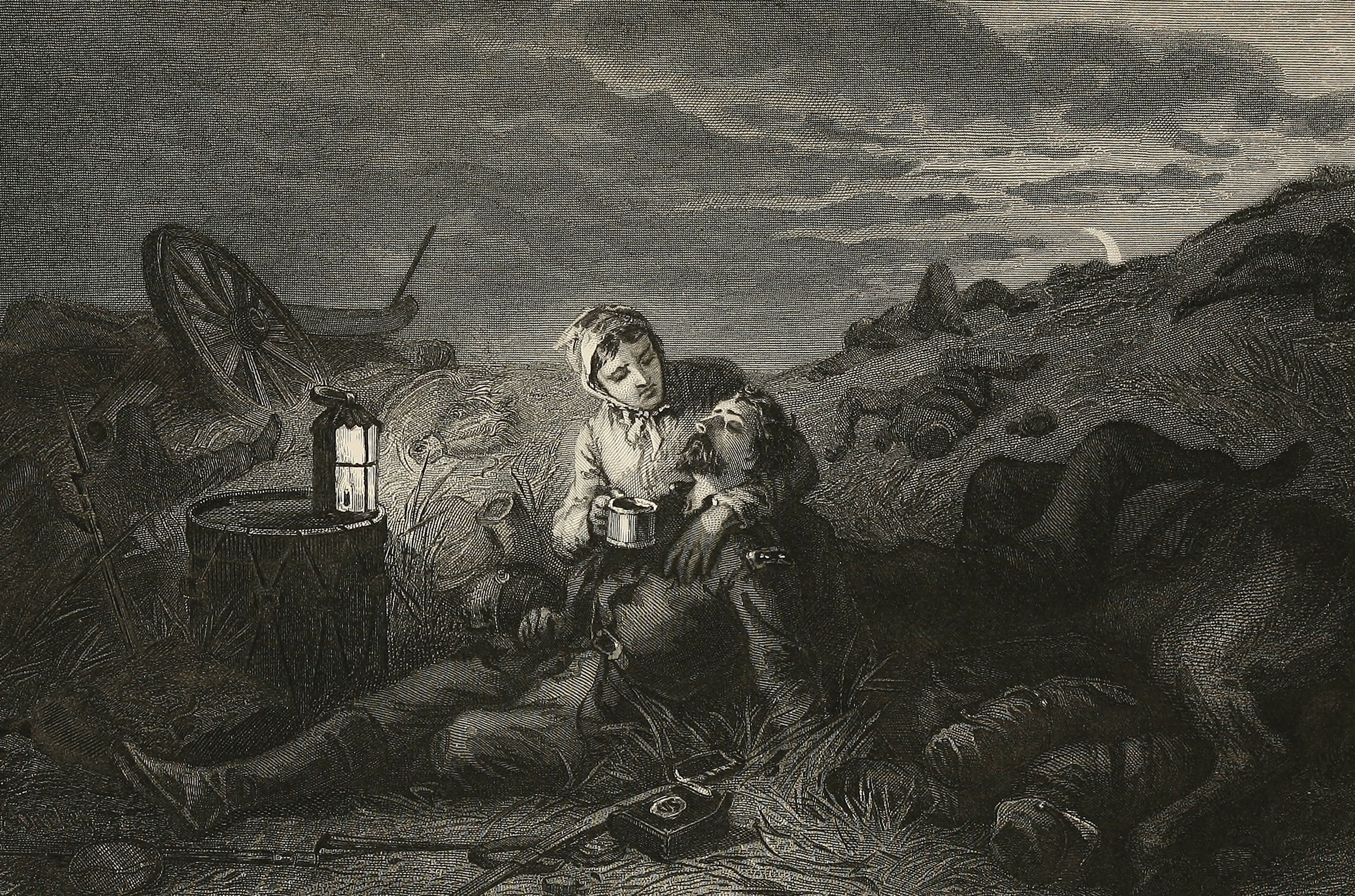 My Story of the War
This Darley illustration (below) appeared alongside a poem titled “The Little Drummer” in the 1864 book A Selection of War Lyrics. One verse reads: “Upon his comrade’s shoulder/They lifted him so grand,/With his dusty drum before him,/And his drum-sticks in his hand!/To the fiery front of battle,/That nearer, nearer drew,—/And evermore he beat, and beat,/His rat-tat-too!”
The Little Drummer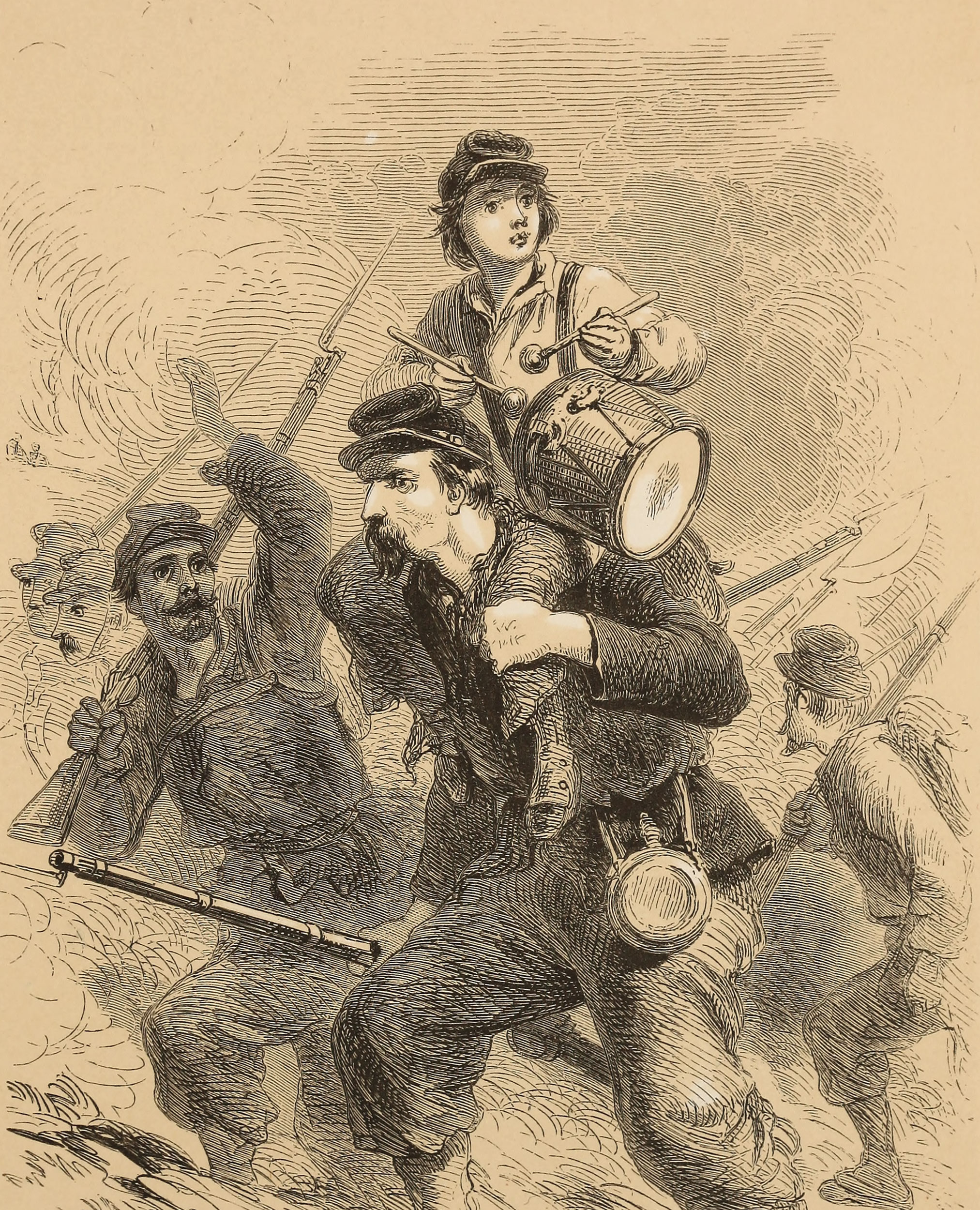 A Selection of War Lyrics
Sources
The National Magazine Vol. IX (July–December 1865); Graham’s American Monthly Magazine of Literature and Art Vol. XLV (1854); Mark D. Tomasko, Images of Value: The Artwork Behind US Security Engraving, 1830s–1980s (New York, 2017).