James Montgomery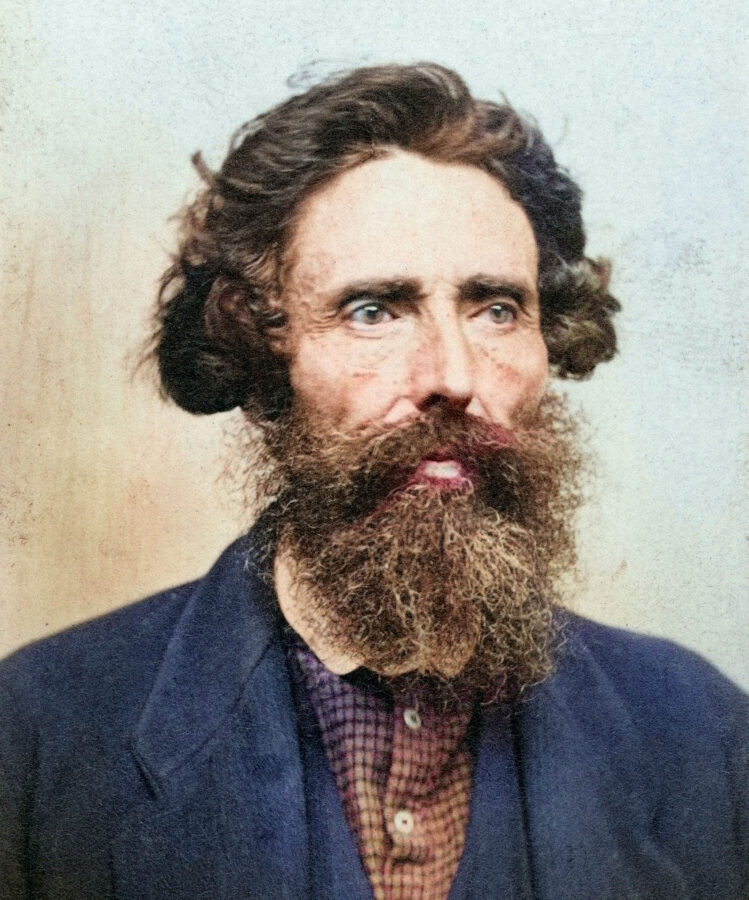 Kansas Historical Society, colorized by CWM
On June 11, 1863, Union troops marched into Darien, Georgia, a wealthy small town south of Savannah on the Atlantic coast. Almost all its 500 inhabitants had evacuated to the safety of a nearby area called “the Ridge.” A company of Confederate troops was close, but they were no match for the Yankees, which included Colonel James Montgomery’s 2nd South Carolina Infantry (consisting of former slaves), elements of the 3rd Rhode Island Artillery, and a company of men under Robert Gould Shaw, colonel of the 54th Massachusetts Infantry. After looting what Shaw called “a beautiful little town” of anything the troops could carry away, Federal soldiers—on Montgomery’s orders—put it to the torch. Montgomery told Shaw he was burning Darien because secession must be “swept away by the hand of God, like the Jews of old.”1 Shaw was shocked, but had no choice but to aid him. The destruction of Darien was nearly total.
In that season of 1863, the burning of Darien symbolized how the war had changed and how destructive it had become. Here was a Union commander using black troops to loot and destroy a Rebel town built on plantation wealth. The burning of Darien, as one historical marker today notes, was “one of the most controversial events of the Civil War.”2 For Confederates, Darien’s fate was the Slave Power’s worst fear made real and foreshadowed worse to come. Some northerners, inside and outside the army, applauded Montgomery’s actions, while others condemned him. The destruction of Darien horrified Democrats and conservative Republicans. Radicals thought him a hero, but his actions revealed clear differences among abolitionists about the use of violence to eradicate slavery.
James Montgomery proved one of the war’s most controversial figures. His raid on Darien enflamed public opinion, setting off an intense debate about the limits of “civilized” warfare and how far Union armies should go to defeat the rebellion.
 Tri-Star/Photofest
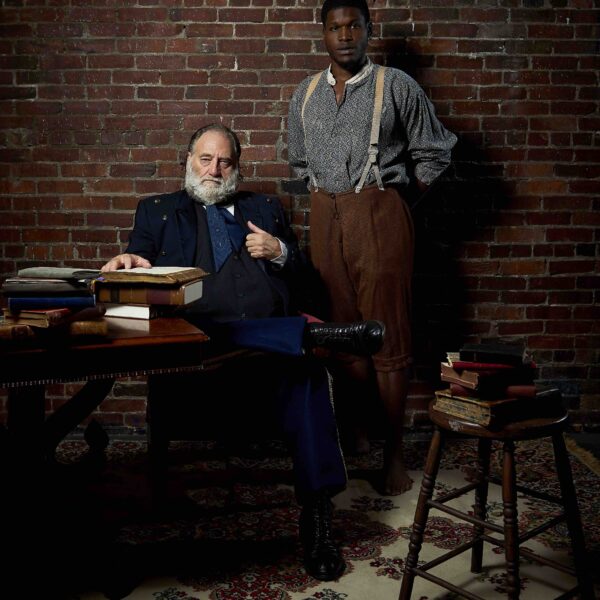
James Montgomery, a staunch abolitionist before joining the Union army, was a controversial figure during the Civil War. His depiction in the 1989 movie Glory by actor Cliff DeYoung (shown above) left the impression that Montgomery had once owned slaves in Kentucky, though there is no evidence he did so.
More than a century later, millions of people first encountered Montgomery in Glory, the Oscar-winning 1989 film that dramatically depicts—in a typical Hollywood blending of fact and fiction—the burning of Darien. Who was this “strange sort of man” as Colonel Shaw described him, who did not smoke, drink, or swear?3 A man who was not “soldierly looking,” who didn’t like riding his horse or holding a sword but was “very pleasant and easily approached,” as one journalist put it.4 Despite Montgomery’s calm, amiable demeanor, he was one of the war’s most aggressive practitioners. When it came to his deep religious beliefs, abstemious habits, appearance, and violent nature, he mirrored Thomas J. “Stonewall” Jackson. When it came to his racist (albeit abolitionist) views, and the necessity of inflicting pain on the South for making war, he was similar to William T. Sherman.
Little is known about Montgomery’s early life. He was born to Irish immigrants James and Mary Baldwin Montgomery on December 22, 1814, in Austinburg, Ohio, a town roughly halfway between Cleveland and Erie, Pennsylvania. Ohio was where settlers from the northeast in 1833 had founded progressive, abolitionist Oberlin College.
Montgomery moved to Kentucky in 1837, where he worked as a teacher, farmer, and itinerant preacher. He subscribed to the “Campbellite” school of religion; followers of Thomas and Alexander Campbell, who were leaders among the Disciples of Christ. They emerged from the Second Great Awakening and believed in a primitive form of Christianity.
Montgomery’s first wife died not long after they were married. His second wife was Clarinda Evans, a Kentuckian. In Glory, the Montgomery character (played by actor Cliff DeYoung) claims to have owned slaves in Kentucky, though there is no evidence he did so. In camp in 1863, Montgomery told Shaw that Clarinda came from a slaveholding family, but it is uncertain what Montgomery meant by this. According to census records, Clarinda’s parents were not significant slaveholders, if they ever owned slaves at all. Regardless, Montgomery held extreme antislavery views, and even before the war, he was willing to kill others in the name of abolition and black freedom.
In 1854, the fateful passage of the Kansas-Nebraska Act raised the possibility that slavery could be extended into territories where it had once been banned. That year, Montgomery bought a farm (for $11) outside Mound City, Kansas, close to the Missouri border. Now 40 years old, tall and slender, Montgomery was described as “slightly stooping in his gait,” with “a profusion of black hair” and a “piercing black eye, which lighted up when he spoke; his voice was pleasant and musical, [and] he spoke rapidly and with animation.”5 When not attacking the “proslavers” as he called them, Montgomery worked as a teacher, preacher, and farmer. Photographs show a man of intensity, one worthy of opposing Stonewall Jackson or Nathan Bedford Forrest. Like Jackson, Montgomery was tough and shrewd and took his strength from a Calvinist faith and sense of Old Testament justice. In the spirit of Exodus 21:25, he was prepared to pay a “burn for a burn, a wound for a wound, a stripe for a stripe.”
In Kansas, Montgomery and his allies were victims of violence, in other cases perpetrators. In 1856, his house was burned by proslavery settlers. The next year, Montgomery organized a “Self-Protective Company” of antislavery men. His raids took him into Missouri and back to Kansas, gathering information and hunting down proslavery border ruffians. Montgomery never operated with much of a plan. He was impulsive by nature and could be rash, even foolhardy. The radical abolitionist John Brown, who had come to Kansas in 1855, found him too reckless at times. But as with Brown, what remained consistent was Montgomery’s violent and determined commitment to destroying slavery.
In 1858, Montgomery liberated free-state advocate Benjamin Rice, who was charged with murder and was being held at Fort Scott, Kansas (a hotel rather than a true fort). In the course of the action, a proslavery fighter named John Little was killed. Soon after, Montgomery gave a speech in which he expressed gladness at Little’s death. Sene Campbell, Little’s wife-to-be, threatened Montgomery. “I am a girl but I can fire a pistol,” she wrote to him in January 1859, adding that “if ever the time comes I will send some of you to the place where thers Weeping and knashing of teeth.” Montgomery, she said, was not a man of God but a “minister of the devil and a very superior one too.”6
Montgomery’s ambitions were not to be thwarted by Little’s killing and the dangers of the border wars. In 1859 he ran for election to the territorial legislature. He lost, but the next year, he served as a delegate to the Republican convention in Lawrence, which in turn sent delegates to Chicago that May in support of presidential hopeful Abraham Lincoln.
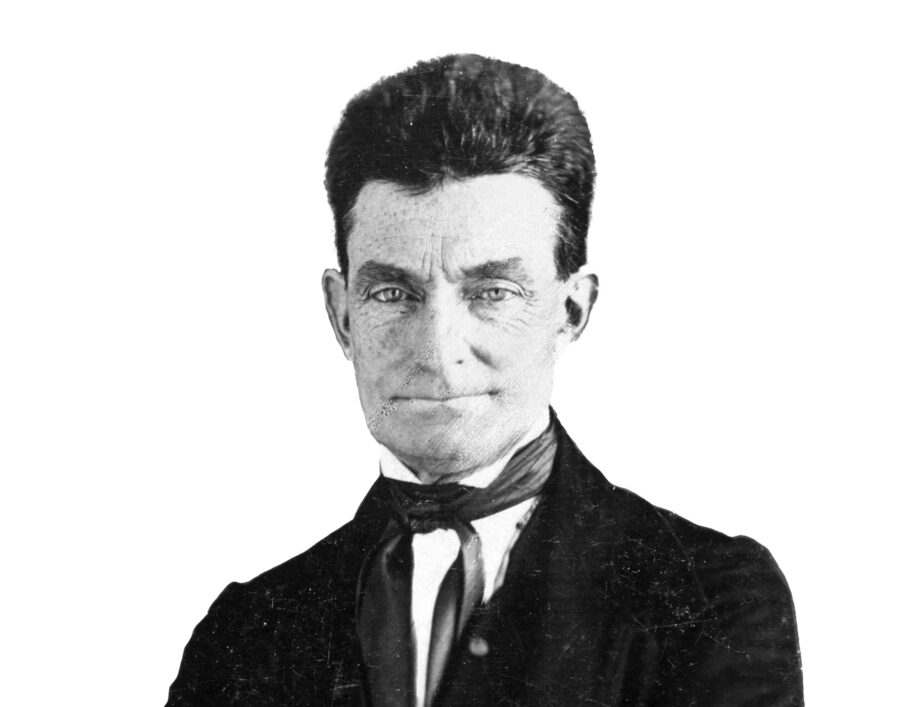 Library of Congress
John Brown
John Brown was hanged in December 1859 for trying to incite a slave rebellion in Harpers Ferry, Virginia. Montgomery wanted to free Brown’s men still held in captivity and met with some men to hatch a scheme: British antislavery writer Richard J. Hinton, affluent Boston abolitionist John W. LeBarnes, and future commander of black troops Thomas Wentworth Higginson. The latter, whom Montgomery would meet again in 1863 in the Department of the South, described Montgomery as “lithe, quick, low-voiced, reticent, keen, he seemed the ideal of a partisan leader, and was, indeed, a curious compound of the moss-trooper [raider] and the detective.”7 Montgomery traveled to Pennsylvania, where he worked on his plan to liberate Brown’s surviving raiders. His attack never materialized and probably would have ended as badly as Brown’s had.
When the war broke out, Montgomery—with no military training but years of fighting experience—joined the army and managed to obtain a commission as a colonel. He had influence among abolitionists and in April 1861, radical Boston publisher William W. Thayer wrote him about the need to make the war a crusade for slavery. “Do you not think the time has arrived to initiate Insurrection in the South?” Thayer asked. He advised Montgomery to join forces with abolitionist James Lane in Kansas or else take matters into his own hands. Fomenting slave rebellion would not only free the slaves but also “help save our liberties.”8
On July 24, Montgomery was named colonel of the 3rd Kansas Infantry, part of “Lane’s Brigade” of Kansas troops. Montgomery was second in command, and with Lane and Charles R. Jennison, took part in destructive raids in western Missouri. On September 23, Union forces sacked and burned Osceola, Missouri, seizing supplies, taking 200 slaves, and torching almost all the town’s 800 buildings. It was unlike anything happening at the time in Virginia or the other, more publicized theaters in the East.
In the eyes of abolitionists, Montgomery was Brown’s heir, doing God’s work. In December, abolitionist Lydia Child told him she was knitting him suspenders. She knew his notoriety made him a special target for Confederates. She had heard that he had been captured. “I trust in God it is not true,” she said of the rumor, fearing that if the “rebels should get possession of him, they would treat him most cruelly.”9 She told Montgomery that “since John Brown’s spirit ascended to Him who gave it, I think no man has more of their respect, than your honored self.” In addition to the suspenders, she sent Montgomery knitted socks, mittens, pamphlets, and some songs, “which may help to enliven the tedium of the camp.”10
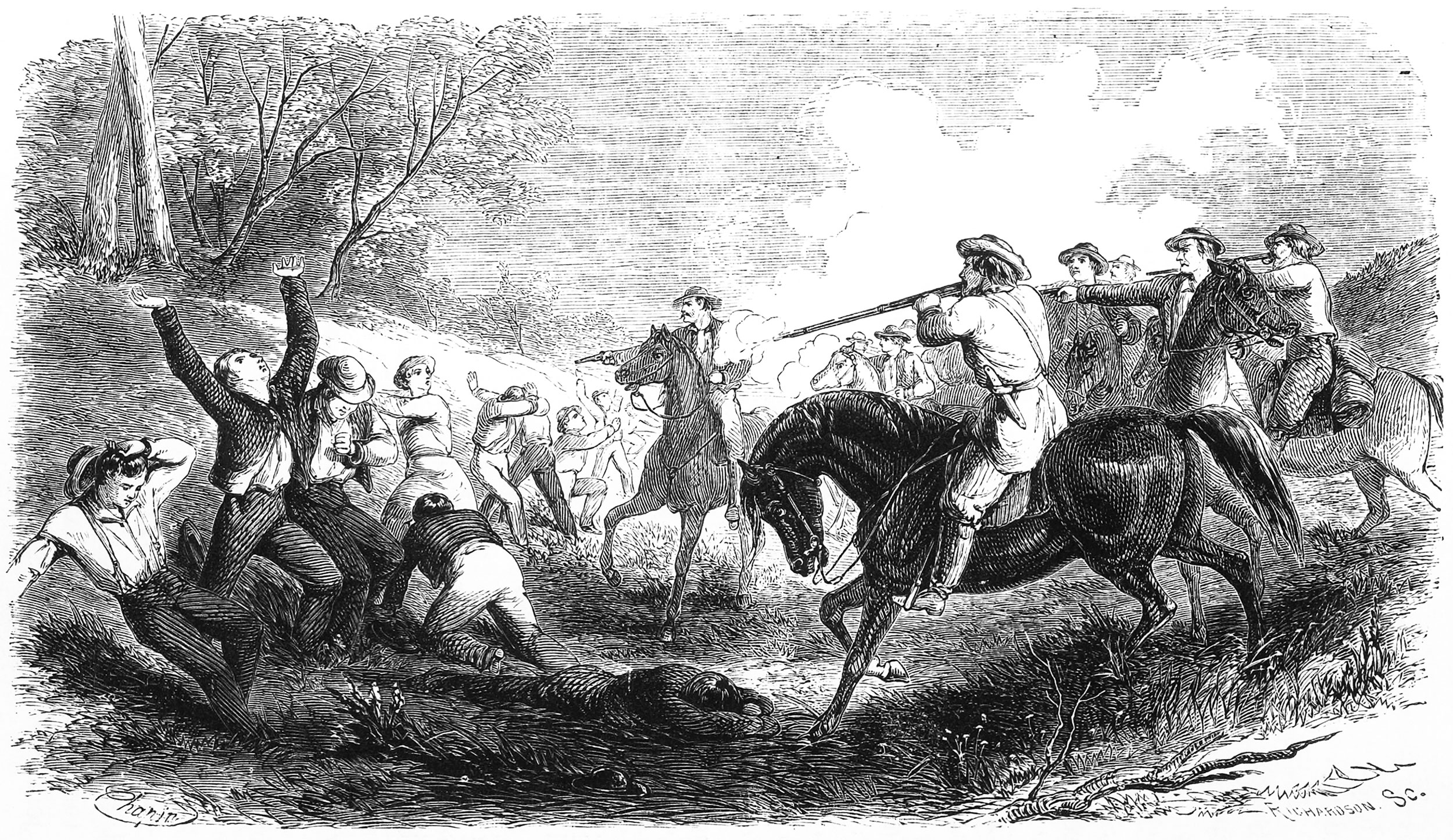 Beyond the Mississippi (1867)
By the time war broke out, Montgomery, though he had no formal military training, was familiar with violence (as both victim and perpetrator) from his experiences in the “Bleeding Kansas” period of the 1850s. Above: Pro-slavery men are depicted killing a group of Free-Staters in Kansas in May 1858.
Despite the Union’s successful raids in Missouri, they did not end the rebellion there. In December 1861, Montgomery wrote of Sterling Price and his force of pro-secessionist Missourians roaming the state in large numbers. The landscape “swarms with guerrillas,” Montgomery lamented. Measles, furthermore, had ravaged his camp, leaving his men “reduced to mere skeletons.”11 Montgomery feared the worst in eastern Kansas.
After coming through the winter, a reshuffling of units in April left Montgomery without a command. According to historian Dudley Cornish, Montgomery “left Kansas in disgust” after having a falling out with Lane.12 Restive, he went to Washington seeking a new command. For all his stubbornness, Montgomery could be persuasive, and he had the approval of abolitionists in the East. He managed to meet with President Lincoln and was on good terms with Union general David Hunter, the West Pointer and Mexican War veteran who served in Kansas before the war. Montgomery’s persistence paid off. On January 13, 1863, the War Department authorized the creation of a South Carolina regiment of African-American troops—the 2nd South Carolina Volunteer Infantry Regiment (Colored).
Montgomery at last had a new regiment. The problem: He had no troops. Recruiting was left to him. His regiment might have been the 2nd South Carolina, but it was in Florida that he first began putting former slaves into uniform. In February, he had success enlisting men in Fernandina, north of Jacksonville. But Montgomery was prepared to go as far south as Key West to fill his ranks.
Initially, he was popular among his fellow officers. Higginson said he was “delighted” to have Montgomery with him in camp. He found Montgomery brilliant but erratic, ambitious but impatient, a man “impulsive & changeable.”13 With Higginson’s help, Montgomery made war on northeastern Florida, where Union troops skirmished with Confederates and stole cotton, rifles, and horses. All that time, slaves were freed. Many became recruits. Nothing was safe from Union forces, who were making all-out war on southern property. In March, Jacksonville was set ablaze. The flames, Higginson wrote, gave the destruction a “Judgment-Day” atmosphere.14 Montgomery was no doubt pleased.
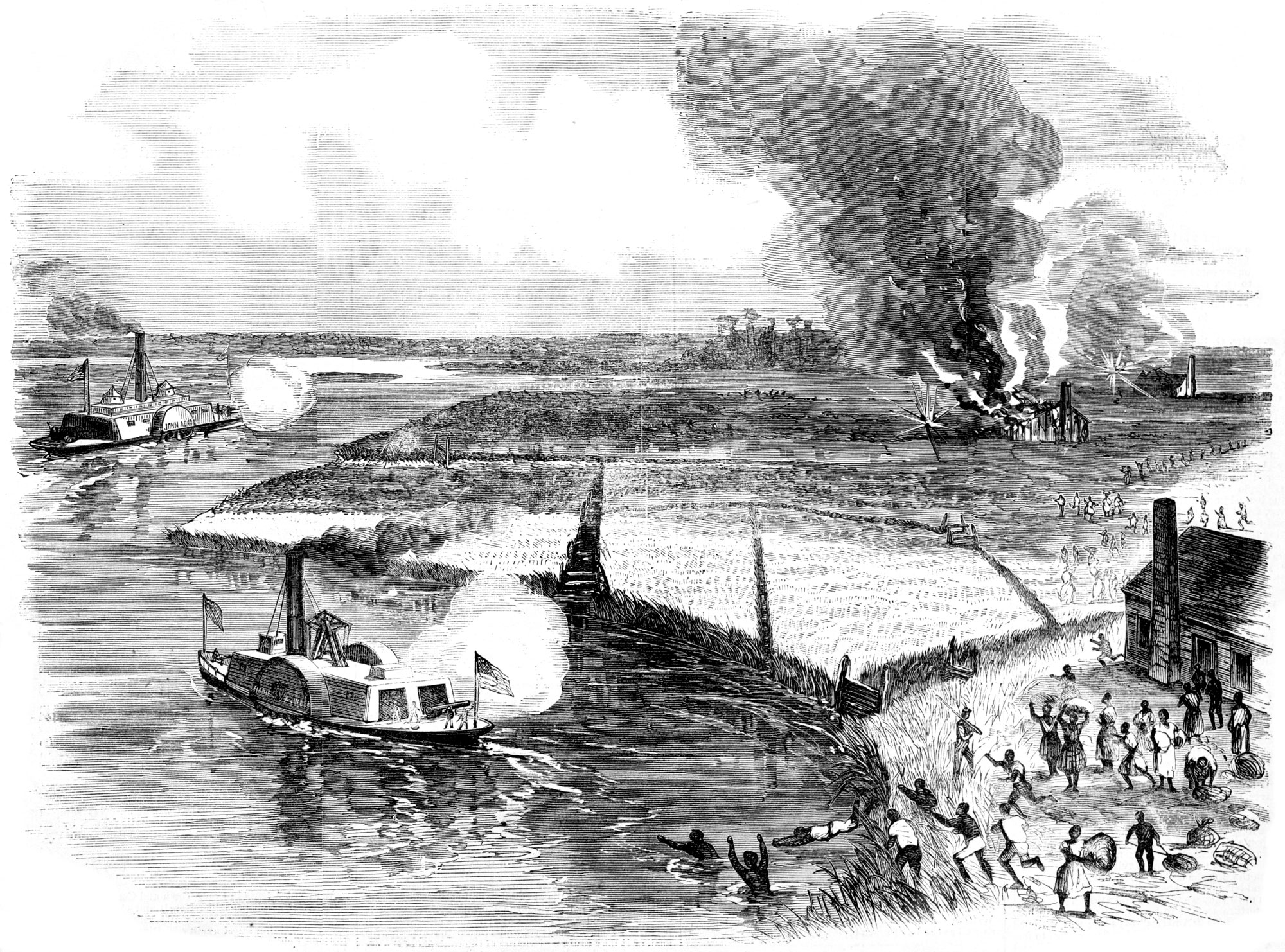
He soon took the war farther north. On June 1, he began his Combahee (kuhm-bee) Raid along the rice-producing areas of southeastern South Carolina. In military terms, it was his masterpiece. In an area roughly a day’s march from either Beaufort or Charleston, his men “scattered in every direction, burning and destroying everything of value they came across,” including plantation homes.15 Montgomery had help from Harriet Tubman, who acted as a guide. He appreciated her assistance, calling her “a most remarkable woman” and “invaluable as a scout.”16 One observer wrote that it was “impossible to describe the eagerness with which these negroes sought the opportunity to escape.”17 An estimated 750 slaves won their freedom, far more than Tubman freed in her years as a conductor on the Underground Railroad. Montgomery also destroyed roughly $1 million in property—all without the loss of a single man. The raid was a textbook example of Union forces using civilian help to free African Americans and damage Confederate resources in the Deep South.
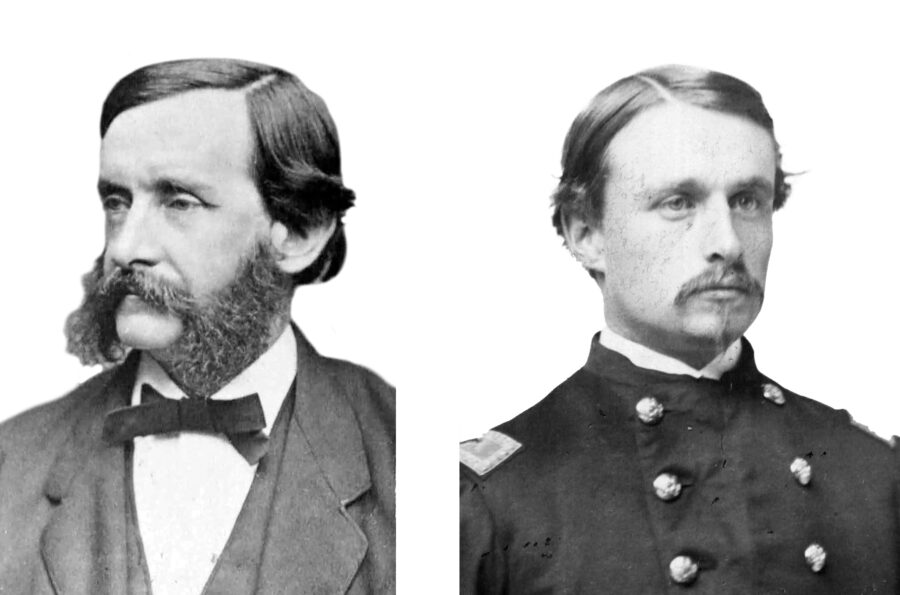 Library of Congress (Higginson), USAHEC
Thomas Wentworth Higginson (left) and Robert Gould Shaw
Massachusetts papers called the Combahee Raid one of the “most brilliant” of the war and dubbed Montgomery the “Kansas hero.”18 His boss in the Department of the South, David Hunter, was also pleased. Hunter expected great things from Montgomery, but warned him against wanton destruction. In late April, the Lincoln administration had issued General Orders No. 100, better known as the “Lieber Code” for its author, Francis Lieber, the Prussian-born New York legal scholar. It outlined the rules of conduct for Union soldiers. Hunter trusted Montgomery’s judgment, but he feared actions that might endanger the reputation of black troops and allow the war to “degenerate into a barbarous and savage conflict.” Montgomery was to spare household furniture, libraries, churches, and hospitals. Overall, he must hold himself to the “very strictest interpretation of the laws and usages of civilized warfare.”19
Hunter had sent his order on June 9, two days before the burning of Darien. If Montgomery saw it, he disobeyed it with a recklessness surprising even for him. What is certain is that Darien got the full Montgomery treatment. The Boston Traveller gave a detailed account of the burning and pillage of the town. Union men left Darien loaded down with “all sorts and quantities of furniture, stores, trinkets.… [They] had sofas, tables, pianos, chairs, mirrors, carpets, beds, bedsteads, carpenters’ tools, cooper’s tools, books, law books, account books in unlimited supply, china sets, tin ware, earthen ware,” and more.20 The men also liberated the town of sheep, cows, and chickens as well as of a good supply of lumber. In addition, the Harriet A. Weed, an armed Union cargo ship, made off with 85 bales of cotton. By 6 p.m., the town was ablaze. Warehouses along the river were also put to the torch. The fires were so hot that the Union men could feel them on their transports as they steamed away. Hardly any structures were left standing.
Not surprisingly, Confederates were appalled at the destruction. Southern papers decried the “cowardly, wanton outrage” perpetrated by “Yankee-negro vandals.”21 Slaves took the opportunity to leave with the Yankee troops, but as usually was the case, white southerners pointed out incidents when slaves refused to go. One white Georgia woman claimed the Yankees shot a slave woman in the head before taking her away.
Confederates were not alone in their judgment of Montgomery, though the North’s reaction to the burning of Darien fell along party, ideological, and racial lines. The Democratic Cleveland Plain Dealer wondered whether Darien’s burning would “bring shame to the cheeks of our Washington officials,” while the Union Democrat of Manchester, New Hampshire, called Montgomery and Higginson (who was not involved) “barbarians.”22 Northern Democrats agreed with Confederates who branded Yankees in the Department of the South as vandals.
Shaw was horrified at the destruction he witnessed firsthand. He called the burning of Darien a “dirty piece of business,” “abominable,” and “barbarous.”23 For Shaw, it violated the laws of warfare: Darien was not a legitimate military target. It was not the state capital, nor was it garrisoned. More important, Shaw worried that wiping out Darien reflected badly on African-American troops; he wanted to show that they could excel in conventional combat. Higginson was similarly worried, writing to his mother that “I will have none but civilized warfare in my reg’t, but the public may not discriminate.”24
Northerners, however, did discriminate. Moderate Republican papers such as the Springfield Republican and the Hartford Courant denounced Montgomery. More radical Republicans defended Montgomery’s actions as a necessary attack on the Slave Power—one that yielded great destruction at no cost in Union blood. The abolitionist Boston Commonwealth noted that when it came to eradicating slavery, “burning and pillage are incident to this main object.”25 A correspondent for the Boston Traveller said that Darien was a beautiful town and “never did it look so grand and beautiful as in its destruction.”26
 Harper's Weekly
The June 1863 Combahee Raid (depicted above in an illustration from Harper’s Weekly)—during which Union troops, with the assistance of Harriet Tubman, freed some 750 slaves and destroyed nearly $1 million in property in South Carolina—was Montgomery’s military masterpiece, earning him praise in the press and from his superiors. His raid just days later on Darien, Georgia, proved much more controversial.
African Americans were the least squeamish of abolitionists. Frederick Douglass had long advocated antislavery violence. When asked about the Fugitive Slave Act of 1850, Douglass remarked, “The only way to make the fugitive slave law a dead letter is to make a dozen or more dead kidnappers.”27 One of his sons served in Shaw’s 54th Massachusetts and was there when Darien was burned. In July 1863, Douglass wrote a heated letter to the Philadelphia Press—the most prominent Republican paper in the city—on the destruction of Darien. He defended Montgomery’s actions. “I am astonished,” Douglass wrote, that no one (to his knowledge) had defended the colonel, adding that “the ordinary rules governing civilized warfare have no application to the act in question.” Douglass was aware of black men murdered by Rebels on various battlefields. Confederates were the ones, then, who had raised the “black flag.” For Douglass, they deserved whatever men like Montgomery might mete out. He lauded Montgomery as a “wise man” working to stop the “hell-black purposes declared against colored men.” A few more raids by Montgomery, Douglass believed, “will do more than all the soft talk of a thousand presses.” When it came to the Rebels, Douglass invoked Hosea 8:7: Those who sow the wind “shall reap the whirlwind.”28
As Douglass made clear, the men of the 54th Massachusetts and other African-American units were abolitionists of a different sort: They were freeing slaves at the point of a gun. For them, the fate of Darien was fitting. Whites scattered. Homes and plantations burned to the ground. Cotton and rice seized. Enslaved black people liberated.
George Stephens, a black soldier serving in the 54th Massachusetts, wrote about Darien dispassionately. He called Montgomery “active and brave” and noted the plundering provided his unit with “many things of use and comfort.” Once Darien lay in ruins, he and his men “steamed gaily down the river.”29 His words hardly suggest guilt over wiping out a town built on slavery’s wealth. Another black soldier, James H. Gooding, dismissed Darien’s beauty by saying all he had seen in his theater of operations was “stink weed, sand, rattlesnakes, and alligators.”30 He rejected northerners’ attempts (more specifically, in the antiwar Copperhead press) to sow discord among black regiments. As Gooding saw it, he and his fellow soldiers were doing good work.
Montgomery was in many ways his own worst enemy. While he had supporters in his own ranks and in the northern press, he could prove brutal toward his own troops. He told one observer that a soldier “should be able to live three days on the smell of an oiled rag, and roost on a clothesline!”31 When one of his soldiers talked “after taps,” Montgomery shot him.32 On another occasion, a deserter was brought before Montgomery, who had him executed two hours later. Shaw believed the man guilty, but he was again shocked at Montgomery’s capacity for sudden violence. And while many Civil War officers might have agreed with Montgomery, they weren’t as quick to shoot their own men.
Never again would Montgomery wield such influence. The burning of Darien proved to be a climax to the war on civilians in the Department of the South. The Lincoln administration replaced Hunter on July 12 with Quincy Adams Gillmore. A West Pointer and native of Ohio, Gillmore had a talent for engineering and siege operations and had spent time earlier in the war in the Department of the South before his transfer to Kentucky. Hunter’s removal represented a shift in tactics and strategy in his area of operations. The Union henceforth fought a more conventional and “eastern” style of warfare.
Under Gillmore’s direction, Colonel Shaw and his 54th Massachusetts had the opportunity to prove themselves as a conventional fighting force. On July 16, they stood their ground at the small Battle of Grimball’s Landing on Morris Island. Two days later came the bloodbath at Battery Wagner. In the 54th’s repulse, Shaw and many of his men were killed. Command of the 54th passed to Montgomery. He was in the trenches during the siege at Wagner, which dragged into September. Montgomery was no stranger to violence, but he was a newcomer to carnage, writing home of the “sickening sights: men with heads, legs and arms torn off. Others dashed all to pieces. One poor fellow with both arms torn off, and both eyes blown out lived several weeks.” Montgomery, as ever, was fatalistic. “Such is war,” he concluded. “God grant that this, the greatest war of the world, may be one among the last.”33 Montgomery feared he would lead another bloody charge against Wagner, but the Union did not repeat the slaughter of July 18. Federal forces took the fort on September 7 after its Confederate garrison abandoned it.
The summer of 1863 saw the bloodiest battles of the war at Gettysburg in the East and Chickamauga in the West. The guerrilla war had also reached new levels of violence. On August 31, Montgomery heard of the sacking of Lawrence, Kansas, by William Quantrill’s guerrillas. “The wretches!” he wrote his wife. “O that I could follow.”34 The notorious Quantrill’s butchering of 164 men, women, and young civilians was far worse than anything Montgomery or the Union had done during the war. But it was revenge for the years of raids and destruction in “Bleeding Kansas” and Missouri, especially the burning of Osceola, Missouri, by Montgomery, Lane, and Jenison in September 1861.
The fall of Fort Wagner was an anticlimax for Union troops in the Department of the South. As 1863 wore on, the 54th did little of note, and Montgomery was left idle. His relationship with his men deteriorated. “Colonel Montgomery is cordially detested by everybody,” wrote Massachusetts cavalryman John C. Gray in October.35 George Stephens, who had shed no tears at Darien’s fate, grew tired of Montgomery’s style of combat, wanting instead to “enter the field honorably—to fight a legitimate warfare.” What had turned Stephens against his commander was Montgomery’s racist rant against his troops that fall. Montgomery was angry over soldiers grumbling about the unequal pay between white and black regiments. His September speech to his troops about the issue is shocking in its condescension and racism. He said his men should be grateful for the privilege of fighting, rather than be squabbling about money. He dismissed his own troops as a “race of slaves.” Despite the fact that most of the soldiers in the 54th had been freedmen before the war, Montgomery claimed “a few years ago your fathers worshipped snakes and crocodiles in Africa. Your features partake of a beastly character. Your religious exercises in this camp is a mixture of barbarism and Christianity.”36
 Library of Congress
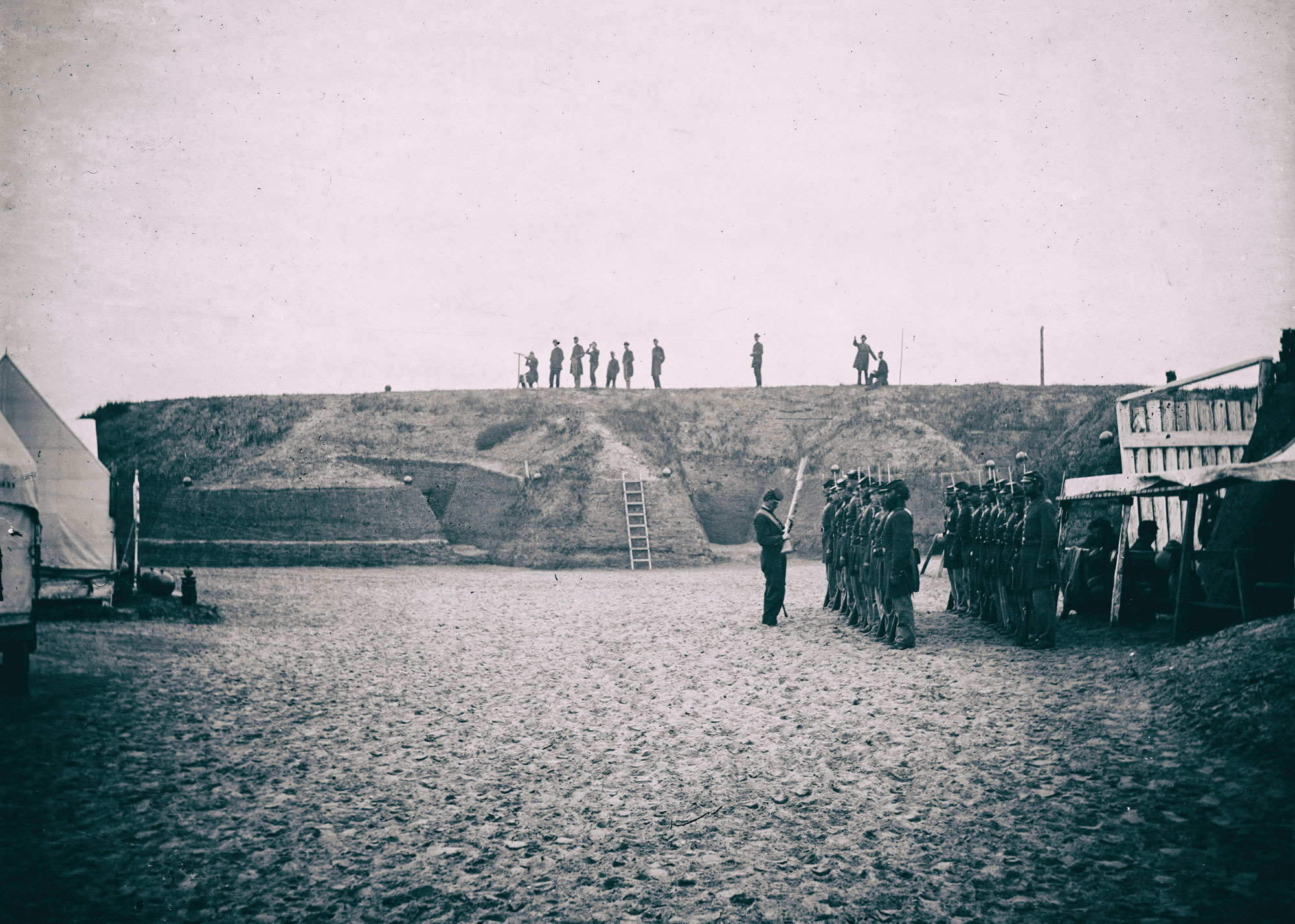
Montgomery took charge of the 54th Massachusetts Infantry after its commander, Robert Gould Shaw, was killed in the fighting at Fort Wagner in July 1863. After Confederates abandoned the fort in September, Montgomery’s relationship with the regiment’s African-American troops deteriorated. Above: Union soldiers are shown occupying Fort Wagner in a photo from 1865.
Despite such insults, and the undoubted loss of his men’s trust and admiration, Montgomery remained in command of the 54th. He fought his last major battle with the regiment at Olustee in northern Florida in February 1864. Montgomery was praised for his “great personal intelligence and valor” in the bloody fight, but Confederates proved victorious.37 They killed black troops they should have taken captive. The brutality of the fighting foreshadowed similar battles later that year at Fort Pillow, the Crater, and Saltville.
Montgomery fought well at Olustee, but campaigning in the subtropics was taking its toll. Observers in Union camps in the spring of 1864 noted Montgomery’s haggard appearance. He resigned from the 54th in September, citing ill health. But the war was not over for him.
Montgomery returned to Kansas. Within a few weeks, he was appointed commander of the 6th Kansas Militia, helping Federal forces during Sterling Price’s invasion of Missouri. At Westport, the “Gettysburg of the West,” Montgomery took part in the Union’s defeat of Price’s vastly outnumbered Confederate army. He fought with his usual zeal at the head of forces that included African-American troops. James G. Blunt, commander of the 1st Division, Army of the Border, praised Montgomery for his “gallant service.” Another commander, C.W. Blair of the 14th Kansas Cavalry, likewise noted Montgomery’s “gallantry and good conduct.” According to Brigadier General William H.M. Fishback, in charge of Kansas militia, Montgomery was the “last to quit the chase.”38
After the war, Montgomery lived a quiet life as a farmer and preacher in Kansas. He died on December 6, 1871, in Linn County. The Leavenworth Daily Times reported his death as being from “pleuro-pneumonia.” A Cincinnati paper remembered him as the “terror of the Missouri border,” while the Leavenworth Daily Times noted he was “brave as a lion” and “possessed of a wonderful power of command over his associates.” News of his death made it as far as California.39
Montgomery has proven as controversial in death as he was in life. Higginson wrote highly of Montgomery after the war, though a decade later, Louis Emilio (a teenager when he served in the 54th Massachusetts) called the burning of Darien a “crowning act of vandalism.” Scholars’ later views of Montgomery have—as was true during the war—fallen along racial and ideological lines. African-American historian Benjamin Quarles noted Montgomery was “one of the war’s ablest guerrillas and foragers” and a man of “unparalleled audacity.” In a similar vein, white historian Dudley Taylor Cornish—who dedicated his book The Sable Arm to an African-American friend—spoke highly of Montgomery. He said that when it came to the differences between eastern and western styles of fighting, “Higginson, the romantic, had raised money to send Sharps rifles to Kansas in the fifties. Montgomery, the realist, had used them.”40
White southern historians have been less impressed by Montgomery’s exploits. E. Merton Coulter called Montgomery a “barbarian” worthy of Genghis Khan. In his well-researched but highly partisan book on Darien, Spencer B. King likened Montgomery to a snake. King called him a “part-time preacher, but his ruthlessness made him appear to be more a ruffian than a man of the cloth.”41
The film Glory essentially takes the pro-southern and conservative northern view of Montgomery. In its inaccurate depiction of Darien’s burning, it clearly sides with Shaw and the “eastern” method of warfare. The film ignores the historical fact that Shaw admired Montgomery, even after Darien was burned. Nor does the film show that Montgomery freed hundreds of slaves during the Combahee Raid or that he took charge of the 54th Massachusetts after Shaw’s death—and commanded it for a much longer period than Shaw had.
For Montgomery, the destruction of Darien was business as usual, all part of a war he had been waging against the Slave Power since the 1850s. And in terms of the war in the Deep South, it was a sign of things to come, for it was the West that triumphed over the East in the war. William T. Sherman, Ulysses S. Grant, and Philip Sheridan had all proven themselves out West before moving on Robert E. Lee and Joseph Johnston. What Sherman did to Atlanta and Columbia made Darien’s destruction look like child’s play. But Montgomery’s raids were destructive enough.
James Montgomery is important, not only to Civil War scholars looking to see how the West influenced the war’s strategy and outcome, but how the abolitionists were the hardest of hard war practitioners. Montgomery’s views were uncompromising, and it made him a terror to slaveholders and Confederate forces. But he was no mere brigand. He saw some of the worst violence of the war—conventional and unconventional. When it came to using the sword and musket to kill slavery, he was among the fiercest and most effective of abolitionists. 
Colin Edward Woodward received his PhD in history from Louisiana State University. He is the author of Marching Masters: Slavery, Race, and the Confederate Army during the Civil War (UVA Press, 2014) and Country Boy: The Roots of Johnny Cash (University of Arkansas Press, 2022). He lives in Richmond, Virginia, where he is host of the American Rambler history and pop culture podcast.
Notes
1. Robert Gould Shaw to wife, June 9–13, 1863, Russell Duncan, ed., Blue-Eyed Child of Fortune: The Civil War Letters of Colonel Robert Gould Shaw (Athens, 1992), 342, 343.
2. The marker can be viewed at hmdb.org/m.asp?m=84005 (accessed October 16, 2021).
3. Robert Gould Shaw to Charley Morse, July 3, 1863, Duncan, ed., Blue-Eyed Child of Fortune, 369.
4. Boston Commonwealth, July 24, 1863.
5. Leavenworth Daily Times, December 12, 1871.
6. Sene Campbell to James Montgomery, January 4, 1859, James Montgomery Papers, Kansas Historical Society (hereafter MP-KHS).
7. Thomas Wentworth Higginson, Cheerful Yesterdays (Boston, 1898), 233.
8. William W. Thayer to James Montgomery, April 16, 1861, MP-KHS.
9. Lydia Maria Child to Mary Stearns, December 15, 1861, Milton Meltzer and Patricia G. Holland, eds., Lydia Maria Child: Selected Letters, 1817–1880 (Amherst, 1982), 399.
10. Lydia Maria Child to James Montgomery, December 26, 1861, MP-KHS.
11. James Montgomery to James H. Lane, December 8, 1861, The War of the Rebellion: A Compilation of the Official Records of the Union and Confederate Armies 129 vols. (Washington, D.C., 1880), Series 1, Volume 8, 415–416 (hereafter cited as OR).
12. Dudley Taylor Cornish, The Sable Arm: Black Troops in the Union Army, 1861–1865 (New York, 1956), 78.
13. Entry for February 23, 1863, Christopher Looby, ed., The Complete Civil War Journal and Selected Letters of Thomas Wentworth Higginson (Chicago, 2000), 105, 116.
14. Thomas Wentworth Higginson, Army Life in a Black Regiment (Mineola, NY, 2002), 82.
15. Dispatch of June 8, 1863, Matzke Adams, ed., On the Altar of Freedom: A Black Soldier’s Civil War Letters from the Front (Amherst, 1991), 28.
16. James Montgomery to Quincy A. Gillmore, July 6, 1863, Sarah H. Bradford, Scenes in the Life of Harriet Tubman (Auburn, NY, 1869), 65.
17. Greenfield Gazette and Courier, June 15, 1863.
18. Greenfield Gazette and Courier, June 15, 1863; Massachusetts Spy, June 17, 1863; Boston Recorder, June 26, 1863.
19. David Hunter to Montgomery, June 9, 1863, OR, Series 1, Vol. 14, 466–467.
20. Boston Traveller, June 30, 1863.
21. Memphis Daily Appeal, June 18, 1863; Charleston Mercury, June 17, 1863.
22. Cleveland Plain Dealer, June 20, 1863; Union Democrat, June 30, 1863.
23. Robert Gould Shaw to wife, June 9–13, 1863, Duncan, ed., Blue-Eyed Child of Fortune, 343.
24. Thomas Wentworth Higginson to mother, June 19, 1863, Looby, ed., Selected Letters of Thomas Wentworth Higginson, 288.
25. Boston Commonwealth, June 26, 1863.
26. Boston Traveller, June 30, 1863.
27. See Douglass’ speech at the August 1852 Free Soil Party convention, Nicholas Buccola, ed., The Essential Douglass: Selected Writings and Speeches (Indianapolis, 2016), 72.
28. Philadelphia Press, July 9, 1863.
29. Dispatch of June 1863, Donald Yacovone, ed., A Voice of Thunder: The Civil War Letters of George E. Stephens (Urbana, 1997), 242.
30. Dispatch of June 14, Adams, ed., On the Altar of Freedom, 30.
31. Boston Commonwealth, July 24, 1863.
32. Robert Gould Shaw to Charley Morse, July 3, 1863, Duncan, ed., Blue-Eyed Child of Fortune, 369–370.
33. Montgomery to wife, August 30, 1863, MP-KHS.
34. Montgomery to wife, September 1, 1861, MP-KHS.
35. John C. Gray to Elizabeth Gray, October 15, 1863, John Chipman Gray and John Codman Ropes, War Letters 1862–1865 (Boston, 1927), 232.
36. Dispatch of October 3, 1863, Yacovone, ed., Voice of Thunder, 277–278.
37. Report of Truman Seymour, March 25, 1864, OR, Series 1, Vol. 35, Part 1, 289.
38. OR, Series 1, Vol. 41, Part 1, 572, 600, 622.
39. Leavenworth Daily Times, December 12, 1871; Cincinnati Semi-Weekly Gazette, December 19, 1871.
40. Higginson, Army Life in a Black Regiment, 73; Luis F. Emilio, History of the Fifty-Fourth Regiment of Massachusetts Volunteer Infantry, 1863–1865 (Boston, 1894), 42; Quarles, The Negro’s Civil War, 226; Cornish, The Sable Arm, 150.
41. E. Merton Coulter, “Robert Gould Shaw and the Burning of Darien, Georgia,” Civil War History, Vol. 5, No. 4 (December 1959): 368, 371; Spencer B. King Jr., Darien: The Death and Rebirth of a Southern Town (Macon, GA, 1981), 20.
Related topics: emancipation