Of all Civil War battles, Gettysburg remains among the most analyzed and debated. Countless authors—from veterans of the fight to modern-day buffs and scholars—have written about the three-day struggle, scrutinizing command decisions, dissecting minute tactical movements, pondering might-have-beens, and reflecting on the battle’s larger significance. With the battle’s 150th anniversary upon us, we thought it the perfect time to ask two of our favorite Gettysburg scribes—Allen C. Guelzo and Stephen W. Sears—to weigh in on a few of the more enduring questions about the epic engagement.
What was Robert E. Lee’s biggest mistake at Gettysburg?
Allen C. Guelzo: Failing to push either or both Richard Ewell and Powell Hill to take Cemetery Hill on July 1. He was sure that no other major portions of the Army of the Potomac were within less than a day’s march, and thus acquiring Cemetery Hill could safely be put off to the light of the next morning.
Stephen W. Sears: His inability to manage his generals. He let J.E.B. Stuart and Ewell go as they pleased. With James Longstreet, he overmanaged, stubbornly refusing to listen to Old Pete’s questioning of his all-attack-all-the-time tactics.
Lee’s best decision?
Allen C. Guelzo: The July 2 attack. It was a pitch-perfect repeat of the flank attack at Chancellorsville, and wrought even more havoc with the Army of the Potomac, which was left at day’s end with little more than two corps in any kind of reliable fighting shape.
Stephen W. Sears: His decision on the evening of July 3 to pack up and head for home with all possible speed.
What was George Meade’s biggest mistake at Gettysburg?
Allen C. Guelzo: Positioning Dan Sickles and the III Corps out of mind, but directly in the path of Longstreet’s assault. This was a reckless decision, and no moment to let personal or political animosities sway one’s better military judgment.
Stephen W. Sears: Not maintaining a close enough eye on Dan Sickles on July 2, which would have prevented that blunderer from going off on his own with the III Corps.
Meade’s best decision?
Allen C. Guelzo: Yielding to the advice of his corps commanders on both July 1 and the evening of July 2 to stay and fight things out to a conclusion. Meade never wanted a fight at Gettysburg, and would have pulled out on July 2 if his corps commanders had not protested.
Stephen W. Sears: Keeping John Reynolds in charge of the Army of the Potomac’s advance, and trusting him to select a proper battlefield on July 1.
Whose Gettysburg performance is most overrated?
Allen C. Guelzo: Meade’s. Through the entire battle, Meade’s directives were almost entirely reactive. At the height of Pickett’s Charge, Meade wasn’t even around — he had decamped for Powers Hill, beside the Baltimore Pike. And after the battle, his lack of a decisive pursuit of the Confederates is largely responsible for Lee’s escape and nearly two more years of war.
Stephen W. Sears: Joshua L. Chamberlain’s. Not because he didn’t perform brilliantly — he did — but because Michael Shaara (in The Killer Angels) and Ken Burns (in his PBS documentary The Civil War) presented him as far, far larger than life.
Who was the battle’s unsung hero?
Allen C. Guelzo: Oliver Otis Howard, who identified and acquired the most significant piece of real estate in Gettysburg: Cemetery Hill. While it’s likely he was acting on John Reynolds’ recommendations the evening before, Howard is still the one responsible for the decision to stay and hold Cemetery Hill after Reynolds’ death.
Stephen W. Sears: Lieutenant Colonel Freeman McGilvery, commanding 41 guns of the reserve artillery, who surprised and savaged Pickett’s Charge. The Yankee artillery broke the back of the charge well before it reached the Angle.
What’s the biggest myth surrounding Gettysburg?
Allen C. Guelzo: That Meade won the Battle of Gettysburg. Au contraire, Meade won Gettysburg. Lee lost it and lost it big. Meade showed almost no tactical initiative during the battle, and nearly lost it twice, by dangling the III Corps in the path of Longstreet’s attack on July 2, and then failing to reinforce John Gibbon’s and Alexander Hays’s divisions ahead of the attack on July 3. Meade was convinced that morning that any Confederate attack would come from the north rather than the west. Gettysburg might have been the turning point if Meade had followed up in the days after the battle, or even launched a final attack at Williamsport. Even so, the victory restored the Army of the Potomac, and Lee was never again in a position to launch an invasion of the North.
Stephen W. Sears: That Lee lost the Battle of Gettysburg. Au contraire, Meade won Gettysburg. Spanking new to command, Meade managed his generals with skill and got exceptional performances from most of them (see Winfield Scott Hancock, Henry Hunt, George Greene, etc.). He covered Sickles’s blunder on July 2, and he had 13,000 men staged for Pickett’s Charge on July 3 who were not needed. Meade did nothing at Gettysburg that threatened defeat.
Did the Battle of Gettysburg mark a turning point in the war?
Allen C. Guelzo: Gettysburg triggered no perceptible turning point. But at every level of command, the Army of Northern Virginia suffered an irreparable loss of its lifeblood there, and was never the same afterward.
Stephen W. Sears: Gettysburg triggered no perceptible turning point. But at every level of command, the Army of Northern Virginia suffered an irreparable loss of its lifeblood there, and was never the same afterward.
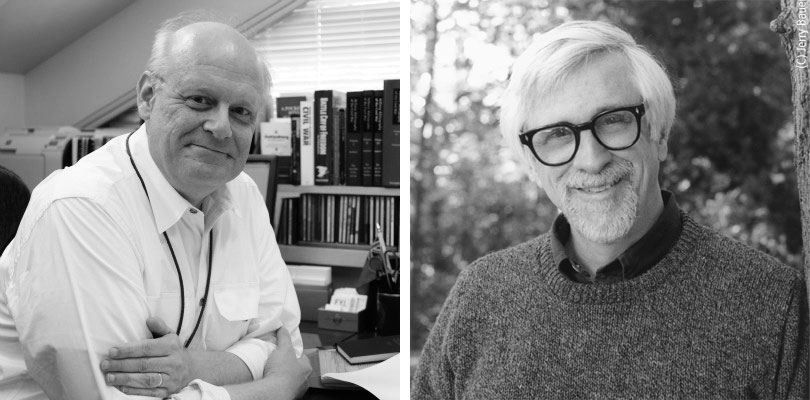
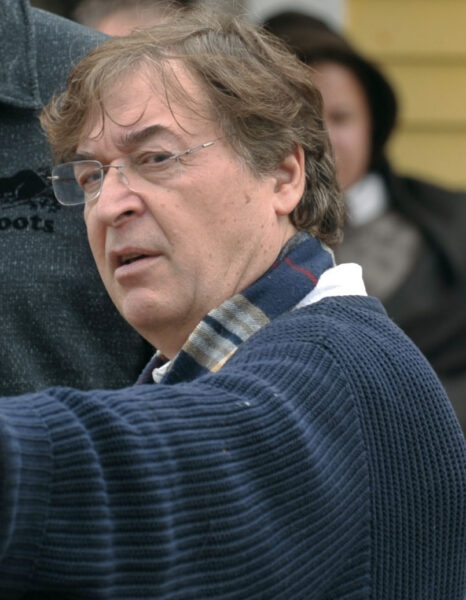
Allen C. Guelzo (above, left) is the Henry R. Luce Professor of the Civil War Era at Gettysburg College. His newest work is Gettysburg: The Last Invasion (Knopf, 2013).
Stephen W. Sears is the author of a dozen books on the Civil War, including Gettysburg (Houghton Mifflin, 2003).