Soldiers getting rations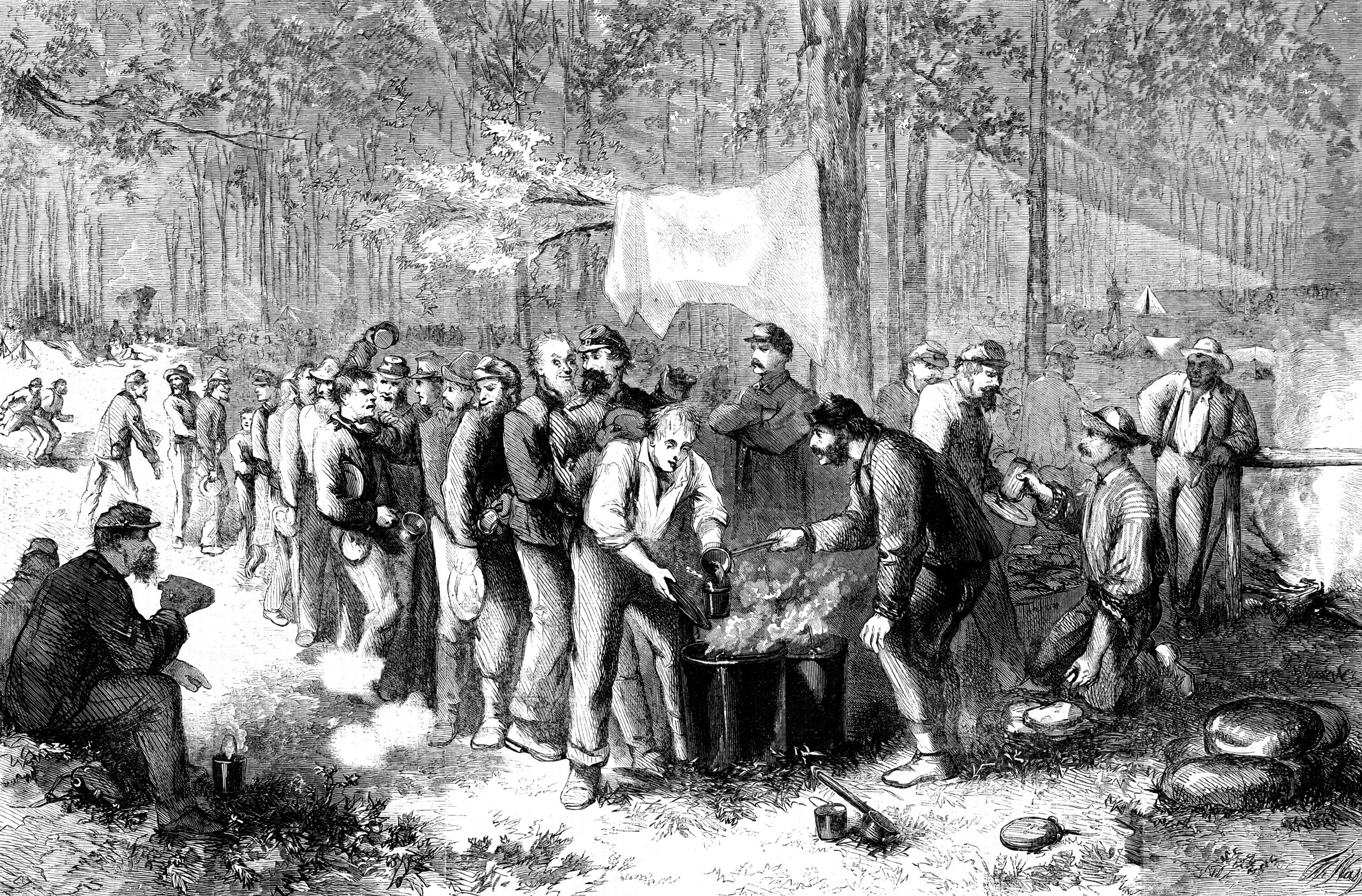 Harper’s Weekly
“Science has conferred no greater blessing on armies than desiccated and condensed food. Easy of transportation, capable of being kept for months or even years without deterioration, it is the duty of every commander to see that such are with his command on the campaign.” So wrote “An Old Soldier,” an anonymous correspondent to the Washington, D.C., newspaper Daily National Intelligencer, in the fall of 1861.
Desiccated vegetables were a common component in Civil War army rations. Specialized factories produced two main varieties: mixed vegetables were cut up, deprived of moisture, and formed into “cakes” under severe hydrostatic pressure; and potatoes were steam-cooked, diced, dried, ground to the consistency of corn meal, and packed into tins. Like the “Old Soldier,” army commissary and medical officers regularly praised those easily transportable and long-lasting products as effective scurvy preventatives for troops when fresh vegetables weren’t available.
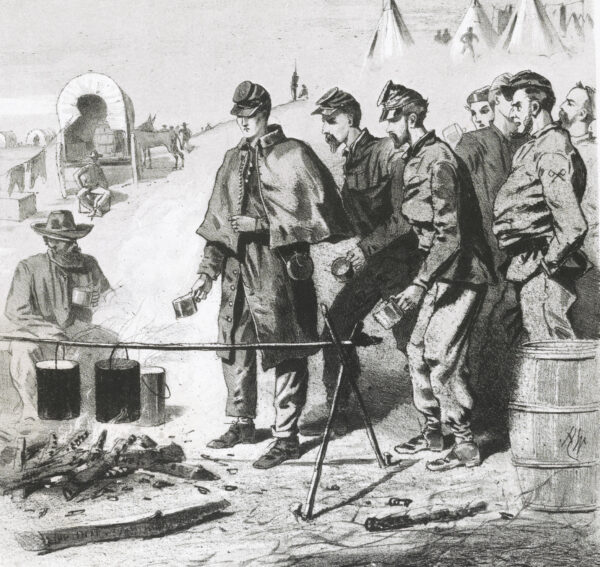
The soldiers themselves were less enthusiastic, especially about desiccated mixed vegetables, which they derided as coarse and flavorless—and regularly refused to eat. As one Union veteran put it, “this … vegetable compound could with much more propriety have been put before Southern swine than Northern soldiers. ‘Desecrated vegetables’ was the more appropriate name which the men quite generally applied to this preparation of husks.” Shown here are statistics about the production and procurement of desiccated vegetables for the Union army.
Desiccated Vegetables by the Numbers
Weight of desiccated mixed vegetable cakes (shipped 10 to a box) provided to the army: 7 lb
Amount of desiccated mixed vegetables per ration (as a substitute for beans, peas, rice, hominy, or fresh potatoes): 1 oz
Net weight of 1,000 rations of desiccated mixed vegetables: 62 lb, 8 oz
Amount of desiccated potatoes per ration (as a substitute for beans, peas, rice, hominy, or fresh potatoes): 1.5 oz
Net weight of 1,000 rations of desiccated potatoes: 93 lb, 12 oz
Quantity of “good soup” that could be made from one cake: 42 gallons
Price paid by the U.S. Army per pound for desiccated potatoes in 1861: $0.11
Price paid by the U.S. Army per pound for desiccated mixed vegetables in 1861: $0.24
Amount of desiccated mixed vegetables the U.S. Army looked to procure per month from November 1, 1862 – October 31, 1863: 135k lb
Amount of fresh potatoes processed (into 20,000 lb of desiccated potatoes) per week during the war at a specialized factory in Portland, Maine: 120k lb
Standard makeup of 100 lb of desiccated mixed vegetables included:
22 lb white turnips
22 lb carrots
20 lb potatoes
10 lb cabbage
10 lb onions
5 lb string beans
5 lb tomatoes
5 lb rice
1 lb celery or parsley
Sources
Daily National Intelligencer, November 1, 1861; John D. Billings, Hard Tack and Coffee (1887); New-York Daily Tribune, July 3, 1862; Revised United States Army Regulations of 1861 (1863); The Daily Press (Portland, Maine), December 2, 1863; The Scientific American, November 28, 1863; The Weekly Pioneer and Democrat, November 1, 1861; United States War Department, The War of the Rebellion: A Compilation of the Official Records 129 vols. (Washington, 1880–1901), Series I, Vol. 5, Vol. 11, Pt. 1, Vol. 36, Pt. 1.
Related topics: food and drink