In The Life of Johnny Reb, his comprehensive history of Confederate soldiers, historian Bell Wiley reflected on the considerable diversity of military uniforms worn in the Civil War’s early months by imagining what a visitor to Richmond would have encountered in 1861: “Here might be seen a rugged Texan … attired in homespun gray” wearing a “western hat” with “expansive brim,” a “native of the southern Appalachian area … in a bearskin blouse, nondescript trousers and rawhide leggings,” and “the dingy butternut of the lank, muscular Georgian, with its green trimming.”
While the clothing worn by these and other troops became less diverse as the war entered its second year, soldiers’ uniforms on both sides still incorporated a number of accessories, like belt plates, that came in a variety of (occasionally elaborate) styles, as shown by these Confederate examples.
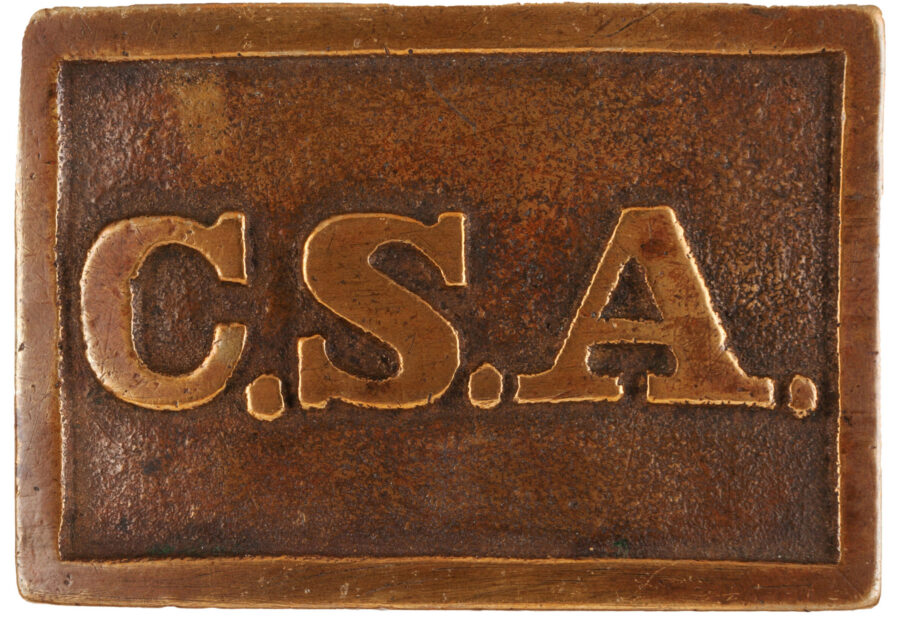
This waist belt plate, stamped “CSA” for Confederate States of America, was worn by Confederate surgeon James William Fennell, who was captured (and paroled) several times while remaining on the battlefield to treat wounded troops. He spent the conflict’s final months as a prisoner at Johnson’s Island in Sandusky Bay, Ohio.
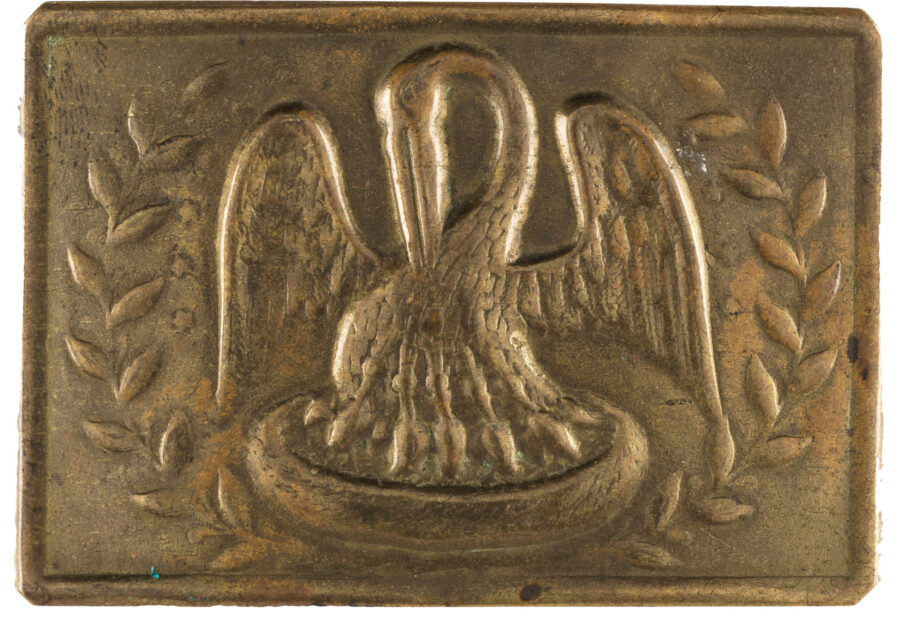
This brass belt plate is adorned with an image of a pelican, the distinctive state bird of Louisiana.
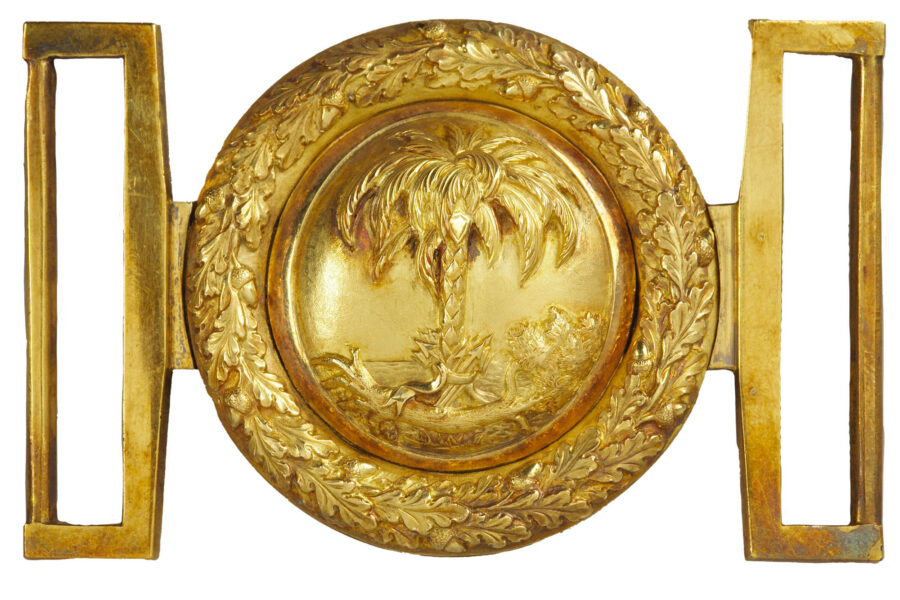
Confederate cavalry commander Wade Hampton wore this solid gold interlocking waist belt plate, an item it is believed he ordered from a Charleston jeweler on the eve of his home state’s secession in December 1860. At its center is a depiction of South Carolina’s official tree, the palmetto.

This belt plate was worn by a member of the Alabama Volunteer Corps, an assemblage of local military units formed in February 1860 whose members seized federal military installations in the state after Alabama seceded in January 1861. The corps disbanded once the war started, most of its men entering Confederate service.
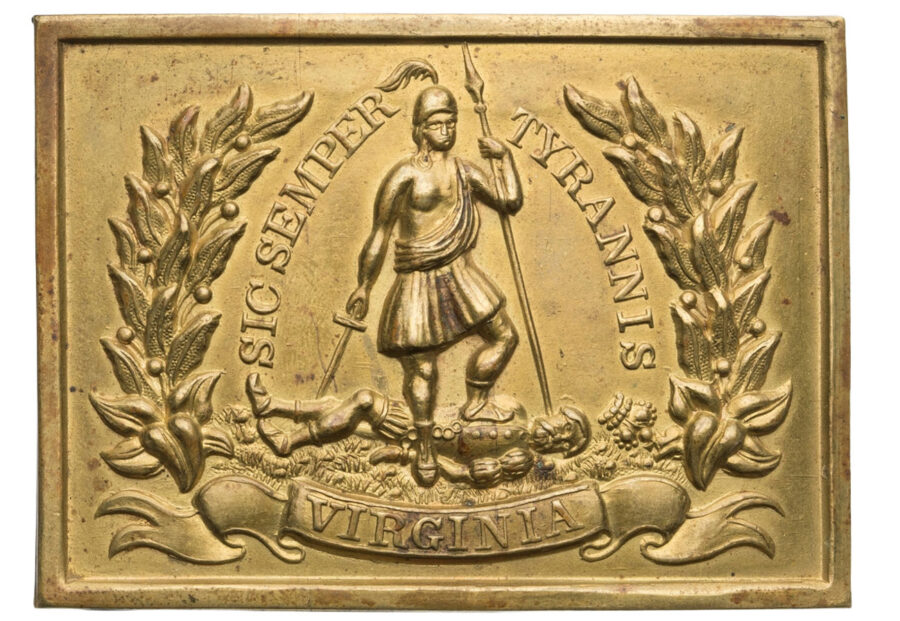
A depiction of the Roman goddess Virtus standing triumphantly over a felled king, surrounded by the Latin phrase Sic Semper Tyrannis (“Thus always to tyrants”)—the seal and motto of Virginia—adorn this detailed belt plate.
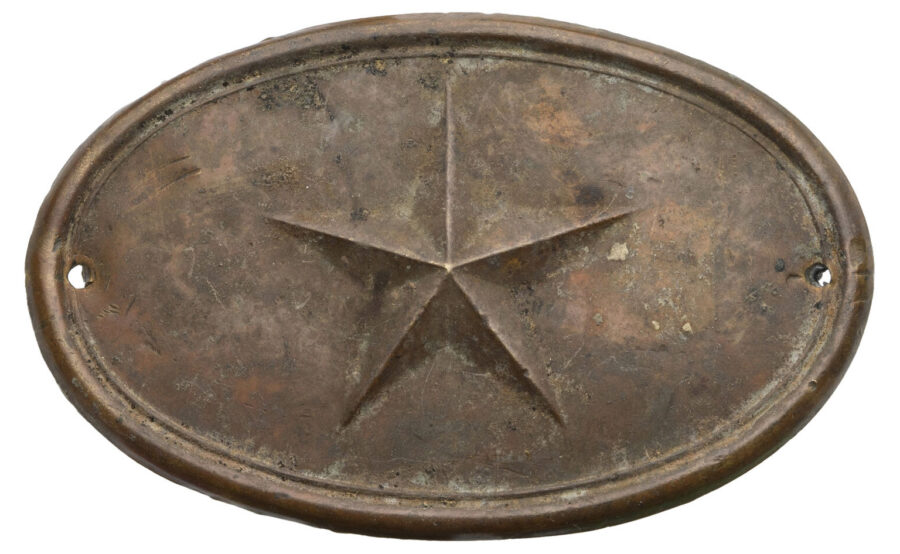
A soldier from Texas, the Lone Star State, would have worn this star-embossed oval belt plate.
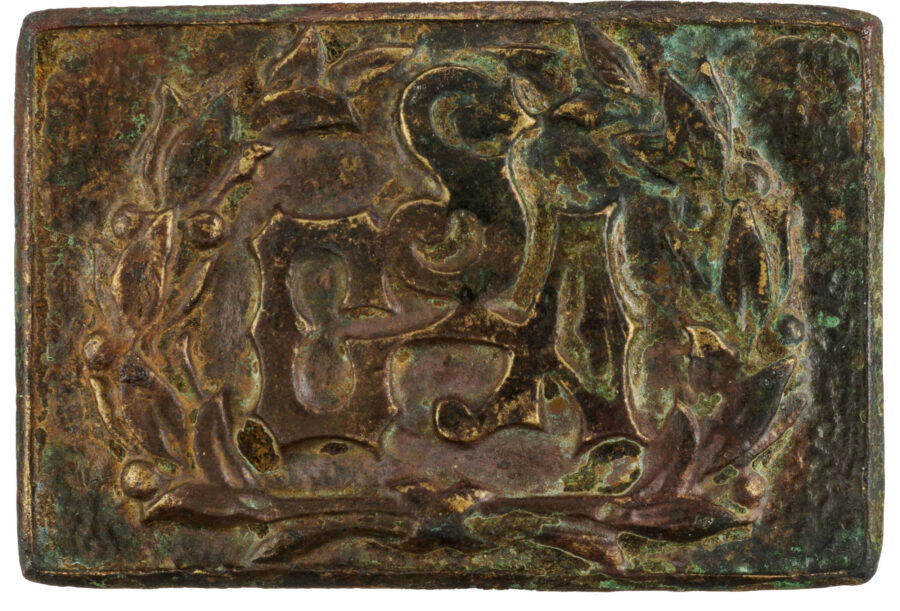
This “Blockade Runner”-type brass belt plate, so-called because of its English manufacture, features interlocking “CSA” letters within a wreath.
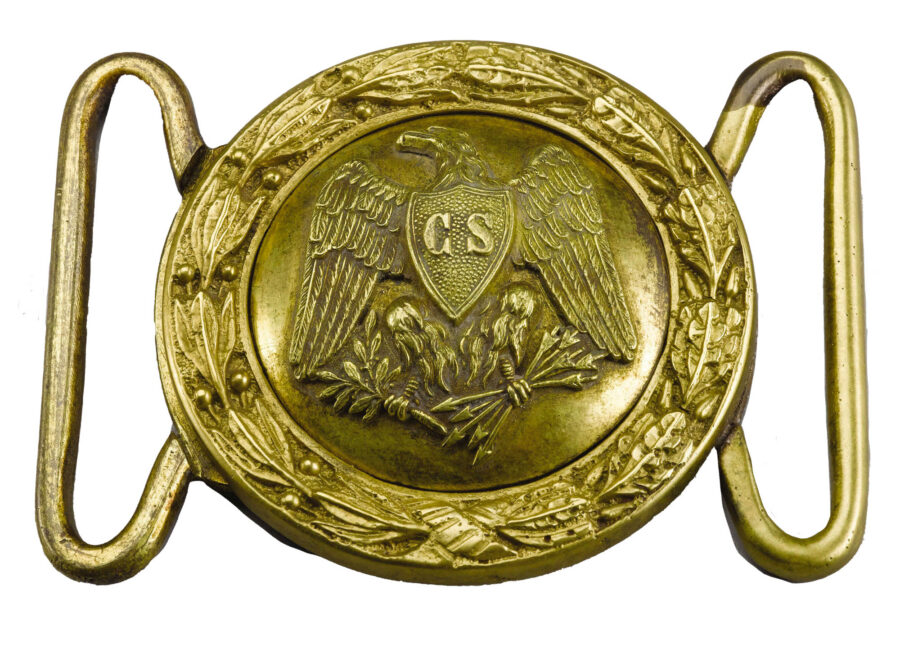
An unknown Confederate officer wore this two-piece, interlocking waist belt plate featuring an eagle and shield, the shield branded with the commonly used “CS” for Confederate States, surrounded by a wreath.
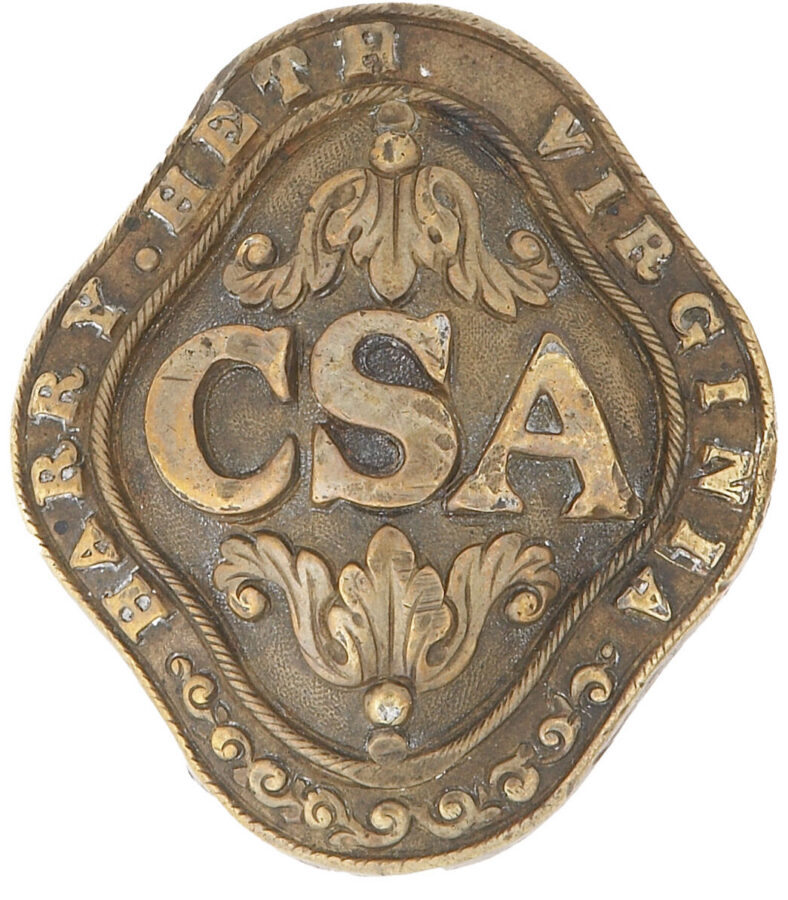
Confederate general Henry “Harry” Heth had this unique breast plate made for his horse’s harness. It incorporates Heth’s name, home state of Virginia, and the letters “CSA.”
Sources
Bell Irvin Wiley, The Life of Johnny Reb, The Common Soldier of the Confederacy (1943). Belt plate images and details courtesy of Heritage Auctions (ha.com).