 Library of Congress
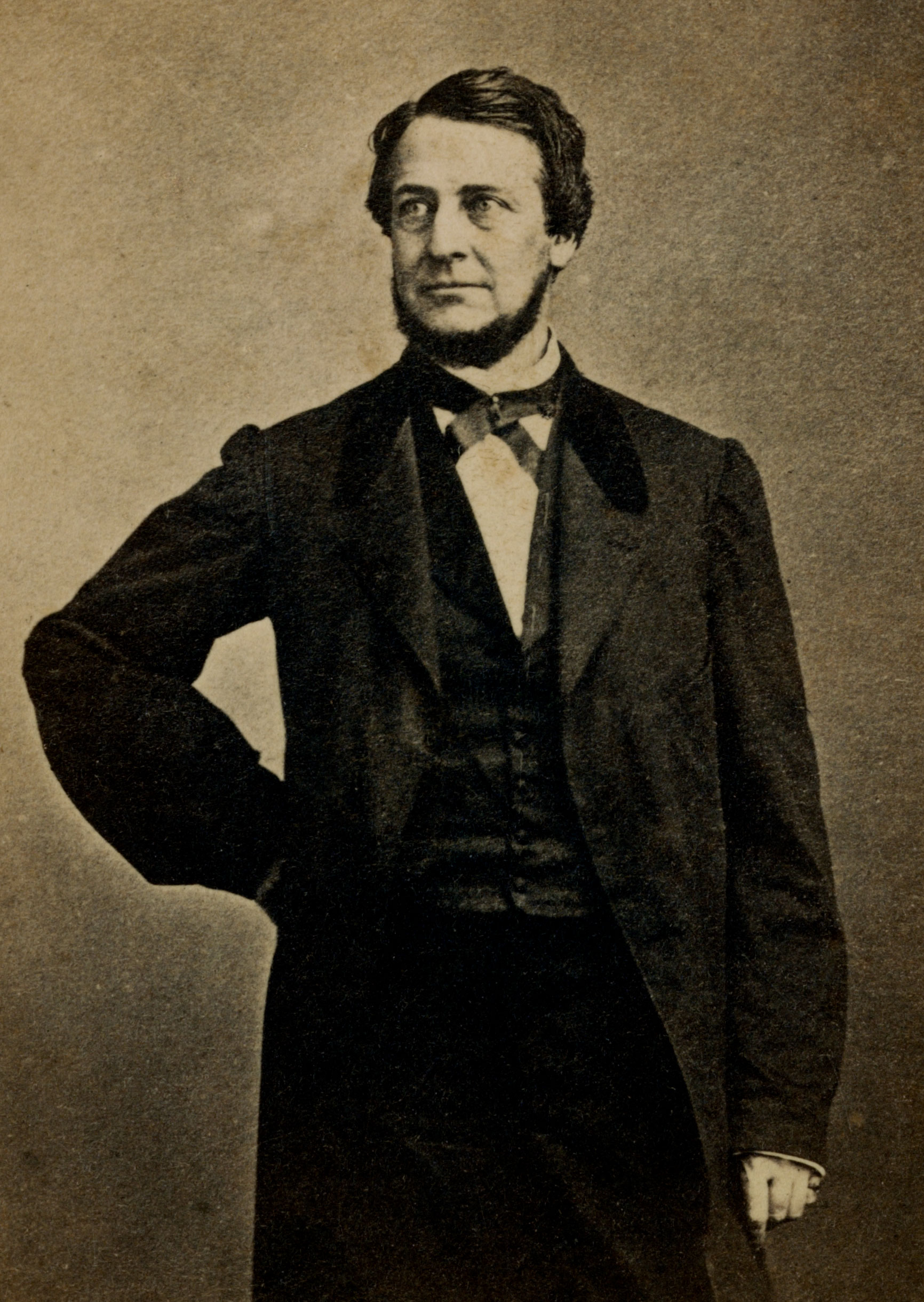
Clement Vallandigham
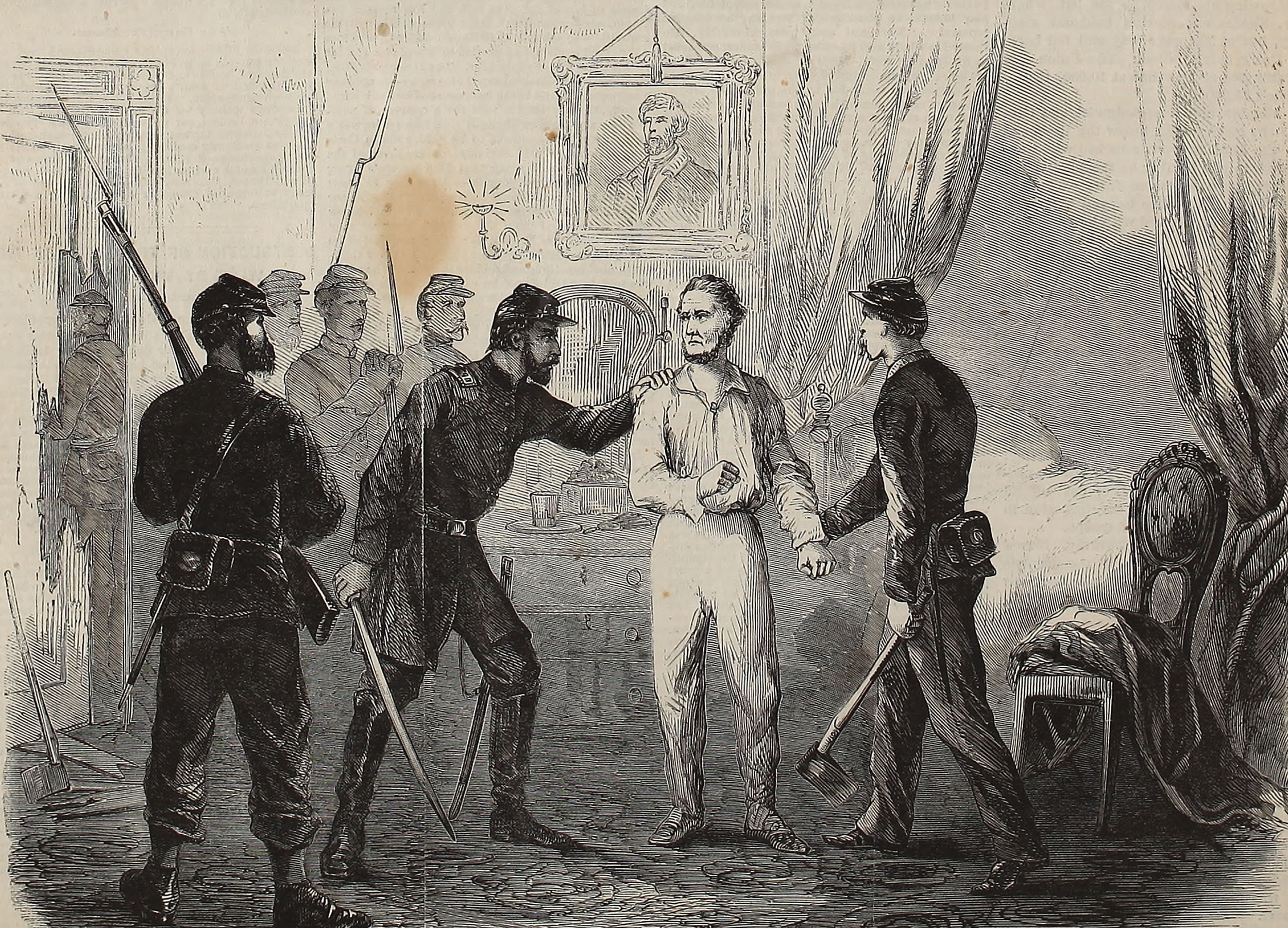
On the night of may 4, 1863, Congressman Clement L. Vallandigham was asleep at home in Dayton, Ohio, when he was awakened by pounding on the front door. Flinging open the shutters, he saw scores of soldiers filling the street below. An officer called on him to come down. Vallandigham refused, proclaiming to the swelling crowd that the order to arrest him was illegal. His wife, sister-in-law, and young son wept and shrieked as soldiers chopped through the doors. At this point, Vallandigham declared, “You have now broken open my house and overpowered me by superior force, and I am obliged to surrender.” The soldiers marched him to a special train waiting to carry him to Cincinnati, there to join some 200 other political prisoners incarcerated at Kemper Barracks.
By morning, the news had raced through Dayton and the surrounding countryside. Fire bells rang. Street-corner orators made bitter threats against the Lincoln administration. Vallandigham’s mouthpiece, the Dayton Daily Empire, called it “A Dastardly Outrage!!” and predicted bloodshed.1 A mob attacked the office of the rival Republican newspaper, the Dayton Journal, and then set fire to the building, which burned through a city block. Only with difficulty did Democratic leaders prevent the mob from lynching prominent Republicans. Other rioters cut telegraph wires and tore up railroad tracks into town, but they couldn’t prevent the arrival of federal troops. The soldiers cleared the streets at bayonet point and, with the city now under martial law, arrested 45 citizens.
Vallandigham’s was not the only arrest of a dissident public figure during the Civil War, but it was far and away the most widely publicized. By mid-1863, he had become the most strident opponent of the administration and a national voice challenging the premises of the conflict. Although many of his views were deeply offensive to northern supporters of the war and are repellent to mainstream values today, his principled dissent and defense of civil liberties in wartime made him a martyr to the administration’s impulse to squelch views that seriously threatened the Union war effort. The issues raised by his arrest and subsequent prosecution have dogged Americans during wartime since the country’s founding, hugging the fault line between the constitutional guarantees of free speech and the dangers of perceived subversion in a time of national crisis.
 Frank Leslie's Illustrated Newspaper
In this sketch from Frank Leslie’s Illustrated Newspaper, Union soldiers arrest Clement Vallandigham at his home in Dayton, Ohio, on the night of May 4, 1863. “You have now broken open my house and overpowered me by superior force, and I am obliged to surrender,” the congressman told his captors before being taken to a nearby train bound for Cincinnati.
At 40, Vallandigham was a rising star in the Democratic Party serving his second term in Congress as the nation hurtled toward war in the spring of 1861. Congress faced existential challenges: How could the North be mobilized for a war that it never expected to fight? How could the war be paid for? Could the Constitution survive the suspension of fundamental civil rights in the name of national security? What should Americans do about slavery? Should the war be fought with respect for the sanctity of southern property—including slaves—or with a ruthlessness that would bring the seceded states to their knees? Meanwhile, suspicion of central government in general, distrust of a strong executive in particular, and embedded traditions of states’ rights—in the North and the South—threatened to undermine the country’s war-making ability, while racism was etched into almost every aspect of war policy. Vallandigham, the quintessential antiwar northern Democrat, a faction that had been labeled “Copperheads,” was determined to make his presence felt.
Republicans held decisive majorities in both houses of Congress, having won about three-fifths of the seats in each chamber, and the presidency, in the 1860 elections. One-third of the seats in both chambers sat empty, abandoned by defectors to the Confederacy. Their absence opened the gates to one of the most dynamic eras of legislative activism in American history. Over the next four years Congress would help win the war, reinvent the nation’s financial system, and enact a raft of legislation long blocked by southern intransigence, including western homesteading and the Transcontinental Railroad. In doing so, Congress also laid the foundation for the activist central government that came fully into being in the 20th century, and initiated a racial and economic revolution that would overthrow the South’s cotton economy and make nearly 4 million enslaved people citizens.
The once mighty but now diminished Democrats were split into two factions: those aligned with the Republicans on war policy and defiant skeptics like Vallandigham, whose views many judged had crossed the line into treason. Vallandigham was a paradoxical figure. Bright-eyed, intellectual, and often charming, he was a pro-southern “Negrophobe” and an advocate for the immigrant working class, an opponent of capital punishment and a critic of the brutal treatment suffered by seamen on American ships. The son of a Presbyterian minister, he was said to have pulled a pistol on friends who tried to force him to drink alcohol at an otherwise convivial gathering. As chairman of the National Democratic Campaign Committee during the recent election, he had stumped the Midwest for Stephen A. Douglas. Everywhere he went, he had attacked racial “amalgamation” and “negro equality,” and charged that a Republican victory would lead to the emancipation of millions of slaves who would steal white men’s jobs. Unalterably opposed to going to war to save the Union, he declared that he “never would, as a Representative in Congress of the United States, vote one dollar of money whereby one drop of American blood should be shed in a civil war.”2
An apostle of small government in the Jacksonian tradition, Vallandigham opposed public debt, protective tariffs, and public works, all of which, he charged, only benefited the special interests of the moneyed classes. In both his populism and his racism, he was largely in tune with many northern Democrats, especially those in the lower Midwest, which had been settled in large part by emigrants from the South, including his own Virginia forebears. The South and the West were natural allies, he preached, with identical interests, until the incubus of anti-slavery agitation began to drive them apart.
Only a restructuring of the government could save the Union, he argued. His plan was a radical one: an amendment to the Constitution that would divide the United States into four sections. New England with New York and Pennsylvania would be designated “The North”; the upper Midwest from Ohio to Kansas, “The West”; Oregon, California, and any new states formed adjacent to them, “The Pacific”; and “The South,” to include all the slave states from Delaware to Texas. Votes on national legislation would require a majority of the senators from all four sections. Election of the president would also take place by section, with two electors being appointed by each state, and a majority of the electors in each of the four sections required to choose the chief executive, putting an end to majority rule, and precluding the future election of a president by the vote of a single sectional majority, as Lincoln had been. Secession would be a constitutional right, requiring the consent of all the legislatures of the section to which the seceding state belonged. Congress would be prohibited from interfering with the right of any citizen—this really meant slaveowner—to settle wherever he wished on equal terms with all other citizens. This plan won little support, but it foreshadowed the role that Vallandigham would play as, increasingly, he became the leading spokesman for northern opposition to the war.
The fall of Fort Sumter in April 1861 rendered all compromise proposals moot. With Congress out of session, President Lincoln, proclaiming that the Union faced “combinations too powerful to be suppressed by the ordinary course of legal proceedings,” took it upon himself to summon 75,000 militiamen to forcibly retake national property that had been seized by the Rebels, suspended habeas corpus protections in Maryland (where pro-Confederate sabotage threatened to prevent northern troops from reaching Washington), directed northern navy yards to arm civilian ships for battle, and ordered a blockade of southern ports. Lincoln’s actions were decisive and of questionable constitutionality.3 That he did so without the consent of Congress fed the fears of Americans already suspicious of the new administration.
Congress met in July with a Republican majority under pressure from both their leadership and their base to ratify Lincoln’s actions. In the debate that followed, Vallandigham denounced Lincoln as the “Tiberius of America,” and declared that, in his view, it was the Republican administration—not the aggrieved South—that was guilty of treason.4 He staked out a position he would defend in the years to come: support for the South’s right to slaves, yoked to the conviction that southerners would embrace peace if only they were guaranteed protection from the menace of the anti-slavery North. “Yet the president now asks us to ratify his usurpations by a law ex post facto, and thus to make ourselves parties to our own degradation, and to his infractions of the Constitution,” he charged.5
 National Archives
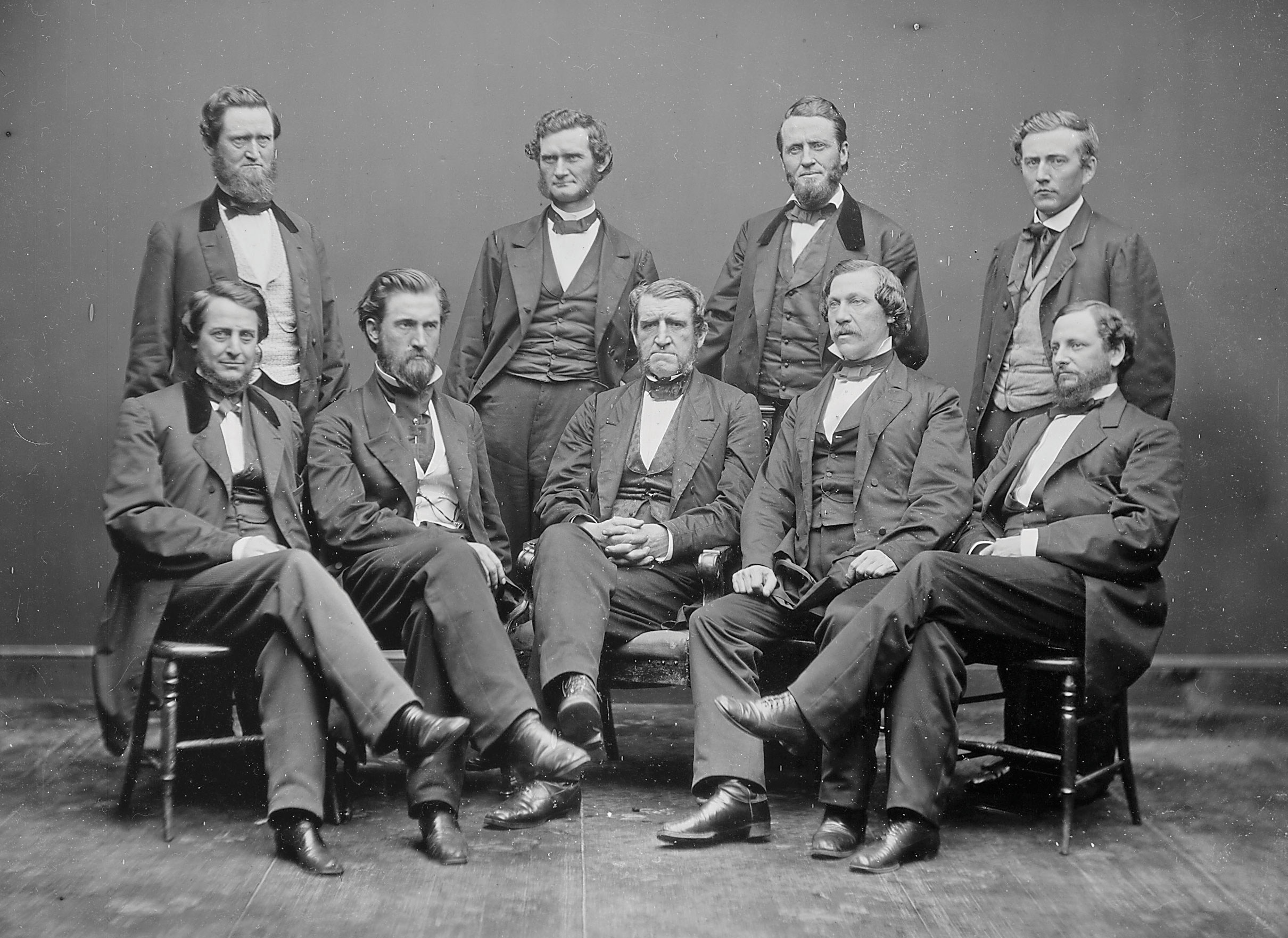
Clement Vallandigham (seated at far left) poses with other prominent Democratic congressmen in Mathew Brady’s Washington studio sometime near the outbreak of the war. Though Vallandigham and other Democrats had tried to find ground for compromise during the secession crisis, the firing on Fort Sumter rendered all such proposals futile.
Vallandigham challenged virtually every war policy subsequently proposed by Republicans. He fought the creation of a national currency (known as “Greenbacks”) to help pay the cost of the war, denouncing it as a dangerous experiment that would lead to high prices, speculation, and runaway inflation. When it became evident that the initial wave of volunteer troops would be insufficient to quell the rebellion, he opposed conscription and dared the government to try to enforce it and “like the destroying angel in Egypt, enter every house for the first-born sons of the people.”6 He was contemptuous of any policy that sought to undermine slavery. The South was neither weak nor corrupted by slavery, but warlike and enduring, he told his fellow members of Congress, and slavery was actually the source of its greatest strength. Never could the people of the South be “whipped back into love and fellowship at the point of the bayonet,” nor slavery abolished either by the sword or proclamation, any more than could such equally fundamental human institutions as marriage or paternity.7
Such views had substantial support among Copperheads. A Democratic paper in Circleville, Ohio, for instance, called for abolitionists to be lynched “till the flesh rot off their bones and the winds of Heaven whistle Yankee Doodle through their loathsome skeletons,” while the New York Herald predicted that southern whites would now unite even more firmly “in a furious hatred of the North.”8 Copperhead ranks swelled. In the army, soldiers threatened to throw down their arms, or revolt against abolitionist officers. Some Copperheads began quietly rooting for the Union’s defeat.
Copperhead bitterness—and Vallandigham’s —was further inflamed when, in September 1862, Lincoln expanded the suspension of habeas corpus to cover the entire country, authorizing the arrest without due process and trials by military commissions of all alleged insurgents, anyone who abetted them, and any who discouraged enlistment, resisted militia drafts, or was deemed to be guilty of any other form of disloyalty. Republicans tended to see treasonous schemes behind almost anything from declining enlistments and local antiwar protests to provocative speech that had always come under the protection of the First Amendment. Confederate agents were in fact active in many states, and the shadowy pro-Confederate secret society known as Knights of the Golden Circle was forming armed units in Illinois and Indiana and infiltrating the Union army. Democratic judges mainly in the lower Midwest issued subpoenas for the demobilization of soldiers who no longer wanted to serve. Doctors welcomed appeals from draft dodgers claiming newly discovered ailments. Copperhead editors urged men to reject the income tax. In some towns, troops had to be called out to break up anti-draft rioting. Everywhere, desertion metastasized.
As the country’s leading Copperhead, Vallandigham knew that he was a prime target in the October 1862 state elections since the Unionist-controlled Ohio legislature had gerrymandered his district to include a strongly Republican county. As he stumped for reelection, he tirelessly challenged the government’s erratic but widespread crackdown on opposition to the war. He spewed savage attacks on Republican support for emancipation, repeatedly condemning Congress for its alleged obsession with the “Almighty African,” claiming that “from the prayer to the motion to adjourn, it is negro in every shape and form in which he can, by any possibility, be served up.”9 On August 2, he assured an enthusiastic crowd, “My opinions are immovable; fire cannot melt them out of me. The knife of the assassin shall [never] move me from my firm purpose.”10 The elections were a disaster for Republicans. The Democrats took control of the Indiana legislature and won most of the House seats in Ohio and Pennsylvania, and in November captured the statehouses and scores of state offices in Illinois, New Jersey, and New York. “Today the shackles of the white man have been loosened!” the Dayton Daily Empire crowed.11
Vallandigham, however, was defeated by Major General Robert Schenck, a war veteran and anti-slavery lawyer. The editor of the Republican newspaper in Vallandigham’s boyhood hometown of New Lisbon gloated: “That arch-traitor and chief of Copperheads—that pimp of Jeff. Davis and standing disgrace to his state, Clem Vallandigham, is laid out cold and stark in the embrace of political death. He is dead, dead, dead—and a loyal people will bury him so deep in the mire of his own infamy that the stench from his putrid carcass will never offend the nostrils of good men.”12
Vallandigham’s term would continue to the end of 1863, since new members did not take their seats until December of the following year. All over the country, Copperheads heroized him as a principled prophet; some proposed him as a future senator or governor, ambitions that Vallandigham quietly shared.
 Library of Congress
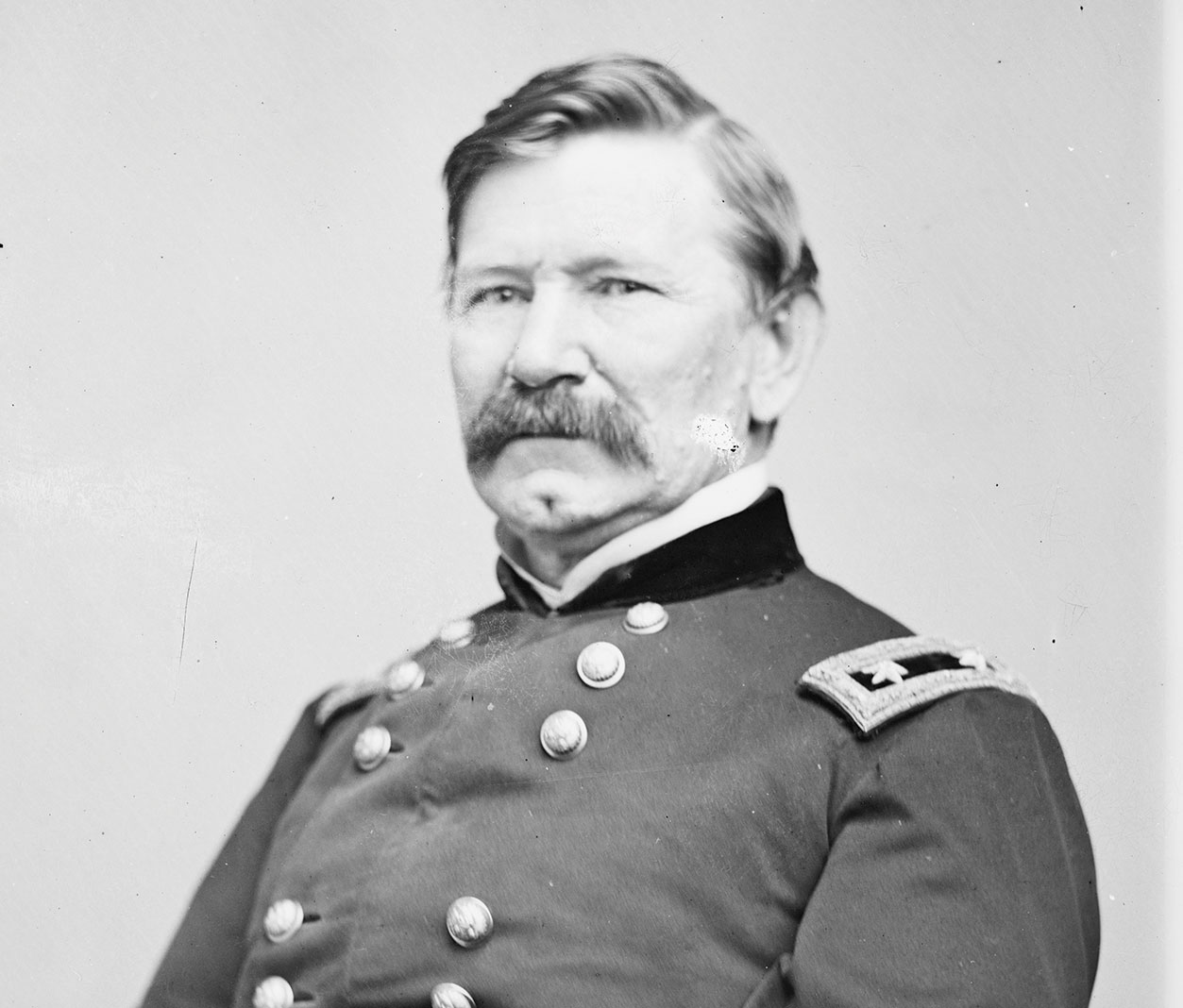
Major General Robert Schenck, who defeated Vallandigham in the 1862 election.
Lacking votes to thwart the Republicans’ agenda, through the spring of 1863 Vallandigham attempted to stall their initiatives by means of parliamentary challenges and a fusillade of resolutions that sought to define much of the legislation as treason. One of these declared any federal official who attempted to overthrow any state’s “established institutions”—such as slavery—guilty of a high crime against the Union and the Constitution. Another defined as a crime any attempt to propose peace on any terms but the integrity of the Union as it existed before the war. None stood a chance of passing, but they served as rallying points for the opposition, and more importantly as prospective guidelines for the Democratic Party’s 1864 presidential platform.
The most potent weapon in Vallandigham’s armory was his incessant hammering at the government’s suspension of habeas corpus and the “tyrannical” methods employed to curtail dissent. The suspension protected federal officers from prosecution for carrying out arrests that would be illegal in peacetime. Although such actions were never as widespread or draconian as Vallandigham claimed, they were just capricious and heavy-handed enough to lend credibility to his charges. For instance, ordinary citizens were sometimes hauled in simply for questioning the war, cheering for Jefferson Davis, or insulting Abraham Lincoln. By November, more than 500 dissenters had been interned at a camp near Columbus. And in Dayton, a law student, the son of one of Vallandigham’s best friends, was arrested for saying Democrats shouldn’t help the Republicans attack the South, while two Presbyterian ministers who had been guests in Vallandigham’s home were jailed as alleged Confederate spies.
To most Republicans, Vallandigham had become the incarnation of disloyalty. Many believed him to be implicated in a vast if murky Copperhead conspiracy bent on sabotaging the war effort. Mass desertion was encouraged and in some cases abetted by Copperheads. In December 1862, military authorities in Indiana were arresting an average of 400 deserters a week, doubtless a fraction of the total. Especially after the Democrats won control of the Indiana and Illinois legislatures, there was more talk of creating a “Northwestern Confederacy,” an idea that Vallandigham had long, if ambiguously, hinted at. By mid-1863, violent resistance was epidemic across swaths of Ohio, Indiana, and Illinois, and in some areas of Pennsylvania, Michigan, and Wisconsin. Just outside Indianapolis armed horsemen fought a pitched battle with Union soldiers sent to capture deserters. In Union County, Illinois, gunmen shot dead a federal provost marshal and wounded another. (By the end of the war, 38 provost marshal agents would be murdered, and another 60 wounded.) In Brown County, Indiana, a Copperhead state senator killed a cavalry trooper there to arrest deserters and was spirited away by a mob. Elsewhere, armed men seized draft records, cheered Vallandigham and Jefferson Davis in the same breath, and drilled openly with draft resisters and deserters.
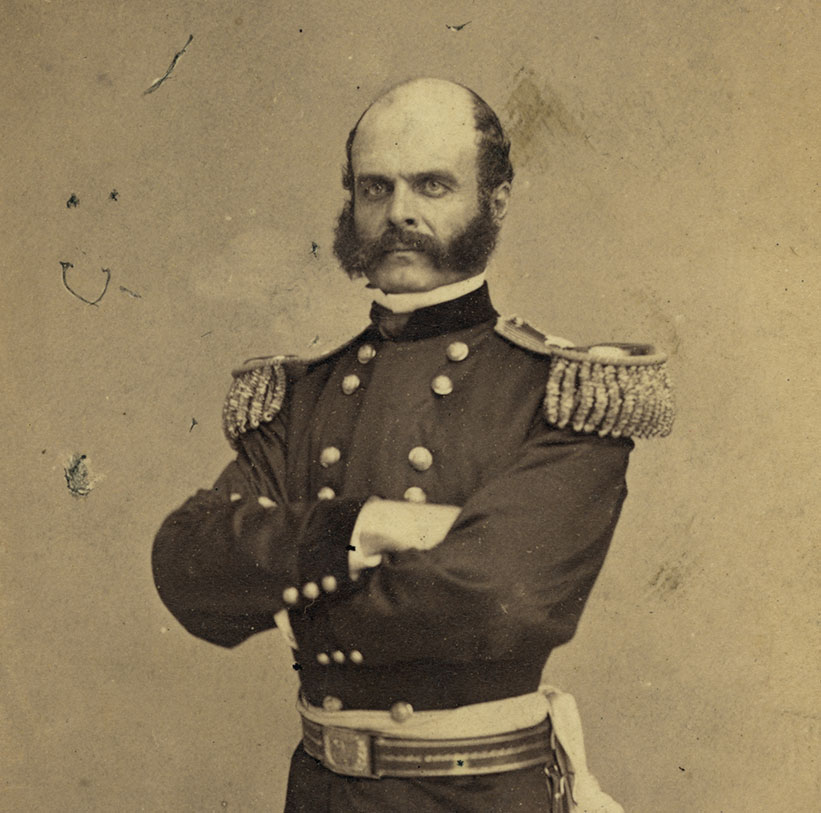
It was in this climate, in April 1863, that Vallandigham confronted Major General Ambrose Burnside, who had been sidelined after leading the Army of the Potomac to disastrous defeat at the Battle of Fredericksburg in December 1862, and now ruled a new military district encompassing Ohio, Indiana, Illinois, and Kentucky. Burnside’s object was twofold: plan an invasion of eastern Tennessee to relieve the beleaguered Unionist population there and crush draft resistance. He issued three orders to be enforced by the military authorities: One barred the public from bearing arms; the second banned criticism of the administration’s policies by either newspapers or public speakers; and, most controversial of all, the third, known as Order No. 38, threatened a death sentence for anyone deemed guilty of proclaiming support, offering aid, or communicating secretly with the enemy, or guilty of treason, whether openly expressed or implied. Spies and journalists felt the orders’ sting. Two alleged Confederate recruiters were condemned to death by a Cincinnati court-martial, while the Cincinnati Enquirer was subjected to censorship, the Copperhead Chicago Times suppressed, and circulation of the New York World banned in the district.
 Ye Book of Copperheads
Vallandigham was voted out of office in 1862, but his term continued into 1863, while his reputation among Republicans as the embodiment of disloyalty strengthened. Right: Two illustrations—one of Vallandigham as a snake, the other of a group of Copperheads attempting to turn a wounded soldier against the war effort—from Ye Book of Copperheads, a pro-Union publication from 1863.
In speech after speech, Vallandigham denounced the orders. On May 1, at a meeting in Mount Vernon, Ohio, attended by thousands of Democrats—many of them sporting Copperhead pins, flags and banners—he condemned the surrender of American liberties and the conversion of government into despotism. He said little that he hadn’t said publicly before: that the war was being waged for the liberation of the blacks and the enslavement of the whites, that the administration was bent on suppressing free speech, that he “spit” and “trampled” on Order No. 38. But this time an army captain, J.M. Cutts, was there in civilian clothes taking notes. He reported that Vallandigham had explicitly invited his listeners to resist Order No. 38—sentiments that he must have known offered aid and comfort to the enemy. So came the nighttime knock on his door and his arrest.
Vallandigham quickly turned his arrest to political advantage. On May 5, from his jail cell, he smuggled an open letter to “the Democrats of Ohio.” In it he declared, “I am here in a military bastille for no other offense than my political opinions, and the defense of them and of the rights of the people, and of your constitutional liberties.”13 His trial was an embarrassment for the administration. Although it provided the appearance of due process, the outcome seemed predetermined. He was nominally represented by two nationally known Democrats, former Senator George Pugh of Ohio and Representative George Pendleton of Indiana, but they were not permitted in the courtroom. A skilled lawyer in his own right, Vallandigham grandiloquently denied the commission any authority to try him and refused to enter a plea, claiming that he had merely advocated peaceful compromise, a position held by countless northerners. And if he had called the war one for abolition, wasn’t that simply a statement of fact based on the Emancipation Proclamation? After three hours of deliberation, the commission pronounced Vallandigham guilty, and sentenced him to imprisonment for the duration of the war.
 Library of Congress
Major General Ambrose Burnside, whose Order No. 38 had laid the groundwork for Vallandigham’s arrest.
Vallandigham’s arrest brought to a head both the immediate question of the suspension of habeas corpus and the broader one of whether any suppression of dissent could be justified. It also made clear that strong-arm repression was likely to further strain the alliance between Republicans and pro-war Democrats. Virtually the entire Democratic press was volcanic with rage, while mass meetings from Vermont to Wisconsin denounced Vallandigham’s treatment and the tyranny of “military rule.” His arrest gave even some administration men pause. “The proceedings were arbitrary and injudicious,” Navy Secretary Gideon Welles reflected in his diary. “Good men, who wish to support the administration, find it difficult to defend these acts.”14
Lincoln maintained that the arrests of Vallandigham and others were made less for what they had done than for what they probably would do. Had Robert E. Lee and other southern officers in the U.S. Army in 1861 been seized and detained then, he argued, the Confederate cause would have been crippled. Vallandigham, wrote Lincoln, “was warring upon the military,” adding in words that resonated powerfully among the northern public, “Must I shoot a simple-minded soldier-boy who deserts, while I must not touch a hair of a wily agitator who induces him to desert?”15 All the same, Lincoln felt that Burnside had gone too far. Imprisoning Vallandigham would only inflate his martyrdom and serve the antiwar Democrats’ political agenda. But he hesitated to undermine Burnside, who had been trying, however clumsily, to carry out the administration’s orders. Three days after the trial Lincoln expelled Vallandigham to the Confederacy.
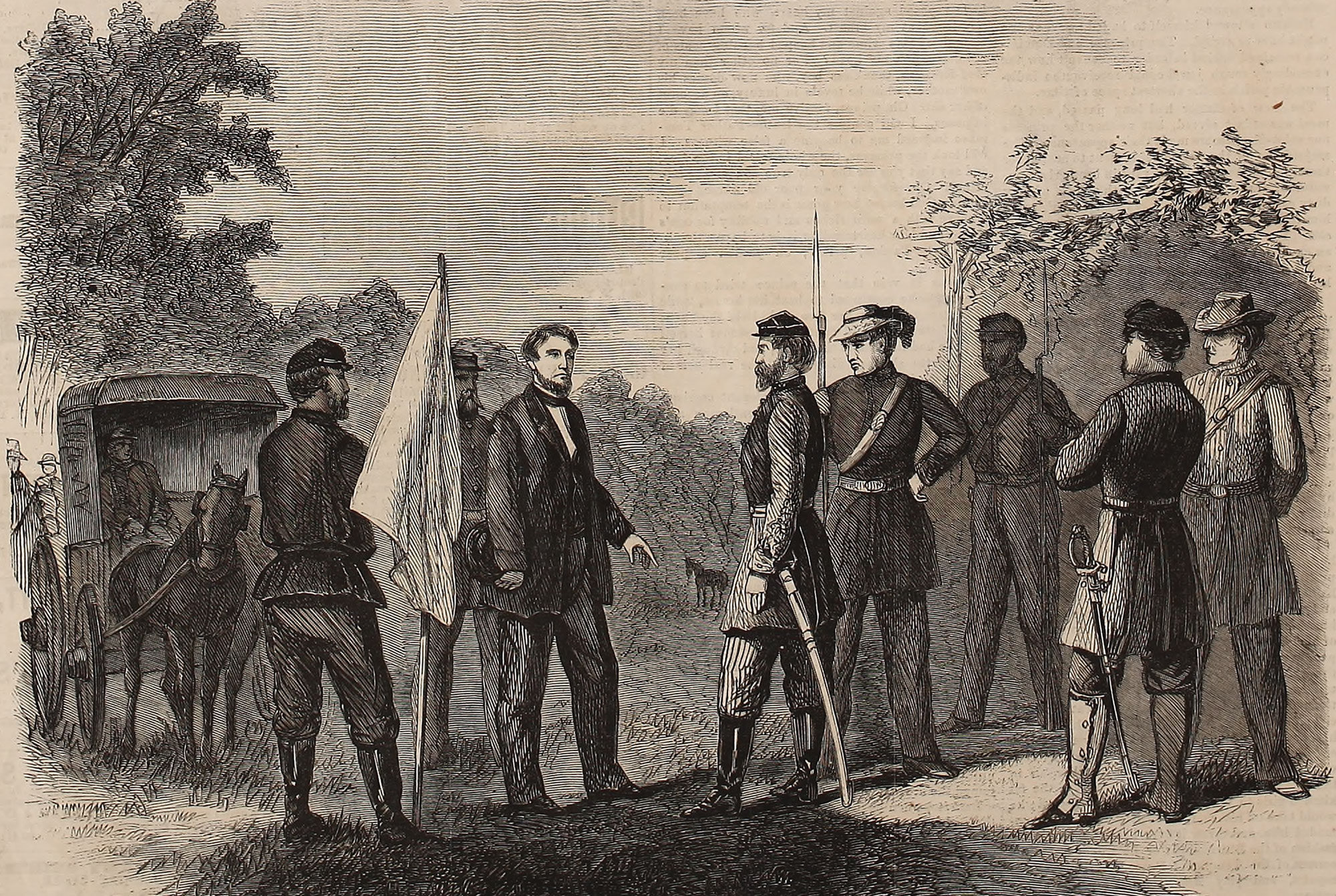
On May 22, Vallandigham was placed on a federal gunboat and dispatched southward. In a letter to Horatio Seymour, the Democratic governor of New York, he said the entire fiasco had “reserved the best possible issue for us”—the protection of civil rights.16 At 2 a.m. on May 25, he was escorted from Murfreesboro, Tennessee, 12 miles across no man’s land to the Confederate lines. (The order for his transit was written by James A. Garfield, the future president, then a major general serving in Tennessee with William S. Rosecrans’ Army of the Cumberland.) A message from General Braxton Bragg directed that he be brought to Confederate headquarters at Shelbyville, where he was billeted in the home of a local admirer who said she had been expecting him to defect since the beginning of the war.
Bragg ceremoniously congratulated Vallandigham on his arrival “in our land of liberty, where you will find the freedom of speech and conscience secured to all.”17 (This was a preposterous claim, given that southern Unionists suffered far worse repression than did Copperheads in the North, not to mention the fact that southern blacks enjoyed no freedoms.) The Confederate authorities officially regarded him as a private citizen who had been exiled by a “foreign government.” Vallandigham was of no use to the South as an exile here, but of immense value as a gadfly undermining federal morale in the North. As Robert E. Lee later wrote to Jefferson Davis, “It is plain to my understanding that everything that will tend to repress the war feeling in the federal States will enure to our benefit.”18
Vallandigham had no desire to remain in the Confederacy, which would only lend plausibility to his enemies’ accusations—which of course was Lincoln’s intention. He had no political future except in the North, where he was confident that the Democrats would build on their victories in the 1862 elections. His plight was solved by Davis, who on June 2 ordered him escorted to Wilmington, North Carolina, where he could board a blockade runner bound for neutral British territory. Vallandigham stopped on the way in Lynchburg, Virginia, to confer with Colonel Robert Ould, whom he assured that if the Confederacy could hold out for another year, the antiwar Democrats would drive the Republicans from power and bring about a peaceful settlement. Vallandigham couldn’t grasp that the South wasn’t interested in reunion but determined to win its independence on the battlefield. He had staked his wartime career on his belief that the prewar Union could be restored as it was, and he was unwilling to allow reality to intrude.
 Frank Leslie's Illustrated Newspaper
Under flag of truce, Vallandigham—recently expelled to the Confederacy by order of Abraham Lincoln—is escorted by Union soldiers from Murfreesboro, Tennessee, to Rebel lines on May 22, 1863
Meanwhile, back in Ohio, “Vallandigham fever” swept the Democratic state convention—its largest ever—that met in Columbus on June 11. Boys hawked his picture in hotel lobbies and taverns, while pro-Vallandigham speeches were made all over town and from platforms on the statehouse grounds. When his name was placed in nomination for governor, it was ratified by near-acclamation on a vote of 411 to 13.
On June 17, Vallandigham successfully ran the Union blockade aboard Cornubia, with a cargo of contraband and several Confederate agents. He arrived three days later at British-governed Bermuda, where he transferred to a ship bound for Halifax, Nova Scotia. From there he continued on to Montreal and then down the St. Lawrence River to Niagara Falls, where on July 15 he was greeted by a Copperhead friend, Representative Daniel Voorhees of Indiana, and a delegation from Dayton.
Vallandigham presided over his campaign from a command post in Windsor, in Canada West—later redesignated Ontario—where he could be reached by his Ohio supporters. Southern sympathizers invited him to dinners, fetes, and rallies, and streams of visitors—Democratic politicians, well-wishers from all over the Midwest, parties of students, even delegations of firemen—turned up at his door to shake his hand, collect his autograph, or just gawk. Democrats campaigned for him on a platform of free speech and assembly, rejection of the Emancipation Proclamation, the restoration of habeas corpus, and a constitutional convention to propose amendments restoring the Founders’ “original intent”—code for accommodating the South and slavery. Pro-Vallandigham parades were gala affairs. Marchers in Dayton pulled a miniature “Lincoln Bastille” replete with downcast “prisoners of state,” and in Springfield a procession of floats included one carrying 60 virginal girls beneath a banner emblazoned “Give Us White Husbands or None at All.” Vallandigham’s followers sanctified his birthplace at New Lisbon as hallowed ground on a par with Thomas Jefferson’s Monticello and George Washington’s Mount Vernon, and predicted that Americans would make pilgrimages there for centuries to come.
Democratic rallies swelled in size: 15,000 at Bellefontaine, 10,000 at Marysville, almost 20,000 at Delaware, 40,000 at Circleville, or so The Crisis in Columbus reported.20 Republicans treated Vallandigham’s candidacy as a national emergency. Conceding that no Republican was likely to win, Ohio’s two senators, Ben Wade and John Sherman (the brother of Major General William T. Sherman), along with former Ohio governor and now Treasury Secretary Salmon P. Chase, threw their critical support behind John Brough, a tough-minded pro-war Democrat and railroad executive running on the Union ticket, who scorned abolitionism and Vallandigham. They pulled no punches in their rhetoric; Sherman denounced Vallandigham as a “convicted traitor” who merely mouthed the words that the Confederates “dictated” for him.21
 Library of Congress
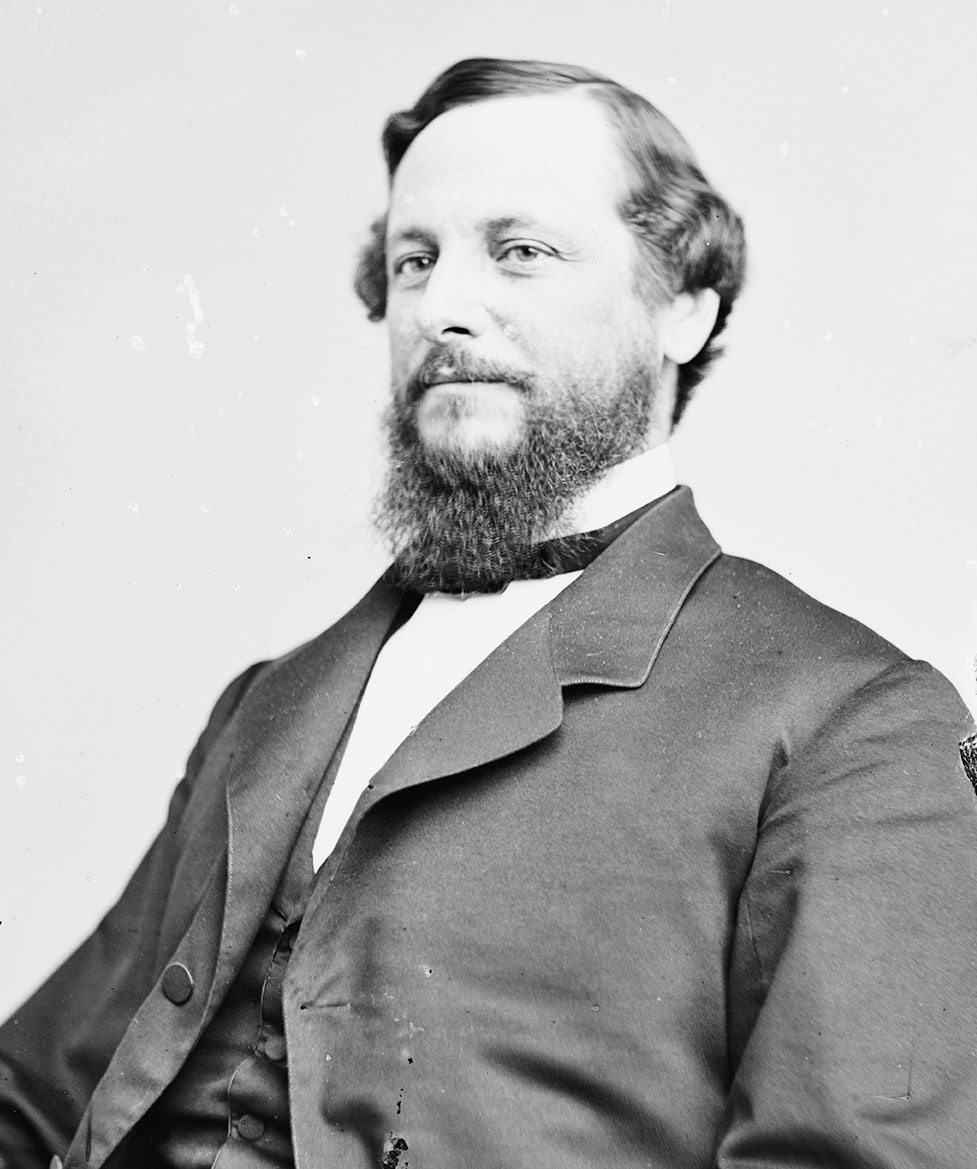
Representative George Pendleton of Indiana, who joined McClellan on the Democratic ticket.
The Democrats badly misread the public’s mood. Vallandigham was defeated by more than 100,000 votes. They were especially shocked by his poor showing among Ohio’s serving soldiers. When news of his defeat reached the Army of the Cumberland, James Garfield later recalled, “There arose a shout all along the line on that rainy midnight from every tent, which rent the sky with jubilees.”22
Yet Vallandigham’s reaction to the election was surprisingly sanguine. “As to the future, posterity will vote for me,” he wrote to his wife.23 He was still certain that the Republican administration would fail, as the public optimism that followed the Union victories at Vicksburg and Gettysburg faded in winter. By spring 1864, public horror at the swelling casualty lists generated by Ulysses S. Grant’s Overland Campaign turned more and more exhausted northerners against the war. Desertions climbed to 7,333 per month, a 40 percent increase over the previous year. Draft-dodging spread even to Republican strongholds in the upper Midwest, New England, and upstate New York. Armed Copperheads were seen openly drilling in Ohio just two miles from Columbus. In Illinois, pro-Confederate bushwhackers who burned property and threatened civilians were acquitted by Copperhead juries. Brick Pomeroy, the extremist editor of the La Crosse, Wisconsin, Democrat, raged that if Lincoln were to be reelected, “we trust that some bold hand will pierce his heart with dagger point for the public good.”24
The war was now costing $3 million a day, taxes had again increased, and the draft was continuing to commandeer sons, fathers, and husbands. Many Republicans, and at times Lincoln himself, considered defeat at the polls in November almost certain. On August 22, New York Times editor and Republican Party chairman Henry J. Raymond warned Lincoln that “the tide is setting strongly against us.”25 The dismal military situation was out of the party’s hands, he admitted. But slavery was not. Raymond proposed naming a commission to go to Richmond to offer the Confederacy peace on the sole condition of acknowledging the supremacy of the Constitution, in effect abandoning emancipation and the millions of still enslaved blacks.
The Republicans’ gloom was a counterpoint to the Democrats’ euphoria as they prepared for their convention to be held in August in Chicago. For more than a year, Vallandigham had restlessly marked time in Canada, following events as best he could. Now he took bold action, disguising himself to slip back into the United States on June 14. Stung by criticism from civil libertarians over his arrest and highly publicized expulsion, the administration simply ignored him. He arrived at Hamilton, Ohio, where supporters elected him to serve as a delegate to the Chicago convention. He had come home in peace to vindicate his rights as a citizen, he said. “Let no man of the Democratic party begin any act of violence or disorder, but,” he added meaningfully, “let him not shrink from any responsibility, however urgent, if forced upon him.”26
In the weeks that followed, Vallandigham traveled the North, reconnecting with allies, speaking at peace rallies, and campaigning tirelessly for the appointment of antiwar delegates to the convention. That event opened with a stream of rabble-rousers who praised the South, denounced pro-war party members as “shoddy abolitionists in disguise,” urged open resistance to the draft, an immediate end to the war, and repudiation of emancipation. Some raged against “flat-nose, wooly-headed, cursed of God and damned-of-man descendants of Africa,” and to cheers, warned that if the voters did not put Lincoln out of power by means of the ballot “they will by the bullet.”27
Although some Democrats tried to promote Millard Fillmore or Franklin Pierce, the former presidents, or Horatio Seymour, the New York governor, for the presidential nomination, a clear preference for Major General George B. McClellan had taken shape. It was assumed that “Little Mac,” whom Lincoln had ordered removed from command of the Army of the Potomac after the Battle of Antietam in 1862, remained beloved by soldiers, especially in the eastern armies. McClellan opposed interference with slavery and believed that emancipation needlessly exacerbated sectional tensions. At one point during the war, he told a staff officer that he would flatly refuse to fight to free the slaves and warned that radical action of any kind against slavery would cause the army to disintegrate.
 Library of Congress
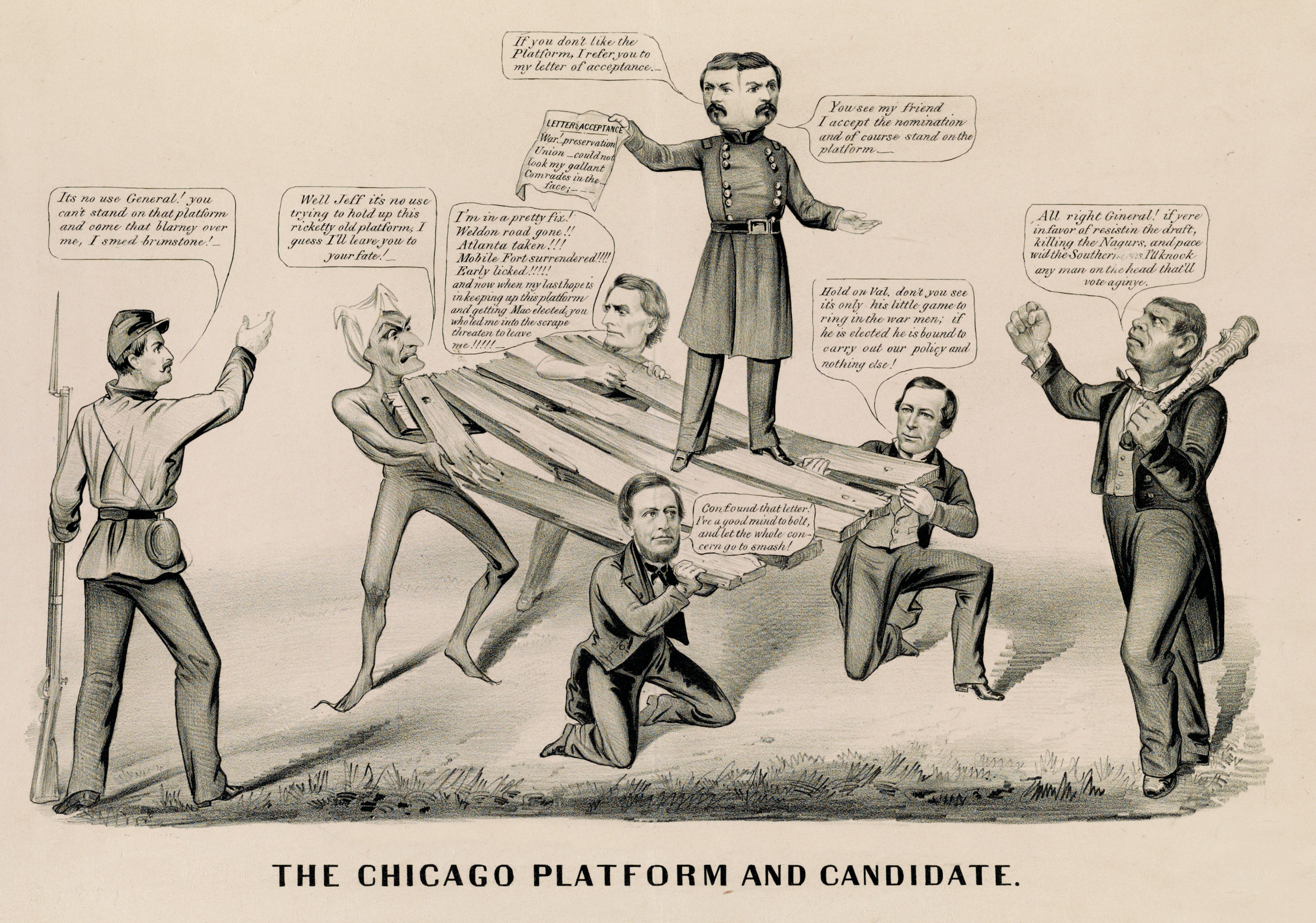
While he didn’t win a spot on the Democratic presidential ticket, Clement Vallandigham exerted influence on the party’s antiwar platform. Above: “The Chicago Platform and Candidate,” a lithograph published by Currier & Ives in 1864, mocks Vallandigham (kneeling, center), who joins three others—including a devil and Confederate president Jefferson Davis—in carrying a two-faced George B. McClellan atop the Democratic platform.
Vallandigham was ubiquitous at the convention, laboring to deny the nomination to McClellan, whom he deemed insufficiently antiwar. He may have hoped to win the nomination for himself, or at least the vice presidential slot. But it was his ally and arch-Copperhead Representative George Pendleton of Indiana who joined McClellan on the ticket. (In May, Pendleton had suggested on the floor of the House that Ohioans might “appeal to the sword” if the federal government ever dared to overturn the state’s law barring blacks from voting.)
Vallandigham’s most decisive influence was on the Democratic platform, which he in part wrote. It made clear that “after four years of failure to restore the Union by the experiment of war,” the Democrats were willing to reverse emancipation and called for a ceasefire followed by a convention of the states to restore the pre-war Union.28 This “war failure” plank, as Republicans sarcastically called it, made no mention of resuming the war if an armistice and negotiations failed. In order to secure his nomination, the Peace Democrats had overlooked McClellan’s views on the war, and he ignored the peace plank. Vallandigham warned the general, “If anything implying war is presented, two hundred thousand men in the West will withhold their vote.”29 But hardly had the convention ended when McClellan, in his letter of acceptance, wrote, “The Union is the one condition of peace. We ask no more.”30 He added that if peace negotiations failed he would hold the South responsible for the consequences, implying that he might be willing to continue the war. Although McClellan was revealing himself as a species of War Democrat, it was most unlikely that soldiers could be induced to once again shoulder their rifles if they once laid them down.
Incensed, Vallandigham at first refused to campaign for the ticket. But he and his allies came around, having conclud-
ed that splitting the party would ruin their near-certain chance to win the election. He also believed he would be able to exert direct influence on McClellan once he was elected. The only alternative, after all, was utterly unpalatable: four more years of Abraham Lincoln.
The Democrats compounded their problems by refusing to face the fact that what the Confederate leadership and doubtless a substantial majority of the white southern public wanted was independence. After three years of slaughter, Confederate determination had only hardened. On October 4, 1864, Jefferson Davis declared, “Let fresh victories crown our arms, and the peace party, if there be such at the North, can elect its candidate. But whether a peace candidate is elected or not, Yankee instinct will teach him that it is better to end the war and leave us to the enjoyment of our own rights.”31 To such unambiguous declarations, the Democrats seemed deaf.
The Democrats counted on the soldier vote delivering fat majorities in key states—this though their platform made clear the Democrats were prepared to abandon the struggle for which those soldiers had fought and bled. Soldiers wanted the war to end, but they wanted to win it. By 1864, many of them had also changed their minds about emancipation. They recognized it as a war measure that had caused many tens of thousands of blacks to abandon the farms and factories that helped sustain the Confederate war effort, and had put more than a hundred thousand blacks into Federal uniform. (The total would reach at least 170,000 by the war’s end.)
The fog of war-weariness that had clouded the North also lifted. Just days after the Democratic convention, General William T. Sherman captured Atlanta after four months of brilliant maneuver across northern Georgia. Then, beginning on September 19, Major General Philip Sheridan began sweeping through the Shenandoah Valley, destroying stocks of food and nearly annihilating the Confederate army opposing him. The smell of victory was in the air. Public opinion began to turn. The Democrats’ claim that the war had failed suddenly seemed unmoored from reality.
 National Archives
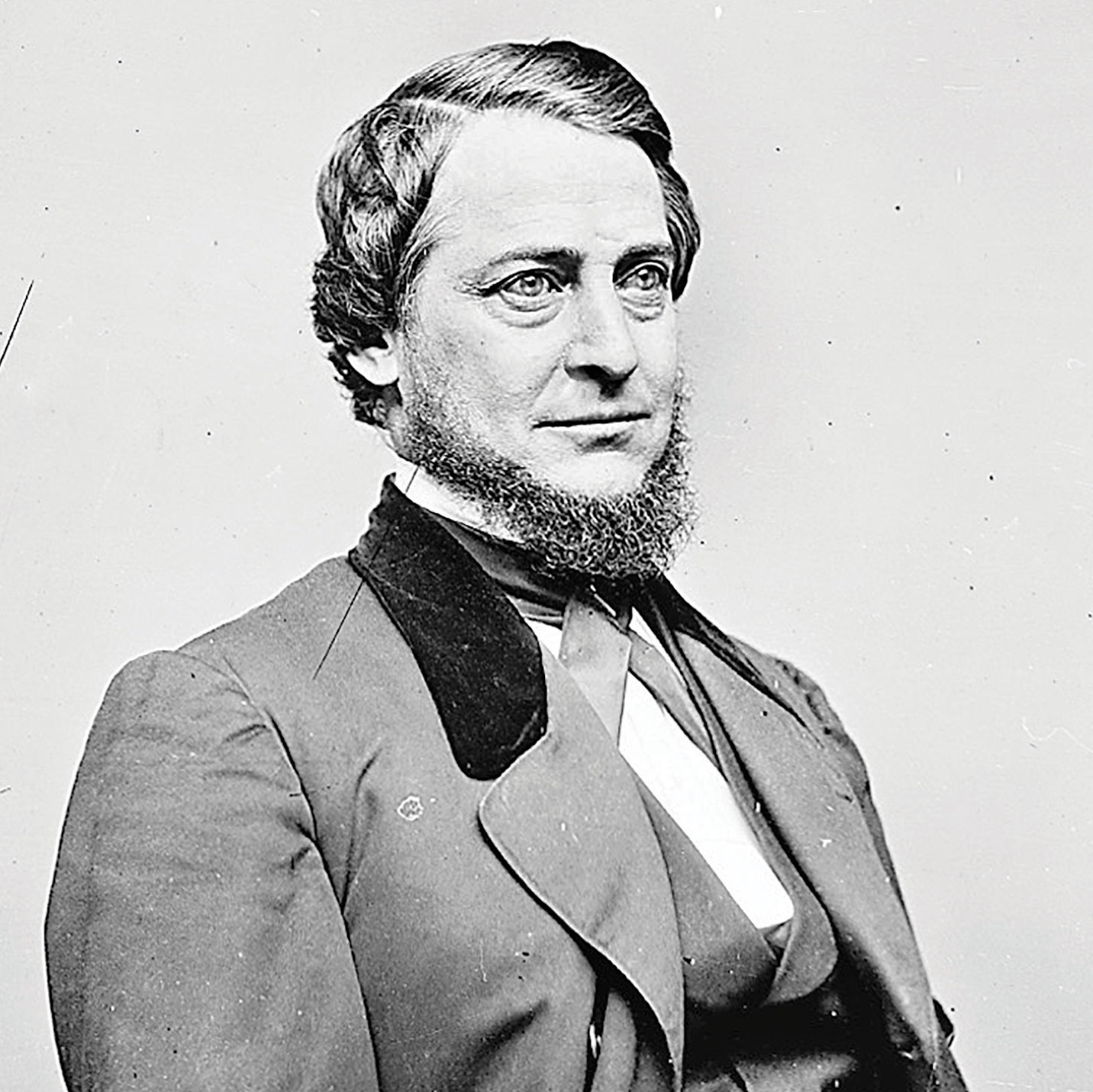
Clement Vallandigham
On Election Day, Lincoln stoically waited in the telegraph room at the War Department as telegrams trickled in. In the early hours of the morning the outcome began to take shape. Republicans had won by a majority of 10,000 votes in Philadelphia (McClellan’s birthplace), and by 4,000 in Boston. (“The Almighty must have stuffed the ballot-boxes,” a friend commented later.)32 Even New York went for Lincoln. He had won 55 percent of the popular vote and carried all but three states—New Jersey, Delaware, and Kentucky—and crushed McClellan by 212 electoral votes to 21, becoming the first president since Andrew Jackson in 1832 to be reelected. In addition, the Democrats lost every governor’s race in the free states except New Jersey, while the Republicans took control of most of the state legislatures. Most dramatic of all, Lincoln had won 78 percent of the soldiers’ ballots. In Pennsylvania and several other states, it was soldiers who gave him his margin of victory.
The peace movement had been repudiated, and Vallandigham along with it. His national career was over. “The accumulation of obloquy, persecution & wrong, heaped upon me, & [the] persistency which they are kept up, would assuredly crush any man of less nerve & fortitude than myself,” he wrote after the war, with his customary self-regard.33 Although he had passionately, at times eloquently, articulated the feelings of many northerners, he was wrong about almost everything. Northern force had prevailed, and northern voters embraced emancipation, Greenbacks, and even, albeit grudgingly, the draft. The great majority also accepted temporary constraints on civil liberties as a necessary war measure, trusting that their rights would be fully restored once the Confederacy had been defeated, as in fact they were. And in defiance of Vallandigham’s and his fellow Copperheads’ assumptions, African Americans consistently shattered racist stereotypes by proving their courage in battle and living responsible independent lives as freed people.
In 1865, the crippled Democrats were too weak to do more than feebly contest postwar Republican policy for the defeated South. But they rebounded. Riding a tide of public discontent at the frustrations of Reconstruction and the corruption exposed during the Grant administration, Democrats in 1868 gained 20 seats in the House of Representatives; in 1870, they gained 37, and in 1874 gained 89 to become the majority party in Congress. One who would not share in the Democrats’ revival was Clement Vallandigham. Although he remained active in Ohio politics and hoped for election to the U.S. Senate, his name remained permanently tainted by the odor of disloyalty. His own party fairly begged him to stay away from its 1868 convention. (He didn’t.) He remained popular in Dayton, where he continued to practice law. In June 1871, he was defending a local tough charged with shooting and killing one Tom Myers in a saloon brawl. In an attempt to show other lawyers how Myers could have accidentally shot himself, Vallandigham pulled out his own gun, not realizing it was loaded, and inadvertently shot himself in the stomach. He lingered for 12 hours in agony before he died. He was 50 years old.
Had he lived in another era, or had more enlightened politics, Vallandigham might well have been celebrated for his wartime defense of civil liberties. In the 20th century, Socialist Eugene V. Debs went to prison for opposing World War I, and emerged with his reputation, if anything, enhanced. Later, many members of Congress challenged the Vietnam War and wars in the Middle East in terms not all that different from those Vallandigham articulated in the 1860s. Repellent though his views on race and the Union are today, he stands as one of the most significant dissenters in American political history. His sympathetic biographer, Frank L. Klement, wrote of him, “Whereas Republicans equated dissent with treason, Vallandigham insisted upon practicing the same rights during the war that he exercised in times of peace.”34 He was not the only member of Congress who feared the long-term consequences of unchecked authority, but he was the most outspoken. His warnings about the abuse of arbitrary power and an unchecked executive still resonate.
Fergus M. Bordewich is the author of Congress at War: How Republican Reformers Fought the Civil War, Defied Lincoln, Ended Slavery, and Remade America.
Notes
1. Dayton Daily Empire, May 5, 1863.
2. James L. Vallandigham, A Life of Clement L. Vallandigham (Baltimore, 1872), 141.
3. “Proclamation Calling Militia and Convening Congress” in Don E. Fehrenbacher, ed., Lincoln: Speeches, Letters, Miscellaneous Writings (New York, 1989), 232.
4. Congressional Globe, Thirty-Seventh Congress, Session 1, 57–59.
5. Ibid.
6. Dayton Daily Empire, January 5, 1863.
7. Congressional Globe, Thirty-Seventh Congress, Session 3, 53–59.
8. Jennifer L. Weber, Copperheads: The Rise and Fall of Lincoln’s Opponents in the North (New York, 2006), 63–64; New York Herald, December 31, 1862.
9. Clement L. Vallandigham, The Record of Hon. C.L. Vallandigham on Abolition, the Union and the Civil War (Cincinnati, 1863), 126.
10. Vallandigham, Life, 212ff.
11. Dayton Daily Empire, October 18, 1862.
12. Frank L. Klement, The Limits of Dissent: Clement L. Vallandigham and the Civil War (New York, 1998), 113.
13. Vallandigham, Life, 260.
14. Gideon Welles, Diary (Boston, 1911), Vol. 1, 321.
15. “The Truth from an Honest Man,” pamphlet (correspondence between Abraham Lincoln and Erastus Corning, 1863), Gilder Lehrman Collection, online at GilderLehrman.org.
16. Clement L. Vallandigham to Horatio Seymour, May 21, 1863, Vallandigham Collection, Ohio Historical Society.
17. Braxton Bragg to Clement L. Vallandigham, May 26, 1863, Vallandigham Collection, Ohio Historical Society.
18. Robert E. Lee to Jefferson Davis, June 25, 1863, in Clifford Dowdey, ed., The Wartime papers of Robert E. Lee (Boston, 1961), 530.
19. George H. Porter, Ohio Politics during the Civil War Period (New York, 1911), 181ff.
20. Ibid., 119–120.
21. Theodore Clarke Smith, The Life and Letters of James Abram Garfield (New Haven, 1925), Vol. 1, 374.
22. Vallandigham, Life, 335–336.
23. Weber, Copperheads, 159.
24. Henry J. Raymond to Abraham Lincoln, August 22, 1864, Lincoln Papers, Library of Congress.
25. Frank L. Klement, “Vallandigham as an Exile in Canada 1863–1864,” Ohio History 74 (Summer 1965).
26. “The Real Chicago Platform as Expounded by the Democratic Orators at Chicago” (broadside, 1864), Library of Congress.
27. William Frank Zornow, “Clement L. Vallandigham and the Democratic Party in 1864,” Bulletin of the Historical and Philosophical Society of Ohio (January 1961).
28. Klement, Limits, 287.
29. George B. McClellan to the Democratic Nominating Committee, September 8,1864, in Stephen W. Sears, ed., The Civil War Papers of George B. McClellan: Selected Correspondence (New York, 1989), 595–596.
30. William J. Cooper, Jefferson Davis: The Essential Writings (New York, 2003), 351.
31. William Roscoe Thayer, ed., The Life and Letters of John Hay (Boston, 2015), Vol. 1, 238–242.
32. Clement L. Vallandigham to James W. Wall, November 26, 1865, Vallandigham Collection, Ohio Historical Society.
33. Klement, Limits, 321.