Detail from a poster for the 1939 movie Gone With the Wind, which—when adjusted for ticket price inflation—ranks as the highest-grossing film ever released in the United States.
In 1939, Hollywood glamour and Civil War history came together in two unlikely cities.
In December, Hollywood appeared in all of its glitziest glory in Atlanta, Georgia, for the world premiere of the film Gone With the Wind. For three days, white Atlantans took in a whirlwind of parties, parades, and movie stars. Based on local writer Margaret Mitchell’s Pulitzer Prize-winning novel, largely set in Atlanta and other parts of Georgia, the film shone a spotlight on the region’s Civil War history, although the premiere events devoted far more space to the movie’s magical re-creations than to genuine historical artifacts. At one point in the festivities, the organizers of a grand ball unveiled a movie-like set featuring a re-created antebellum plantation house, along with a “Negro choir” dressed in slave garb, intoning Negro spirituals. With the Atlanta events adhering strictly to segregation protocols, these singers were some of the only black residents in attendance.1
Earlier that year Hollywood had also brought some of its magic, albeit with a bit less glitz, to Springfield, Illinois. In May, John Ford’s Young Mr. Lincoln debuted in the city most associated with Abraham Lincoln’s early life. The events included a gathering of the film’s stars, as well as reflections from local politicians and Lincoln scholars. The highlight was a nationally broadcast concert by African-American contralto Marian Anderson, who had made headlines just a few weeks earlier when, after being barred from singing in the Washington, D.C., hall owned by the Daughters of the American Revolution, she performed at the Lincoln Memorial before a crowd of 75,000. In Springfield, Anderson sang “America” and “Ave Maria,” in addition to two spirituals; she wore modern dress, not a slave costume. Greeted warmly by the Illinois crowd, Anderson appeared as a serious and respected performer paying tribute not to the antebellum plantation South but to Lincoln the Emancipator.2
Both Gone With the Wind and Young Mr. Lincoln, and each of their premieres, reflect the conflicted ways Hollywood was thinking about the Civil War in the New Deal era. The two movies showcased distinct, sometimes overlapping Civil War narratives, both of which had deep roots in American culture: one heavily focused on celebrating the Old South and the “Lost Cause” of the Confederacy, the other building on the often reverential stance taken toward Lincoln as the nation’s Civil War president. Over the course of the 1930s, those two points of view underwent important transformations and planted even deeper roots in the American psyche. The movies of this era provided a crucial arena for reshaping and further amplifying those traditions.
 Courtesy Everett Collection
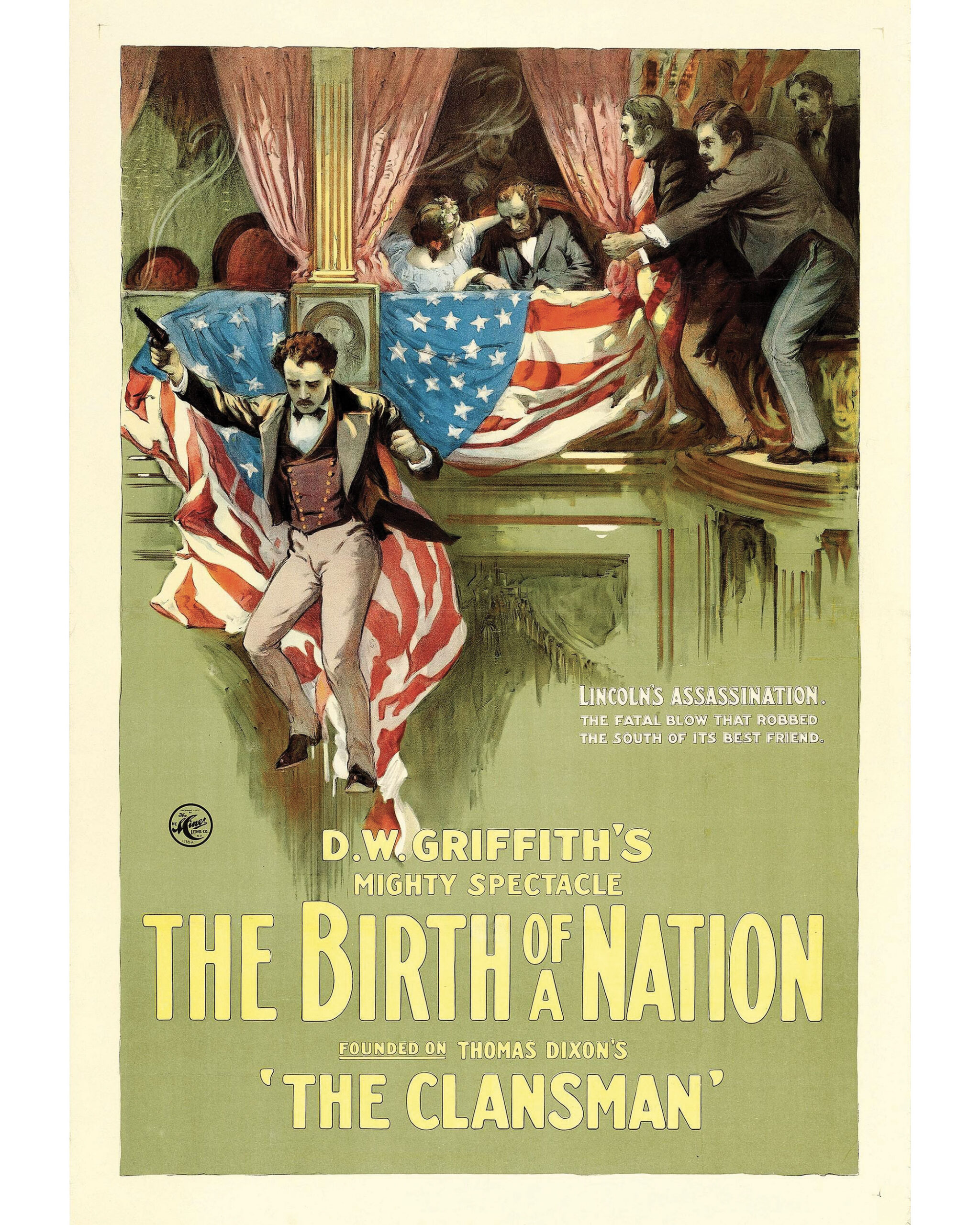
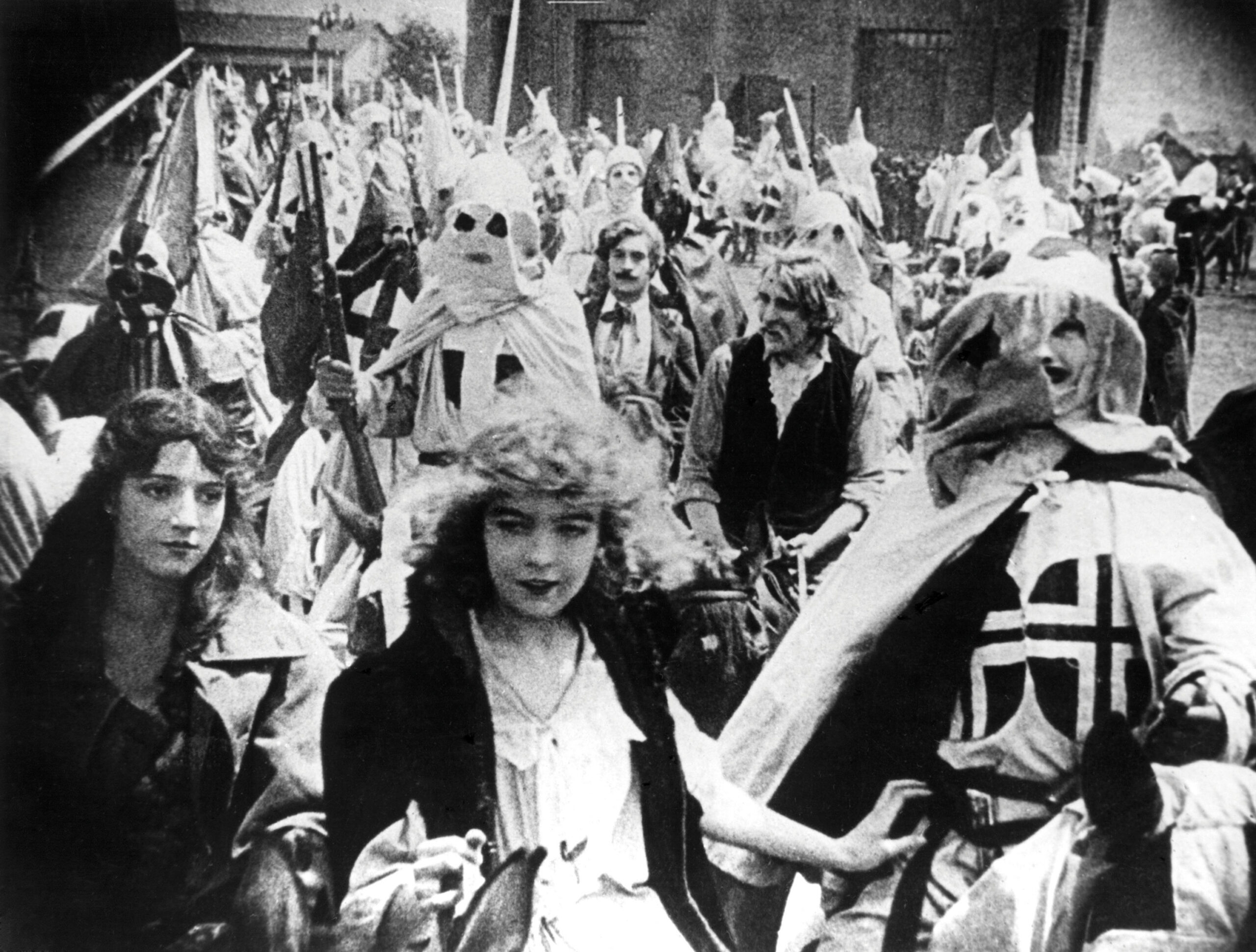
During the Depression era, Civil War cinema reflected longstanding pro-Confederate biases that had been featured prominently in the 1915 movie The Birth of a Nation, which promoted a white supremacist version of the Civil War and Reconstruction, and portrayed the Ku Klux Klan (as shown above in a still from the film) as a heroic force out to save helpless whites from malicious, recently freed blacks.
The Depression decade was not, of course, Hollywood’s first foray into the turbulent terrain of the blue and the gray. Cinema’s first blockbuster, D.W. Griffith’s 1915 The Birth of a Nation, immortalized a white supremacist version of the Civil War and Reconstruction, replete with heroic Ku Klux Klan members rescuing helpless whites from malicious, newly freed blacks. This story was still influential 15 years later, when Birth was reissued with a synchronized musical score and a hokey introductory conversation between Griffith and actor Walter Huston, in which the director revealed his family ties to both the Confederate army and the KKK. The 1920s saw a few films with Civil War themes, Buster Keaton’s The General (1926) being one of the more memorable. But the devastating images Americans saw from World War I may well have dampened public interest in sentimentalized Civil War movies. In the decade that followed, with memories of World War I fading, film studios returned to the Civil War, offering movies on such themes as the life of Lincoln, the death of Lincoln, and the wartime destruction of southern plantation life. Civil War movies were not usually among the most popular pictures of the 1930s—with Gone With the Wind as the one big exception—but the genre itself was an important staple of the burgeoning film industry.3
Civil War cinema in the Depression era hewed closely to longstanding pro-Confederate biases, often referred to as the “Lost Cause” narrative, predominant among both historians and in the culture at large. Although the KKK received less prominence, many fallacies from the Birth of a Nation storyline reappeared: The South’s system of plantation slavery had spawned happy relations between masters and slaves; white southerners went to war not to defend slavery but for constitutional principles or for their “quaintly” way of life; those white southerners, in turn, suffered unjustly at the hands of a vengeful North in both war and Reconstruction. There were no stories depicting the brutal conditions of chattel slavery or the barbaric tendencies of southern plantation owners and certainly none showing enslaved people heroically throwing off their bondage. One difference in this decade, though, was how much more spectacular and cinematically enhanced the Civil War became. Like other movies in Hollywood’s “Golden Age,” Civil War movies showcased improved sound technology as well as more intensely rendered colors. With bigger budgets to draw on, movies also featured sumptuous sets and elaborate costumes. Those spectacular effects, coupled with Hollywood’s celebrity-obsessed culture, seemed to make filmmakers a bit less earnest or didactic about history and a bit more attuned to glamour and showmanship. Whereas D.W. Griffith had embraced the idea of “writing history with lightning,” 1930s filmmakers thought more about the lightning than the history.4
 Courtesy Everett Collection
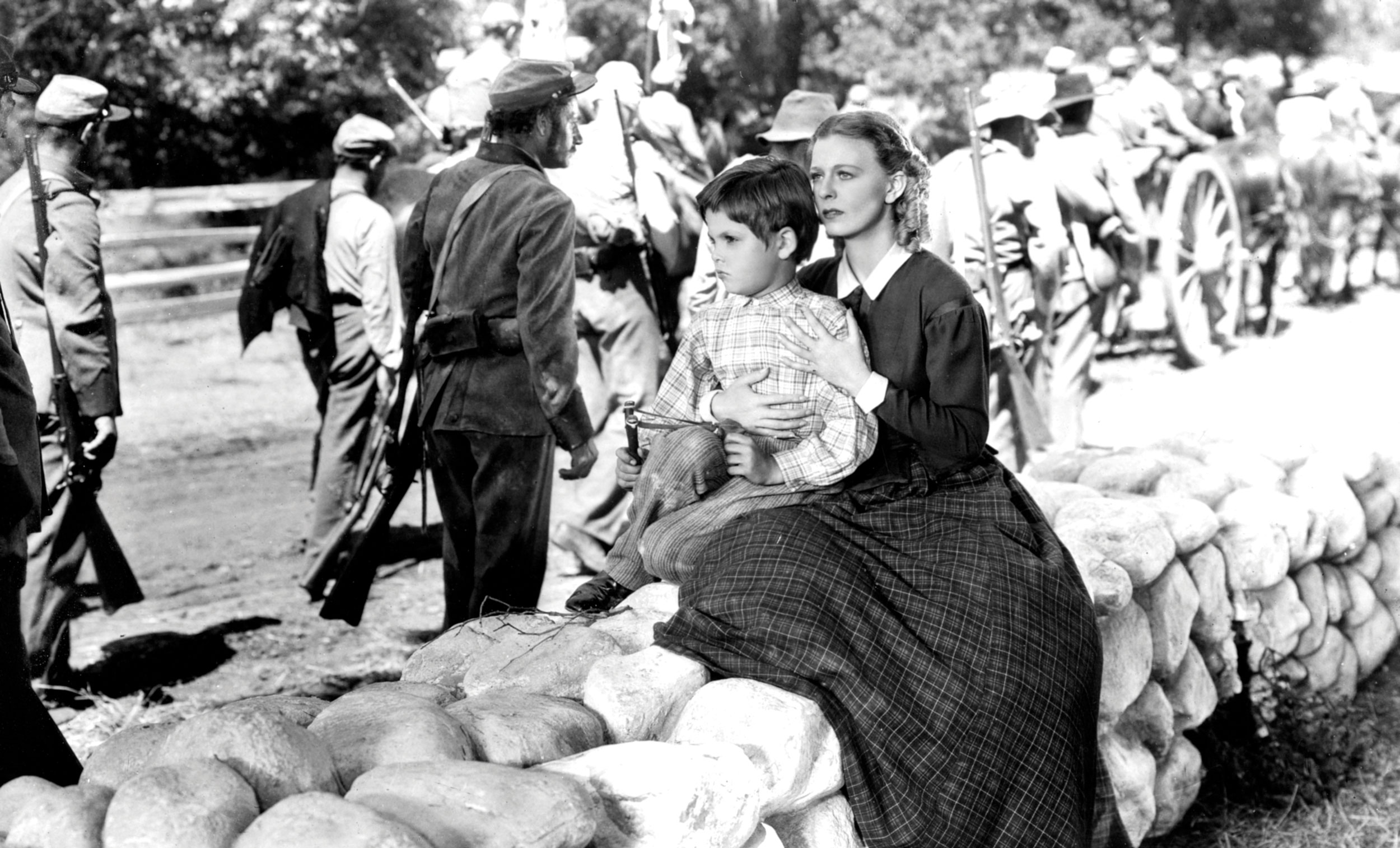
While the 1930s saw the release of such favorites as Gone With the Wind and Young Mr. Lincoln, not all of the decade’s Civil War films—including the 1935 movie So Red the Rose, which follows a southern plantation family during the conflict—were hits. Above: A scene from So Red the Rose.
One of the first big Civil War movies of the 1930s, Paramount Studio’s So Red the Rose (1935) provided later filmmakers with a cautionary tale in Civil War movie-making. Based on a bestselling novel by the Mississippi writer Stark Young, the film spotlights the turmoil that engulfs a plantation family as they face the invasion of Union troops, the death of a son at the Battle of Shiloh, and a slave uprising. Although it had the traditional Lost Cause story, it did poorly at the box office, partly because it took its history too seriously. The film, Variety observed, gave “an accurate and sometimes shocking cross-section of war conditions,” seeking to “remove the audience from the present and transplant them into the struggle as it occurred.” Yet such features, this reviewer contended, did not make for “palatable cinematic merchandizing”: The film’s sober rendering of its historical material lacked the frivolity movie viewers desired. Too much vitriol, the Variety reviewer explained, and not enough of the “Dixie gallants romancing the Yank sweeties.”5
Over time, filmmakers recognized that “palatable cinematic merchandizing” came more from movie magic and less from history. In John Ford’s 1934 Judge Priest, residents of a small Kentucky town in the 1890s confront their community’s Civil War’s legacy and how best to honor their aging veterans. Will Rogers, Hollywood’s top earner at the time, played the title role, presiding over the assault trial of an ex-Confederate. The film’s most dramatic moment comes when Henry Walthall, the actor who played the Little Colonel in The Birth of a Nation, makes a surprise appearance to testify on behalf of the defendant. That knowing wink at an earlier Hollywood classic would be just the thing, explained the screenwriter, to make viewers “rise and shout.” In the 1935 film Steamboat Round the Bend, the principal character, again played by Will Rogers, takes over an old wax museum, and knowing he will need to market the museum to southerners, turns the figure of Ulysses Grant into one of Robert E. Lee. We might think of Steamboat as Hollywood’s open acknowledgement of its new strategy: to self-consciously take liberties with history in the interest of creating appealing, and marketable, illusions.6
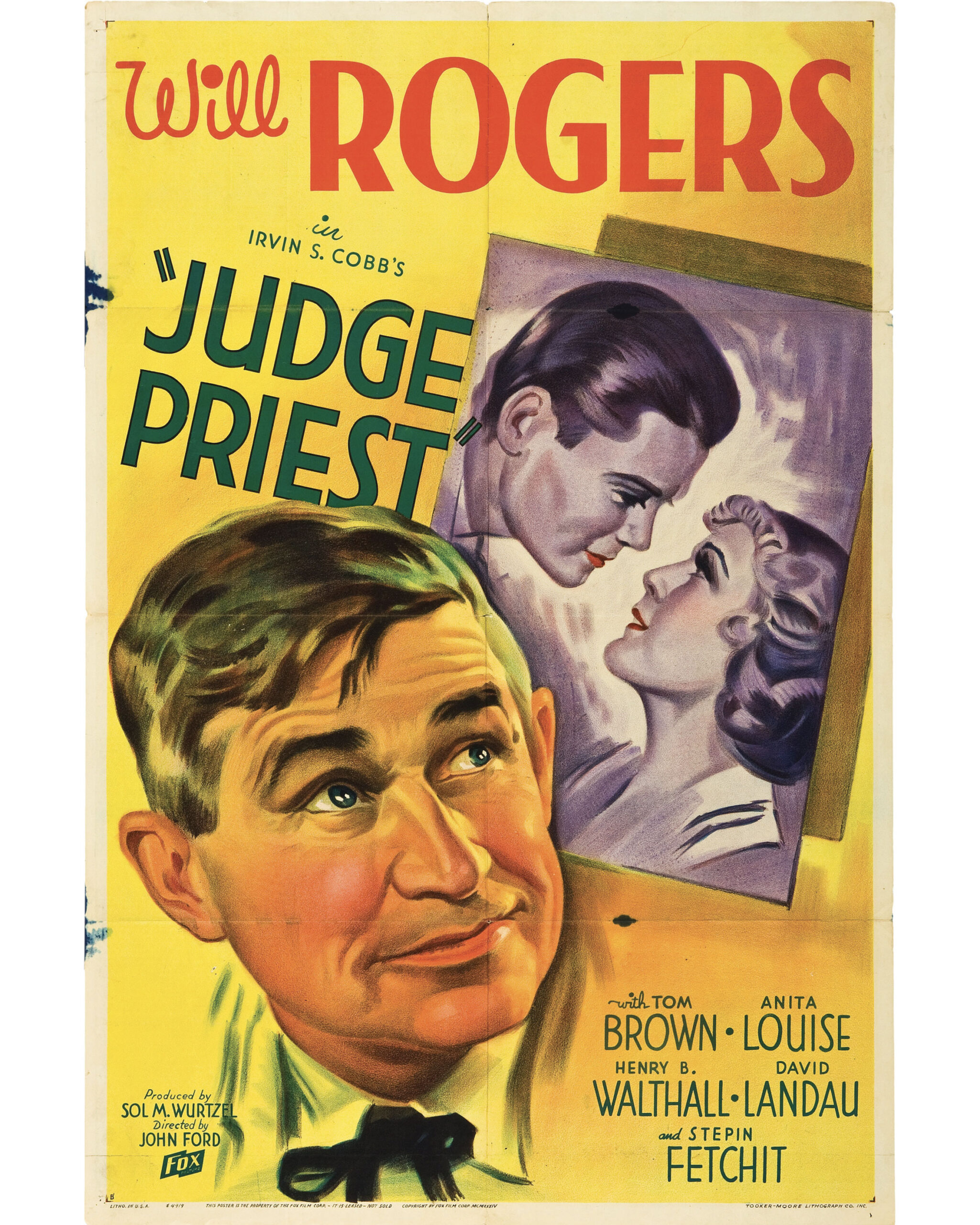
A poster for the 1934 John Ford film Judge Priest, in which the residents of a Kentucky town confront their community’s Civil War legacy.
Perhaps no one proved more adept at marketing illusions than producer David Selznick, who made Gone With the Wind the most profitable of all Civil War movies. From the outset, viewers were assured that no history lesson would unfold; as writer Ben Hecht’s opening scroll explained, this was just a story about “a land of Cavaliers and Cotton Fields called the Old South. Here, in this pretty world, Gallantry took its last bow. Here was the last ever to be seen of Knights and their Ladies Fair, of Master and Slave.” To enhance the legend’s appeal, Selznick ditched the idea of showing the kind of rudimentary homes that Margaret Mitchell had depicted in her novel, realistic as they might have been for 1850s middle Georgia, and turned instead to elaborate sets of grandiose plantation homes. He had his historical consultant, Wilbur Kurtz, gather samples of Georgia’s red clay, less for the realism it imparted and more for the Technicolor effects. All this, a writer for Time maintained, revealed fable making taken to new heights: a legend “told without subtlety, subjective shadings, probings or questionings.” Read as a spectacularly rendered legend, Gone With the Wind also made viewers more willing to accept the film’s pro-South bias, including its tendency to make the Confederate cause seem worthier than the Union’s. Even in the North, audiences cheered Scarlett O’Hara for shooting a Yankee intruder and sympathized with Rhett Butler when he finally cast his lot with a bedraggled Confederate army. A New York Times reporter put the problem this way: “occasionally some bewildered child Yankee,” having seen the film, “remembers what he was taught in school and asks, confusedly, if it wasn’t all right for us to have won the war.” Savvy audiences, however, who understood the magic of the movies, were untroubled by this history. “Nearly every one has the right Confederate spirit,” the Times reporter explained. “They applaud the Confederate flag and say of Scarlett, ‘Isn’t she gorgeous?’”7
Current events also helped promote the “Confederate spirit” during the Depression. The dramatic reversal of fortune experienced by Confederates during the Civil War period suddenly seemed unusually relevant for people facing the devastating economic crisis of the 1930s. “During the depression of 1932,” wrote the southern journalist Ben Robertson, “I said to myself I need not worry too much if I lost my job—what my grandfather could do in 1865, I could do in 1932.” If anyone knew how to stare down poverty and hunger and unemployment, Robertson implied, it was defeated Confederates. When the biographer Douglas Southall Freeman gave a radio address about Robert E. Lee, he took as his theme “How a Great Leader Met Adversity,” drawing out the parallels between Lee’s challenges and those of the present day. And perhaps no character epitomized the southern struggle for survival as starkly as Scarlett O’Hara. Although Margaret Mitchell had written most of the original novel in the 1920s, when the book, and later the film, debuted in the 1930s, the American public responded eagerly to a story that spoke to present-day tribulations. Readers who took up Mitchell’s book wrote of the strong connection they felt to Scarlett’s suffering, including one Iowa fan who saw in Scarlett someone who “wanted only what so many of us want now. Material security for our families that life may hold something but the endless drudgery of a bare existence.” One reviewer summed up the appeal this way: “The real stroke of genius is in the story of Scarlett’s struggles to survive—it is the story of thousands of young (& older) women during the depression.” When Scarlett finally made her way back to her former plantation and uttered what may be the movie’s most famous line—“As God is my witness, I’ll never be hungry again”—those words felt deeply relevant in 1930s America.8
 TM & Copyright (c) 20th Century Fox Film Corp. All rights reserved.
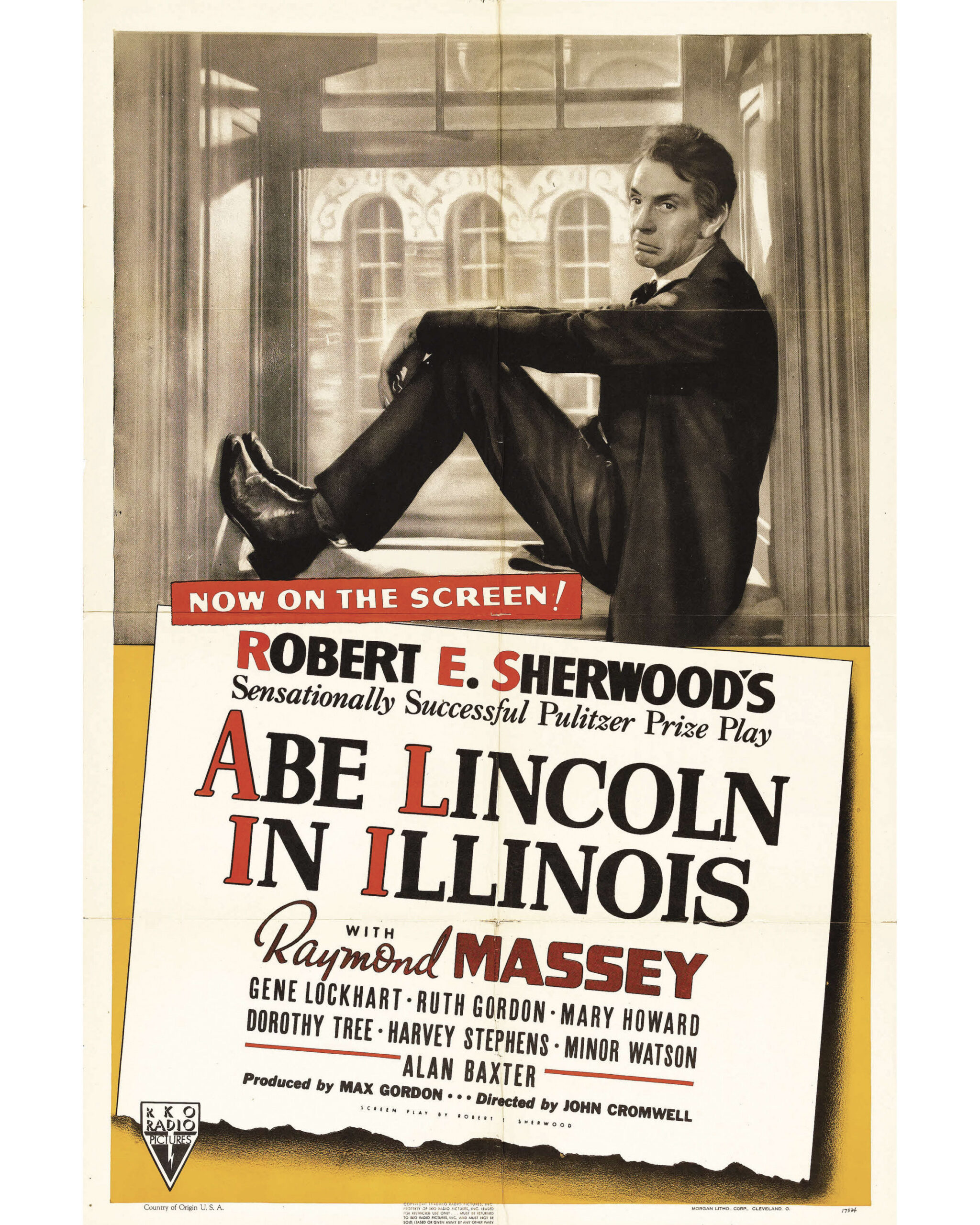
A poster for the 1940 film Abe Lincoln in Illinois, in which Raymond Massey plays Lincoln in a portrayal of his life up to the time of the presidential election of 1860.
The staggering appeal of movies like Gone With the Wind tells us only part of the story about Civil War cinema during the 1930s. The decade also witnessed a new surge of popularity for the man leading the fight against the Confederacy and its slave system. In hugely popular biographies by Carl Sandburg, a plethora of images found in New Deal murals and posters, musical compositions, as well as motion pictures like Young Mr. Lincoln and Abe Lincoln in Illinois, the Civil War president emerged as the single most important historical persona of the New Deal era. Lincoln, of course, had been in movies before, including The Birth of a Nation. In that film, though, Lincoln had been incidental to the movie’s story and often appeared helpless and sad. In contrast, the Lincoln who emerged over the course of the 1930s became a star, and a powerful one at that, capable of vanquishing foes with both wit and physical strength. In Young Mr. Lincoln, Henry Fonda’s Lincoln tells a lynch mob that he can lick anybody there and later verbally eviscerates the prosecution’s chief witness in a murder trial. Surely Lincoln’s new prestige bore some relation to the popularity enjoyed by New Deal president Franklin Roosevelt: Both Lincoln and FDR were celebrated for their strong national leadership in moments of national crisis and their obvious concern for the marginalized and dispossessed. With Americans, both North and South, demonstrating renewed appreciation for Honest Abe, and with some even championing his work as the Great Emancipator, it’s not hard to imagine some “bewildered child Yankee,” and perhaps a few adults as well, feeling a bit confused about all the gushing over southern slaveholders and their secessionist goals.
Some of that confusion, though, may have been mitigated by the way audiences in the 1930s encountered Lincoln. Movies and popular Lincoln plays of the era mainly told stories about Lincoln in his pre-presidential days: His New Salem romance with the ill-fated Ann Rutledge was one of the most popular threads in the Lincoln tale. By showing only the antebellum Lincoln, directors and producers could avoid imagining Lincoln waging war on white southerners or advocating the end of chattel slavery. At the same time, many southern-themed films gave more emphasis to post-Civil War events or prewar conditions than to the conflict itself, again avoiding anything that might have pit Lincoln against southern whites. The Prisoner of Shark Island, a 1936 movie about the trial and imprisonment of Dr. Samuel Mudd for his role in Lincoln’s assassination, and the 1938 plantation romance Jezebel both followed that formula. So Red the Rose, released in 1935, provided the lesson on how not to make a Civil War movie: Because the war was so central to the story, it made viewers uncomfortable with its denigration of “the uncouth legions of Mr. Lincoln” who seemed all the more uncouth because of the movie’s obvious idolizing of the southern aristocracy.9
Lincoln, of course, received praise for his benevolence, but he was more often shown coming to the aid of whites than blacks. In a popular 1936 play written by Howard Koch, who would later be a screenwriter for Casablanca, a reincarnated Lincoln comes to Harlan County, Kentucky, to help white coal miners fight their own brand of “slavery.” Striking miners parade across the stage holding a sign that reads, “Free the Whites.” When Lincoln appears in the Shirley Temple film The Littlest Rebel (1935), his task has nothing to do with helping black slaves. He’s there, instead, to grant Shirley Temple’s plea for freedom for two imprisoned white men, one her Confederate father and the other a kindly Union officer. In Young Mr. Lincoln, Henry Fonda’s Lincoln likewise has virtually no contact with black characters. But in the film’s most dramatic moment, he comes to the defense of two white brothers, falsely accused of murder, who face the wrath of a lynch mob. The young Lincoln turns back the mob and later mounts a successful defense of the brothers, again breaking the chains of confinement for white men.
 Courtesy Everett Collection
Abraham Lincoln figured in a number of 1930s movies that focused largely on his antebellum life and portrayed him as strong, witty, benevolent, and a natural leader. Above: Henry Fonda portrays the future 16th president as a young lawyer in a scene from Young Mr. Lincoln (1939).
These types of story lines helped mask real racial conflict, both historical and contemporary: They muted the tensions between slave masters and the enslaved as well as the racial hostility that had driven angry whites to lynch thousands of African Americans in the post-Civil War era. Hollywood studios were particularly keen to avoid those tensions, partly to appease southern white audiences and also to circumvent possible black protest. Mindful of the controversy associated with The Birth of a Nation, especially the protests organized by the National Association for the Advancement of Colored People when the movie opened and that were renewed with each reshowing, later filmmakers sought a more harmonious racial portrait. Birth’s focus on violent interracial conflicts, especially scenes of vicious, marauding blacks, was a particular source of ire for NAACP leaders and had even led to court injunctions against the film. During the 1930s, Hollywood’s infamous Production Code, adopted by the Motion Picture Producers and Distributors of America, may have further discouraged films with any interracial antagonism. Although code enforcers showed little concern for the sensibilities of black audiences—there were no rules against portraying black people as lazy or slow or comical—they did worry about upsetting white southerners by showing either too much racial intimacy or too much racial hostility.10
Additionally, showing interracial contact, especially anything antagonistic, became more complicated in the 1930s, when studios began employing increasing numbers of black men and women, not just white men in blackface, to play black parts. Griffith strictly adhered to Jim Crow protocol and pointedly cast only white men and women in roles that involved close contact with white characters. In 1930s Civil War movies, black men and women took those parts, which included playing slaves who might occasionally have complicated interactions with whites. Recognizing the potentially explosive nature of these scenes, many in the movie industry tried to control what viewers saw and how they interpreted it. The problem was particularly acute for the producers of So Red the Rose, who dubbed this new interaction between black and white actors a “sociological experiment.” Because that film showcased a plantation rebellion led by disgruntled slaves, publicists were particularly anxious to explain that scene, especially to southern white audiences. Paramount, the film’s studio, issued a statement telling audiences that because the director, King Vidor, was a southern white man, he knew how to handle a black “mob” and could properly motivate his actors with “a simple word picture of negro life during the period of slavery.” Hoping to reassure audiences who might be alarmed at seeing an uprising of blacks, Paramount explained that Vidor had to push the black actors to go against their “native” comedic tendencies.11
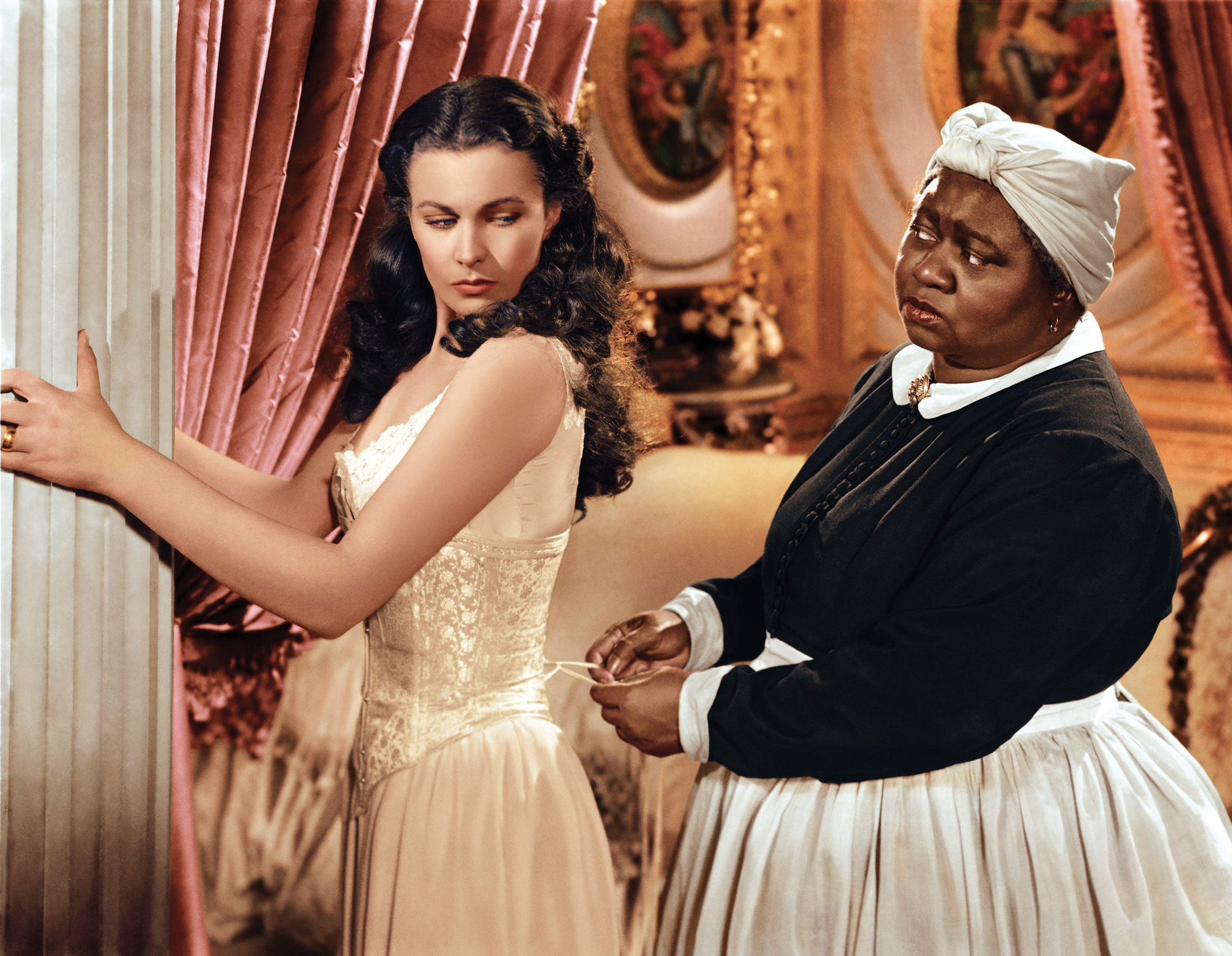
Other filmmakers, as well as local censorship boards, likely looked at Vidor’s movie and concluded that interracial conflict was best left on the cutting-room floor. Filmmakers shied away from racial tension, whether in the form of white men punishing black slaves, black slaves attacking white owners, or black men suffering at the hands of white lynch mobs. What viewers got instead was a story that white Americans had always been more comfortable with: the traditional Lost Cause narrative about the extreme benevolence of slavery. Few films featured the angry slaves of So Red the Rose. Far more showcased the happy, contented slaves of Gone With the Wind, Jezebel, Rainbow on the River (1936), or The Littlest Rebel. And since plantation slavery fostered only kindness and good feelings in this alternative narrative, the act of emancipation had virtually no significance for most of Hollywood’s black characters. When The Littlest Rebel begins, and a children’s birthday party quickly becomes a scene of white families preparing for war, Shirley Temple and Bill Robinson (playing the part of the loyal butler) take a moment to ponder what the war is all about. Robinson’s character says he has heard about a white gentleman up north who wants to “free the slaves.” Both Temple and Robinson express confusion about what that even means.
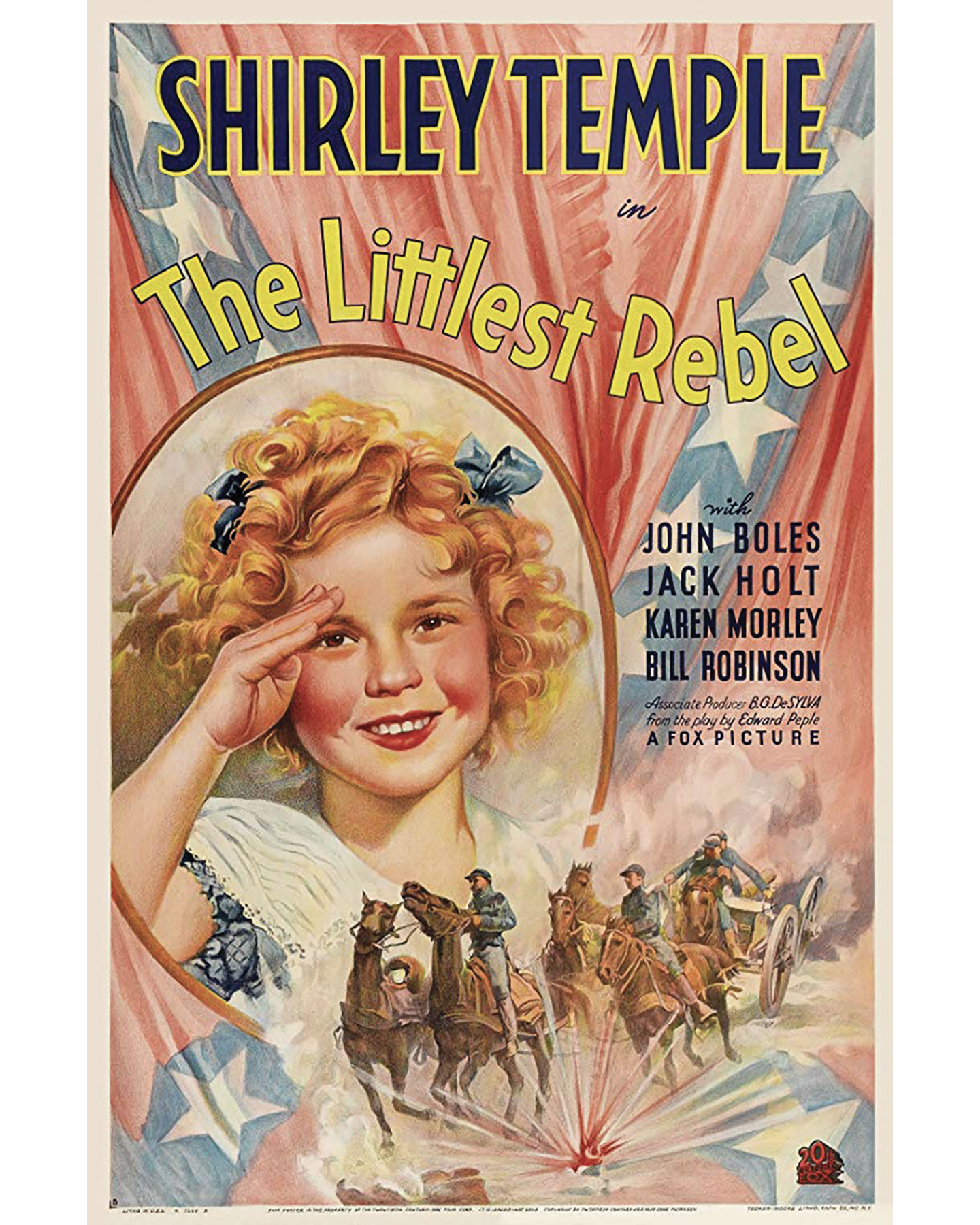
A poster for The Littlest Rebel (1935), one of several Civil War films of the era in which emancipation was downplayed.
Yet, as the Depression decade drew to a close and war, specifically a war against a global fascist menace, became an ever more likely possibility, it became harder, even in Hollywood, to present a totally benign picture of America’s racial history. With many African Americans already drawing parallels between Jim Crow in the U.S. and anti-Semitism abroad, mobilizing against Adolf Hitler’s racism required some acknowledgement of American problems. Some movie executives, along with members of the Roosevelt administration, recognized that opposing Nazis might affect the way they reckoned with American racial problems. For David Selznick, an understanding of these “fascist-ridden times” meant excising the Ku Klux Klan from Gone With the Wind, even as he kept the basic elements of Mitchell’s pro-Confederate plot in place. Lincoln, too, began to look different once Americans began talking more explicitly about racial hostility, whether abroad or in the U.S. When Marian Anderson was barred by the DAR from singing in their whites-only concert hall, members of the Roosevelt administration saw an opportunity to take a stand against racial bigotry, both in Nazi Germany and on American soil. Oscar Chapman, the assistant secretary of the Interior who helped organize the event, compared the ban against Anderson to the shunning of Jewish singers in Nazi Germany. But, Chapman insisted, America had something the Nazis lacked: a tradition of racial enlightenment, symbolized by Anderson singing before “a shrine for Abraham Lincoln.” Given that context, Anderson’s performance at the premiere of Young Mr. Lincoln a few weeks later helped spotlight not only Lincoln’s role in emancipating black slaves, but also his place as an icon in a global fight against bigotry. Additionally, her concert lent a more pointed racial overlay to John Ford’s movie, even though the film itself played it safe by imagining Lincoln only as a liberator of white men.12
Even during World War II, Hollywood films, including those with Civil War themes, leaned more toward avoiding racial conflict than confronting it. It was easier to simply take black characters out of a film altogether than risk spotlighting troubling racial tension. After all, to show African Americans in any type of conflict with white southerners might end up alienating one of these groups, both of whose support was needed in the current military effort. MGM studios dealt with precisely this problem in the production of Tennessee Johnson, a 1942 film on the life of Andrew Johnson. Worried about the NAACP criticism swirling about the film even before its release, filmmakers chose not to portray racial conflict in the Reconstruction South. Instead, they focused on the political struggles in Washington, drawing critical portraits not of black characters but of white politicians like Thaddeus Stevens, an adjustment that hardly appeased black leaders.13
 Courtesy Everett Collection
Civil War films of the 1930s largely avoided the depiction of interracial tension, opting instead to tell stories that emphasized the Lost Cause narrative about slavery, one characterized by kind owners and contented slaves. Above: A scene from Gone With the Wind, in which Hattie McDaniel’s performance as a loyal slave won her an Oscar.
Which is not to say that Lincoln, or Lincoln’s spirit, was totally absent in these films. The message he conveyed was not always made explicit, but his symbolic significance unquestionably assumed increased importance. During World War II, recalled the author Robert Penn Warren, “it was the image of Lincoln, not that of Washington or Jefferson, that flashed ritualistically on the silver screen after the double feature.” Sometimes, as in Tennessee Johnson, Lincoln was recalled as a great unifier, a leader celebrated for his commitment to bringing all parts of the nation back together. Sometimes, Lincoln was recalled as a great emancipator, a leader who championed not just abolition but even racial justice. And sometimes Lincoln appeared in subtle forms, his presence folded into films that had little to do with the Civil War or even Reconstruction. We might, for example, find him in a particularly unusual place: the most iconic World War II movie of all, Casablanca.14
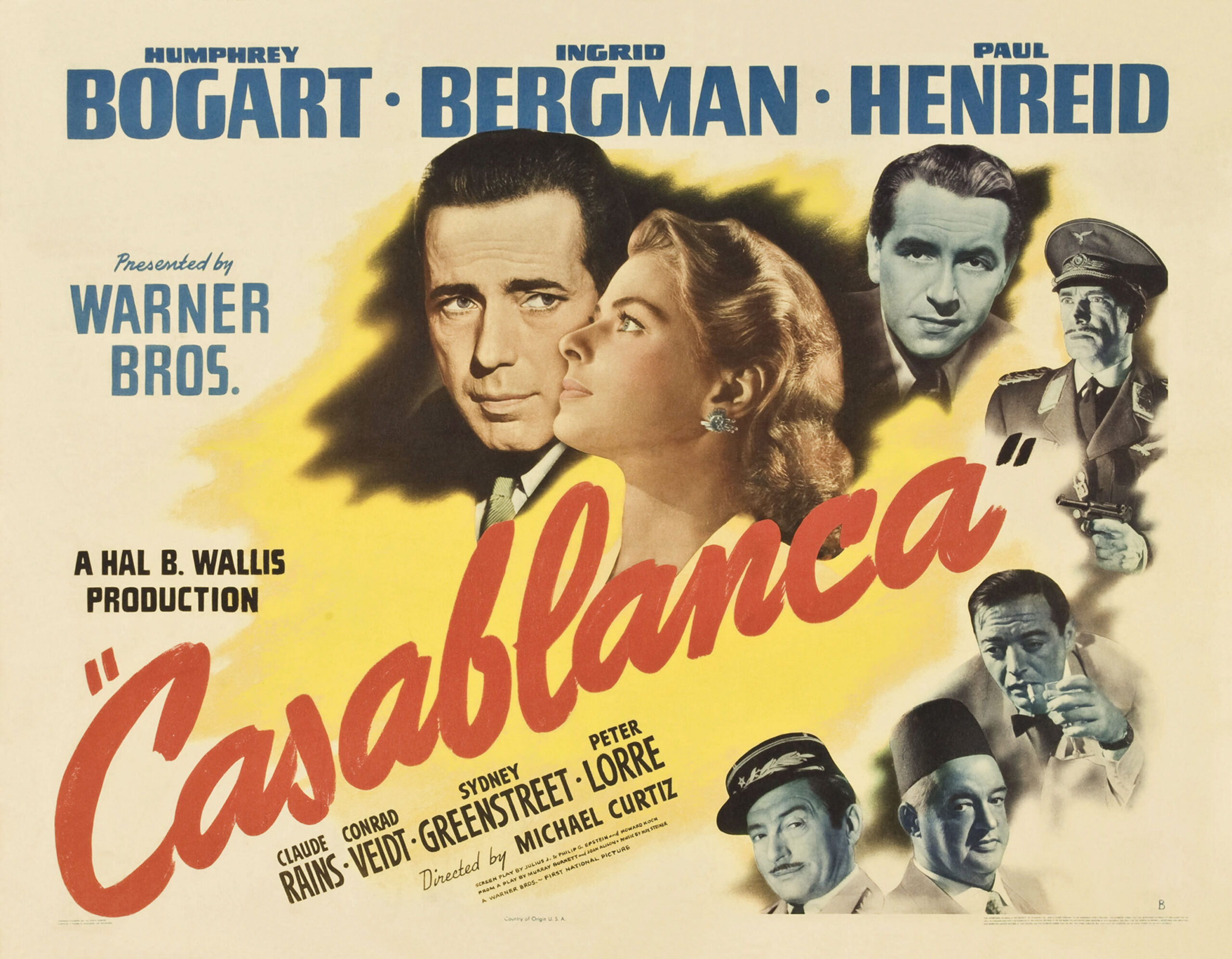
In Michael Curtiz’s 1943 film, there is a hint, early on, that the Civil War has a certain relevance for those caught up in the current conflict. “I remember every detail,” Humphrey Bogart says to Ingrid Bergman, remembering their time together in Paris. “The Germans wore gray, you wore blue.” By invoking this Civil War color scheme, the filmmakers indicate who fights for freedom and who does not. Central to Casablanca’s story, though, was not a simple dichotomy between freedom and slavery, but the evolution from indifference to commitment, in this case the process by which Rick, Humphrey Bogart’s character, dedicates himself to the anti-Nazi cause. In some ways, Rick’s journey reflects a larger American journey: how it became necessary to break with the hesitations and isolationism of the interwar period and accept the need, again, to fight a new war. One critical step in that journey involved giving the new war a strong moral overlay, to make it clear that the fight in Europe was about principles, not material gain. And no figure better symbolized deep moral conviction in wartime than Abraham Lincoln. In Casablanca, nothing illustrates this quite so clearly as the moment when Rick’s saloon-owning competitor asks if Rick’s Café Americain and the saloon’s black piano player, Sam, are for sale. It’s a critical moment in the film that signals Rick’s budding alliance with the anti-fascist fight. Rick gives a response that reverberates with Lincolnian morality: “I don’t buy or sell human beings.” We can feel even more certain that Lincoln’s spirit stood behind this line when we consider that the one-time Lincoln dramatist Howard Koch was the likely author.
During the 1930s, Hollywood’s Civil War movies walked gingerly across a Civil War landscape. Several motion pictures not only brought the Confederate tradition to life; they also found ways to make it even more compelling and appealing. Increasingly, though, Depression-era filmmakers also responded to the growing power of the Civil War president, whose influence deepened as the 1930s drew to a close and global conflict loomed on the horizon. Unlike Confederates, Honest Abe was entwined with opposition to racial bigotry, making him an ideal symbol for the kind of moral outrage that could help turn indifferent Americans into committed anti-fascists. Surely these were images that simplified Lincoln’s own attitudes about race and racial justice, erasing the complicated twists and turns that finally led the real Lincoln to issue a proclamation of emancipation. But Hollywood has always excelled at simplifying complicated historical circumstances. During the New Deal years, Hollywood, as it gradually shifted away from one simplified narrative about the Confederacy, helped create a new but still uncomplicated storyline, one that would have considerable staying power in the movies: the story of the powerful and crusading Civil War president who maintained a firm and consistent commitment to freedom and racial justice.
A professor of history and American Studies at Boston University, Nina Silber currently serves as the president of the Society of Civil War Historians. Her books include The Romance of Reunion: Northerners and the South, 1865–1900 (1993) and Daughters of the Union: Northern Women Fight the Civil War. Her work has also appeared in The Washington Post; The Chronicle of Higher Education; and History News Network. This article draws from research for her recently published book, This War Ain’t Over: Fighting the Civil War in New Deal America (2018).
Notes
1. For more on the Atlanta premiere of Gone With the Wind see Leonard Leff, “Gone With the Wind and Hollywood’s Racial Politics,” Atlantic Monthly 284 (December 1999): 106–114.
2. Bosley Crowther, “Lincoln’s Gala Night: Twentieth Century-Fox Haunts a Ghost at Midnight in Springfield, Ill.,” The New York Times, June 4, 1939.
3. The best account of the making, showing, and legacy of The Birth of a Nation is Melvyn Stokes, D.W. Griffith’s “The Birth of a Nation”: A History of “the Most Controversial Motion Picture of all Time” (New York, 2008); for more on Civil War films in the 1920s and after see Bruce Chadwick, The Reel Civil War: Mythmaking in American Film (New York, 2001).
4. Chadwick, Reel Civil War, 122.
5. Review of So Red the Rose, Variety (December 4, 1935).
6. Matthew Bernstein, “A ‘Professional Southerner’ in the Hollywood Studio System: Lamar Trotti at Work, 1925–1952,” Deborah Barker and Kathryn Mckee, eds., American Cinema and the Southern Imaginary (Athens, GA, 2011), 122–148.
7. On plantation architecture in the book and film versions of Gone With the Wind, see Darden Pyron, Southern Daughter: The Life of Margaret Mitchell (New York, 1991), 370–371; Time Magazine, December 25, 1939; Jane Cobb, “Living and Leisure,” The New York Times, January 17, 1940.
8. Ben Robertson, Red Hills and Cotton: An Upcountry Memory (New York, 1940), 28; Thomas Connelly and Barbara Bellows, God and General Longstreet: The Lost Cause and the Southern Mind (Baton Rouge, 1995), 125; Marion Fritz to Margaret Mitchell, December 14, 1936, box 96, Margaret Mitchell Papers, University of Georgia; Pyron, Southern Daughter, 325.
9. Review of So Red the Rose, The New York Times, November 28, 1935.
10. Ellen Scott, “Regulating ‘Nigger’: Racial Offense, African American Activists, and the MPPDA, 1928-1961,” Film History 26 (2014): 1–31.
11. Arthur Draper, “Uncle Tom, Will You Never Die?” New Theatre and Film Magazine (January 1936): 30–31.
12. Hollywood had a complicated history with Nazism, with some studios making compromises so they could retain a German market, while others took a more critical approach. For more on this see Thomas Doherty, Hollywood and Hitler, 1933–1939 (New York, 2013). David Selznick, Memo From David O. Selznick (New York, 1972), 152; “Southern Intolerance Years Ago Inspiration for Anderson Recital,” Chicago Defender, April 15 1939.
13. Thomas Cripps, “Movies, Race, and World War II: Tennessee Johnson as an Anticipation of the Strategies of the Civil Rights Movement,” Prologue 14 (Summer, 1982): 49–67.
14. Robert Penn Warren, The Legacy of the Civil War (Cambridge, MA, 1983), 79.