Photo from “Illustrations of Camp Life” taken by Mathew B. Brady.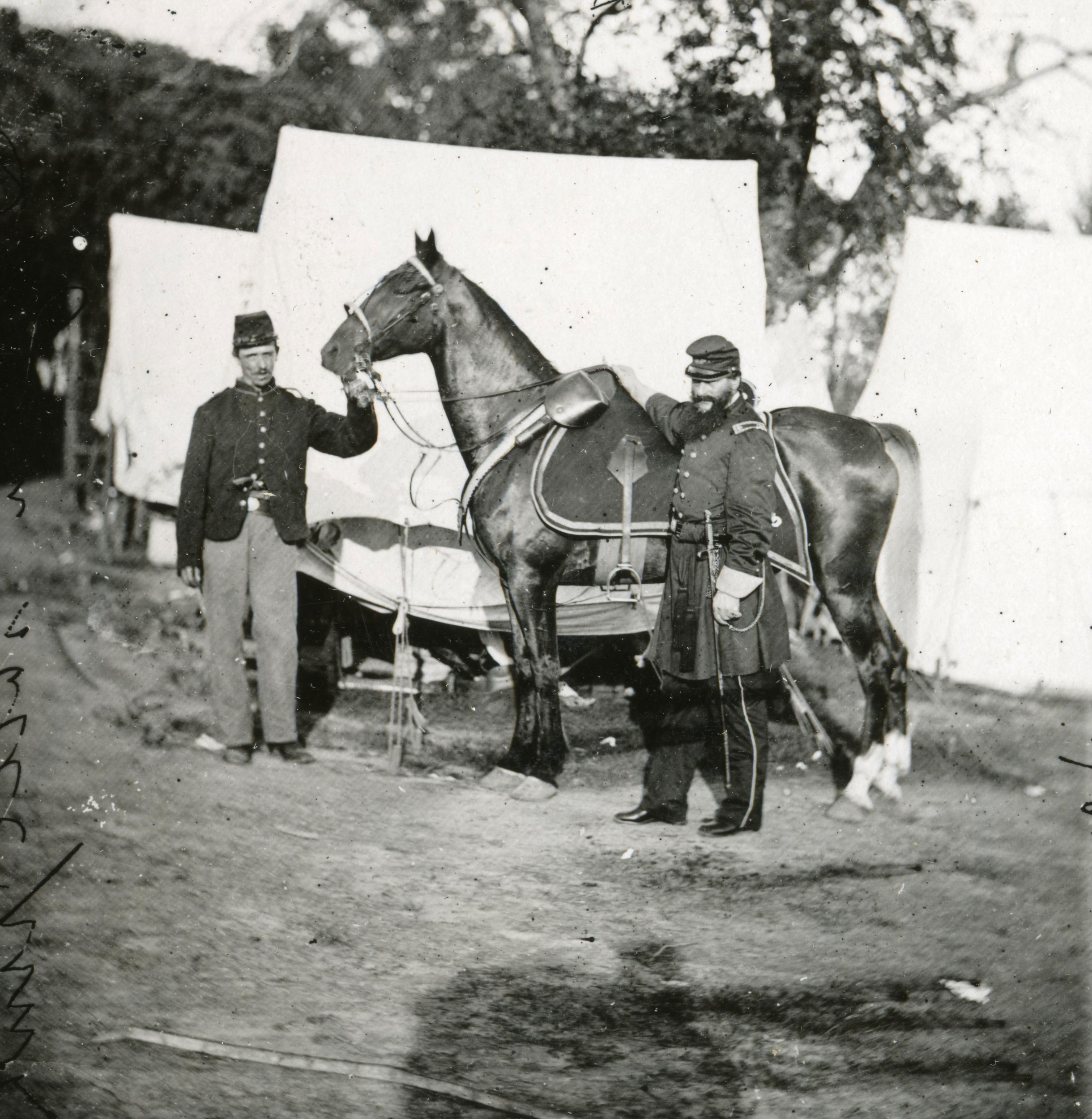 National Archives 111-B-5353
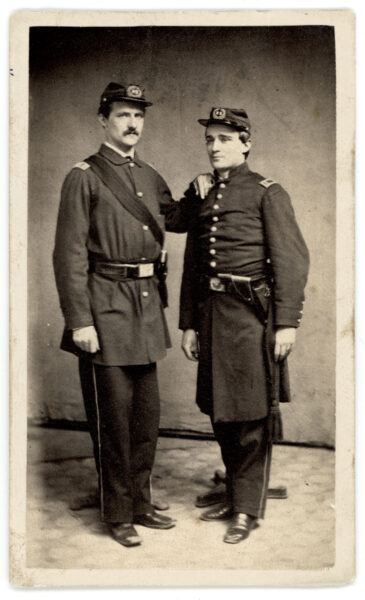
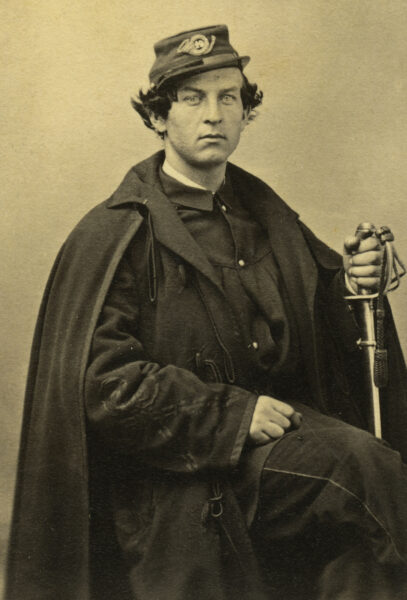
In the spring and summer of 1861, as Washington, D.C., filled with tens of thousands of Union soldiers, renowned photographer Mathew B. Brady and his crew visited the army camps, where they took dozens of glass plate negatives of troops posing in groups or by themselves, often in front of their tents.
These “Illustrations of Camp Life,” as Brady entitled them, show eager, confident young Union recruits and their officers, unaware of the awful toll soon to be demanded by the war’s grim reaper.
Hundreds of Brady’s “Camp Life” negatives are among the 6,000-plus Civil War negatives at the National Archives. The scant identifying material that accompanies the images establishes that Brady visited the 7th New York Infantry at Camp Cameron in Georgetown, the 12th New York Infantry at Camp Anderson in the District, the 2nd Rhode Island Infantry at Camp Sprague on Bladensburg Road near Washington, and several other units.
At least seven of the negatives show soldiers of the 33rd New York Infantry, including this sunlit image of an unidentified mounted officer. It was likely taken either in July 1861, when the regiment reached Washington and encamped at Camp Granger on 7th Street, or in August, when it moved to Camp Lyon near the Chain Bridge on the Potomac River.
This is the only “Camp Life” negative in which the shadow of Brady’s camera, on its tripod and covered by its cloth shroud, is visible, along with the shadow of the photographer. The square shape above the photographer’s head shows that he was wearing a top hat, as Brady often did, so it’s possible that we see the shadow of Brady himself, though assistants usually operated the camera even if Brady was present.
Bob Zeller is president of the nonprofit Center for Civil War Photography, which is devoted to collecting, preserving, and digitizing Civil War images.