 American Battlefield Trust
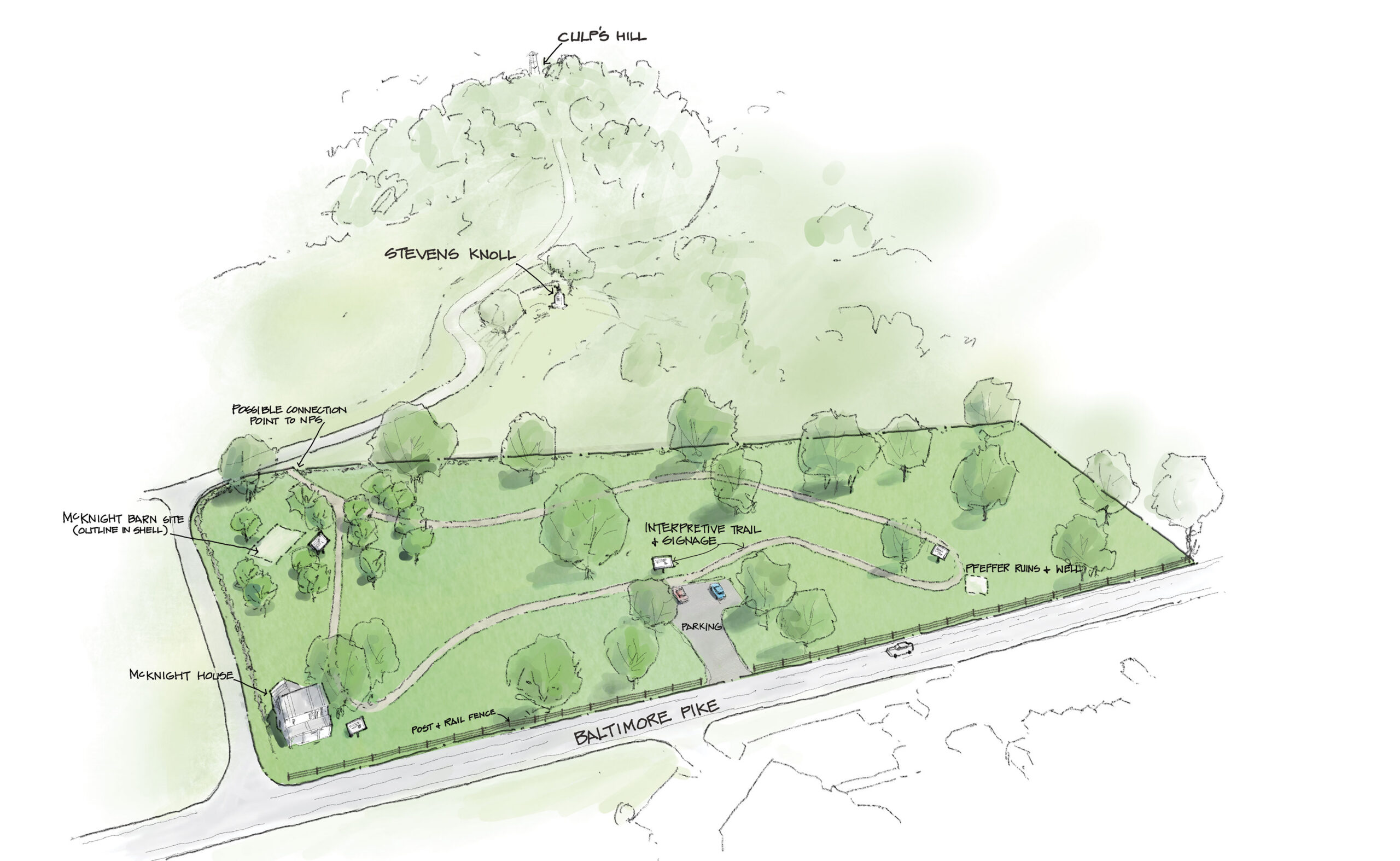
An artistic rendering of what the site around the demolished Gettysburg Battlefield Military Museum on Baltimore Pike will look like after restoration.
More than 160 years after the fighting there, the Gettysburg Battlefield stands as a breathtaking witness to one of our nation’s defining moments. We at the American Battlefield Trust are in the midst of several transformational projects, including removing non-historic structures, restoring those that bore witness to the battle, installing needed interpretive markers and signage, and revitalizing the landscape so that the battle’s remarkable history more clearly emerges.
December 2025 marked a milestone in our ongoing restoration efforts when we completed the demolition of the building that once housed the Gettysburg Battlefield Military Museum and the other structure along Baltimore Pike. The removal of these modern buildings allows a much-improved view of Stevens’ Knoll, an area of the battlefield set aside for preservation in the 1860s. Additionally, the historic James McKnight House located nearby, fronting Baltimore Pike, is undergoing a dramatic restoration to its 1863 appearance. Ultimately, the Trust plans to have walking trails with interpretive signage and markers to help visitors better connect with events that took place on this part of the battlefield.
The power of place on the Gettysburg Battlefield is indisputable. I know this work to date will lead to a richer and deeper experience on what is hallowed ground, and I cannot wait for you to see it for yourself. But other ambitious projects are also on the horizon, which you can support by visiting battlefields.org/restore-gettysburg.
For decades, General Pickett’s Buffet was an iconic site in the Gettysburg community. But when the restaurant’s operation relocated to a new, larger venue, its longtime owners sold the original property to the Trust. Following a successful fundraising campaign, the Trust is engaged in a planning and permitting process to remove the building that has always marred the landscape of Pickett’s Charge and integrate the site into the adjacent parkland. This will make way for state-of-the-art interpretation, including place-based augmented reality tools. Before its demolition, the building will be available to the Gettysburg Fire Department for training exercises.
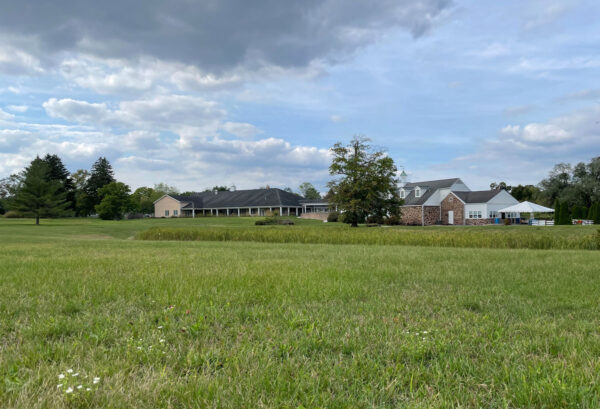
Across town, the area between McPherson Ridge and Herr’s Ridge, and just past Willoughby’s Run, saw intense fighting on the battle’s first day, July 1, 1863. In the 1940s, some 110 acres here became the Gettysburg Country Club, which operated into the 21st century. After the club closed, the course was added to the national park, but the remainder was proposed for intensive residential development. However, after significant local opposition and a permitting setback, the Trust was able to acquire the site in a series of good-faith negotiations. Our long-term plans envision removal of intrusive modern elements but retention of the original clubhouse, which was frequented by former President Dwight D. Eisenhower during his retirement years in Gettysburg. For the time being, that space is occupied by Cumberland Township; the Trust offered it rent-free to local police and administrators during a renovation of their permanent office space.
David Duncan is president of the nonprofit, nonpartisan American Battlefield Trust, which is dedicated to preserving America’s hallowed battlegrounds—Revolutionary War, War of 1812, and Civil War—and educating the public about their significance.