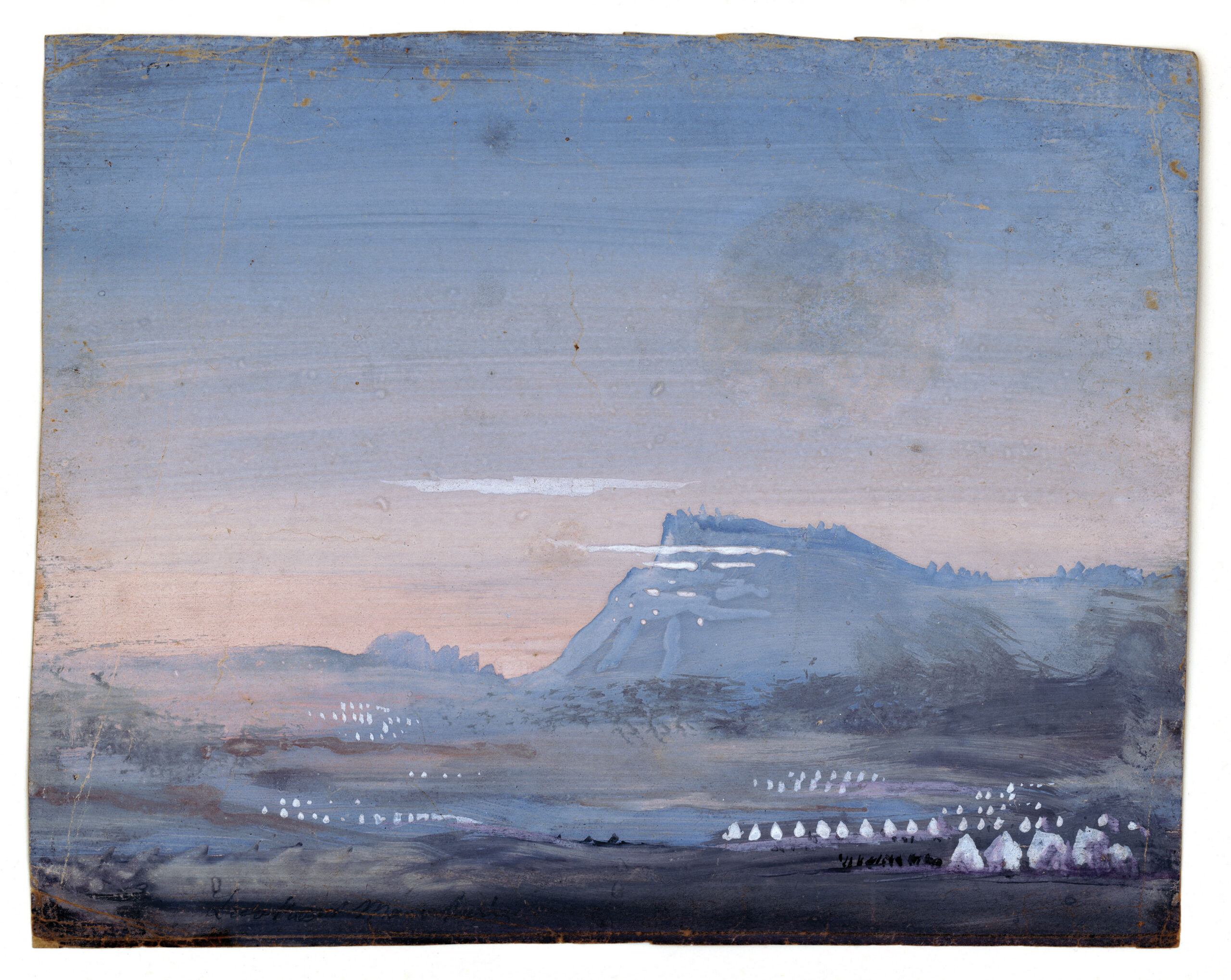
Metzner’s watercolor of Lookout Mountain, Tennessee, in the fall of 1863
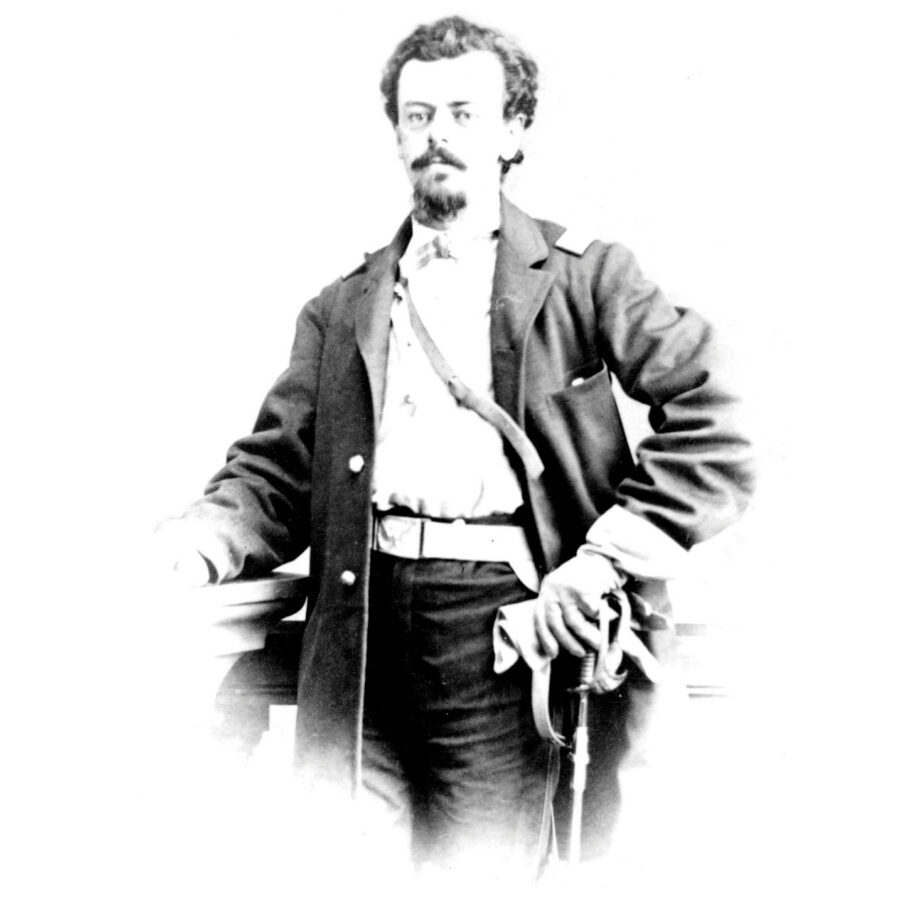
Adolph Metzner
When the Civil War broke out, Adolph Metzner had been living in the United States for four years. Born in Baden-Württemberg, Germany, in 1834, he had earned a degree as a pharmacist at the University of Freiburg before immigrating to America in 1856. Not long after his arrival here, Metzner and a partner opened a druggist shop in Louisville, Kentucky, a burgeoning business when it was interrupted by the opening of hostilities in 1861.
Four months after the firing on Fort Sumter, Metzner traveled to Indianapolis to help raise a company of Union volunteers—many of them of German heritage—that would become part of the 32nd Indiana Infantry. In his three years in the regiment, Metzner would rise to the rank of captain and participate in many of the western theater’s bloodiest engagements, including Shiloh, Stones River, the Tullahoma Campaign, Chickamauga (where he was wounded in the leg), Chattanooga, and the Atlanta Campaign.
Along the way, Metzner composed a detailed record of his experiences with a number of sketches: of his comrades in arms, the nature of camp life, and the ferocity of battle. When the war ended, Metzner returned to Indianapolis, where he worked as a pharmacist for a time before pursuing a career in artistic tiles and glazes. He retired in 1912 and moved to New Jersey. He was 83 when he died in 1918, and was survived by his second wife and six children.
I. Camp Life
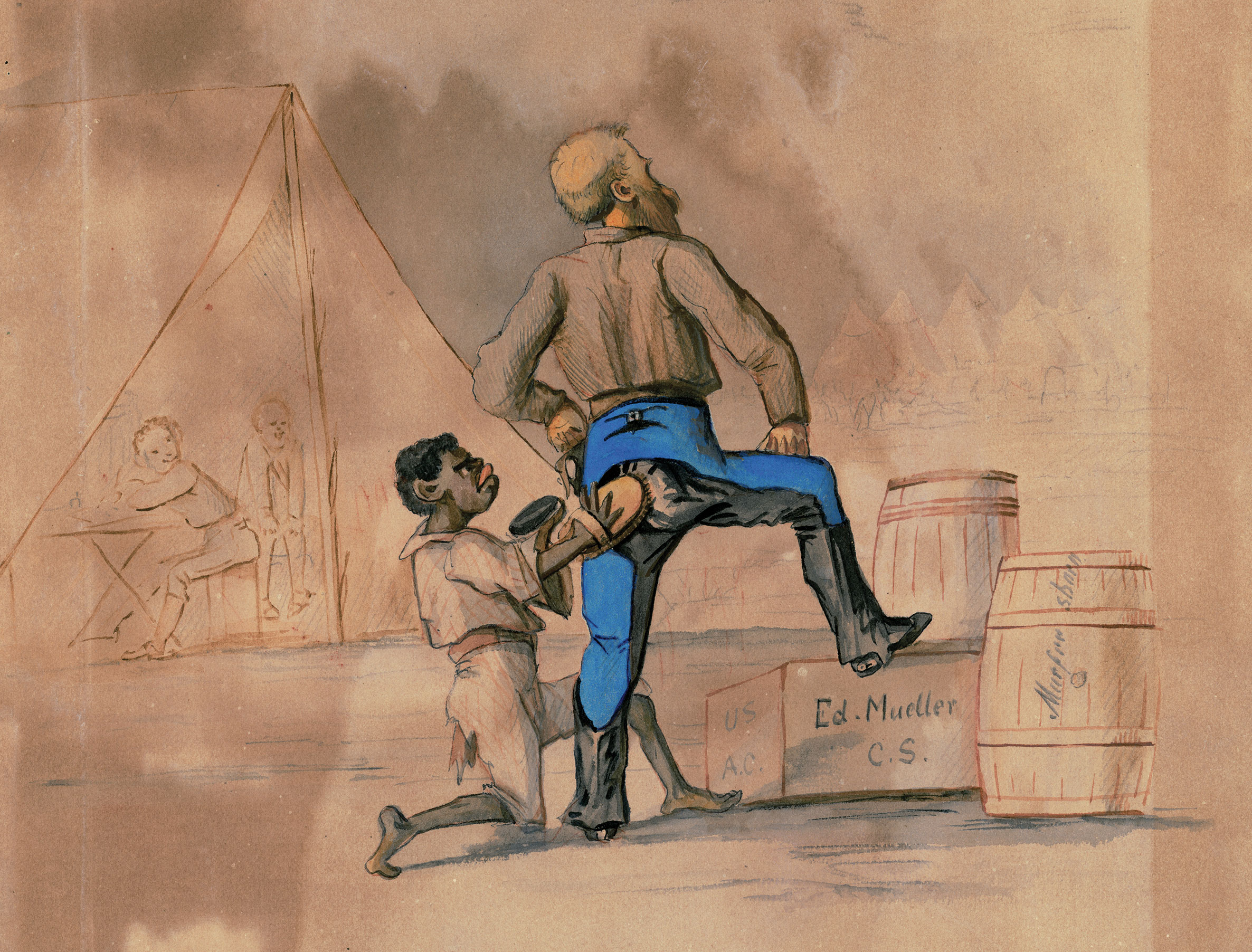
Metzner’s illustrations often captured scenes—both serious and humorous—of life in an army camp. Shown below, a young contraband proceeds with the unpleasant duty of polishing Major Ed Mueller’s leather chaps while men from the 32nd watch, bemused, from a nearby tent.
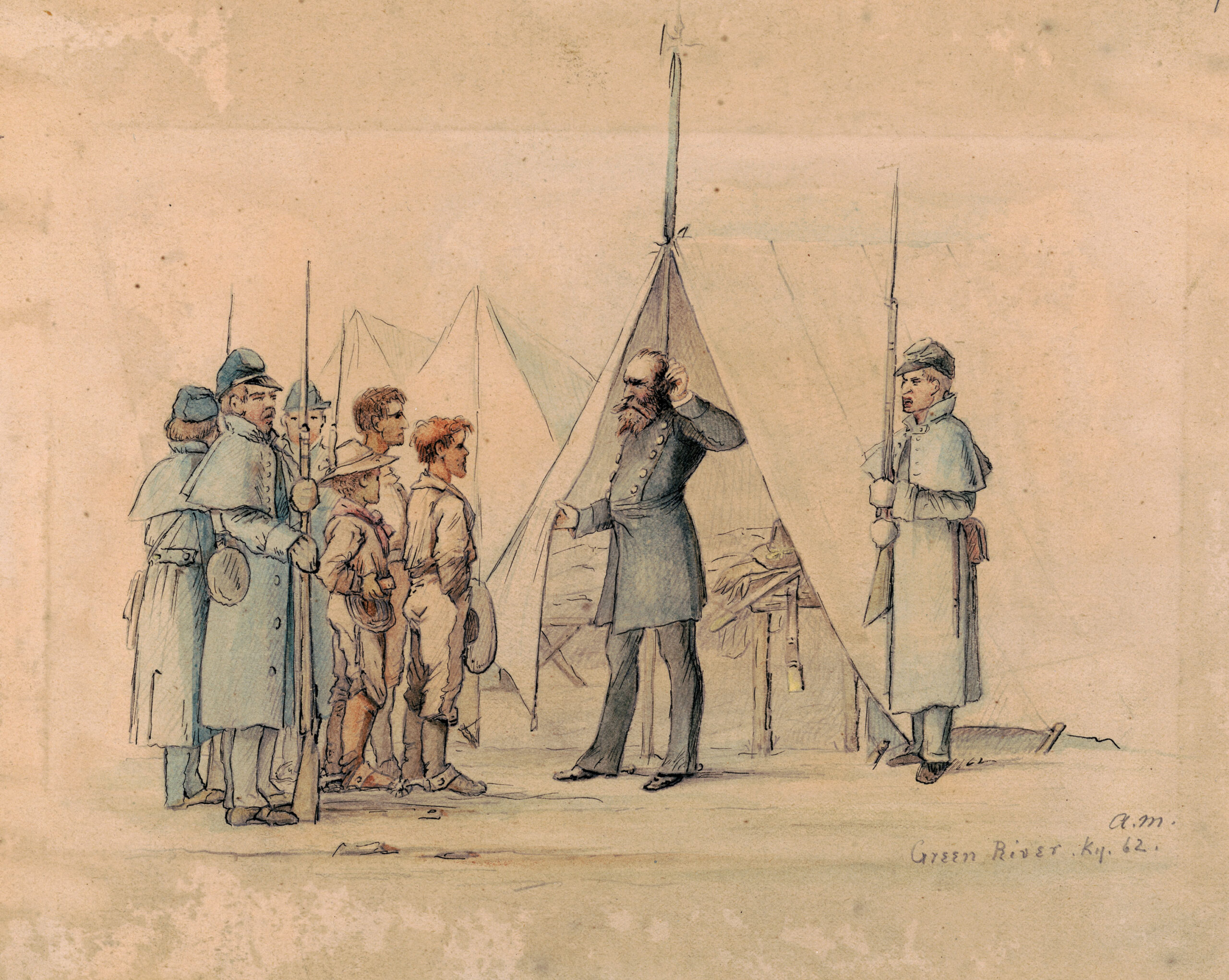
The regiment’s commander, August Willich, figured prominently in Metzner’s camp sketches. Willich receives Confederate prisoners outside his tent at Green River, Kentucky, in 1862.
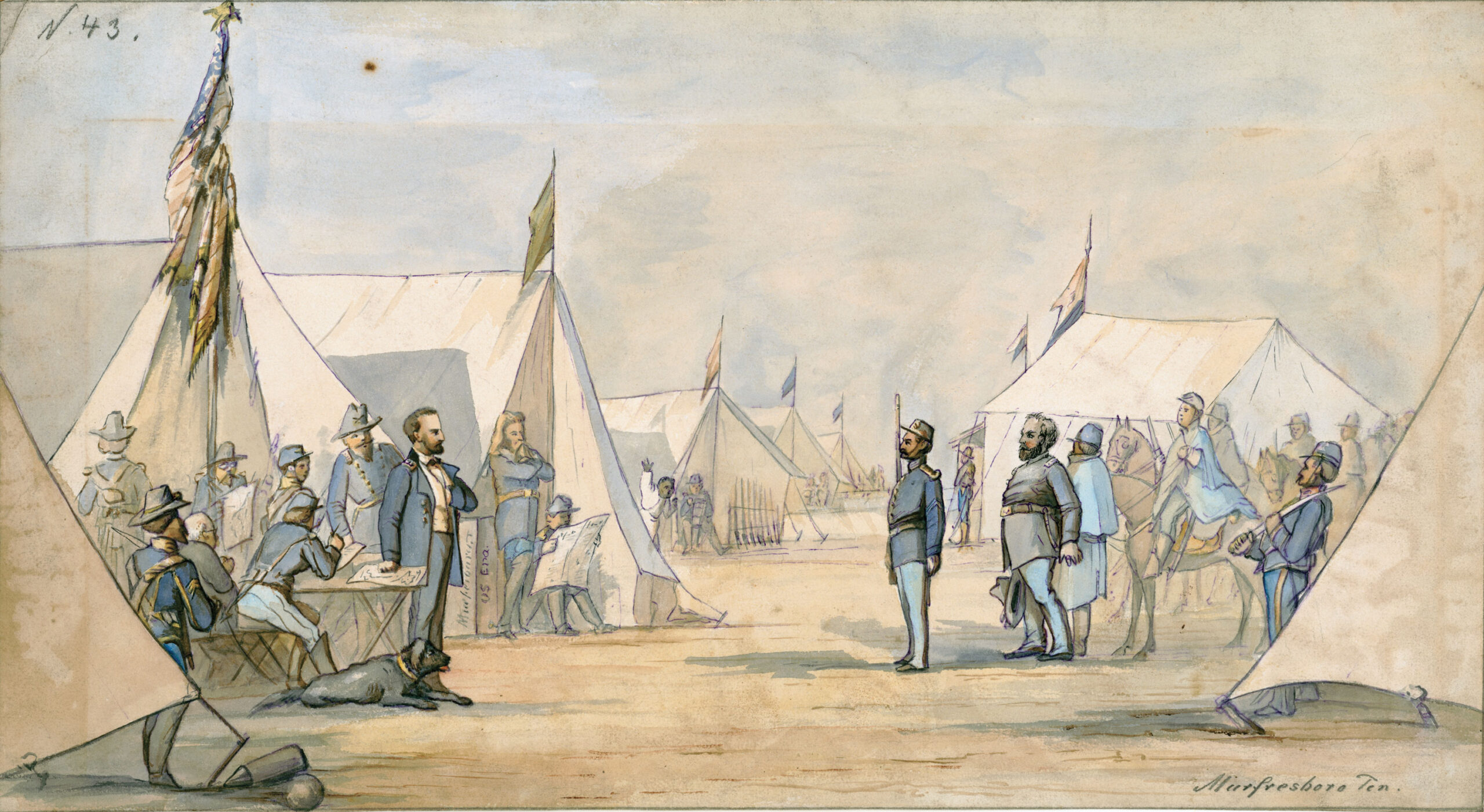
General William S. Rosecrans (standing at left) watches as Lieutenant Robert Wolff arrives at his tent in Murfreesboro, Tennessee, under guard. Metzner’s caption for the sketch notes that Wolff was “under arrest and dismissed from the service for kissing a nurse.”
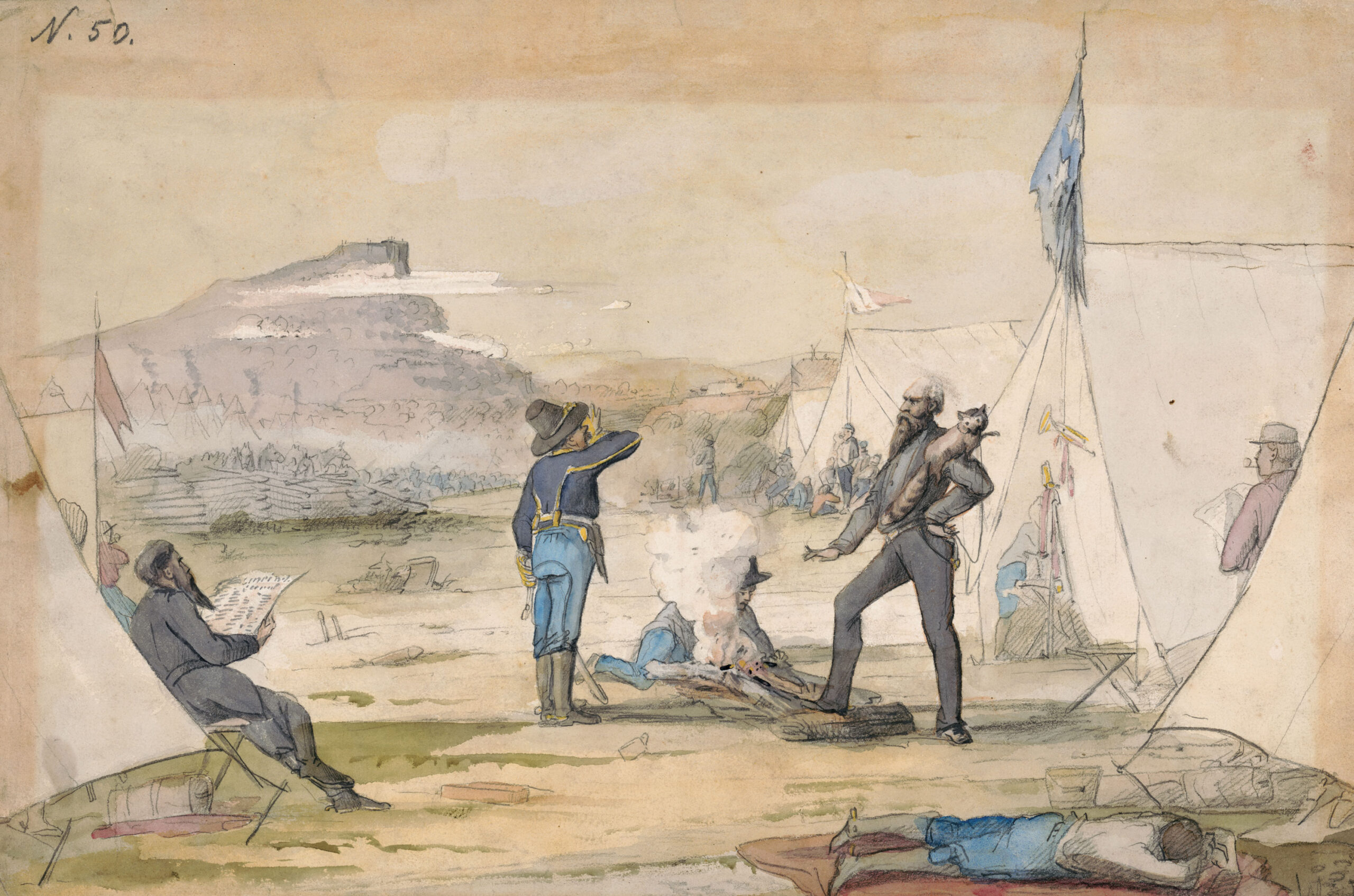
At Chattanooga, Willich, his pet raccoon sitting on his shoulder, receives a report from one of his officers.
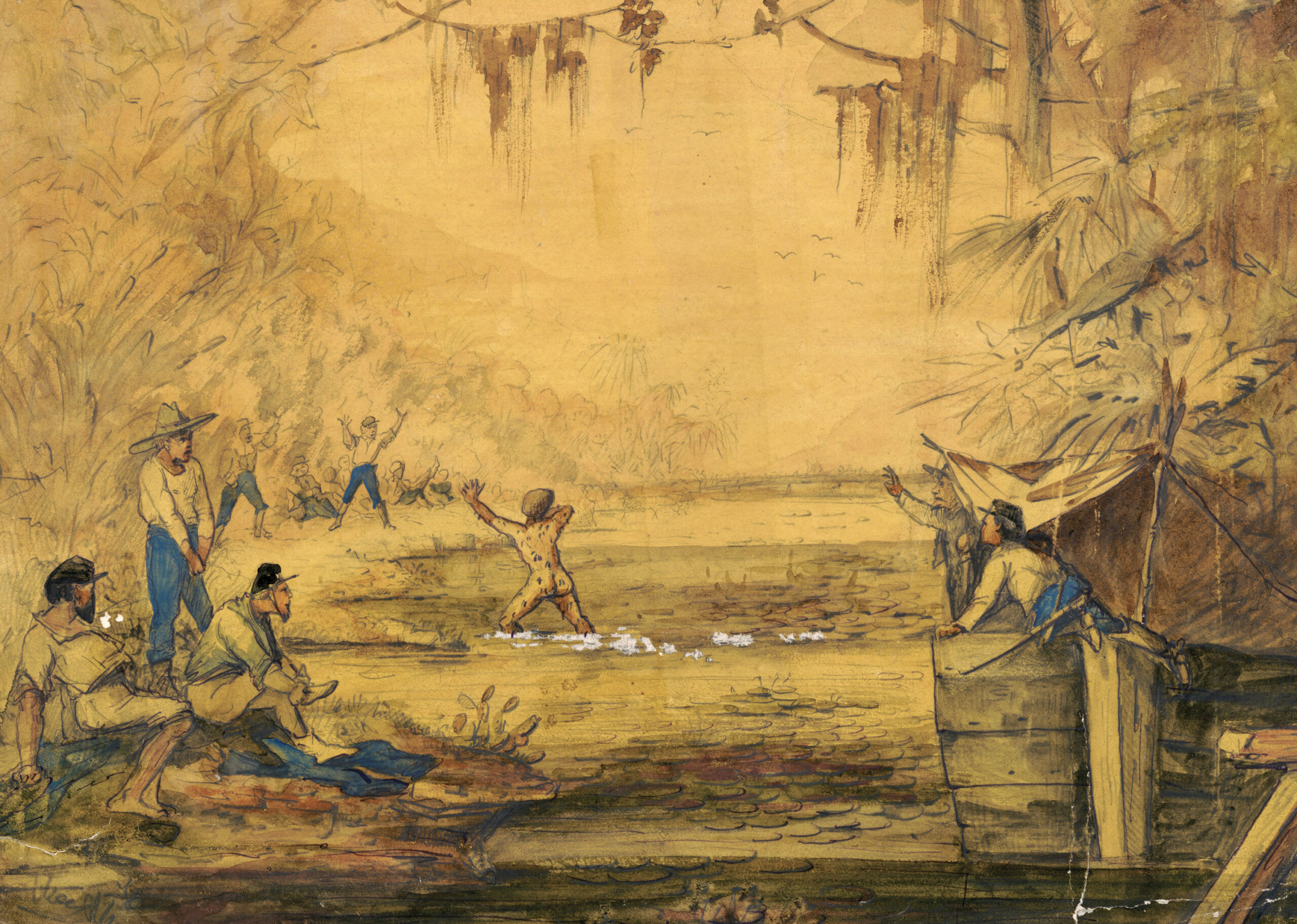
As soldiers bathe in the Chattahoochee River in Georgia in July 1864, one of them emerges covered in leeches.
II. Personalities
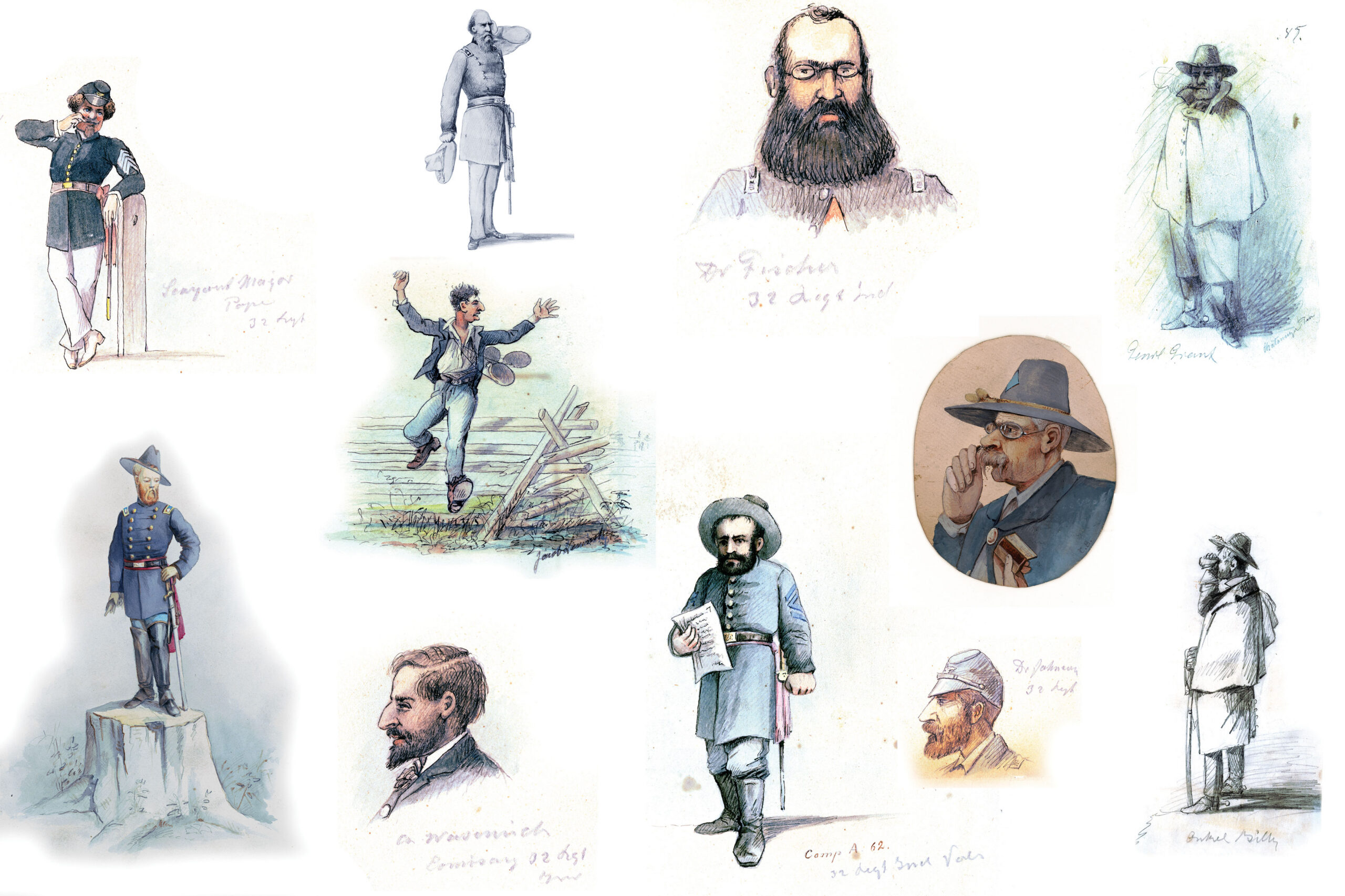
Metzner focused much of his attention on sketching the men he served alongside in the 32nd Indiana. Shown here on the left (clockwise from left) are: Sergeant Major Frank Bockmann; August Willich, the 32nd Indiana colonel who was promoted to brigadier general in 1862; Company A’s “Camp Comedian” Jacob Labinsky, whom Metzner described on the reverse of this sketch as “Scared to death by Rebel cavalry”; Commissary Sergeant Emanuel Wassenich; and Lieutenant Colonel Henry von Trebra. Among the right grouping are: Chaplain Charles Fischer (top, second from right); Orderly Sergeant Robert Wolff (lower center), a well-known actor who worked in New York and Louisville, Kentucky, before the war; hospital steward Carl Bayer (center); Dr. Jean Allard Jeancon (center, below Bayer); and generals Ulysses S. Grant at Chattanooga (upper right) and “Onkel [“Uncle” in German] Billy” William T. Sherman (lower right).
III. Campaigning
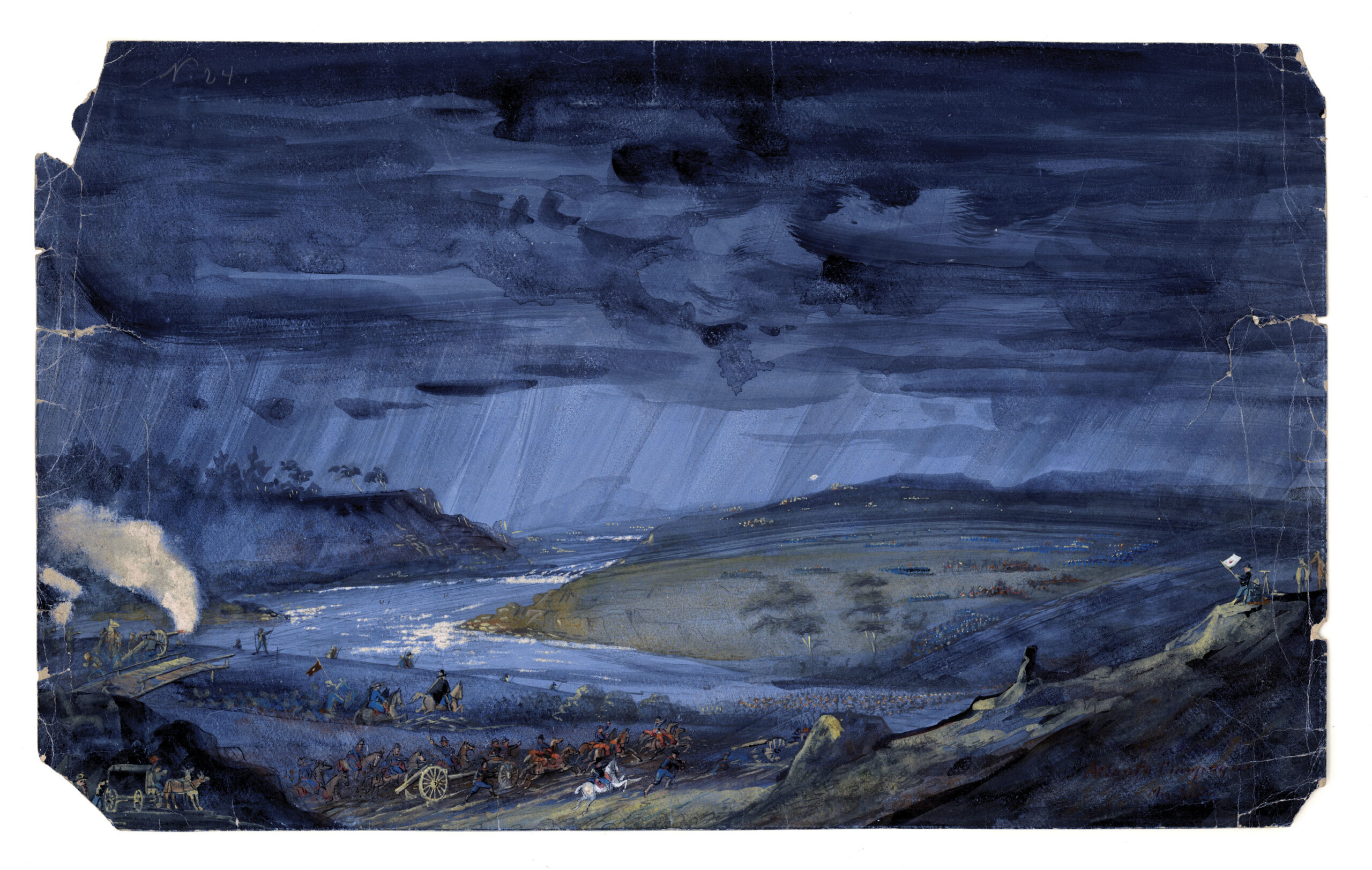
Metzner accompanied the 32nd Indiana on campaigns through Kentucky, Tennessee, and Georgia, often sketching men on the march, as in this watercolor of troops crossing Chickamauga Creek on May 10, 1864, at the beginning of the Atlanta Campaign.
IV. Combat
Metzner witnessed some of the conflict’s fiercest fighting with the 32nd Indiana, and his battle illustrations reflect the confusion and chaos that often accompanied combat. Shown below: Metzner’s depictions of the fighting at Peachtree Creek, Liberty Gap, the Battle of Chickamauga, and Missionary Ridge.
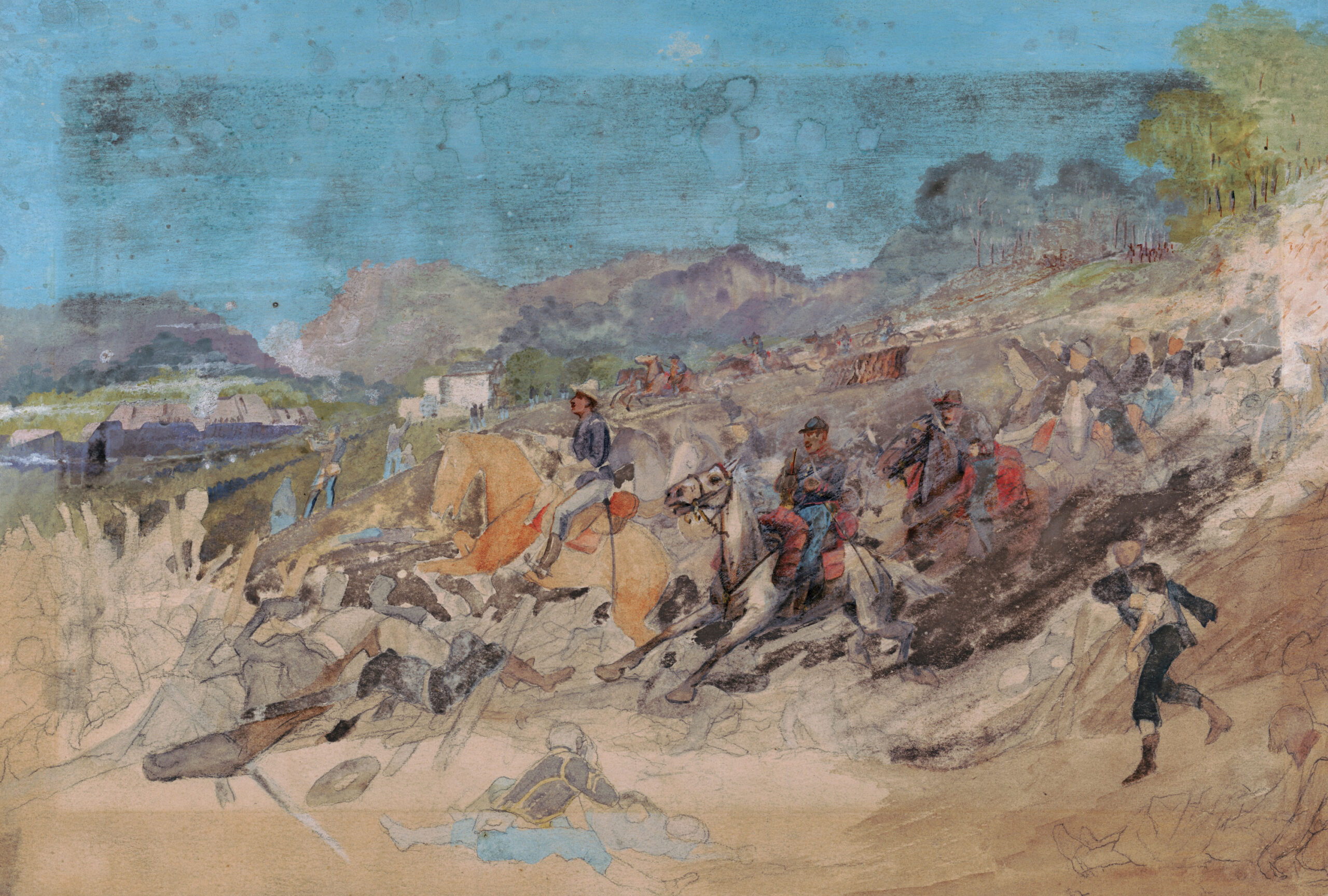
Peachtree Creek
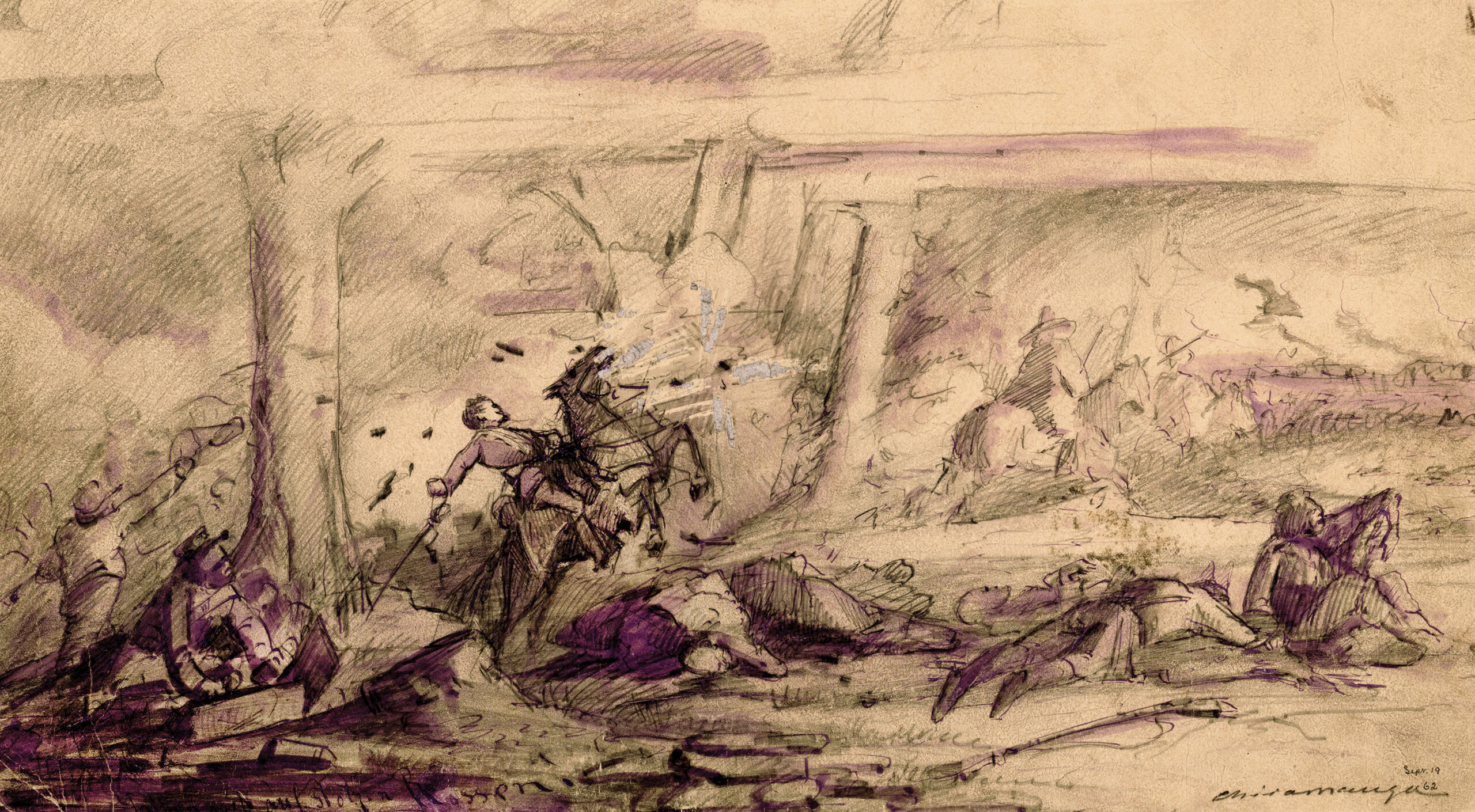
Battle of Chickamauga
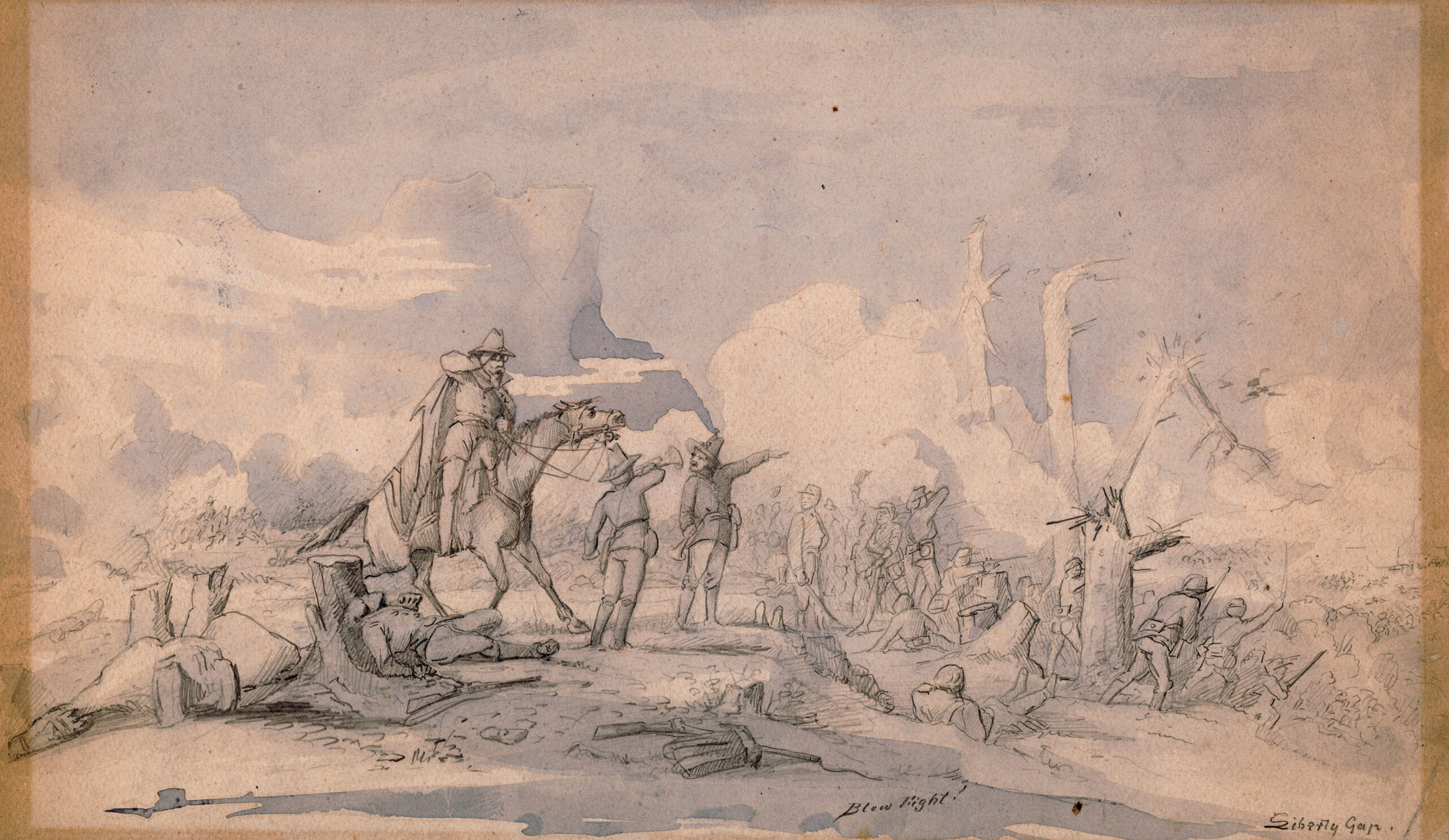
Liberty Gap
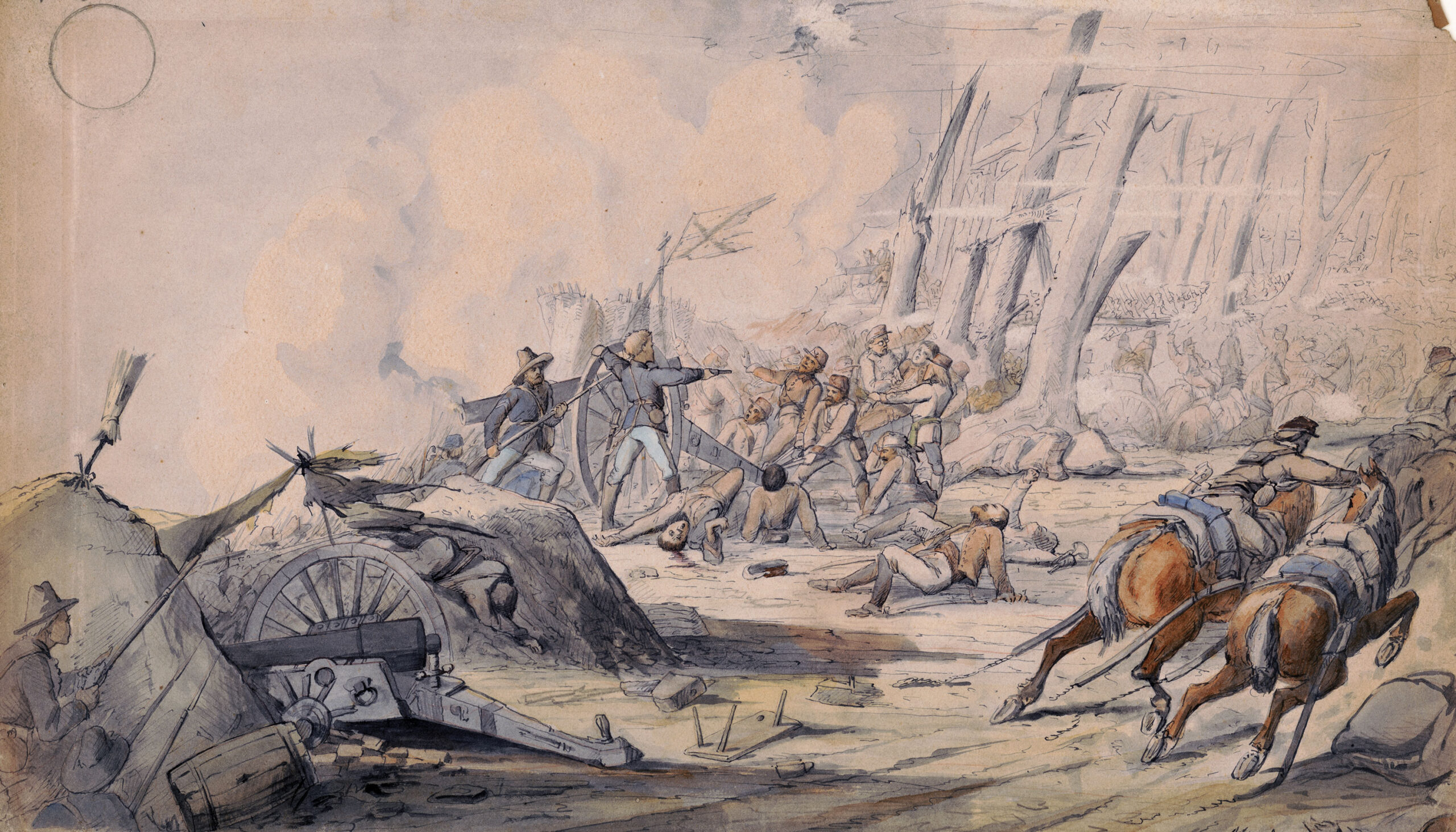
Missionary Ridge
V. Casualties
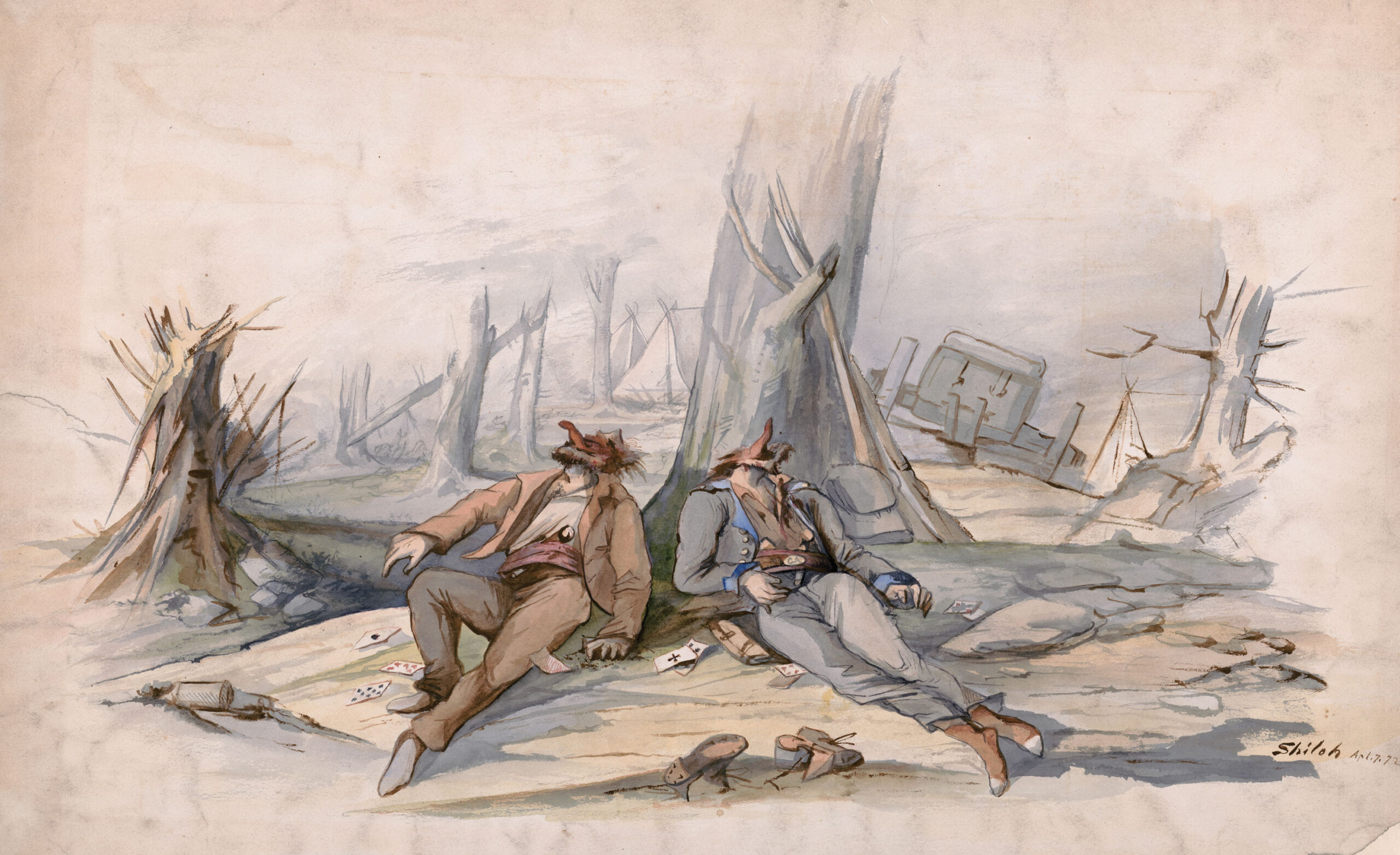
Metzner captured not only the ferocity of combat, but also its human cost. None of his sketches were as compelling—and gruesome—as this one of two soldiers killed at Shiloh, presumably beheaded by a passing shell.
Sources
Michael A. Peake, Blood Shed in This War: Civil War Illustrations by Captain Adolph Metzner, 32nd Indiana (2010). All images courtesy of the Library of Congress.