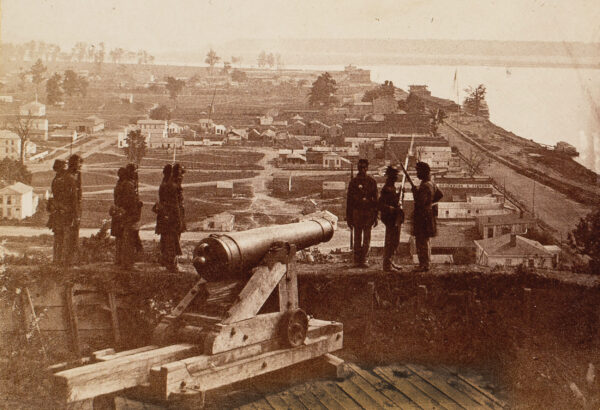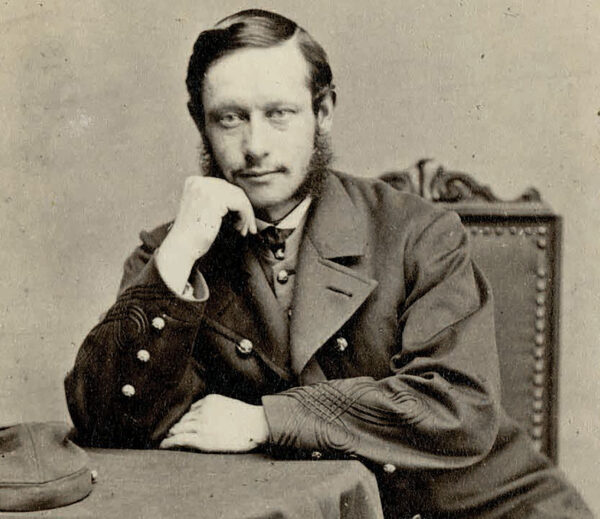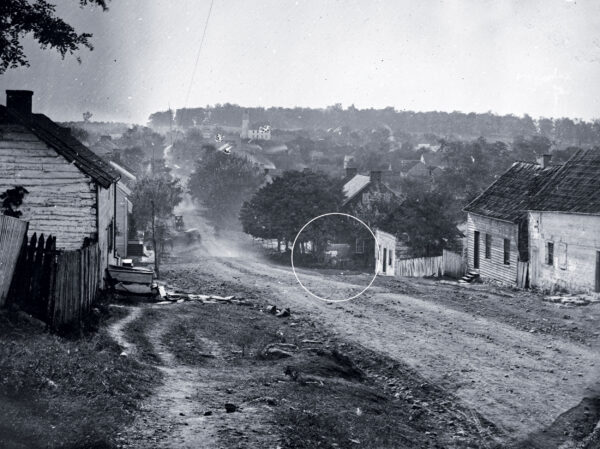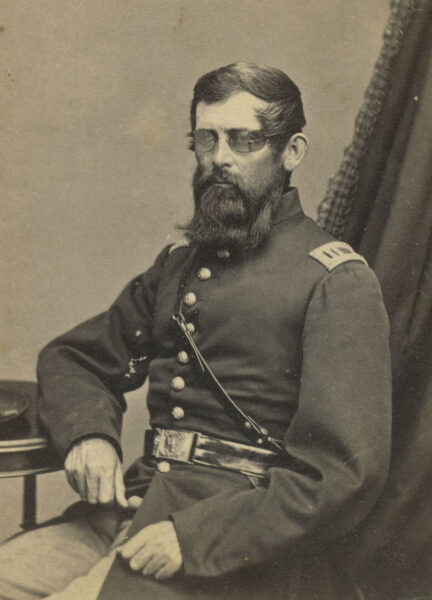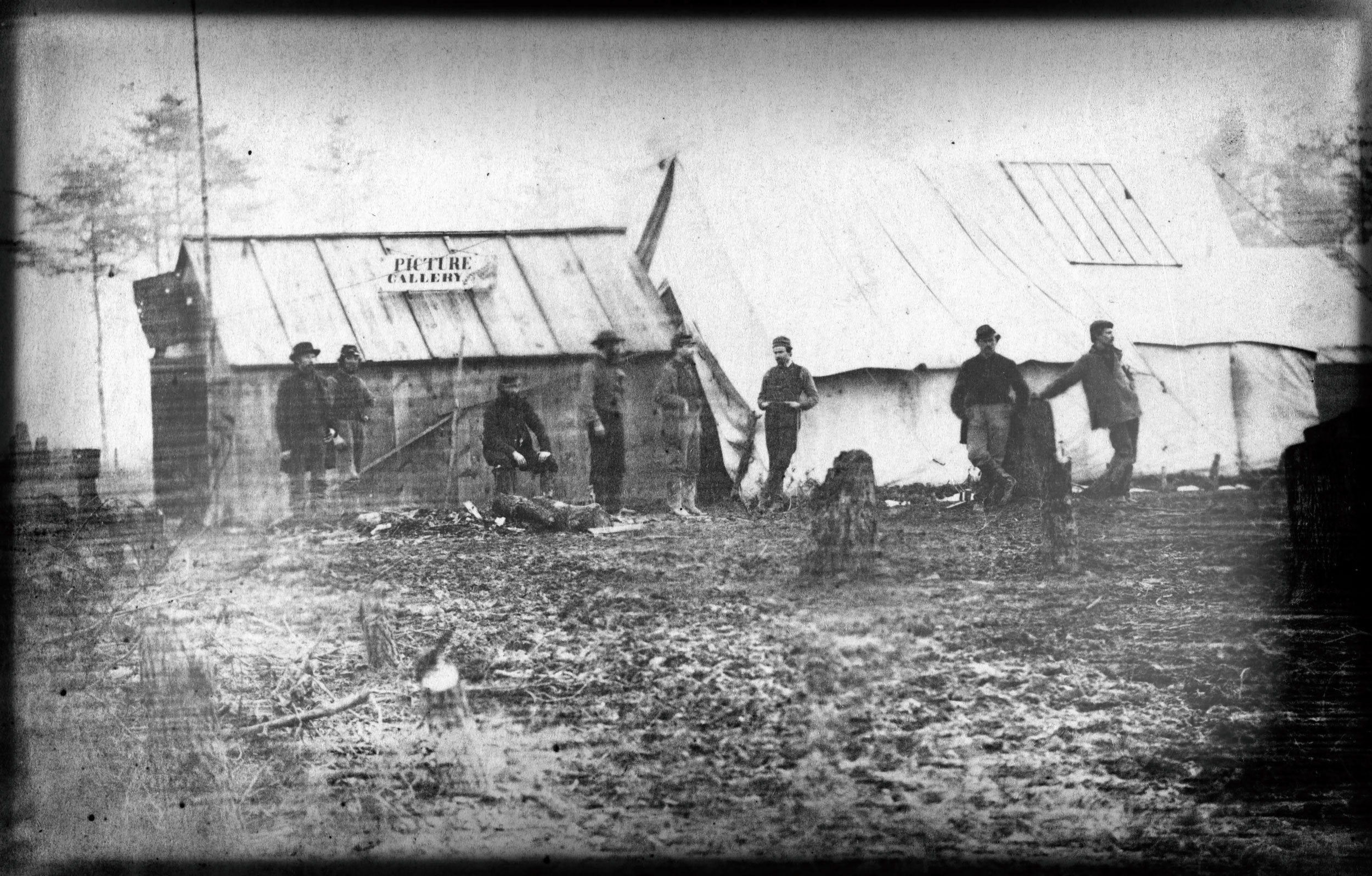
This image of Vermont photographer G.H. Houghton’s “Picture Gallery” at Camp Griffin in Langley, Virginia, in 1861 is emblematic of how photographers following the Union armies made a business during the conflict. Houghton is seen at left, standing near the gallery door. To the right is his tent studio, where he took countless portraits under the skylight cut into the tent roof. By 1865, Houghton was back in Vermont, but there were plenty of others still making the Civil War their business. In that final year of the war, the Army of the Potomac’s Roster of Sutlers and Traders listed 31 photographers and 68 assistants. Each division had its own approved photographer, right up to General Headquarters, which claimed Mathew Brady. The approved photographers were sometimes called on to make photographic copies of maps. And a few took documentary or scenic photographs as well as stereoscopic views. Their work established a standard for war photography that not only documented camps and battlefields, but also created a visual archive of countless thousands of soldiers who fought in the war.
The nonprofit Center for Civil War Photography (civilwarphotography.org) is devoted to collecting, preserving, and digitizing Civil War images.