 Anne S.K. Brown Military Collection
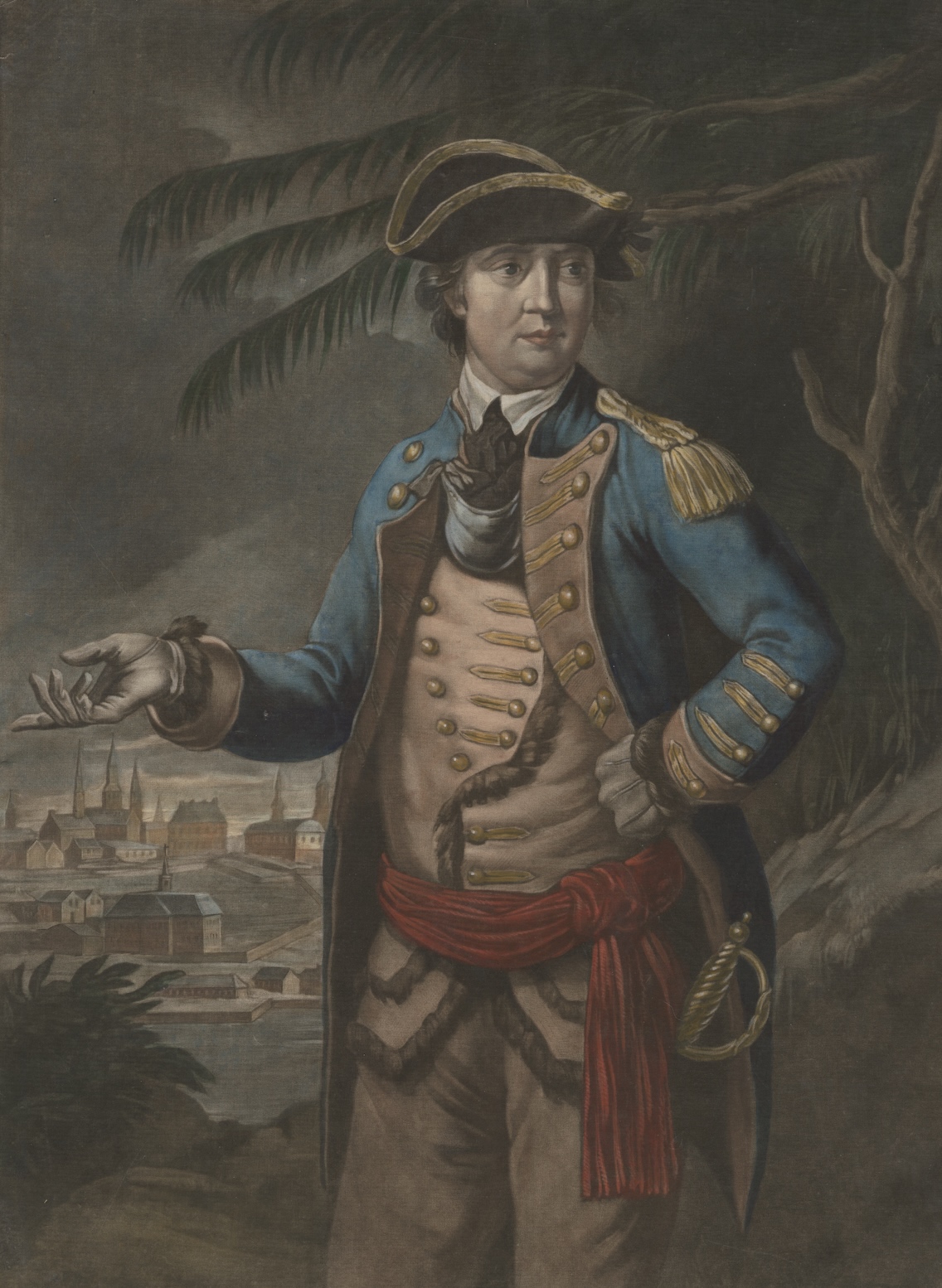
Benedict Arnold
It is a well-known fact that Civil War-era Americans frequently invoked the legacy of the American Revolution in their struggle to save the Union. Abraham Lincoln’s “mystic chords of memory” bound the men and women of 1861–1865 to their Revolutionary forebears and gave meaning to a war that would ultimately cost some 750,000 Americans their lives. Among the most incendiary figures of the Revolutionary War was Benedict Arnold—an American soldier whose name became synonymous with treachery when, in 1780, his collusion with the British army nearly resulted in the surrender of West Point to the redcoats. Before the Constitution, before the Articles of Confederation, before Yorktown, Arnold insured he would be remembered as the greatest traitor in American history (even before recorded American history had rightfully begun).
Treason was a great theme of the Civil War and participants on both sides frequently recalled Arnold as an avatar for dastardliness. Three major themes emerge in newspapers from the period, related to Arnold’s reputation and legacy. First, and earliest, the parallels between Arnold and James Buchanan, whose failure as president to prevent the splintering of the Union struck many as an act of deep treason. Second, soldiers who abandoned their federal military commissions to fight for the Confederacy. And, finally, in criticisms of the Copperhead faction of the Democratic Party in the North, who were seen as the principal inheritors of Arnold’s legacy of treachery.
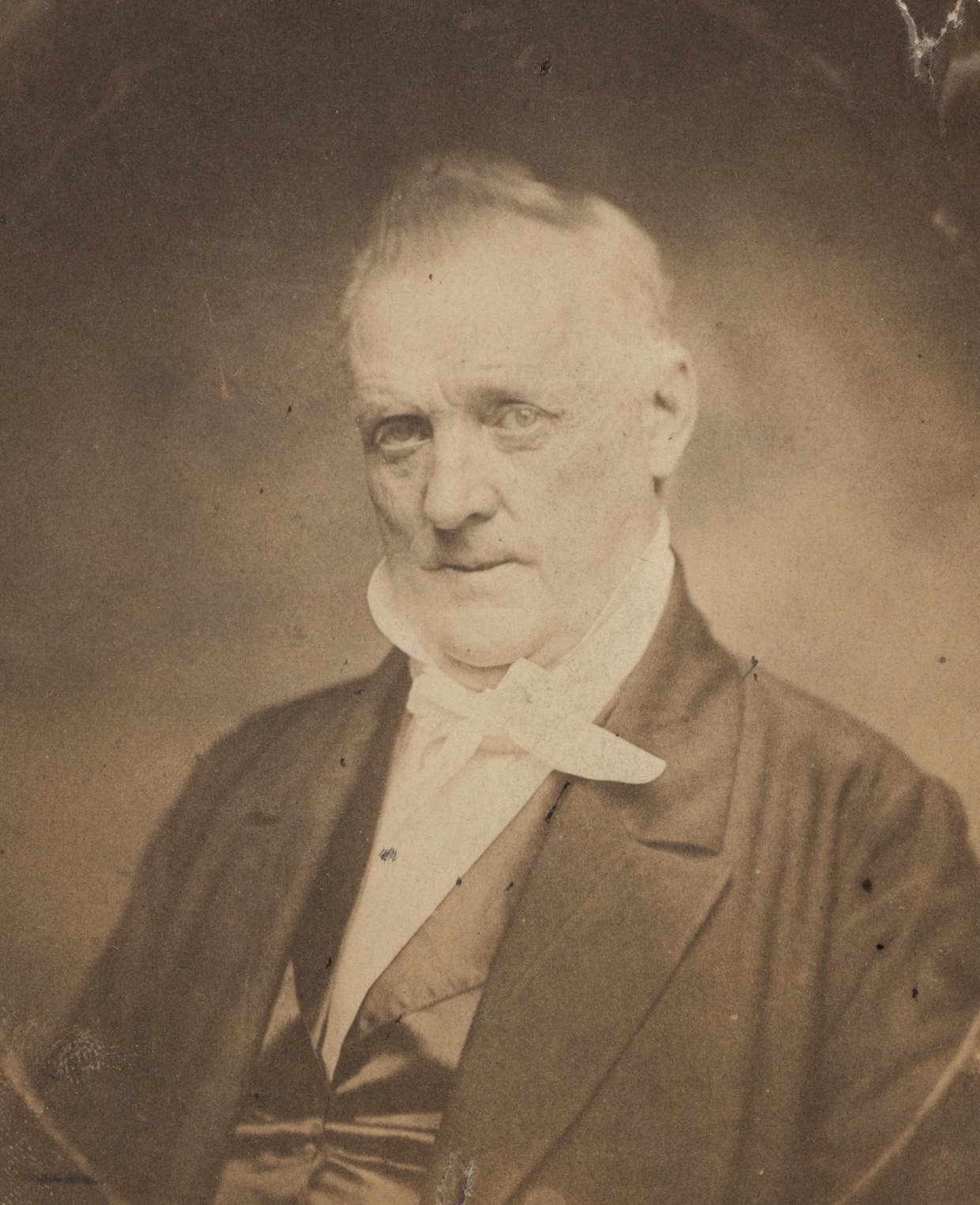
The earliest and most sustained comparisons attached themselves to the architects of secession, and above all to Buchanan. As the secession winter of 1860–1861 wore on, Republican and pro-Union editors increasingly indicted the outgoing president not merely for failing to arrest disunion but for actively abetting it. The New York Dispatch offered a representative and unusually explicit example. In an editorial of December 29, 1860, titled “What Will It Come To?” the paper described a treasonous conspiracy to dismember the Union that had originated two years earlier among leading southern men and had been, in its words, “eagerly embraced and seconded” by Buchanan and three members of his Cabinet. The program of what the Dispatch called “the modern Benedict Arnolds” was, the newspaper insisted, now plain enough, “secretly framed, covertly and criminally urged” toward a fruition that would reward its authors with infamy.
What distinguished the Dispatch’s case was its specificity about the machinery of betrayal. The comparison did not rest on epithet alone. With the president and the heads of the most important federal departments inside the plot, the newspaper charged, it had been a simple matter to “plunder the treasury, rob the Indian Trust Fund,” and ship arms and ammunition wholesale, at national expense, to the disaffected states. Where the historical Arnold had abused a specific military command to deliver West Point to the enemy, Buchanan and his department heads stood accused of abusing the ordinary instruments of federal administration—the Treasury, the Indian trust, the arsenals—to arm and finance a rebellion from within. The alleged treason was bureaucratic, executed through the very offices established to sustain the Union.
 National Portrait Gallery
James Buchanan
By invoking “the modern Benedict Arnolds” rather than a single traitor, the Dispatch distributed the guilt across an entire conspiracy, implicating the president, his Cabinet, and the South Carolina secessionists together under one Revolutionary-era label. This allowed the newspaper to sidestep a difficulty that troubled other invocations of Arnold during these months. Critics who cast Buchanan as a traitor often struggled to reconcile the charge with his evident passivity, for Arnold’s crime had been active betrayal while Buchanan’s was more plausibly described as paralysis. The Dispatch refused the premise.
The growing crisis around the security of federal forts in Charleston Harbor brought the comparisons to a head at the close of 1860. In late December a dispatch reported that Buchanan had authorized Major Robert Anderson to surrender Fort Moultrie, and it was this report—the handing of a federal fort to a seceding state—that activated the sharpest Arnold comparisons. The reason is not hard to see. A fort surrendered to the enemy was an echo of Arnold’s own crime, and editors reached for the parallel to invite readers to see Fort Moultrie as Buchanan’s West Point.
The Wood County Reporter of Wisconsin, writing under the headline “A Traitor at the Helm,” declared that the report left no doubt as to Buchanan’s character. He was “not merely a weak and vacillating time-server,” the editor wrote, “but a vile and infamous traitor, as much more infamous than Benedict Arnold, as the trusts committed to him by the American people are greater than those committed to Arnold.” The logic was proportional and, in its way, rigorous. Treason scaled with the magnitude of the trust betrayed, and because a president held a charge incomparably greater than a fort commander’s, his betrayal outstripped that of the Revolution’s archetypal traitor. The newspaper did not shrink from the conclusion the comparison implied, holding that Buchanan “deserves to meet a traitor’s fate.”
The Green Mountain Freeman of Vermont, reacting to the same news, pressed the point into outright displacement. Hitherto, the paper observed, Arnold had “enjoyed the infamous distinction of being the chief among the traitors to this country.” But that distinction had now been reserved for Buchanan, whose treason was so vast that beside “its gigantic proportions the crime of Arnold is dwarfed into comparative insignificance.” This was a stronger claim than the Reporter’s. The Vermont newspaper demoted the Revolution’s great traitor to a lesser rank and installed the sitting president in his place. The Freeman closed with a call to “lash the traitor naked through the world,” a ferocious image that matched the enormity of the treason it alleged.
On February 7, 1861, the Daily Intelligencer of Wheeling, the leading Unionist paper in the northwestern counties of Virginia, laid out the whole indictment as a single coordinated one—what historians have since described as the “Slave Power Conspiracy.” The disloyalty was organized department by department. The newspaper described, in particular, a professional army manipulated so that secessionist officers could deliver forts and arsenals to the South at a signal, a War Department under John B. Floyd that had shipped weapons south and left the government without arms, a Treasury under Howell Cobb charged with destroying public credit, and an Interior Department under Jacob Thompson arranged so that its property could be stolen by old associates. The ledger was complete, with the Intelligencer reckoning the arms, the fraudulent acceptances, and the surrendered forts at some $15 million despoiled from the government.
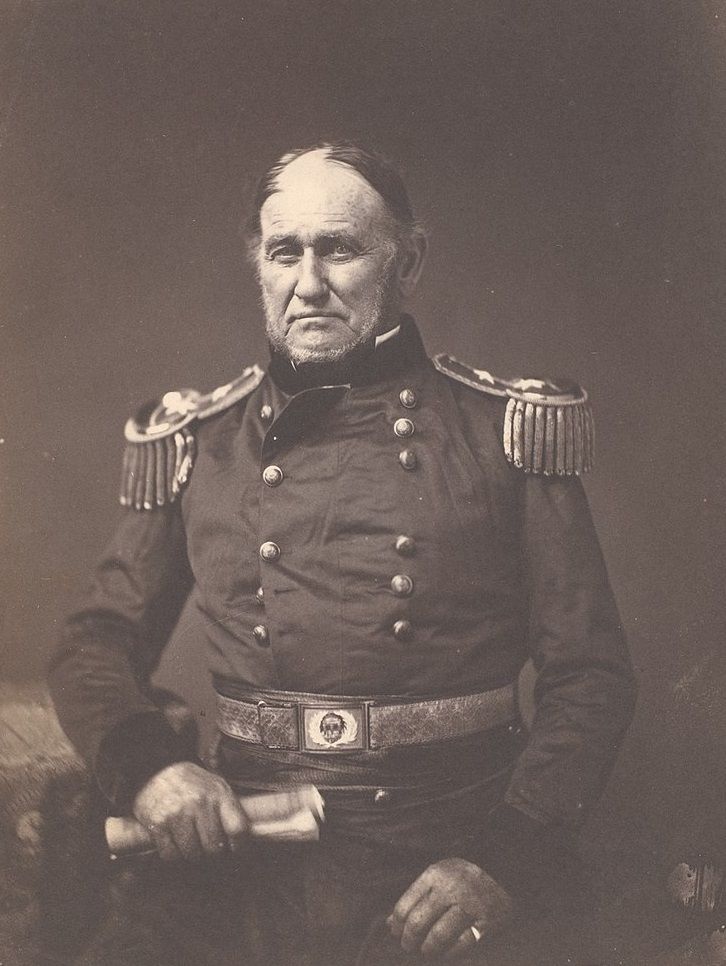
When it came to military affairs, the Intelligencer declared that “the sacred spot of West Point has again been the scene of a plot,” one beside which the crime “attempted by Benedict Arnold sinks into insignificance.” The conspiracy reprised Arnold’s treason and it required officers in the field, soldiers who held commissions in the United States Army, to underwrite the betrayal. The officers who resigned their commissions to serve the Confederacy thus drew the Arnold comparison back to its origin. Where the papers of the secession winter had stretched the analogy to lambaste a lame duck president, the military resignations of early 1861 offered a sharp parallel to Arnold’s crimes.
 Texas State Historical Association
David E. Twiggs
On March 4, 1861, the New York Daily Tribune took up the case of David E. Twiggs, the United States general who had surrendered his entire Texas command to Confederate authorities in February. Rather than cast Twiggs as Arnold’s successor, the paper offered a mordant conceit. The most fortunate thing that ever happened to Benedict Arnold, according to the Tribune, was the birth of David Twiggs. “The monopoly of shame has at last been taken from the traitor of the Revolution,” the editors decreed, “and shared with a worthy rival.” Arnold now had a partner in his infamy and ignominy. The Tribune heaped contempt on Twiggs, who apparently thought that the South would “canonize him as a saint” and that “Northern men with Southern propensities” would reward his baseness with sympathy. That last phrase linked Twiggs back to Buchanan—a perfect pair of doughfaces.
By the time the war entered its third year, the Arnold comparison had found a new target. Buchanan returned to Pennsylvania. Confederate officers resigned their U.S. Army commissions. They went away. The Copperheads did no such thing. Northern Democrats who agitated for an armistice—citizens and officeholders—remained inside the Union while allegedly working to sap the war effort from within. Treason from inside the house was a crime that most closely matched Arnold’s own. Arnold had not gone over to the British and then turned against America; he had plotted while still in an American uniform, still trusted with an American command. The peace Democrats, loyal in name while suspected of aiding the rebellion in effect, were his truest heirs, and the Republican press did not miss the resemblance.
Arnold’s own history fit the Copperhead case with eerie precision. Arnold’s treason had been clothed in the language of peace. After his defection he issued a proclamation to the citizens and soldiers of the United States urging them to lay down their arms, abandon a needless and bloody war, and accept reconciliation with the parent country. In June 1863 the Fremont Journal of Ohio reprinted Arnold’s proclamation in full under the heading “The First Copperhead” and told its readers that with the signature struck off, the document was “a perfect copperhead manifesto for the present day.” Arnold, the newspaper observed, “like a Copperhead of ’63,” would have free men ground their arms to tyrants and submit to any yoke a master might impose.
 National Portrait Gallery
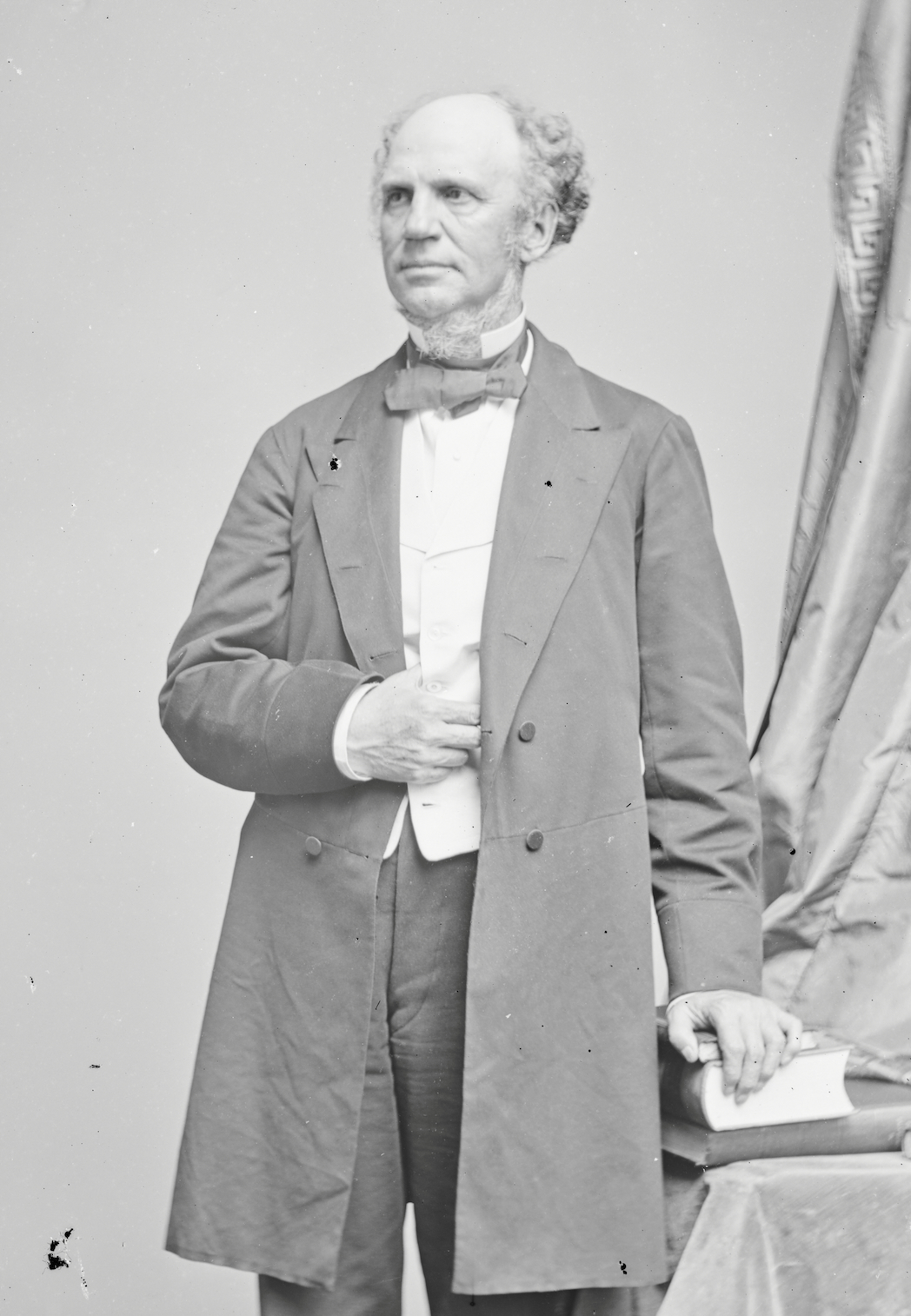
Horatio Seymour
The comparison reached its fullest form during the 1864 presidential campaign. On October 1, 1864, the Portland Daily Press likewise reprinted Arnold’s proclamation and reduced it to eight numbered grievances: the suppression of speech and press, the seizure of property, illegal imprisonment, odious conscription, the refusal of an available peace, the abandonment of the war’s original aims, a country deluged with blood (leaving a land of widows and orphans), and a closing summons to join him and end the affliction. The Maine newspaper set those eight points in a parallel column beside the campaign speech Horatio Seymour had delivered in Milwaukee that September. Seymour, the Democratic governor of New York and chairman of the Chicago convention that nominated George B. McClellan on a peace platform, had made the same eight arguments in the same order. His points against the Lincoln administration in 1864 were, the Press declared, “identical, point with point,” with those Arnold had made against George Washington and the Continental Congress in 1780. The newspaper wrote that Seymour had been “inspired by the same spirit” as Arnold—a hostility to the government and a sympathy for treason.
And then, the comparison to the American Revolution, the deep connections between the present war with that of 1776 became perfectly clear. Seymour told his Milwaukee audience that “our views came from our fathers.” The Press agreed, archly. These were inherited views, the editors explained, the views “the Tory fathers, through their executor, Benedict Arnold, bequeathed to their Copperhead offspring.” In a single sentence the paper built a genealogy of treason, a line of descent running from the Loyalists of the Revolution through Arnold and down to the peace Democrats of 1864, and it set that dishonorable lineage directly against the patriotic inheritance Lincoln had once hoped would keep the nation together.
Civil War Americans understood their struggle as the inheritance of the Revolution, and they bound themselves to their forebears throughout their bloody struggle. The recurring figure of Benedict Arnold proved a useful foil for many of the war’s darker developments. If the loyal American citizen descended from the patriots of 1776, then the American traitor descended from Arnold. Across four years the analogy morphed to fit each new object of suspicion, serving as a measure of treason’s magnitude. That so changeable a figure could be summoned against targets so various is the surest sign of what Arnold had become in the American imagination. He was not merely a man who had once betrayed his country but the permanent name for betrayal itself, a fixed point against which every subsequent treason could be identified, measured, and condemned.
Cecily Zander is an assistant professor of history at the University of Wyoming. She is the author of The Army Under Fire: The Politics of Antimilitarism in the Civil War Era (LSU Press 2024) and is writing a history of Abraham Lincoln and the American West, to be published by Liveright.