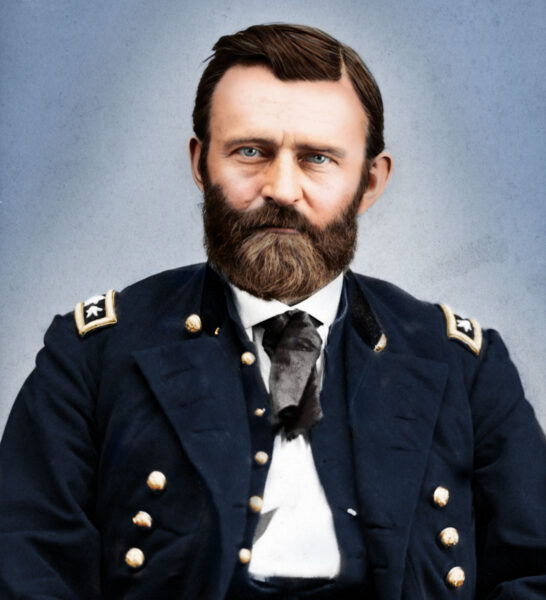
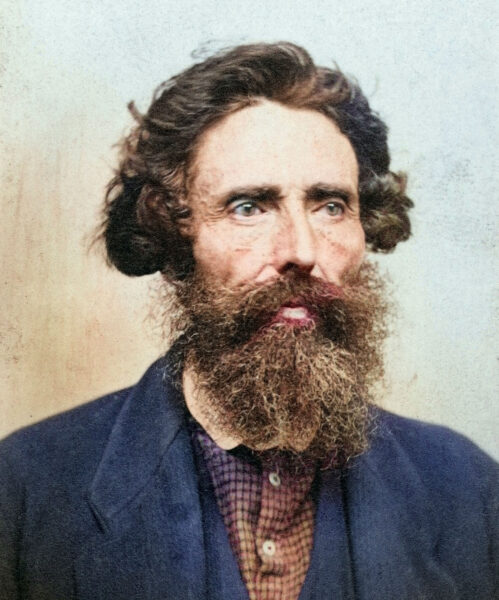
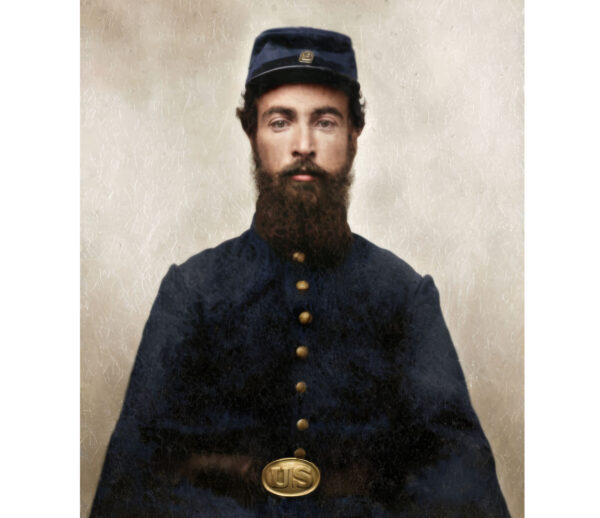
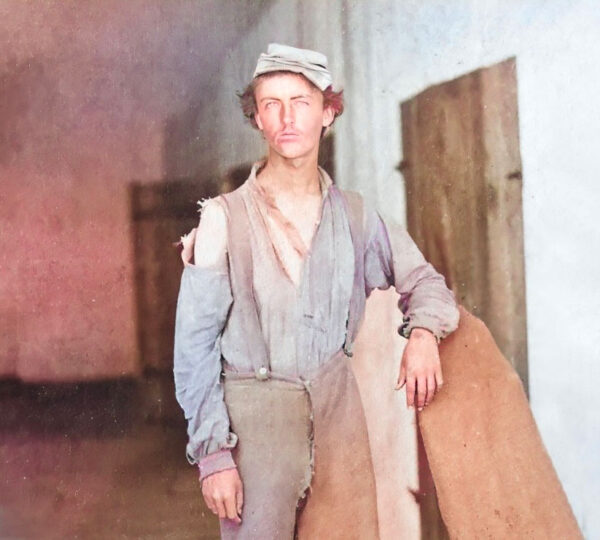
Illustration of Civil War commanders as game pieces with hands picking them up.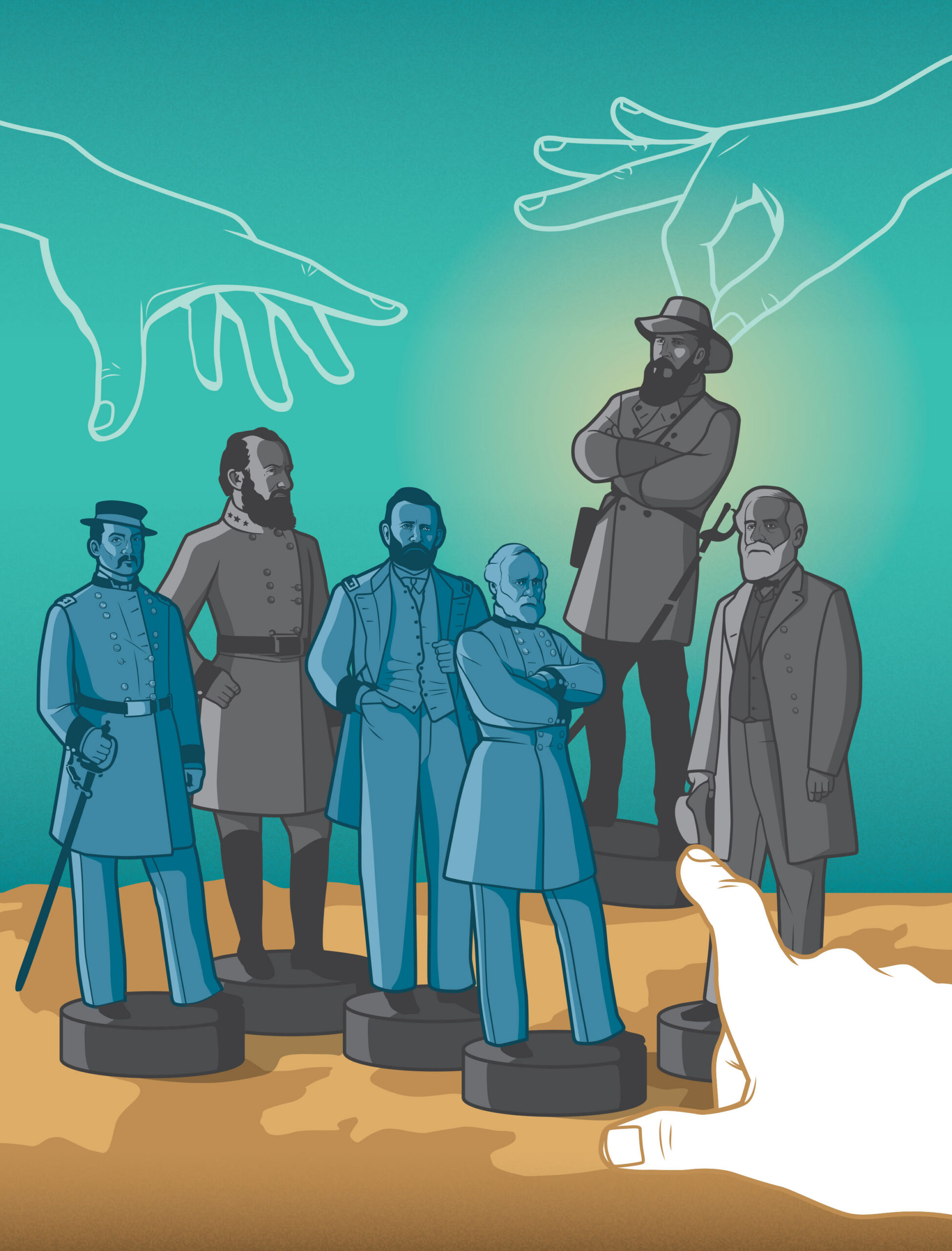 Todd Detwiler
If you could build the ideal Civil War force from scratch, what would it look like? We recently enlisted the assistance of five Civil War historians to get their takes. To do so, we held an eight-round draft—much like one for a fantasy sports league. After determining what “positions” each army would consist of—army, corps, division, artillery, and cavalry commanders, as well as a fighting regiment and two “utility” players (two soldiers or civilians to supplement an army’s overall strength)—we randomly selected the participants’ drafting order, and the picking commenced.
We gave each of our historians the following instructions:
(1) They could fill their roster positions in any order.
(2) Once an individual was selected, he or she could not be picked again.
(3) For the army, corps, and division commander slots, they needed to pick individuals who held these positions during the war; for corps and division commanders, they needed to pick individuals who not only held these positions during the war, but who didn’t rise above them (i.e., their division commanders never held formal corps or army command; their corps commanders never commanded an army).
(4) So that the draft did not become too unwieldy, we asked that all selections were associated with the land war—no naval picks allowed. And, perhaps most importantly,
(5) we asked that the individuals selected were evaluated strictly on their talent and skill, not ideology or cause.
Each of the resulting forces were then judged by a panel of experts (more about them and their decisions on pages 42–43), who assigned a numeric value from 1 to 10 for each pick as well as for two additional categories: “draft grade” (an assessment of each participant’s drafting strategy) and “intangibles” (how each army might perform given its component parts). We took these scores, averaged them, and added them up for a final tally.
Read about the fantasy fighting forces and their evaluations, presented in the order they were ranked.
Jennifer Murray’s Army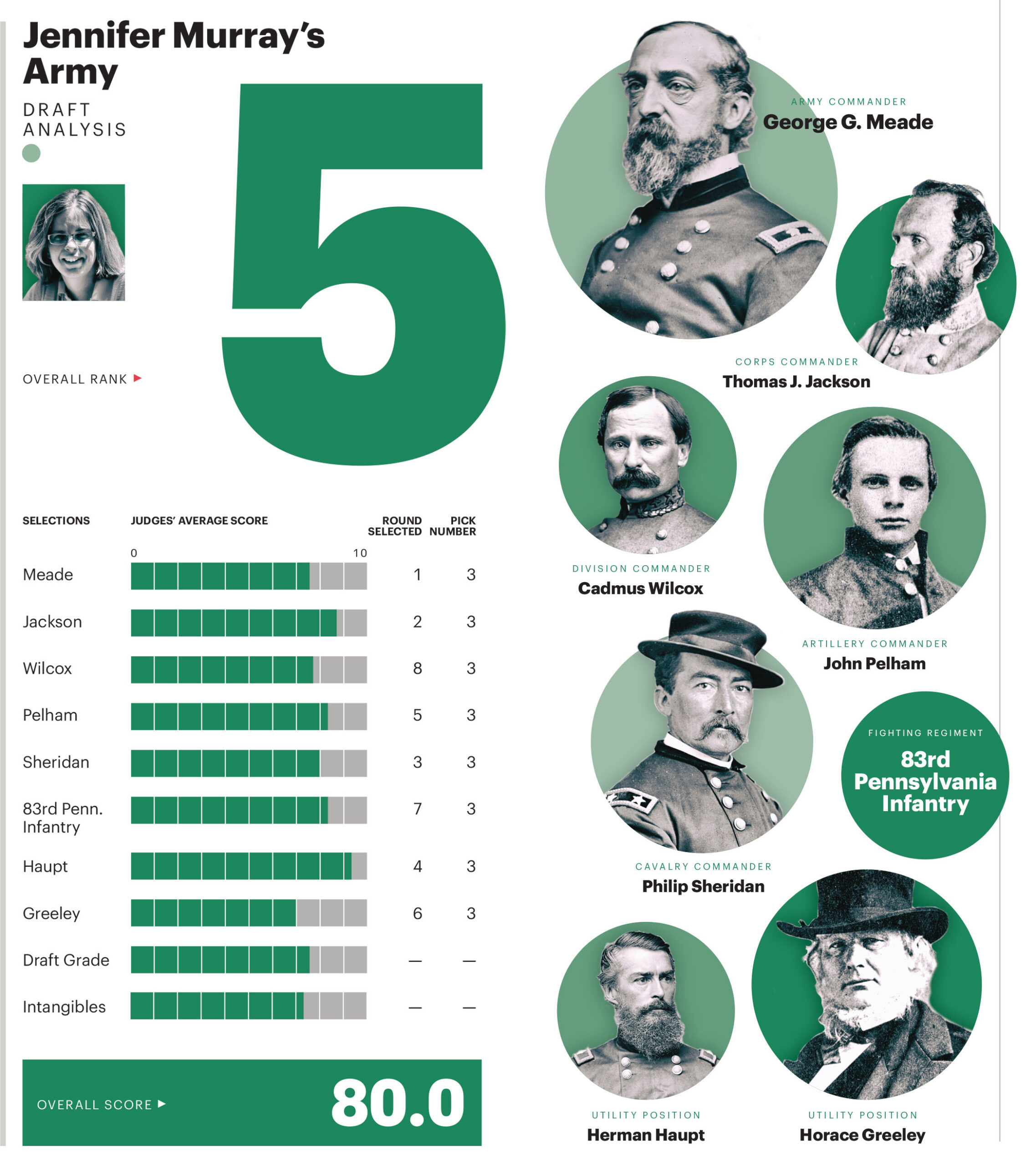 Francis Miller, The Photographic History of the Civil War (Pelham); Library of Congress (6)
Murray’s Strategy
My army’s philosophy centers on speed and maneuverability. My selections demonstrate the best of the war’s aggressive commanders, proven in mobile operations and relentless pursuits of the enemy. I can control the time and tempo of the war by executing aggressive offensives while dominating transportation networks, namely railroads. Complementing this strategy is a hard-war policy that will destroy the enemy’s resources and weaken civilian morale, while fostering support for the war on my home front.
George G. Meade is a worthy army commander. While strategically calculated, Meade trusted his subordinates to execute his orders. Although he certainly does not possess the aggressive nature of Ulysses S. Grant or Robert E. Lee, Meade’s preference for situational and collaborative leadership will allow his subordinates—Thomas J. Jackson, Philip Sheridan, and John Pelham—to take initiative and execute hard-hitting campaigns of maneuver.
Jackson and Sheridan represent the war’s best offensive commanders. Jackson’s “foot cavalry” will maneuver quickly, while disrupting and confusing the enemy. Sheridan offers a two-pronged approach, with both his ability to execute tireless pursuits, as seen during the Appomattox Campaign, and his willingness to implement hard-war policies on the enemy’s civilian population.
My artillery will be commanded by one of the war’s most innovative, well-regarded artillerists, John Pelham. Pelham’s success in pioneering light artillery will further enhance my army’s maneuverability.
While my army focuses on offensive maneuverability, my division commander, Cadmus Wilcox, offers a proven record of defensive success, as seen in his actions in the final days of the Petersburg Campaign. My fighting regiment, the 83rd Pennsylvania Infantry, is experienced in combat, having served in nearly every major battle in the Civil War’s eastern theater. Its men will suit my strategy of maneuverability well.
Herman Haupt, the superintendent of railroads, is the cornerstone to the philosophy of mobility. His presence will be invaluable and will allow me to quickly move men and supplies, perfectly complementing Jackson and Sheridan.
Finally, Horace Greeley, editor of the New York Tribune, will be essential to shaping public opinion and maintaining support for the conflict. Wars cannot be won without popular support, and here Greeley excels.
George G. Meade at Gettysburg.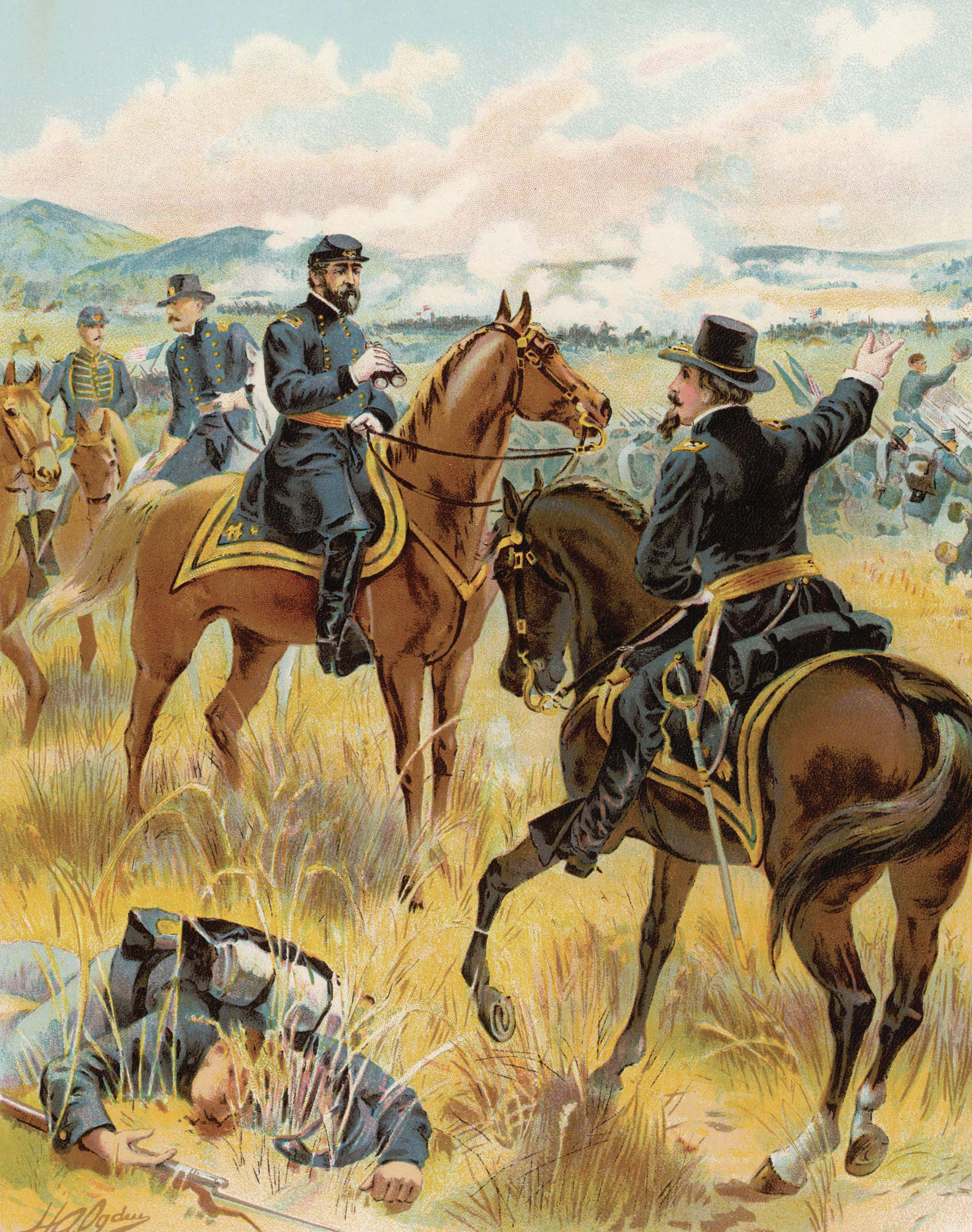 Alamy Stock Photo
Opponent Opinions
“Murray’s army will be immobilized by feuding between Meade and Sheridan, egged on by the always mercurial Horace Greeley.”
“Defeating this army, with its high quality of leadership in its infantry and cavalry wings, will be difficult in a stand-up fight.”
Lorien Foote’s army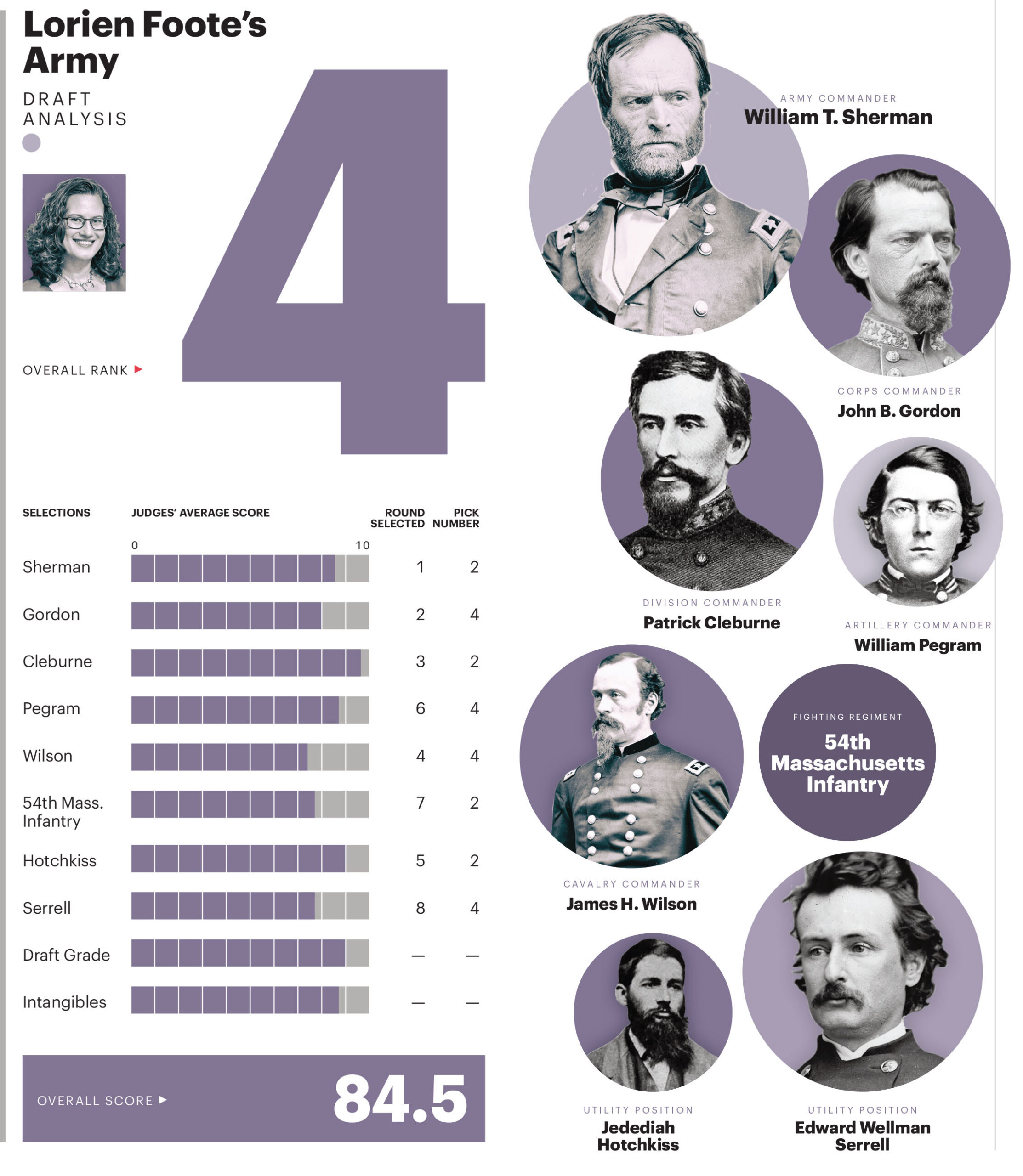 Jennings Cropper Wise, The Long Army of Lee (Pegram); Francis Miller, The Photographic History of the Civil War (Cleburne); National Archives (Gordon); Library of Congress (4)
Foote’s Strategy
This is the most flexible and mobile army in the field, under the command of the most strategically creative leader of the Civil War. This force projects power into the enemy’s interior with great speed, confounding any opponent as to our location while destroying its war resources, severing the connection between its armies and its material and human support, and breaking the will of the civilian population that supports it.
William T. Sherman, the army’s commander, has proven superiority in conceptualizing and waging this kind of “total” warfare. His orders and personal example ensured that his army traveled with minimal baggage. The speed with which his army marched through the swamps and rain-swollen rivers of South Carolina in winter, building its own roads and bridges, was a stunning logistical triumph. The army’s mapmaker, Jedediah Hotchkiss, will ensure our ability to move at will through enemy territory. His ingenuity in assessing terrain for the optimal points to locate and maneuver troops was unmatched during the Civil War. Cavalry commander James A. Wilson uses speed, mobility, and tactical prowess in battle and can conduct raids deep into enemy territory. During the Civil War, he defeated Nathan Bedford Forrest twice and his independent cavalry corps conducted the largest cavalry raid of the conflict, capturing four fortified Confederate cities in Georgia and Alabama, destroying munitions production, and rendering the Confederate railroad network completely inoperable. Our young artillery commander, William Pegram, who rose from sergeant to full colonel during the Civil War and shares the intensive mind-set of our entire army, will deploy his guns as offensive weapons to inflict maximum damage. The superlative ingenuity and logistical excellence of our army commander is supported by the internationally acclaimed civil engineer Edward Wellman Serrell. The British journal Engineering proclaimed his construction of a floating battery in an impassible swamp on Morris Island to be one of the greatest feats of the war.
This army will mobilize all available social resources to conduct its campaigns. Its division commander, Patrick Cleburne, whose troops were renowned for their skill and valor, proposed in January 1864 that the Confederacy arm slaves and offer them freedom to fight. He recognized, as does this army, that African-American manpower represents the margin of victory in the war. That’s also reflected in the selection of a fighting regiment: the 54th Massachusetts Infantry, a superbly trained and disciplined African-American unit raised in the northern states, whose members fight for freedom, giving them an extra fighting edge. Serving under corps commander John B. Gordon, whose troops successfully repelled attacks and assaulted positions in every one of the bloodiest battles of the eastern theater, our troops will effectively execute the will of the high command.
Sherman’s March portrait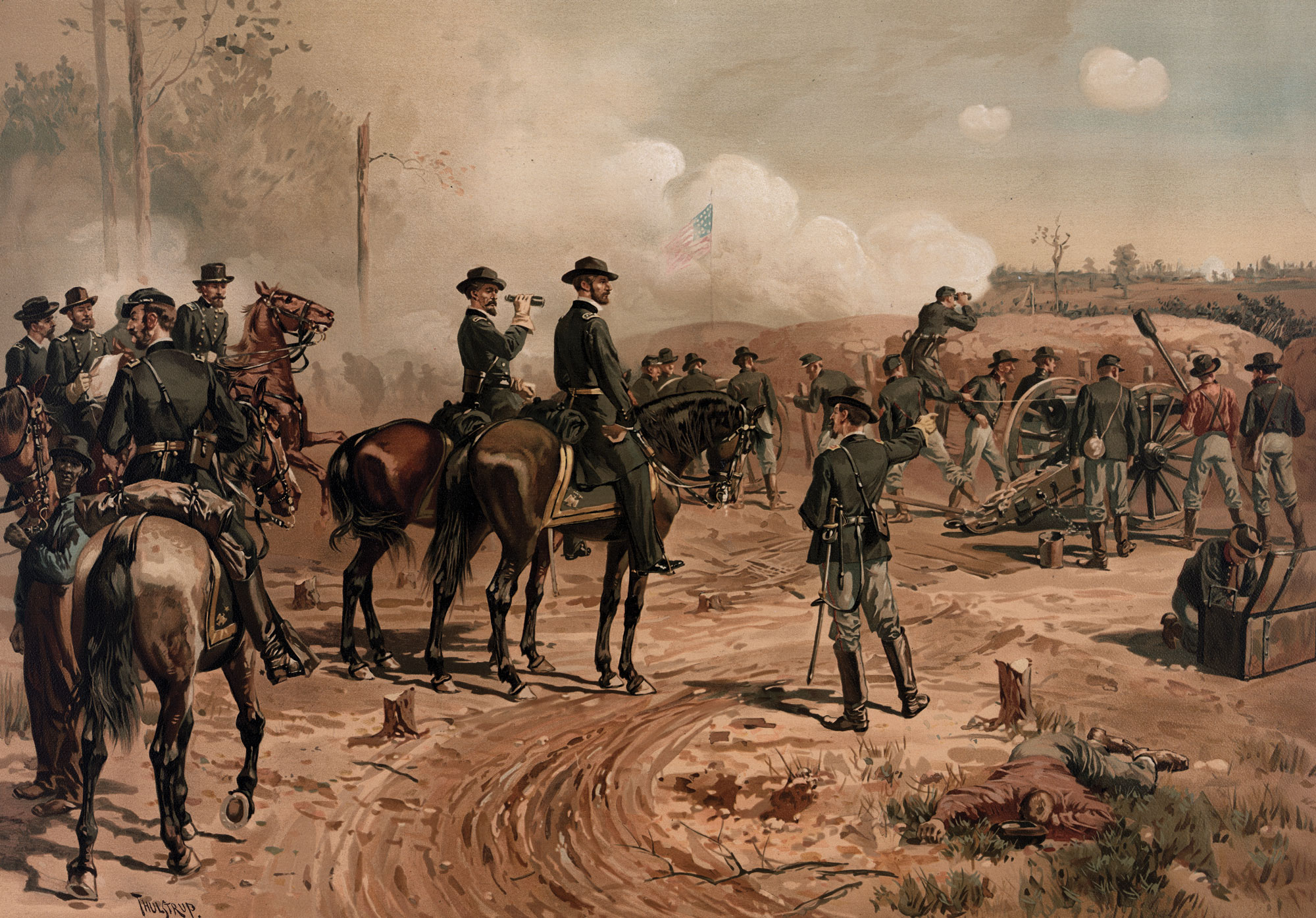 Library of Congress
Opponent Opinions
“The men of the 54th Massachusetts went into a fight with clenched jaws and clear motivation—a lethal combination for any opposing force.”
“Foote’s army is led by a marcher, not a fighter, who was often scared by what he thought someone else would do. And while it’s nice to see the 54th Massachusetts present, we all know that Sherman had no use for black soldiers, so their talents will be wasted.”
Brian Matthew Jordan’s Army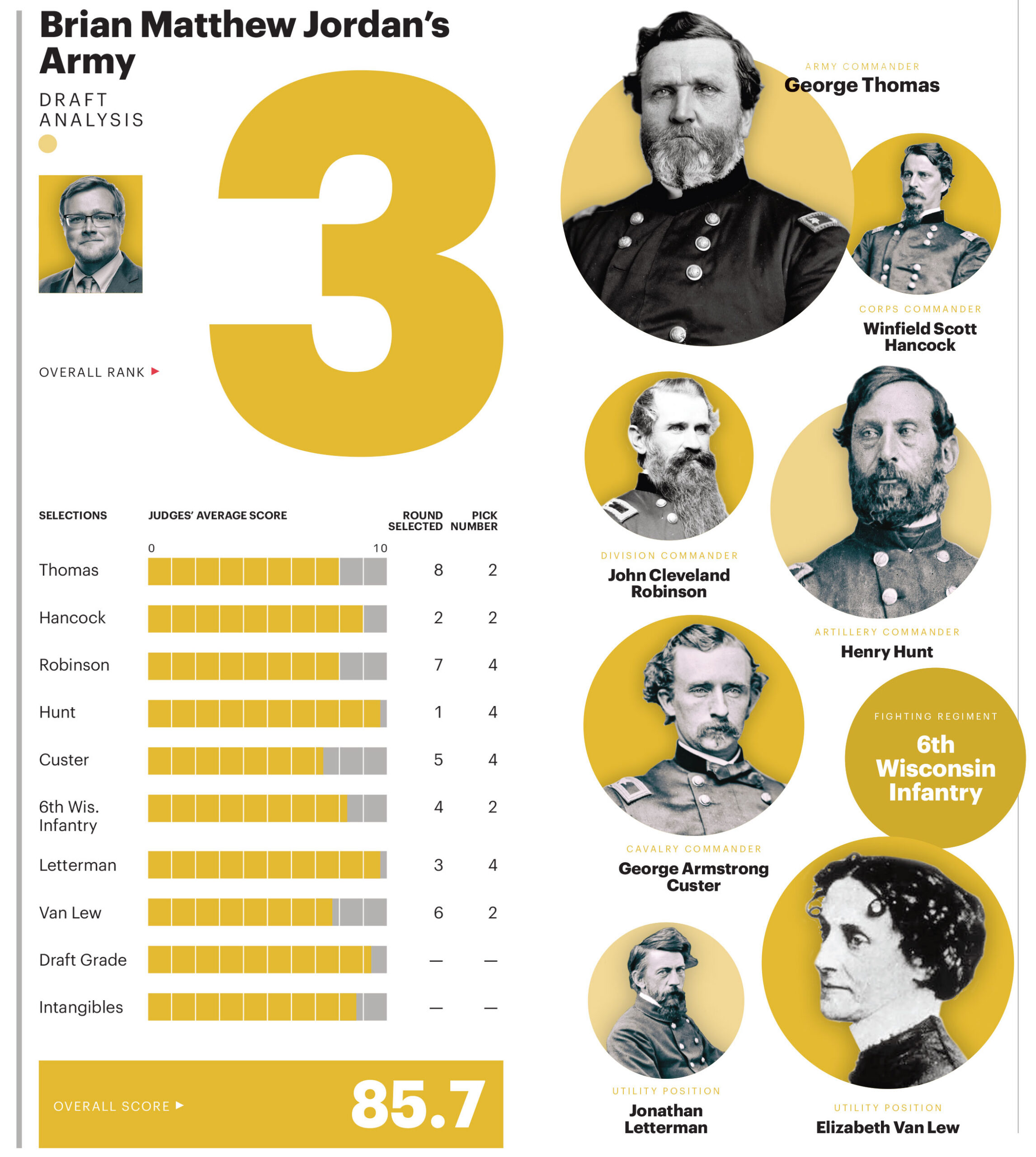 National Park Service (Varon); National Archives (Hancock, Hunt); Library of Congress (4)
Jordan’s Strategy
Mine is the only army to be led exclusively by Union men. Its commanders are representative of all points on the political spectrum—giving voice to southern Unionists (George Henry Thomas), War Democrats (Winfield Scott Hancock), and abolitionists (John Cleveland Robinson). Supplied with the tidings of spy Elizabeth Van Lew’s “Richmond Underground,” each general, steady and stouthearted, maintains a keen sense of what is at stake in the war. Thomas and Hancock, for instance, subordinated section and party, respectively, in the interest of preserving the Union.
From Mill Springs to Stones River, from Snodgrass Hill to Nashville, modest and undervalued George Thomas turned in estimable battlefield performances. “He could not be driven from a point he was given to hold,” Ulysses S. Grant averred in his memoirs, esteeming the Virginian as a “sensible, honest and brave” commander who “gained the confidence of all who served under him.” So too did Hancock enjoy the allegiance of his men, despite his habit of always finding the thickest part of a fight. Indeed, from Cemetery Ridge to the Mule Shoe, his II Corps was a steady pillar of the Army of the Potomac. “Hancock,” Grant aptly concluded, “stands as the most conspicuous figure of all the general officers who did not exercise a separate command.” Though the final days of Hancock’s Civil War career along the siege lines of Petersburg were less than inspiring, it is fair to say that good, hard fighting exhausted him.
Sporting one of the war’s most impressive beards, the alert John Cleveland Robinson earned a Medal of Honor for his daring at Laurel Hill, Virginia—a sharp fight that unfolded as the armies coiled earthworks around Spotsylvania Court House. Packed into his division are the confident, black-hatted foot soldiers of the 6th Wisconsin Infantry, who scaled South Mountain, pressed down the Hagerstown Turnpike at Antietam, and charged a railroad cut west of Gettysburg. Their pluck and fighting spirit is unmistakable. These men are supplied battery support by Henry Hunt, who literally co-authored the Union army’s field artillery manual. Also lending aid is the mounted arm, led by an intrepid George Armstrong Custer—whose record of daring during the Civil War would be effaced by the events at Little Bighorn. Finally, whatever casualties the opposing armies might inflict will be well and efficiently treated by my army’s chief medical inspector, Jonathan Letterman.
George Thomas portrait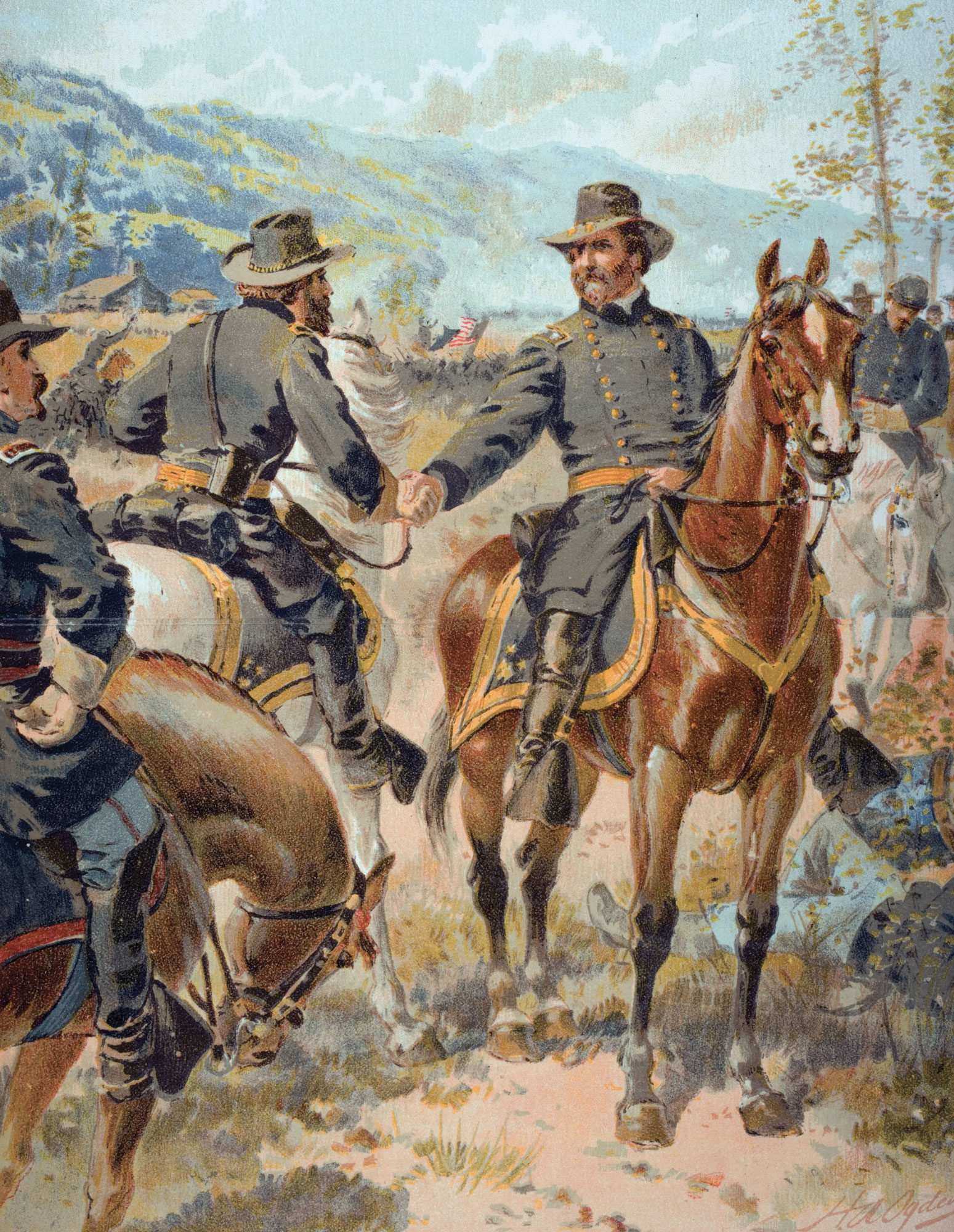 Alamy Stock Photo
Opponent Opinions
“This army combines modern efficiency and careful preparation—from the telegraphic communication from headquarters to the medical structure that will save lives—with the ability to deliver powerful blows on the battlefield.”
“Hancock never really functioned well as a corps commander (he did not serve in that capacity at Gettysburg), while Thomas was, shall we say, deliberate. And while I admire the choices of Hunt, Letterman, and the 6th Wisconsin, I wonder what Thomas would have made of Custer.”
Brooks Simpson Army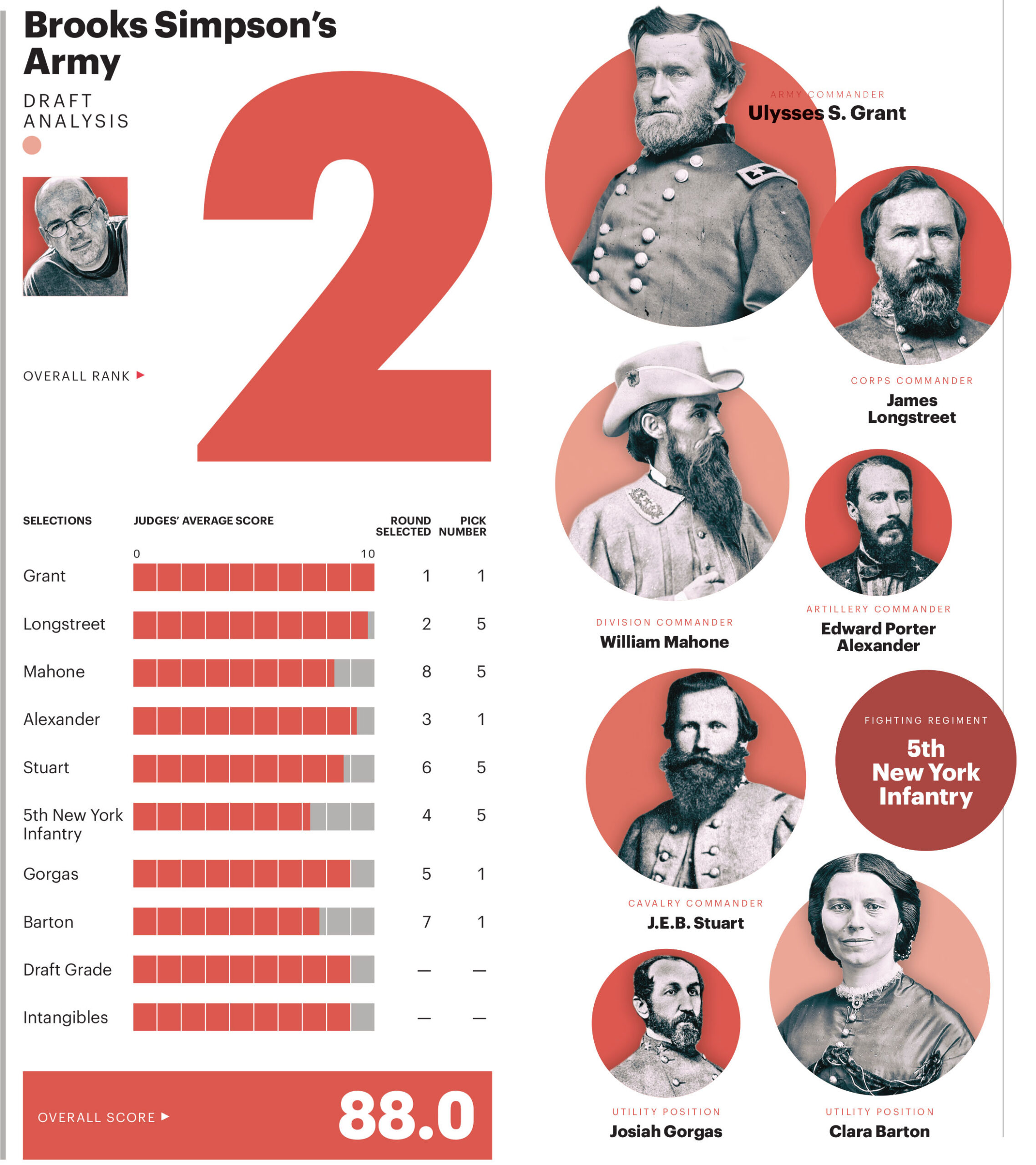 Francis Miller, The Photographic History of the Civil War (Alexander); National Archives (Mahone, Barton); Library of Congress (4)
Simpson’s Strategy
Building this army required thinking about how several people would work together as a unit. Ulysses S. Grant as army commander was an obvious choice: In turn, James Longstreet, who could attack like a sledgehammer and defend like a stone wall, simply needed a respected directing hand, and his respect for Grant ensures a smooth-working machine. Division commander William Mahone could launch a furious counterattack, and he would also be acting under proper supervision (he nosed out Charles F. Smith for the job). That assured me of having top-flight command talent that would work well together (and would have worked well together during Reconstruction too). Like Grant, Edward Porter Alexander could write as well as he could fight, and he had a keen understanding of Robert E. Lee’s weaknesses that would have come in handy. Both men could be relied upon to reflect upon their experiences in ways that would assure us that their force triumphed.
J.E.B Stuart would have been superb in collecting intelligence and in providing a distraction at key moments, and, given Grant’s ability to write lucid orders, Stuart would have stayed on task during a campaign (in a pinch he would have been able to command infantry if needed). The 5th New York Infantry adds a dash of color, flair, and élan to this force (in contrast to the plain commander) as well as the possibility of G.K. Warren serving in what would have been his proper calling as chief of staff and Judson Kilpatrick rising to his position as a crazy cavalryman. Confederate ordnance chief Josiah Gorgas fared so well given limited resources that one wonders what he could have achieved on a level playing field, and Clara Barton would have played a major role in ensuring that the soldiers in this hard-fighting force would receive superior medical care.
In short, this is an aggressive army, led by pragmatic, level-headed generals, well-supported logistically and medically, whose two top commanders served in both theaters east of the Mississippi. It’s a resilient group, with just enough flash to complement its skill, determination, and reputation for hard fighting.
Ulysses S. Grant in battle portrait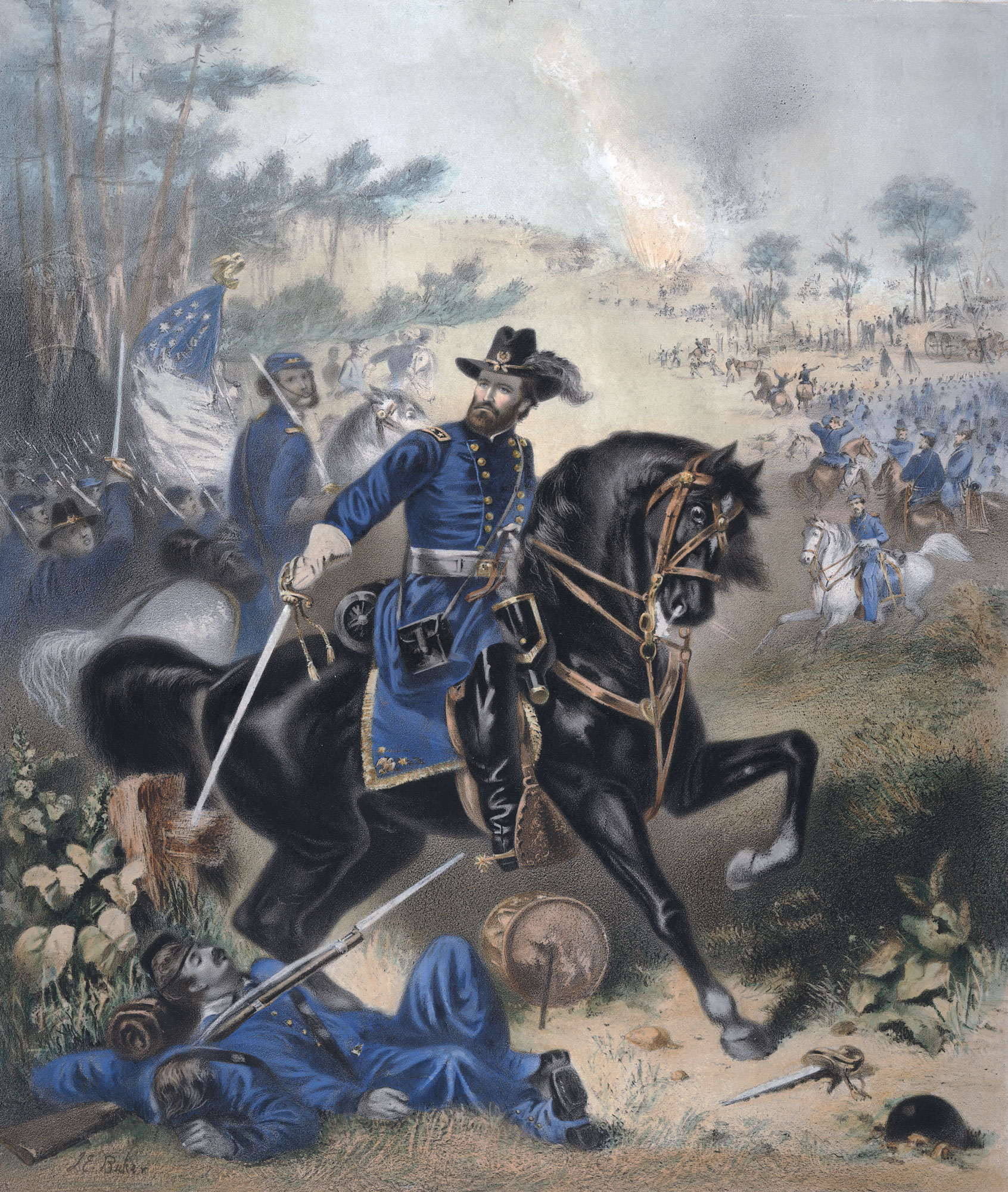 Anne S.K. Brown Military Collection
Opponent Opinions
“Simpson’s army is led by the war’s most aggressive commander. If my force is to beat his, it will have to be a quick, decisive conflict that ends before Grant unleashes a war of attrition.”
“If concerns about navies and joint operations were part of the exercise, in light of Grant’s unmatched competence in them, I might be concerned. They aren’t, so I am not— especially since he is relying for intelligence on a guy who is only good at his job south of the Potomac River and a corps commander who lost a battle to Ambrose Burnside.”
Ethan Rafuse army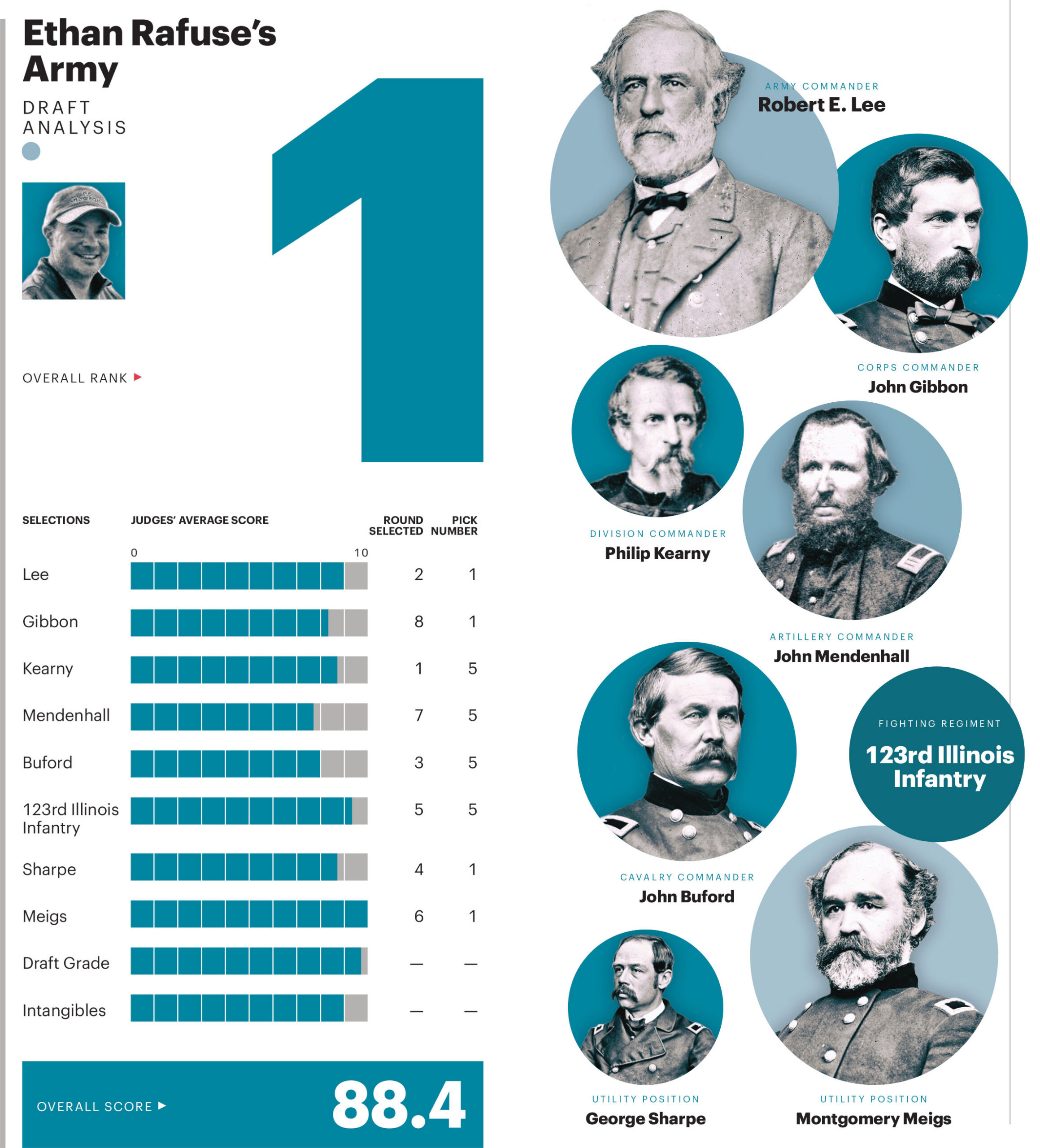 John Mendenhall image courtesy of Henry Deeks; National Archives (Sharpe); Library of Congress (5)
Rafuse’s Strategy
My selection process couldn’t have started better, with Robert E. Lee dropping into my lap as my army commander. The only better choice for this position would be Ulysses S. Grant, and only because of Grant’s demonstrated ability with joint army-navy operations. But since our instructions indicated we were not to worry about navies, I have no reservations in matching the war’s best operational field commander up against anyone.
Going from Lee, my priority was seeing that my army had what modern military theorists call “information dominance.” Thus, my selection of George Sharpe for one of my utility positions and the no-brainer of John Buford as cavalry commander—with the certainty that my army commander will find it quite a welcome change to have good information both south and north of the Potomac. Next, for my fighting regiment, I chose the 123rd Illinois Infantry because they carried Spencer repeating rifles during the Civil War. With their prowess and the skill demonstrated by the much underappreciated John Mendenhall in managing artillery in the Army of the Cumberland (and with John Gibbon available for consultation), I will have a firepower advantage against any foe. For that reason, I commend those who included Jonathan Letterman and Clara Barton as utility picks, for they will have ample need of their services after crossing swords with my guys.
Of course, there is a serious potential danger with all of this firepower—namely, running out of ammunition. Thus, my selection of Montgomery Meigs for my second utility position. With him handling logistics, I will have no shortage of ammunition even after my Illinoisans have shredded the boys from New York, Massachusetts, Pennsylvania, and Wisconsin manning the other armies.
On top of this, I have Phil Kearny and John Gibbon as my division and corps commanders, providing quality second-echelon leadership in the decidedly unlikely event that having Lee as my army commander plus information superiority plus overwhelming and amply supplied firepower proves insufficient. Granted, Kearny most certainly did not always play well with others (but usually if he perceived them lacking in aggressiveness—not a problem with “audacity personified” Lee), but no one could lead a division under fire like he did. Plus, he got along well with and respected Gibbon—and for good reason, as Gibbon was one of the war’s truly and consistently first-rate combat commanders.
With Robert E. Lee backed by northern firepower, intelligence, and logistics, and leading a tough, competent, and cohesive command team, my only concern is that my army will win this war too quickly and easily.
Robert E. Lee and officers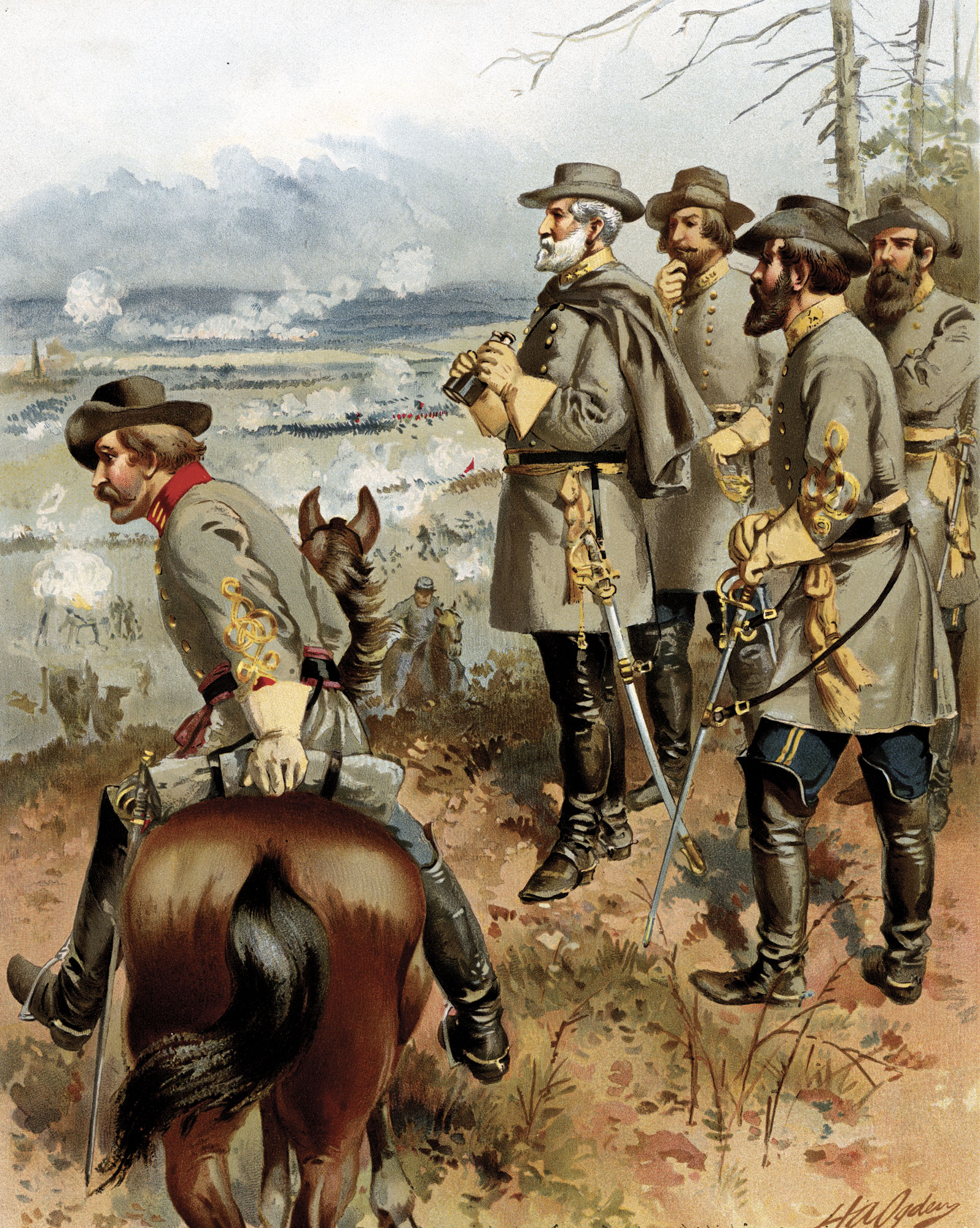 Library of Congress
Opponent Opinions
“I find Rafuse’s army to present the toughest challenge, because its lineup is aggressive and shrewd. Lee is a fighter capable of offensive moves that bewilder his enemy and defensive maneuvers that bog the opponent down.”
“Ultimately, Lee will destroy his own army with high casualty rates. And he does not recognize that hard war must be practiced to win.”
Judges’ Verdicts explained
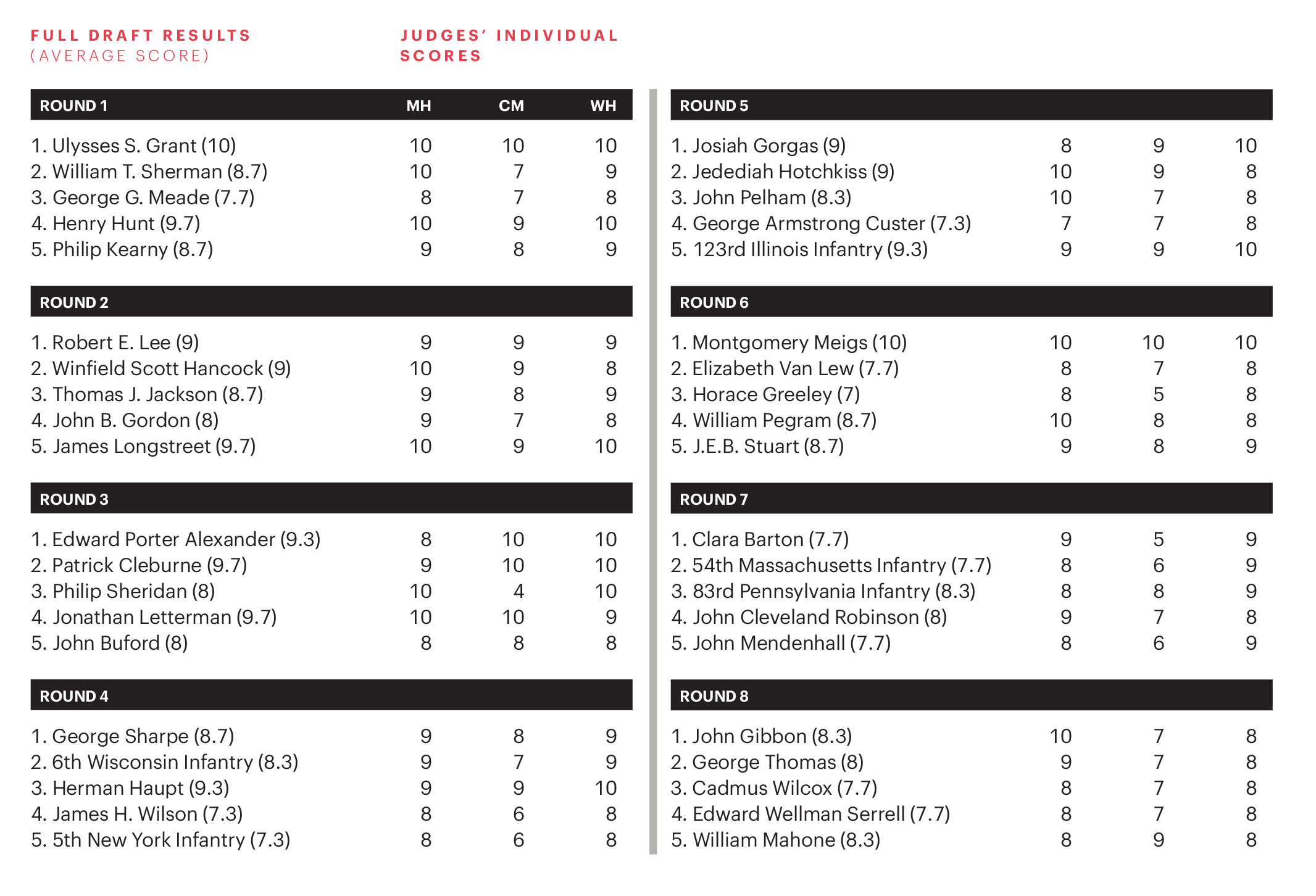
The teaming up of Lee, the elite Virginia planter, and Kearny, the New Yorker renowned for talking smack on the battlefield, is a masterstroke of aggressive command. Throw in Gibbon’s panache, the 123rd Illinois’ deadly mobility and firepower (owed in large part to repeating carbines), and Sharpe’s capabilities in handling intelligence duties, and this is likely the army with the most potent offensive capabilities. The addition of Meigs, a bargain in the sixth round, ensures that Lee and company never run out of ammunition. [Matthew C. Hulbert]
Lee is a real playmaker, and no one here has a tougher lineup working under him. Buford is a double-threat at reconnaissance and combat. That aggressiveness makes him a good fit with Gibbon and Kearny, while Sharpe’s intelligence will supplement their skills. Meigs is an especially inspired choice, able to provide all the logistical support Lee perpetually lacked during the Civil War. Watch out for overaggressiveness from this army, though, which could make them their own worst enemy. [Chris Mackowski]
Meigs was an absolute steal so late in the selection process. Kearny was also a solid pick, as was the 123rd Illinois Infantry. As a whole, Rafuse had a great draft, especially for someone who had the last pick in the first round. [Wayne W. Hsieh]
Natural chemistry between Grant and Longstreet (the latter having stood up for the former at his 1848 wedding to Julia Dent) gives this army the best top and corps command combination of the entire bunch. The pairing of Grant—one of the war’s most thoughtful commanders—and Barton is also intriguing. Stuart was a steal in round six, assuming Grant can keep him on point. Alexander is a dependable pick but also a reach in the third round with the likes of Pelham and Pegram still available. [MH]
Look for a close working relationship between Grant and Longstreet, who both bring a no-nonsense approach along with great chemistry. Stuart, however, while possessing unmatched speed and flair, is uncreative offensively. Barton, while an angel on the battlefield, was also a shameless self-promoter, making her the clear weak link. [CM]
Simpson had the advantage of selecting first overall, which meant he could take Grant—in my view, the clear No. 1 overall pick—but he also made sure to draft other solid choices, including a group of leaders without especially problematic personalities. [WH]
When it comes to artillery, sometimes it’s best to go big or go home. Hunt constitutes big. Thomas in the eighth and final round is hands-down the steal of this draft. The “Rock of Chickamauga” paired with “Hancock the Superb” and the “Iron Brigade” is the recipe for one hell of a tough, dependable army. Letterman’s ability to keep more men alive only adds to that designation. The chink in this army’s armor is the drama-prone Custer, who brings “character issues” to the organization. [MH]
This is the least flashy army of them all, with the exception of Custer, but he has the kind of fight in him that backs up his flash. This force will perform well with the rock-solid, underrated Thomas, who’s apt to be outshone by not only Custer but also Hancock. Still, look for Hancock and Thomas, in particular, to build a good rapport with each other as the conflict unfolds and they rack up some gritty victories. That’ll take its toll on the 6th Wisconsin—a regiment that will be tough to beat early but have a difficult time as the war grinds on. With Hunt, Robinson, and Van Lew, this army has a stalwart lineup, but it will be Letterman—the army’s MVP—who will save the day over and over. [CM]
Picking Hancock ahead of both Longstreet and Jackson? And choosing Custer ahead of Stuart? I wonder if Jordan’s affinity for his alma mater, Gettysburg College, and its proximity to the arena where these Union generals bested their Confederate rivals affected his better judgment. But who can blame a fan for a bit of homerism in such an exercise? [WH]
Foote’s army is an imposing mix of grit, aggression, and creativity. Sherman is second only to Grant as a commander, while Gordon and Cleburne are just the sort of subordinates to carry out Uncle Billy’s orders for “hard war.” Serrell and Hotchkiss are inspired picks; one the “MacGyver” of Civil War engineers and the other arguably the best mapmaker in the business. The only knock on the 54th Massachusetts is war experience—which is almost entirely not the fault of the unit itself. There’s just no soft spot on this roster. [MH]
Sherman’s greatest asset is his maneuverability, which matches him up well with most of the other army commanders, but he bogs down when drawn into stand-up brawls, so look for trouble against both Lee and Grant. Fortunately, Gordon, Cleburne, and Pegram are all good brawlers, so they’ll keep Sherman in the fight. The 54th Massachusetts has undeniable grit, but not an extensive combat record, so a key question will be how they hold up over the duration of the conflict. Expect Wilson to get better as the conflict goes on, if the army can survive any early gaffes. Hotchkiss will help make up for Wilson’s deficiencies. [CM]
Foote’s pick of Cleburne was truly inspired, but Gordon was a reach. I also would have taken Meigs or Gorgas ahead of Wilson, who took time to emerge as a solid cavalry commander. Meigs or Gorgas would also have helped Foote in the utility spots. [WH]
Pelham and Sheridan stand out as the best overall artillery–cavalry combination of any of these armies. And with Haupt as her logistics guru, Murray’s group is guaranteed to be an efficient fighting force. The brilliance of Pelham and Sheridan is, however, counterbalanced by the vulnerability created by selecting Meade with the third overall pick. To some observers the overall commander will matter less than the subordinates; in that case, though, how the personalities of Meade and Jackson might mesh is an unknown quantity. [MH]
Jackson and Pelham both bring lot of offensive power, and they’re backed by a workhorse regiment in the 83rd Pennsylvania. Meade and his more deliberate style, while hard-nosed, won’t mesh well with Jackson, who is used to a more aggressive style, or with Sheridan. Meade will also have his hands full with Greeley, who makes a great cheerleader when he’s feeling up, but who is overall more trouble than he’s worth. Much will fall on Haupt, the most solid member of Murray’s army, to keep everyone on track. [CM]
It’s true Meade deserves more credit than he’s received among both professional and lay students of the war, but picking him third overall and ahead of Robert E. Lee? However, I loved the Sheridan pick—in selecting Sheridan, Murray not only got a fine cavalry commander, but one who could also effectively serve as an army commander. In the end, though, the large number of irascible personalities in this group hurts its larger cohesion. [WH]
The Participants
Jennifer Murray is an assistant professor at Oklahoma State University, specializing in American military history and the Civil War. She is the author of On A Great Battlefield: The Making, Management, and Memory of Gettysburg National Military Park, 1933–2013 (2014) and is currently working on a biography of George Gordon Meade.
Lorien Foote is the Patricia and Bookman Peters Professor in History at Texas A&M University. She is the author of four books, most recently The Yankee Plague: Escaped Union Prisoners and the Collapse of the Confederacy (2016).
Brian Matthew Jordan is assistant professor of Civil War history and director of graduate studies in history at Sam Houston State University. His Marching Home: Union Veterans and Their Unending Civil War (2014) was a finalist for the Pulitzer Prize in History. His next book, Enduring War, is forthcoming in 2019 or 2020.
Brooks D. Simpson is Foundation Professor of History at Arizona State University. His most recent work is Reconstruction: Voices from America’s First Great Struggle for Racial Equality (2018).
Ethan S. Rafuse is the 2018–19 Charles Boal Ewing Visiting Professor of Military History at the U.S. Military Academy at West Point.
The Judges
Matthew C. Hulbert is the author or editor of three books, including The Ghosts of Guerrilla Memory: How Civil War Bushwhackers Became Gunslingers in the American West, which won the 2017 Wiley-Silver Prize.
Chris Mackowski is editor in chief at Emerging Civil War and teaches writing at Saint Bonaventure University.
Wayne Wei-siang Hsieh is an associate professor of history at the United States Naval Academy. He is the author of West Pointers and the Civil War (2009) and co-author, with Williamson Murray, of A Savage War: A Military History of the Civil War (2016).